Retro Review – Legend (1985, dir. Ridley Scott)

legend

I can remember being in my grandmother’s living room at her home in Clarksville, Tennessee. I was about seven or eight. My Uncle Thomas has control of the television and it was on the mysterious and forbidden HBO. The film playing captivated me with the dreamlike world being presented on screen and when the moment came that the towering demonic villain of the piece stepped on screen I was absolutely floored. Later, I would learn this was the film Legend.

Legend is about as classical of a fairy tale you could get. There’s a beautiful princess, Lily (Mia Sara) who plays in the forest with a child of nature named Jack (Tom Cruise). A foolish encounter with a pair of unicorns plunges the world into the beginnings of eternal shadow. It’s up to Jack and band of dwarves and fae to defeat the fiendish Darkness (Tim Curry) before evil overtakes the world for all time.

After watching The Force Awakens I realized more than anything that film is able to perfectly recreate how it *feels* to watch Star Wars for the first time when you were a kid. I don’t know how to explain it but it’s a very primal, emotional thing that Abrams is able to tap into. In Legend, Ridley Scott accomplishes the same sense of nostalgic wonder on the topic of reading a fairy tale. Every single archetype looks and plays so perfectly. Tom Cruise pulls of the generic hero who has received the Call. Mia Sara’s Lily is ethereal in her beauty but also brings a strength to her character not typically seen in fairy tales. It’s by no means a feminist portrayal, but her confrontational scenes with Darkness show she is a character able to overcome her initial fears. The supporting cast of goblins, dwarves, faeries, and demons are everything you remember from laying in bed and leafing through a hardback anthology of fairy tales.

Even now, some twenty-plus years later, the film still brings out that sense of slipping into a dream. This is accomplished thanks to two key crew members: Assheton Gordon, the production designer, and Rob Bottin, makeup designer. Gordon was a British film veteran having worked on some of the great British New Wave films of the 1960s (The Knack…and How to Get It, Wonderwall, The Magic Christian) and was part of the crew of Michelangelo Antonioni’s countercultural crime thriller Blow-Up. I don’t believe Gordon had done production design on a film of this scale before, but he produced a brilliant world. Filmed entirely on the famous 007 soundstage at Pinewood Studios, the entire enchanted forest and hellish citadel of Darkness were perfectly realized. It is obvious that our characters are moving through an artifice of nature, but I think that helps add to the dreamlike qualities of the picture. It reminded me of Canadian director Guy Maddin’s work which intentionally lets its audience in on the layered reality of watching a film. The plan had been to shoot on location and if that had gone through I think the story would have suffered.

Rob Bottin handled makeup design and the variety of magical beings, both angelic and sinister, look wonderful. The obvious crowning achievement of the film is Tim Curry as Darkness. This is the definitive Devil. Massive black horns, piercing cat’s eyes, brilliant white fangs in a malevolent grin, goats hooves that tower him above the rest of the cast. Just from an engineering point of view this is a massive task. Bottin made his way up on some classic 1970s cheesy films (King Kong, Rock and Roll High School), but really broke out through his work with John Carpenter (The Fog, The Thing) and particularly The Howling. The most important part about his transformative work with Darkness, and the testament to Tim Curry’s prowess as an actor, is that neither the makeup or the actor ever overwhelm each other. It’s such a perfect synthesis of both crafts.

Legend did not do well upon its release. The plot is paper thin and character development is almost nil. But I would argue neither was something the film set out to do. Legend is a film about dreaming and about imagination. I suspect it still works to lure in the attention of children even today, evoking in them those ancient curiosities that have kept fairy tales alive in our culture for centuries.

Tom at the Farm (2015, dir. Xavier Dolan)

xavier-dolan

Frenetic strings screaming. The sound of cornstalks furiously rustling. The blur of figure bursting through them. He enters a clearing in the field. We cut to a tight shot of his face. His bleach blond hair is a tangled mess. A thin line of blood travels from the corner of his lip diagonally down to his chin. He is suddenly thrown to the ground by a man exploding from the corn.

This sort of explosive moment is what Tom at the Farm is all about. It spend the majority of its run time letting tension crank up until the rope is tightly wound. When the tension is allowed to release we’re met with moments of raw brutality that are confusing and upsetting.

Brought to us by Quebecois director, Xavier Dolan, Tom at the Farm follows a young man (Dolan as the lead) as he journeys into the Canadian version of the Midwest. He’s headed there to attend the funeral of his boyfriend, Guillaume. Upon arrival, he quickly learns that Guillaume was keeping a lot of secrets from him and his own family. He meets Agathe, the matriarch, who was lied to about her youngest having a fiance and Francis, the psychotic older brother who believes he can beat Tom into submission about keeping these lies going.

The first time Francis assaults Tom it is shocking and unexpected. But as their aggressive relationship continues it begins to take on a twisted psychosexual tone. At moments, Tom seems to become submissive and seeks out this continued violent treatment from Francis. And even Francis seems to desire Tom despite his protestations. When Tom finally attempts to leave he finds his car dismantled in the barn, stranding him in this desolate farm country. However, he finds himself comforted by the pastoral lifestyle, helping the birth of a calf, and then finding a moment to break down with emotion of what he participated in. In the midst of this tense psychological battle, Tom and Francis end up in an embrace after the latter reveals he took ballroom dancing lessons for a long lost ex.

The tone of the film is balanced somewhere between a lesser Hitchcock picture and The Talented Mr. Ripley. As the film nears its conclusion we discover a secret about Francis that illuminates his virulent anger and rage over Guillaume’s sexuality. The final shot of the film lets up contemplate the consequences of a moment when that rage overflowed. We don’t know what Tom believes about this revelation but we know it will inevitably shake up his world. While as unreal and absurd as the choices are that Tom makes when we, the audience, are likely shouting at him to just leave, these quiet final moments bring the film back to some semblance of a grounded reality.

High Rise (2015, dir. Ben Wheatley)

ofhighrise
The feeling of being alienated from a group perceived as “better” can elicit the most raw of emotions. I see it in my students when one thinks they are not only being excluded from a clique, but believe they have become an object of ridicule. Ben Wheatley’s latest film, High Rise presents characters in this situation, but also places the audience there as well through intentionally obtuse storytelling styles.

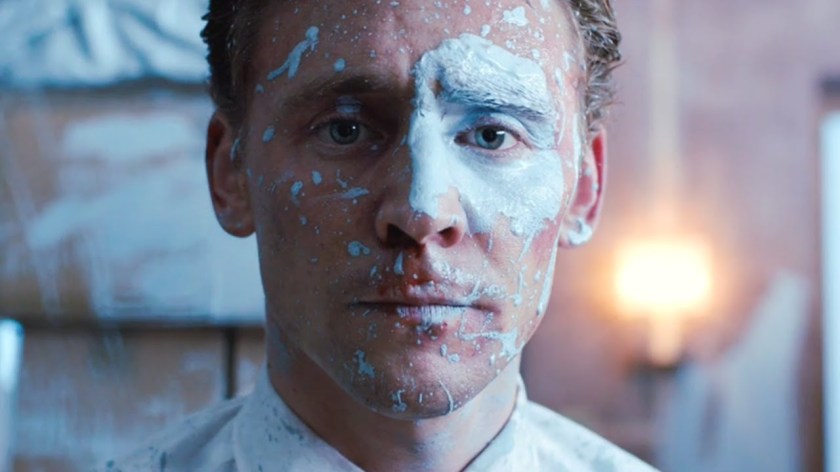
Based on the darkly satirical novel by J.G. Ballard, the film centers around Laing (Tom Hiddleston), a doctor who has purchased an apartment in a revolutionary new high rise complex. The building is mixed income, with the poorest residents living on the bottom while the wealthiest reside above the clouds on top. Laing floats somewhere around upper middle class and is very much excluded from the exclusive, extravagant parties in the penthouse. There’s also Royal (Jeremy Irons), the crippled architect of the building who seems to simultaneously loathe his fellow aristocrats while never desiring to visit those at the bottom. Finally, there is Wilder (Luke Evans) a roughneck documentarian that lives in the squalor of the bottom floors. Very suddenly life devolves into tribal warfare among the occupants, resulting in murder, rape, and finally roasting the dog.

Ben Wheatley is a director I have come to love in the last few years, My first exposure to his work was the dark comedy Sightseers, the story of a star crossed couple who bond through murder. This was followed by A Field in England, a psychedelic horror story set in the midst of the English Civil War. This year I finally managed to visit his first major work, Kill List, a horror film about the tragedy that befalls a hitman. All of his work is complex and challenging, often upsetting, but ultimately rewarding for the ideas they put forward.

From the first moments of High Rise it is apparent we are entering a world resembling our own, but not. When the full heft of the madness goes down we lose all contact with the world outside of the high rise. It’s very easy to start to wonder how the external world would react to the brutality going on inside. But the film is not attempting to ground itself. This is Swiftian satire that is going to clobber you over the head with most extreme exaggeration of the ideology it wishes to rail against.

Every visual aspect of the film is perfection. The 1970s are wonderfully reproduced and then twisted into a post-apocalyptic nightmare. Mark Tildesley, the brilliant production designer behind 28 Days Later and Sunshine, is responsible for taking these mundane spaces and transforming them into grim abattoirs.The most chilling aspect of the film is how easily the characters transition from annoyance with others misuse of the garbage chute and jockeying for prime parking spaces to planning raids on lower floors and abducting residents to force them into servitude.

It would be easy to take High Rise as a meditation on the corporate gentrification going on in major cities across the United States and in London. Or it could be seen, as the film teases in its final moments, as a prelude to Thatcher era class warfare. But I see the source material and director Wheatley’s take on it as deeper and more contemplative of our most primal and basic selves. High Rise is a film about the default tribalism society falls into when a crisis overtakes us, and how those who endure and retain some semblance of dignity must step away from the crumbling world around them.


Captain America: Civil War (2016, dir. The Russo Brothers)

cw-cap-iron-man-171105
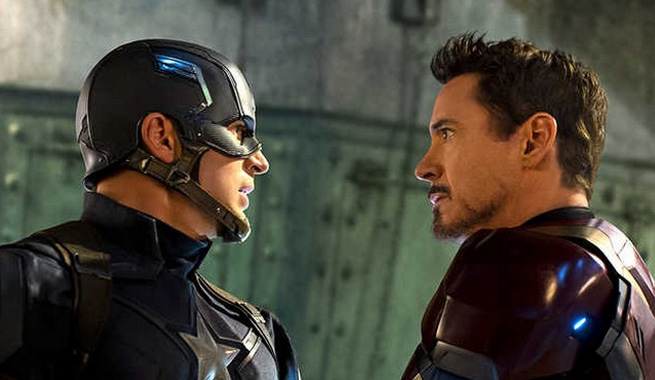
It is an inevitability that you’re going to immediately compare Captain America: Civil War to Batman v Superman. Their core is simply heroes fighting heroes, but it is fascinating how differently they tell their stories. The obvious winner in the clash of these films is Civil War and the reason is apparent: An ideological distinction between sides is developed and debated so that when the fists fly there is an actual reason.

If you haven’t watched the previous films in the Marvel Cinematic Universe (MCU) then it would make Civil War a fairly impenetrable film. Like the comic books that inspired these films, they are essentially soap operas in spandex. Despite the perilous possibility of falling into high camp, Civil War balances its over the top battles with well written and developed discussions on the nature of responsibility and consequences.

After a long run of 9/11 scale battles, the governments of the world wish to reign in the Avengers. A plan is presented that would tie the team to the United Nations. This means they would not act unless the UN passed a resolution allowing them to do so. Tony Stark (Robert Downey, Jr) has been feeling guilt over his role in the Ultron debacle and wants to sign right away. Steve Rogers (Chris Evans) is hesitant to give his autonomy over so quickly. It makes sense, Steve is the product of a nation’s desire to create a human weapon. Everything goes south when Steve’s old partner turned Hydra killing machine, Bucky is implicated in a terrorist attack. The heroes choose sides, battles take place, and the film turns the superhero formula on its head by ending not in a battle through a city but in a brutal, and surprisingly emotional, battle between three heroes in Siberia.

I don’t think it is a coincidence that Spider-Man name drops Empire Strikes Back mid-way through the film. In the same way that Empire served to disrupt and reshape the status quo of the Star Wars universe, Civil War is out to accomplish the same goal. The purpose of the Avengers is in question. The relationships of heroes that joined together under tenuous circumstances are torn apart. The film sets up many questions but doesn’t provide answers. I suspect those answers will be the next two Avengers films the Russo Brothers are set to direct.

There are so many new and interesting elements introduced in this film. What I liked about them was that they didn’t come across as shoehorned by the studio to set up future films. Think of the Thor vision scene from Ultron and how it hamfistedly worked to get us thinking about his next film, rather than add to the film we were currently watching. Black Panther, played brilliantly by Chadwick Boseman, has a full character arc that affect the plot of the film in an important way. Helmut Zemo changes up the big bad supervillain formula the films have follows thus far. By the end of the film, it’s hard not to have conflicting feelings about his actions and their reason. Plot threads have valid conclusions while still hinting at future stories.

The one issue a film like Civil War can have is the feeling of character bloat. While new faces like Spider-Man feel like they get enough attention and development in relation to their purpose, I was a little let down by how little we learn about Scarlet Witch. Scarlet’s role in the story is fairly crucial, her actions are the inciting incident that lead to the conflict in the film. She’s fresh to the MCU, having only seen her in Age of Ultron previously. It would have been nice to see her character fleshed out more, but that would have been hard to do because of the previously mentioned overflowing cast list.

Civil War is a step in the right direction for the MCU. Critics and viewers has begun speculating as of late that the franchise’s luck was going to wear out soon, but I think there is a lot of story potential still left. The Russo Brothers are a great replacement for the Whedon-led Avengers. They directed the best Marvel film to date, Captain America: The Winter Soldier and I feel confident in their ability to give a different, more grounded take on these characters. Previously, the next two films were planned to be the two part Infinity War, a massive coming together of all the franchise elements. Recently the Russo Brothers announced the two films would not be directly connected and I think that was a smart choice. Keeping each film’s plot tight and singularly focused will keep them from falling into the trap of Batman v Superman, where previewing the next films became more important than telling a good story in the present.