
Patreon Update – August Blog Stats

Patreon-logo

Views and Visitors

Growth in views from July to August was -65% (July: 716, August: 249)

Growth in visitors from July to August was -55% (July: 464, August: 207)

16% of views came from Google Plus

41% of views came from Google searches

6% of views from Facebook

Posts

The top five most visited articles for August were:

  1. Comic Book Review – Omega Men by Tom King – 25 views**
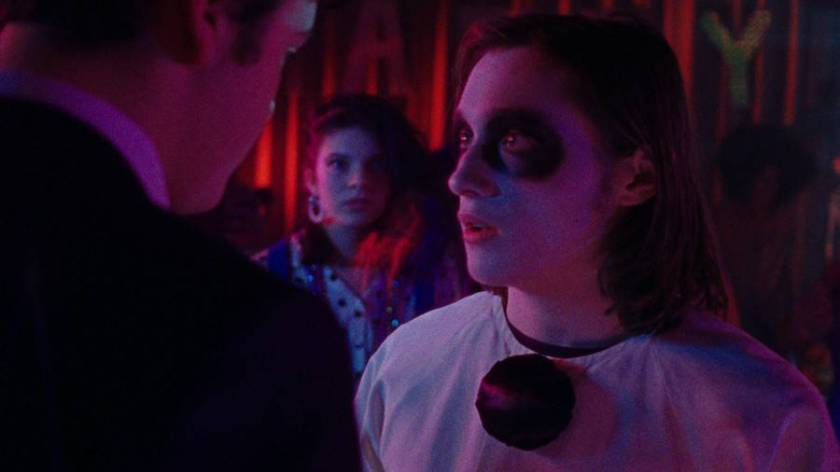
  2. The Childhood of a Leader (2016, dir. Brady Corbet) – 19 views
  3. Games for Two – Lost in R’lyeh & Sushi Go – 15 views*
    Comic Book Review: The Vision Vol.1: A Little Worse Than Man – 15 views**
  4. Great Books You Should Read #1 – 12 views

** denotes post was published in previous months, though the views came exclusively from August.

Analysis
Due to a much-diminished posting schedule for August, I saw inevitable drops across the board. I posted less new content, so search engine hits became the core of my views for the month. As a result, my most viewed posts were more of my older content. It does appear that Tom King was increasing in interest, probably due to his current run on Batman and the release of a few trades at the end of July. Not on the top five for August, but prominent when I look at my statistics for the year is my Origins article on Bluebeard’s Bride. August marked the 100th view of that particular article since it went up in late June. To me, that is a sign of high interest in the unreleased roleplaying game.

Conclusion
Posting will increase by a bit in September. One of my series for this month will be a Gene Wilder/Richard Pryor retrospective that I suspect will get decent views due to Wilder’s recent passing. I don’t expect to see numbers like June and July’s til next summer if I decide to post with that frequency. In October there will be an increased number of posts for Halloween, and I believe the numbers I generate that month will be more reflective of what will be the mean views.
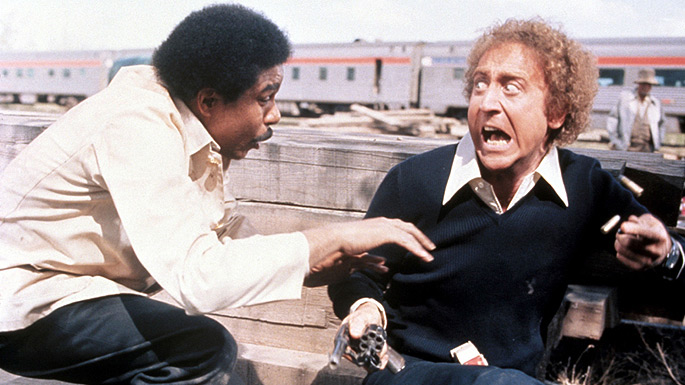
The Pryor/Wilder Quartet – Silver Streak

Silver Streak (1976, dir. Arthur Hiller)

Silver-Streak-Gene-Wilder-Richard-Pryor-gun-in-hand-or-glad-to-see-me

George Caldwell (Gene Wilder) is taking the Silver Streak train from Los Angeles to Chicago. While onboard he meets and spends the night with Hilly Burns (Jill Clayburgh), the secretary to a prominent art professor. George claims he saw the professor dead and thrown from the roof of the train and his investigation the next morning leads to him crossing paths with paid goons and being tossed from the train. A conspiracy behind the professor’s work is uncovered and George must team up with Grover Muldoon (Richard Pryor), a thief who ends up drug into the mess.

When Silver Streak was released, Gene Wilder was at his career peak. He’d come off of Blazing Saddles and Young Frankenstein. Previously, Wilder had struggled to find a breakout role. In retrospect, films like The Producers and Willy Wonka are spoken of fondly but at the time they were considered box offices failures whose love only came later with home video in the 1980s and 90s. Richard Pryor was as big a name and arguably bigger than Wilder at the time. By 1976, he’d had three comedy albums that went gold and hosted what became one of the great Saturday Night Live episodes. Before that, he’d cut his teeth as a writer on Sanford and Son as well as Blazing Saddles. He was set to play the co-lead with Wilder in Saddles but his volatile nature connected to his drug use caused studio heads to nix that idea.

The film was directed by Arthur Hiller, one of the big directors of the 1970s with features like Love Story, The Out of Towners, and The In-Laws. He worked frequently with playwright Neil Simon, however, Silver Streak was the work of Colin Higgins. Higgins was the screenwriter behind Harold and Maude and would go on to write and direct Foul Play, 9 to 5, and The Best Little Whorehouse in Texas.

The biggest thing you’ll notice while watching Silver Streak is that Pryor doesn’t appear onscreen until a full hour into the film. He’s billed third behind Jill Clayburgh and this appears to be because his roll was not meant to be as stand out. After reading the script, Wilder told the producers that the only way to keep elements in the film from becoming offensive would be to hire Pryor for the Grover role and allow him to bring his personality and point of view to the role. He was exactly right because, in scenes like the blackface disguise moment, Pryor is able to comment on white people and their exploitation of blackface in a way that most certainly came from his own mind. It’s very apparent to see why Pryor and Wilder would be teamed together for the next 15 years because they do have a wonderful chemistry together.

Speaking of chemistry, the relationship between Wilder and Clayburgh is one of the most convincing I’ve seen in a film. There was a certain type of naturalistic acting that worked its way into mainstream cinema in the 1970s that I think is present in the interaction between these two actors. It doesn’t hurt that both of them just have very magnetic, genuine, and charming personalities. You just can’t help but smile during their flirtation because it feels like you’re watching a real moment between two people who are attracted to each other.

The supporting cast is one of those great character actor showcases: Ned Beatty, Scatman Crothers, Patrick McGoohan, Ray Walston, Clifton James, and Richard Kiel. The roles are not that meaty on the page, but the actors bring dimensionality to the characters through their choices. The film is also very well-paced with Wilder’s series of ejections from the train marking the act breaks in a very clever manner. This will definitely be the strongest of the four Pryor/Wilder films in the series and serve as a benchmark to compare the subsequent pictures.

Movie Review – I Am Not a Serial Killer

I Am Not a Serial Killer (2016, dir. Billy O’Brien)

not a serial killer

John Wayne Cleaver (Max Records), a teenager with sociopathic tendencies, lives in a bleak Midwestern town, seemingly under a permanent blanket of snow. Against this wintery landscape, a series of killings begin. Cleaver gets a front row seat to examine the corpses due to his family’s prominence as the only mortuary in town. He quickly discovers each body is missing an internal organ or body part. The bodies also appear to have been cut apart with a chainsaw or toothed blade. And there’s that sizzling black oil at all the crime scenes. Cleaver struggles to control his own compulsions to hurt school bullies and the need to connect with others while trying to figure out whose sinister hand is behind the killings.

I did not expect what I got from this film. I knew going in from the atmospheric trailers that it was going to be moody and dark. There is plenty of gore due to the mortuary being a key location. We never see victim’s faces until more than halfway through the film. In many ways, this is from the perspective of Cleaver. He sees the bodies as simply hunks of meat at the beginning, parts of a mystery he wants to uncover. When the victims become people he personally knows the weight of the crimes set in.

Despite this darkness pervading the film, there is humor and softer moments. Cleaver frequently visits his psychiatrist, Dr. Neblin. Instead of Cleaver lying on a couch and unloading his feelings, the two meet in outdoor locations having sessions in a park or on a rooftop while birdwatching. The doctor comes across a very human and truly working to show empathy to the young man while attempting to stoke the fires of empathy in his patient. The family dynamics between Cleaver, his mother, aunt, and older sister feel very genuine with lots of tension around the holidays that the film knows it doesn’t have to get expository about.

The look of the film is grainy and textured. Handheld shots in moments of extreme horror and tension add to the despairing atmosphere of the crimes. It’s clear that slasher horror of the 70s and early 80s influenced the tone and visuals of the picture in all the most positive ways. The movie is also confident in letting itself wander through landscapes. There’s not hurry to wrap up the story. Instead story elements are allowed to simmer and we get some wonderful performances from young Max Records. His most notable role thus far has been as the lead in Spike Jonze’s Where the Wild Things Are. It’s apparent that he understands emotion and subtlety and gives a very honest performance of a very troubled character. Cleaver is never presented as angsty, he’s contemplative and seeks understanding of his condition, even if it means communing with a killer.

There is a major twist halfway through the film that is not presented in any of the trailers I saw and should be avoided at all costs. The shock of what the film becomes in that moment was one of the best elements of the picture. The director manages to take elements that could be eye-rollingly ludicrous and add some emotional weight. If you are looking for a horror film that lives in the “real world” I Am Not a Serial Killer will do the trick.