
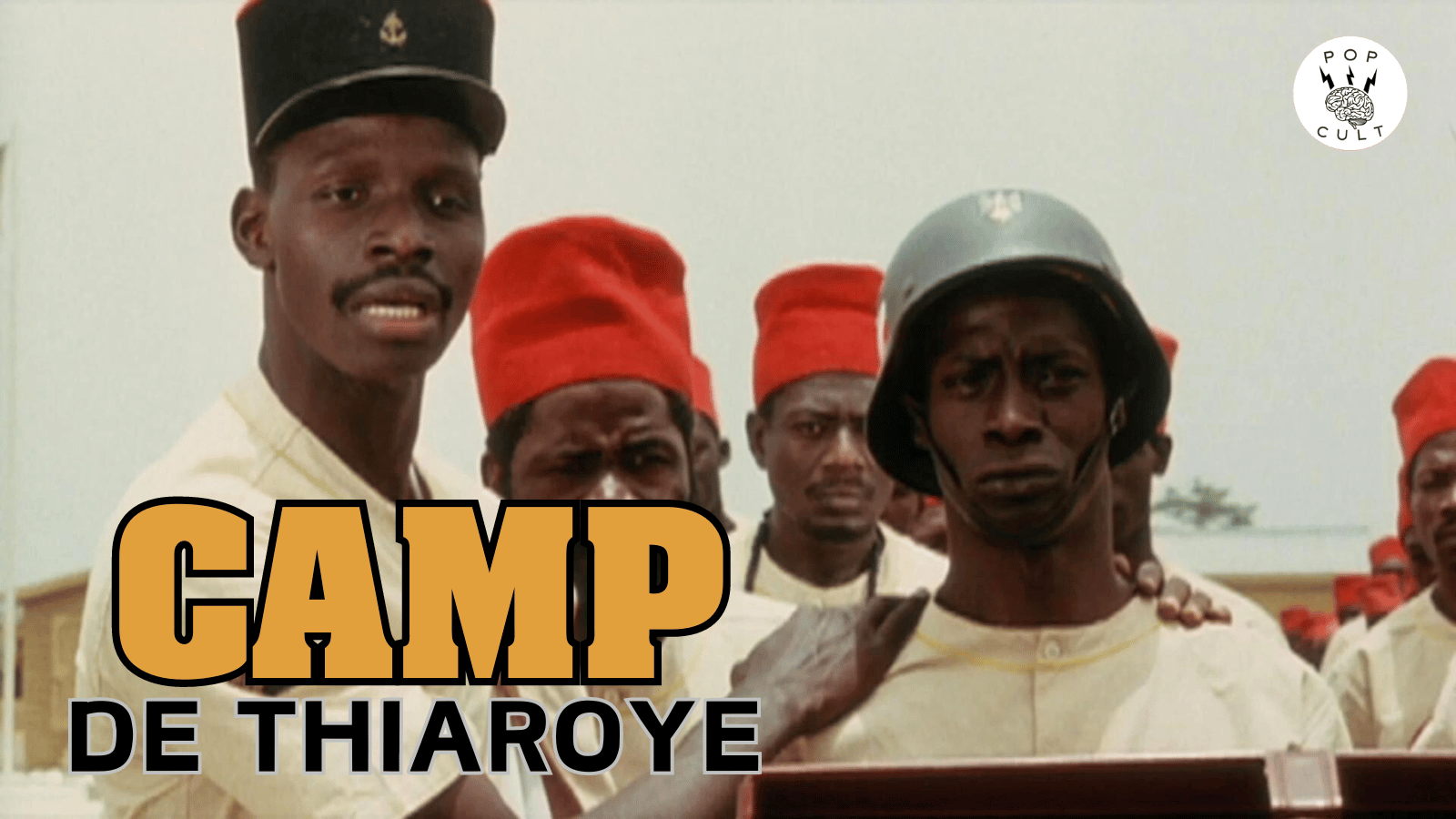
Camp de Thiaroye (1988)
Written and directed by Ousmane Sembene and Thierno Faty Sow
Few things are accepted as fundamental as a person being paid for their labor. However, it was not that long ago that slavery was an open practice in the West and its colonized territories. Don’t get me wrong. Slavery isn’t gone. The specific Transatlantic slave trade was dissolved, yes, but slavery persists to this day. Prison labor is a form of slavery. Debt of all kinds is used to keep people under the boot. Human trafficking is a rampant problem that sees no end in sight. The Thiaroye massacre should come as no surprise then, yet still, it outrages the decent among us.
Approximately 120,000 soldiers from French colonies were captured by the Germans during the Battle of France. The Germans killed 1,500 of them over two months in 1940. The rest were imprisoned in concentration camps in France. Because they were Black men, they were seen as disease vectors by the Nazis and unfit to transport to Germany. D-Day came, and these colonized soldiers were freed by the Allies. The French authorities had already written these men off; they were disposable. Though they had promised to pay these soldiers for the sacrifices they made being conscripted and sent to fight a war in a land that ultimately held no meaning for the Senegalese.
A Senegalese platoon of soldiers in this ironically named Free Army have been brought home but kept in a military encampment that reminds many of them of their conditions under the Germans. Fences lined with barbed wire surround them at all times. Sergeant Diatta is an officer & learned man; he’s married to a white French woman and has a child with her. On the flip side, there’s Pays, a Senegalese man so traumatized by his time in the German camps that he speaks in guttural screams & grunts, constantly exuding a state of anxiety.
The food in this camp is awful, and when they complain, the Black soldiers are told the quality ingredients are reserved for the White officers. This begins the descent, increasing tension between the French and their colonized soldiers. As they are about to be transferred from this camp, the soldiers learn they will only be given half the pay promised at the start of their service. Also, the francs will be converted to Senegalese currency at half the rate, which will be even less. This leads to a stand-off where the French make grand promises only to return in the twilight and massacre the soldiers while they sleep.
Ousmane Sembene and his collaborator on this project, Thierno Faty Sow, a Senegalese documentarian, take their time in developing the deteriorating situation among the soldiers and their personalities & conflicts. This is not a single hivemind but a collection of diverse men who share a unified goal: to be paid for their work & start a life in their homeland. This was denied to them by the French colonizers, whom they had never known a life without. When this event occurred, Senegal was centuries into the occupation, so many had been conditioned to be unable to envision a future without European interference. Despite that, they were very informed of their fundamental human rights and how the sacrifices they made in service of their occupier were ignored entirely.
Pays is the most heartbreaking character in the piece. Early on in the film, when they first arrive at Camp de Thiaroye, Pays walks to the fence line. The camera emphasizes the barbed wire and how he takes in his new surroundings. We understand that this new home reminds him of his time in Buchenwald. It’s a fact many of the other soldiers don’t fully digest. They believe that now that they have returned to Senegal, things will get better. Pays understands that the Nazis who tortured him in Europe don’t look vastly different from the French who oversee his every move now.
To say that we white people in the West are woefully misinformed about the history and treatment of African people and their descendants is a gross understatement. At 42, I still learn about historical events every year that are entirely new to me that detail a horrific genocidal massacre done on Black people at the hands of a white oppressor. There has yet to be a complete reckoning of this history because to face it would mean to take on the responsibility of doing something about it. Instead, among conservatives & liberals alike, you are most likely to hear the response that “it was in the past” or to “move on” despite these same cultural groups holding generations-long grudges over acts that pale in comparison.
Taking in these soldiers’ lives in its full scope is harrowing. These were Senegalese men born into colonization. Their histories & identities were warped and obscured through a French lens their entire lives. Yet still, they understood their inherent dignity. They were forced to fight in a war between imperialists, and they would lose no matter the outcome. Once those who survived came home, somewhere permanently broken like Pays and even those who still had their full faculties were given the indignity of having their pay shredded. They rightfully spoke out against this injustice and were murdered in their sleep for that. I never again want to hear about “honor” from any European; it is a social nicety extended only to their own countrymen. You see what duplicitous snakes they actually are in moments from history like this. Because these men were African, because they were Black, they were seen as deserving of no dignity by those who wanted to pillage their homeland.
The Nazis didn’t invent concentration camps; they were a favorite of the Europeans in Africa. Pays quiet recognition that he’s been moved from one to another is a heartbreaking moment. It’s also appropriate that he is the one most on guard after the French make flowery promises of paying in full. He ascends to the watchtower while the others go to sleep. Pays knows you cannot trust the occupier, and he’s tragically correct. Tanks emerge from the darkness that surrounds the camp. He cannot speak; he can only cry out in pain for his brothers. He tries to save as many as possible, but they are tired and desperately need rest. Pays ends up a victim of ableism, being dismissed as crazy. His trauma is real, but his intense expression of that trauma makes him a non-person in their eyes. The colonized carry on the dirty work of the colonizer and are massacred in the process. That’s how insidious this ideology is.

 PopCult Reviews
One thought on “Movie Review – Camp de Thiaroye”