
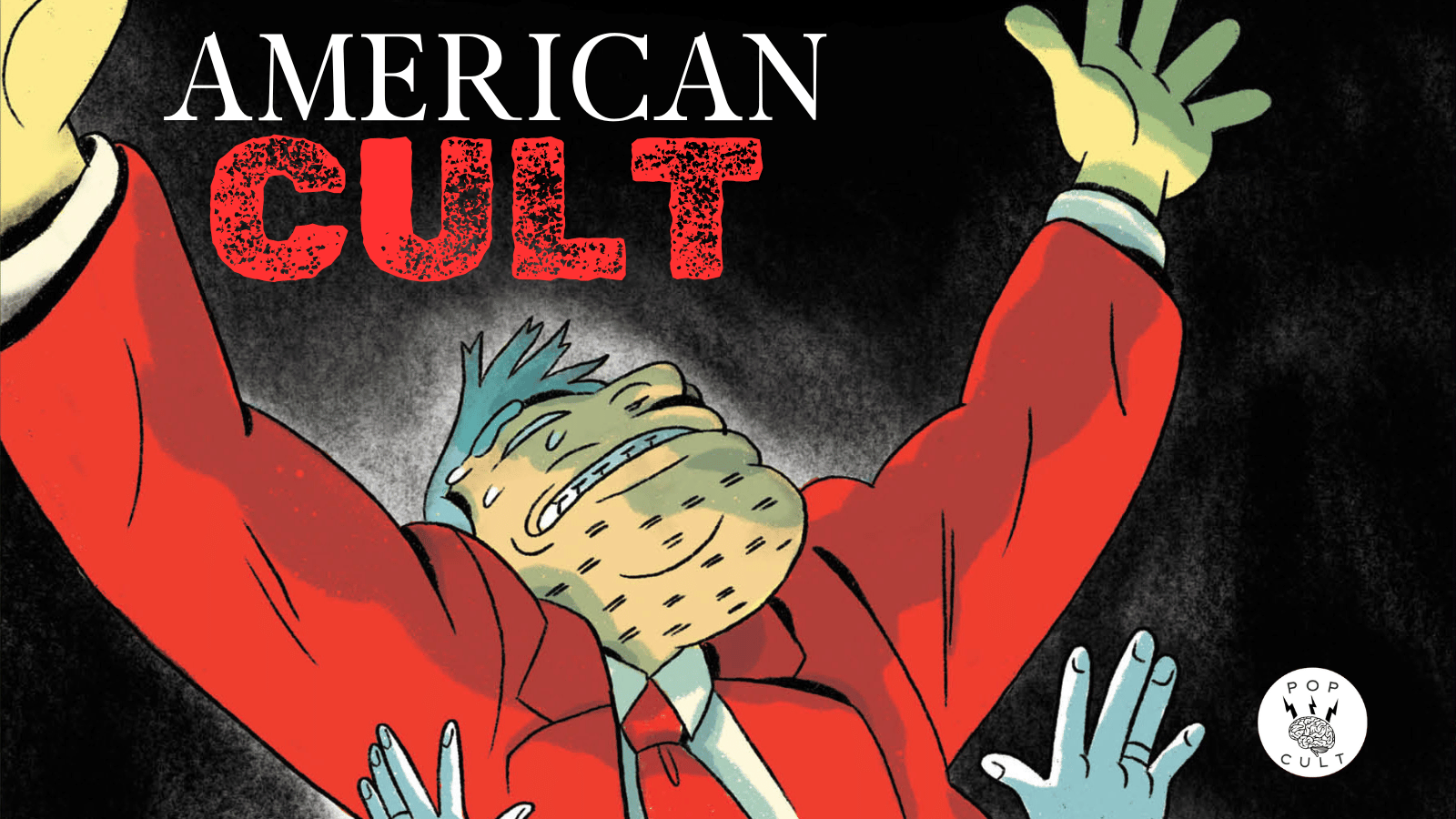
American Cult: A Graphic History of Religious Cults in America from the Colonial Era to Today (2021)
Edited by Robyn Chapman
Written and illustrated by Steve Teare, Emi Gennis, Ellen Lindner, Rose Colon Guerra, Janet Harvey, Jim Rugg, Andrew Greenstone, Lara Antal, Josh Kramer, Mike Dawson, Ryan Carey, Mike Freiheit, Lisa Rosalie Eisenberg, Ben Passmore, Jesse Lambert, Vreni Stollberger, J.T. Yost, Robyn Chapman, Robert Sergel, Lonnie Mahn, and Brian “Box” Brown
The United States has been a place where the religiously fanatical have flocked since its founding. Most people who studied what passes for U.S. history in schools will know about the Puritans and the Salem Witch Hunts. You’ve probably heard of Jonestown and The Heaven’s Gate cult. The Westboro Baptist Church made sure they became infamous to convince themselves they were “beloved” by their demonic image of god. American Cult touches on several of these well-known cults and still delivered surprises to me. It also presents several cults you may not have heard about, with some continuing to have a place in your life through the goods they manufacture to stay afloat. What can’t be argued is that the particular nature of America and Americans makes them susceptible to cults in a way few other societies ever have been.
What American Cult works as is an attempt to understand why this kind of extreme devotional madness can so thoroughly grip many people’s minds. I think it is important to note the ongoing fascination with “true crime,” a genre wherein people voyeuristically listen in on the gruesome details of homicides. Part of true crime’s appeal seems to be a similar questioning of motive: Why did they kill their loved one? which is paralleled with cults: Why would they devote their life to this one person? The search for an answer doesn’t have to take us on a long journey. The answers are literally within every American.
Standing up & putting your hand over your heart for the National Anthem is cult behavior. Making children stand & recite the Pledge of Allegiance every day in schools is cult behavior. You can say these things are not mandated by law, and in the case of the Pledge, there are rulings that a child cannot be compelled to participate. I would push back that our institutions don’t need to impose themselves in this manner when they have merged the concept of “patriotism” and “self” into a singular idea for millions of Americans. Depending on what part of the country you are in, you will probably see someone bullied if they don’t rise for the Anthem at an American football game. I have no doubt primary school-aged children are bullied every day in the U.S. by delusionally zealous children into complying with the Pledge. Having a population inclined toward cultish behavior is quite beneficial to the ruling class.
The graphic novel begins in the colonial era with an apocalypse cult based in Pennsylvania. It was run by Johannes Kelpius, the Monk of Wissahikon. He was born Transylvanian and studied theology, following in his father’s footsteps. He became obsessed with the writing of German mystic Jakob Boheme, which led to a very different interpretation of the Christian Bible than was familiar when he arrived in the colonies. Things like numerology became a big part of the cult, focusing on 40 due to its prevalence in the text. Eventually, the apocalyptic prophecies failed to come true, many followers drifted away, and Kelpius died of tuberculosis, thought to have been worsened by his constant meditation in damp caverns.
Kelpius’s cult establishes something that will be the dominant strain throughout American cults. They can’t simply emerge out of the ether and hope to work. Almost all of them find their footing with the Christian Bible. This is not a coincidence but an aspect of most successful cons. You have to embed it in something that those you hope to rope in already believe. In the United States, whether someone attends church regularly or went when they were a kid, using the Bible as a part of your cult is very lucrative. In more recent years, some successful cults have been able to pivot away from that with charismatic figureheads or leaning into contemporary mythologies like UFOs, but the Bible remains a potent tool.
Almost every cult presented in this book is led by a male figurehead, and all of them develop bizarre rules & restrictions surrounding sex. Louisa May Alcott’s father led a cult, which is detailed in the book. Bronson Alcott’s trajectory began with him publishing a book on the detailed conception of children and then allowing a Black child to join his school. We see him as progressive-minded today for these things, but the Boston elite found it distasteful, and the Alcott family was forced to move into rural environs. Eventually, Louisa May’s mother packed up the kids and left when she saw his religious project involved him not doing much work. The future author of Little Women would never rely on a man for her livelihood for the remainder of her days.
That’s not quite as bad as the Children of God. If you know much about River and Joaquin Phoenix’s upbringing, they were raised in this cult. It was founded in 1968 by a religious con man named David Berg. Things started out reasonably traditionally Christian, but behind the scenes, Berg was sexually molesting and abusing his own children. He began publishing illustrated newsletters titled “The Law of Love,” which encouraged his followers to experiment with incest, statutory rape, and polygamy (almost always male-directed). While some left, others succumbed to the sunk cost fallacy and held out that this twisted ideology would make sense one day.
One of the most disturbing cults I’d never heard of until I read this book was Synanon, which started as a drug rehab program. It started out seemingly progressive – a live-in treatment facility open to people of all racial & ethnic backgrounds. Its founder, Chuck Dietrich, coined many bumper sticker phrases like “Today is the first day of the rest of your life.” He broke off from AlAnon and wanted to use his own strategies. The worst of these was The Game, where addicts would sit in a circle and hurl insults and accusations (true or untrue) at each other for hours. Eventually, he started controlling how his followers dressed and made them shave their heads to resemble him. Dietrich brought property where he established even more restrictive rules, like taking babies away from their mothers as soon as they were born and raising them at a separate site where they received no physical affection and were made to play The Game as young as four years old.
Synanon was hailed at the time because, to the media and public, they were seen as a revolutionary new way of dealing with addiction. Its headquarters hosted sober parties that celebrities like Leonard Nimoy, Jane Fonda, and Ray Bradbury would attend. Labor organizer Cesar Chavez loved the Game and brought the practice into his movement. Time and Life magazines published glowing features about the program. Columbia Pictures released a film titled “Synanon” that told a remarkable recovery story, with Dietrich serving as an official advisor on the project. Eventually, some people started running away, and things like mandatory abortions and vasectomies were made standard in the group. Once the news media began covering the dark side, Dietrich lashed out. The FBI would eventually raid the compound and shut things down. The practice of sending troubled teens to brutal boot camps, which continues to this day, originated with Dietrich and Synanon.
The Book holds many more disturbing stories about real cults. It’s a harrowing but fantastic read that illuminates a part of our history that media institutions like to brush over. It’s essential, though, because the moment you believe you can’t be taken in by a cult is when you are guaranteed to be susceptible. I consider myself an intelligent, well-read, thoughtful, and ultimately stubborn. It would be easy to think I was immune to someone with intense charisma. The key is not to sit comfortably in thinking you are above it all but to live with vigilance & skepticism to anything that suggests a solution to your problems lies in total devotion to a single person. Our inclination to seek a savior has led to the status of the U.S., where Liberals sit around waiting to vote for a manager, not understanding such vital concepts as freedom and liberty cannot be attained by a “hero” but by the actions of all of us. The Conservatives/Fascists have entirely fallen into a cult mindset, and it seems the whole of the States.

 PopCult Reviews
One thought on “Comic Book Review – American Cult”