So the former student who was staying with us is now with another parent, not the one who was causing the horrible neglect in her life. We were sad to see her go, but we had an absolutely fantastic week having her in our home. While she was here, we watched a couple of horror films: Hereditary and Us. She loved both of them, pointing out the psychological aspects of each that made them a cut above a jumpscare movie. We are still in touch, and I am sure there are many more movies in our future.
The Apartment (1960) Written by Billy Wilder and I. A. L. Diamond Directed by Billy Wilder
As we come to the end of this Billy Wilder retrospective, we get to what might be the most excellent comedy of his later years. It’s so interesting how we began with the dark & bleak Double Indemnity and come to this comedy-drama. That isn’t to say that The Apartment lacks maturity. It’s a finely developed and sensitive picture about adults and the complexity of relationships & sex. The two films have more in common than what you might think at first glance as they are both about the darker side of adult relationships, one more outlandish than the other.
In my personal life, I am in the midst of something that could potentially change my life forever. As I’ve mentioned in previous posts, I’m an elementary school teacher and have been doing this for fourteen years of my life. I have tried to stay in contact or reconnect with individual students over the years, and this last week one of those relationships has become something more significant. A young woman I taught in 3rd & 4th grade and is now a junior in high school contacted my wife. Her home life has been negatively affected by emotional abuse and neglect to the point that Child Services became involved. Since Monday, she and her younger brother have been living with us. Our goal at this point is to get this extended to longer if not permanent custody. Even though I’ve taught for so long, we have no children of our own, and I’ve always leaned more towards having a childfree home. After this week, I simply don’t want our life to have not have these kids in it. It’s also made me think about the films I would want to share with them if they do stay.
One aspect of Iranian society that Westerners seem to not fully understand is the rights of women inside that country. If you read up about contemporary Iran, there is an ongoing dialogue about extending the rights of women and activists pushing this. Once again, our myopic American viewpoint continues to judge others as a hivemind conglomeration of thought. Cue Abbas Kiarostami, who always seeks to blur the lines between reality and fiction, making his films strange narrative documentaries. We also have the dawn of digital video, which allows filmmakers to make movies fast and find ways to place the camera where film cameras could not go.
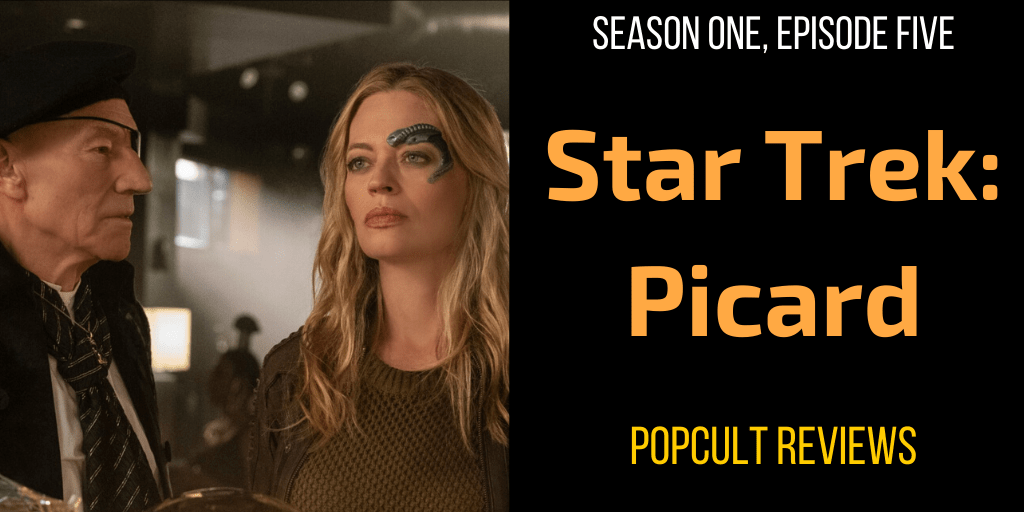
Star Trek: Picard (CBS All Access) Season One, Episode Five – “Stardust City Rag” Written by Kirsten Beyer Directed by Jonathan Frakes
Now, this is an episode I enjoyed. After setting the pieces up on the board for the first month of the series, Picard finally has our characters getting into dangerous situations and dealing with both interpersonal and external conflict. I wonder how someone utterly unfamiliar with Voyager would understand Seven of Nine’s part in this story. I think you need at least a rudimentary understanding of who she is and what happened to her on that series. Of all the episodes we’ve gotten thus far, I think this one does the best in blending contemporary elements with the world of the Federation.
We Need To Talk About Kevin (2011) Written by Lynne Ramsay & Rory Stewart Kinnear Directed by Lynne Ramsay
Who do we blame when something terrible happens? It’s becoming fairly common in the United States for there to multiple school shootings every year. When this happens, there is a strong innate human need to place the blame on someone. Parents are typically the focus of the public’s ire. In the case of Sandy Hook Elementary, the mother of the shooter literally gave him the gun thinking it could be a hobby to help with his mental illness. I’m sure if you are reading this outside of the United States, you are thinking, “Why would you give someone with mental illness a high powered killing machine?” and you are right to question it.
The Color of Paradise (2000) Written & Directed by Majid Majidi
One thing I came into this film series was wondering what influence the Islamic religion would have on these films. Iran is a type of presidential democracy with a co-equal (or maybe more powerful) theocratic branch. The revolution in 1979 had a significant influence on pushing Islam to the forefront of every aspect of Iranian life. As a Westerner, my perspective on Islam has been shaped by a strong Judeo-Christian bias in my youth. Now that I’m an adult, I can see with much greater clarity and have a better understanding of religion and dogma.
Some Like It Hot (1959) Written by Billy Wilder & I. A. L. Diamond Directed by Billy Wilder
Billy Wilder, as previously established, authored or at least refined many of the comedic subgenres in mainstream American cinema. Some Like It Hot takes classic tropes from authors like Shakespeare with the protagonist in disguise as another gender who is in love with another character and modernized them. Some Like It Hot is set in the 1920s, but its story is a classical one seen through the 1960s’ eyes while reflecting back across literature. There are definitely some problematic issues when viewed through the context of our modern gender progressive era. Additionally, it is a genuinely entertaining and influential piece of film.
One of my favorite novels of the last few years has been A Head Full of Ghosts by Paul Tremblay. It’s told with such a deft touch, never careening into camp and walking that sort of ambiguous line that reminds me of The Exorcist. The finale is particularly chilling as it manages to recontextualize the unreliable narrator who has been telling us their story. Since 2018 there has been lots of movement in pre-production on a film adaptation, and this week we finally got a leading actress cast.
The Seven Year Itch (1955) Written by Billy Wilder and George Axelrod Directed by Billy Wilder
Watching these later works by Billy Wilder feels like if David Fincher went from doing dark thriller movies to working exclusively in light comedies. They aren’t bad, but they are definitely not as strong as the earlier work. The Seven Year Itch is another film based on a stage play, and it feels like through the first half. It’s slow, and the main character thinks aloud constantly, which gives away the stagey-ness of the production. Throughout the film, I kept thinking of Mad Men and how this picture was pretty dated with its portrayal of marriage.