Movie Review – Krisha

Krisha (2015, dir. Trey Edward Shults)

krisha

Krisha is a story that could have easily fallen into cliche and melodrama, but the deft hand of first-time feature film director Trey Edward Shults elevates this story and these characters into something transcendent and horrifically beautiful. Krisha is a woman in her early 60s, reunited with her estranged family after an undetermined number of years. It’s Thanksgiving, so her sister Robyn has the house full of siblings, spouses, and children. A niece has just become a new mother, and the baby is a the center of everyone’s attention. Later in the day, even the matriarch is brought over from her nursing home. As most people can relate, there is a tension underlying the joyful reunions happening, particularly on the part of Krisha. She has suffered from substance abuse, and individual family members are not sure of what condition she is in at the moment.

Krisha’s arrival sets the stage for the tone of the film. The camera hovers above and floats down, following her as she goes to the wrong house and then drags her suitcase across the lawn to the right one. In both the aesthetics and details of the performance we are being informed about who this person is. Krisha is overly cheerful but a mess in her action, disorganized and overwhelmed. It’s explained she lives by herself, but it’s more than that. Her sister Robyn raised her son, Trey and the circumstances are never brought to light. It is apparently tied to Krisha’s substance abuse, though.

We’ve all likely met Krisha, either as a member of our family or a passing acquaintance. She just can’t seem to get her life in order, was probably labeled a “free spirit” when she was younger but now it’s worn on the people around her. Some small gestures and details develop her character without the film ever becoming expository. When she is finally reunited with her mother, the elder woman has a strange aside about her mother. She states that the great-grandmother was a gorgeous woman who always seemed ashamed of where she was from. This causes Krisha to step back in shock, and the implication is that this story may be very similar to Krisha’s experience and what led her away from her family.

Shults is powerfully skilled for such a young filmmaker, and it is evident he has influences from the American canon. The tension built with a wandering camera and taught percussion feels at home next to Paul Thomas Anderson’s Punch-Drunk Love. The naturalistic exchanges between family members and the overlapping family conversations is very much a stroke of Robert Altman across the screen. Star Krisha Fairchild is undoubtedly making reference to the great Gena Rowlands (A Woman Under the Influence, Gloria) in her performance. This film is a beautiful homage to the great directors of the American independent cinema.

One aspect of the film that may not be readily apparent while watching it is the personal connection it has to the director and actors. This is Shults’ real family. Krisha is his aunt, Robyn is his mom, the home is his mother’s house. In interviews, he’s explained that the central character is not based on any one person but a combination of troubled family members. His father was estranged from the family and died as a result of substance abuse a few years ago. The explosive incidents in the film are drawn from a cousin’s outburst at a family gathering, a cousin who ended their life months later.

Krisha is a tragic and powerful film. It is one of those works of film that embeds itself under your skin. Shults’ next work It Comes At Night looks to be a powerful exploration of human relationships in the face of horror. I am excited to see Shults expand his craft and continue developing this talent of building tension and atmosphere.

Book Review – The Worst Kind of Monster: Stories

The Worst Kind of Monster: Stories by Elias Witherow (Thought Catalog, 2016)

worst kindElias Witherow is an author who I first encountered through their presence in the NoSleep community on Reddit. His stories induce such a true fear in me I felt myself drawn to his work time and time again. In this collection, he takes many of those NoSleep stories, along with new material and delivers a very powerful short story collection. As I read through the collection, I felt like I was reading, not the masterpiece of a writer, but the first seeds planted on the path to that great work of horror. Here are my thoughts on some of the stories in The Worst Kind of Monster.

“The Tall Dog” – This is what I would call the most typical NoSleep story in the collection. Grieving widower dealing with his daughter waking up in the middle of the night complaining of the “tall dog” that comes in her room whispering horrible things in her ear. The father doubts but as the story progresses, he becomes convinced something is in his home. This opening story highlights a significant element of Witherow’s work: endings where protagonists don’t die but have to endure an even worse state of living.

“The House in the Field” – I first heard this story on the NoSleep Podcast, and it prompted me to buy this collection. A narrator tells a story from their youth about seeing an old farmhouse in a field on her family’s property. No one else can see the house, until one day another person can. The monster revealed behind this house is unlike any I have read about in horror. The description will give you chills. All I will say is that gigantic monsters usually don’t scare me, but this one is both hidden and massive at the same time.

“There’s Something Wrong With Dad” – Domestic horror is a common trope in Witherow’s work (see Tommy Taffy), and this is very bare bones version. Dad comes home from work, starts to behave increasingly erratic, hell on his poor family begins. And like Tommy Taffy, the violence visited upon the family is not directly by a family member. The perpetrator is a metaphor. Or, another way to read the story is that the fantastic “happy” ending is all delusion of a child being killed by their father.

“Feed the Pig” – The most surreal and fantastic of the stories in a pretty surreal collection. Our protagonist has hung himself and ended up in a bizarre afterlife. What I love here is the mythology building. Apparently, God felt the need to create a place for suicides separate from Hell. So he created the Black Farm and put The Pig in charge. He eventually forgot that he created this place, so The Pig attempted to become a god and shape a world in his image. The narrator’s journey through the world is obscured so we get the slightest of glimpses of a place that seems like Clive Barker would be right at home. This story also features a genuinely hopeful ending.

“horse/8min” – Another very NoSleep type of story. The narrator finds a strange DVD on his front step. The video contained on it shows a murky obscured scene. Nothing overtly horrific. Then the creeping fear and dread set in. This is a great mood piece. It’s short and to the point while leaving us hanging in the final moments.

A Different Kind of Monster spans some horror genres, but the common thread is “a fate worse than death.” No one gets out that easy, especially those who have done wrong by their fellow man. The worse a person is, the worse they will get in the end.

The Revisit – Starship Troopers

The Revisit is a place for me to rewatch films I love but haven’t seen in years or films that didn’t click with me the first time. Through The Revisit, I reevaluate these movies and compare my original thoughts on them to how they feel in this more recent viewing.

Starship Troopers (1997, dir. Paul Verhoeven)

STARSHIP-SPTI-20.tif

The late 1990s was a weird time in cinema. On the independent side of things, you had some interesting work produced, while on the studio big budget side there was some awful dreck being churned out. Take for instance 1997; the year Starship Troopers came out. Boogie Nights, L.A. Confidential, The Fifth Element, and Lost Highway were released, All films that I would argue are vital pieces of work from their respective creators. Simultaneously you have Batman and Robin, The Lost World, George of the Jungle, Spawn, and Spiceworld the Movie. All films that I would argue represents studio executives shaping films. In the middle of all this, you have Starship Troopers.

I think the first time I saw Starship Troopers was my first night in the dorm my freshman year of college. It was 1999, and the guy across the hall had the VHS tape so as about six of us were hanging out we decided to watch it. I hated this movie. I hadn’t done my deep dive into films yet, but I remember being very turned off by the cheesy nature of the movie and god awful acting. It was the ending especially that created friction with me. Something felt off and wrong about it. In my naivete, I discounted it as simply a bad film and have never actually revisited it til now. I was making up my list of movies to review for The Revisit and came across Starship Troopers. I had read things since 1999 that hinted at the film not being what it appears to be the surface level. It’s believed now that the audience has grossly misinterpreted the picture. So, I decided to give it a shot.

Paul Verhoeven, despite having a career directing films since the 1960s to the present. He was responsible for Elle, a film that came out last year starring Isabelle Huppert that has garnered significant praise (though I have not yet seen it). But for most of us that came of age in the 1980s and 90s, he feels like a director of that period. That is when he was hitting his peak as a big-budget director. Robocop. Total Recall, Basic Instinct. Showgirls, The Hollow Man. Those are the films his name is commonly associated with, but to understand Starship Troopers, you must understand some other things about Verhoeven.

He was born in the Netherlands in 1938, showing up just as the Third Reich began their march across Europe. War struck incredibly close to Verhoeven’s family. They lived near an installation for V1 and V2 rocket launchers so Allied forces bombed the area. His parents were almost killed. However, Verhoeven says as a child he viewed war as an adventure.Verhoeven states that he remembers the sight of charred corpses vividly and hollowed out buildings, but admits because his parents lived and he was not Jewish he doesn’t hold the trauma that others do. That sense of war as an exciting adventure existing alongside horrific violence and mutilation is a the core of Starship Troopers.

The opening frames of Starship Troopers are unquestioningly satirical. This is the first of many newsreels that will be used as an ingenious exposition device throughout the film. Each time one of these appears an unseen newsreader will click through related links to the videos we see unfolding before us. The important thing this first video establishes is the dichotomy between being a Citizen and a civilian. In the world of Starship Troopers, Citizenship is only obtained after serving in the armed forces. With Citizenship comes the right to vote as well as other rights that Americans and other developed nations currently hold as inalienable. One recruit gives her reason for joining is that one day she would like to have kids and getting a license to do so is much easier when you are a Citizen. We’re in a world where even nature is under the boot heel of the government. But for being such a dictatorial society we never truly see our protagonists question it.

Only one character speaks up against Rico, the protagonist, joining up with the Federal Service. Rico’s father has a brief moment where he chastises his son for choosing that path post-graduation. Later, both of Rico’s parents are killed by the enemy bugs who strike Earth with an asteroid launched from their system. The message of the film’s world is that Rico’s parents were wrong to question him and now he is emboldened to bring the wrath of humanity down on the bugs truly.

It is funny to think back at my reaction and the reactions of critics and audiences to Starship Troopers. From the start of the film, it is glaringly obvious what Verhoeven is saying about this world. Michael Ironside plays first the high school teacher to and commanding officer of Rico. In his Social Studies class at the opening of the film he states the following:

“This year we explored the failure of democracy. How our social scientists brought our world to the brink of chaos. We talked about the veterans, how they took control and established the stability that has lasted for generations since. You know these facts, but have I taught you anything of value this year? […] Why are only citizens allowed to vote? […] Something given has no value. When you vote, you are exercising political authority, you’re using force. And force my friends is violence. The supreme authority from which all other authorities are derived.”

A few moments later the teacher has this exchange:

Dizzy: My mother always told me that violence doesn’t solve anything.
Jean Rasczak: Really? I wonder what the city founders of Hiroshima would have to say about that.
[to Carmen]Jean Rasczak: You.
Carmen: They wouldn’t say anything. Hiroshima was destroyed.
Jean Rasczak: Correct. Naked force has resolved more conflicts throughout history than any other factor. The contrary opinion, that violence doesn’t solve anything, is wishful thinking at its worst. People who forget that always die.

Starship Troopers is not glorifying fascism or even oblivious to its presence in the film. The entire work is a direct commentary on fascism, and even further I believe the film is meant to be a piece of meta-fiction. We are watching a propaganda film made in the universe of Starship Troopers that is aimed at impressionable high school students.

The cast of “high school” students are apparently grown, adults. The acting is stiff and artificial. The music is overly bombastic. The characters exhibit no signs of empathy. Both the male and female lead lose people the film tells us they are romantically linked to, but at the end, they march off triumphantly. The meaningless nature of human death is highlighted even further in the newsreel segments. A cow is devoured by one of the Arachnid bugs and is censored. In the end, the brain bug has a tool inserted into her apparently vaginal mouth, and that is censored. One thing that is never censored throughout the film and the newsreels are human casualties. This is because one purpose of this propaganda is to desensitize the young viewers to the sight of human death. No one is ever truly grieved; the protagonist never appears to suffer any emotional or long-term physical consequences. As the teacher said, violence is the best way to solve every problem.

There is so much more I could write about Starship Troopers and eventually, I may. One big takeaway I did have was thinking about games inspired by material like Troopers and that they completely miss the point. Verhoeven did not intend for people to be inspired to run around and shoot bugs. I personally think this is one of the most transgressive studio films ever produced. He wanted us to be appalled through our laughter at the absurdity of fascist thought. He wants us to see what the characters fail to see, that this way of thinking leaves you blind to understanding the horrible implications of your actions on the world around you.

Movie Review – Deadpool

Deadpool (2016, dir. Tim Miller)

DeadpoolShocked

Deadpool is a tricky film to write about because the movie comments on itself and its genre so incessantly that it is likely making the criticisms a reviewer would pen before they do so. That doesn’t mean it is a movie that is critic-proof by any means. Deadpool is an incredibly self-aware movie, and when any piece of media exhibits that much meta-commentary, it begins to walk a thin line between remarkably clever and self-sabotaging. I believe Deadpool walks that line to its finale but never actually falls to either side, leaving it an adequate movie.

Wade Wilson aka Deadpool has always stood as a fourth wall breaking antidote to the soap operatic X-Men corner of comic books. I can’t say he’s a character I have ever enjoyed solo and I’ve made a couple attempts to get into runs that have a lot of critical praise. When I have enjoyed Deadpool, it has been in the context of a team setting, with ‘Pool as a background commenter. I loved Rick Remender’s X-Force run which had Deadpool in a very crucial but not main character role. It was a just enough self-awareness to help balance a storyline that was bleak and dealt with heavy themes. His role in the current Uncanny Avengers comic book is also fun, and he’s balanced with a team that is taking matters seriously.

In regards to the film, I deeply appreciated that it jumped into the action and let the origin unfold in small chapters along the way. It pushes the expectations of what comic book super movies can be with gratuitous violence, sex, and language. Just like science fiction, super movies should be a wider swath of tones and content than they currently are. However, for as much winking and nudging Deadpool does it doesn’t break any real conventions of the super movie formula.

The opening credits announce the cast as a list of formulaic stereotypes (A CGI character, British bad guy, comic relief sidekick) and then go on to feature those specific characters. Not once does the script attempt to surprise us with something new. Yes, there are tons of sight gags, but they don’t stretch the genre conventions in any way. We still have a tragic origin, torn from the woman he loves, a hero out for vengeance, a showdown with the villain that puts the woman in peril, and a big ‘splosion at the end. I was particularly let down by the pat happy ending that I felt kicked the legs out from underneath the filmmakers’ entire tongue in cheek approach.

Deadpool also has significant tonal problems. It wants to be nihilistic yet then endearing about its lead and his love interest. But I found myself not caring about the two of them because the film had done such an efficient job of pushing this “give no shits” mentality. There is an underlying desperation in the humor of the movie; it is another case of the filmmakers’ attempting to underplay their concern yet at the same time obnoxiously yelling their jokes in our faces. It ends up feeling very forced and when the jokes don’t hit they are the cringiest of cringe. What I expected and truly wanted out of Deadpool was for them to push the boundaries of the character’s anarchy even further. Shoehorning in a cliche lost love plot just doesn’t work for this character. It works for a movie studio that, while allowing the director and screenwriters to joke about cliches, still demands these cliches are present in the film because of how well they test in focus groups.

What Deadpool should have been and could have been was a middle finger to the entire supers genre. It stands as a missed chance to openly parody and mock the very cliches it goes on to present with a knowing shrug. There were so many instances where fourth wall breaking could have gone further, where genre play could have been more outlandish, so many times the decision could have been made to tear the structure of the movie apart to make more than just a slightly sillier comic book movie but into something amazingly hilarious and destructive.

Movie Review – Hunt for the Wilderpeople

Hunt for the Wilderpeople (2016, dir. Taika Waititi)

1200 (1)

Ricky Baker is a young boy in New Zealand who has reached the end of the foster system. This brings him to a farm on the edge of Bush and into the lives of Bella and her husband, Hec. Bella immediately takes a shine to Ricky while Hec remains on the sides and grumpy. Events transpire that force Ricky and Hec to endure each other in the dark reaches of the Bush. The public believes Hec has kidnapped Ricky and manhunt ensues that forces the two to become family, yet not lose their respective abilities to irritate the other.

Director Taika Waititi gathered a significant amount of interest with his mockumentary What We Do In Shadows, chronicling the days of a quartet of vampire roommates in Wellington, NZ. Previously he had helmed smaller independent films Eagle vs. Shark and Boy. Throughout his work, he is a constant collaborator with Jemaine Clement of Flight of the Conchords fame. And, if you are familiar with that comedy duo then the style of humor present in Waititi’s work is strongly comparable. The jokes are very silly, very dry and everything holds a sense of endearment for the oddball quirks of the characters.

Wilderpeople is a film of many techniques and themes, and it could have easily fallen apart trying to carry so much weight. Miraculously, it balances all of these elements and presents a story that is both rife with pathos but never maudlin. There are sweeping epic helicopter shots of characters traversing the wild, yet the movie maintains a very intimate, independent tone. Characters are absolutely silly and absurd, but we never lose sight of the humanity the film is in touch with. In many ways, Wilderpeople feels like a movie you would have stumbled across in the 1980s, an emotional and smart cult classic that would grow in popularity year after year.

What so many American studio comedies get wrong is the idea that improv equals funny now. This is easily seen in the dozens of comedies released that have hours of deleted scenes where actors merely riff. Wilderpeople delivers its seemingly improvised comedy so effortlessly that the craftsmanship of writer-director Watiti is an invisible hand. And that is the hallmark of not just a good, but a great director, that they recede into the film and that its voice is singular yet diverse. The film has an overall sense of style and humor, but each character speaks in a way that is true to them. The supporting cast are remarkable, and my particular favorite is Rachel House (you probably heard her as the grandmother in Moana) as Paula, the absurd social worker who seems to simultaneously love and hate Ricky.

This picture has me excited to see what Waititi does with Thor: Ragnarok. Marvel Studios made headlines when Edgar Wright dropped out of Ant-Man citing the studio’s desire to focus on the franchise connections between its movies than allowing diverse voices to emerge out of the work. From the visuals I’ve seen, it appears this next Thor movie will be very different from its predecessor’s. My greatest hope is that Waititi’s sensibilities for voice and humor are allowed to come through.

Book Club Announcement – March 2017: Bird Box

Bird Box (2014, Josh Malerman, Ecco)

51bin6sub1l-_sx321_bo1204203200_

The apocalypse came and with it was the poisoning of a sense: sight. Whatever is out there, when you gaze upon it, you become a violent raging killer. Malorie, a single mother in Detroit, lives with her windows boarded up and her children blindfolded on a daily basis. They must learn to grow their other senses because what they might see beyond the door of their home could destroy them.

“Malerman excels at building tension with his eerie descriptions of blindfolded characters groping their way through a world of the dead, aware that something inhuman and beyond comprehension might be observing them, or possibly standing right in front of them. Malorie’s trek down the river is frightening, but even more unsettling is the constant awareness of the characters’ helplessness in both timelines, and the possible price of any attempt to alleviate it: Every time they hear a strange noise, encounter an unnervingly unfamiliar object, or feel what might be a gentle touch from an unseen, alien creature, they’re tempted to lift their blindfolds and settle their fears—possibly at the cost of their sanity, and then their lives” – The AV Club.

Movie Review – Girl Asleep

Girl Asleep (2016, dir. Rosemary Myers)

girlasleep

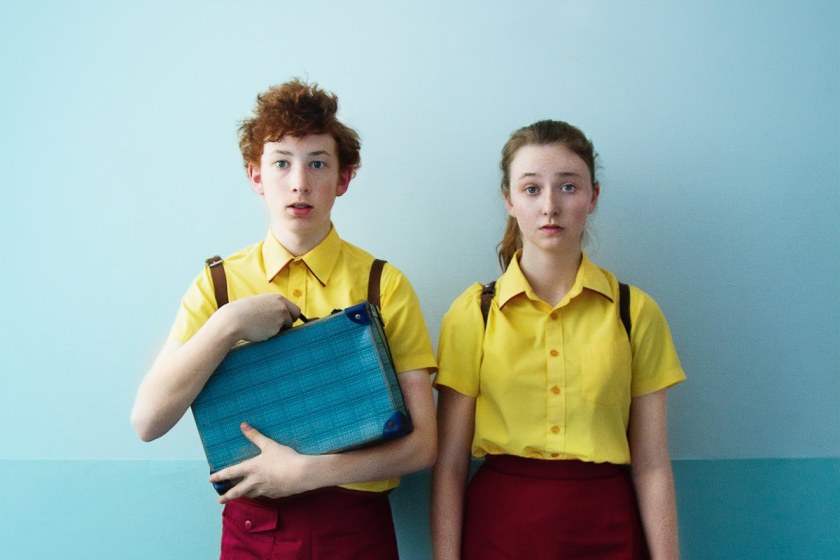
14-year-old Greta Driscoll has just moved to a new town and like many adolescents is having trouble fitting in. She makes friends with the kind, but awkward Elliott and quick enemies with Jade and her mean girl crew. Things get worse when her mother decides to invite everyone at her school to Greta’s 15th birthday party. Greta is crushed after being humiliated by Jade during the party and ends up slipping away into a magical world just beyond the woods of her home.

From the first moments, there is a strong Wes Anderson vibe to the aesthetics of the picture. But I knew there was something slightly different I couldn’t put my finger on. After a few more scenes it was apparent, this film has much more overt warmth than your typical Anderson fare. Don’t get me wrong, I love Wes Anderson, but I have rarely had a strong emotional reaction to any of his films. Girl Asleep has all the quirky characters and the style, but with a sense of life and energy, Anderson’s films intentionally refrain from. It is not a perfect movie, though, and while characters are warm and full of life, they are still painted in broad strokes.

Another piece of inspiration appears to the British television series The Mighty Boosh. The magical land of the woods and its inhabitants are presented in the style of a young child’s imagination. One central figure is clad in a banana yellow rain slicker with pink and blue crayon tones across their masked face. There’s a high similarity to the costumes seen in Moonrise Kingdom but with zanier, more fantastic visual accents.

The performances in Girl Asleep are excellent and capture the specific traits each character needs to present. Greta (Bethany Whitmore) is vulnerable and fierce, able to balance the many facets of her character going through a period of tremendous growth and change. Elliot (Harrison Feldman) is one of those actors who makes performance look easy. He is effortless and funny, awkward and genuinely charming. Greta’s parents, played by originators of the story on stage, Matthew Whittet, and Amber McMahon, are entirely exaggerated parents without being unsympathetic.

Girl Asleep won’t be my favorite film of the year, but it does take a very well-worn genre, coming of age, and adds some freshness to it. The magical aspects of the story make it something different. The performances, particularly Bethany Whitmore, are very charming and endearing. I could see this being an excellent film to introduce a neophyte film geek to art cinema and non-American films.

Movie Review – Dredd

Dredd (2012, dir. Peter Travis)

Judge Dredd Still Image

Mega-City One is an urban sprawl filled with crime and poverty. Enforcing the rule of law in this crumbling post-apocalyptic landscape as the Judges, a natural combination of judge-jury-executioner. The most famous of these brutal lawmen is Judge Dredd, an enigmatic figure who is more of a justice-dispensing machine than a human being. He’s charged with testing rookie Judge Anderson on what ends up being one of his toughest days. The call comes from the large tenement Peach Trees that there has been a triple homicide. The Judges quickly learn these murders are tied to a threat is plaguing all of Mega-City One.

Most movie-savvy people are aware of Sylvester Stallone’s 1995 trash fire of a film, Judge Dredd. His adaptation of the popular UK comic book made a ton of errors that betrayed the spirit of the source material. He rarely wore his Judge’s helmet after the opening action sequence, and the script gave a lot of backstory to the Judge. These story elements are pretty antithetical to the nature of the comic book. The film ended up highlighting the more absurd elements and has become a perennial entry of the Worst Films of All Time lists. So, this reboot had a tremendously bad reputation to overcome.

Dredd manages to stay very faithful to the source material, even the more fantastic parts while delivering a character-centered story. Apparently inspired by The Raid, Dredd focuses its action within the walls of Peach Trees, a housing complex that provides plenty of set pieces and a palpable tension. When you have nowhere to run from the forces out to kill you, it will inevitably bring out more ferocious elements in humans. With a character like Judge Dredd, he is absolutely in his environment with this scenario. To say Dredd is a violent film is an understatement. This is a gory, visceral, kill fest. Yet, it tells a compelling story, particularly through Judge Anderson.

In the same way, Max in the Mad Max films is merely a cipher through which to tell a story, writer Alex Garland fashions Dredd into the same type of protagonist. It is entirely unimportant what Dredd was like as a child or the what the moment was that he forfeited his humanity to become an arbiter of justice. Instead, he is the vessel that helps tell the story of Judge Anderson’s loss of innocence. Actor Karl Urban takes on a role many actors would shirk at, the majority of his face covered with the entire film. But Urban, a fan of the comic, expressed that he understood why keeping Dredd’s identity obscured was essential to the character. Olivia Thirlby as Anderson first appears as your typical by the book, nervous rookie but by the end of the film, she is able to hold onto her humanity while acknowledging the violence that people can be pushed towards. The exact route her character will take within the fiction of the film is left for us to wonder about.

Lena Headey plays the movie’s central antagonist, Mama. I was absolutely thrilled with the choices she made in playing this crime boss villain. The minute she spoke I knew I was going to love her performance because she chose to be quiet in the way she spoke. This wasn’t the godawful Eddie Redmayne in Jupiter Rising sort of calm quiet then SHOUTING performance. We learned a lot about Mama through how she communicated. In the environment where she grew up, words carried little currency. For people in places like Peach Trees, a threat is worth nothing if there isn’t a physical punishment behind it. Mama makes sure to inflict brutal horrors on people who cross her. Even in the final showdown between Dredd and Mama we have her maintaining a very calm, quiet hate in her voice.

Dredd succeeds and undoing and helping the audience forget everything about the 90s attempt to adapt the property. It is definitely elevated above your average comic book fare as well. It has tons of social commentary cleverly embedded in amongst the brutal violence. It is definitely one of those futures that, while extreme and different than our modern day, still feels unsettlingly familiar and far too close to our lifetimes.

TV Review – The O.A.

The OA (Netflix, Season 1, created by Brit Marling and Zal Batmanglij)

585987beaca0591e008b4c65-1920

A young woman is caught on camera jumping off a bridge. She doesn’t die, and an older couple watching television coverage recognize the woman as their daughter, Prairie who has been missing for seven years. The biggest shock comes when they find she has been miraculously cured of her blindness. Prairie hunkers down in the unfinished subdivision her parents live in while meeting an eclectic assortment of young people and a high school teacher. This group becomes her greatest friends, the ones whom she confides the secret of what happened to her in the last seven years and why she no longer goes by Prairie but The O.A.

For the majority of the pilot episode, I wasn’t too keen on the series. Nothing stuck out as particularly interesting. There was a slightly intriguing mystery in The O.A. losing her blindness, but all the pieces felt very spread apart, and nothing was a great hook. Then the last fifteen minutes started. Out of nowhere a powerful musical score swells, the credits begin (which I hadn’t noticed did not play at the beginning of the episode), and we found ourselves in a place very different than where we started. This is where I was hooked. As The O.A. tells her story, it was pretty impossible for me not to become engrossed.

The series hits a note very reminiscent of Lost. Lost was and is one of my favorite television shows of all time. When I reflect back on the first season, I have realized that the mysteries (polar bears, smoke monster, the hatch) while intriguing were not the primary factor that caused me to come back week after week. The relationships between the characters and how they were revealed one piece at a time are what still resonates with me. So many Lost clones got that part wrong and overloaded their pilots with too many bits of strangeness and mystery hooks. They forgot that characters are the core of a good piece of fiction.

The O.A. is a show that is nothing without its characters and their relationships. The obvious center of the show is The O.A. and Homer, two captives who have been to the same places beyond most people’s understanding. Their compressed seven-year relationship is full of trials and struggles and an ending full of beautiful frustration, yet the hope that the story is not over yet. My personal favorite relationship was that of Steve and Betty. Steve begins the show as an incredibly unlikable teenage prick. He is a drug dealer, obsessed with the physical over the spiritual, quick to anger and jealousy. He assaults a fellow student for no particularly good reason. He is someone we should naturally root against.

Betty is a teacher at the local high school who has suffered a loss. None of her colleagues actually know about it, but through a series of circumstance, she and The O.A. meet to talk about Steve. Our protagonist’s supernatural empathy allows her to see beyond the strict authoritarian teacher and seek to understand. The way Betty changes and the way she sees Steve by the end of the series is beautiful. Playing Betty is the remarkable Phyllis Smith, who you may know as Phyllis from The Office. She is one of those wonderful character actors who endear themselves to you. It is easy for an actress like Ms. Smith to be typecast after a long run on a popular network series. But in The O.A. she breaks away from our preconceived notions. She portrays a regular person process a tremendous grief and coming out on the other end an incredibly empowered woman.

This is not a show for everyone. Another similarity it has with Lost is that it features a nebulous type of supernatural. Science and new age philosophy weave together to present ideas that ludicrous so to enjoy the show you have to suspend your disbelief. I would argue that the character development being done is heightened by the more fantastic elements of the show, so they are valuable parts of the overall piece. The O.A. ends on a cliffhanger and a second season has been announced. I am intensely eager to see where the series goes next because it spent its first eight episodes flipping my expectations around at every turn.

Masks: Refugees AP Part 2


masks

We kicked off our first full session of Masks: Refugees with our characters in their personal lives. Sparks has offered up her home/spaceship to Monster, who is actually homeless. Sparks, whose entire race has been inspired by pop culture from the 1980s, as her ship taking the form of a suburban home complete with a white picket fence and a tree house in the backyard. However, her ship is parked in the middle of a gentrified urban

dad
D.A.D, the artificial intelligence on Sparks’ ship.

block, so it sticks out like a sore thumb, saves the hypno-inducer that causes people to just glance over it most of the time. Her onboard A.I. is named D.A.D. and appears as Greg Evigan from My Two Dads. His personality is modeled after cool sitcom dads from the 1980s though he shifts into a stoic mode when emergencies occur. Her race is known as the Duranians. We also established that Sparks’ native language would destroy human brains, so human minds have evolved to mishear the words and replace them with common nouns. Her mother’s name is heard as Queen Diamond when spoken, for example.


Since the first game session, I’ve built out the Duranians a bit more. Their homeworld is Rio Prime, and Sparks’ dad holds the title of The Grand LeBon. A cultural revolution was occurring at the same time transmissions of Earth culture from the 1980s were intercepted. As a result, their society now looks like America circa 1985.

Across town, Akil Batin aka Shatterstorm is helping his father, Professor Batin at Halcyon University with a shipment that has arrived from their home country of Obrijan. Despite the ongoing civil war there, the Professor was able to obtain a block of a pure element with a strong effect on gravitons. The Professor believes this element may be tied to his family’s abilities to manipulate gravity. Mishaps occur when he attempts to break a chunk off, and Akil begins to hear a voice emanating from the massive monolith, beckoning him to come closer and embrace his power. Akil holds back and gets a great excuse to leave when an alien vessel arrives at Sparks’ place demanding her return to Rio Prime.


garryn_bek
Risk Imsit, intergalactic bounty hunter

Ajax is in the middle of class when the alien invasion lockdown drill occurs. He skips school despite protestations from Vice Principal Quesada and meets up with the Refugees. The alien ship, an obvious junker, unloads some refurbished strike drones who blast open the door of Sparks’ house. Monster plows into them creating an opportunity for Sparks to reconfigure an old block cell phone into a one use teleporter that pops the team onto the ship. Shatterstorm and Ajax use their powers to crush and destroy mecha-tentacles that emerge from the walls to bind them while Sparks and Monster find the engine room and disconnect the fusion core. The Refugees storm the control deck and find bounty hunter Risk Imsit there, having taken up the reward offered by The Grand LeBon to bring his daughter back. Sparks uses her pheromone powers to enamor Imsit and convince him to leave Earth.


However, The Order arrives this time with The Badge (shield bearer), Shooting Star (speedster), and Mr. Fantasmo (occultist) in their line up. They immediately screw up the headway the Refugees made with Imsit and demand that he must be turned over to AEGIS. Sparks tries to use a holographic communication with her mother citing intergalactic treaties about extradition, but The Badge counters with a more masterful knowledge of the law. Sparks is obviously pissed and Imsit, still in his charmed stupor is taken off.

Monster and Ajax head off to their regular volunteering at a clinic/shelter run by Dr. Green. Dr. Green is an Iraq war vet who had her skin turned green from toxic chemical agents. No powers, just green skin. She is incredibly empathic and focuses on helping vets, runaway kids, and battered women at her shelter. She counsels Ajax about defying authority at school and how he needs to think about doing what will lead him to a better future, not returning to who he used to be. The calm is interrupted by a special announcement about anti-mutant legislation proposed by Halcyon’s own Senator Victor Hu. Senator Hu speaks from the floor of the Senate explaining that self-made metahumans are real heroes, while mutants born from accidents or mistakes of nature need to be curtailed and more aggressively vetted. The legislation gives BanCon Industries a contract to construct Mutant Evaluation Centers to temporarily displace America’s mutant populations til they can be registered and partnered with a metahuman mentor. Monster is so angry she destroys the television.


the-order-american-steel
American Steel, one of The Order

Sparks is fuming from The Badge when DAD suddenly announces that a Duranian artifact has been detected within the city. His triangulation leads her to Professor Batin’s office and the block of what is now being called Ifritium. Shatterstorm has a rough interaction with his sister Amira who is reaching a boiling point about being boxed out of the family’s heritage. He and Ajax debate with Sparks about how to deal with the element. They settle on contacting The Order for help, despite Sparks’ protestations. Arriving from their floating base, The Panopticon, The Order (this time Shooting Star, Mr. Fantasmo, and American Steel) want to crack the Ifritium open. Ajax tussles with American Steel and, despite no one ever have before, wrests Steel’s Atomic Sledgehammer from his hands. The Order is visibly pissed and announced they will be taking the Ifritium with them. Shatterstorm thinks it’s for the best despite the fact that how angry his father will be and Ajax is in supreme cocky mode.