Game Review – Heavy Rain


Heavy Rain (2010, Quantic Dream, PS3 only)

In 1999, I was very excited about the release of Shenmue on the Dreamcast console. The conceit behind that game was you were in a completely open world where you could interact with everything. That had me very interested, while the game’s action mechanic didn’t seem as appealing. For instance, if you were in a footchase with someone, buttons would flash on screen and you would have a couple seconds to press the corresponding one on your controller. At the time, I found that style of play a little stressful and not very fun. Heavy Rain doesn’t have the freedom and openness, but makes that initially frustrating game play riveting.


In an unnamed metropolitan city, we find ourselves in the shoes of architect Ethan Mars, a family man with a beautiful wife and two sons. His happy life turns to tragedy when his eldest, Jason is hit by a car and put in a coma. Ethan’s marriage falls apart and he ends up sharing custody of his younger son, Shaun. A second horrific tragedy strikes when Shaun disappears and appears to be the victim of the Origami Killer, a criminal plaguing the city. You will simultaneously play as Madison Paige; a journalist who befriends Ethan, Norman Jayden; an FBI agent using experimental VR tech to investigate the Origami Killer, and Scott Shelby; an ex-cop turned crusading P.I. out to avenge the victims of the Origami Killer. The game is divided into alternating chapters as these characters pursue their individual paths, while occasionally crossing over.

What stands out most about Heavy Rain over traditional video games, is that you can’t die in a way that ends the game. Instead, characters can be wounded and make mistakes that branch the story in different directions. Near the end of the game the possibility of death becomes a major reality, but up until then you constantly feel progression even if you aren’t making headway in the case. For example, Shelby and his partner visit a local repair shop where things go bad. Before they can leave you (as Shelby) have to wipe your prints from everything you touched in the store. If you fail to wipe down everything the story branches into you being brought in for questioning. This type of game play comes across as a more complex version of a Choose Your Own Adventure.

There are other types of play moments that involve a limited amount of time. Fights with characters consist of a button flashing on the screen, which you must hit within seconds or you miss a block or the chance to throw a punch of your own. Occasionally you end up in a grapple with a foe which requires you to quickly tap a button to break through. Other moments involve the physically movement of the controller to emulate a character’s on screen action. There’s also certain challenges that involve your hands contorting unnaturally on the controller as your avatar on screen must contort to escape being bound or restrained.

Heavy Rain manages to deliver an interactive cinematic story that will pull you deep into the drama. From the excitement of footchases and fights, to the shocking reveal of the Origami Killer’s identity I was completely absorbed.

Film Review – The Heartbreak Kid (1972)


The Heartbreak Kid (1972, dir. Elaine May)
Starring Charles Grodin, Cybil Shephard, Jeannie Berlin, Eddie Albert

If you have only seen the 2008 remake of this film, then you are missing out. Where the Ben Stiller-driven version works to make you actively dislike his bride and everything is wrapped up in a nice neat package, Elaine May’s film makes Lenny a completely narcissistic prick. The result is a very dark, clever comedy that ends on a note of ambiguity. Unlike most comedies, this will remain in your head for a long time, thinking about what the result of this character’s choices will be. This is also the best performance from Charles Grodin I have ever seen, turning his smarmy asshole persona up to high.

Lenny (Grodin) meets and quickly ends up engaged and married to Lila (Berlin). As they head south for a honeymoon in Miami, Lenny grows quickly repulsed by her. Upon arriving, he meets young WASP Kelly (Shephard) and quickly falls for her. He begins coming up with absurd excuses to leave the hotel room as Lila treats a nasty sunburn. Lenny eventually decides he’s going to divorce Lila and follow Kelly back to Minnesota where they will start a life together. There’s just the matter of her father, who happens to hate Lenny.

In the remake Ben Stiller’s Lenny is a lovable schlub who has crazy best friends who help him out. In that film you’re made to want him to leave his horrible wife and be with the sunny, charming new girl. Here we get a much more realistic story, any one that would do this to their wife on their honeymoon is a pretty cruel, selfish person. There’s an implication that Lenny only ends up married to Lila because she won’t have sex before marriage, and after their wedding night, he begins actively looking for reasons to hate her. Grodin plays Lenny as a sociopath, a man who constantly lies to worm his way in and out of situations. He manages to balance his performance by making Lenny a likable guy too, the audience is meant to be conflicted. The same can be said about both female leads, too. Lila is a sweet, loving woman but also kind of obnoxious. Kelly is incredibly beautiful, but also very fickle and cold.

I haven’t seen too many Neil Simon films (he scripted this one), but I got the feeling this is not his typical type of writing. Director May has brought her comedy chops to the table, coming out of Second City and her comedy partnership with Mike Nichols. The humor here is nuanced and dry, and its perfect for this story. There’s no slapstick set pieces, just characters engaged in conversation that has the tempo of perfectly normal speech, but when we pay attention to what they are saying, we see just how screwed up they (particularly Lenny) are. Interestingly enough, this picture makes a great companion piece to Nichols’ own The Graduate, both about the ennui experienced by immature men.

Director in Focus: Werner Herzog – Signs of Life

Signs of Life (1968)

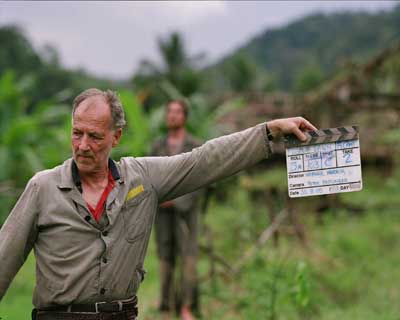
Before we jump into this first film, some background on Werner Herzog. Werner Stipetic was born in Munich in 1942 in a house that was destroyed by Allied bombing a couple years later. The family migrated to the Alps, where the father left the family, causing 12 year old Werner to take his grandmother’s last name, Herzog. Herzog showed a rebellious streak early on, when asked to sing in front of his class and refused. Till he was 18, as an act of defiance, he never sang, listened to music, or learned to play a single instrument. At the age of 14, Herzog encountered a simple encyclopedia entry on film making that infused the desire in him to create. He stole a 35mm camera from the Munich Film School in act he defends as a necessity for him to continue living. Herzog has been married three times, something you would expect based on his volatile personality. One more interesting note about the director, during a 2006 interview with BBC critic Mark Kermode, Herzog was shot by an unknown person with an air rifle. He seemed to brush it off and attempted to continue with the interview, despite Kermode freaking out over the incident.

Signs of Life is a war film without war, instead the soldiers are driven to madness through sheer boredom. Set on Crete during World War II, the film finds Strosek and two fellow German officers put in charge of a munitions depot nestled in ancient ruins. The main character here is the most blank canvas, while his compatriots, Becker and Maynard have more fully fleshed personalities. Strosek has ended up engaged to local Greek girl, Nora in a relationship that seems founded in their mutual lack of anything interesting to do. The film is narrated in a stoic, travelogue style that tempers the picture up until its last twenty minutes when Strosek becomes completely unhinged.

Signs of Life is cited as an inspiration for Kubrick’s The Shining, however I saw a lot of similarities with Polanksi’s Knife in the Water. Both films are of the same era and place their characters in a lifeless, desolate landscape where they are psychologically pushed to extremes. As we’ll see with the majority of Herzog’s work, he is incredibly interested in the psyche of men who have a break with reality and the role nature plays in that. Strosek is positioned against his desert setting as minuscule, he is insignificant, hence his position defending a post that is no danger of being attacked. Signs of Life is about humanity’s innate need to believe they are useful. When we feel that our society has no use for us it will inevitable cause a break from the social expectations and mores.

Up next: Even Dwarfs Started Small

Director in Focus: John Cassavetes – Big Trouble


Big Trouble (1986)
Starring Alan Arkin, Peter Falk, Beverly D’Angelo, Robert Stack, Charles Durning

Big Trouble feels like a defeat. It’s the defeat of an extremely independent personality who made films that he wanted to make, not caring about building a large audience. With Big Trouble, Cassavetes gives in to the studios and it seems poetically appropriate that he died after making this film. The picture is an unofficial follow up to Arthur Hiller’s The In-Laws (1979), and Hiller was originally attached to direct until fights with the studio caused him to leave. Bring in Cassavetes (such a bizarre choice, but I suspect his friendship with Peter Falk played a part) and you have a film that is shredded so brutally in the editing bay by the studio that any humor that might have been gleaned from its piss poor script is lost.

Leonard Hoffman (Arkin) is an insurance salesman with triplets who have all been accepted to the music program at Yale. This has sent him into a breakdown as he tries to gather the funds to get his boys into school. Cue the sultry Blanche (D’Angelo), a woman looking to purchased an insurance policy for her ailing husband, Steve (Falk). She confides in Leonard that she and Steve plan to have him die at home via pills, the stage it to look like an accidentally death. They need Leonard’s help so that Blanche will be provided for in the wake of Steve’s demise. Leonard agrees, especially when he will receive a cut of the policy after it is paid out. However, once the scheme is hatched Leonard learns the truth about this deal and painfully unfunny hijinks ensue.

You can feel Cassavetes on set, tossing the script aside and encouraging Falk and Arkin to improve a lot of their scenes together, but it never works. Whether is was a lack of rehearsal before filming or studio suits of set hindering Cassavetes. It also reeks of multiple script re-writes with the film shifting tone and plot about three times along the way. Characters show up and vanish, and a terrorism subplot is thrown in at the end as a deus ex machina. The film is purportedly a farce, but seems to only be in the loosest sense. I get the feeling the people behind the film believed all you needed for a farce was an incoherent plot. The film chokes and sputters to its weak conclusion.

Looking back at the work of John Cassavetes, I can’t say he is a director whose work I consistently enjoy. I respect the hell out of his very personal and independent style of filmmaking, but honestly I am relieved to be done with his films. There were lots of strong highlights for me: Shadows, A Woman Under the Influence, Love Streams. However, to get into his movies you need an incredibly strong sense of patience, but for many of them you will be rewarded if you stick with the picture. I am also in awe of Gena Rowlands, who is now one of my favorite actresses. She was unafraid to look “un-ladylike” and uses her age as a plus. I can’t see a woman in her twenties or thirties delivering the level of performance that Rowlands brought.

Director in Focus: Werner Herzog

So, Mr. Werner Herzog will be the focus of my next spotlight, and has enough films that he will probably take up the rest of the year. Below is the list of films I’ll be watching, in order:

Signs of Life
Even Dwarfs Started Small
Fate Morgana
Land of Silence and Darkness
Aguirre, Wrath of God
The Enigma of Kaspar Hauser
Heart of Glass
Woyzeck
Fitzcarraldo
Cobra Verde
Scream of Stone
Lessons of Darkness
Little Dieter Needs to Fly
My Best Fiend
Invincible
Wheel of Time
The White Diamond
The Wild Blue Yonder
Rescue Dawn
Encounters at the End of the World

Film Review – The Social Network


The Social Network (2010, dir. David Fincher)
Starring Jesse Eisenberg, Andrew Garfield, Justin Timberlake, Armie Hammer, Max Minghella, Rashida Jones, Brenda Song

In the middle of David Fincher’s latest film a character sums up the current technology driven economy by saying this current generation creates jobs for themselves. In the past supply-demand was the dominating force; the people wanted something, then someone provided it. Now, we have products that are given to us and we are conditioned to need and want them. Facebook as one example. No one ever needed Facebook, but by preying on some very primitive psychological compulsions, it has become an addictive force. The Social Network rewinds back before there was Farmville or Poking or Mafia Wars, and focuses on the collegiate roots of Facebook. Here we see at its core the entire idea came from the exclusivity of Harvard’s Final Clubs.

The more intimate moments of the film are fictionalized and used to reveal aspects of Mark Zuckerberg’s personality, but the litigations that frame the film are very real. Its 2003, and Mark is a sophomore at Harvard, a kid from a middle class family who is studying computer science. Mark and his best friend, Eduardo are a clever pair, with Eduardo able to get money together whenever needed. After being spurned by a female student due to his emotionally stilted personality, Mark strikes back via Livejournal and quickly cobbled together webpage that has students rate Harvard girls against each other. The site gets him placed on academic probation and the attention of the Winklevoss twins, monied legacies who want to make a Harvard dating site. Mark listens to their idea, turns it down, then rebuilds it in his own images. As the site spreads beyond the walls of Harvard and even across the pond, Mark becomes more obsessed with becoming the very elite he resented in school.

This film succeeds on a number of factors: Aaron Sorkin’s amazing script, David Fincher’s perfect direction and editing, and Trent Reznor and Atticus Ross’ score. In a movie that is mostly people sitting around talking, you think it would drag, but the craft around everything creates tension and drama in every moment. I find myself liking every *other* Fincher film. Meh on The Game, loved Se7en, Fight Club doesn’t hold up, Zodiac is underrated, Benjamin Button is a yawn, and now The Social Network. I think Fincher works best with a script that isn’t trying to be anything huge. These small stories are given scope through the way he makes films. The score is also one of the strongest elements of the film, in particular a rowing competition scene that involves tilt-shift camera work and tight editing that is a short film unto itself.

The Social Network reminded me a lot of films like All the President’s Men. That film was made only a couple years after the events of Watergate, and it is a much stronger film about the Nixon administration than it would have been if they made it in 1990. The Social Network is very much about this moment and mindset in time. The young men behind Facebook were following the capitalist fundamentalism they were born into in the 1980s. They were never too concerned about the money behind the site, it merely worked to fund the venture, but they desired the power that came with it. There’s a moment in the film, Mark and Eduardo have just had sex with a couple girls in a club bathroom, they stand outside grinning and revealing their adolescent nature. Eduardo turns to Mark, smiling, and says “We have groupies”. Counter this with an image at the end with Mark obsessively refreshing a Facebook page and its clear this mindset is a destructive one.

Director in Focus: John Cassavetes – Love Streams


Love Streams (1984)
Starring John Cassavetes, Gena Rowlands, Seymour Cassel

As I’ve talked about before, Cassavetes focuses a lot on the psychological fragility of his characters. Often his main characters feel like Kerouac characters, they live life to self-destructive extremes, exploding like roman candles and inevitably fizzling when they can’t handle things. In Love Streams, he spends the first half of the film exploring two separate figures that fit this bill, then bringing them together for the last sad, heartbreaking hour. And, as with so many of his films, Gena Rowlands is the force of nature that powers things forward. Cassavetes also holds his own and looks much older than his appearance in 1977’s Opening Night. While I don’t know the details, it wouldn’t surprise me if this was when his health problems were starting.

Robert (Cassavetes) is an alcoholic writer who lives in a labrynthine mansion in the Hollywood Hills, populated with a parade of call girls. He finds women to obsess about, charms them, then reveals his true nature of drunken hopelessness and they leave. Sarah (Rowlands) is a women going through a divorce and trying to cling desperately to her teenage daughter, while her ex (Cassel) argues that Sarah’s history of mental illness makes her unfit to be the primary custody holder. These two figures come together and share an interesting connection that leads to a sad and rather bleak ending.

The film does wander as Cassavetes is wont to do, though it wanders into some interesting places. In particular is a segement of the film devoted to Robert’s meeting his son, now about 10 years old, and being pressured to take him for the weekend. Being the horrible figure that he is, he frightens the kid off with the bevy of women lounging around his house, chases the kid down and brings him back, then gets him drunk. Impulsively, Robert decides they are going to Vegas, where he drops the boy off to go carousing with women. When he shows up the next morning, the boy is weeping and saying he wants to go back to his mother, which pisses off the drunken Robert off and he berates the boy for not being a man. This is very interesting as we have seen what a grown up child Robert is for the majority of the film. Love Streams stands as one of the more captivating works by this director, with some strong artistic moments.

Next: we finish things up with the slapstick comedy Big Trouble (not the Tim Allen movie!)

Director in Focus: John Cassavetes – Gloria


Gloria (1980)
Starring Gena Rowlands, Buck Henry, Julie Carmen, John Adames

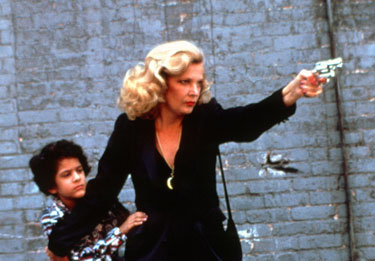
One of the few aspects of Cassavetes’ films that kept his work from falling into self-indulgent tripe was his muse and wife, Gena Rowlands. Rowlands regularly grounds the films she appears in with performances that challenge typical ideas about women. She’s just one of those actresses that its a joy to sit back and watch work. And here, in Gloria, she was given a larger commercial venue to display her skill. And it was thanks to Rowlands that Cassavetes directed this film in the first place. Cassavetes has originally just written the screenplay and sold it to Columbia Pictures, after which Rowlands was cast in the lead. She highly recommended her husband to direct his own script and he was hired.

The story follows the titular Gloria (Rowlands), a woman who grew up around mob types and has the hard exterior to match. She ends up in the custody of young boy (Adames) whose mob accountant father and family are murdered. Gloria uses her mob connections to try and negotiate she and the boy’s freedom from the endless pursuits. Along the way, Gloria clashes with her young charge, leaves him to fend for himself, but eventually chases back after him. Like the majority of Cassavetes’ movies, this is about a character, not necessarily the plot.

Unlike most of Cassavetes movies, this doesn’t have the ploddingly dull feel to it. The pace is very well done and some thing is always happening. Add to that Rowlands, who gives great performances every time and you have a film that actually had a bit of a commercial life. In fact, the premise of this film would be the basis for Luc Besson’s Leon about a decade later.What enjoyed most about this picture was, how the premise could easily have been maudlin crap, but Rowlands never lets her character fall for any “maternal instinct” nonsense. She has enjoyed a life unmarried without a children, and just because she is with this young boy she isn’t going to start treating him like her son. Even in the film’s conclusion we’re shown that she will not change who she is and is going to talk to this child like an adult.

Next up: Love Streams

Director in Focus: New Director Poll

As we come to a close on the films of John Cassavetes, its that time to decide a new director to spotlight. The choices are from below:

Claude Chabrol (1930 – 2010)

He was never quite a renowned as his peers Truffat and Godard, but Chabrol produced a respectable body of film that was part of the French New Wave. Chabrol eventually transitioned out of the experimental New Wave and adopted a more Hitchcock-esque style, which would become his trademark.

Sydney Pollack (1934 – 2008)

Pollack was a filmmaker who came into his own during the 1970s by adopting a simultaneously radical and commercial approach to cinema. While many directors fought to remain independent, Pollack worked to make thoughtful and intelligent films that could be sold to the mainstream.
Films I’ve Seen: They Shoot Horses Don’t They, Three Days of the Condor, Sketches of Frank Gehry


Robert Bresson (1901- 1999)

Bresson was an intense French filmmaker who worked to strain performances from his actors. The actor would be made to do multiple takes until Bresson saw the “acting” fade away and more layers of reality come out. His work was strongly influenced by his Catholic upbringing. Bresson was also heavily influenced by a year spent in a POW camp during WWII. His work features characters who are victims of a culture that has accepted or ignored injustices.

Werner Herzog (1942 – present)

The insane German director who has a singular vision he compromises for no one.
Films I’ve Seen: Stroszek, Nosferatu the Vampyre, Bad Lieutenant: Port of Call New Orleans, My Son My Son What Have Ye Done


Leave comments as to what director you think I should focus on next.

TV Viewing Habits for September

Here’s what’s on the docket for television for me during this month.

Sunday
Mad Men (AMC)
Delocated (Adult Swim)
Childrens Hospital (Adult Swim)
The Venture Brothers (Adult Swim)
Boardwalk Empire (HBO)
Eastbound and Down (HBO)
Bored to Death (HBO)
Dexter (Showtime)

Monday
Inbetweeners (BBC)
The Event (NBC)

Tuesday
Ideal (BBC)
Running Wilde (Fox)

Thursday
Community (NBC)
30 Rock (NBC)
It’s Always Sunny (FX)

Friday
Real Time with Bill Maher (HBO)