

A journey through the dreams of a (dying?) artist trying to grapple with his cultural identity. Two young lovers on an endless cannibalistic road trip through America.
Continue reading “PopCult Podcast – Bardo/Bones and All”A journey through the dreams of a (dying?) artist trying to grapple with his cultural identity. Two young lovers on an endless cannibalistic road trip through America.
Continue reading “PopCult Podcast – Bardo/Bones and All”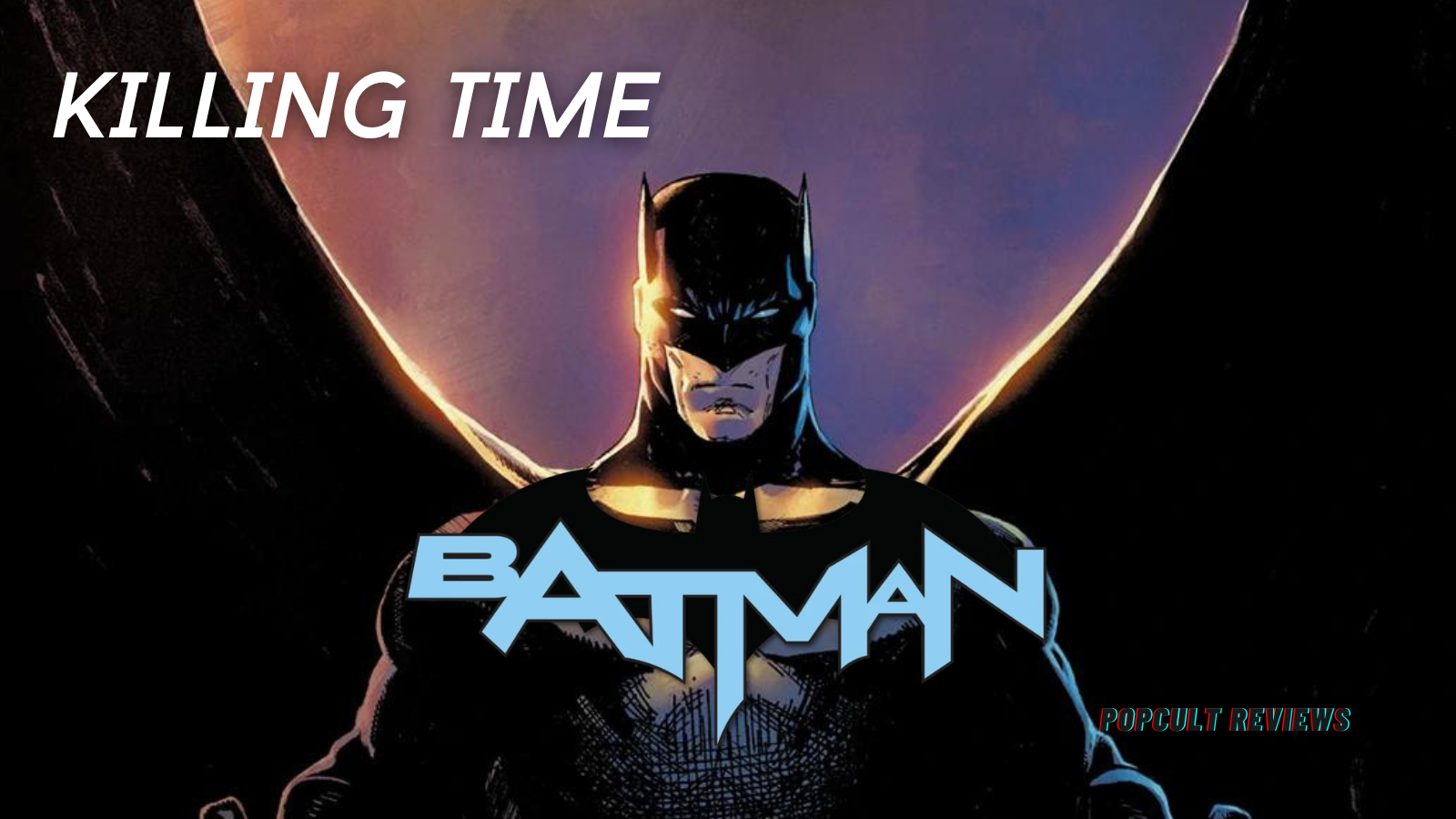
Batman: Killing Time (2022)
Reprints Batman: Killing Time #1-6
Written by Tom King
Art by David Marquez
I don’t think this is a controversial opinion, but here goes: The most interesting thing about the Batman mythos is his villains. If you had to compare Batman to another superhero based on everything surrounding the character, Spider-Man is your best bet. Yet, Spider-Man is a character often more interesting than many of his rogues while still having some fascinating baddies in the mix. Batman, on the other hand, is a one-note character for me; of course, it all depends on who is writing. I’m always eager to see what the villains are up to, though, and this mini-series by Tom King focuses mainly on two of them, a pair we don’t see too often: The Riddler and Catwoman.
Continue reading “Comic Book Review – Batman: Killing Time”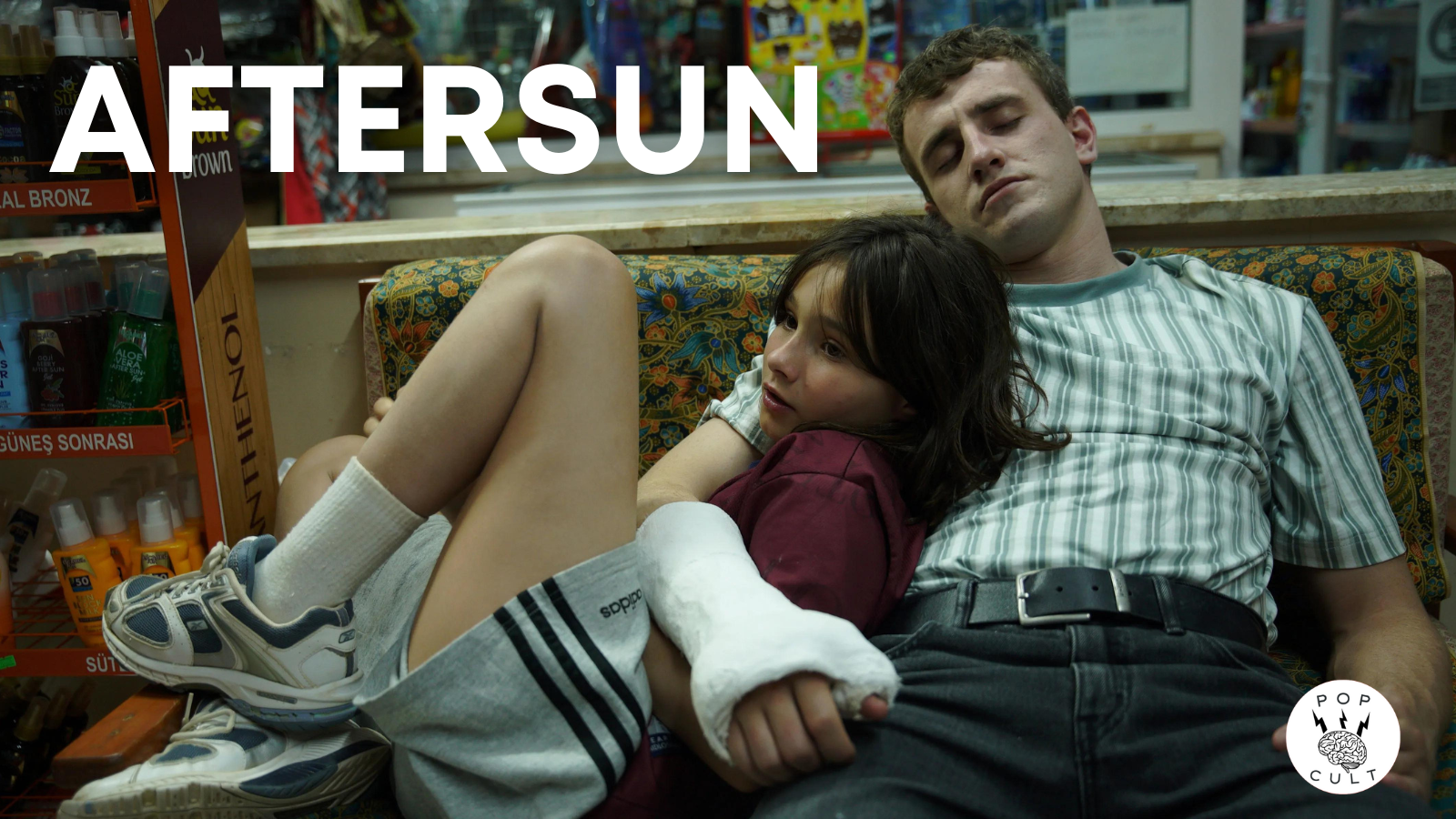
Aftersun (2022)
Written & Directed by Charlotte Wells
Many people will never know their parents as real human beings. That could be because the parent puts up emotional barriers to hide their vulnerabilities. The parent may not want to overwhelm the child with adult emotions they are far too young to understand, which continues into their child’s adulthood. Or the parent could simply not respect the child as a person and think they couldn’t understand. I know for me, my parents will always be enigmas. Estranged from my dad for 14 years and counting and my mom for 3+. It’s better for me that way; they are both broken, toxic people who I don’t think will ever seek out the help they need. I don’t have the bandwidth to do it for them, and honestly, I was neglected in so many ways, so a relationship with them is nothing I desire. But, unfortunately, that’s how life can sometimes be. We don’t choose to be born, and we don’t choose who we are born to. Some people have parents that are grounded, open, and loving. Others have parents who are distant, closed off, and confusing. All we can do is try to make sense of the cards we are dealt.
Continue reading “Movie Review – Aftersun”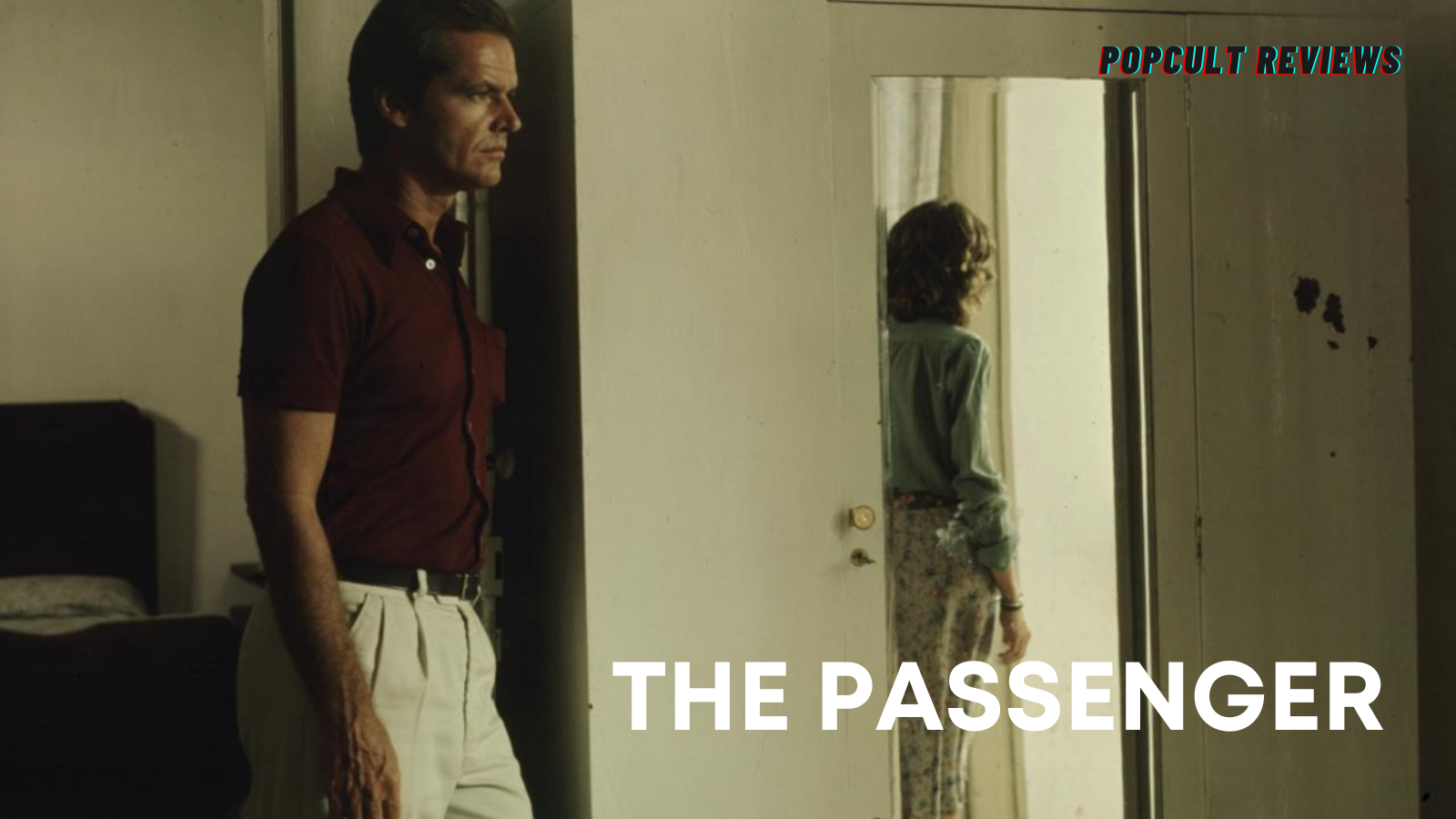
The Passenger (1975)
Written by Mark Peploe, Michelangelo Antonioni, and Peter Wollen
Directed by Michelangelo Antonioni
This will be our last stop with the filmmaker Michelangelo Antonioni, though he kept making films. It will have to be another time when we look at his work outside his four Monica Vitti films and his MGM trilogy, but we’re ending on an exceptionally high note. Financially this was not a success, and in the aftermath, Jack Nicholson was sold the rights after a dispute between him and MGM over another picture in development. The Passenger would sit on a shelf for three decades after its initial release, a film thought to be lost and only recaptured by going back to read the old reviews. In 2006, it finally received a DVD release and could be rediscovered by a new generation. It’s a dense picture, full of Antonioni’s common themes but lots of new settings and political ideas surfacing. The result is another enigmatic film that performs a kind of hypnosis on the viewer, a picture that is multiple things at once and deserving of considerable examination.
Continue reading “Movie Review – The Passenger”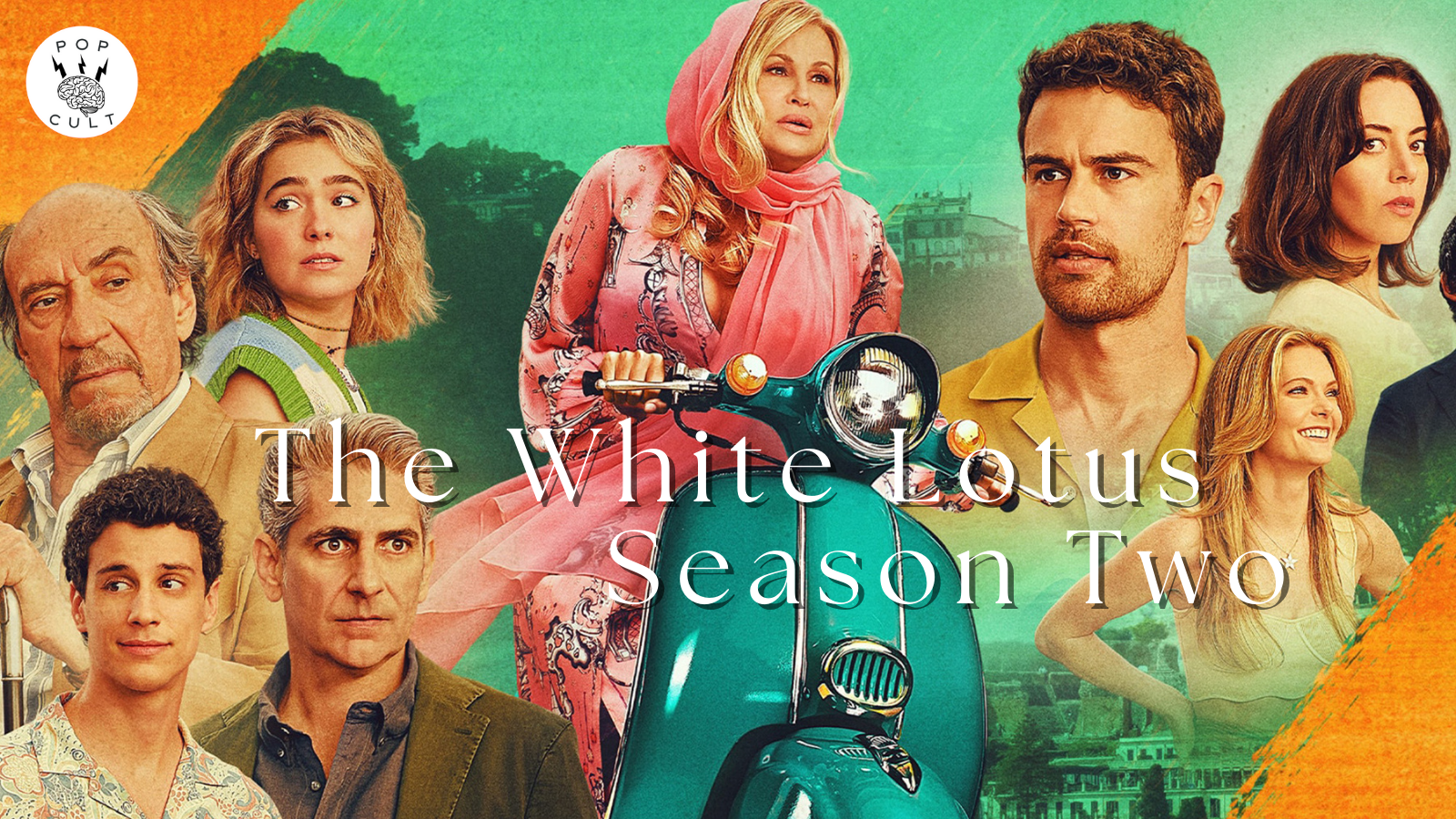
The White Lotus Season Two (HBOMax)
Written & Directed by Mike White
The first season of Mike White’s surprise HBO hit The White Lotus delivered an acerbic examination of the lives of the privileged while vacationing in another culture’s home. That setting was Hawaii, and the interactions between characters, both local and foreign, resulted in some pretty strong dark comedy about colonialism. For the second season, White drops all but one guest and switches the setting to a White Lotus resort in Taormina, Sicily. Once again, we have three sets of guests intermingling with the staff and local people, exploring ideas of ennui, sex, and alienation. The quality here does not skip a bit, but I did find that White was pulling his punches, being a little too gentle with the same people he would have skewered a year ago.
Continue reading “TV Review – The White Lotus Season Two”
Zabriskie Point (1970)
Written by Michelangelo Antonioni, Fred Gardner, Sam Shepard, Tonino Guerra, and Clare Peploe
Directed by Michelangelo Antonioni
Michelangelo Antonioni experienced his first commercial failure with Zabriskie Point. I never really thought of his movies as something that sought mass audience approval. His work in Italy felt extremely niche, but that could be because today, popular media is often so broad & so shallow that we aren’t used to seeing thoughtful, challenging works shown in the cineplex. The United States in 1970 was an incredibly different time than now, especially with film. Influenced by the revolution in filmmaking making happening in Europe, American directors and studios were trying to crank out fare that would appeal to the youth counterculture. Easy Rider crafted the mold, and everyone else chased it. Zabriskie Point is a movie that’s part of that shift, but it’s still Antonioni’s particular perspective on existence in the modern world and once again follows two people adrift in this strange new world.
Continue reading “Movie Review – Zabriskie Point”
Bones and All (2022)
Written by David Kajganich
Directed by Luca Guadagnino
A recurring trope in American cinema is the story of a pair of lovers, lost in a world without much to offer them, traveling across desolate landscapes and having strange encounters. Most notably, Arthur Penn told us this story with Bonnie & Clyde and Terence Malick with Badlands; the list is ever-growing. More often than not, these stories serve as commentary on the plight of the current youth, a means to examine what makes it challenging to be coming into adulthood at a particular time and how young people respond to these obstacles. Luca Guadagnino’s latest, Bones and All, is one of those movies. He’s not brand new to these ideas; they were explored with a lot of depth in his HBO mini-series We Are Who We Are, albeit with a more grounded concept.
Continue reading “Movie Review – Bones and All”So I have been playing with the ChatGPT AI and making some incredibly stupid, yet hilarious things to entertain me. This weekend I came up an exceptionally stupid yet entertaining thing, Oh, Hello the Tabletop Roleplay Game.
If you are not familiar, these are two characters created by John Mulaney and Nick Kroll that are so weird and awful and funny. They have had an off-Broadway show, an on-Broadway show, a p’dcast, and have appeared all over television. I made a game where you get to play as them. That’s fucking hilarious to me. You can read it and download it below. Let me know if you play it.
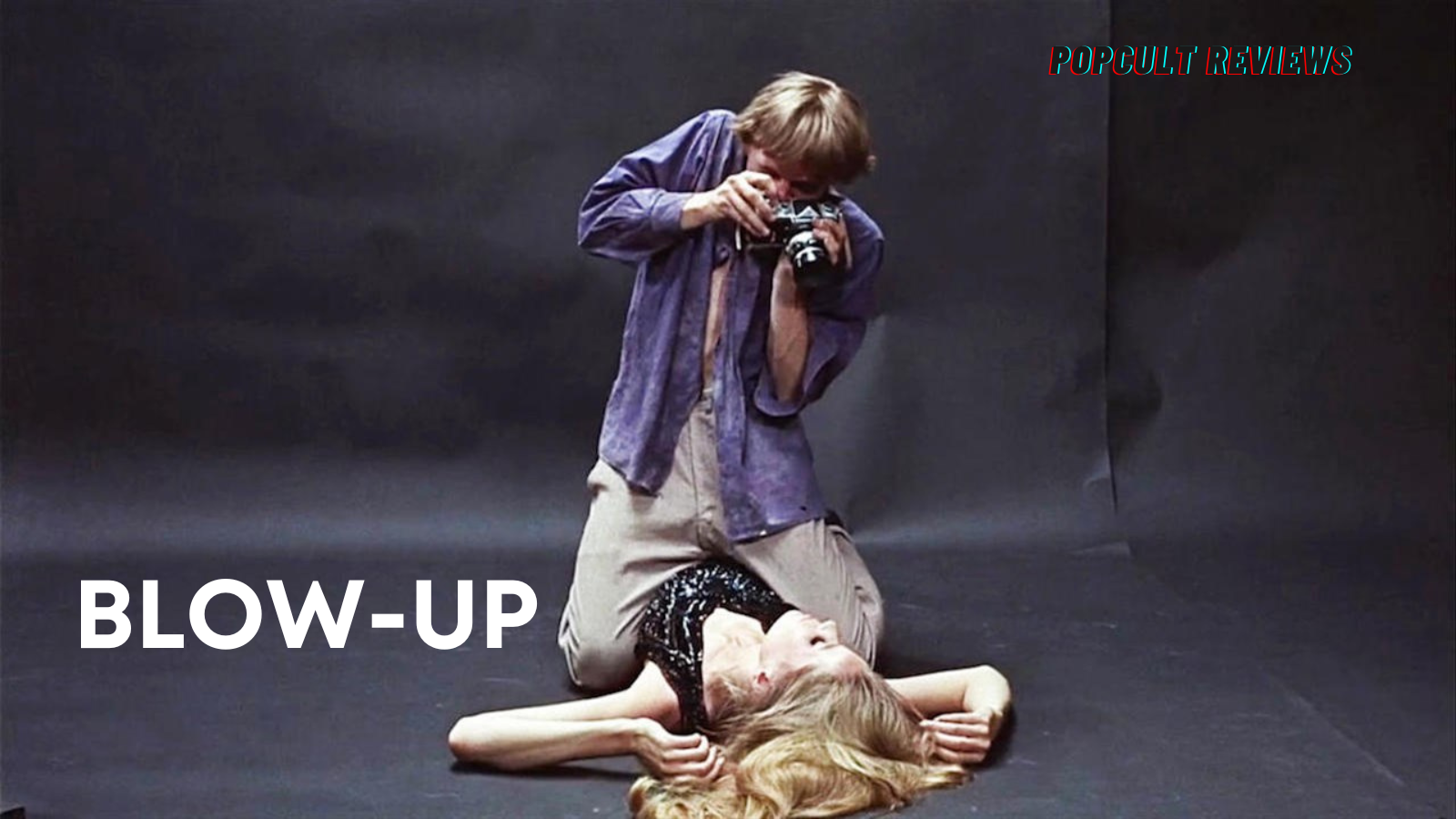
Blow-Up (1966)
Written by Michelangelo Antonioni and Tonino Guerra
Directed by Michelangelo Antonioni
For some reason, I keep drawing parallels between Michelangelo Antonioni and Alfred Hitchcock, despite their radically different filmmaking styles. Even their narratives are different in structure. The connection I’m seeing is that, thematically, they are touching the same ideas, just in radically different manners. Hitchcock is devoted to the suspense thriller narrative and uses it to spotlight modernity-related anxieties. Rear Window, Vertigo, Psycho, etc., are all about people confronting horrors within the context of the mid-20th century. Where Hitchcock provides us with concrete antagonists to focus our anxieties on, Antonioni keeps things ambiguous, the horror is existential, and thus his conclusions feel bleaker.
Continue reading “Movie Review – Blow-Up”
Better Call Saul Season Four (AMC)
Written by Peter Gould, Thomas Schanuz, Gordon Smith, Heather Marion, Ann Cherkis, Gennifer Hutchison, and Alison Tatlock
Directed by Minkie Spiro, Michelle MacLaren, Daniel Sackheim, John Shiban, Michael Morris, Andrew Stanton, Deborah Chow, Jim McKay, Vince Gilligan, and Adam Bernstein
And with the final moment of Better Call Saul Season Four, I felt the floor give out underneath me, and all of the misplaced hope I’d had about Jimmy McGill (Bob Odenkirk) went up in flames. It shouldn’t be a surprise, though. This is a prequel series, and I’ve watched Breaking Bad. I know who Jimmy becomes, yet Peter Gould and his collaborators have created a show that exists in such a sphere that, despite knowing Saul Goodman was inevitable, I was in no way prepared to see what he did. The way Kim’s (Rhea Seehorn) smile drops, the way you know the truth of who this man is revealed so nakedly to her. Jimmy will never be the man she wants him to be, the man she imagines in her head; he’s lost in a perspective that has him seeing everyone he meets as a potential mark or someone higher on the food chain than him. Like so many arrogant, short-sighted men in the United States, he failed to learn anything, to gain a better understanding of his place in the world, or see how much the woman standing in front of him is in love with & devoted to him. Jimmy deserves to lose everything now. We’re going to be talking spoilers, so be forewarned.
For some stupid reason, I thought Jimmy would eventually open up to Kim and finally grieve over the death of Chuck. I should have known better. Throughout the season, Kim makes continual efforts to be there to listen if Jimmy needs it, but she also offers up the idea of therapy or a grief counselor. He just won’t do it, never overtly saying he’s against it but weakly assuring Kim that Jimmy will take a look when he finds the time. Kim is most worried about the legitimate guilt Jimmy would have to feel over his brother’s passing, a suicide caused by Jimmy’s complete ruination of Chuck’s legal reputation. While Jimmy didn’t set the house on fire, it wouldn’t have happened without him. Yet, we also have to balance the fact that Chuck seemed to not be finding relief from his mental illness. Maybe suicide would have been how the elder McGill’s life ended regardless? We can’t know that, so Jimmy remains at least partly responsible.
Was Kim just a fool for believing Jimmy could end up any other way? Their relationship has always included elements of his past life as a con artist. In previous seasons, she clearly got a thrill from buttering up some out-of-towner at a hotel bar with Jimmy. The con was just to get free drinks, and while the stakes were low, she did find satisfaction in proving herself more cunning than the mark. It’s the same satisfaction she encounters as a lawyer, the ability to use her words to achieve the outcome she desires. That’s a powerful & dangerous thing to know how to do, and Kim makes a concerted effort to not abuse that skill. She thought Jimmy understood that and he could eventually be “domesticated,” but at this point, it’s clear he’s acting out. My read was that Jimmy wants to sully the Law in a way that would upset Chuck; he wants to ruin the thing that his brother loved so much in the act of immature spite.
In these reviews, I haven’t talked much about Mike (Jonathan Banks), but season four is where the character began to emerge for me. We start things out with him feeling restless. He’s on Gus Fring’s (Giancarlo Esposito) payroll, under a false position with Madrigal, and decides to turn that into a more believable front. Posing as a safety inspector, Mike convinces his new boss to let him play the part, yet Mike really is doing legitimate safety inspections. It’s as if he thinks he can make the front feel natural, then it will erase all the bad stuff he does and morally struggles with. But, of course, just like Jimmy, Mike is a character we already know from Breaking Bad, and we know how his story turns out. That foreknowledge makes every choice that causes Mike to sink deeper into the moral quagmire that will eventually destroy him. We can see every moment & chance he had to say no and back away, trying to keep whatever fragments remained of his soul. But Mike just can’t; like so many men in this show, Mike cannot stop once he starts, he’s not a rash person, but he does have a chip on his shoulder. Where Jimmy fails to learn as people he loves are lost, Mike is in the same boat, having profound guilt over his son’s death yet learning nothing of value from that loss.
In a parallel to Jimmy & Kim’s relationship, Mike develops a friendship with Werner (Rainer Bock), the lead engineer of a team of Germans brought to Arizona in secrecy to help Gus build his underground meth lab. It’s another moment of laying the groundwork for things that have to happen to keep in continuity with Breaking Bad, yet it doesn’t feel like an easter egg or something obligatory. Werner is close to Mike’s age, unlike the younger men involved in the construction project. They form a very light friendship to the point that Werner can convince Mike to let him and the other men have an evening out at a local bar, supervised.
Mike is sympathetic when Werner talks about his loving relationship with his wife and how he’s never been far from her for this long. We know Mike had a troubled marriage and wasn’t the best father. There is a part of this gruff, violent man who wants to help his new friend not feel lonely, so he sets up a phone call between the two. Yet, Mike’s softness creates the conditions for his and Werner’s friendship to end. If he had been colder & less agreeable, he wouldn’t have to do what he’s forced to in the season finale. Mike is killing a part of himself when he chooses to go with Gus’s wishes over what the human element of him is screaming out to do. The world just works in a certain way; from Mike’s point of view, he sees himself as partially autonomous. Instead, he’s someone who made an agreement with an influential person and is now responsible for doing horrible things.
This season’s third arc details the rivalry between Gus Fring and Hector Salamanca (Mark Margolis). The last season concluded with Hector being sent to the hospital for a stroke, and now Gus looms over his hospital bed, keeping a close eye on his rival in the cartel. I also developed a better understanding of the operations of the broader cartel. The Salamancas were brought into the fold because they are brutal enforcers, while Gus is there because he has an exacting mental acuity for brokering deals and being in a position of control regarding business. Hector is a blunt object, while Gus is a scalpel, and we’re seeing that precision wins over brute force. Well, at least in Better Call Saul, it is winning. Those familiar with the conclusion of these two’s arc in Breaking Bad know that hubris is the one thing that Gus is susceptible to.
Thematically Gus & Hector’s storyline ties into the exploration of toxic masculinity at the show’s core. Jimmy is too lost in feeling like everyone is against him, so he has to con them all first; Mike feels like the loyalty he shows to even the worst people is more critical than leaning into humanity, and these two crime bosses don’t care about anything else but destroying each other. Along the way, they cause bodies to pile up, and there’s only one we’ve yet to see the answer for their crimes by the time Breaking Bad ended. That’s why his name is in the title of the show. I hope that by season six, we get to spend some time with Jimmy as he processes how many people he knows are gone now and what that means for his future.
The fourth season’s first half is where the “weaker” episodes lie, though calling any episode of this show “weak” feels like blasphemy. The crucial moment we’re building to is a slow burn, and the writers must bring the characters to a very particular point to move forward in the final two seasons. So many pieces are put into place, like the construction of the underground lab or the introduction of Gale Boetticher (David Costabile), another essential part of the Breaking Bad pie. While these seem slightly Easter Egg-ish, I have been pleasantly surprised by how Better Call Saul hasn’t piled that on. They have to bring elements of that show at some point, and thus far, it has been done with care & attention to the characters and ensuring this show has a cohesive ongoing narrative.
I don’t think I’m stating anything revelatory when I say the strongest episodes here are the last two, “Wiedersehen” and “Winner.” The cold open is a reminder that Kim isn’t opposed to Jimmy’s scams when she has benefitted from them. In this instance, she and a client want changes made to blueprints for a new bank that have already been submitted to the proper municipal authority. She runs a scam where she wants to compare them to a new set of blueprints but involves Jimmy as an irresponsible brother who fails to keep an eye on her non-existent baby son. The civil servant working in the office is distracted long enough for the switch, so Kim’s clients can stay on their timetable. When this is compared to the final scene in the season finale and the devastation Kim feels, we understand that in this last moment, she realizes that Jimmy is partly this way because she has enabled it. She didn’t discourage him when she benefited, so can she even stop what’s coming next?
“Wiedersehen” culminates in the biggest fight we’ve ever seen between Kim and Jimmy. Hurtful truths are finally spoken that have been hanging in the air for a long time. Jimmy makes the same excuses; there’s always a reason he hasn’t grabbed the golden ring. Finally, Kim calls him out on it with a simple but devastating line, “You’re always down.” Those words are like daggers, reminding Jimmy of his bruised ego related to his social status and that he seems to thrive in full loser mode when he’s a desperate dog scavenging for a bone. And we see it’s true throughout the season as Jimmy gets a job working in a cell phone store during the year of his legal license suspension. He can’t do the 9 to 5 and falls into crime-adjacent work selling burner phones to people who are obviously up to no good.
The season finale, “Winner,” definitely earned its title, being one of the most emotionally brutal episodes thus far. Where Saul Goodman served mainly as a character to lighten the mood in Breaking Bad, we understand the horrible truth behind the man in this episode. Once we’ve gotten to know people like Kim and Chuck, suddenly Jimmy/Saul doesn’t seem so funny anymore. The Jimmy/Kim portions of the episode focus on his efforts to get his license reinstated by leaning into the passing of Chuck. He donates a considerable amount to rename a legal reading room after his late brother and plays up his “grief.” He even cons Kim, who forgets who she’s dealing with. It’s not until his impassioned, tear-filled plea to the appeals board and his subsequent flipping of the switch in the hallway outside that Kim is left stunned in the wake of this man’s ability to crush it all down and not feel anything.
Jimmy is Saul now, and that’s who we’ll be dealing with in the final two seasons. He pulled off his “greatest” con; he tricked the woman he loved into thinking he could feel remorse or guilt or even just be sad and process that feeling. So a clock is ticking, counting down to when Jimmy loses her too. But she already said that Jimmy’s always down. Kim was an oasis on the way to the bottom.
 PopCult Reviews