Movie Review – Ouija: Origin of Evil

Ouija: Origin of Evil (2016, dir. Mike Flanagan)

ouija

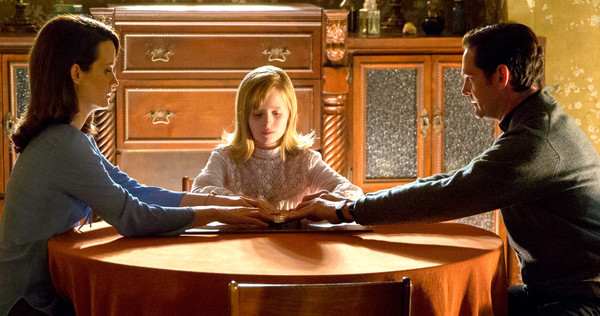
It’s 1967, and Alice Zander works her spiritual medium con with help from her daughters, Lina and Doris. Since her husband died, Alice has struggled to make ends meet and manipulating grieving people eager to believe barely helping. Enter the Ouija board that young Doris quickly takes to, communicating with what she believes to be her father’s spirit. Well, as you can expect from a film like this, things get bad, and the entity using Doris becomes increasingly more malevolent as the plot progresses.

I’ve been watching director Mike Flanagan’s films since his 2011 debut Absentia and have always viewed his work as okay. It’s never risen to the top as my favorite horror, though he always has some interesting ideas in his scripts. Ouija is sadly the most generic of his films to date. It comes off as a Blumhouse styled horror film (Insidious, The Conjuring, etc.). And like those films, the horror is incredibly formulaic and predictable. If you have ever seen a horror film from the last decade, then you will be able to see the plot points coming miles away. As a result, Ouija commits the worst sin a horror film can: it’s not scary.

Stylistically it’s admirable that Flanagan attempted to make a pastiche of 1960s horror cinema. The title card, the warped soundtrack, the crackles in the audio track, the “burn marks” on the screen signaling reel changes in the projector room. However, the tone of the horror works in bold contrast to these stylistic flourishes. These are yawn-inducing jump scares that never make you jump. The evil entity becomes way too physically aggressive to be truly scary. I find the horror from Absentia to still linger with me because of its ambiguity and unpredictable nature. The same with the mirror in Oculus, the things it does are much more interesting and skin-crawling than just using invisible force to throw someone across a room.

The acting is fine with the main weight of the story being balanced between Elizabeth Reaser as Alice and Annalise Basso as Lina. They aren’t amazing, but I blame a lot of that on the weakness of the script. Henry Thomas pops up as a faithful Catholic priest who will be the inevitable Exorcist, another plot point you see coming as soon as he’s introduced. Doris is played by Lulu Wilson and does most of the villainous acting. She is painfully an “acting kid, ” and that is seen in the way she delivers her lines. After watching Dafne Keen in Logan show nuance and strength in her mainly silent performance, this is like looking at a Disney kid overemote. On top of that, the computer generated effects they use to make her monstrous end up being comically bad.

Ouija: Origin of Evil seems to be getting praised due to its juxtaposition with the first film in the franchise. I’ve successfully avoided the first picture due to the incredibly negative buzz it’s received. I assume it must be catastrophically bad if this sequel is being considered a magnificent film in comparison. Origin of Evil is not the worst film you could watch, but there are many other you would be better spending your time on.

Movie Review – Deadpool

Deadpool (2016, dir. Tim Miller)

DeadpoolShocked

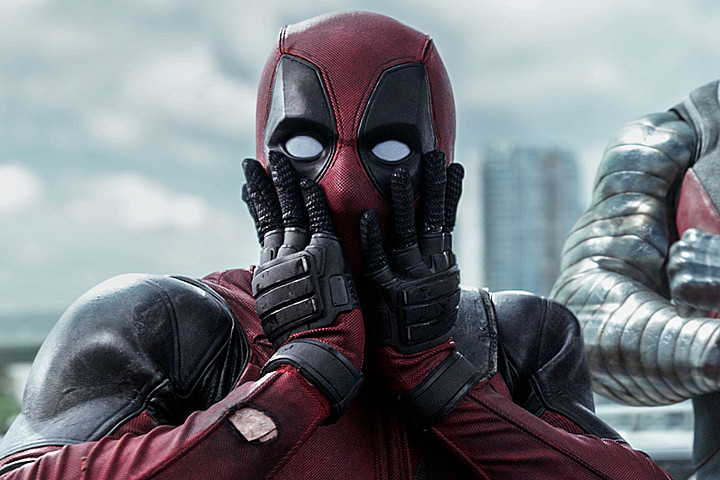
Deadpool is a tricky film to write about because the movie comments on itself and its genre so incessantly that it is likely making the criticisms a reviewer would pen before they do so. That doesn’t mean it is a movie that is critic-proof by any means. Deadpool is an incredibly self-aware movie, and when any piece of media exhibits that much meta-commentary, it begins to walk a thin line between remarkably clever and self-sabotaging. I believe Deadpool walks that line to its finale but never actually falls to either side, leaving it an adequate movie.

Wade Wilson aka Deadpool has always stood as a fourth wall breaking antidote to the soap operatic X-Men corner of comic books. I can’t say he’s a character I have ever enjoyed solo and I’ve made a couple attempts to get into runs that have a lot of critical praise. When I have enjoyed Deadpool, it has been in the context of a team setting, with ‘Pool as a background commenter. I loved Rick Remender’s X-Force run which had Deadpool in a very crucial but not main character role. It was a just enough self-awareness to help balance a storyline that was bleak and dealt with heavy themes. His role in the current Uncanny Avengers comic book is also fun, and he’s balanced with a team that is taking matters seriously.

In regards to the film, I deeply appreciated that it jumped into the action and let the origin unfold in small chapters along the way. It pushes the expectations of what comic book super movies can be with gratuitous violence, sex, and language. Just like science fiction, super movies should be a wider swath of tones and content than they currently are. However, for as much winking and nudging Deadpool does it doesn’t break any real conventions of the super movie formula.

The opening credits announce the cast as a list of formulaic stereotypes (A CGI character, British bad guy, comic relief sidekick) and then go on to feature those specific characters. Not once does the script attempt to surprise us with something new. Yes, there are tons of sight gags, but they don’t stretch the genre conventions in any way. We still have a tragic origin, torn from the woman he loves, a hero out for vengeance, a showdown with the villain that puts the woman in peril, and a big ‘splosion at the end. I was particularly let down by the pat happy ending that I felt kicked the legs out from underneath the filmmakers’ entire tongue in cheek approach.

Deadpool also has significant tonal problems. It wants to be nihilistic yet then endearing about its lead and his love interest. But I found myself not caring about the two of them because the film had done such an efficient job of pushing this “give no shits” mentality. There is an underlying desperation in the humor of the movie; it is another case of the filmmakers’ attempting to underplay their concern yet at the same time obnoxiously yelling their jokes in our faces. It ends up feeling very forced and when the jokes don’t hit they are the cringiest of cringe. What I expected and truly wanted out of Deadpool was for them to push the boundaries of the character’s anarchy even further. Shoehorning in a cliche lost love plot just doesn’t work for this character. It works for a movie studio that, while allowing the director and screenwriters to joke about cliches, still demands these cliches are present in the film because of how well they test in focus groups.

What Deadpool should have been and could have been was a middle finger to the entire supers genre. It stands as a missed chance to openly parody and mock the very cliches it goes on to present with a knowing shrug. There were so many instances where fourth wall breaking could have gone further, where genre play could have been more outlandish, so many times the decision could have been made to tear the structure of the movie apart to make more than just a slightly sillier comic book movie but into something amazingly hilarious and destructive.

Movie Review – Hunt for the Wilderpeople

Hunt for the Wilderpeople (2016, dir. Taika Waititi)

1200 (1)

Ricky Baker is a young boy in New Zealand who has reached the end of the foster system. This brings him to a farm on the edge of Bush and into the lives of Bella and her husband, Hec. Bella immediately takes a shine to Ricky while Hec remains on the sides and grumpy. Events transpire that force Ricky and Hec to endure each other in the dark reaches of the Bush. The public believes Hec has kidnapped Ricky and manhunt ensues that forces the two to become family, yet not lose their respective abilities to irritate the other.

Director Taika Waititi gathered a significant amount of interest with his mockumentary What We Do In Shadows, chronicling the days of a quartet of vampire roommates in Wellington, NZ. Previously he had helmed smaller independent films Eagle vs. Shark and Boy. Throughout his work, he is a constant collaborator with Jemaine Clement of Flight of the Conchords fame. And, if you are familiar with that comedy duo then the style of humor present in Waititi’s work is strongly comparable. The jokes are very silly, very dry and everything holds a sense of endearment for the oddball quirks of the characters.

Wilderpeople is a film of many techniques and themes, and it could have easily fallen apart trying to carry so much weight. Miraculously, it balances all of these elements and presents a story that is both rife with pathos but never maudlin. There are sweeping epic helicopter shots of characters traversing the wild, yet the movie maintains a very intimate, independent tone. Characters are absolutely silly and absurd, but we never lose sight of the humanity the film is in touch with. In many ways, Wilderpeople feels like a movie you would have stumbled across in the 1980s, an emotional and smart cult classic that would grow in popularity year after year.

What so many American studio comedies get wrong is the idea that improv equals funny now. This is easily seen in the dozens of comedies released that have hours of deleted scenes where actors merely riff. Wilderpeople delivers its seemingly improvised comedy so effortlessly that the craftsmanship of writer-director Watiti is an invisible hand. And that is the hallmark of not just a good, but a great director, that they recede into the film and that its voice is singular yet diverse. The film has an overall sense of style and humor, but each character speaks in a way that is true to them. The supporting cast are remarkable, and my particular favorite is Rachel House (you probably heard her as the grandmother in Moana) as Paula, the absurd social worker who seems to simultaneously love and hate Ricky.

This picture has me excited to see what Waititi does with Thor: Ragnarok. Marvel Studios made headlines when Edgar Wright dropped out of Ant-Man citing the studio’s desire to focus on the franchise connections between its movies than allowing diverse voices to emerge out of the work. From the visuals I’ve seen, it appears this next Thor movie will be very different from its predecessor’s. My greatest hope is that Waititi’s sensibilities for voice and humor are allowed to come through.

Movie Review – Girl Asleep

Girl Asleep (2016, dir. Rosemary Myers)

girlasleep

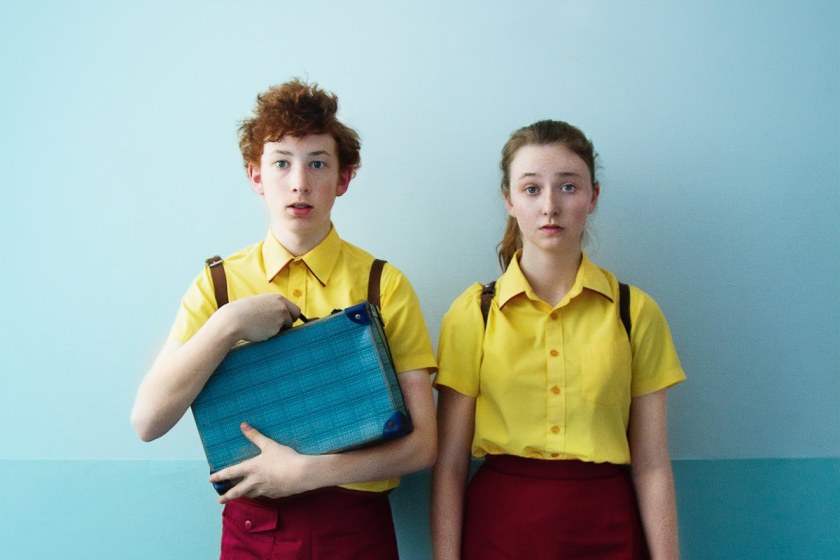
14-year-old Greta Driscoll has just moved to a new town and like many adolescents is having trouble fitting in. She makes friends with the kind, but awkward Elliott and quick enemies with Jade and her mean girl crew. Things get worse when her mother decides to invite everyone at her school to Greta’s 15th birthday party. Greta is crushed after being humiliated by Jade during the party and ends up slipping away into a magical world just beyond the woods of her home.

From the first moments, there is a strong Wes Anderson vibe to the aesthetics of the picture. But I knew there was something slightly different I couldn’t put my finger on. After a few more scenes it was apparent, this film has much more overt warmth than your typical Anderson fare. Don’t get me wrong, I love Wes Anderson, but I have rarely had a strong emotional reaction to any of his films. Girl Asleep has all the quirky characters and the style, but with a sense of life and energy, Anderson’s films intentionally refrain from. It is not a perfect movie, though, and while characters are warm and full of life, they are still painted in broad strokes.

Another piece of inspiration appears to the British television series The Mighty Boosh. The magical land of the woods and its inhabitants are presented in the style of a young child’s imagination. One central figure is clad in a banana yellow rain slicker with pink and blue crayon tones across their masked face. There’s a high similarity to the costumes seen in Moonrise Kingdom but with zanier, more fantastic visual accents.

The performances in Girl Asleep are excellent and capture the specific traits each character needs to present. Greta (Bethany Whitmore) is vulnerable and fierce, able to balance the many facets of her character going through a period of tremendous growth and change. Elliot (Harrison Feldman) is one of those actors who makes performance look easy. He is effortless and funny, awkward and genuinely charming. Greta’s parents, played by originators of the story on stage, Matthew Whittet, and Amber McMahon, are entirely exaggerated parents without being unsympathetic.

Girl Asleep won’t be my favorite film of the year, but it does take a very well-worn genre, coming of age, and adds some freshness to it. The magical aspects of the story make it something different. The performances, particularly Bethany Whitmore, are very charming and endearing. I could see this being an excellent film to introduce a neophyte film geek to art cinema and non-American films.

TV Review – The O.A.

The OA (Netflix, Season 1, created by Brit Marling and Zal Batmanglij)

585987beaca0591e008b4c65-1920

A young woman is caught on camera jumping off a bridge. She doesn’t die, and an older couple watching television coverage recognize the woman as their daughter, Prairie who has been missing for seven years. The biggest shock comes when they find she has been miraculously cured of her blindness. Prairie hunkers down in the unfinished subdivision her parents live in while meeting an eclectic assortment of young people and a high school teacher. This group becomes her greatest friends, the ones whom she confides the secret of what happened to her in the last seven years and why she no longer goes by Prairie but The O.A.

For the majority of the pilot episode, I wasn’t too keen on the series. Nothing stuck out as particularly interesting. There was a slightly intriguing mystery in The O.A. losing her blindness, but all the pieces felt very spread apart, and nothing was a great hook. Then the last fifteen minutes started. Out of nowhere a powerful musical score swells, the credits begin (which I hadn’t noticed did not play at the beginning of the episode), and we found ourselves in a place very different than where we started. This is where I was hooked. As The O.A. tells her story, it was pretty impossible for me not to become engrossed.

The series hits a note very reminiscent of Lost. Lost was and is one of my favorite television shows of all time. When I reflect back on the first season, I have realized that the mysteries (polar bears, smoke monster, the hatch) while intriguing were not the primary factor that caused me to come back week after week. The relationships between the characters and how they were revealed one piece at a time are what still resonates with me. So many Lost clones got that part wrong and overloaded their pilots with too many bits of strangeness and mystery hooks. They forgot that characters are the core of a good piece of fiction.

The O.A. is a show that is nothing without its characters and their relationships. The obvious center of the show is The O.A. and Homer, two captives who have been to the same places beyond most people’s understanding. Their compressed seven-year relationship is full of trials and struggles and an ending full of beautiful frustration, yet the hope that the story is not over yet. My personal favorite relationship was that of Steve and Betty. Steve begins the show as an incredibly unlikable teenage prick. He is a drug dealer, obsessed with the physical over the spiritual, quick to anger and jealousy. He assaults a fellow student for no particularly good reason. He is someone we should naturally root against.

Betty is a teacher at the local high school who has suffered a loss. None of her colleagues actually know about it, but through a series of circumstance, she and The O.A. meet to talk about Steve. Our protagonist’s supernatural empathy allows her to see beyond the strict authoritarian teacher and seek to understand. The way Betty changes and the way she sees Steve by the end of the series is beautiful. Playing Betty is the remarkable Phyllis Smith, who you may know as Phyllis from The Office. She is one of those wonderful character actors who endear themselves to you. It is easy for an actress like Ms. Smith to be typecast after a long run on a popular network series. But in The O.A. she breaks away from our preconceived notions. She portrays a regular person process a tremendous grief and coming out on the other end an incredibly empowered woman.

This is not a show for everyone. Another similarity it has with Lost is that it features a nebulous type of supernatural. Science and new age philosophy weave together to present ideas that ludicrous so to enjoy the show you have to suspend your disbelief. I would argue that the character development being done is heightened by the more fantastic elements of the show, so they are valuable parts of the overall piece. The O.A. ends on a cliffhanger and a second season has been announced. I am intensely eager to see where the series goes next because it spent its first eight episodes flipping my expectations around at every turn.

Movie Review – Moana

Moana (2016, dir. Ron Clements, John Musker)

homepage_trailerthumbnail_moana_720_f3266261

Moana is captivated by the stories her grandmother tells about her people and their mythology. The story of the demigod Maui particularly inspires a sense of exploration in the young woman. However, she is the daughter of the village leaders and is expected to maintain life on the island as it is. The ocean begins to communicate with Moana, and she learns from her grandmother that their people used to sail across the ocean living on different islands. When Maui stole the heart of Te Fiti, the island goddess, darkness began to spread across the world. That darkness has reached the shores of their island and Moana cannot stay put any longer. She sets out to find Maui and restore the heart of Te Fiti, saving her people.

In 1989, Disney released The Little Mermaid, a film that would serve as the template for princess movies to come for the next 25+ years. Moana very closely follows that formula: A young woman expected to follow the expectations of her parents, she feels a yearning to travel beyond the borders of the land she knows, an event occurs that pushes her beyond the boundaries, she has a weird/silly/funny pet, she conquers a great evil despite feeling apprehensions. It is the traditional hero’s journey story that has cleverly replaced the original Disney style of princess stories. If you haven’t seen movies like Cinderella or Sleeping Beauty recently then you may have forgotten how annoying the characters are. Those earlier animations seem more like an exercise in animation technique more than a story about characters with arcs. So, while I greatly appreciate Disney presenting stories about more active rather than reactive princesses, I hope that we continue to see diversity in character but also in the way stories are told and the types of stories being told. Zootopia highly impressed me as a kind of story I haven’t seen from Disney before.

Moana is a lot of fun, but I know I am not the intended audience for this film. It’s a children’s film and thus the story arcs are very evident and classical. There’s not a lot of character complexity but that wouldn’t be appropriate for the intended audience. One element I greatly appreciated was that the film doesn’t have a villain that follows the characters through the whole movie. This lets the movie feel like an actual myth being retold and keeps the focus on Moana’s arc rather than subplots. There are some antagonists who show up, my personal favorite being the Kakamora, animated coconut pirates. The sequence where these monsters attack has been revealed to be a direct reference to Mad Max: Fury Road and it is just subtle enough that it doesn’t come across as a crass pop culture reference. The film’s final obstacle in the form of Te Ka the lava demon has a clever twist that shies away from the act of killing the “final boss”. Lately, I’ve found myself drawn more and more to films that don’t follow the traditional black/white good/evil dichotomy. And it is very refreshing to see this in a children’s film.

I was very impressed with the level of computer animation. It took me awhile to be sold on the aesthetic as a replacement to classic cel animation for Disney pictures, but at this point, they have really perfected it. I’m not one who expects CG to be “realistic,” I’d rather see the technology be used to create the fantastic and impossible. Why recreate something we can already see in the real world when you can make something look real that could never be. While watching Moana, I was captivated by the texture and weight of objects. The previously mentioned Kakamora looked more like stop motion animation than something that was flat and two dimensional. People still look flat to me, but the world around them (grass, trees, water, man-made objects) looked like you could lift and hold them.

With Moana and Zootopia up against each other at the Oscars, I would still have to give it to Zootopia. This is not a slight to Moana, but an acknowledgment that Zootopia was a kind of story we have never had in as much depth and relevance from Disney before. Moana, while an excellent example of Disney creating more diverse characters, follows a very traditional and unsurprising story arc. It’s a film I’m sure kids and parents will enjoy watching again. Zootopia is a larger statement that I suspect will be remembered and studied in a way Disney films don’t traditionally do.

Movie Review – Toni Erdmann

Toni Erdmann (2016, dir. Maren Ade)

toni-erdmann

German music teacher Winfried Conradi is happy in his simple life, playing oddball pranks that no one actually falls for and just create awkward moments. His favorite prop is a pair of novelty teeth he wears and fails to get a laugh out of anyone. His daughter, Ines, is a business consultant working out of Bucharest, Romania currently trying to outsource labor for the oil industry. Winfried decides to surprise her with a visit and discover she not the sort of person he hoped she’d become. Ines has been consumed by her work and adopted a very corporate philosophy through every aspect of her life. The trip goes south when Ines sleeps through a meeting with a client because he father wanted her to get her rest. He retreats back to Germany and Ines goes about trying to salvage things on her end. But then man in a tangled messy wig and novelty teeth pops up calling himself Toni Erdmann. He claims to be a life coach and looks a hell of a lot like Ines’ father.

Toni Erdmann is being referred to as a comedy, but it does everything it can to defy many audiences’ expectations of what makes a film comedy. The traditionally set up and pay off formula for gags is not present. Scenes open without any clear sense of where we are going, and sometimes we get a pin on some moment. Other times the scene just ends, and we move onto the next one. This is all very intentional and not the sign of poor writing. Rather this is a deliberate subversion and makes the film a representation of everything Winfried is trying to do to his daughter. There are some scenes where he pulls the omnipresent novelty teeth from his pocket, pops them in his mouth, begins to play out a bit, and just as quickly slumps his shoulders, and the teeth go back in the pocket. He perpetually seems to be met with incredulity by Ines and her associates. An incidental laugh will occasionally occur but never for the reasons Winfried intends.

Ines is forever frustrated by her father and focuses on gaining the respect she believes she deserves in her very male dominated profession. Her adherence to stepping in line with Western capitalism elicits a quandary from her father about her humanity. That comes at a very tense moment and acts as the crux on which the film flips. She has tolerated him to this point but after this she tells him he must leave. Later, her boss labels her a feminist as he goes on about the direction he believes their business proposal should take. Ines replies “I’m not a feminist, or I wouldn’t tolerate guys like you.” This is less a commentary on a feminism than it is the way in which the world she finds herself is systematically erasing a sense of self. Every decision she makes is calculated based on the effect it will have on her career interests. Winfried seems to believe he can save her through his shtick and that eventually her shell will crack.

Toni Erdmann is a long film, just short of three hours. This is also a part of the subversion. Jokes are meant to be punchy and quick. The film, like Winfried, lingers longer than we expect it to. The awkwardness increases and we wonder when this nuisance will just move along. We also see Ines as the pestered working parent and Winfried as the obnoxious child fawning for attention. Through all of this subversion and intentional annoyance, there is a genuinely real story about parent and child trying and failing to reconnect. It’s a situation many of us have faced as we get older and find ourselves distanced physically, emotionally, and ideologically. Even the way the film brings about it’s “happy ending” doesn’t follow the conceits you would expect to see. Toni Erdmann is a truly bizarre but fantastic film that earns the “it’s not for everyone” motto.

Movie Review – Christine (2016)

Christine (2016, dir. Antonio Campos)

59643_ppl

The story of Christine Chubbuck is fated to end in tragedy. To most people, she’s known for the stories of a video of her suicide. During the early morning on 1974, while delivering the news, Christine produced a gun from beneath her desk and announced that “In keeping with Channel 40’s policy of bringing you the latest in ‘blood and guts,’ and in living color, you are going to see another first—attempted suicide.” She proceeded to pull the trigger and fire a bullet into her skull. Fourteen hours later she was pronounced dead at the age of 29. To the public who heard of this event the most looming question has always been, “Why?”

Antonio Campos’ dramatization of the last few months of Christine’s life begins in a way that might surprise someone who was only familiar with the story of her death. She is an energetic, passionate reporter struggling to tell positive human stories while up against a news media that is learning sensationalism corresponds to higher ratings. She isn’t willing to give up so easily and argue viciously with news director Mike. While she fights for principles on the news, Christine is also experiencing severe abdominal pains that she attributes to stress but seem to be something more serious.

Taking on the task of capturing who Christine was is actress Rebecca Hall. I’ve seen in some supporting roles in various films but never really felt very impressed. Apparently, she had just never been given an active enough role to show off her talents. Her absence from Best Actress nominations at any of the major awards is yet another sign that the mainstream awards are out of touch. It has been a very long time since I have seen a performance that so transformed an actor. Her voice, the way she moves, just watching her hands tense and grasp at objects, so encapsulates a real person. Christine’s pain is real, but even more surprising is her joy at producing stories about people. It’s hard not to get caught up in her passion as she takes the mundane and attempts to transform it into the remarkable.

Surrounding Hall’s central performance is a brilliant cast of supporting actors. Michael C. Hall plays George, the news station’s main anchor who shares the awkward flirtations of Christine. He could easily have been off as a pastiche of Ted Knight’s archetypal pompous newsman from Mary Tyler Moore, but a moment in the third act reveals a layer to the character I didn’t expect and changes the audience’s perception of him. The always great Maria Dizzia plays Jean, Christine’s best friend at the station and camerawoman. Jean sees Christine’s moments of breaking down and is deeply affected in the wake of her suicide. The final moments of the film choose to focus on Jean and they almost wordlessly convey the real emotions and reaction a friend would feel in the aftermath of such a tragic end. There is a numbness in her eyes and a deliberate effort to try and move past this. Tracy Letts plays the role of Mike, the film’s antagonist, who worries over the station’s dwindling ratings and aggressively pushes Christine to change her angle on the news. But even he is given brushstrokes of character development that reveal he does care about the station beyond just ratings.

The film gets across a sense of alienation that is suffocating. Christine continually spirals further down, never giving up her sensibilities that she can find a way out of her problems. But at every turn something gets in her way, kicking the legs out from underneath her. By the time the film reaches its climactic moment it feel heartbreakingly that there was no other way this could have ended. In the larger context of the news media, everything she represented was going down the drain. Throughout the picture news reports about Nixon and Watergate can be heard. Even the opening has Christine shooting footage for her reel, alone on the set, pretending to interview the president. She points out the idea that you can’t really be paranoid if people are actually out to get you. And for Christine, everyone did seem to unintentionally be out to get her.

Movie Review – The Handmaiden

The Handmaiden (2016, dir. Park Chan-Wook)

the-handmaiden-review-2

In the 1920s, Korea was under the control of Japan as part of its expanding empire. In this state of affairs lives Tamako, a pickpocket raised by a Fagin-esque house mother. Tamako is chosen by the art forger “Count Fujiwara” to be his accomplice in collecting the fortune of a young Japanese noble lady. This involves Tamako posing as her new handmaiden and traveling to live with the woman on her uncle’s rural estate. Tamako feels an almost immediate bond with her new mistress, Lady Hideko when they first meet. However, she begins to learn the relationship between Lady Hideko and Uncle Kouzuki is much more complicated and darker than she first expected. When Fujiwara arrives at the estate, Tamako finds herself forced to carry out a plan she is no longer comfortable with. But there is more going on here than our protagonist realizes.

I haven’t devoured the work of Park Chan-wook, but what I have seen I’ve loved. Oldboy is the title most film fans would recognize, but I enjoyed his vampire film Thirst more. His first English-language film Stoker was an engaging moody art house flick. But The Handmaiden feels like a pinnacle film. Much like, Moonlight which I just watched and reviewed, The Handmaiden is made by a filmmaker who is very confident in his work. Every technical, structural, and character element is finely crafted and presented. The story elements are woven with a subtext that speaks to colonialism, identity, and sexuality. What you end up with is a film that misses no marks and is near perfection.

The film is presented in three chapters, the first is focused on Tamako, the second on Lady Hideko, and the third acts as the denouement of the story. From the opening frames, Tamako is presented as a very captivating character. She is an incredibly confident young woman who quickly switches between her own personality and the submissive handmaiden, Sook-lee. Without giving away the second act reveal, our presentation of Tamako is colored in a very biased way and in the second chapter we see her in a very different light, the same is said for Lady Hideko.

Lady Hideko, the co-protagonist of the film, is an incredibly complicated character. She was raised by her Uncle and late Aunt, and the dark history she has in the estate is truly disturbing. Her Uncle treasures his vast book collection many than any human, his late wife included, and this obsession has ties to what led her to be found hanging from the cherry blossom tree in the yard. Hideko is a character who provokes emotions and reactions from everyone around her, a trait that is important as men come from Japan to hear her do dramatic readings from her Uncle’s collection. What she does to Tamako can at times seem cruel, but there is a dark secret behind her motives.

The Handmaiden is a very difficult film to talk about without giving away secrets. The film borrows heavily from the tone of classic Gothic literature (Rebecca, Jane Eyre) but also feels indebted to Noir like Double Indemnity. The estate itself is a fusion of Japanese and English architecture (the film is based on a British novel). Beyond the story is a commentary on the complicated history between Japan and Korea. Hideko’s Uncle is a Korean who desperately wishes to be Japanese. So much so he married a Japanese noblewoman and took her family name over his. He comments at one point that everything about Korea is filth and he wants to wash it away. Moments like that elevate a film that could be a simple thriller to a piece of filmmaking that has something to say about it’s creator’s cultural history. This is a film that once you see it, you’ll have frames frozen in your mind for a long time after.

Movie Review – Moonlight

a24 visions

Moonlight (2016, dir. Barry Jenkins)
moonlight

Moonlight is an American masterpiece. Of films I’ve seen in the last ten years, I place it up there with The Master or The Witch, as a piece of cinema that is sure of itself on technical, thematic, and character levels. It tells a story that is primarily American, but yet not beyond connecting with people universally.

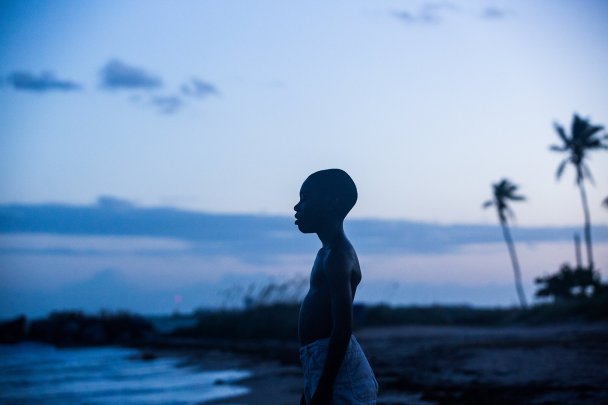
The film is told in three acts, each one chronicling a pivotal moment in the personal development of Chiron, a black youth living in Miami, Florida. We first glimpse Chiron (nicknamed “Little”) as he runs from school bullies and hides in a boarded-up tenement. It’s here he meets Juan, the head of the local drug sellers and the older man sees something inside this struggling kid. He takes Chiron to his home to meet his wife, Teresa, and they manage to get Chiron to share a little bit about his life. Later, Juan delivers Chiron home, and we meet the mother, Paula who knows what Juan does and attempts to shield her child from him. Later, we learn Paula is connected to Juan, and this knowledge shapes the relationship between Chiron and the man.

The second act catches up with Chiron in high school where the bullying has continued. Throughout both these acts, his one constant is his friend Kevin, a boy who doesn’t treat Chiron with the revulsion and hate the others do. It is made apparent that our protagonist is questioning his sexuality and finds himself attracted to Kevin and that attraction may be reciprocated. Their relationship comes to a painful conclusion in this act, and then we transition to adulthood. Here Chiron has made himself into the person he thinks he should be but is struggling with his past. This all leads to a reunion between himself and Kevin that will bring out their past and hint at their future.

I had to fight back the tears at two moments in this film. The final scene between Chiron and Juan is profoundly painful and the final scene between Chiron and Kevin is a release of emotions and honesty. The element of the film that I want to praise director Jenkins the most for was the refusal to have a villain. No one is the villain, but many people make horrible choices that hurt people. However, Jenkins chooses to reveal layers to these characters that make a reductive judgement of good/evil near impossible. Juan is a strong of example of this, and my overall favorite character in the film. He is responsible for crack cocaine being in the neighborhood and this business ends up having a direct adverse effect on Chiron. Juan is unaware at first and wants to be a father figure to this kid he sees in need of one. Chiron’s mother rightly suspects Juan is attempting to pull her child into the drug trade. But we learn more about her own connection to Juan and that becomes more complicated. Juan is not a villain but he is responsible for great harm in the community. The scene where he comes to this realization and then also has to admit it to young Chiron is heart-rending. This really highlights the idea that as often as we think we are the “hero” in our own story, we can so easily be the “villain” in another’s.

The acting throughout Moonlight is superb. Chiron is played by a succession of three actors: Alex R. Hibbert (Chiron at 9), Ashton Sanders (Chiron as a teen), and Trevante Rhodes (Chiron as an adult). It’s weird to say I was glad Rhodes didn’t get a Best Actor nomination for an Oscar, but that is only because the character is a collective of three commanding performances. The only way to do justice would have been to have a single nomination for three actors. I have not read much about the production and rehearsal process but the synchronicity between these performances is unlike anything I’ve ever seen. I have to wonder if the movie was made sequentially so that Hibbert set the foundation of the performance, Sanders studied that and adapted, and finally Rhodes was a culmination of his own thoughts of the character filtered through these two others. As a result, Chiron is one of the most fully realized characters I have ever seen on screen. He is a living breathing person who I feel like I’ve met.

As a public school teacher, I’ve worked mainly in the inner city for the seven years of my career. As a result, I have worked with some young men much like Chiron. I have also worked with young black men who are happy and healthy and have very supportive families. So, I don’t think we should view Moonlight as a universal truth of the “black male experience” so much as it is about how masculinity is framed for so many black men. The scenes where Chiron sits at Juan and Teresa’s kitchen table eating food and refusing to speak has been a part of my life. I’ve sat across from young men who are so tormented inside at such an early age. Food is about the only nurture some of them get. I’ve watched young black men crying because they’ve injured themselves only to have their mother smack them over the back of the head and spit “Stop crying and being a pussy! Men don’t cry!” Even with my current year’s class, I have a young black male student who finds it deeply difficult to verbalize his frustration even when it is just the two of us talking. He didn’t want to say sorry to another student he upset in front of everyone because he’d been taught that would make him look weak and his status among his peers is more important to his livelihood than his conscience. This sort of toxic masculinity is what Moonlight is all about. And it’s why the brief glimpse we get of Chiron being able to stop tensing, stop holding himself back is so emotionally cathartic.

I had seen Barry Jenkins’ previous feature film, Medicine for Melancholy, and while it is a great independent character focused film, he has made a significant leap across all elements of filmmaking with Moonlight. This is going to be a defining American film and is going to resonate for many years to come. The intersection of LGBT people and People of Color can be a tough one. Growing up in the South, I have been an outsider and observer of this intersection, and the deeply religious pockets of the black community can be as brutally homophobic as their white counterparts. At the same time, I have seen same sex relationships between women accepted without much strife. It is when men reveal their nature as gay that fear boils up, across all communities. Power is assumed to be heterosexuality, and Moonlight shows that strength doesn’t come from a particular sexual orientation, rather a personal resolve and determination, aided by people in your life who show you what love can be.