Teenage Mutant Ninja Turtles: Out of the Shadows (2016, dir. David Green)

144611-mutant-ninja-turtles-out-of-the-shadows-2016

I was 7 years old when I first glimpsed the Teenage Mutant Ninja Turtles. As I was flipping through the channels one summer morning I came across the opening credits of the series. I remember having trouble remembering the four nouns of the title, referring to them as simply the Ninja Turtles. Eventually, being an imaginative DIY-er, I made a mask out of a piece of purple cloth and re-purposed a green backpack and taped together cardboard paper towel tubes, and I spent hours in the backyard acting out the stories I saw. In 1990, my sister won advance screening passes via the local Fox Kids Club to the TMNT film. I loved the Turtles. But it hasn’t been something that has stuck with me, they’ve never had the complexity that makes me want to revisit them often.

The most recent film, Teenage Mutant Ninja Turtles: Out of the Shadows, is the follow up to the successful 2014 reboot. The new film finds the Turtles continuing their life underground in the daytime while protecting the citizens of New York City during the night. After Shredder escapes from police custody, our heroes find themselves pushed out into the spotlight and their group goes through the inevitable existential questioning found so often in superhero sequels. Added to the mix this go round are Stephen Amell as the hockey stick wielding Casey Jones and the mutants Bebop and Rocksteady (played to perfection by Gary Anthony Williams and WWE’s Sheamus). Plus, Krang the Brain and the Technodrome make the slightest of appearances for the third act.

Out of the Shadows is not a great movie, but it is a big improvement on the 2014 film. One of the biggest complaint, and one I shared, about the first was that it was too April O’Neil focused with the Turtles in the background. For the second film we get a lot of time with the heroes with April being featured alongside them in a sort of sidekick partnership with Casey Jones. As previously mentioned, Bebop and Rocksteady are perfect recreations of their cartoon counterparts. They are buffoonish henchmen who bumble through their job with Shredder always on the edge of ending their lives, but strangely keeping them around.

My biggest issues with the film come from the overflow of content in the script and how a lot of these plot points aren’t able to be developed. Krang is the biggest example of someone who shows up in the first act to get the plot rolling, vanishes until the third act, and ends up just being a CGI punching bag so the film can have the big finale battle in the skies over New York City. Another problem I had was that right from the start of the film, April O’Neil uses her sexuality to get access to important information to the plot. It doesn’t come up again, but it is a rough start for her character. April has never been a character who flashed her midriff or seduced men. She’s an experienced reporter and it’s a shame that her opening moment in the film were so reductive.

The Out of the Shadows will feed that nostalgic itch of people who grew up with the cartoon series. It is also a big, loud dumb summer blockbuster but maybe a little less than other films under the Michael Bay banner. It’s considerably shorter than Transformers and their ilk, so that gives the Turtles a greater sense of energy and movement towards the finale. I don’t have expectations that we’ll ever have a deep, meaningful Teenage Mutant Ninja Turtles film, it was a concept developed as a parody of ninja comics in the mid 80s. But what has been made is a very fun, light movie.

Warcraft (2016, dir. Duncan Jones)

warcraft

Few video game properties come to the table with a such a dense lore and mythos as Warcraft. I never really played the original real-time strategy Warcraft games, but I did put about two years worth of time into World of Warcraft, even grinding two characters to the level cap of 90 at the time. During those two years of play, what I enjoyed most was the exploration aspect. Every time my character entered a new zone it was exciting to see what monsters lay in wait, what treasures there were to find, and it was always great to spend time seeing all the beautiful design put into the world. The film Warcraft was announced ten years ago but has languished in development until the last couple years. After a decade of development, what did we end up with?

Warcraft, directed by Duncan Jones, tells the stories of the war between the human and the orcs of Azeroth. As a result of a demonic plague, the orcs construct a portal that brings them to the world of Azeroth. Souls are needed to open the portal again and bring the orcs who stayed behind. The humans immediately want to drive the orcs back and thus the war begins. The cast is filled with many confusingly similar bearded men and some beautiful animated motion capture orcs. Also, Paula Patton is a half-orc with some very distracting tusk prosthetic.

Warcraft is an utter mess of a film. This rests entirely on the screenplay which failed in something that should have been easy. The IP has thousands of years of established lore and they picked a very meaty chunk of that history. The only work the screenplay had to do was character development and it completely fails. Instead, the film is constantly jumping from location to location never allowing us to really get to know or care about the characters. The dialogue is also painfully cliched. As a knight is leaving a curious mage behind in a mystical library he turns around to utter, “And while I’m gone…try not to touch anything” followed by the mage causing a minor accident. None of the dialogue differentiates the characters or gives you a sense of who they are.

The look of Warcraft also always been exaggerated and cartoonish. This does not translate well into live action. The entire look of the Alliance armor and much of the architecture is cringeworthy. The orcs look wonderful, though. The cgi used for the other side of the film’s war is exceptional and the facial expression that comes through is quite an achievement. The orcs are also far and away the most interesting part of the film and we do not spend enough time with them. It’s essentially a 60/40 split in my opinion between humans and orcs.

For viewers unfamiliar with the world of these games, I can only imagine what a confusing, mind boggling film this must be. I have a passing familiarity with many of the characters and bits of history so I was able to feel my way through events in the film, but even I had moments of confusion about who was who. There’s an emphasis put on the importance of Durotan’s newborn orc son which will play strangely to newcomers. Easter eggs abound for the fans, which is no surprise, but when the core of your narrative is near impenetrable to people who have never played the game you have problems. Sadly, if the acting had been more over the top, a la the Dungeons & Dragons film, Warcraft might be a fun “bad” movie, but everyone is so dull and uninteresting. And worst, it’s almost as hard to tell the litany of bearded white men apart as it is the orcs.

Duncan Jones is not a bad director. His debut feature, Moon, is one of the best independent films of the last decade. His mainstream follow up was Source Code, not a terrible film but fairly forgettable. He is thankfully returning to his roots with Mute, which he calls a follow up to Moon. What he presents us with in Warcraft is very confounding. The only conclusion a viewer could come to is that Jones struggled to bring his own stamp to the film, and it was inevitably overtaken by studio notes and the marketing department. What we’re left with is a film that so desperately wants to be the start of a new franchise but doesn’t have a hook to bring in the audience you need to do that. The film is doing amazingly well in China so there may actually be more. Let’s hope they put character first and use those individual, interesting personalities to help us care about the lore, not the other way round.

Film Review – Submarine

Submarine (2010, dir. Richard Ayoade)
Starring Craig Roberts, Yasmin Page, Noah Taylor, Sally Hawkins, Paddy Considine

The directorial debut of British comedic actor Richard Ayoade has drawn unfair criticism for “being too much like Rushmore or Amelie”. Its easy to see how you could mistake this film for something like that, but after viewing the film it becomes apparent Ayoade has made an homage to French New Wave cinema. Ayoade takes those hipster affectations he’d being excused of exploiting, and actually frames them in a poignant look at the hyper-urgency of the adolescent mind.

Continue reading “Film Review – Submarine”

Film Review – 127 Hours

127 Hours (2010, dir. Danny Boyle)
Starring James Franco, Kate Mara, Amber Tamblyn, Treat Williams, Clemence Posey, Lizzy Caplan

Aron Ralston couldn’t be contained and he wasn’t going to let anyone hold him back from exploring deep canyons or scaling perilous cliffs. That rush of adrenalin as he tackled the impossible was everything, and like most addicts, he damaged a lot of relationships for the sake of his rush. Director Danny Boyle (28 Days Later, Slumdog Millionaire) takes Aron’s story of survival and will and transforms it into something transcendent that becomes incredibly philosophic. The film succeeds based on two factors; the acting of James Franco and what is essentially a masterclass in film editing as storytelling.
Continue reading “Film Review – 127 Hours”

Film Review – The Bad Seed

The Bad Seed (1956, dir. Mervyn LeRoy)
Starring Patty McCormack, Nancy Kelly, Eileen Heckart, Evelyn Varden, Henry Jones

Contemporary audiences would probably be bored and not find this film scary. Contemporary audiences are dopes on the whole, though. This piece of pernicious, regressive cinema is one of the tightest horror pics I’ve seen. What makes it such a juicy little piece of evil is the context. Its the repressive Red Scare 1950s where wholesomeness and purity is slathered on suburban streets like whitewash. Children especially are angelic and your neighbors can pop in when ever they choose.  This is also the height of psycho-analysis, where Freud’s phallic fantasies are holy and it becomes acceptable, and encouraged to visit the shrink. Into this tense situation, we’re given Rhoda Penmark (McCormack), the sweetest little blonde in pigtails you ever did see. Rhoda is absolutely perfect, her parents and teacher agree. But Rhoda doesn’t like having what she wants withheld and she will take it, no matter the cost.

Continue reading “Film Review – The Bad Seed”

Film Review – The Heartbreak Kid (1972)


The Heartbreak Kid (1972, dir. Elaine May)
Starring Charles Grodin, Cybil Shephard, Jeannie Berlin, Eddie Albert

If you have only seen the 2008 remake of this film, then you are missing out. Where the Ben Stiller-driven version works to make you actively dislike his bride and everything is wrapped up in a nice neat package, Elaine May’s film makes Lenny a completely narcissistic prick. The result is a very dark, clever comedy that ends on a note of ambiguity. Unlike most comedies, this will remain in your head for a long time, thinking about what the result of this character’s choices will be. This is also the best performance from Charles Grodin I have ever seen, turning his smarmy asshole persona up to high.

Lenny (Grodin) meets and quickly ends up engaged and married to Lila (Berlin). As they head south for a honeymoon in Miami, Lenny grows quickly repulsed by her. Upon arriving, he meets young WASP Kelly (Shephard) and quickly falls for her. He begins coming up with absurd excuses to leave the hotel room as Lila treats a nasty sunburn. Lenny eventually decides he’s going to divorce Lila and follow Kelly back to Minnesota where they will start a life together. There’s just the matter of her father, who happens to hate Lenny.

In the remake Ben Stiller’s Lenny is a lovable schlub who has crazy best friends who help him out. In that film you’re made to want him to leave his horrible wife and be with the sunny, charming new girl. Here we get a much more realistic story, any one that would do this to their wife on their honeymoon is a pretty cruel, selfish person. There’s an implication that Lenny only ends up married to Lila because she won’t have sex before marriage, and after their wedding night, he begins actively looking for reasons to hate her. Grodin plays Lenny as a sociopath, a man who constantly lies to worm his way in and out of situations. He manages to balance his performance by making Lenny a likable guy too, the audience is meant to be conflicted. The same can be said about both female leads, too. Lila is a sweet, loving woman but also kind of obnoxious. Kelly is incredibly beautiful, but also very fickle and cold.

I haven’t seen too many Neil Simon films (he scripted this one), but I got the feeling this is not his typical type of writing. Director May has brought her comedy chops to the table, coming out of Second City and her comedy partnership with Mike Nichols. The humor here is nuanced and dry, and its perfect for this story. There’s no slapstick set pieces, just characters engaged in conversation that has the tempo of perfectly normal speech, but when we pay attention to what they are saying, we see just how screwed up they (particularly Lenny) are. Interestingly enough, this picture makes a great companion piece to Nichols’ own The Graduate, both about the ennui experienced by immature men.

Film Review – The Social Network


The Social Network (2010, dir. David Fincher)
Starring Jesse Eisenberg, Andrew Garfield, Justin Timberlake, Armie Hammer, Max Minghella, Rashida Jones, Brenda Song

In the middle of David Fincher’s latest film a character sums up the current technology driven economy by saying this current generation creates jobs for themselves. In the past supply-demand was the dominating force; the people wanted something, then someone provided it. Now, we have products that are given to us and we are conditioned to need and want them. Facebook as one example. No one ever needed Facebook, but by preying on some very primitive psychological compulsions, it has become an addictive force. The Social Network rewinds back before there was Farmville or Poking or Mafia Wars, and focuses on the collegiate roots of Facebook. Here we see at its core the entire idea came from the exclusivity of Harvard’s Final Clubs.

The more intimate moments of the film are fictionalized and used to reveal aspects of Mark Zuckerberg’s personality, but the litigations that frame the film are very real. Its 2003, and Mark is a sophomore at Harvard, a kid from a middle class family who is studying computer science. Mark and his best friend, Eduardo are a clever pair, with Eduardo able to get money together whenever needed. After being spurned by a female student due to his emotionally stilted personality, Mark strikes back via Livejournal and quickly cobbled together webpage that has students rate Harvard girls against each other. The site gets him placed on academic probation and the attention of the Winklevoss twins, monied legacies who want to make a Harvard dating site. Mark listens to their idea, turns it down, then rebuilds it in his own images. As the site spreads beyond the walls of Harvard and even across the pond, Mark becomes more obsessed with becoming the very elite he resented in school.

This film succeeds on a number of factors: Aaron Sorkin’s amazing script, David Fincher’s perfect direction and editing, and Trent Reznor and Atticus Ross’ score. In a movie that is mostly people sitting around talking, you think it would drag, but the craft around everything creates tension and drama in every moment. I find myself liking every *other* Fincher film. Meh on The Game, loved Se7en, Fight Club doesn’t hold up, Zodiac is underrated, Benjamin Button is a yawn, and now The Social Network. I think Fincher works best with a script that isn’t trying to be anything huge. These small stories are given scope through the way he makes films. The score is also one of the strongest elements of the film, in particular a rowing competition scene that involves tilt-shift camera work and tight editing that is a short film unto itself.

The Social Network reminded me a lot of films like All the President’s Men. That film was made only a couple years after the events of Watergate, and it is a much stronger film about the Nixon administration than it would have been if they made it in 1990. The Social Network is very much about this moment and mindset in time. The young men behind Facebook were following the capitalist fundamentalism they were born into in the 1980s. They were never too concerned about the money behind the site, it merely worked to fund the venture, but they desired the power that came with it. There’s a moment in the film, Mark and Eduardo have just had sex with a couple girls in a club bathroom, they stand outside grinning and revealing their adolescent nature. Eduardo turns to Mark, smiling, and says “We have groupies”. Counter this with an image at the end with Mark obsessively refreshing a Facebook page and its clear this mindset is a destructive one.

In Theaters Now: Scott Pilgrim vs The World


Scott Pilgrim vs The World (2010, dir. Edgar Wright)
Starring Michael Cera, Mary Elizabeth Winstead, Kieran Culkin, Mark Webber, Alison Pill, Johnny Simmons, Anna Kendrick, Jason Schwartzmann, Brandon Routh, Aubrey Plaza, Chris Evans, Mae Whitman

EPIC!

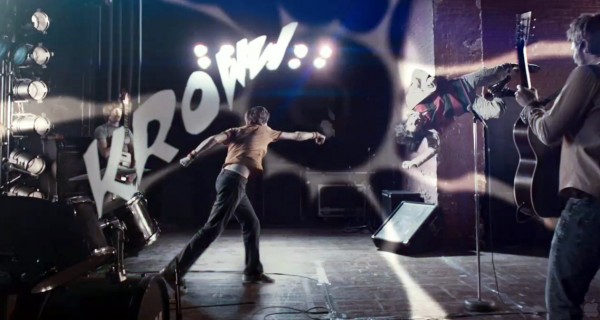
This is the official film of the Nintendo Generation, from the opening Universal logo to the final battle, the film is painted with pixelated brush strokes of late 80s video game fandom. Its also the closest I’ve seen director Edgar Wright come to recreating the style of humor found in his wonderful British series Spaced. These are the same kinds of people that populated that television show, just born a couple decades later. They have the same idiosyncratic obsessions and quirks just colored in an 8-bit aesthetic. This also marks a major departure for Michael Cera who has made a career on playing the lovable loser. The Scott Pilgrim character is a real asshole, especially to the girls in his life, and Cera does a good job of shifting his style of acting to fit Pilgrim. Simply put, this is the best date movie/action flick of the year.

The story takes us to the snowy streets of Toronto where Scott plays bass in Sex Bob-Omb and has upset fellow bandmates by dating the 17 year old Knives Chow. His dalliance with Chow is usurped when the mysterious Ramona Flowers crosses his path. Once they start a relationship its quickly revealed that Ramona’s seven exs have formed a villainous league who are intent on destroying anyone who dares to date her next. In this world you don’t need to be a black belt to fight like a character out of Mortal Kombat, and no one questions when Scott drops his bass and flies into the air to clash with ex after ex. This is a world where the line between game console and reality are blurred.

The humor here is so wonderful, its geeky and silly and the film never takes it self too seriously. Its the kind of thing you expect from Edgar Wright. Characters talk in a hyper real way, popping in and out frame when ever they are needed. The standout in the cast for me was Kieran Culkin as Scott’s gay roommate Wallace. Wallace is devoid of stereotype and is simply a perfect compliment to Scott’s often immature relations with the female of the species. The rest of the cast hits every note they needed to. None of the characters are all that fleshed out, by the conceit of the film is that they don’t need to be. This is a live action video game so characters are more types rather than three dimensional. Despite that lack of character dimensionality, the film does an excellent job of world building. While the far edges are kept blurred, the world of this fictional Toronto feels like it is bursting with life with so many characters passing through the frame.

It’s a shame the film didn’t have a bigger opening and appears to be quickly fading from theaters. It is Wright’s highest opening film though, almost twice as much as Hot Fuzz. The thing about Scott Pilgrim is that it is not ever going to appeal to a mass audience. This is a film made squarely for people who were kids when the Nintendo was released and were obsessed with it. It doesn’t have the mass guy appeal of The Expendables or the mass gal appeal of Eat Pray Love. Though, I’m willing to bet it is much much better than either of those films.

Page to Screen: Batman – Under the Red Hood

In Page to Screen I look at comic books adapted to film.


Batman – Under the Red Hood (2010, dir. Brandon Vietti)
Adapted from Batman: A Death in the Family by Jim Starlin and Jim Aparo, Batman: Under the Hood by Judd Winick and Doug Mahnke
Starring Bruce Greenwood, Jensen Ackles, Neil Patrick Harris, John Dimaggio

I’m never one to be against resurrecting comic book characters. It does happen way too often now for the impact of it to amount to much, but if done well it can make for some brilliantly interesting development for the characters affected by the return. In 1988, through a rather callous and cynical phone-in vote, the fans voted for the second Robin aka Jason Todd to be killed off in the current story arc of Batman. Todd was a polarizing character, who started out simply as a blank slate replacement for Dick Grayson. As time went on, Todd was revamped into a counter to Grayson, a rebellious teen who didn’t listen to the advice of Batman. It was a much more interesting take on the Robin character than Grayson had ever been, frankly. But the fans at the time seemed to balk at this brazen rebellion towards the Dark Knight and got young Jason beaten to death by The Joker. Fifteen years later, a new criminal figure appeared in Gotham, calling himself The Red Hood, a blatant reference to the costumed identity the man who would become The Joker wore on the night of his transformation. As Batman investigated further, he would learn The Red Hood was tied to what he saw as his greatest failure.

This latest from DC Comics high end animated film department takes the very end of the Death in the Family story and merges it with a “greatest hits” compilation from Winick’s run on Batman. I was surprised that some more esoteric elements were included, particularly, Batman and Nightwing’s battle with the super android Amazo. In the original comics, that story was tied to both The Red Hood and plot development for Infinite Crisis, the big event at the time. Winick, who handles scripting duties here as well, reworks the moment as a part of the more condensed plot of the film. He also takes his epically long struggle between Red Hood and Black Mask and turns into a much more satisfying and shorter story. Despite the film’s length of 75 minutes, it feels like we got at least a treatment for what could be a longer live action film story.

This is the first true solo Batman comic story since the animated series ended. In a lot of ways, it could be shoehorned into The Animated Series continuity; in TAS we eventually got Tim Drake as Robin and Grayson as Nightwing. It could be said this story takes place in between the Fox version of TAS and the WB follow up, a sort of untold tale of the lost Robin. The voice acting is very well done and Bruce Greenwood sounds so much like Kevin Conroy (Batman in TAS) I thought for a second it was him. Neil Patrick Harris does an excellent job providing comic relief in the first half as Nightwing, but it was disappointing that the character sort of vanishes from the story. John DiMaggio (Bender from Futurama) tackles The Joker and reminded me how strange it is to not hear Mark Hamill’s voice coming out of the animated villain. He’s good, its just a different style and laugh than I suspect myself and my peers are used to. Jensen Ackles rounds out the cast as Red Hood and does a decent job.

What I saw here was how two stories that are important to the canon, but have always felt poorly executed, can be retold in a way that shows its all about the craftsmen behind the scenes. I’ve been surprised by Judd Winick twice in the last week, first by the latest Justice League: Generation Lost issue and now this. I suspect when he is made to really collaborate with others we see the weaknesses in his storytelling diminish. Instead of these stories coming off a cynical and mean, which they do on paper, a lot of redemptive qualities are brought to the front in the animated film. Where Batman and the other characters are left at the end of the story is a very interesting place and serves as a reminder as to what separates Batman from the gun-toting vigilantes that followed in his footsteps. It’s also nice to see a Batman affected by mistakes, something we rarely get in any medium he shows up in. To see Batman as a vulnerable and human figure, a father wracked with guilt, provides an incredibly deeper picture of the character.

Shadows in the Cave: The World of Henry Orient


The World of Henry Orient (1964, dir. George Roy Hill)
Starring Tippy Walker, Merrie Spaeth, Peter Sellers, Angela Lansbury, Tom Bosley

When I see George Roy Hill’s name I think of The Sting or Butch Cassidy and the Sundance Kid. I never expected this small, delightful film. This is one of those pictures where New York City is a player along with the actors. There’s that sort of innocent magic about the city as seen through the eyes of our adolescent protagonists. And despite Peter Sellers receiving top billing, this is most definitely not his film. While I love Sellers, I would have hated for his character overshadow the performances of the two young women in the leads. He works perfectly as the awkwardly charismatic pianist paranoid over the two young girls he believes are stalking him. And as life imitates art, Sellers was actually dealing with a real life stalker during the filming of Henry Orient.

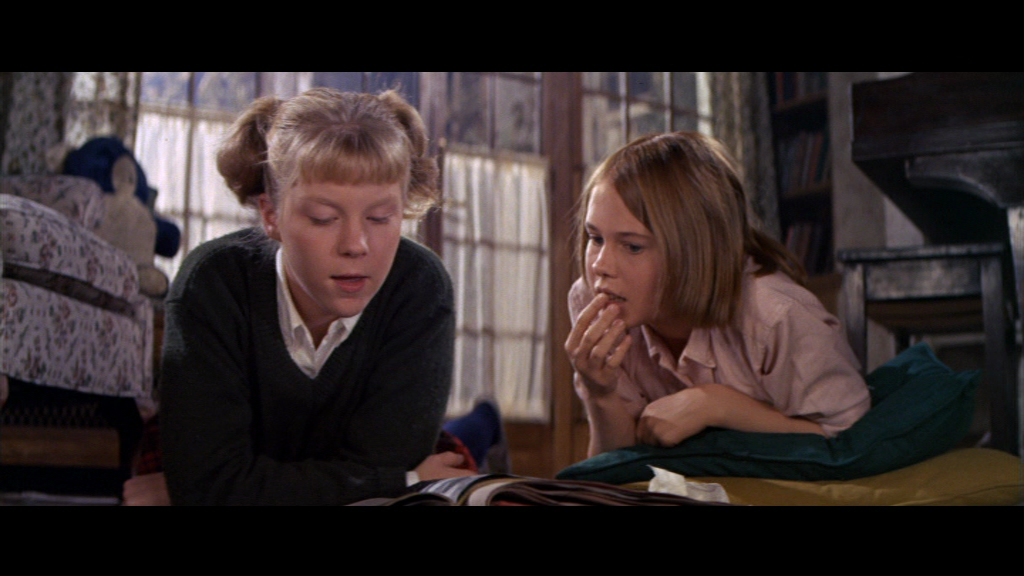
Marian (Spaeth) meets Val (Walker) one morning on the first day of school at St. Mary’s. The two hit it off splendidly and Marian quickly learns of Val’s highly imaginative nature and penchant to go on adventures in the city. During an excursion in Central Park, they happen across a man and woman in the throes of passion. The man spies them and they run off. Later the same day, they run into the man again and eventually learn this is Henry Orient (Sellers), a well known avant garde pianist. Val becomes obsessed with him and dreams that she will eventually woo the befuddled man. From Henry’s perspective these two little girls are harbingers of doom and possibly spies for the husband of the woman he is seeing. The film perfectly balances the comedic misunderstandings and the coming of age story that centers around Val. Her parents (Lansbury and Bosley) come into town and we immediately see that Val’s mother exhibits a strong coldness around her.

The film lives and dies on the performances of the two female leads, and thankfully they picked two great unknown actress for the roles. There’s some interesting elements, particularly in the third act that feel very much of the time, but I’d like to think director Hill was going against the grain up until that point in the film. The girls are very much kids, while parents pressure them to socialize with boys, they really have no interest. They would rather play and, when Val does develop a “crush” on Henry, its never done with any seriousness. Its simply a continuation of the imagined world she and Marian have invented. You can tell Hill actually cares about these two and shows them as three dimensional, intelligent young women, not yet bogged down by the seriousness of the adults. Its reflected in how scenes featuring adults in the movie are never as interesting as the ones with the kids.

It’s interesting to note that rather than casting “superstars”, Hill opted to go with two unknowns and Sellers who was famous, but not as much as other comedic actors. Originally, it looked like the three roles would go to Hayley Mills, Patty Duke, and Dick Van Dyke, and while they are all great actors, the film would not feel as special. The movie evoked such strong emotions of happiness from me, reminding me of the way it feels when summer starts to turn to fall and how intimate and safe the worlds you imagine as a youth can feel. The film has been retold with a contemporary slant in Ghost World (the film moreso than the comic book) and a poster for Henry Orient even pops up in that picture. The film’s greatest feat is balancing adult themes and ideas while never diminishing the sense of joy and play. A great picture that deserves to be known by a larger audience.