In Theaters Now: Life During Wartime


Life During Wartime (2010, dir. Todd Solondz)
Starring Alison Janney, Shirley Henderson, Ciaran Hinds, Dylan Riley Snyder, Paul Reubens, Ally Sheedy, Charlotte Rampling

I can’t see anyone who hasn’t seen Solondz’s 1998 film Happiness being able to get much from this movie. It is about a direct sequel as you can get, making references to plot points from the first film in ways that makes it un-enjoyable for someone unfamiliar with the older picture. It’s not a bad film, I enjoyed it a lot, it just is not made for the uninitiated. What it does is revisit some familiar faces, some in a more interesting way than others, and offer different perspectives on their personalities. It’s very sad and at times very funny, probably Solondz’s most restrained film to date, but also has me worried about his lack of new characters or material. Life During Wartime also shares elements with Palindromes, as not a single one of the actors from Happiness reprise their roles here, which I suspect is a choice made by Solondz.

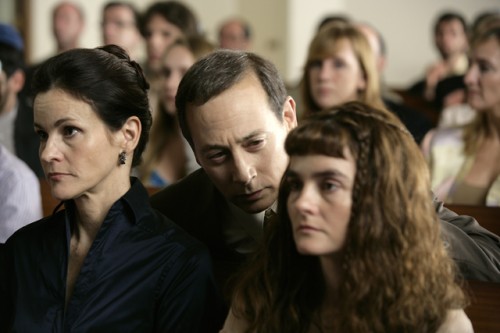
Joy (Henderson) has dinner with her husband, Allen in a scene that mimics the opening of Happiness. The entire affair has her remembering that first dinner with Andy (Reubens) who killed himself after she rejected him. It’s decided she will take a trip to visit family in Florida, and Joy ends up in the company of her divorcée mother and single parent sister. Trish (Janney) is getting involved with a new man and helping her middle child, Timmy (Snyder) prepare for his bar mitzvah. Up the coast, Trish’s ex and convicted child rapist, William (Hinds) is released from prison. He also wanders down to Florida sneaking into the house just for glimpses of the family he lost. Joy ends up in California at the home of her other sister, Helen, a pretentious and self-obsessed writer. Where ever she goes she is haunted by the ghost of Andy, who always starts out gentle but becomes violent. It’s a large ensemble movie where characters are connected, but rarely interact.

Solondz seems to have a very strong personal connection to these character types, and I suspect they come from his own family and acquaintances, an exaggerated cinematic sheen spread over them. I found his criticisms of the East Coast Jewish community very interesting. At one point, Trish is talking about her new beau, a middle-aged New Jerseyian and says that he voted for Bush twice and McCain, but only because he knows they support Israel. From many of the more liberal Jews in America, this has been an issue of frustration, how the right has co-opted the pro-Israel cause as their own. So, there’s a lot personal issues in this and all of Solondz’s films. The film has three central figures: Joy, William, and Timmy. All three of these characters are haunted (some literally) by the past. Joy is visited by Andy, whose suicide she spurred forward. William, newly released from prison, has lost every thing and wanders down the east coast and eventually to the pacific northwest searching for something. Timmy has been told William was dead his entire life and has just now learned his father was a pedophile. This warps his sense of intimacy with others, and will have a profound effect on his mother’s burgeoning relationship.

While the film is seen as an exaggeration of real life, I suspect it is closer to realism than most films. Solondz appears to be a very good listener, especially for interactions between family members. In almost every conversation between a mother and daughter, sisters, etc. no one is every asking about or talking about the other person they are with. While Helen may be the most outwardly self-absorbed, every character here only talks about themselves, is only concerned with what they need. The only exception I would say is William, the pedophile. There’s a couple moments where we gasp, thinking he may be tempted, but he abstains. He contemplates stealing from his family to pay his way, but stops. William eventually ends up at his eldest son, Billy’s college in Oregon and explains he sought him out just make sure Billy didn’t inherit his father’s predilections. Once he is assured Billy is “normal”, he says goodbye, and the implication is that he goes off somewhere private and kills himself.

Wartime is a heavy film, to be sure, but also surprisingly funny in very dark moments. Not a movie for the cinematic light at heart, but for the viewer who wants to have their ideas about “good” film challenged, then I think there is definitely some thing here for you.

Wild Card Tuesdays – The Dinner Game


The Dinner Game (1998, dir. Francis Veber)

You’ve no doubt seen the trailer or commercials for the upcoming Paul Rudd/Steve Carrell film Dinner for Schmucks. This is its source material, a very small and wry French comedy that, unlike the American version never makes it to the titular dinner. Instead, we get a very clever farce from the same director that brought us La Cage Aux Follies and many other French comedies brutally remade by American studios. I’m beginning to think studios simply wait around for him to release a film so they can rush to produce a butchered remake. While not the kind of funny the American remake is shooting for, The Dinner Game will make you laugh through clever wordplay and increasingly convoluted misunderstandings

Pierre Brochant is excited about the weekly “idiots dinner” held by he and his businessmen friends. He comes upon Francois Pignon, Finance Ministry employee (think IRS agent) whose obsession is building landmarks out of matchsticks. Brochant sees this man as the perfect idiot to bring along with him. However, his wife has left him and he has injured his back on the golf course on the same day he is to take Pignon to the dinner. The squat little man arrives, thinking Brochant is offering him a book deal about his matchstick constructions. Over the course of the evening, Pignon helps Brochant makes fake phone calls to track down his wife, mistakes the wife for the mistress, and brings on of his auditing buddies over to help out, unwittingly revealing some shocking infidelities. The film appears to be heading down a maudlin path when it returns to its comedic elements in a very clever way.

Pignon is a very endearing character. He has had his wife leave him and wants to legitimately help Brochant, but he possess a short term memory and care barely retain the simple plans they hatch when calling people they believe Brochant’s wife is with. Jacques Villeret plays the role of Pignon and manages to keep him from becoming a dolt. He’s a clever, sensitive, eager to help simpleton and the audience sighs with relief when we realize he won’t be subjected to the cruel evening Brochant has planned. From what I have seen of Schmucks, I get the feeling Carrell is playing a much broader, less sympathetic version of this character and that’s a shame.

The Dinner Game plays like stage play. It’s one set with characters coming in and out, a perfect comedy of errors. Schmucks looks like it is uninterested in the simplicity of the original and is opting for complex set pieces involving outsiders that we don’t sympathize with but mock. The overly sentimental finale that the original avoids feels all but inevitable for the American remake. The irony here is that The Dinner Game emotionally earns that ending if it wants, while I suspect Schmucks will be so mean spirited that when it comes to that “our hero learns a lesson” moment it will come off as ludicrous.

Newbie Wednesdays – Greenberg


Greenberg (2010, dir. Noah Baumbach)
Starring Ben Stiller, Greta Gerwig, Rhys Ifans, Mark Duplass, Jennifer Jason Leigh

Hey, you know what isn’t an interesting topic for contemporary cinema right now? Angst ridden white people who live comfortably and don’t have to worry about any necessities. Especially when they aren’t in some sort of hyper-realistic universe (i.e. James Bond, comic book movies). When the films are meant to be set in reality and feature characters whose biggest problems are that their band when they were in their twenties didn’t work out, yet are still rich through other endeavors, then I don’t really have much empathy towards them. This is yet another hugely pretentious piece of cinema from the grating Noam Baumbach. If you’re interested in navel gazing claptrap you’ve found your film.

Florence (Gerwig) is the personal assistant to the Greenberg family, a wealthy couple with two kids and a dog. The Greenbergs are off to Vietnam to open one of the husband’s hotels and they let Florence know his brother, Roger will be visiting for a few weeks while they are gone. Roger had a nervous breakdown and is coming the mansion to relax and work a doghouse. Roger and Florence meet, and she inexplicably ends up liking him. She learns Roger was involved with a semi-successful band in the 80s and they would have made it big if Roger hadn’t freaked out and left. Roger runs into some of his old bandmates (Ifans, Duplass) and while one of them has gotten over it, the other still holds a grudge.

The character of Greenberg is not necessarily a bad concept. I think everyone enjoys a good curmudgeon every once and awhile. But the curmudgeonly attributes of Roger Greenberg come across as cliche and totally dishonest. It doesn’t help that Noah Baumbach is doing what he did in Margo at the Wedding, one of the least watchable films I’ve ever had the privilege of falling asleep during. This is film straining desperately to be so clever and erudite, yet maintain that angst white middle class tone I hate. While some people have the same things to say about Wes Anderson’s films, I argue that Anderson works his damnedest to make his work feel intentionally separate from reality, in effect making contemporary fairy tales. Baumbach thinks he’s making a movie grounded in realism, and I guess for self-absorbed upper middle class people it probably is. I just have zero sympathy who have these problems.

There are few moments of good in it. I think Greta Gerwig is a great actress, more so in more mumblecore type movies than this one. She has a very natural ease in front of the camera and is one of the few people in the movie who doesn’t feel like she is acting. There’s a sub plot involving her ex-boyfriend that I found to be good to see in a film, its something that never really happens even in movies, and if it does there seems to be some moral cultural obligation to make it a big deal. Here Gerwig simply does this thing and everyone moves on with their lives, the way in reality it would probably be. Many of the supporting players are quite good, with the exception of Jennifer Jason Leigh as Roger’s ex from back in the band days. Leigh is also the co-screenwriter, producer, and the wife of Noah Baumbach. She’s just not very good in this role. If you have the option to watch this film, I can’t really say its one of those worth one view ones. It really isn’t, it doesn’t say anything of importance, it doesn’t work to achieve any interesting artistic aesthetic, it is just simply nothing.

DocuMondays – This Filthy World

This Filthy World (2008, dir.Jeff Garlin)

Unlike the other documentaries I have looked at, where you have multiple interviewees and tightly edited footage to form a narrative, this is simply one man on stage in front of a crowd, talking to them. It’s basically a concert film, but while most of those feature either a music performer or comedian this is a film director. I guess the closest equivalent  of this would be the Evening With Kevin Smith DVDs. Both are the result of directors whose personalities are as large as the reputation of their films. John Waters is definitely not a filmmaker who appeals to everyone, something he readily admits, but even if you don’t enjoy his films I think it would be hard not to enjoy this one-man show about his love of all things strange.

Waters was raised in and around Baltimore, Maryland, which is to him like New York is to Woody Allen. Baltimore, named the Ugliest City in America at the time which Waters proudly cites, provided him with a front row seat to the grotesque. Rather than being repulsed, Waters was drawn to the misshapen and demented natives and made them movie stars. His love of film also began in Baltimore when, as a child, he became enamored with the gimmickry of William Castle (House on Haunted Hill, House of Wax) and Kroger Babb. Babb was a filmmaker who had little skill with filmmaking, and more with being a salesman. He produced films like Mom and Dad, which the Catholic Church gave a Condemned rating, and features actual birth footage, one of the few ways of showing female nudity in those days. Babb would have an obvious influence in Waters later work, and Castle got a very gimmicky homage with the Odorama cards handed out at showings of Polyester.

My favorite piece of the performance was the second half, where Water discusses how he even he has lines he doesn’t think people should cross. This allows him to go into very poetic descriptions of teabagging, helicoptering, and other outer edges sexual practices that he gets pleasure from horrifying the audience with, but also seems to honestly think are too far. He addresses his child molestery appearance, which draws looks when he goes to see animated films at the theater. He talks about his love of attending trials and the little club of friends who try to one up each other about which they have attended (Waters got into one of 10 public seats at Watergate for a day, an elderly woman beat him, she was Nuremburg, the Super Bowl of courtroom trials). There’s a wonderful sequence where he talks about the influence The Bad Seed has on him, creating a desire to be a secretly evil child. Even now, he says he loves to encourage children to get into trouble, mentioning when he was attending a parade recently and tried to convince a little girl to help him go knock people’s bicycles over.

Like I said, Waters isn’t everyone’s cup of tea, nor should he be. If he was, then the entire agenda of his work would be subverted. He talks about how his career is now lauded in elite high society circles in New York and that he thinks its wrong. Even if you don’t care for his films, I don’t think you could watch this and not find some anecdote or piece of wry wisdom memorable. If you haven’t seen his work some segments might be confusing, but nevertheless this is an excellent piece of insight into one of the ground breaking directors in America.

Wild Card Tuesdays – True Stories


True Stories (1986, dir. David Byrne)
Starring David Byrne, John Goodman, Swoosie Kurtz, Spalding Gray

I remember making long trips in the car as a child and feeling a sense of excitement as we pulled onto off ramps, stopping a strange gas stations and towns on our way. The journey and these stops always held much more interest to me than the destination it seems. I can distinctly remember driving through the Smoky Mountains and drinking Faygo Root Beet, a brand I had not had before. True Stories felt, for me, like stopping in of those little towns along the way and staying a bit longer than usual. Virgil, Texas is however a byproduct of the strange mind of David Byrne, lead singer of The Talking Heads. Things are quite off from the real world, but that just makes it all that more interesting.

Byrne is the nameless narrator, decked out in stereotypical Texan gear: Ten gallon hat, western wear, cowboy boots, and driving around a cherry red Cadillac. He delivers exposition with a very monotone demeanor, explaining the underlying psychological aspects of urbanization creeping into Virgil. Among the cast are John Goodman as Louis, a man so desperate to find a mate he has a marquee outside his home reading “Wife Wanted”, Swoosie Kurtz as Miss Rollings, a rich woman so lazy she never leaves her bed, and Spalding Gray as Earl, a man who has not spoken to his wife in 15 years but still seems to have a happy life at home. The stories are all leading towards a town-wide celebration taking place on stage being constructed in the wilderness. The Narrator visits with the characters who seem to have a familiarity with him, and various Talking Heads songs are re purposed to expand upon characters’ motivations.

I’ve always enjoyed when musicians set out to make films. They are rarely huge hits and usually end up as cult classic movies. I knew going into this one that Byrne has a very unique sensibility, which I had seen in videos of his concerts, and in particular the Jonathan Demme concert film Stop Making Sense. That sensibility is translated here into a film that is more like a quirky short story collection than anything overly cinematic. And it totally works. Certain songs, like “Dream Organizer”, so perfectly work for the character they are attached to that you have to wonder if this was the character Byrne had in mind when he originally wrote the song. The cinematography is also top notch, I think a lot of that coming from Byrne’s background in art school. The composition of many shots are not what we expect, leaving tons of negative space, and making for something that could be a framed photo on its own.

It’s also interesting to see some actors before they made it big, and one whom I never thought of as a traditional film actor. Spalding Gray was a quite a surprise to see, as I only knew him through his monologues (you should all check out Swimming to Cambodia). He does a decent enough job, though comes off a little stiff. Goodman and Kurtz are definitely the best of the bunch, each hamming it up in a way that totally works with the atmosphere Byrne has created. Jo Harvey Allen was also a standout as a perpetually lying woman who takes credit for “writing half of Billie Jean” as well as being JFK’s lover in Texas, whom he met with before the assassination. The film is definitely a fun, quirky picture that can be incredibly refreshing compared to most Hollywood films.

Newbie Wednesdays – Toy Story 3


Toy Story (2010, dir. Lee Unkrich)
Starring Tom Hanks, Tim Allen, Joan Cusack, Don Rickles, Wallace Shawn, John Ratzenberger, Ned Beatty, Michael Keaton, Jodi Benson, Estelle Harris

In 1970, Japanese roboticist Masahiro Mori coined the term “The Uncanny Valley”. Basically, it refers to the point when a robot or human facsimile (CG animated character) resemble real humans so closely it evokes a sense of revulsion in the viewer. CG animation walks that very fine line, and in the case of Robert Zemeckis’ animated works (The Polar Express, Beowulf) it reaches the revolting atmosphere. This is where Pixar gets it right, in that it never tries to make its humans look like exact copies of humans. Instead, the real humanity in the film is infused in the inanimate who have a larger ability to express emotion than ever before. For me, Toy Story 3 marks a clear point in history where, in the right hands, CG animation is a clear challenger to live action cinema.

Andy is eighteen and about to head off to college. The time to cast out his toys, which have been long ignored anyway, has come. All but Woody end up in a trash bag destined for the attic, while the cowboy ends up in Andy college-bound boxes. With the fear of being separated from his pals, Woody makes a daring escape and goes to save Buzz and company who have accidentally been put out for the trash. They all avoid the landfill but end up in Sunnyside Daycare, which is ruled over by Losto Hugs Bear, a 80s relic. They also meet a host of other toys, more generic than specific products and engage in what is essential a prison break movie, with some very strong themes about aging and obsolescence threaded throughout.

The situation the toys are placed in is one that speaks across generations. The children, whom most assume the film is squarely marketed at, will see their own feelings of powerlessness reflected in the plight of the toys. When faced with the circumstances of simply moving to a new town all the way to dealing with the divorce of parents, children are without any say in where they go. The same theme is applied to children transitioning into adulthood, like Andy, who are pressured by society to abandon toys and play. The issues Andy is grappling with reflect a lot of those who were children when the first Toy Story came out. Bumping up another generation, the themes of a child leaving home are very palpable and those wistful feelings as days when your child was little and playful. Laurie Metcalf and the animators behind her character deliver a very short, but beautiful performance in the moment where she enters Andy’s now empty bedroom. Finally, through Lotso we have the resentment of elderly and those who are left behind. Lotso has taken the moment he realized he was no longer wanted by his owner, and has allowed those feelings to become anger and rage, which is merely a form of hurt.

Pixar is a company that makes perfect films (I refuse to acknowledge Cars). They are writing scripts that are light years (no pun intended) richer and more complex than the majority of those shopped around Hollywood. The production staff also has a strong sense of creating rich worlds, they fill their universes with so many details that we want to inhabit them just a little bit longer. The Toy Story trilogy now stands a perfect trilogy, with themes that develop and mature just like Andy. The technical side of the animation has also evolved in a similar fashion. While buzz of Toy Story 4 has recently hit after the current release’s box office success, but I hope the Pixar crew treads carefully in adding on to an already complete masterpiece.

Criterion Fridays – Loves of a Blonde

Loves of a Blonde (1965, dir. Milos Forman)

My familiarity with director Milos Forman comes mainly from his work in English language cinema (One Flew Over the Cuckoo’s Nest, Amadeus, Man in the Moon), but I have been aware for a long time of the movies he honed his craft with in his native Czechoslovakia. I didn’t know much about them, other than from reviews and criticisms they were akin to the French New Wave youth culture movies, but with a more anti-authoritarian bite. One thing I’ve found in art that is hard to translate between languages and culture is humor. Jokes are a product of the experiences and philosophies of a specific group of people, and the broader the joke (i.e. slapstick comedy) the larger the audience you can appeal to. Humor of language or subtle situations is much harder to get a foreign audience to laugh at. However, Forman conquers that challenge with expertise.

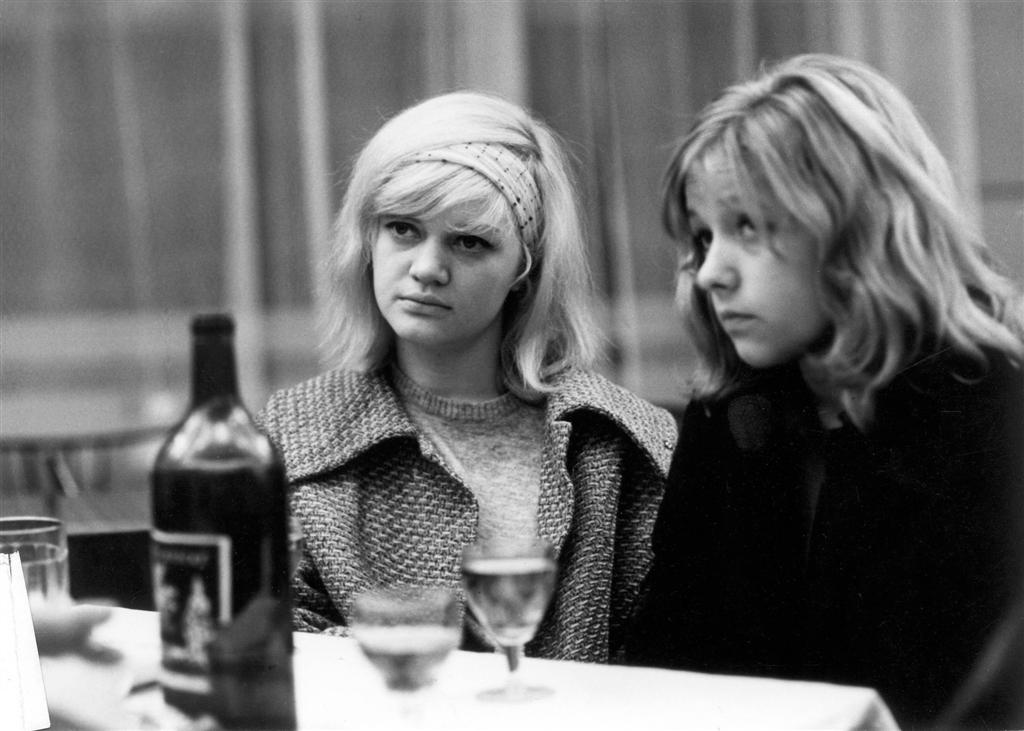
Hana lives and works in a rural Czech village whose economy revolves around a textile factory. The factory employs primarily women so the demographics are 16:1 in favor of women. The factory owner petitions the military to station some soldiers there as a way to provide some relief for the tension building amongst the workers. They get sent a group of thirty-something, slightly balding reservists and most of the girls decide to just go with the flow, despite their disappointment. Hana avoids the leers of these men, most of whom are married already, and ends up in the room of a visiting musician more her age. The problem with Hana is that every week she seems to have a new true love and these dreams and wishes get the best of her.

I found myself laughing many times at Loves, particularly in moments where the dialogue was greatly improvised. A trio of reservists looking to lure in some of the young women reveal themselves as inept buffoons as they waste most of their time debating how many of them should approach the table where their prey is sitting. They send a bottle of wine over, but it gets delivered to the wrong table and they tell it to take it from the women who believe they were picked. Soon after, one of the reservists slips off his wedding ring, its kicked across the dance floor and under the table of the spurned women which he must now crawl under.

It’s rare that I find a film from Europe during this period which doesn’t have sequences that seem to drag and pull me out of the picture. Here I was completely engaged from the start, due in part to some very skillful editing and language-transcendent humor. The circumstances that these characters experience are universal to all people: unwanted affections from suitors, allowing oneself to get caught up in what you think is love, and a general sense of dissatisfaction with mundane and repetitive life. Once again, Forman delivers a highly entertaining film with truly funny comedy.

Newbie Wednesdays – MacGruber


MacGruber (2010, dir. Jorma Taccone)
Starring Will Forte, Kristen Wiig, Ryan Phillippe, Val Kilmer, Powers Boothe, Maya Rudolph

It began with The Blues Brothers and it was a long time before another one was made. Then with Wayne’s World, followed by The Coneheads, Night at the Roxbury, Superstar, and The Ladies’ Man. The idea of adapting a skit from Saturday Night Live series is not new, but never has the source material been so brief. MacGruber is originally a thirty second bumper to commercials, so the idea of making a feature film around the character is a bit of an oddity. It’s also a very simply parody of the MacGyver television series, which itself is almost twenty years past. So how does this longshot stack up as a full length movie?

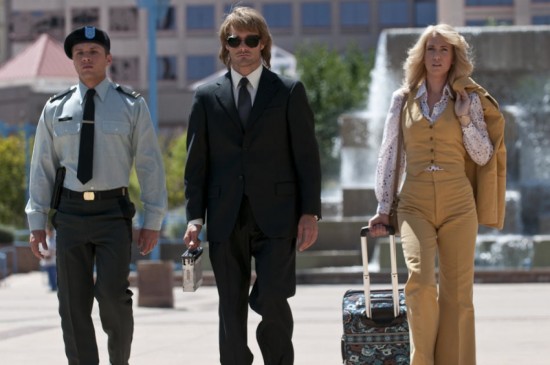
The premise borrows its plot from films like Rambo, with MacGruber (Forte) as a former Pentagon agent who has been living in a monastery for the last decade after the tragic death of his bride. When the villainous Dieter Von Cunth (Kilmer) steals a Russian nuclear missile, MacGruber is called back into action alongside straight arrow Lt. Dixon Piper (Phillippe) and his former sidekick Vicki St. Elmo (Wiig). The trio engage in a series of episodic attempts to either get in contact with Von Cunth and foil his plans. These typically involve Piper suggesting a reasonable military tactic, while MacGruber does something outlandish (i.e. hopping naked with a piece of celery sticking out of his butt). The plot hits all the expected points, and delivers a very hard R-rated comedy.

The sources being parodied here are done by people who know those sources well. Director Taccone, part of The Lonely Island and a writer for SNL, most definitely grew up watching the awful Golan-Globus military action films of the 1980s (Death Wish, Cobra, American Ninja). From that perspective, its an amusing film but nothing terribly special. I believe I chuckled once or twice, but for the most part I felt myself slogging through the picture, simply trying to make it to the end. Of all the current cast of SNL, Will Forte is far and away my favorite, but when he is constrained by SNL material he’s never as funny as he could be. Such is the case here, the jokes feel very lazy and the payoffs are never clever or surprising. In the end, its a case of a flimsy premise being stretched beyond its abilities to hold together, resulting in an incredibly disappointing and forgettable film.

Director in Focus: Brian De Palma – The Bonfire of the Vanities


The Bonfire of the Vanities (1990)
Starring Tom Hanks, Melanie Griffith, Bruce Willis, Kim Catrall, Morgan Freeman, Saul Rubinek, F. Murray Abraham

And so, all great filmmakers must descend into the bowels of hell from time to time. It’s hard for us to understand just how terrible this film is now. Oh yes, Hanks is certainly acting in a way that comes across as acting. And Willis is forced to deliver voice over narration that both shoves the story forward and sounds like he has difficulty saying it. But the utter disaster that is The Bonfire of the Vanities was both as a completed picture and the behind the scenes production fiasco. What was thrown up on the screen was a watered down version of a biting satire, that somehow manages to still offend every major racial group and still feel like the studio was pulling back and watering it down.

The novel by Tom Wolfe, was an attempt to skewer the 1980s greed culture and the rise of a more and more tabloid-influenced media. You have Sherman McCoy (Hanks), a Wall Street financial wunderkind who is sneaking behind his wife’s back (Catrall) to have an affair with socialite Maria (Griffith). During one tryst the lovers take a wrong turn and end up in the Bronx where, with Maria at the wheel, they end up running over a black youth who was attempting to rob them. Sherman thinks they should report it to the police, but Maria convinces him otherwise. Cue an Al Sharpton-inspired preacher, opportunistic D.A., and drunken reporter (Willis) and the hunt is on to catch the WASP in the Mercedes who ran over the poor young man. All of these cynical characters feel set to get their comeuppance in deliciously vicious way…however, it never happens.

The names originally batted around in pre-production color a very different film. William Hurt was originally looked at to play McCoy. Jack Nicholson and John Cleese were named as playing the role that went to Willis. Walter Matthau was brought up when casting the judge, but he wanted more money than they were willing to spend. And nineteen year old newcomer Uma Thurman has been up for the role of Maria. These people in these roles would have presented a much better film, not perfect, and they would have fit the types they were meant to play. Hurt would have played into the Ivy League, born into money mold much better than Hanks, who has always come across a more everyman than anything else. And anyone would have been better than Willis as the reporter, who seems to never know what he is doing and simply plays “smarmy”.

De Palma throws us some cinematography bones: steadicam shot, quick POV, deep focus. It all comes across as him jumping up and down, shouting “Hey, remember I’m directing this!” Otherwise this is any other lofty studio picture trying to tackle the race issues of the early 1990s and come across as “edgy”. I was reminded of Lawrence Kasdan’s Grand Canyon (also released in 1990) which is on the other end of the spectrum from this picture. In Grand Canyon, Kasdan seems to tread as if he is walking on ice while broaching the issue of black-white relations and so the film never feels like it comes to any point. Here, we have a film that seems to be promising its going to go where no one else will while constantly tugging at the reins. The final courtroom scene snuffs out any chance that the film will end on a provocative note, as the judge descends from his bench and delivers a sermon to the characters and to us. The entire didactic droning feels like it should have ended with an American flag unfurling behind him and tiny sparklers appearing from out of frame. De Palma was at a major low point here…but he was about to prove he could deliver a monumental picture.

Next up: Carlito’s Way

Newbie Wednesdays Bonus! – Get Him to the Greek


Get Him to the Greek (2010, dir. Nicholas Stoller)
Starring Russell Brand, Jonah Hill, Sean Combs, Elizabeth Moss, Rose Byrne, Colm Meany

There is the way Apatow films are perceived by those that haven’t seen them, and then the what the films actually are. Most people who don’t see these movies discount them as gross out frat boy movies, and that’s sad because they will be missing a rather poignant film about relationships. That’s what the Apatow circle has done an amazing job of, making movies about very real relationships. The women in this film are not harpies or shrews, they are not holding these men back. Instead, they are equal partners in the mistakes and travails of our main characters.

Aaron (Hill) is a young music executive tasked with the job of getting washed up rocker Aldous Snow (Brand) from London to L.A. for an anniversary concert at the Greek. Aaron is also dealing with his live-in girlfriend Daphne (Moss) who is in the midst of med school and has just got a transfer to Seattle. Aaron leaves LA on a sour note with her, but quickly gets involved in the insanity that surrounds the hard drinking, drugged out Snow. Aaron is constantly impeded by Snow in getting the man first to an appearance on the Today, and then to the Greek theater. They are sidetracked by Snow’s proclivities for sex and drugs and Aaron usually ends up on the losing end of this. He drinks absinthe unaware of what it is and ends up a buffoon in a nightclub. He is forced to store Aldous’ heroin on his person in a rather uncomfortable place. He is injected with a needle full of adrenaline and goes on a rampage in a strip club.

The character of Aldous Snow first appeared in 2007’s Forgetting Sarah Marshall, there he was  put together, Zen-like sage. Here his career has seen a downturn, he’s lost the woman he loves, and his career seems to be over. This version of Snow has much more in common with Brand’s own life. If you have read his autobiography Booky Wook, then you know that Brand suffered from a drug and sex addiction. He also has some major emotional issues when it comes to his father. Snow’s father also plays a significant role in the film, as a figure responsible for much of his son’s current state. Snow also has a more successful ex (Byrne) who is at first presented as an absurd character, but when we meet her later, comes across as someone who has moved past the gutter Snow seems to be stuck in.

Every performance here feels very unforced and natural, and I think that’s why Apatow’s productions are so enjoyable. Every one feels like they are these characters, the lines roll effortlessly from them and never feel like actors acting. The friendship between Aaron and Snow feels genuine, and this comes from the fact that in real life Brand is a very open and friendly person, as glimpsed in his many British television series. Director Stoller is also not afraid to end Snow in a place that doesn’t wrap everything up perfectly. Snow doesn’t get the girl, he ends up going on stage right after receiving a horribly painful injury, and tells Aaron in a heartbreaking scene that this is the only thing he has left that makes him feel like a good person. In an odd sort of way Snow is a comedic version of Mickey Rourke in The Wrestler. They are both playing characters based more on themselves than any fictional creation.