Movie Review – Christine (2016)

Christine (2016, dir. Antonio Campos)

59643_ppl

The story of Christine Chubbuck is fated to end in tragedy. To most people, she’s known for the stories of a video of her suicide. During the early morning on 1974, while delivering the news, Christine produced a gun from beneath her desk and announced that “In keeping with Channel 40’s policy of bringing you the latest in ‘blood and guts,’ and in living color, you are going to see another first—attempted suicide.” She proceeded to pull the trigger and fire a bullet into her skull. Fourteen hours later she was pronounced dead at the age of 29. To the public who heard of this event the most looming question has always been, “Why?”

Antonio Campos’ dramatization of the last few months of Christine’s life begins in a way that might surprise someone who was only familiar with the story of her death. She is an energetic, passionate reporter struggling to tell positive human stories while up against a news media that is learning sensationalism corresponds to higher ratings. She isn’t willing to give up so easily and argue viciously with news director Mike. While she fights for principles on the news, Christine is also experiencing severe abdominal pains that she attributes to stress but seem to be something more serious.

Taking on the task of capturing who Christine was is actress Rebecca Hall. I’ve seen in some supporting roles in various films but never really felt very impressed. Apparently, she had just never been given an active enough role to show off her talents. Her absence from Best Actress nominations at any of the major awards is yet another sign that the mainstream awards are out of touch. It has been a very long time since I have seen a performance that so transformed an actor. Her voice, the way she moves, just watching her hands tense and grasp at objects, so encapsulates a real person. Christine’s pain is real, but even more surprising is her joy at producing stories about people. It’s hard not to get caught up in her passion as she takes the mundane and attempts to transform it into the remarkable.

Surrounding Hall’s central performance is a brilliant cast of supporting actors. Michael C. Hall plays George, the news station’s main anchor who shares the awkward flirtations of Christine. He could easily have been off as a pastiche of Ted Knight’s archetypal pompous newsman from Mary Tyler Moore, but a moment in the third act reveals a layer to the character I didn’t expect and changes the audience’s perception of him. The always great Maria Dizzia plays Jean, Christine’s best friend at the station and camerawoman. Jean sees Christine’s moments of breaking down and is deeply affected in the wake of her suicide. The final moments of the film choose to focus on Jean and they almost wordlessly convey the real emotions and reaction a friend would feel in the aftermath of such a tragic end. There is a numbness in her eyes and a deliberate effort to try and move past this. Tracy Letts plays the role of Mike, the film’s antagonist, who worries over the station’s dwindling ratings and aggressively pushes Christine to change her angle on the news. But even he is given brushstrokes of character development that reveal he does care about the station beyond just ratings.

The film gets across a sense of alienation that is suffocating. Christine continually spirals further down, never giving up her sensibilities that she can find a way out of her problems. But at every turn something gets in her way, kicking the legs out from underneath her. By the time the film reaches its climactic moment it feel heartbreakingly that there was no other way this could have ended. In the larger context of the news media, everything she represented was going down the drain. Throughout the picture news reports about Nixon and Watergate can be heard. Even the opening has Christine shooting footage for her reel, alone on the set, pretending to interview the president. She points out the idea that you can’t really be paranoid if people are actually out to get you. And for Christine, everyone did seem to unintentionally be out to get her.


Movie Review – Moonlight

a24 visions

Moonlight (2016, dir. Barry Jenkins)

moonlight

Moonlight is an American masterpiece. Of films I’ve seen in the last ten years, I place it up there with The Master or The Witch, as a piece of cinema that is sure of itself on technical, thematic, and character levels. It tells a story that is primarily American, but yet not beyond connecting with people universally.

The film is told in three acts, each one chronicling a pivotal moment in the personal development of Chiron, a black youth living in Miami, Florida. We first glimpse Chiron (nicknamed “Little”) as he runs from school bullies and hides in a boarded-up tenement. It’s here he meets Juan, the head of the local drug sellers and the older man sees something inside this struggling kid. He takes Chiron to his home to meet his wife, Teresa, and they manage to get Chiron to share a little bit about his life. Later, Juan delivers Chiron home, and we meet the mother, Paula who knows what Juan does and attempts to shield her child from him. Later, we learn Paula is connected to Juan, and this knowledge shapes the relationship between Chiron and the man.

The second act catches up with Chiron in high school where the bullying has continued. Throughout both these acts, his one constant is his friend Kevin, a boy who doesn’t treat Chiron with the revulsion and hate the others do. It is made apparent that our protagonist is questioning his sexuality and finds himself attracted to Kevin and that attraction may be reciprocated. Their relationship comes to a painful conclusion in this act, and then we transition to adulthood. Here Chiron has made himself into the person he thinks he should be but is struggling with his past. This all leads to a reunion between himself and Kevin that will bring out their past and hint at their future.

I had to fight back the tears at two moments in this film. The final scene between Chiron and Juan is profoundly painful and the final scene between Chiron and Kevin is a release of emotions and honesty. The element of the film that I want to praise director Jenkins the most for was the refusal to have a villain. No one is the villain, but many people make horrible choices that hurt people. However, Jenkins chooses to reveal layers to these characters that make a reductive judgement of good/evil near impossible. Juan is a strong of example of this, and my overall favorite character in the film. He is responsible for crack cocaine being in the neighborhood and this business ends up having a direct adverse effect on Chiron. Juan is unaware at first and wants to be a father figure to this kid he sees in need of one. Chiron’s mother rightly suspects Juan is attempting to pull her child into the drug trade. But we learn more about her own connection to Juan and that becomes more complicated. Juan is not a villain but he is responsible for great harm in the community. The scene where he comes to this realization and then also has to admit it to young Chiron is heart-rending. This really highlights the idea that as often as we think we are the “hero” in our own story, we can so easily be the “villain” in another’s.

The acting throughout Moonlight is superb. Chiron is played by a succession of three actors: Alex R. Hibbert (Chiron at 9), Ashton Sanders (Chiron as a teen), and Trevante Rhodes (Chiron as an adult). It’s weird to say I was glad Rhodes didn’t get a Best Actor nomination for an Oscar, but that is only because the character is a collective of three commanding performances. The only way to do justice would have been to have a single nomination for three actors. I have not read much about the production and rehearsal process but the synchronicity between these performances is unlike anything I’ve ever seen. I have to wonder if the movie was made sequentially so that Hibbert set the foundation of the performance, Sanders studied that and adapted, and finally Rhodes was a culmination of his own thoughts of the character filtered through these two others. As a result, Chiron is one of the most fully realized characters I have ever seen on screen. He is a living breathing person who I feel like I’ve met.

As a public school teacher, I’ve worked mainly in the inner city for the seven years of my career. As a result, I have worked with some young men much like Chiron. I have also worked with young black men who are happy and healthy and have very supportive families. So, I don’t think we should view Moonlight as a universal truth of the “black male experience” so much as it is about how masculinity is framed for so many black men. The scenes where Chiron sits at Juan and Teresa’s kitchen table eating food and refusing to speak has been a part of my life. I’ve sat across from young men who are so tormented inside at such an early age. Food is about the only nurture some of them get. I’ve watched young black men crying because they’ve injured themselves only to have their mother smack them over the back of the head and spit “Stop crying and being a pussy! Men don’t cry!” Even with my current year’s class, I have a young black male student who finds it deeply difficult to verbalize his frustration even when it is just the two of us talking. He didn’t want to say sorry to another student he upset in front of everyone because he’d been taught that would make him look weak and his status among his peers is more important to his livelihood than his conscience. This sort of toxic masculinity is what Moonlight is all about. And it’s why the brief glimpse we get of Chiron being able to stop tensing, stop holding himself back is so emotionally cathartic.

I had seen Barry Jenkins’ previous feature film, Medicine for Melancholy, and while it is a great independent character focused film, he has made a significant leap across all elements of filmmaking with Moonlight. This is going to be a defining American film and is going to resonate for many years to come. The intersection of LGBT people and People of Color can be a tough one. Growing up in the South, I have been an outsider and observer of this intersection, and the deeply religious pockets of the black community can be as brutally homophobic as their white counterparts. At the same time, I have seen same sex relationships between women accepted without much strife. It is when men reveal their nature as gay that fear boils up, across all communities. Power is assumed to be heterosexuality, and Moonlight shows that strength doesn’t come from a particular sexual orientation, rather a personal resolve and determination, aided by people in your life who show you what love can be.

Movie Review – Nocturnal Animals

Nocturnal Animals (2016, dir. Tom Ford)

nocturnal-animals-amy-adams-image.jpg

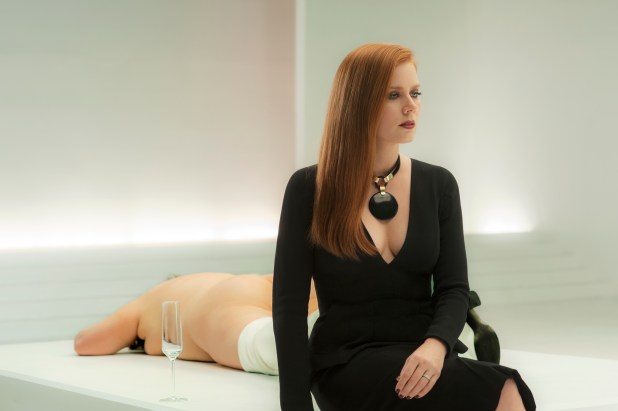
Nocturnal Animals is so much and so elusive in letting us know what it is. At a basic level, it is three narratives: The Present, The Past, and The Fiction. All of these narratives are filtered through a single viewpoint, and they tell us much about the effects of love and hate. The story of Nocturnal Animals begins in the Present with Susan Morrow (Amy Adams), a California art gallery owner whose life is a comfortable one, luxurious and successful. She is in her second marriage and with a young adult daughter. What she thought would make her happy has failed to do so. Her daughter is living away and distant while her husband is habitually cheating on her. Into this mix arrives a manuscript from her estranged first husband, Edward Sheffield (Jake Gyllenhaal). The novel is titled Nocturnal Animals, a name he used to call Susan.

Continue reading “Movie Review – Nocturnal Animals”

Movie Review – Always Shine

Always Shine (2016, dir. Sophia Takal)

hero_always-shine-2016

Two friends, Beth and Anna, are headed to Big Sur for a weekend getaway. Both women are actresses in Los Angeles with a big difference: Beth keeps booking bigger and bigger roles while Anna is passed over regularly. Anna believes this is rooted in their personal demeanors. Beth is perfect for the sexy but non-threatening female roles. Anna is “aggressive” by simply being very clear and direct about what she wants. Over the course of this weekend the friendship between these women will be strained to the breaking point with horrific consequences.

It’s no surprise that Always Shine is thematically about women existing in male dominated spaces. Our main characters are archetypal depictions of women in cinema, or in Anna’s case women that are marginalized in cinema. Director Takal shows a ton of skill in layering that theme under the story of this friendship and the psychological breakdown of one character. What could have been didactic and ultimately turned into a philosophical abstraction ends up being a visually engaging psychological thriller that isn’t exploitative.

The challenge in a film like Always Shine is making sure the audience doesn’t view one character as the bad one and the other good one. Beth is your traditional Final Girl and the film opens with her auditioning for the role of such a character in a horror movie. The producers inform her that the role will have “extensive nudity” and Beth is unaware of this fact, her agent didn’t tell her of that detail. Our introduction to Anna is a direct to camera monologue when she picks up her car from the mechanic. A repair was made without her consent and she unloads. Both of these scenes set up how these women are perceived by the men they interact with, but they are also subverted for the rest of the film. In particular as we get to know Anna better, we learn she is not a sweet, kind person. In many ways, she is playing a role to her own advantage.

Mackenzie Davis’ performance as Anna is the core of the film and, like in everything she appears in, she knocks it out of the park. It’s likely Davis experienced the struggles as she was developing her career and likely faces the problem of being offered roles that would force her to take on this behavior that is so antithetical to who she is. There are a number of compelling character scenes between she and Caitlin Fitzgerald who plays Beth that are beyond just awkward but painful. One scene has Anna learning about Beth’s casting as the lead in the horror film from the opening. Anna pushes to do a read through with a hesitant Beth and the scenes plays out like a competition or challenge. Anna is adamant that she’ll show Beth her prowess. The film is intelligent enough to not overtly talk about male perceptions shaping these women, but the subtext is there, buried beneath all the tension.

The structures and the themes of identity working in the film reminded me of Nicolas Roeg’s Performance. In that movie, the traditional macho archetype meets a counterculture sexually liberated almost sorcerer and their persona’s begin to meld and split. Always Shine leaves the final outcome up to the viewer. We see police. We see an ambulance. But one character’s fate is left in question. Will she disappear into the woods, invisible or will she step out and make herself heard?

Movie Review – King Cobra

King Cobra (2016, dir. Justin Kelly)

gay_art3

Sean Lockhart wants to make it in the movies. He intends to become a director and helm great films. He’s taking a rather unorthodox path by first changing his name to Brent Corrigan and then moving in with a man named Stephen. Stephen runs King Cobra, a gay pornography website and Brent is becoming his biggest star. Simultaneously, we’re introduced to Joe and Harlow, a pair of male escorts in a committed relationship. Joe never hesitates to indulge Harlow and provide him with every extravagance. Harlow carries the trauma of abuse from his stepfather, and this had caused Joe to become almost psychotically protective of him. These two pairs of men are on a trajectory towards each other. The events of this story will end in betrayal and murder. This is the story of King Cobra.

The film is based on real events, though director Kelly has taken a lot of liberty with the facts. The real life Sean Lockhart has expressed much disdain over the way the film portrays queer culture. Via Twitter he stated, “I gave them permission to use my name but explicitly made it clear that their story was heinous & not sanctioned. They told me they couldn’t change their screenplay after we entered negotiations.” Director Justin Kelly is a gay man himself and has stated that his interest in the film came from a more true crime angle that happened to feature representation of “different kinds of gay characters.” I find that both men have some very solid ideas and interpretations of the final product. There are some incredibly strong moments, but flaws are still present that degrade what could be a fascinating film.

The two most solid performances, in my opinion, are Christian Slater as Stephen and Keegan Allen of Harlow. Slater walks a very fine line with Stephen as both a lecherous older man getting off on young guys and a very isolated gay man from an older generation who didn’t have a support network for coming out. He is still publicly closeted and tells Brent a painful story about his first experience with another man and how his friends ostracized him after finding out. The film doesn’t come down black or white on the issue of Stephen exploiting  Brent, we are left to decide what their relationship was.

When you first glimpse Keegan Allen, you’ll likely think of Joaquin Phoenix, and there is a strong physical resemblance. Another resemblance is that Allen is arguably the strongest actor in this picture. The character of Harlow has many layers and Allen makes interesting choices about how to play him. There is genuine love from Harlow to Joe and a desire to be monogamous with him. Joe, knowing that their finances are crippling them and keeping this from his partner, forces Harlow to continue meeting with clients. My hope is that we continue to see Keegan Allen in films because I get the sense there are some great performances there.

The most glaring problem with King Cobra seems to be a glaring issue in a lot of films: James Franco. Franco produced this film and chose to play Joe, the manic abusive lover of Harlow. I can’t say I understand a single choice Franco makes when it comes to playing this character but everything he does seems to pull the viewer out of the film. You’ll have a scene that is setting a muted, layered tone and then Franco comes on the screen and it devolves into dark comedy. He plays a complete caricature. The film has a lot of gratuitous simulated gay sex and the sex that appears as part of the porn productions is expectedly smutty but makes sense. Franco’s most explicit sex scene is such a joke I can’t imagine audiences not howling in laughter at his horrible performance.

King Cobra is a true crime film that plays with the idea of being a moody, independent film but falls into but ends up becoming borderline exploitative. There are some interesting performances, but they aren’t given the support needed to become great. There was the opportunity to explore some intriguing themes: the generation gap in the gay community, the American culture’s obsession with appearing wealthy. But every time one of these themes emerges it is just as quickly dropped.


Movie Review – The Fits

The Fits (2015, dir. Anna Rose Holmer)

the-fits-0-0

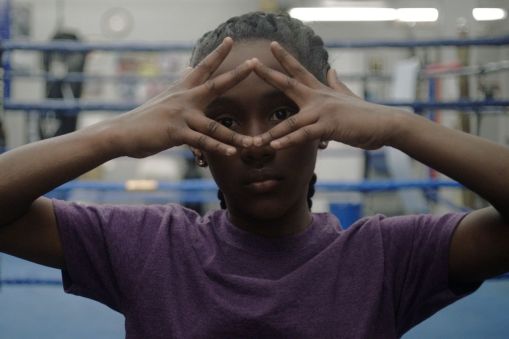
Toni, an eleven-year-old girl, is very focused and determined when it comes to working out with her brother at the local community center’s boxing gym. She even stays after to help him wash towels, replace water cooler jugs, and get a little extra training. However, she’s recently been intrigued with a competitive girls’ dance team that trains in the larger gym at the community center. Slowly, Toni begins to be torn between these two worlds and witnesses girls on the team seemingly falling ill to strange trance-like seizures.

Continue reading “Movie Review – The Fits”

Movie Review – Mommy

Mommy (2014, dir. Xavier Dolan)

mommy-two

The film opens with title cards that explain we are going to be viewing an alternate 2015 where a new political regime has come to power in Canada and passed a law titled S-14. The law allows for parents of emotionally troubled children who are in low socio-economic conditions to send their children to hospitals and mental health care facilities without regard to fundamental justice. Fundamental justice is a much broader sense of civil rights, designed to anticipate unknown future laws that might try to violate the rights of individuals by being intentionally vague. In this situation, we meet Diana Després (Anne Dorval), a widowed journalist who is forced to remove her emotionally unstable son, Steve, from a juvenile detention facility after he burns another child. From there, their living situation becomes more complicated as work dries up and tension between Diana and Steve intensifies. Into this mix is thrown their neighbor across the street, Kyla (Suzanne Clément). This trio makes up a very different family unit, and they experience highs and lows ending up in a bittersweet place at the end of the film.

This is the last Xavier Dolan film of the month, and it is fascinating to see his growth as a filmmaker in a relatively short time. I Killed My Mother came out in 2009 and next year he has his seventh film coming out. He has also developed a stronger sense of aesthetics since that first feature. In an interview about Mommy, Dolan explained the importance of fashion in his work and how designing the costume of his characters is a crucial element in his writing and directing. In Mommy, each character tells us their story through their clothes, before a single word is even spoken.

The element of the film that you’ll immediately notice is the 1:1 aspect ratio, meant to resemble a cell phone camera filming. The movie is not found footage, but Dolan explained that he believes the aspect ratio to feel incredibly intimate. This seemingly unimportant and possibly pretentious element of filmmaking actually plays a crucial role in conveying the emotional conditions of the characters. Twice in Mommy, the screen expands to a 2:35:1 ratio. The first time this happens, it is to convey a sense of exhilaration and the second is to communicate Diana’s internal pain and struggle near the end.

Not enough can be said about the performances of Anne Dorval and Suzanne Clément in this film. Both actresses have been with Dolan in four out of his now seven films. Each time they play a prominent role they reveal a different facet of themselves. Dorval has played a mother in three films (I Killed My Mother, Heartbeats, and Mommy) and each portrayal is of an entirely different character. Clément is amazing to watch in light of her performance in Laurence Anyways. Kyla could not be a more different character, but the actress brings layers of depth and leaves ambiguity as to what has left Kyla with her speech impediment and why she has gone on sabbatical from teaching.

What is most important about Mommy is it’s honest and heartbreaking portrayal of how poverty destroys a family’s ability to get quality mental and emotional care. Financial hardship creates barriers to getting a lawyer, paying the bills, and generally living life. Diana struggles with creating a sense of hope for Steve and succumbing to the stresses of life and lashing out at him. Diana sums it up in a speech that can be read in some different ways:

“[…] I’m full of hope, okay. The world ain’t got tons of hope. But I like to think it’s full of hopeful people, hoping all day long. Better off that way because us hopeful people can change things. Hopeful world with hopeless people…that won’t get us far. I did what I did, so that way there is hope.”

Movie Review – Laurence Anyways

Laurence Anyways (2012, dir. Xavier Dolan)

img-holdingxavierdolanembed00_112722557316

Laurence Alia (Melvil Poupaud) is a literature teacher in Montreal who is a long term relationship with Fred (Suzanne Clément). Laurence is also a transgender woman living as a man and has yet to reveal this truth to anyone around her. Laurence and Fred’s relationship is volatile one, and we find it at a high point, but hints show us there have been many ups and downs. When Laurence finally reveals that she wants to begin transitioning, Fred runs but eventually comes back after she’s had some time to process this idea. She encourages Laurence to start dressing in ways she feels comfortable and to take those steps to begin living the life her partner needs. The rest of the film explores the impact this change has on Laurence and Fred’s relationship as well as how Laurence grows and finds support outside his immediate circle.

Xavier Dolan finally stepped away from merely autobiographical work to make a film about an experience he has never had. The result is a film that is ultimately going to turn some people off if they approach it with a certain expectation. Laurence Anyways is not a film about a fully realized transgender woman. It is a film about transition and expectation. It is a film about making compromises when the things we need to survive conflict with the people we love. And while it has “happy ending” it is not the ending a more traditional filmmaker would come to.

At its heart, Laurence Anyways is a highly French film, like all of Dolan’s work. Emotion runs high and big chunks of the film are impressionistic glimpses into the inner thoughts of our characters. A woman sits on a sofa reading a poem, and we see the set engulfed in torrents of water. Laurence and Fred step forth from a house after a critical moment in their relationship and step through a rainfall of clothing. A character hesitates before a doorway, contemplating how their next step will determine the direction of their future and leaves are violently whipped around just beyond the glass letting them know this could be a risky path. Heartbeats was primarily a queer remake of Jules et Jim and, while I’m not an expert in French or queer cinema, I strongly feel Laurence Anyways is taking on tropes of traditional romantic French films and remixing them with this large, crucial idea of transgender identity.

Dolan doesn’t shie from the uncomfortable throughout the film. The first third has a high, positive energy threaded throughout. Once the formal transition begins though we see characters who were accepting in theory start to question how they feel about Laurence. Dolan doesn’t seek to tell a historically factual accounting of a relationship, rather the emotions of a relationship. Once Fred first comes to accept, or think she has accepted, her partner’s choice she ecstatically tells a friend that “Our generation is ready for this! The sky’s the limit!” When you reach the conclusion of the film these words take on a new context and Laurence and Fred’s relationship is not the simple, easy thing that Fred believed.

Laurence is not a perfect representation of a trans person and the film’s lack of actual trans people does feel slightly problematic. Poupaud’s performance, however, feels incredibly honest. The film uses the framing device of Laurence being interviewed 10 years after the start of the film. She explains to the reporter that she had “stealing the life of the woman [she] was meant to be.” Throughout, no matter how other characters react to or try to advise Laurence she staunchly fights to remain true to herself. This doesn’t mean life plays out with sunshine and rainbows, but this central focus keeps her from failing in this larger ideal. Dolan infuses the conclusion with a bittersweet ending. While Laurence has become on the outside the woman she has always been internally, there has been loss along the way. The greatest changes in our life are wrought with pain and loss but, if they lead us to a greater understanding of the truth within ourselves, we will endure.

Movie Review – I Killed My Mother

I Killed My Mother (2009, dir. Xavier Dolan)

jai_tue_ma_mere-1

If you look up the many articles and interviews about Xavier Dolan, you will likely get a picture of an arrogant young artist. These would not be wrong, but I would challenge that this portrayal is negative particularly in cinema. Dolan represents a strong, re-interpretive Millennial energy that was inevitable in film. In the same way, the French New Wave and the iconoclastic American 1970s filmmakers made their mark in the form; Dolan is doing that same type of work. Does he indulge? Damn straight he does. But I challenge anyone to find a single auteur who doesn’t indulge constantly.

Dolan’s first feature, I Killed My Mother is the story of Hubert Minel (played by Dolan), a 16-year-old gay man, still closeted to his mother and who engages in the most vicious arguments and conflicts with this central caretaker. Dad stepped out when Hubert was seven and left Chantale, the mother (Anne Dorval) to raise the boy on her own. Hubert is two months into a relationship with a classmate and looking towards a career in the arts, encouraged by a supportive teacher (Suzanne Clément).

Dolan is a filmmaker influenced by the medium. No moment in I Killed My Mother is simply a moment; they are accented by flourishes of style from Goddard-like framing (off center and with both conversants in the frame), slow motion almost from a perfume ad, black and white confessional close-ups, and myriad of other touches that add emotion to a relatively typical story of parent-child conflict. He also knows the importance of establishing character through setting, as seen in the very opening close-ups of his mother’s tchotchke-filled home. We also learn volumes about her through her hairstyle, clothing, even the manner in which she eats breakfast. And all this if before she even has a modicum of dialogue.

While Dolan is the composer and conductor, Anne Dorval as Chantale is the star player. It would have been very easy for Chantale to slip in caricature, but Dorval does gritty work to keep the character faceted and obscured. In moments of high tension, she will begin to follow the same type of script I imagine all of us remember from our adolescence, which is underscored by Hubert calling her out on this same repetition. She shuts him down in the same manner that frustrated us all and drove many teenagers to those primal, guttural ARGHs! There is a moment near the end of the film where her role as a single mother is blamed as the reason why Hubert is struggling academically and exhibits such rebellious behavior. This is the moment where Dorval lets Chantale crack through the thickly layered makeup and sequined floral outfits. Chantale’s love for her son is beyond the question of outsiders, and she makes that known.

Dolan made I Killed My Mother at the age of 20 and has not tried to hide the fact that it is heavily biographical. He has stated that this is a film he couldn’t have waited decades to make, that it needed the raw emotion of being only steps away from adolescence. And he is completely right. A forty-something making the film in deep retrospect would have let nostalgia slip in between the cracks. There is no wistful memory manifesting falsified beauty here. Through the ugliness of this relationship, we see Beauty and Love. We don’t fight and scream with this level of fervor at people we hate, the type of anger glimpsed in the film born out of intense love and need. It is the attempt to communicate love but failing to do so because the language does not possess the vocabulary to do so.

Hubert states in one of his bathroom confessionals on camera that he doesn’t love his mother like a mother, but he loves her nonetheless. During a late night conversation, Hubert fueled by ecstasy and barging home full of elation to speak to Chantale; he states, “I love you. I am telling you this so that you won’t forget.” This is the moment where the nature of the relationship changes, not profoundly, but both characters redefine the bond. Hubert is no longer the dependent glimpsed in the Super 8 home movies at the old house by the lake. He is an individual coming into his own, intellect, a sexual being, a partner in a relationship, developing complex ideas and emotions. Chantale is reticent to accept that, but by the end of the film, they come to an unspoken understanding. Their relationship will never be what they both remember and wish it could be, something new will form and in that they will find a place for their love.

TV Review – Atlanta: Season 1

atlanta_ka_p11273_fin_01_couchfrontc

The city of Atlanta exists in a strange space geographically and culturally. Burnt to the ground during the American Civil War, rebuilt and exploded into a major hub in the Southeast for manufacturing and the civil rights movement, now a diverse and constantly shifting urban space. It’s one of the largest cities in America, but it’s surrounded by lush, verdant hills. It’s the place where the city meets the country. It’s a place where rappers hang out in the woods wearing their hunting camo. Donald Glover wasn’t born here, but he was raised in the contradiction that Atlanta is, and he understands the true wonder of that beautiful, messy conflict of ideas.

Earn (Glover) doesn’t so much as live in Atlanta, as he exists there. He dropped out of Princeton. He lives with the mother of his child, but their relationship is complicated, and she sees other men with no argument from Earn. He works a dead-end at the Atlanta airport. Even his parents won’t let him in the house because they know he’ll ask for money. When his cousin Alfred releases a regional hit as the rapper “Paper Boi,” Earn sees this as an opportunity to make something of his life as Alfred’s manager. But that’s not really what the show is about; Atlanta spends the next nine episodes challenges the viewer’s’ notions of just what the show is and what is it about.

Glover plays with traditional television structure, partially inspired by the work done by Aziz Ansari’s Master of None and Louis C.K. on his FX series. The success of the latter show has opened doors for creators like Glover and Pamela Adlon’s Better Things not to be forced into typical three-act sitcom structure. Atlanta has no loyalty to any one character and will allow the focus to meander depending on the interest of the moment. Sometimes we have Earn hustling for Alfred. Others we follow Alfred’s right-hand man, Darius as he goes through a series of deals and bartering for some unknown purpose. On the show’s most interesting episodes it highlights a day in the life of Vanessa, Earn’s on again/off again after she makes a career ending mistake. There’s also an entire episode framed as a local program on issues in the black community, where Alfred is confronted over transphobic comments.

The play between relationships is what makes Atlanta so engrossing. Earn and Alfred are arguably the show’s core relationship, and they don’t behave like a typical performer/manager. Their familial connection seeps into every aspect, and Alfred makes concessions that you would not see a performer do for someone that is going to take 5% of their paycheck. And Earn looks after Alfred in a more intimate way than most managers.

Even more interesting is the relationship between Earn and Vanessa. From their first scene together, waking up in bed and beginning their morning routine there is a palpable tension. As the series goes on, we get two spotlight episodes with just her and one crucial episode about the next stage of she and Earn’s relationship. Vanessa is a highly educated woman who has ended up sidetracked with a child and undefined relationship. We see her interact with peers from college who have made their living in possibly questionable ways and Vanessa ponders other paths.

What kept me coming back to Atlanta was the magical realism of the series. Smartly, Glover and company don’t go overboard in the first couple episodes, hinting at the less familiar elements of the series. Glover has described the series as “Twin Peaks with rappers, ” and this comes through during Earn’s encounter with a strangely stoic man on the bus offering him a Nutella sandwich before exiting the bus and wandering off. As episodes roll up, we find Justin Bieber played by a young black man, the quirky inhabitants of a police lock up; an opportunistic social media-driven pizza delivery man, a slimy club promoter who escapes through secret passages, and many more strange and interesting side characters. Glover believes Atlanta is a magical place and works to convince us of the same.