Best Television 2011 – Jan thru June

When I’m not watching movies…I’m probably working my way through a television series. These are my favorite television programs that I have watched the first half of this year. It’s a mix of both old and new, from the States and the U.K.


Game of Thrones Season 1 (HBO)

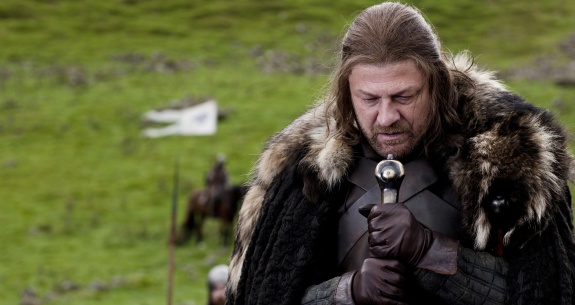
Hands down the highest quality drama on tv the first half of the year. I remember seeing the teaser commercials for this, didn’t really know much about George RR Martin’s Song of Fire and Ice series, I’m not the biggest high fantasy lit fan, so I came into it with moderate expectations. How those expectations were exceeded. This is the first drama since Lost that has gotten to me so emotionally. Martin and the people at HBO understand you have to give a damn about your characters and then the worldbuilding can happen. This series, based on the first of four books, follows the members of the Houses Stark, Lannister, and Targaryen. There’s a lot of political intrigue, espionage, a whodunit style story, and just basic character development that adds up to a television series that makes me blot out all other distractions when I watch it. HBO proves once again that, if you have a property you want to develop for television and want to have creative freedom to make it the best, you go to them. Never in a million years would the networks have the guts to take the risk on a show that is this amazing.

Continue reading “Best Television 2011 – Jan thru June”

Film Review – The Fighter

The Fighter (2010, dir. David O. Russell)
Starring Mark Wahlberg, Christian Bale, Melissa Leo, Amy Adams

What is interesting about David O. Russell’s current film, The Fighter, is how the way the story is told parallels the situation our lead, Micky Ward (Wahlberg) finds himself in. He is the younger half-brother of  Dicky Eklund (Bale), a former big time boxer whose career fell apart after he became addicted to heroin. The opening scene of the film is about Dicky’s pomposity and grandiose nature overshining Micky. This is the situation Micky finds himself in consistently. Despite Dicky’s failings as a son and a father, everyone seems to love him and give him an infinite number of chances. Even Micky’s boxing career seems to be one big stepping stone in Dicky’s comeback. While The Fighter treads into dark territory it still comes off as the feel good movie of the year, in an honest way with its audience.

Continue reading “Film Review – The Fighter”

Film Review – 127 Hours

127 Hours (2010, dir. Danny Boyle)
Starring James Franco, Kate Mara, Amber Tamblyn, Treat Williams, Clemence Posey, Lizzy Caplan

Aron Ralston couldn’t be contained and he wasn’t going to let anyone hold him back from exploring deep canyons or scaling perilous cliffs. That rush of adrenalin as he tackled the impossible was everything, and like most addicts, he damaged a lot of relationships for the sake of his rush. Director Danny Boyle (28 Days Later, Slumdog Millionaire) takes Aron’s story of survival and will and transforms it into something transcendent that becomes incredibly philosophic. The film succeeds based on two factors; the acting of James Franco and what is essentially a masterclass in film editing as storytelling.
Continue reading “Film Review – 127 Hours”

2010: The Year in Television

Looking back at 2010 there were a lot of highlights from television. Here’s the ones that standout as the most memorable for me:

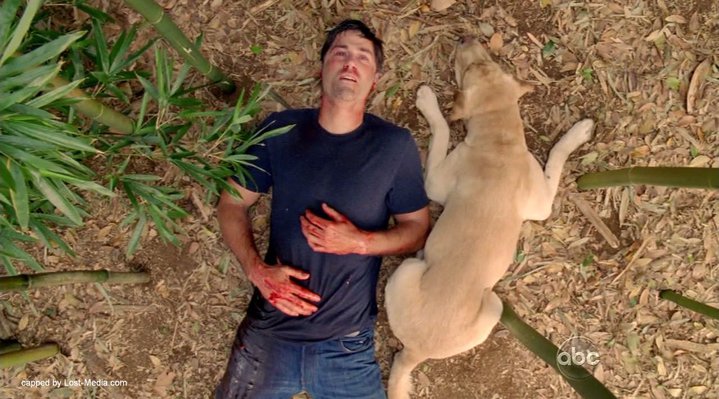
The Lost Finale (ABC): After six years, Lost came to an end with a three hour finale that didn’t seek to solve the myriad of mysteries built up during the show’s run. Instead, the creators chose to focus on emotional closure. There are some valid criticism of the show’s six season, but overall I felt very satisfied by the way things ended. It definitely evoked some of the same feelings I had years ago reading The Last Battle by C.S. Lewis. Despite my own personal views on religion, I found the “spiritual” ending to not come off as hackneyed. It was also the hardest I’ve ever cried while watching a single episode of television.

Continue reading “2010: The Year in Television”

Film Review – Black Swan


Black Swan (2010, dir. Darren Aronofsky)
Starring Natalie Portman, Mila Kunis, Vincent Cassel, Barbara Hershey, Winona Ryder

With Darren Aronofsky you know you will get something ambitious, whether its ambitious in its drama (Requiem for a Dream), its scope (The Fountain), or its simplicity (The Wrestler). Are they always winners? Nope, but they always bring forth a completely unique vision and experience. With Black Swan, Aronofsky is bringing together elements from all his previous work. You have the severe schizophrenic breakdown of a character, you have a hallucinatory transformations, and you have the destruction of the physical body for the sake of one’s art. The film also breaks the boundaries of genre by being both one of the best dramas and one of the best horror films of the year.

Nina Sayers (Portman) is one of the many dancers that perform at New York’s Lincoln Center. The prima ballerina of the company (Ryder) is on her way and out and the manipulative director, Thomas (Cassel) is looking for his new “little princess”. A re-interpretive staging of Swan Lake is in the works and Nina finds herself in competition with the new girl, Lily (Kunis). Lily works against the conventions of the ballerina, staying out late, dropping ecstasy, and being very laid back with her work ethic. Nina must also contend with her mother (Hershey) who is babies her daughter and attempts to mold her into the dancer she failed to be. Nina is suffering from strange abrasions on her back and is beginning to have intense nightmares about the ballet. All of this is leading down a dark and destructive path….or is she merely fighting against those who have constrained her since she was a child.

Everything about this film clicks, the performances are pitch perfect and the direction from Aronofksy hits on all cylinders. There is the return of the shaky handheld cinematography of The Wrestler that adds that vérité feel to the story. In direct contrast to the realism of cinematography there is amazing use of makeup and CG effects. The films does a great job in balancing the psychological horror, and will make you question deeply what events actually happen to Nina and which are the product of a fragmented mind. I was most impressed with how Portman manages to infantilize Nina’s behavior in very subtle and nuanced ways. She doesn’t babytalk, but the way she interacts with her mother and her director bring out her childlike mentality. Her rebellion against these forces of control is played naturally and its horrific outcome resonates in the mind for a long time after.

Film Review – I Am Love

I Am Love (2009, dir. Luca Guadagnino)
Starring Tilda Swinton, Flavio Parenti, Edoardo Gabbriellini

I Am Love is attempting to tread the same territory of Italian cinema in the late 1950s and 60s, in particular I was reminded of Visconti’s The Leopard. They were films about the aristocracy and the secrets that lied beneath the clean and constructed surface. I Am Love brings modern elements into its plot, but still manages to evoke a sense of the classical. Swinton is perfectly cast as a Russian-turned-Italian via marriage. And the cast around her does an excellent job in their roles. The plot is fairly straightforward, there are only a few twists, but its the cinematography and music that really raise the picture above the rest.

Emma Recchi (Swinton) is the matriarch of an Italian family who has made its fortune in textiles, even during the time of Mussolini, an element that plays a bit part sub-textually in the film. Her husband and son have inherited the business from the elderly father and a tension exists, as Emma’s husband believed he would be the sole inheritor. Emma has recently met her son’s friend, Antonio, an aspiring chef. Emma’s son is helping fund Antonio’s first venture into the restaurant business and so she and the young man become more acquainted, eventually starting an affair.

You will be an awe of the camera work in this film. It is some of the most lush and gorgeous work I have ever seen on film. Director Guadagnino is able to pull the warmth right out of his bright spring scenes and bone chilling cold from the winter ones. This is a very sensual film, constantly focused on sex and food, and to get those themes across you need powerful cinematography just like this. In addition, the choice to use musical pieces by John Adams was brilliant. Adams’ contemporary orchestral music helps to create momentum and then a sense of urgency, especially in the film’s surprisingly frantic finale. A great overlooked picture that every fan of good foreign cinema should check out.

Director in Focus: Werner Herzog – Signs of Life

Signs of Life (1968)

Before we jump into this first film, some background on Werner Herzog. Werner Stipetic was born in Munich in 1942 in a house that was destroyed by Allied bombing a couple years later. The family migrated to the Alps, where the father left the family, causing 12 year old Werner to take his grandmother’s last name, Herzog. Herzog showed a rebellious streak early on, when asked to sing in front of his class and refused. Till he was 18, as an act of defiance, he never sang, listened to music, or learned to play a single instrument. At the age of 14, Herzog encountered a simple encyclopedia entry on film making that infused the desire in him to create. He stole a 35mm camera from the Munich Film School in act he defends as a necessity for him to continue living. Herzog has been married three times, something you would expect based on his volatile personality. One more interesting note about the director, during a 2006 interview with BBC critic Mark Kermode, Herzog was shot by an unknown person with an air rifle. He seemed to brush it off and attempted to continue with the interview, despite Kermode freaking out over the incident.

Signs of Life is a war film without war, instead the soldiers are driven to madness through sheer boredom. Set on Crete during World War II, the film finds Strosek and two fellow German officers put in charge of a munitions depot nestled in ancient ruins. The main character here is the most blank canvas, while his compatriots, Becker and Maynard have more fully fleshed personalities. Strosek has ended up engaged to local Greek girl, Nora in a relationship that seems founded in their mutual lack of anything interesting to do. The film is narrated in a stoic, travelogue style that tempers the picture up until its last twenty minutes when Strosek becomes completely unhinged.

Signs of Life is cited as an inspiration for Kubrick’s The Shining, however I saw a lot of similarities with Polanksi’s Knife in the Water. Both films are of the same era and place their characters in a lifeless, desolate landscape where they are psychologically pushed to extremes. As we’ll see with the majority of Herzog’s work, he is incredibly interested in the psyche of men who have a break with reality and the role nature plays in that. Strosek is positioned against his desert setting as minuscule, he is insignificant, hence his position defending a post that is no danger of being attacked. Signs of Life is about humanity’s innate need to believe they are useful. When we feel that our society has no use for us it will inevitable cause a break from the social expectations and mores.

Up next: Even Dwarfs Started Small

Film Review – The Social Network


The Social Network (2010, dir. David Fincher)
Starring Jesse Eisenberg, Andrew Garfield, Justin Timberlake, Armie Hammer, Max Minghella, Rashida Jones, Brenda Song

In the middle of David Fincher’s latest film a character sums up the current technology driven economy by saying this current generation creates jobs for themselves. In the past supply-demand was the dominating force; the people wanted something, then someone provided it. Now, we have products that are given to us and we are conditioned to need and want them. Facebook as one example. No one ever needed Facebook, but by preying on some very primitive psychological compulsions, it has become an addictive force. The Social Network rewinds back before there was Farmville or Poking or Mafia Wars, and focuses on the collegiate roots of Facebook. Here we see at its core the entire idea came from the exclusivity of Harvard’s Final Clubs.

The more intimate moments of the film are fictionalized and used to reveal aspects of Mark Zuckerberg’s personality, but the litigations that frame the film are very real. Its 2003, and Mark is a sophomore at Harvard, a kid from a middle class family who is studying computer science. Mark and his best friend, Eduardo are a clever pair, with Eduardo able to get money together whenever needed. After being spurned by a female student due to his emotionally stilted personality, Mark strikes back via Livejournal and quickly cobbled together webpage that has students rate Harvard girls against each other. The site gets him placed on academic probation and the attention of the Winklevoss twins, monied legacies who want to make a Harvard dating site. Mark listens to their idea, turns it down, then rebuilds it in his own images. As the site spreads beyond the walls of Harvard and even across the pond, Mark becomes more obsessed with becoming the very elite he resented in school.

This film succeeds on a number of factors: Aaron Sorkin’s amazing script, David Fincher’s perfect direction and editing, and Trent Reznor and Atticus Ross’ score. In a movie that is mostly people sitting around talking, you think it would drag, but the craft around everything creates tension and drama in every moment. I find myself liking every *other* Fincher film. Meh on The Game, loved Se7en, Fight Club doesn’t hold up, Zodiac is underrated, Benjamin Button is a yawn, and now The Social Network. I think Fincher works best with a script that isn’t trying to be anything huge. These small stories are given scope through the way he makes films. The score is also one of the strongest elements of the film, in particular a rowing competition scene that involves tilt-shift camera work and tight editing that is a short film unto itself.

The Social Network reminded me a lot of films like All the President’s Men. That film was made only a couple years after the events of Watergate, and it is a much stronger film about the Nixon administration than it would have been if they made it in 1990. The Social Network is very much about this moment and mindset in time. The young men behind Facebook were following the capitalist fundamentalism they were born into in the 1980s. They were never too concerned about the money behind the site, it merely worked to fund the venture, but they desired the power that came with it. There’s a moment in the film, Mark and Eduardo have just had sex with a couple girls in a club bathroom, they stand outside grinning and revealing their adolescent nature. Eduardo turns to Mark, smiling, and says “We have groupies”. Counter this with an image at the end with Mark obsessively refreshing a Facebook page and its clear this mindset is a destructive one.

Director in Focus: John Cassavetes – Love Streams


Love Streams (1984)
Starring John Cassavetes, Gena Rowlands, Seymour Cassel

As I’ve talked about before, Cassavetes focuses a lot on the psychological fragility of his characters. Often his main characters feel like Kerouac characters, they live life to self-destructive extremes, exploding like roman candles and inevitably fizzling when they can’t handle things. In Love Streams, he spends the first half of the film exploring two separate figures that fit this bill, then bringing them together for the last sad, heartbreaking hour. And, as with so many of his films, Gena Rowlands is the force of nature that powers things forward. Cassavetes also holds his own and looks much older than his appearance in 1977’s Opening Night. While I don’t know the details, it wouldn’t surprise me if this was when his health problems were starting.

Robert (Cassavetes) is an alcoholic writer who lives in a labrynthine mansion in the Hollywood Hills, populated with a parade of call girls. He finds women to obsess about, charms them, then reveals his true nature of drunken hopelessness and they leave. Sarah (Rowlands) is a women going through a divorce and trying to cling desperately to her teenage daughter, while her ex (Cassel) argues that Sarah’s history of mental illness makes her unfit to be the primary custody holder. These two figures come together and share an interesting connection that leads to a sad and rather bleak ending.

The film does wander as Cassavetes is wont to do, though it wanders into some interesting places. In particular is a segement of the film devoted to Robert’s meeting his son, now about 10 years old, and being pressured to take him for the weekend. Being the horrible figure that he is, he frightens the kid off with the bevy of women lounging around his house, chases the kid down and brings him back, then gets him drunk. Impulsively, Robert decides they are going to Vegas, where he drops the boy off to go carousing with women. When he shows up the next morning, the boy is weeping and saying he wants to go back to his mother, which pisses off the drunken Robert off and he berates the boy for not being a man. This is very interesting as we have seen what a grown up child Robert is for the majority of the film. Love Streams stands as one of the more captivating works by this director, with some strong artistic moments.

Next: we finish things up with the slapstick comedy Big Trouble (not the Tim Allen movie!)

Director in Focus: John Cassavetes – Gloria


Gloria (1980)
Starring Gena Rowlands, Buck Henry, Julie Carmen, John Adames

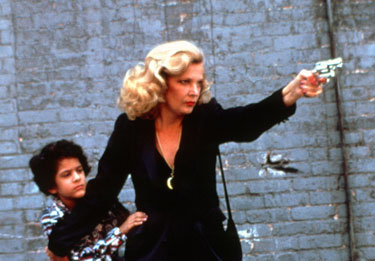
One of the few aspects of Cassavetes’ films that kept his work from falling into self-indulgent tripe was his muse and wife, Gena Rowlands. Rowlands regularly grounds the films she appears in with performances that challenge typical ideas about women. She’s just one of those actresses that its a joy to sit back and watch work. And here, in Gloria, she was given a larger commercial venue to display her skill. And it was thanks to Rowlands that Cassavetes directed this film in the first place. Cassavetes has originally just written the screenplay and sold it to Columbia Pictures, after which Rowlands was cast in the lead. She highly recommended her husband to direct his own script and he was hired.

The story follows the titular Gloria (Rowlands), a woman who grew up around mob types and has the hard exterior to match. She ends up in the custody of young boy (Adames) whose mob accountant father and family are murdered. Gloria uses her mob connections to try and negotiate she and the boy’s freedom from the endless pursuits. Along the way, Gloria clashes with her young charge, leaves him to fend for himself, but eventually chases back after him. Like the majority of Cassavetes’ movies, this is about a character, not necessarily the plot.

Unlike most of Cassavetes movies, this doesn’t have the ploddingly dull feel to it. The pace is very well done and some thing is always happening. Add to that Rowlands, who gives great performances every time and you have a film that actually had a bit of a commercial life. In fact, the premise of this film would be the basis for Luc Besson’s Leon about a decade later.What enjoyed most about this picture was, how the premise could easily have been maudlin crap, but Rowlands never lets her character fall for any “maternal instinct” nonsense. She has enjoyed a life unmarried without a children, and just because she is with this young boy she isn’t going to start treating him like her son. Even in the film’s conclusion we’re shown that she will not change who she is and is going to talk to this child like an adult.

Next up: Love Streams