Comic Book Review – Klaus

Klaus (2016)
Reprints Klaus #1-7
Written by Grant Morrison
Art by Dan Mora

So many origin stories have attempted to explain Santa Claus’s roots. I just reviewed a middling Netflix animated film a few weeks ago, also titled Klaus, that provided its own explanation. I’ve always been a fan of writer Grant Morrison and their genre-reinventing work in comics. From devouring their run on JLA in the 1990s to going back through their catalog to read Animal Man and more modern work, like Seven Soldiers and Morrison’s extremely engrossing Batman work, I am a fan. Not an uncritical one, though. Some of Morrison’s work just doesn’t click for me, but I always know they will do something interesting, and at least the kernel of fascinating ideas will be in there. 

Continue reading “Comic Book Review – Klaus”

Comic Book Review – All-Star Superman

All-Star Superman (2011)
Reprints All-Star Superman #1-12
Written by Grant Morrison
Art by Frank Quitely

I’m not sure what I think of Superman these days. For anyone claiming to believe there is a single definitive version of him, it shows they don’t actually know the character’s history. The Superman who appeared in the pages of Action Comics #1 wasn’t even Siegel & Shuster’s first attempt to create a character with that name. Over the nearly 90 years that Superman has existed in the culture, he has undergone numerous reboots and minor tweaks. The Golden Age Superman is a different person from the Silver Age version who, in turn, is not the same as John Byrne’s rebooted Man of Steel. Even that iteration from 1985 was changed significantly by the end of the 20th century. In All-Star Superman, writer Grant Morrison is focused purely on the Superman of their youth. This was the Superman of the 1960s, a fatherly figure whose powers bordered on god-like, new ones manifesting as writers needed them. Morrison has chosen what is ironically the least human of Superman’s faces to tell a story about life & death, a Herculean postmodern myth.

Continue reading “Comic Book Review – All-Star Superman”

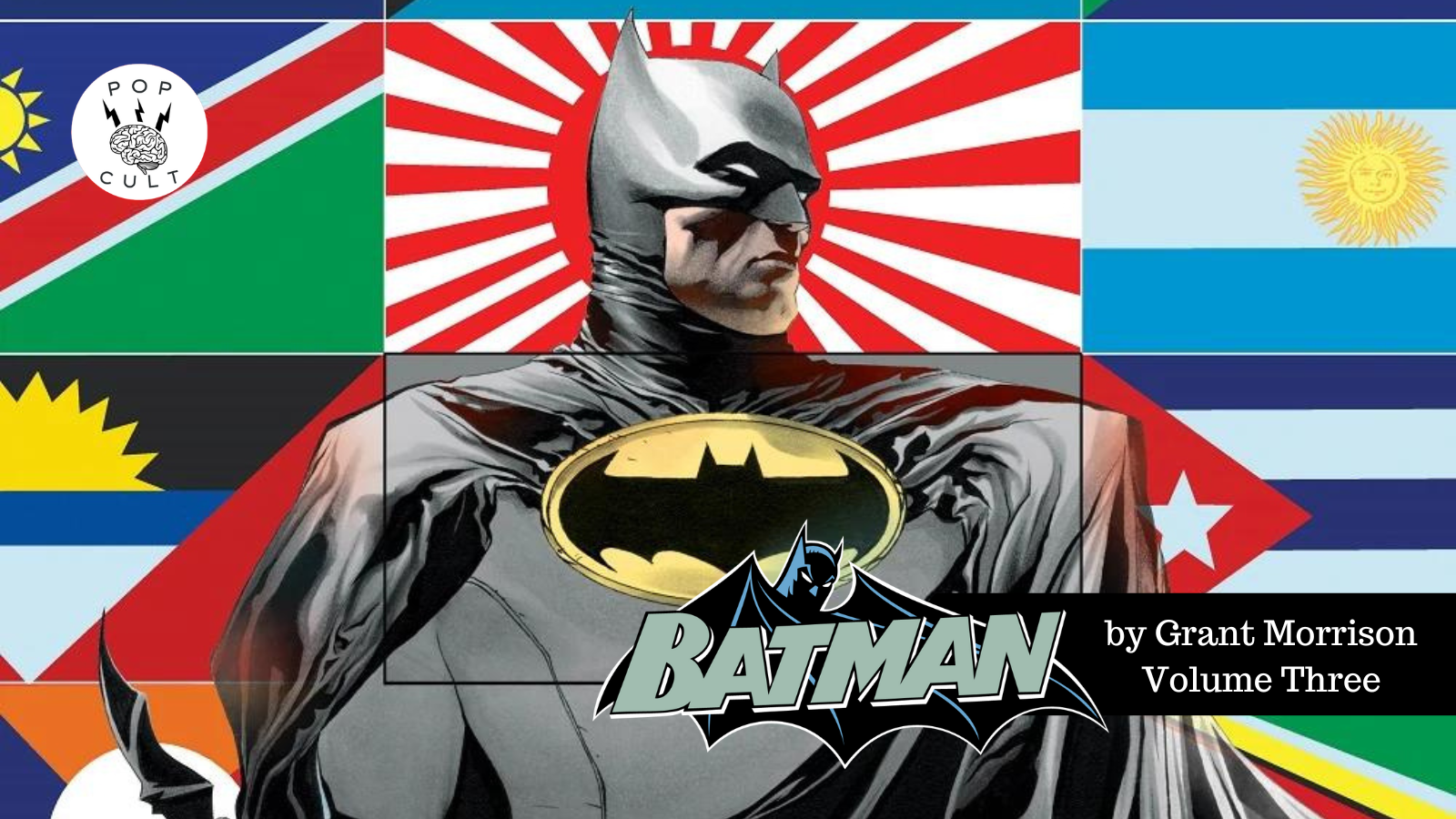
Comic Book Review – Batman by Grant Morrison Omnibus Volume Three

Batman by Grant Morrison Omnibus Volume Three (2020)
Reprints Batman: The Return #1, Batman Incorporated v1 #1-8, Batman Incorporated: Leviathan Strikes #1, Batman Incorporated Special #1, and Batman Incorporated v2 #0-13
Written by Grant Morrison (with Chris Burnham)
Art by David Finch, Yanick Paquette, Chris Burnham, Scott Clark, Cameron Stewart, Frazer Irving

Grant Morrison’s Batman run entered its third act with quite a significant speed bump. Eight issues into Batman Incorporated, the book was canceled along with every other DC Comics title to make way for the New 52. The New 52 was an attempt in 2011 to inject fresh talent and get new eyes on the company’s comics and characters. There was undoubtedly an initial boost of interest, but over the following five years, the company would backtrack many of the changes until the current status quo, which is “embrace everything and continuity will just be hyper-flexible.” At the time, then Editor-in-Chief Dan Didio abruptly ended Morrison’s tenure on Batman with the promise to fans that at some undecided point soon, it would be wrapped up. There is a conclusion, but it still has some frustrating parts due to not knowing how this fits in with how Batman’s timeline was altered.

Continue reading “Comic Book Review – Batman by Grant Morrison Omnibus Volume Three”

Comic Book Review – Batman by Grant Morrison Omnibus Volume Two

Batman by Grant Morrison Omnibus Volume Two (2018)
Reprints Batman #700-702, Batman and Robin #1-16, and Batman: The Return of Bruce Wayne #1-6
Written by Grant Morrison
Art by Tony S. Daniel, Frank Quitely, Scott Kolins, Andy Kubert, David Finch, Philip Tan, Cameron Stewart, Andy Clarke, Frazer Irving, Chris Sprouse, Yanick Paquette, Georges Jeanty, Ryan Sook, Pere Pérez, and Lee Garbett

The Grant Morrison run of Batman is not a perfect thing. The transition from the first chapter to this second has got to be one of the clunkiest, with desperate attempts to try and mesh Morrison’s intentions with their story with Dan DiDio’s editorial edicts. This is why the first three comics reprinted here focus so much on trying to take the death of Batman we see in “Batman RIP” and the death of Batman we see in “Final Crisis” and have them make a single cohesive narrative. In my opinion, it is a big mess. However, that leads to one of the best parts of Morrison’s run, Batman and Robin. The side story of The Return of Bruce Wayne? Eh, I’m not the biggest fan, but it does coherently tie up the Doctor Hurt storyline that began in the first volume.

Continue reading “Comic Book Review – Batman by Grant Morrison Omnibus Volume Two”

Comic Book Review – Batman by Grant Morrison Omnibus Volume One

If you enjoy the reviews, podcasts, and other content we make here at PopCult Reviews please consider sending a tip of appreciation through our Ko-Fi. Thanks!

Batman Omnibus by Grant Morrison Volume One (2009)
Reprints Batman #655-658, 663-683 with material from 52 #30,47 and DC Universe #0
Written by Grant Morrison
Art by Andy Kubert, J.H. Williams III, Tony Daniel, Joe Bennett, Giuseppe Camuncoli, Ryan Benjamin, and John Van Fleet

Batman has had a wildly varied history over his 80 years as a comic book character. The popular conception of Batman as The Dark Knight started in the 1970s and was continued by Tim Burton’s 1989 film. That wasn’t always the way. The most notable example of a different sort of Batman is the high-camp television version of the 1960s, but even before then, the title had a much sillier bent in the 1950s as science fiction stories were more popular. Grant Morrison is a writer who always seeks to encompass the totality of a character when he’s writing a comic, finding a way to make all the ideas fit even if some seem absurd. They understand that comics are inherently silly and shouldn’t be taken too seriously. During their run, Morrison managed to reinvent Batman, adding one particular element that has stuck around for fifteen years and counting: Batman’s son.

Continue reading “Comic Book Review – Batman by Grant Morrison Omnibus Volume One”

Comic Book Review – Seven Soldiers

Seven Soldiers (2010)
Reprints Seven Soldiers of Victory #0, Shining Knight #1-4, Guardian #1-4, Zatanna #1-4, Klarion the Witch Boy #1-4, Mister Miracle #1-4, Bulleteer #1-4, Frankenstein #1-4, Seven Soldiers of Victory #1
Written by Grant Morrison
Art by J.H. Wiliams III, Simone Bianchi, Cameron Stewart, Ryan Sook, Mick Gray, Frazer Irving, Pasqual Ferry, Yanick Paquette, Serge LaPointe, Doug Mahnke, Billy Dallas Patton, Michael Blair, and Freddie Wiliams II

I will not be able to fully unpack Seven Soldiers in this small setting. This is a book worthy of its own full-length book detailing the references, symbolism, and meaning that Grant Morrison has packed into it. I will spend this time talking about how much I appreciate and enjoy this book, touching on some thematic and structural aspects as we go. This cannot be an exhaustive deconstruction of such an overwhelming piece of comic art.

Continue reading “Comic Book Review – Seven Soldiers”

Comic Book Review – JLA by Grant Morrison Omnibus

JLA by Grant Morrison Omnibus (2020)
Reprints JLA #1-17, 22-31, 34, 36-41, One Million, JLA/WildCATs, JLA-Z #1-2, JLA: Classified #1-3, JLA: Earth-2, JLA: Secret Files & Origins #1 , Adventures of Superman One Million, DC One Million #1-4, DC One Million 80-Page Giant, Detective Comics One Million, Green Lantern One Million, Martian Manhunter One Million, Resurrection Man One Million, Starman One Million, Superman: The Man of Tomorrow One Million, New Year’s Evil: Prometheus
Written by Grant Morrison (with many contributions)
Art by Howard Porter, Val Semekis, Oscar Jimenez, and many more

Introduction

By 1996 it was clear that the Justice League has lost its luster among D.C. Comics books. This was a shame because it was the premier team title at the company. Keith Giffen & J.M. DeMatteis’s run on the book transitioned to Dan Jurgens, who eventually made way for Dan Vado with Gerard Jones writing the final arc. The roster by that time was made up of interesting but definitely not marquee level superheroes. Blue Devil. Nuklon. Icemaiden. Obsidian. Wonder Woman was there, but she was about the only notable character among the bunch. Sales dwindled, and Scottish writer Grant Morrison saw it as an opportunity to put their idea of a blockbuster movie take on the Justice League out there. 

Continue reading “Comic Book Review – JLA by Grant Morrison Omnibus”

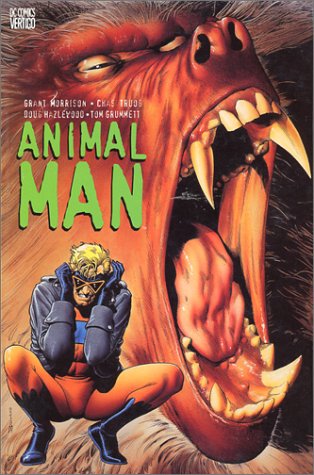
Back Issue Bin: Animal Man #1-26


Animal Man #1-26 (1988-1990)
Written by Grant Morrison
Art by Tom Grummett, Chas Truog, and Doug Hazelwood

It’s no secret that I love Grant Morrison’s work. He’s like the second coming of Julius Schwartz, the crazy DC Comics innovator of the Silver Age mixed with metaphysical, post-modern sensibilities. Just a year after Watchmen’s publication, Morrison wrote what was in many ways a response to Watchmen’s attempt at realism. With Animal Man, Morrison created a hyper real look at the comic book reality and its the relation of creator and creation. The fact that these were mainstream comics published by DC, yet so innovative and experimental is amazing. Its hard to see anything like this happening again, though there was a brief attempt with Brian Azzarello’s Architecture and Morality mini-series in 2006, more on that later.

Animal Man was created decades before, in 1965 in Strange Adventures. The character could take on the abilities of what ever animal life was in the vicinity, so if a bird was around he could fly, if an elephant was close he could charge with massive strength, etc. The character was pretty flat an uninteresting, and even ironically became a member of a team called The Forgotten Heroes in the early 1980s. It was in the late 1980s, that the young upstart Morrison, newly imported from the UK was given the character. DC deemed it fairly safe to test the young writer out on a superhero with little fanbase invested in him, so if he screwed up it wouldn’t cause very much damage. What Morrison managed to do was turn Animal Man into one of the most complex and interesting characters DC published. The character continues on in popularity, having been a major player in events in the last five years, as well as getting his own eight issue mini-series.
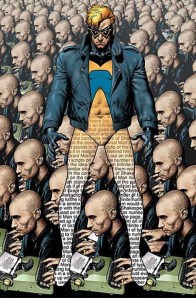
Morrison began things by making Buddy Baker, the civilian identity of Animal Man, a family man. He had a wife, Ellen, and two kids, Cliff and Maxine. In the first story arc of the series, Buddy become involved in a battle between fellow animal-linked hero B’Wana Beast and a company using animals for scientific testing. The story is dark and poignant and there aren’t your typical hero versus villain battles. B’Wana Beast dies and Buddy is changed significantly. In resulting stories he goes vegan, his powers now linked to the emotional spectrum of animals, feeling their suffering. Morrison doesn’t let him get away with this easily, and Buddy ends up in some heated arguments with Ellen who doesn’t appreciate Buddy forcing his personal lifestyle change on the rest of the family. As you can tell, this is not the sort of thing you expect from comic books and its incredibly refreshing.

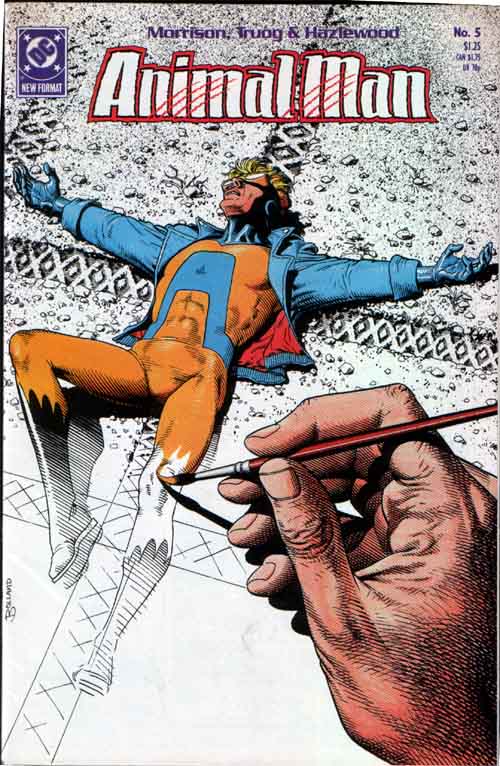
The most mind blowing story up this point came in Animal Man #5, “The Coyote Gospel”. In this story, a humanoid coyote wanders the desolate roads of the American southwest. He’s hunted by an obsessive truck driver who kills him, only for the coyote to rise from the dead again and again. Animal Man, who plays a very backseat role in this story, shows up and the coyote hands him a scroll. The story shifts to the content of the scroll which explains that this coyote came from a universe very much like that of the Warner Brothers cartoons. The inhabitants lived in a state of un-death, dying but constantly ressurecting. This coyote finally became fed up and question his world’s creator. The creator, depicted as a man in a plaid pants and wielding a paintbrush condemned the coyote to wander other worlds. Morrison pulls us back to show that to Animal Man’s eyes the scroll is unintelligible chicken scratch. He tells the coyote that he can’t read this and at that moment the trucker fires, shooting the coyote point blank in the head and killing him. The final full page panel is off a hand drawing this scene which has faded away partially at the bottom as just a simple pencil sketch.

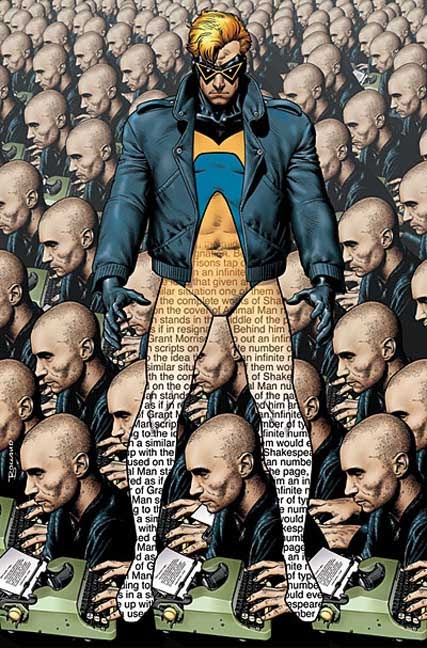
This single issue serves as the thesis statement for the rest of Morrison’s run on the series. He begins to deconstruct the ideas of continuity in comics and how Animal Man’s original creator and his own intentions for the character are drastically different. Morrison looks at the idea of the multiverse and about what happens to comic book characters who are forgotten and never used. All of this culminates in a meeting between Animal Man and Morrison himself. What also has to be one of the trippiest moments in comics books occurs during this run, as Animal Man has gone to a mountaintop and taken peyote in an attempt to break free from the physical constraits of his universe. In this moment, he suddenly feels that he is being watched, then looks right up at the reader, shouting that he can see you, that he knows you are watching. Chills!
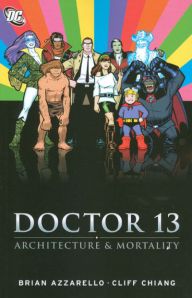
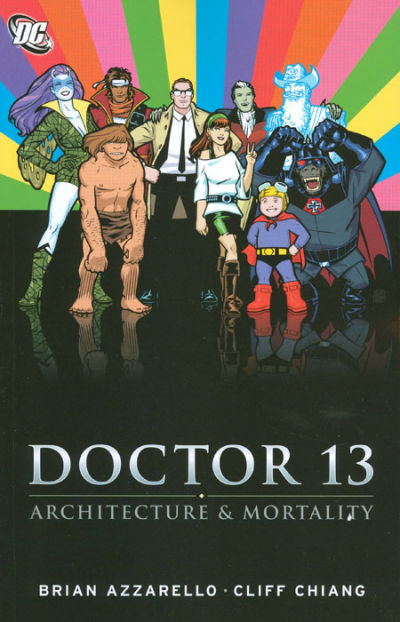
As further reading, Brian Azzarello and Cliff Chiang got together for a very small series of back up stories in the mini-series Tales of the Unexpected (2006). Much like Morrison’s stories, these explore the nature of forgotten characters and their relationship with their creators. The series is a lot of fun and features some crazy characters (Genius Jones, Infectious Lass, The Gorilla Brigade) as well as poking fun at DC’s editorial staff. It’s available in a collected edition titled Architecture and Morality.

Review: Batman #701 and Batman and Robin #13

Batman #701 and Batman and Robin #13
Written by Grant Morrison, Art by Tony Daniel (Batman), Frazier Irving (Batman and Robin)

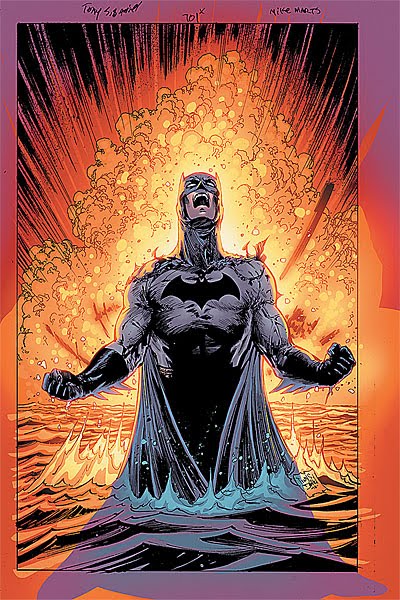
For those of you not keeping up with Batman currently, here’s the score: Over a year ago, Batman was driven to madness by a group called The Black Glove, led by the mysterious Doctor Hurt. Hurt claimed to Batman’s believed dead father, and buzz swept through Gotham that Thomas Wayne never died and had paid the gunman to kill his wife. Batman regained his senses after being put through a psychological gauntlet and both he and Hurt plunged into the bay surrounding Gotham while onboard a helicopter. Batman emerged from the water and Hurt disappeared. Some time later, Bats got involved with Final Crisis, one of those big cross company events where all the heroes show up. He sacrificed himself to stop the mini-series’ villain and the first Robin, Dick Grayson is now wearing the mantle of the Bat. Batman #701 features the first of two parts of writer Grant Morrison filling in the gaps between Batman’s battle with Doctor Hurt and his death in Final Crisis. In Batman and Robin #13, Morrison is setting up the inevitable return of Bruce Wayne with Doctor Hurt attacking the new Batman.

Grant Morrison is my favorite comic book writer and also the one who frustrates me to no end on everything he writes. Morrison goes against the current trend in comics writing which is decompression (i.e. stretching out an event with endless scenes of the heroes gathered together discussing what they are going to and what has just happened). While tells multi-part stories, they feel jam packed with things happening. It may not be traditional action, but you will have a handful of concepts and ideas thrown at you in a single issue that keep you thinking for a whole month till the next handful. And, when I first heard he was signed to write the core Batman title back in 2006, I was a little worried. Morrison’s focus had always been on established heroes or original ideas that contained a hint of the cosmic, and Batman never really seemed to be one of those titles.

But he has pulled off in a spectacular way, referencing some of the reviled “science fiction” Batman stories from the 1950s and incorporating them into the modern interpretation beautifully. He’s also managed to tweak the Joker in a way that has really injected that character with life. What Morrison up to is a reinventing of the character, in the same way that Batman was reinvented in 1950s, 1960s, and 1970s. The 1970s brought us the Dark Knight concept which has remained the way most writers have tackled the character until Morrison. His story this in this month’s Batman is interesting and definitely written as a “fill in the gaps” type arc. Batman comes to the surface of the bay, makes his way back the manor, eventually returns to find Hurt’s body is now missing, then gets brought into the events of Final Crisis. All along the way, he’s fixated on Doctor Hurt’s last words, that the next time Batman wears the cape and cowl it will be his last. Throughout the issue he goes unmasked, with that prophecy looming in his mind. And this first part ends with him putting it on for what we the readers know is the case he dies on.

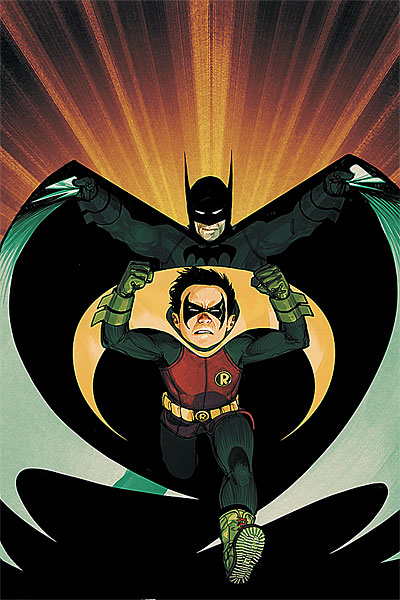
In Batman and Robin, we’re giving a series of enigmatic panels showing the murder of the Waynes, then a panel where Thomas stands over the bodies of Martha and Bruce. Then Doctor Hurt wearing a Bat costume that Thomas Wayne once wore for Halloween, and would inspire Bruce as an adult. This jumps to three days in the future, where Hurt has Batman (Dick Grayson) and Robin (Bruce’s illegitimate son Damien Wayne) being held captive. He tells Dick that this new Batman could never beat a Wayne and shoots him point blank in the back of the head. Then we jump back three days to where the core story is told. Batman and Robin are interrogating the Joker, who has turned up disguised as a famous British crime author to help bring the original Batman back from the dead. Batman is called away and core of the issue deals with Damien Wayne revealing his true brutal colors by sneaking a crowbar in to beat the Joker to death. Batman and Commissioner Gordon investigate crimes related to the original Batman’s death and it appears that Doctor Hurt is back from the dead.

Both issues set up some intriguing hooks, though Batman and Robin for me has been flawless its entire first year. Every issue builds on the next and its just one of those I have to read as soon as it comes out. Art wise, Batman and Robin is also the stronger of the two. Frazier Irving has come onboard as the new artist and he’s do something amazing things using shadows and has such a clean European style of drawing. Tony Daniel is much more from the Image Comics school of drawing, that early 90s Marvel influenced work that has never cut for me, even as a kid. Morrison’s work has been excellent on the Batman books and these are strong evidence that it is going to continue.