Roots of Fear: I used to work in a Pill Mill in Florida

pharmacy

“I used to work in a pill mill in Florida Part One” – https://www.reddit.com/r/nosleep/comments/5k78ih/i_used_to_work_at_a_pill_mill_in_florida_ive_saw/

In the last couple months, I started to think about writing more on what makes something horror for me. I think horror can be just as niche a comedy. People’s senses of humor can vary wildly and so can their sense of fear. For some, nature is a terrifying concept. Stories about tornadoes and hurricanes are chilling. I personally don’t click with Man vs. Nature type stories. I feel that the evil needs some form of intelligence for me to be scared of them. Lovecraft’s cosmic horrors live in that space. Large and beyond human comprehension but also thinking and planning. The masked slasher (Jason, Michael Myers, Leatherface) has been a hugely popular horror trope followed by variants (Freddy Krueger most notable). There is an intimacy to that horror. Teens stumbling through dimly lit rooms and the close murder of the blade. But again, that type of horror has never clicked with me. Possibly because of the oversaturation of that genre during my formative years. Jason just isn’t scary anymore. Most of my scares have been coming from literature lately more than film, in particular, short stories.

Continue reading “Roots of Fear: I used to work in a Pill Mill in Florida”

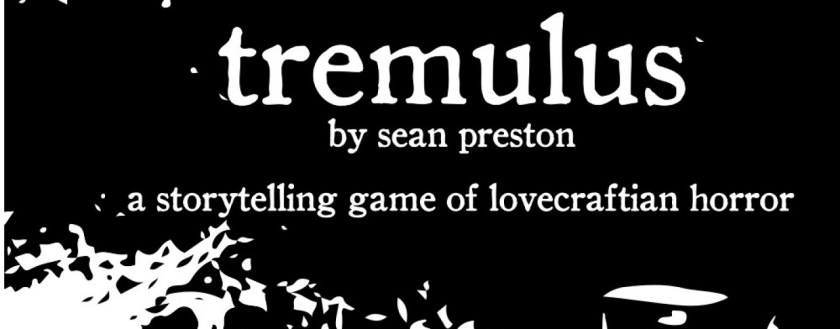
Tabletop Actual Play – tremulus

realityblurs-tremulus1-1440x564_c

In 2015, I ran a magnificent series of games using the tremulus system, a Lovecraftian Powered by the Apocalypse game that focuses on investigation and creeping horror. Ever since then, I’ve wanted to run it again with the same set up: just me and two players. The intimacy of that setting created a great atmosphere and it has gone down as one of the best things I’ve run/participated in. Here is the actual play I wrote up and originally posted on the tremulus G+ community.

The Protagonists

Malachi Arkton, the Sorcerer, played by Dan Luxenberg –Malachi is a traveling mage who was brought to Ebon Eaves through his own sense of the mystic and the town’s troubled Mayor who seems to be cursed.

Annabelle Leighton, the Philanthropist, played by Ariana Ramos – Annabelle was brought to Ebon Eaves due to her family’s connection to the town. Her great-grandfather was a free man, escaped from the South. Her family later established themselves in Philadelphia and have amassed a fortune which she has brought to Ebon Eaves to build a school for the poor, rural farm population there. She brings Byron, a streetwise ex-con bodyguard and Pennyworth, an erudite driver

Continue reading “Tabletop Actual Play – tremulus”

Movie Review – Always Shine

Always Shine (2016, dir. Sophia Takal)

hero_always-shine-2016

Two friends, Beth and Anna, are headed to Big Sur for a weekend getaway. Both women are actresses in Los Angeles with a big difference: Beth keeps booking bigger and bigger roles while Anna is passed over regularly. Anna believes this is rooted in their personal demeanors. Beth is perfect for the sexy but non-threatening female roles. Anna is “aggressive” by simply being very clear and direct about what she wants. Over the course of this weekend the friendship between these women will be strained to the breaking point with horrific consequences.

It’s no surprise that Always Shine is thematically about women existing in male dominated spaces. Our main characters are archetypal depictions of women in cinema, or in Anna’s case women that are marginalized in cinema. Director Takal shows a ton of skill in layering that theme under the story of this friendship and the psychological breakdown of one character. What could have been didactic and ultimately turned into a philosophical abstraction ends up being a visually engaging psychological thriller that isn’t exploitative.

The challenge in a film like Always Shine is making sure the audience doesn’t view one character as the bad one and the other good one. Beth is your traditional Final Girl and the film opens with her auditioning for the role of such a character in a horror movie. The producers inform her that the role will have “extensive nudity” and Beth is unaware of this fact, her agent didn’t tell her of that detail. Our introduction to Anna is a direct to camera monologue when she picks up her car from the mechanic. A repair was made without her consent and she unloads. Both of these scenes set up how these women are perceived by the men they interact with, but they are also subverted for the rest of the film. In particular as we get to know Anna better, we learn she is not a sweet, kind person. In many ways, she is playing a role to her own advantage.

Mackenzie Davis’ performance as Anna is the core of the film and, like in everything she appears in, she knocks it out of the park. It’s likely Davis experienced the struggles as she was developing her career and likely faces the problem of being offered roles that would force her to take on this behavior that is so antithetical to who she is. There are a number of compelling character scenes between she and Caitlin Fitzgerald who plays Beth that are beyond just awkward but painful. One scene has Anna learning about Beth’s casting as the lead in the horror film from the opening. Anna pushes to do a read through with a hesitant Beth and the scenes plays out like a competition or challenge. Anna is adamant that she’ll show Beth her prowess. The film is intelligent enough to not overtly talk about male perceptions shaping these women, but the subtext is there, buried beneath all the tension.

The structures and the themes of identity working in the film reminded me of Nicolas Roeg’s Performance. In that movie, the traditional macho archetype meets a counterculture sexually liberated almost sorcerer and their persona’s begin to meld and split. Always Shine leaves the final outcome up to the viewer. We see police. We see an ambulance. But one character’s fate is left in question. Will she disappear into the woods, invisible or will she step out and make herself heard?

Comic Book Review – House of Penance

House of Penance (2016, Dark Horse Comics)
Writer: Peter J. Tomasi
Artists: David Stewart, Ian Bertram

penanceIn 1884 in San Jose, California, Sarah Winchester began construction on a massive estate with no building plan. Deeply troubled by the deaths of her husband William and daughter Annie, rumors abound that Sarah believes she is cursed and that the strange architecture she demands is part of her deluded thinking of how she will cure herself. This real life story becomes the center of Peter Tomasi’s fictional retelling House of Penance. In this version of events, the Winchester House becomes a magnet for men troubled by killings they have committed with guns, the very things that brought the Winchesters their fortune.

House of Penance is a story that has a very clear moral message it wants to deliver but is written cleverly enough that it can hide that message in a story of personal horror. The story is told from the points of view of Sarah and new arrival Warren Peck. The first time we glimpse Peck he’s murdering Native Americans for the benefit of Westward Expansion while staging the scene to make it appear that a rival tribe killed the family he descended upon. He beds down at the workers’ quarters at the Winchester House but quickly becomes compelled to stay. Sarah experiences visions of tendrils of blood seeping up through the floorboards of the house, the spirits of her family and their company’s victims coming to drag her down to Hell.

The story is paced beautifully, revealing just enough horror in its early chapters to make the reader question Sarah’s sanity but also be convincing enough that we believe there really are demonic forces after her. Her relationship with Peck is the bulk of the story and is explored in depth. I found it to be darkly adversarial at first but soften into a caretaker position. You might stumble upon this mistakenly believing it is a Western, but it is much more a Gothic horror tale. I’m surprised we haven’t had more fiction around the Winchester House as it feels primer for horror exploitation. Though, the novel House of Leaves seems to have been heavily influenced by the non-traditional architecture of the Winchester House. House of Penance has a very similar Grand Guignol finale as the house becomes the site of a mass killing.

The pencil work of Ian Bertram uses a textured woodcut style and plays with the shadows and dark, creepy corners of the house. The way the character’s bodies are presented is also distorted with overly large eyes and grotesque muscle on the workers. Before the explicit horror of the story raises its head we already feel uneasy due to how the world is being presented to us. If you enjoyed Guillermo del Toro’s Crimson Peak or similar fare, there is a lot to like about House of Penance and is a quick read that is worth your time.

Movie Review – The Girl With All the Gifts

The Girl With All the Gifts (2016, dir. Colm McCarthy)
girlwithallthegifts

Zombies. I don’t really get it. They seem to have an endless appeal to a large enough group of people that creators keep coming back to them. They’ve never really scared me which probably has to do with how I see them in that category of conflict of Man vs. Nature which isn’t interesting to me. A few have broken through and managed to interest me: Pontypool, 28 Days Later, Deadgirl. But for the most part, they seem to play out the same tired cliches and tropes.

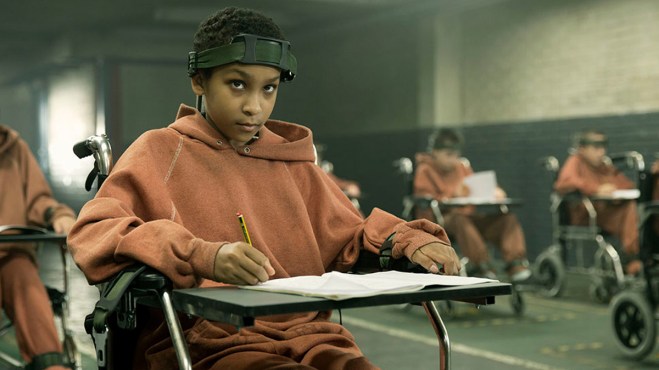
The Girl With All the Gifts (based on the novel by Mike Carey) starts us out in the twilight of man’s fight against a fungal outbreak that has turned humans into ravenous hordes. The film is told through the eyes of Melanie, an 11-year-old girl who, with dozens of other children are kept in a subterranean prison, observed by scientists, and held at gunpoint by paranoid soldiers. As things often do in zombie films, the proceedings get chaotic, and our human characters are on the run. However, they survivors bring Melanie along who isn’t entirely human and whose origins reveal something much bigger about the fungal outbreak.

The overarching theme of the film is about the power of the older generation being lost and handed off to the younger generation. This particular passing of the torch is not one done willingly, and it is easy to see the conflict reflective of generational clashes in our own history. There is also some impressive play with the idea of how one generation processes the behavior of the new as mindless and evil when they simply don’t understand the underlying motives at play. Sadly, these themes are about the only good thing in this film.

The most frustrating aspect of The Girl With All the Gifts is the lack of strong character development. Instead, the script focuses on hitting plot points and moving characters from location to location. There are never enough still enough, quiet moments to develop the relationships between characters, most importantly Melanie to her teacher Ms. Justineau. That relationship feels like it’s meant to be the crux of the entire story and it is so lightly touched upon it feels inconsequential. The film’s ending behaves as though we have a high investment in these two and ends up feeling shallow because the foundations were never laid to evoke the strong emotional response the filmmakers except.

Melanie is played by newcomer Sennia Nanua, and she feels very much like a child actor. Maybe I was spoiled by Royalty Hightower’s naturalistic style in The Fits, but Nanua isn’t as hammy as a stereotypical “Broadway kid, ” but she just doesn’t seem to have a handle on realistically emoting. It never feels like anything that happens in the story lands with weight on her. There is a scene where Melanie has to take a life, nd it should play as dark and heavy, but the performance just feels like an actor doing “actor tears”. The supporting cast has some strong names: Paddy Considine, Gemma Arterton, and Glenn Close. However, even they aren’t given much to do outside hitting plot points to advance the story.

The flaws in this film likely come from the inexperience of the director in feature work. Colm McCarthy has primarily done television work which isn’t necessarily a bad thing but it does come with a lack of interesting cinematography and different type of pacing with character development. The look of The Girl is disappointingly bland. The majority of shots are either medium shots or long shots when there could be some more interesting ways to show this story unfold. The setting of the third act is full of interesting visual potential but never seizes it.

I was very excited to see this film and expected some interesting twists on the tired zombie genre. While there are lots of interesting themes and ideas brought up, nothing is ever developed particularly through the characters.

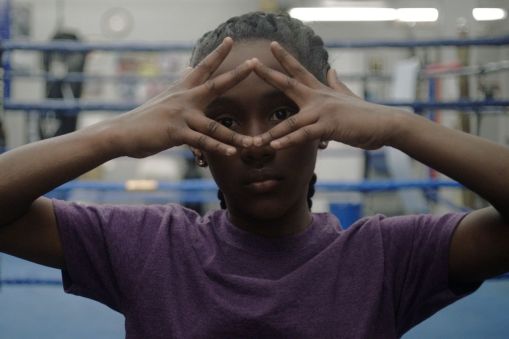
Movie Review – The Fits

The Fits (2015, dir. Anna Rose Holmer)

the-fits-0-0

Toni, an eleven-year-old girl, is very focused and determined when it comes to working out with her brother at the local community center’s boxing gym. She even stays after to help him wash towels, replace water cooler jugs, and get a little extra training. However, she’s recently been intrigued with a competitive girls’ dance team that trains in the larger gym at the community center. Slowly, Toni begins to be torn between these two worlds and witnesses girls on the team seemingly falling ill to strange trance-like seizures.

Continue reading “Movie Review – The Fits”

Pop Cult Book Club Review #6: The Visible Filth

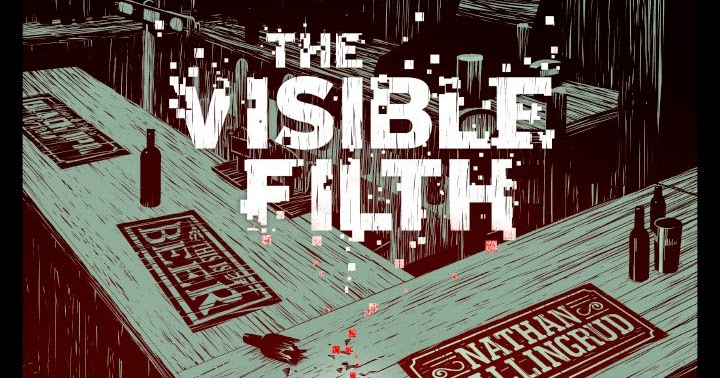
The Visible Filth by Nathan Ballingrud (This Is Horror, 2015)

the-visible-filth-nathan-ballingrud-horror

One trend I’ve noticed almost my entire time on the Internet in places like 4chan or seedier corners of Reddit is gore posting. Not once has the idea of looking at the human body in various states of mutilation struck me as intriguing. The times I’ve accidentally stumbled upon these pictures have left me frantically trying to scrub their afterimage out of my brain.

In The Visible Filth, Will, the bartender at a dive in New Orleans stumbles across a bedazzled cell phone after a fight in his place of work. Taking it home with the intention of finding the owner he stops in his tracks when text messages and strange images are sent to the device. Eventually, Will and his live-in girlfriend see a series of images that imply a ritual killing. Despite the mystery, the story is not concerned with solving the case, rather looking at the way we get lost in despair and pain.

Will comes home to find his girlfriend lost in an internet rabbit hole of investigating a book glimpsed in one image. She is never close to finding any closure or answers and seems to be physically deteriorating as a result. Ballingrud grounds the work by continually shifting the focus back to Will’s feelings for a frequent bar patron, the person whose relationship status never seems to line up with yours. There’s also one of the participants in the bar fight who lives in an apartment over the bar. Will visits and finds the man refusing to go to the doctor as the wound from a broken glass bottle festers and grows worse. The story would also suffer if we didn’t have a believable character making believably foolish choices. In this situation, we would all be tempted with curiosity to look again. It’s a lot packed into 68 pages.

The Visible Filth delivers something imperative that a good horror story needs: Incompleteness. A piece of mystery writing gives you a series of steps and then an answer. Horror should give you some of the steps but never answer. The horror is the ambiguity of what you witness. The story behind the photos on the phone are never going to be explained, and as a result, they haunt you and keep picking away at your sanity, at your trust in the reality of the external world. And Ballingrud’s external world is very textured and visceral. The opening of the text lays out a tactile space where the story will unfold:

The roaches were in high spirits. There were half a dozen of them, caught in the teeth of love. They capered across the liquor bottles, perched atop pour spouts like wooden ladies on the prows of sailing ships. They lifted their wings and delicately fluttered. They swung their antennae with a ripe sexual urgency, tracing love sonnets in the air.

I can’t think of too many better ways to convey a sense of filth. We’ve all been in this bar. The sticky floors our shoes cling to. The every present stench of background cigarettes. The watery slosh of cheap beer. The sense of place is so strong and claustrophobic at times. Similar scenes take place at Will’s apartment with briefly glanced figures in the shadows. The Visible Filth will put you in the shoes of its protagonist: uncomfortable, left without answers, everything a good horror story should be.

Movie Review – Blair Witch

Blair Witch (2016, dir. Adam Wingard)

blair-witch-callie-hernandez

It’s been 20 years since Heather Donahue and her fellow filmmakers disappeared in the woods around Burkittsville, Maine while in the pursuit of the legend of the Blair Witch. In 2014 her brother James found footage online that appears to show Heather alive and well in a rundown house. He takes off to investigate for himself along with three friends, one of whom is making a documentary on the process. They join up with two Burkittsville locals and begin what will be their last days working closer to discovering the secret of these haunted woods.

I was excited when I heard director Adam Wingard and his writing partner Simon Barrett were behind this Blair Witch sequel I was more excited than I might have normally been. I am a big fan of their previous films You’re Next and The Guest, both of which take their genre tropes seriously while having still having a sense of fun about the proceedings. I have been relatively lukewarm about the Blair Witch films. When the original came out, I was 18 and completely got caught up in the faux-realism the filmmakers used via the internet to promote the story. When I finally got to see the film I was pretty let down, and it began my decades-long dislike of the found footage genre. The second Blair Witch film is best left unmentioned as it is just a terrible and un-scary movie.

Sadly, this iteration of Blair Witch ends up being another dull entry into the franchise. My biggest issue with the entire film is the conceit behind the found footage storytelling. There is absolutely no reason why this couldn’t have been a third person film. We get a scene attempting to justify the constant recording where Lisa, the film student friend explains to another character why it is so important she records everyone. She ends up bringing along a drone camera and little ear piece cameras so that coverage can be a bit more expansive. But like all found footage horror films it devolves into either dreary boredom intend to convince us of “how real” the story is or shaky images so incomprehensible there’s no point in watching.

The seeds for a good horror story are here though. The film embraces the role of social media in horror by having the inciting video for the investigation come to James via social media. The mythology of the Blair Witch is restated from the first film, but with a little more clarity. Characters ask the kind of questions we would when told stories like these and get answers that make sense. There is an interesting angle of time not moving in a standard linear fashion once you reach a certain point of the woods and that is a fantastic element of the picture. Rustin Parr’s vanishing house is another classic horror trope that has lots of potential. I was reminded, albeit very briefly, of House of Leaves.

The acting is not atrocious, it feels perfectly adequate which is a pretty big disappointment compared to films like You’re Next and The Guest which had some very solid performances. I’m not sure how choreographed or improvised the film was because of its found footage moments but I can’t help but think that hindered the actors from doing better work. The final moments of the film continue the same well-tread formula we see in found footage horror constantly. The characters are worked up into a frenzy as they have finally confronted the Big Evil so all we get is screaming, barely audible dialogue, and overly shaky camera footage.

For now, I think the Blair Witch franchise should go back to being dead. There is not much meat on the bones because it feels at the end like pretty much any generic local legend. The one element that interested me the most, the concept of time moving at different speeds in the woods for different people had potential but wasn’t enough to make this movie even remotely enjoyable.

Movie Review – The Autopsy of Jane Doe

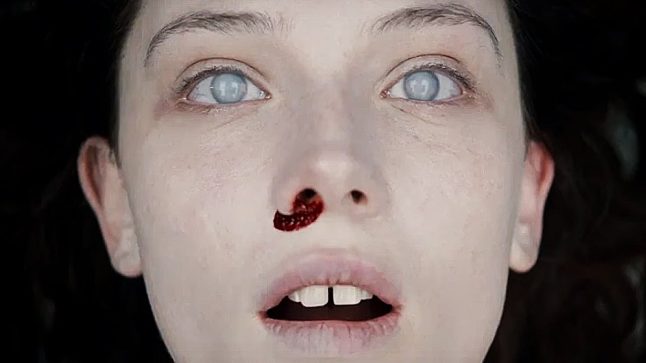
The Autopsy of Jane Doe (2016, dir. André Øvredal)

autopsyjanedoe-e1482462366256

Our film opens with a scene that immediately ropes us in. Triple homicide. The old couple who lives at the residence. A plumber who was servicing the house. No signs of forced entry. The strangest thing in a very strange crime scene turns out to the half-buried body of a young woman, not a mark on her. The protagonists of our story are Austin Tilden (Emile Hirsch) and his father Tommy (Brian Cox), the latest in a family line of morticians. They have a contract with the local police to do forensic work in their morgue with an emphasis on just determining the cause of death. The body of Jane Doe arrives late one night, and they begin to find strange marks and injuries on her that lead into a night of terror.

Autopsy marks the follow-up feature by director André Øvredal who last brought us, Troll Hunter, a Norwegian horror film that offered a smart take on the found footage genre. Whereas Øvredal wrote Troll Hunter, this time he directs a script by a writer from Once Upon a Time among other television work. The premise for this horror flick is great. Tons of questions are raised from the crime scene alone, and the first half of the film compounds those questions as strange things are discovered in the body. However, when the horror tropes start to kick in the film begins to feel painfully formulaic. There is one particular misdirect/death that happens about ⅔ through the film that had my wife and I both, groaning. It comes out of nowhere and feels logistically impossible that this person could have been in this place at that time. Definite plot convenience to shock the audience with a twist kind of territory.

The film does offer a few jump scares but overall chooses to focus on the creeping dread the autopsy causes. The condition of individual organs don’t make sense. Objects are found in her stomach that should have been digested by now. Bones are broken in very specific ways. We also spend a lot of time developing the father/son dynamic but that seems to peter out when the script decides it’s “horror time” and we have dead bodies wandering around. These are two very good actors that aren’t given much more than moments to react in the script.

Owlen Catherine Kelly plays Jane Doe, and it is a very challenging role because it would seem she just has to lay there naked and motionless for the runtime of the film. Øvredal takes advantage of a film technique called the Kuleshov effect. The idea is that by juxtaposing an expressionless face with other images, you can influence the audience’s perceptions of what emotion the face is showing. Very clever cuts are made from supernatural, spooky events, to the morticians, and finally to Jane’s face causing that expressionless face to feel more and more sinister as we get deeper into the film.

Overall, I was incredibly disappointed by this film. The clips that had been shared online came from the first half which is brimming with potential and has a lot of the elements in place to be a great horror film. My only guess is that the writer didn’t know where they were going with that first half and, instead of working out some clever way to bring these elements together, just went with tired old horror cliches and an incredibly unsatisfying ending.