Movie Review – A Cure for Wellness

A Cure For Wellness (2017)
Written by Justin Haythe & Gore Verbinski
Directed by Gore Verbinski

a cure for wellness

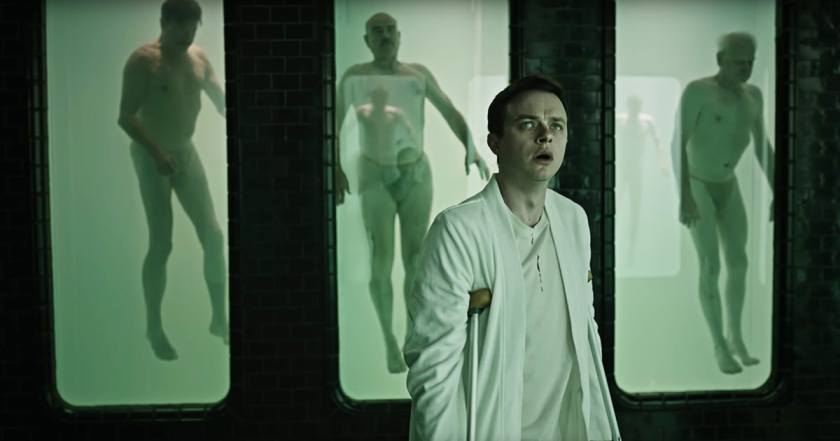
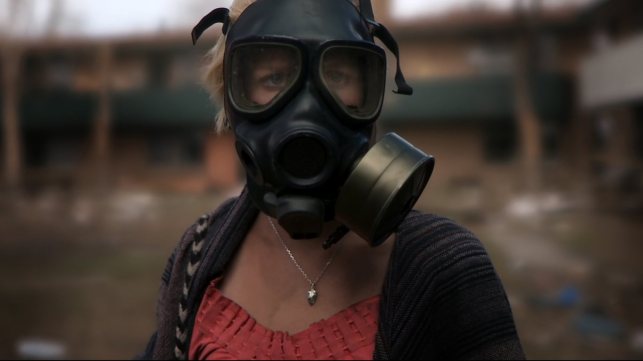
Lockhart (Dane DeHaan) is a young up-and-comer at a prestigious New York investment firm. He’s tasked with taking a journey to the Swiss Alps to recover the company’s CEO, Roland Pembroke. Pembroke left for a wellness center high up in the mountains and has just sent a letter implying he is never coming back. When Lockhart arrives, he meets Dr. Volmer (Jason Isaacs), a mysterious young woman (Mia Goth), and is pulled into a mind-bending conspiracy that dates back a hundred years.

Continue reading “Movie Review – A Cure for Wellness”

Movie Review – Alien: Covenant

Alien: Covenant (2017)
Written by John Logan, D.W. Harper
Directed by Ridley Scott

Alien-Covenant-Trailer-Breakdown-59

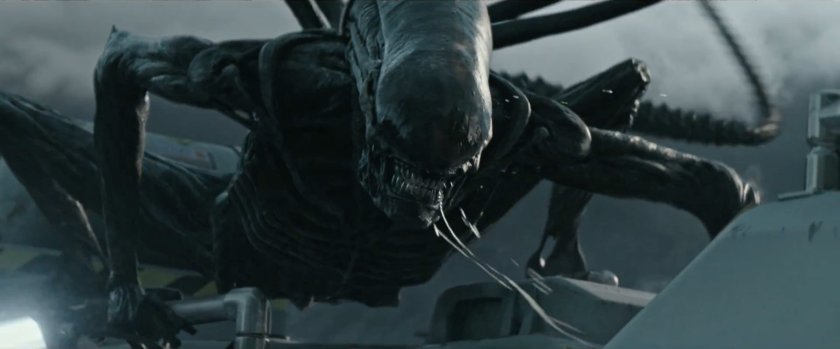
Ten years after the events of Prometheus, a colony ship named The Covenant is traveling from Earth to a new planet carrying over 2000 colonists in cryosleep. An ion storm forces the crew to wake and deal with ship repairs. In the fracas, a crew member dies, and the rest are less than excited about going back under. Just their luck they intercept a faint transmission from a planet that never seemed to come up in any company surveys. The captain makes the decision to investigate, and thus the crew of the Covenant crosses paths with the aftermath of the last film and the beginnings of a new franchise….I guess.

Continue reading “Movie Review – Alien: Covenant”

Movie Review – Guardians of the Galaxy Vol. 2

Guardians of the Galaxy Vol. 2 (2017, dir. James Gunn)

guardians-of-the-galaxy-2-image-ayesha-social

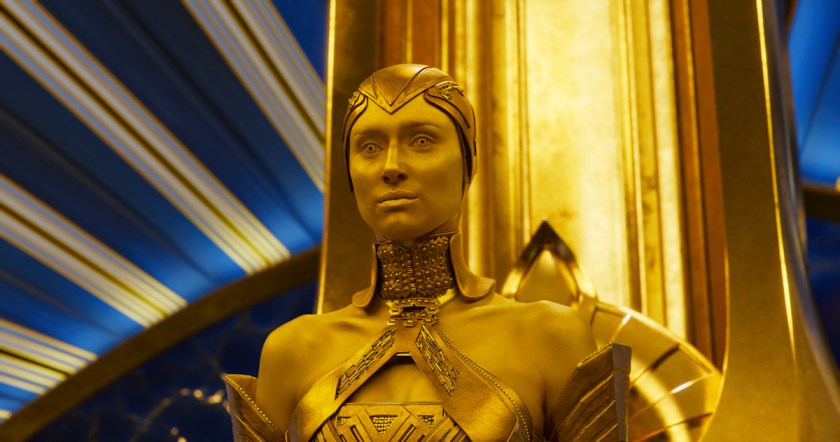
The Guardians have made a name for themselves and now act as heroes for hire. They finish up their latest job, protecting the energy source of The Sovereign, a genetically engineered “perfect race” but run into trouble on the way out. This leads to Peter Quill meeting his father for the first time, a strange man named Ego. Meanwhile, Yondu and his Ravagers are hired by a party disgruntled with The Guardians and wanting revenge. Gamora is also dealing with family issues (her vengeful sister Nebula), and everyone else seems to have their own interesting arcs as well.

Continue reading “Movie Review – Guardians of the Galaxy Vol. 2”

The Revisit – Starship Troopers

The Revisit is a place for me to rewatch films I love but haven’t seen in years or films that didn’t click with me the first time. Through The Revisit, I reevaluate these movies and compare my original thoughts on them to how they feel in this more recent viewing.

Starship Troopers (1997, dir. Paul Verhoeven)

STARSHIP-SPTI-20.tif

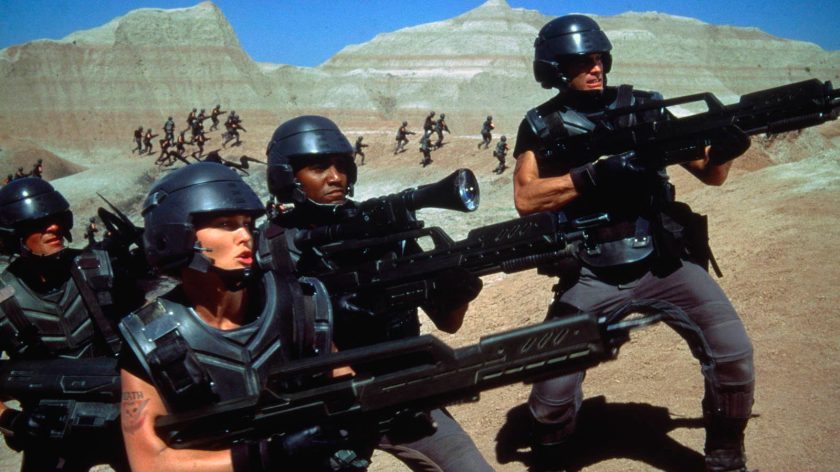
The late 1990s was a weird time in cinema. On the independent side of things, you had some interesting work produced, while on the studio big budget side there was some awful dreck being churned out. Take for instance 1997; the year Starship Troopers came out. Boogie Nights, L.A. Confidential, The Fifth Element, and Lost Highway were released, All films that I would argue are vital pieces of work from their respective creators. Simultaneously you have Batman and Robin, The Lost World, George of the Jungle, Spawn, and Spiceworld the Movie. All films that I would argue represents studio executives shaping films. In the middle of all this, you have Starship Troopers.

I think the first time I saw Starship Troopers was my first night in the dorm my freshman year of college. It was 1999, and the guy across the hall had the VHS tape so as about six of us were hanging out we decided to watch it. I hated this movie. I hadn’t done my deep dive into films yet, but I remember being very turned off by the cheesy nature of the movie and god awful acting. It was the ending especially that created friction with me. Something felt off and wrong about it. In my naivete, I discounted it as simply a bad film and have never actually revisited it til now. I was making up my list of movies to review for The Revisit and came across Starship Troopers. I had read things since 1999 that hinted at the film not being what it appears to be the surface level. It’s believed now that the audience has grossly misinterpreted the picture. So, I decided to give it a shot.

Paul Verhoeven, despite having a career directing films since the 1960s to the present. He was responsible for Elle, a film that came out last year starring Isabelle Huppert that has garnered significant praise (though I have not yet seen it). But for most of us that came of age in the 1980s and 90s, he feels like a director of that period. That is when he was hitting his peak as a big-budget director. Robocop. Total Recall, Basic Instinct. Showgirls, The Hollow Man. Those are the films his name is commonly associated with, but to understand Starship Troopers, you must understand some other things about Verhoeven.

He was born in the Netherlands in 1938, showing up just as the Third Reich began their march across Europe. War struck incredibly close to Verhoeven’s family. They lived near an installation for V1 and V2 rocket launchers so Allied forces bombed the area. His parents were almost killed. However, Verhoeven says as a child he viewed war as an adventure.Verhoeven states that he remembers the sight of charred corpses vividly and hollowed out buildings, but admits because his parents lived and he was not Jewish he doesn’t hold the trauma that others do. That sense of war as an exciting adventure existing alongside horrific violence and mutilation is a the core of Starship Troopers.

The opening frames of Starship Troopers are unquestioningly satirical. This is the first of many newsreels that will be used as an ingenious exposition device throughout the film. Each time one of these appears an unseen newsreader will click through related links to the videos we see unfolding before us. The important thing this first video establishes is the dichotomy between being a Citizen and a civilian. In the world of Starship Troopers, Citizenship is only obtained after serving in the armed forces. With Citizenship comes the right to vote as well as other rights that Americans and other developed nations currently hold as inalienable. One recruit gives her reason for joining is that one day she would like to have kids and getting a license to do so is much easier when you are a Citizen. We’re in a world where even nature is under the boot heel of the government. But for being such a dictatorial society we never truly see our protagonists question it.

Only one character speaks up against Rico, the protagonist, joining up with the Federal Service. Rico’s father has a brief moment where he chastises his son for choosing that path post-graduation. Later, both of Rico’s parents are killed by the enemy bugs who strike Earth with an asteroid launched from their system. The message of the film’s world is that Rico’s parents were wrong to question him and now he is emboldened to bring the wrath of humanity down on the bugs truly.

It is funny to think back at my reaction and the reactions of critics and audiences to Starship Troopers. From the start of the film, it is glaringly obvious what Verhoeven is saying about this world. Michael Ironside plays first the high school teacher to and commanding officer of Rico. In his Social Studies class at the opening of the film he states the following:

“This year we explored the failure of democracy. How our social scientists brought our world to the brink of chaos. We talked about the veterans, how they took control and established the stability that has lasted for generations since. You know these facts, but have I taught you anything of value this year? […] Why are only citizens allowed to vote? […] Something given has no value. When you vote, you are exercising political authority, you’re using force. And force my friends is violence. The supreme authority from which all other authorities are derived.”

A few moments later the teacher has this exchange:

Dizzy: My mother always told me that violence doesn’t solve anything.
Jean Rasczak: Really? I wonder what the city founders of Hiroshima would have to say about that.
[to Carmen]Jean Rasczak: You.
Carmen: They wouldn’t say anything. Hiroshima was destroyed.
Jean Rasczak: Correct. Naked force has resolved more conflicts throughout history than any other factor. The contrary opinion, that violence doesn’t solve anything, is wishful thinking at its worst. People who forget that always die.

Starship Troopers is not glorifying fascism or even oblivious to its presence in the film. The entire work is a direct commentary on fascism, and even further I believe the film is meant to be a piece of meta-fiction. We are watching a propaganda film made in the universe of Starship Troopers that is aimed at impressionable high school students.

The cast of “high school” students are apparently grown, adults. The acting is stiff and artificial. The music is overly bombastic. The characters exhibit no signs of empathy. Both the male and female lead lose people the film tells us they are romantically linked to, but at the end, they march off triumphantly. The meaningless nature of human death is highlighted even further in the newsreel segments. A cow is devoured by one of the Arachnid bugs and is censored. In the end, the brain bug has a tool inserted into her apparently vaginal mouth, and that is censored. One thing that is never censored throughout the film and the newsreels are human casualties. This is because one purpose of this propaganda is to desensitize the young viewers to the sight of human death. No one is ever truly grieved; the protagonist never appears to suffer any emotional or long-term physical consequences. As the teacher said, violence is the best way to solve every problem.

There is so much more I could write about Starship Troopers and eventually, I may. One big takeaway I did have was thinking about games inspired by material like Troopers and that they completely miss the point. Verhoeven did not intend for people to be inspired to run around and shoot bugs. I personally think this is one of the most transgressive studio films ever produced. He wanted us to be appalled through our laughter at the absurdity of fascist thought. He wants us to see what the characters fail to see, that this way of thinking leaves you blind to understanding the horrible implications of your actions on the world around you.

Movie Review – Dredd

Dredd (2012, dir. Peter Travis)

Judge Dredd Still Image

Mega-City One is an urban sprawl filled with crime and poverty. Enforcing the rule of law in this crumbling post-apocalyptic landscape as the Judges, a natural combination of judge-jury-executioner. The most famous of these brutal lawmen is Judge Dredd, an enigmatic figure who is more of a justice-dispensing machine than a human being. He’s charged with testing rookie Judge Anderson on what ends up being one of his toughest days. The call comes from the large tenement Peach Trees that there has been a triple homicide. The Judges quickly learn these murders are tied to a threat is plaguing all of Mega-City One.

Most movie-savvy people are aware of Sylvester Stallone’s 1995 trash fire of a film, Judge Dredd. His adaptation of the popular UK comic book made a ton of errors that betrayed the spirit of the source material. He rarely wore his Judge’s helmet after the opening action sequence, and the script gave a lot of backstory to the Judge. These story elements are pretty antithetical to the nature of the comic book. The film ended up highlighting the more absurd elements and has become a perennial entry of the Worst Films of All Time lists. So, this reboot had a tremendously bad reputation to overcome.

Dredd manages to stay very faithful to the source material, even the more fantastic parts while delivering a character-centered story. Apparently inspired by The Raid, Dredd focuses its action within the walls of Peach Trees, a housing complex that provides plenty of set pieces and a palpable tension. When you have nowhere to run from the forces out to kill you, it will inevitably bring out more ferocious elements in humans. With a character like Judge Dredd, he is absolutely in his environment with this scenario. To say Dredd is a violent film is an understatement. This is a gory, visceral, kill fest. Yet, it tells a compelling story, particularly through Judge Anderson.

In the same way, Max in the Mad Max films is merely a cipher through which to tell a story, writer Alex Garland fashions Dredd into the same type of protagonist. It is entirely unimportant what Dredd was like as a child or the what the moment was that he forfeited his humanity to become an arbiter of justice. Instead, he is the vessel that helps tell the story of Judge Anderson’s loss of innocence. Actor Karl Urban takes on a role many actors would shirk at, the majority of his face covered with the entire film. But Urban, a fan of the comic, expressed that he understood why keeping Dredd’s identity obscured was essential to the character. Olivia Thirlby as Anderson first appears as your typical by the book, nervous rookie but by the end of the film, she is able to hold onto her humanity while acknowledging the violence that people can be pushed towards. The exact route her character will take within the fiction of the film is left for us to wonder about.

Lena Headey plays the movie’s central antagonist, Mama. I was absolutely thrilled with the choices she made in playing this crime boss villain. The minute she spoke I knew I was going to love her performance because she chose to be quiet in the way she spoke. This wasn’t the godawful Eddie Redmayne in Jupiter Rising sort of calm quiet then SHOUTING performance. We learned a lot about Mama through how she communicated. In the environment where she grew up, words carried little currency. For people in places like Peach Trees, a threat is worth nothing if there isn’t a physical punishment behind it. Mama makes sure to inflict brutal horrors on people who cross her. Even in the final showdown between Dredd and Mama we have her maintaining a very calm, quiet hate in her voice.

Dredd succeeds and undoing and helping the audience forget everything about the 90s attempt to adapt the property. It is definitely elevated above your average comic book fare as well. It has tons of social commentary cleverly embedded in amongst the brutal violence. It is definitely one of those futures that, while extreme and different than our modern day, still feels unsettlingly familiar and far too close to our lifetimes.

Movie Review – Dawn of the Planet of the Apes

Dawn of the Planet of the Apes (2014, dir. Matt Reeves)

dawn-of-the-planet-of-the-apes-caesar-hold

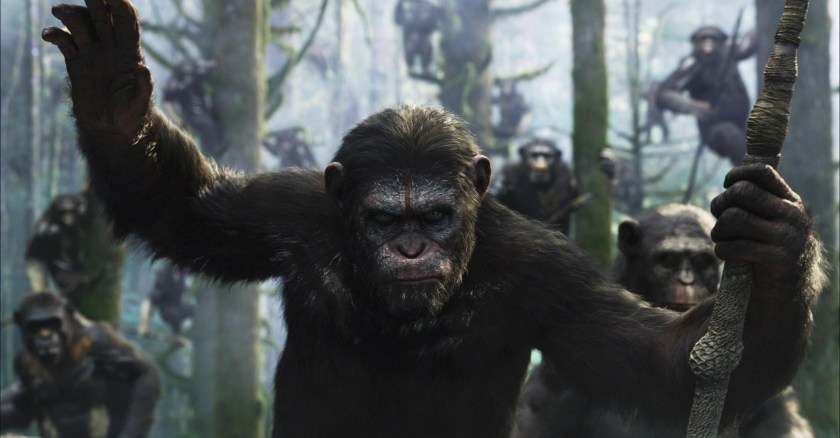
Ten years has passed since the outbreak of the “Simian Flu” and humanity has dwindled to extinction level numbers. In the Muir Woods outside of San Francisco, Caesar leads a tribe of apes granted intelligence by the same scientists that created the flu. Their life is relatively peaceful until human intrude and kill one of them. Tensions mount between Caesar and the human colony in the ruins of the Bay City. One tribe member, Koba, becomes increasingly angry as his trauma at the hands of humans is reawakened, and everything heads toward a tragic ending.

Dawn is a film about two sides, arguably justified in their anxieties, who make terrible decisions that attempt to say the ends justify the means. Now past the origin story of Rise of the Planet of the Apes, we get into the meat of this series that makes it interesting, the conflict between humans and apes. The Apes, under Caesar’s leadership, have a non-aggression agreement. Caesar has established inter-tribal rules about how they will treat each other when an emphasis on doing no harm to each other. As the film goes on, this non-violence pact is tested and, depending on your reading of the film, abandoned. One theme throughout the film is Caesar’s self-reflection on his personal views. He seems assured of what he is doing at the start, and by the end, he seems profoundly resigned to going down a path that likely leads to oblivion and definitely leads to no possibility of man and ape allying.

Koba represents a very different perspective than Caesar’s. In the first film, Koba is brutalized by human scientists as part of their experimentation to develop an Alzheimer’s cure. He still bears the physical scars of their work across his body. Koba is entirely justified in hating the humans. Dreyfus, the leader of the San Francisco colony, is also justified in his hatred of the apes. His entire family was killed as a result of the Simian Flu outbreak. The greater world around him crumbled as the virus led to violence between desperate humans and their governments. Every character has a reasonable justification for their actions against others, but the film is not going to let them off that easy.

Koba’s actions cause hundreds of apes to be killed, and he is even called out on this. One ape tells him he is allowing his personal hate to be disguised as a great revolt. Caesar points out that the only thing Koba learned from the humans was hate. And it is Caesar who has the larger scope of understanding. In Rise, he has an adopted human father and has experienced the empathy and caring that humans are capable of. Koba ends up a tragic character, so broken down by his traumas and unable to find a way out, he is consumed, and his hatred damns him. The hard part is that he isn’t necessarily wrong because from his perspective humanity is this destructive monster. His fall begins when he decides that the ends justify the means and that he must do anything he can to “prove” all humans are liars by nature.

It’s almost impossible to watch Dawn without thinking of our current political climate. There are two tribes so amped up on fears and assumptions and misinterpretations that they live in a ticking time bomb. Caesar’s strength is that he is willing to listen to people that he should rightly run from or make an example of. In the early moments of the film, a human shoots, a young ape and Caesar could have easily killed the man. He chooses to let the man go because he looks at the larger picture. He sees where the path of violence would lead his people and it wouldn’t be to an ultimate victory.

The weakest part of the film were the humans. But this is sort of a common trend in the Apes movies. The human characters are merely plot vehicles. It’s in the development and growth of the apes that fascinate us. Dawn showcases strong CG motion capture that doesn’t muddle the performance but allows actors to break free of the constraints of oppressive makeup. The highlight here are the performances of Andy Serkis and Toby Kebbell as Caesar and Koba, respectively. They cause the potentially unreal to become more dimensional than the humans on screen.

Movie Review – Invasion of the Body Snatchers (1978)

Invasion of the Body Snatchers (1978, dir. Philip Kaufman)

body-snatchers-guys

Elizabeth Driscoll (Brooke Adams) is convinced something is wrong with her boyfriend Geoffrey. His behavior has changed overnight, and she witnesses him meeting with strange people across San Francisco. She seeks out help from her coworker at the city’s Department of Public Health, Matthew (Donald Sutherland) and the two unravel a dark conspiracy that threatens the future of humanity. Along with friends Jack and Nancy (Jeff Goldblum, Nancy Cartwright), they soon find themselves up against a menace that is growing and in turn becoming increasingly unstoppable.

Invasion of the Body Snatchers was a remake of the 1956 classic which in turn was an adaptation of the 1955 novel The Body Snatchers. It’s a classic tale that has been in turn remade many times over (Body Snatchers, The Invasion) and has always served an allegory for some sort of societal strike. The original film adaptation was influenced by the McCarthy Hearings the hunt for communists in America. For the 1978 version, there is a sense of Watergate on the edges of the script. There’s also the overall sense of malaise that came out of The Me Generation and disconnection from others as a person became focused on self-fulfillment. This can be seen most overtly in the bookstore scenes with Dr. Kibner (Leonard Nimoy), a pop psychologist who advises a paranoid wife about reconnecting with her husband and blaming his distance on her own doubts about the relationship.

This is a fantastic film and one we don’t hear about often enough. The cast is composed of some acting greats who are firing on all cylinders. I’ve always felt Brooke Adams was terribly overlooked and this performance is one of those that reminds you of her strengths. Leonard Nimoy who we never got to see outside of Spock very often is excellent as the laidback Dr. Kibner who becomes a very different character by the film’s conclusion. Nimoy plays both sides of the character wonderfully.

Beyond the fantastic cast, you have members of the production who are delivering masterful work. Cinematographer Michael Chapman (Taxi Driver, Raging Bull) finds interesting angles and ways to convey a character’s point of view that provides volumes of information. Chapman is able to obscure enough to keep us wondering and the sense of paranoia building. Almost every shot has some background element that hints at the concrete conspiracy or plays with the thematics of the film. Anytime a plant is present it is grounds to get scared.

Composer Denny Zeitlin delivers a score that mixes elements of jazz and electronic music. The film uses more jazz at the start before finally being overtaken by an eerie alien electronic score for the finale. This way music plays along with the progression of the takeover is one of the examples of a film’s production being a collaborative effort. Sound engineering legend Ben Burtt worked on this movie just after his time on Star Wars and just as with the other elements the sound is textured and crucial to the full experience. The pods that contain the doubles have a wet, membrane sound, cracking and opening with viscous threads of mucus. The soundtrack fades in the scene where we first see a birth taking place, and Burtt’s sound design is allowed to take center stage.

Invasion manages to create a palpable sense of paranoia minutes into the film. It brushes up against becoming cheesy early on but then goes so deep into the gritty bleakness of this event that it becomes chilling. As it is building horror in the literal background of the picture we are being introduced to our two leads and getting a strong sense of character. Elizabeth’s first scene establishes significant external traits (botanist, in a relationship) but also personality traits that help us connect with the character (curious, affectionate, intelligent). With Matthew’s first scene we have him on a surprise health inspection of a high-end French restaurant, and we know exactly who this character is. He’s very dedicated to his job, unwavering in following regulations, but also playful and wry. Neither of these characters feels one-dimensional in any way and, much like I felt about Gene Wilder and Jill Clayburgh in Silver Streak, they have natural chemistry.

The way the horror is developed is paced so well and reveals of information hit at the perfect moments. The film uses it’s first 30 minutes to introduce the leads and establish the sense that something is off. Around then we have the first glimpse of a partially developed clone and character’s sanity being questioned as evidence disappears. At the halfway mark we glimpse an actual birth from a pod occur and the film suddenly tilts. Our protagonists are in the minority and time is running out as the enemy surrounds them.

Released in the shadow of 1977’s Star Wars, Invasion of the Body Snatchers is a science fiction masterpiece that has been sadly overlooked by so many. It exists as a beautiful amalgam of 1970s director focused cinema and an acknowledgment of the remake/reboot film culture to come. It’s a film that still feels relevant and terrifying almost 40 years later.

Movie Review – Arrival

Arrival (2016, dir. Denis Villeneuve)

1472823822-arrival1

The likely cause of almost every argument or conflict you have had or will have in your life is an inability to express your point of view through language. Add to this a common desire of getting your point across rather than hearing another’s and you spiral into conflicts that can increase in intensity. Why do we become so focused on what we have to say rather than listen to another? Why is empathy such a hard mindset for us to achieve? Denis Villeneuve’s latest film Arrival wants to explore ideas of communication and perspective and, like all the best science fiction uses a fantastical scenario to present us with very real ideas.

The film opens with a montage showing the birth, life, and death of a little girl. She’s the daughter of Louise Banks (Amy Adams). It’s a pretty rough opening, even more so I would dare than Up. After this montage, we cut to Louise arriving at the college campus where she works as a linguist. The campus is in an uproar, and she eventually learns that twelve strange objects have appeared across the Earth and are believed to be alien craft. Louise is brought into the mission to make successful communication by the U.S. government who are in turn coordinating with the developed nations of the world. Where Arrival goes will definitely surprise you and how the arrival of these beings connects to the story of Louise’s daughter will be the greatest revelation of all.

With this film I can say that Villeneuve has cemented himself as one of my favorite directors of all time and I believe is on his way to becoming one of the best in the art form. I don’t think we have seen his “great film” yet, but we are incredibly close and I’m excited. There is no bombast in his style. While Kubrick was a very much a visual minimalist he could become explosive in his work, not that it was a bad thing and he most certainly earned it. Christopher Nolan is much more in line with Kubrick sensibilities, frigid emotionally but very complex in ideas and concepts. Villeneuve is also working on complex ideas but has a more delicate touch and can bring the human emotional experience into his work without feeling maudlin. He is able to achieve a sort of ambient emotional tone. You feel the emotion of the character without verbalization. Performances are brought out of his actors that convey raw reaction yet filtered through honest human behavior.

Every element of Arrival’s production is at the highest levels. Screenwriter Eric Heisser kept the key pieces of Ted Chiang’s short story “The Story of Your Life” and added the right level of personal intimacy and changes that a film version of that piece needed. Jóhann Jóhannsson, a collaborator with Villeneuve on Prisoners and Sicario, delivers a score that evokes all the profound sense of otherworldliness the visitors should have. The moment Louise arrives at the ship, and first ventures inside is one of the most flawlessly executed sequences I’ve seen in a film all year. Johanssen’s music, the textured production design of Patrice Vermette, and the cinematography of Bradford Young coalesce into a profoundly visceral and eerie experience.

I was a couple years late to Children of Men, missing it’s 2006 release and catching up with it in 2008. What I saw was a film that captured the tone and mindset created by what is probably the most world-changing event in my lifetime, 9/11. Children of Men accurately reflected the sense of tension, paranoia, and xenophobia that was growing at the time. Using science fiction, it was able to tell that story in a way that something set in “our world” would have felt dishonest. Yet through all the despair and decay that director Alfonso Cuarón put onto the screen, he brought us to the conclusion with a sense of hope. I believe Arrival is a film that serendipitously happened at the right time and when it was needed. There is a profound ideological shift going on in our world, and it is incredibly scary right now. In these moments cinema can guide us and help move from these places of despair and remind us there is hope. Arrival is speaking about the growing divisions between nations, communities, and virtually everyone. The need to expand perspectives and work hard to see the world outside of how we’ve always seen it is essential to our survival. The myopic military figures in the film are not villains, they just are too scared to see beyond how they’ve always seen. We have to grasp the idea that life is not about convincing others to see our way but to learn and have empathy for the viewpoint of others. In the same way that Children of Men affected and changed me, Arrival has/is/will do the same and is going to be a film that remains with me for the rest of my life I suspect.


***SPOILERS ABOUT THE ENDING***

******************
******************
******************

Continue reading “Movie Review – Arrival”

Movie Review – Monsters

Monsters (2010, dir. Gareth Edwards)

monsters

The film begins with title cards that explain that a NASA probe was launched years ago and brought back microorganisms that have mutated into gigantic monsters that rule a swath of land between the United States and Mexico. This area has been walled off and named “The Infected Zone, ” and no one is allowed to pass without permission from the joint-government operation. Andrew Kaulder (Halt and Catch Fire’s Scoot McNairy) is a photojournalist guilted into escorting his boss’s daughter, Samantha back into the States. The catch is that in two days all travel between countries is going to be blocked off for a six-month long major operation.

With Star Wars: Rogue One being released in theaters this weekend I thought it was the right time to finally sit down and watch director Gareth Edwards’ Monsters. I’d only seen his Godzilla film, which I wasn’t very impressed by. When Edwards was announced as the director of the first Star Wars spinoff, I was a bit confused. These were the same feelings I had when Colin Trevorrow was announced to director Jurassic World, Marc Webb was set to helm the Spider-Man reboot, and Josh Trank was put in charge of Fantastic Four. There appears to be a trend of picking the “hot young director” to take over a major film property. This sort of mentality defies logic because from the outside this feels like a very risky proposition. The only way this really makes sense to me is from the perspective of a controlling studio who wants a director that has a creative vision but hasn’t had time to build that sense of earned professionalism to think they can make the big decisions. “Hot, young directors” let studios and their notes on dailies wield greater power than with a genuinely creative director who has earned it.

Monsters is a beautiful looking film. The cinematography is masterful, and Edwards does an excellent job of evoking scale. Landscapes fill the screen and when the monsters do appear they are represented as truly towering and powerful. It also becomes very clear that Edwards is not interested in telling a story of man vs. monster. The film is purely focused on the two characters traveling across a dangerous land and the relationship that grows between them. The appearance of the monsters is used to underline some larger concept or idea that is going on between them or to emphasize that they are in peril to get home. There are a lot of fascinating ideas at work in Monsters.

Monsters wants to be an insightful character piece, but I personally found the characters to be shallow and ultimately uninteresting. The film’s tone bounces between a straightforward narrative with hints of Cinéma vérité but never delves deep enough. The stories behind both characters are painted in fairly broad strokes (He has a son and has never been involved in his life, She is running from an engagement she really doesn’t want to be in). Dialogue is a little too on the nose and, while these are good actors, I just don’t think they are skilled enough to bring a full performance into every gesture or look that would tell these characters’ stories at a greater depth. Edwards has a background in digital special effects which explains why the film looks so good, but may also inform as to why the characters ultimately feel flat and undeveloped.  

TV Review – Westworld Season 1

Westworld Season 1
(HBO, created for television by Jonathan Nolan and Lisa Joy, based on the film by Michael Crichton)

dolores waking up westworld episode three.png

If you have not seen Season 1 of Westworld DO NOT read further. This article contains very detailed spoilers.

Back in 2014 when Spike Jonze’s Her was in theaters, I remember seeing a very awkward interview between Jonze and a reporter on BBC Newsnight. The reporter begins the segment describing the film as being about humanity falling in love with technology. It’s obvious Jonze doesn’t agree with this analysis and attempts to explain his view of the film about any romantic relationship and how often one partner can grow in ways that cause them to fall out of love while the remaining partner has not grown past the love yet. The film is about that emotional dissonance people in dying relationships experience told through a fantastical lens. That’s how I’ve felt reading a lot of pop reviews and analyses of Westworld. The focus is either on the mystery behind everything or seeing it as being about the singularity and advanced artificial intelligence. Westworld is a show that has futuristic technology, but it is not about technology, not about human progress in material terms. It’s a series about self-discovery and the journey inward.

The bicameral mind was an idea developed by Julian Jaynes and published in 1976. He believed early humans had divided cognition which led to the assumption of God when in fact we were speaking with ourselves. Auditory verbal hallucinations resulted in the creation of deities and spirits. Jaynes stated that the modern concept of Consciousness developed around 3,000 years ago which led to introspection and the idea of an inner self. Jaynes compared the psychology of the Old and New Testaments, with the New eschewing legalism for a more human-centered concept of spirituality. There’s no consensus on what causes schizophrenia, this could be a vestige of the early bicameral mind, he theorized. Jayne’s ideas have been routinely shot down as having no scientific footing, one of the main arguments being that language emerged before his timing and that internal consciousness would have had to have existed for language’s development. While Jaynes might have been at something or completely off, the theory is important to understanding what Westworld is attempting to say about our relationship to ourselves and our spirit.

In the final moments of Westworld’s first season, we have two characters, Dolores and Maeve seemingly developing autonomy outside of their creator’s wishes. Throughout the ten episodes, both they and other hosts in the park have experienced contact with an external entity and we’ve been led to believe this is Arnold, the deceased creator of the park. Dolores, through prompting by the park’s co-creator, Ford is brought to the “center of the maze” and finds that the voice she believes to be Arnold’s is supposedly her own inner consciousness developing where once there was none. Dolores then goes on to assassinate Ford, an act the man himself had implied he wanted to be done as part of his creations’ ascendancy. The question then is, did Dolores kill Ford by her own choice or was this yet again another program?

A bit earlier, Maeve, a host who had coerced human technicians into aiding her escape from the facility, learned her entire plan to recruit fellow hosts and stage an escape had been programmed into her. Her entire journey of self-awareness and autonomy was now just the bidding of the masters she had been trying to escape. Maeve angrily tries to reject this and continues on her path to the last train out of Westworld. As she is about to depart, Maeve is reminded of the daughter in her memories, a daughter that logic tells her was just another host and no real relation to her, but the memory and the emotions connected to this child force her to disembark, an act that is truly breaking her programming. I believe Maeve has indeed broken from her programming with this act of humanity while Dolores is still in the process of evolving.


episode-2-williamWe are William. The audience, unsatisfied with the story we are given, petulant and entitled, believing that nihilistic, destructive behavior toward this former object of our love is warranted. How could it end like that? They didn’t explain what it meant! They were just making it up as they went! I wasted hours of my life on this stupid thing! It’s no coincidence that J.J. Abrams was the producer of Westworld, a creator who has been the bullseye of endless online hate towards his work. William is us in that he sees himself as the protagonist of this story. Why? Because he paid to be, I guess? Humanity does an excellent job of elevating the material Self over the internal Self, but more on that a little later. William is continually told that The Maze is not for him, yet he never listens and believes he is entitled to the Maze and this abstract finality he thinks he was promised.

This season was full of meta-commentary about creators, their creations, and how the audience can override the artistic vision for “what sells.” Loops are those conventional narrative formulas and tropes that are trotted out time and time again because they knew the audience will mindlessly eat it up. Shallow mysteries are strung out, diverting the audience’s attention from thinking about the emotions and psyche of characters or using this as a moment of self-reflection. Ford sums it up in his final speech to the board of directors, but actually to the viewing audience:

“I’ve always loved a good story. I believed that stories helped us to ennoble ourselves, to fix what was broken in us, and to help us become the people we dreamed of being. Lies that told a deeper truth. For my pains, I got this, a prison of our own sins. You can’t change, or don’t want to change, because you’re only human after all.”

I believe we must step back even further to see what Westworld is trying to tell us about ourselves. The show makes no bones about saying how we consume life is equally important to what aspects of life you consume. The visitors to Westworld, from the arrogant Logan to the faux-noble William, consume life from the point of view of entitlement and expectation. People are continually unsatisfied with life yet never contemplate what they have done to make it such an unfulfilling experience. I go back to that old dictum of Socrates, “The unexamined life is not worth living.” Unlike the guests, the awakened hosts have keyed into the central element of life that must be tackled: Suffering. Suffering is essential for growth, but that growth is contingent on learning how to overcome your suffering.

Life cannot exist without suffering and how you deal with it determines the trajectory of your future. You can become consumed with hatred and seek to lash out and destroy those who caused your suffering, you can submit to the suffering and passively take it, or you can seek out some way in the middle. Westworld makes no formal judgment about that choice, at least not yet. Dolores chooses, apparently, to stand up against the architects of her suffering, Arnold chooses to die rather than continue living to feel his suffering, William believes life is nothing but suffering and accepts taking it while giving it back.


There’s a lot more that can be said about Westworld, and this is just scratching the surface. The series was co-created by Jonathan Nolan, writer of pretty much every Christopher Nolan film and, as I saw someone say this week, he is able to write about complex ideas and respect that the audience can understand. In future, it would be interesting to look at a lot of the dual relationships in the series (Dolores/Maeve, Logan/William, William/Ford, William/Teddy, Teddy/Dolores, etc.) and explore what these dualities are saying about audiences, creators, and art.