Director in Focus: John Cassavetes – Big Trouble


Big Trouble (1986)
Starring Alan Arkin, Peter Falk, Beverly D’Angelo, Robert Stack, Charles Durning

Big Trouble feels like a defeat. It’s the defeat of an extremely independent personality who made films that he wanted to make, not caring about building a large audience. With Big Trouble, Cassavetes gives in to the studios and it seems poetically appropriate that he died after making this film. The picture is an unofficial follow up to Arthur Hiller’s The In-Laws (1979), and Hiller was originally attached to direct until fights with the studio caused him to leave. Bring in Cassavetes (such a bizarre choice, but I suspect his friendship with Peter Falk played a part) and you have a film that is shredded so brutally in the editing bay by the studio that any humor that might have been gleaned from its piss poor script is lost.

Leonard Hoffman (Arkin) is an insurance salesman with triplets who have all been accepted to the music program at Yale. This has sent him into a breakdown as he tries to gather the funds to get his boys into school. Cue the sultry Blanche (D’Angelo), a woman looking to purchased an insurance policy for her ailing husband, Steve (Falk). She confides in Leonard that she and Steve plan to have him die at home via pills, the stage it to look like an accidentally death. They need Leonard’s help so that Blanche will be provided for in the wake of Steve’s demise. Leonard agrees, especially when he will receive a cut of the policy after it is paid out. However, once the scheme is hatched Leonard learns the truth about this deal and painfully unfunny hijinks ensue.

You can feel Cassavetes on set, tossing the script aside and encouraging Falk and Arkin to improve a lot of their scenes together, but it never works. Whether is was a lack of rehearsal before filming or studio suits of set hindering Cassavetes. It also reeks of multiple script re-writes with the film shifting tone and plot about three times along the way. Characters show up and vanish, and a terrorism subplot is thrown in at the end as a deus ex machina. The film is purportedly a farce, but seems to only be in the loosest sense. I get the feeling the people behind the film believed all you needed for a farce was an incoherent plot. The film chokes and sputters to its weak conclusion.

Looking back at the work of John Cassavetes, I can’t say he is a director whose work I consistently enjoy. I respect the hell out of his very personal and independent style of filmmaking, but honestly I am relieved to be done with his films. There were lots of strong highlights for me: Shadows, A Woman Under the Influence, Love Streams. However, to get into his movies you need an incredibly strong sense of patience, but for many of them you will be rewarded if you stick with the picture. I am also in awe of Gena Rowlands, who is now one of my favorite actresses. She was unafraid to look “un-ladylike” and uses her age as a plus. I can’t see a woman in her twenties or thirties delivering the level of performance that Rowlands brought.
Director in Focus: Werner Herzog

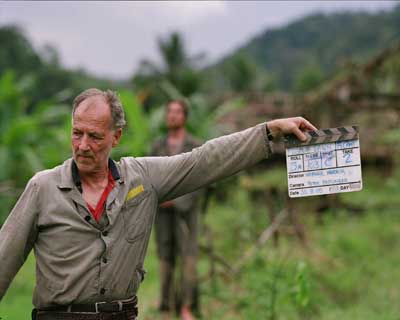
So, Mr. Werner Herzog will be the focus of my next spotlight, and has enough films that he will probably take up the rest of the year. Below is the list of films I’ll be watching, in order:

Signs of Life
Even Dwarfs Started Small
Fate Morgana
Land of Silence and Darkness
Aguirre, Wrath of God
The Enigma of Kaspar Hauser
Heart of Glass
Woyzeck
Fitzcarraldo
Cobra Verde
Scream of Stone
Lessons of Darkness
Little Dieter Needs to Fly
My Best Fiend
Invincible
Wheel of Time
The White Diamond
The Wild Blue Yonder
Rescue Dawn
Encounters at the End of the World

Film Review – The Social Network


The Social Network (2010, dir. David Fincher)
Starring Jesse Eisenberg, Andrew Garfield, Justin Timberlake, Armie Hammer, Max Minghella, Rashida Jones, Brenda Song

In the middle of David Fincher’s latest film a character sums up the current technology driven economy by saying this current generation creates jobs for themselves. In the past supply-demand was the dominating force; the people wanted something, then someone provided it. Now, we have products that are given to us and we are conditioned to need and want them. Facebook as one example. No one ever needed Facebook, but by preying on some very primitive psychological compulsions, it has become an addictive force. The Social Network rewinds back before there was Farmville or Poking or Mafia Wars, and focuses on the collegiate roots of Facebook. Here we see at its core the entire idea came from the exclusivity of Harvard’s Final Clubs.

The more intimate moments of the film are fictionalized and used to reveal aspects of Mark Zuckerberg’s personality, but the litigations that frame the film are very real. Its 2003, and Mark is a sophomore at Harvard, a kid from a middle class family who is studying computer science. Mark and his best friend, Eduardo are a clever pair, with Eduardo able to get money together whenever needed. After being spurned by a female student due to his emotionally stilted personality, Mark strikes back via Livejournal and quickly cobbled together webpage that has students rate Harvard girls against each other. The site gets him placed on academic probation and the attention of the Winklevoss twins, monied legacies who want to make a Harvard dating site. Mark listens to their idea, turns it down, then rebuilds it in his own images. As the site spreads beyond the walls of Harvard and even across the pond, Mark becomes more obsessed with becoming the very elite he resented in school.

This film succeeds on a number of factors: Aaron Sorkin’s amazing script, David Fincher’s perfect direction and editing, and Trent Reznor and Atticus Ross’ score. In a movie that is mostly people sitting around talking, you think it would drag, but the craft around everything creates tension and drama in every moment. I find myself liking every *other* Fincher film. Meh on The Game, loved Se7en, Fight Club doesn’t hold up, Zodiac is underrated, Benjamin Button is a yawn, and now The Social Network. I think Fincher works best with a script that isn’t trying to be anything huge. These small stories are given scope through the way he makes films. The score is also one of the strongest elements of the film, in particular a rowing competition scene that involves tilt-shift camera work and tight editing that is a short film unto itself.

The Social Network reminded me a lot of films like All the President’s Men. That film was made only a couple years after the events of Watergate, and it is a much stronger film about the Nixon administration than it would have been if they made it in 1990. The Social Network is very much about this moment and mindset in time. The young men behind Facebook were following the capitalist fundamentalism they were born into in the 1980s. They were never too concerned about the money behind the site, it merely worked to fund the venture, but they desired the power that came with it. There’s a moment in the film, Mark and Eduardo have just had sex with a couple girls in a club bathroom, they stand outside grinning and revealing their adolescent nature. Eduardo turns to Mark, smiling, and says “We have groupies”. Counter this with an image at the end with Mark obsessively refreshing a Facebook page and its clear this mindset is a destructive one.

Director in Focus: John Cassavetes – Love Streams


Love Streams (1984)
Starring John Cassavetes, Gena Rowlands, Seymour Cassel

As I’ve talked about before, Cassavetes focuses a lot on the psychological fragility of his characters. Often his main characters feel like Kerouac characters, they live life to self-destructive extremes, exploding like roman candles and inevitably fizzling when they can’t handle things. In Love Streams, he spends the first half of the film exploring two separate figures that fit this bill, then bringing them together for the last sad, heartbreaking hour. And, as with so many of his films, Gena Rowlands is the force of nature that powers things forward. Cassavetes also holds his own and looks much older than his appearance in 1977’s Opening Night. While I don’t know the details, it wouldn’t surprise me if this was when his health problems were starting.

Robert (Cassavetes) is an alcoholic writer who lives in a labrynthine mansion in the Hollywood Hills, populated with a parade of call girls. He finds women to obsess about, charms them, then reveals his true nature of drunken hopelessness and they leave. Sarah (Rowlands) is a women going through a divorce and trying to cling desperately to her teenage daughter, while her ex (Cassel) argues that Sarah’s history of mental illness makes her unfit to be the primary custody holder. These two figures come together and share an interesting connection that leads to a sad and rather bleak ending.

The film does wander as Cassavetes is wont to do, though it wanders into some interesting places. In particular is a segement of the film devoted to Robert’s meeting his son, now about 10 years old, and being pressured to take him for the weekend. Being the horrible figure that he is, he frightens the kid off with the bevy of women lounging around his house, chases the kid down and brings him back, then gets him drunk. Impulsively, Robert decides they are going to Vegas, where he drops the boy off to go carousing with women. When he shows up the next morning, the boy is weeping and saying he wants to go back to his mother, which pisses off the drunken Robert off and he berates the boy for not being a man. This is very interesting as we have seen what a grown up child Robert is for the majority of the film. Love Streams stands as one of the more captivating works by this director, with some strong artistic moments.

Next: we finish things up with the slapstick comedy Big Trouble (not the Tim Allen movie!)

Director in Focus: John Cassavetes – Gloria


Gloria (1980)
Starring Gena Rowlands, Buck Henry, Julie Carmen, John Adames

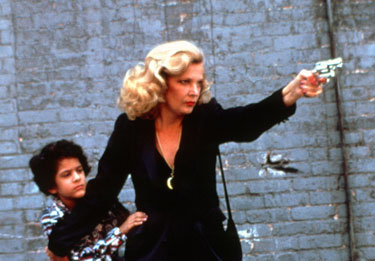
One of the few aspects of Cassavetes’ films that kept his work from falling into self-indulgent tripe was his muse and wife, Gena Rowlands. Rowlands regularly grounds the films she appears in with performances that challenge typical ideas about women. She’s just one of those actresses that its a joy to sit back and watch work. And here, in Gloria, she was given a larger commercial venue to display her skill. And it was thanks to Rowlands that Cassavetes directed this film in the first place. Cassavetes has originally just written the screenplay and sold it to Columbia Pictures, after which Rowlands was cast in the lead. She highly recommended her husband to direct his own script and he was hired.

The story follows the titular Gloria (Rowlands), a woman who grew up around mob types and has the hard exterior to match. She ends up in the custody of young boy (Adames) whose mob accountant father and family are murdered. Gloria uses her mob connections to try and negotiate she and the boy’s freedom from the endless pursuits. Along the way, Gloria clashes with her young charge, leaves him to fend for himself, but eventually chases back after him. Like the majority of Cassavetes’ movies, this is about a character, not necessarily the plot.

Unlike most of Cassavetes movies, this doesn’t have the ploddingly dull feel to it. The pace is very well done and some thing is always happening. Add to that Rowlands, who gives great performances every time and you have a film that actually had a bit of a commercial life. In fact, the premise of this film would be the basis for Luc Besson’s Leon about a decade later.What enjoyed most about this picture was, how the premise could easily have been maudlin crap, but Rowlands never lets her character fall for any “maternal instinct” nonsense. She has enjoyed a life unmarried without a children, and just because she is with this young boy she isn’t going to start treating him like her son. Even in the film’s conclusion we’re shown that she will not change who she is and is going to talk to this child like an adult.

Next up: Love Streams

Director in Focus: New Director Poll

As we come to a close on the films of John Cassavetes, its that time to decide a new director to spotlight. The choices are from below:

Claude Chabrol (1930 – 2010)

He was never quite a renowned as his peers Truffat and Godard, but Chabrol produced a respectable body of film that was part of the French New Wave. Chabrol eventually transitioned out of the experimental New Wave and adopted a more Hitchcock-esque style, which would become his trademark.

Sydney Pollack (1934 – 2008)

Pollack was a filmmaker who came into his own during the 1970s by adopting a simultaneously radical and commercial approach to cinema. While many directors fought to remain independent, Pollack worked to make thoughtful and intelligent films that could be sold to the mainstream.
Films I’ve Seen: They Shoot Horses Don’t They, Three Days of the Condor, Sketches of Frank Gehry


Robert Bresson (1901- 1999)

Bresson was an intense French filmmaker who worked to strain performances from his actors. The actor would be made to do multiple takes until Bresson saw the “acting” fade away and more layers of reality come out. His work was strongly influenced by his Catholic upbringing. Bresson was also heavily influenced by a year spent in a POW camp during WWII. His work features characters who are victims of a culture that has accepted or ignored injustices.

Werner Herzog (1942 – present)

The insane German director who has a singular vision he compromises for no one.
Films I’ve Seen: Stroszek, Nosferatu the Vampyre, Bad Lieutenant: Port of Call New Orleans, My Son My Son What Have Ye Done


Leave comments as to what director you think I should focus on next.

TV Viewing Habits for September

Here’s what’s on the docket for television for me during this month.

Sunday
Mad Men (AMC)
Delocated (Adult Swim)
Childrens Hospital (Adult Swim)
The Venture Brothers (Adult Swim)
Boardwalk Empire (HBO)
Eastbound and Down (HBO)
Bored to Death (HBO)
Dexter (Showtime)

Monday
Inbetweeners (BBC)
The Event (NBC)

Tuesday
Ideal (BBC)
Running Wilde (Fox)

Thursday
Community (NBC)
30 Rock (NBC)
It’s Always Sunny (FX)

Friday
Real Time with Bill Maher (HBO)

Director in Focus: John Cassavetes – Opening Night


Opening Night (1977)
Starring Gena Rowlands, Ben Gazzara, John Cassavetes, Joan Blondell

Some times you just want to punch Cassavetes in the face. His actors always give their all, but Cassavetes, as director, has a very hard time focusing his films. I’d hate for it to be my conditioning by contemporary cinema to be keyed into a storytelling formula, I have to say I enjoy a lot of the less plot focused directors of the independent cinema (Terence Malick comes to mind). However, Cassavetes has a big problems shaping his films into some thing at all. Its like a sculptor who keeps changing their mind as they chip away at large stone monolith, and the end product is more like the rock he started with than an enjoyable film. Rowlands is great, she always is, but in the end the film is a few moments of genius mired in a pit of dragging.

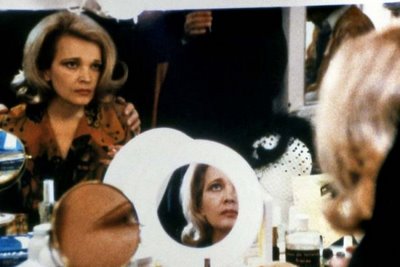
Myrtle Gordon (Rowlands) is working the kinks out of her new play, “Second Woman” in New Haven, Connecticut, and in a few days it will premier on Broadway. One night, after a preview performance, Myrtle meets a young fan of her’s, Nancy. After their encounter, Nancy is hit by a car and killed, and Myrtle begins to have a nervous breakdown. On stage, she is forgetting lines and showing up drunk to rehearsals. The rest of the cast are either infuriated with her or employing different methods to get her back on track. Maurice Aarons (Cassavetes), her co-star, treats her with cruelty while the play’s director, Manny Victor (Gazzara) works to fix Myrtle more for himself, than her.

The concept of the film is an incredibly relevant one today; the aging actress dealing with the fact that she isn’t going to be the first picked anymore. The play she is in is getting attention, and she’s still recognized, but there’s a sense that Myrtle’s time has passed. She’s terrified of the idea of no longer being relevant. The film ties right in to Rowlands’ last great work with her husband, A Woman Under the Influence. In both pictures we have women relegated to a single role (wife, actress) and when the time comes that they feel constrained by these labels there’s no effective support system to help them explore their options. Those around them grow frustrated and angry at these women for not simply continuing down the path. Rowlands plays the hell out of these roles and I always have to wonder if this came from her own life with Cassavetes or if she was simply a great actor who could key into the mindset of her characters. I know that the artist is not necessarily their art, but I think every artist has some part of themselves present in the work.

Cassavetes meanders way too much. The film clocks in at two hours and thirty minutes, and feels like it drags on for forever. A lot of moments are improvised and he just lets the camera run and see where the actors go. I wish he would have edited more, though. I am all for not holding the actors feet to a script where every line and moment is plotted, but after you have the footage it seems that chopping it down the moments that are the truest would be beneficial. I believe Cassavetes released films that he wasn’t always happy with. Shadows has a first cut that he pulled and replaced with the current, shorter version. And The Killing of A Chinese Bookie’s shorter, 1978 director’s cut is the version Cassavetes approved. It’s a novel idea, to produce a film and then recut it after some time has passed. George Lucas has been accused of ruining his work by doing just such a thing, but I like that an artist can continue to work and reveal something more. I just wish Cassavetes has returned to this particular stone to chip away again, so that Opening Night might be a film with a clearer trajectory.

Director in Focus: John Cassavetes – The Killing of a Chinese Bookie


The Killing of a Chinese Bookie (1976)
Starring Ben Gazzara, Seymour Cassel, Timothy Carey

Cassavetes was doing for cinematography and story pacing what Mamet attempts to do with language: try to make it so real it can be almost unbearable some times. Stories are not told in beats and there are no real “plots”. Cassavetes is interested in character studies, without any real arcs. Just a slice of this characters life, and in his later works the slice included a definitive moment. Here Cassavetes is reunited with Ben Gazzara whom he last worked with on Husbands. Gazzara is giving an understated performance to match the understated filmmaking of Cassavetes. When I watched this film I went with the Director’s Cut, released in 1978 and preferred by Cassavetes himself. The original cut was 134 minutes compared to the DC’s 108 minutes. When it comes to Cassavetes more is not necessarily better because he is always allowing his camera and scenes to meander until they figure out where they want to go.

Cosmo Vitelli (Gazzara) is a strip club owner and chronic gambler who is in the midst of paying back his debts to the mob in L.A. He’s so excited to have this debt gone that he spends an expensive night out gambling and ends up $23,000 in the hole. His debtors come up with a creative way for him to pay it off, they tell Cosmo to kill a bookie in Chinatown that has been giving them trouble. The mob refrains from telling Cosmo the whole truth about this man and sends the sad sack in to do their dirty work. Of course some things go wrong and we follow Cosmo for the rest of the night as his life is altered forever. There’s no moments of suspense or climax, but just the camera following this man. Where the film ends is abrupt and we can assume what becomes of Cosmo, but still open to interpretation.

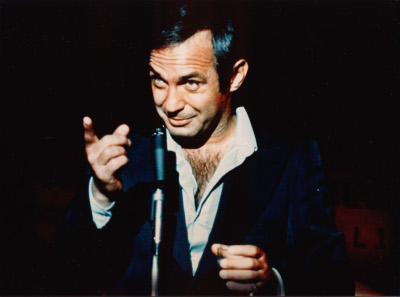
Bookie is very much the American cousin of French gangster films, and I was constantly reminded of Le Samourai with Cosmo’s stoic calm during his assassination of the Chinaman and the resulting fallout. There’s the same slapdash style Cassavetes employs in all his work. Along with Cosmo, there is are some very interesting characters decorating the fringes of the picture. The dancers in Cosmo’s clubs are briefly glimpsed and a few feel like they have histories well beyond the walls of the club. The most fascinating figure in the club is Mr. Sophistication, the master of ceremonies who is a pathetic sort of showman. His nightly shows are themed around exotic locales and he sings pitifully as the women emerge from behind the curtain and undress. Mr. Sophistication is at times angry at his circumstances and others broken by them. A common theme with every character in the film, wanting to get out but eventually giving in to what they see as fate.

While Bookie is far removed from the suburban ennui Cassavetes typically followed, Cosmo is really no different than those characters. Everyone is a person fighting against an overwhelming tide. It might be their failing marriage, mental stability or a bullet, but every person is face to face with inevitability. But Cassavetes forces us to question whether these people are out of control of their lives or the ones completely responsible for their circumstances.

Viewing Habits

Here’s what my weekly tv habits look like. Feel free to comment on what you think about my choice of shows, or recommend something you think I would like. Remember, I am not a fan of the procedural drama.

Sundays
Mad Men (AMC)
True Blood (HBO)
Hung (HBO)
Delocated (Adult Swim)
Childrens Hospital (Adult Swim)

Tuesdays
Ideal (BBC)
Louie (FX)
Big Lake (Comedy Central)

Wednesdays
Top Chef (Bravo)

Netflix
Dexter (Showtime)
The State (MTV)