Valiant Comics – Harbinger and Bloodshot

harbingerHarbinger (Volumes 1 thru 5)
Writer: Joshua Dysart
Artists: Khari Evans, Barry Kitson, others

Harbinger is a team book but begins as a solo one. Peter Stanchek is a teenage runaway who developed telekinetic/telepathic abilities. This has garnered the attention of Toyo Harada, a billionaire philanthropist and founder of the Harbinger Foundation. Peter learns that there is an entirely new variation of humanity, Harbingers, who are evolving abilities beyond what normal humans can do. Things go south between Peter and Harada fairly quickly, and the former ends up on the run once again, this time gathering Harbingers in his travels to form a group counter to Harada’s.

Harbinger is one of the better books Valiant puts out, or at least one of my favorites. It scratches that X-Men itch of angsty teenage superheroes. There’s lots of conflict between the teammates that fuels the story. Then you have the over-arching global/corporate battle with Harada that adds scope to the series. There are moments where it suffers from some cliche, those sort of early 90s Image Comics moments with lame character names, powers, and personalities that are paper thin. Overall, the basic concept is intriguing enough to provide some enjoyable stories.

The fifth volume actual brings closure to series, and someone does die in a meaningful way, a rarity in comics these days. But in ending this first iteration of Harbinger, it opens the concept up to a variety of different directions, those of which I’ll look at in a later installment.

2458321-prv12494_covBloodshot (Volumes 1 thru 5)
Writer: Duane Swierczynski, Christos Gage
Artists: Joshua Garcia, others

I don’t like Bloodshot. First, the name is the most generic moniker for a comic book super soldier. DC has Deathstroke, Marvel has Deadpool, Image had Deathblow, and Valiant has Bloodshot. Additionally, the character is a retread of a lot of cliches. Bloodshot is a genetically enhanced super soldier who was augmented by an evil clandestine group known as Project Rising Spirit. His main power is advanced healing due to the nanobots injected into his body. He has had his memories wiped and struggles to remember who he is. So he’s essentially Wolverine, a character who already makes these elements annoying. Placing them on a super generic character doesn’t make them more attractive.

Bloodshot has no personality and pretty much no character. There is no reason to like this character. His supporting cast is impressive at certain times. Early on a civilian woman ends up pulled into the story and she provides some of the only humanity. Later, during a crossover with Harbinger, there are some Harbinger kids that Project Rising Spirit was experimenting on that provide personality and interesting character bits. The supporting cast gets particularly dreadful and flat when the book briefly becomes Bloodshot and the HARD Corps.

Overall, I didn’t enjoy much of Bloodshot. I have heard that a significant change occurs in a few volumes that completely revamps what the book will be. I look forward to seeing if they can pull something interesting out of such a tired, retread of a character.

Next: Shadowman, Quantum & Woody, The Eternal Warrior, and Unity

PopCult Book Club Review: March 2017 – Bird Box

Bird Box by Josh Malerman
(Ecco, 2014)

51bin6sub1l-_sx321_bo1204203200_

The day society collapses Malorie learns she is pregnant. No one can say why everything has fallen apart, but there are some theories. The most prevalent are that the people who have gone murderous and crazed saw something, creatures or entities, that broke their minds. By the time Malorie heads to the safe house in Detroit people are boarding up their windows and only going outside equipped with blindfolds. Humanity is slipping into darkness. Josh Malerman’s debut novel jumps between Malorie’s pregnancy in the safe house to her blind journey down a river with her equally blinded children. She’s been told that somewhere down the river lies a place where the three of them can be safe. But is something stalking them on the shore?

Bird Box gets a lot of things right. First, it builds tension incredibly well. The concept of something you see, possibly even from the corner of your eye and can drive you to a homicidal rage is terrifying. The book introduces the apocalypse in the background, just a few strange piecemeal stories out of rural Russia. Then more and more incidents are reported until everything has crumbled. It also hits Malorie personally as early on she comes across a loved one who has seen whatever is causing this mental break. Malerman’s smartly leaves the exact nature of what is going a mystery. Characters wildly speculating is much scarier than the book spelling out what is happening outside the doors of the safehouse.

By building a paranoid tension, the author also develops his characters based on how they react to their circumstances. This is an excellent way to let your readers quickly get to know Malorie and the six or so supporting figures around her. As soon as she arrives at the safe house, we are aware who these people are right away. We see who is keeping a level head and trying to come up with workable solutions. We are aware who is petrified with fear about the change. We see who is quick to anger and irritation. I’m not a huge fan of The Walking Dead television series, but I do think Bird Box treads similar ground in its focus on ensemble character interaction. Malerman juxtaposes Malorie against another pregnant survivor. The house’s de facto leader Tom is mirrored and contrasted by a couple of other characters, one of whom comes late the story and could be considered the antagonist of the novel.

There is also something to be said for how smart it is to handicap your characters with the apocalypse, and then on top of that take away their chief sense. Malorie’s blindfolded odyssey out to a local bar to gather supplies is a grippingly tense sequence. Everything takes longer to do, and these stretched out moments allow us to immerse ourselves in the scene. We know as much as Malorie knows. When she discovers the trapdoor in the floor and the subsequent stench of horror that comes from it, we receive the same sensory input she does. This particular mode of information delivery is at it’s best during the journey down the river. Malorie has spent four years adapting herself and her children to the world without sight. As their boat floats down the waters, every sound is a potential threat. A brief encounter with another human on their trip is paranoid and suspenseful. Everyone is a danger, and she begins to speculate about the creatures and if they can now mimic human speech.

Overall, Bird Box is a very breezy exciting read. I wouldn’t place it up there with the type of horror I treasure, but it is a read very worthy of your time. I guarantee it will keep you glued due to his narrative momentum. When the horrific finale in the safe house finally comes about in the last two dozen pages, you’ll not be able to stop until you find out how it concludes. When Malorie and the children are within hearing distance of the new haven, her paranoia will overtake you, and you won’t be sure if they will make it.

Movie Review – Logan

Logan (2017, dir. James Mangold)

logan

I remember being between by freshman and sophomore years of college and going to see X-Men in the movie theater. This was our first introduction to Hugh Jackman as Wolverine. Jackman almost wasn’t this iconic mutant; it would have been Dougray Scott who dropped out of X-Men to play the villain in Mission Impossible III. But now Jackman and Wolverine are constants throughout the X-Franchise, even shoehorned in cameos in First Class and Apocalypse. He is the star of what is roundly considered the worst film of the lot: X-Men: Origins: Wolverine. With Logan, his tenure as this character, and Patrick Stewart’s role as Charles Xavier comes to a close.

We learn at one point that the year is 2029 and for a little, over a year James Howlett aka Logan aka Wolverine has been in hiding with Charles Xavier and another mutant, Caliban. Some catastrophic event occurred that forced these three into the Mexican wilderness. Logan is saving up cash to purchase a Sunseeker yacht and take Charles as far from humanity as possible. Time has caught up to our protagonist. He moves slower and stumbles more often. His claws are impeded by arthritis and injuries that aren’t healing like they used to. While trying to live a quiet life Logan’s path crosses with that of a nurse and a little girl who desperately need his help. There’s one final mission for Logan and Charles where they must struggle past their physical and psychological issues to be heroes again.

In contemplating this film, I realized that we haven’t had a big screen superhero send off like this ever. If we look back at the iconic comic book movie franchise, they more often than not fizzle out and just end with a whimper. Christopher Reeve ended his tenure as Superman with a dismal fourth installment. Michael Keaton left Batman due to creative disagreements. Tobey Maguire danced his way out of Spider-Man with Ted Raimi’s third installment. Christian Bale’s Batman seems to be the only movie superhero I can think of with a proper ending to their iteration, and that is not regarded too well. For close to two decades Hugh Jackman has played this character, even after some films that any of us would have forgiven him from not returning after. So there is a special sentimentality to Logan.

There’s no doubt I loved this film. Will it be on my top ten of the year at the close of 2017? Probably not. But if I were to make a list of best comic book films this is up there. What helps Logan transcend the weight of the convoluted X-Franchise is that it doesn’t need the other films to work. You could switch out the X-Men with any generic superhero team, and the allusions to past events still work just a well. Instead of looking at this as a piece of a larger franchise, writer-director James Mangold smartly chooses to make the film a character piece. I have much stronger memories of the character moments than the action set pieces and that is quite an accomplishment these days in big-budget studio fare. The relationships between the three core characters (Logan, Charles, and Laura) feel honest, and choices they make are affected by these relationships. Logan’s hesitance to take Laura in and embark on her quest is true to his character.

The acting from the three most important cast members is phenomenal. You likely won’t see better performances in another 20th Century X-Picture ever again. Jackman is very comfortable in the skin of Logan and adds more layers with the affliction of age. It would be interesting to go back and watch the action sequences in X-Men and X2, comparing them to the awkwardness and lumbering of Logan in this film. Killing is taking a physical and emotional toll on the protagonist, and we see it how he slows down, how he falls. I have to say I don’t think I have ever seen Patrick Stewart in a role quite like this. The staid, headmaster of previous films is gone, and now we have a very broken, crass, angry Charles Xavier. He floats between states of consciousness due to medication, and when he does gain clarity of mind, it brings up tragic truths Logan sought to bury from his mentor. Dafne Keen as Laura delivers a very powerful performance. She is forced to hold her own against Jackman who is giving probably his best work, and she never flinches. For the majority of the film Keen is non-verbal and how an actor does in a role that asks them to act through reacting is a great litmus test. She has the makings of someone very special because she understands Laura isn’t just an angry Lil’ Wolverine. There is history beneath the surface, and she chooses to reveal that in interesting ways.

There are strong allusions to other films. The most obvious is the 1953 Western film Shane which Charles and Laura watch in a hotel room. The ending monolog of Shane is quoted in Logan’s climax, and it pretty much spells out the themes and ideas Mangold is aiming for. I don’t enjoy this element of comic book films, where at some point characters or the director put up big neon signs that point at what we’re meant to learn from the picture. I’d prefer to infer theme from watching the story unfold, and this element is a big part of why Logan isn’t going to end up as one of my top favorites of the year. Just a personal preference, but one that has always had me keep comic book films at arm’s length. There is also a moment in the third act that is blatantly nodding to Mad Max Beyond Thunderdome, and I loved that film acknowledge it was taking a lot of inspiration from the structure of those films.

If I could just end the X-Men franchise with this film, I would. 20th Century Fox has other ideas it seems. I hope that they look at Logan not for what it is on the surface, but for what it represents in the way comic book properties can work beyond just four color summer tentpole action. In the hands of the right creative people, these characters can be elevated and be central to stories that go much deeper than audiences expect.

Movie Review – Trash Fire

Trash Fire (2015, dir. Richard Bates, Jr.)

TrashFire_Trailer

Owen and Isabel have an extremely unhealthy relationship. He has a laundry list of neurosis and treats Isabel like a doormat. She openly despises him. For some reason, they seem unable to break this relationship off, kept in each other’s toxic orbits. Everything changes when Isabel despondently reveals she is pregnant. Owen appears to change his tune, but she explains she wants him to get back in touch with his estranged family. When Owen was a child, his parents were killed in a house fire he blames himself for. His sister lived, but suffered third-degree burns over her entire body and now lives with the acidic grandmother. The couple makes a trip to visit these two strange family members, and the secret behind that house fire slowly comes to light.

Like many horror films these days, Trash Fire has a lot of interesting pieces but fails to come together as any enjoyable experience. It’s the greatest flaw is the inability to settle on the tone. The first third of the film presents itself as a pitch dark comedy and arrival at the grandmother’s home has enough quirky strangeness that it feels like this is what the film will be. However, the last third of the movie goes completely off the rails and bounces back and forth between comedy and horror, before finally settling on pure nihilistic horror for the finale. At some moments it seems to want to comment on relationships, in others, it seeks to be a satire of fundamentalist religion. And for all it’s plot spasms it ends up equaling nothing at all.

I had previously seen Bates’ Excision, a horror film with similar problems. There is no arguing that he has a distinct style. His scenes are framed in the static medium and wide shots, with subjects dead center in the camera. A line of symmetry splits the subject down the middle, and they are typically flanked by set details on either side. This type of framing is so associated with Wes Anderson at this point that we are subconsciously pushed towards expecting dry comedy, and that appears to be the case…at first. Bates continues to use this framing even in scenes that he intends to evoke great horror. It just falls so flat, so hard.

I don’t have a problem with a film featuring unlikable protagonists, as long as it knows how to handle them just right. Bates does not, so when the tragedy of the finale occurs, I didn’t care because he’d done nothing to frame his protagonists in legitimate conflict with the antagonists. I guess the protagonists weren’t murderous, but they didn’t even exhibit charisma or charm to make me root for them. Unlikable doesn’t mean they have to completely unrelatable. Bates also features his star from Excision, Annalynne McCord as Owen’s scarred sister. She does fine with the material she is given, but I can’t help but imagine how a more nuanced actress could have made the character more interesting.

The worst thing about Trash Fire is that it is a dumb film that thinks it is very clever (the same problem Excision had, hm). Mr. Bates is not a bad filmmaker; he is just aiming to make a kind of film he isn’t necessarily suited for. There is a sense that he is somehow elevating the material when at its heart it is pure horror shlock. If he could embrace it for the particular horror subgenre it is and have fun with the material, he might have a decent flick.

Masks: Refugees AP Part 3

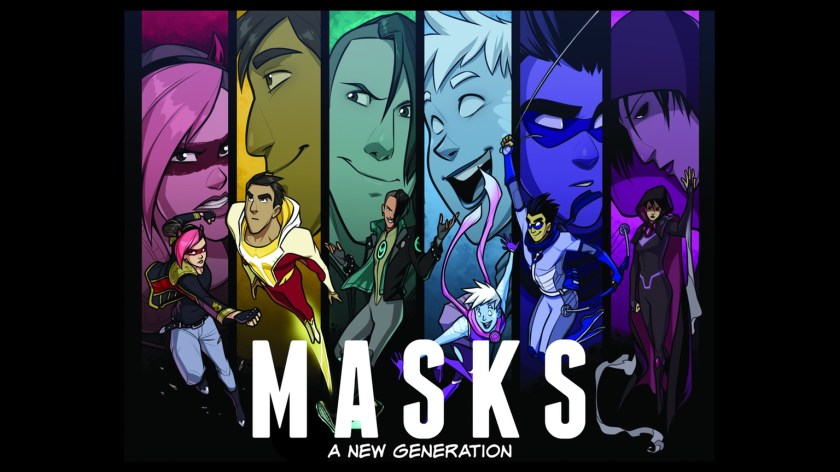
masks

We began our session with anti-mutant protests right outside Dr. Green’s clinic, a known safe place for mutants. A counter protest also showed up in support of the mutants and police were present to keep things from escalating. Ajax and Monster were working at the time, and both had to temper their personal feelings. Though they did spy an unmarked armored truck out of which a small squad of SWAT-like soldiers emerged. They hung back, but something about them rubbed Ajax the wrong way. The shelter was located in a district called The Tumbledown, which came from a devastating earthquake decades ago. Ajax takes advantage of that fact and uses his geo-manipulation just to rattle the earth beneath the protestors enough that they are scared away by a minor tremor.


The Order - Shooting Star
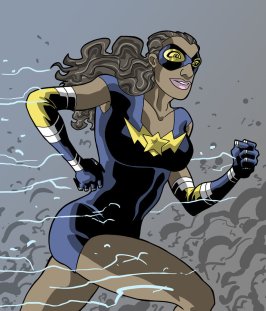
Shooting Star, the speedster member of The Order

The next day, an explosion is heard in the skies of Halcyon City, and smoke is seen coming from The Panopticon, the floating island headquarters of The Order. Ajax and Shatterstorm are in class at Halcyon High. Shatterstorm is easily able to excuse himself due to his frequent work at his dad’s laboratory at the University. However, Vice Principal Quesada remembers Ajax ignoring him when he left the other day to deal with Risk Imsit. Quesada is hearing none of Ajax’s excuses and sends him back to class. To help, Shatterstorm sets off the fire alarm, and the entire student body is rushed outside. Quesada tries to keep an eye on Ajax and loses him in the crowd.


Ajax and Shatterstorm meet up with Sparks and Monster, and the four fly Sparks’ ship to dock with the Panopticon. On board they find American Steel battered and beaten. He tells them the “thing” is in the labs before passing out. Sparks’ AI D.A.D. brings Steel to the sickbay while the Refugees continue. They head to the anti-gravity generator and get it back online, so the island isn’t on the verge of crashing into the city. Then they head to the labs but get sidetracked on the way from cries of help in the holding cells. Risk Imsit, the alien bounty hunter who tried to return Sparks to Rio Prime, is being manipulated by strange disruptions in the gravitons on board. He’s rescued and accompanies the Refugees to the labs.

In the labs, the Refugees find Timekeeper containing a strange cloaked figure in one of her time bubbles. Shooting Star and The Badge lay unconscious on the ground. There’s no sign of the occultist Mr. Phantasmo. The block of Ifritium taken by the Order lays in chunks nearby, the team making the inference that this cloaked figure emerged from the stone. Sparks’ wrist device tells her the device is in the room and she identifies it as the ornate belt the cloaked one is wearing. Shatterstorm manipulates the gravitons around the time bubble and snatches the belt, which ends up containing a small piece of Ifritium. The time bubble shatters and Timekeeper goes hurtling through the walls of the facility.

The cloaked figure eyes the new challengers and acknowledges Shatterstorm by speaking an ancient form of Obrijianian, the language of Shatterstorm’s birthplace. He also appears to have the same powers as Shatterstorm, but more refined and able to manipulate gravitons on a much larger scale. The cloaked one refers to Shatterstorm as “grandson.” A battle ensues and ends with the cloaked one blasting a hole through the Panopticon and flying away. The Refugees message AEGIS who say they have a ship on the way, however, the cloaked figure intercepts and kills everyone onboard, crushing the vessel into a small piece of metal scrap.


Villain - Impetus
Impetus, master of gravity and ancestor of Shatterstorm?

After failing to get ahold of his father, Shatterstorm leads to the team to Dr. Batin’s lab at Ditko University. Dr. Batin is there working and appears shocked to see them, though his son senses something off in the gravitational field in the room. The cloaked one reveals himself, having manipulated the gravity of the light in the room to conceal himself. A second fight begins that leaves Ajax miles away with multiple fractures and unconscious. Through distraction and manipulation, the cloaked one is eventually taken down, but not before it is revealed that Dr. Batin is simply a graviton construct, an illusion. AEGIS arrive and lock the villain up, coding the name Impetus onto his cell. However, Dr. Batin is still missing.


Ajax is in the Halcyon metahuman hospital and receives a call from his parents that they will be having a conversation about his future with the Refugees. He also receives a video message from his villainous former mentor Croydon Samford (who is currently on trial for crimes against humanity). Samford hints that they will be seeing each other soon and attached an encrypted data file. Sparks is finally contacted by her father, The Grand LeBon of Rio Prime, who explains his desperation to get her back to her homeworld: He is dying and needs her to run the planetary industry. Senator Hu’s anti-mutant legislation has led to the development of a private security force, Vanguard, a subsidiary of BanCon Industries to help quell tension in urban areas. Things are looking dire for the Refugees with one more session before a hiatus.

Movie Review – Entertainment

Entertainment (2015, dir. Rick Alverson)

entertainment-rick-alverson-gregg-turkington-1

Entertainment is an anti-film. It is the opposite of life affirming, life refuting. It is a road trip to nowhere, about a man who fails to find himself and instead lost forever. Entertainment is purgatory. This is the intent of director Rick Alverson, who helmed the abrasive 2012 independent film The Comedy. In the same way that Tim & Eric deconstruct comedy, Alverson is breaking down the aimless dreamer in search of their dream.

The focus of Entertainment is an unnamed Comedian (played by Gregg Turkington). While the protagonist may be nameless, fans familiar with Turkington’s stage persona of Neil Hamburger will know that this is a fictionalized version of the performer. The Hamburger persona is an assault on the audience of his comedy shows. His material is exaggeratedly homophobic, misogynistic, grossly sexual, and crude. The concept behind this is a comedian who thinks so little of his audience he believes this is the best they deserve. Contrasted with this is Turkington endlessly waiting between shows. He goes on local tours of industry in the Southwestern United States: an airplane graveyard, an oil field, a ghost town built as part of a mineral boom. The landscapes he walks through are husks.

The Comedian himself is a husk. He’s in his forties, performing at low-end dive bars or worse. The first location we see him at is a prison. His last location is at the birthday party of a spoiled rich, aggressive man (played by Tim Heidecker). That final performance concludes with The Comedian bursting out of a cake and bursting into tears. He ends up spending time with a financially successful cousin (John C. Reilly) who tries to advise him on his comedy act, continually saying it’s great but then talking about making it appeal to “all four quadrants.” As we get to know the cousin we see his misery come to the surface as well.

Two constants refrain throughout the film. The first is Eddie the Opener (Tye Sheridan) a clown/mime who opens The Comedian’s sets. Eddie hasn’t been worn down by the road yet. He shares the cynicism of The Comedian towards the audience but takes joy in the performance. The other refrain is The Comedian’s nightly voicemails to an unseen estranged daughter. He expresses frustration eventually at his inability to get a hold of her, the messages growing more and more desperate.

Both Turkington and Alverson have a keen interest in discomfort and provocation. In an interview with Vanity Fair, Alverson explains his personal view on “positive” cinema:

There’s a common insistence that representations of the positive lift us up and buoy us. I’ve never experienced that. At least not in a prolonged way. The idea of resolution has always seemed weird to me. I think if a movie has any naturalistic pretensions or elements in it at all, it needs to respect and represent the disjointed and difficult nature of the world. You can’t solely promote a fantasy version of the formal experience of living. There’s a necessity for a kind of balance in the field—90 percent of the fare for American audiences operates by those conventions and leaves the viewer satisfied in a very tidy, efficient way. They are unaltered in a way that is so disconnected with our daily experiences. Both The Comedy and Entertainment are in a long tradition of cinema flirting and pushing back against that impulse.

Entertainment is not a film that will appeal to everyone. Because some moviegoers have that expectation of films making them feel good, they are going to react angrily at movies like this. I suspect Alverson would welcome that reaction. The majority of movie studio fare is emotionless, just a series of dramatic formula plot points, but never anything that evokes honest emotion. It’s important that we have films like Entertainment and The Comedy because they remind us that the emotions that rise out of dissonance are some of the most real movies can make us feel.

Movie Review – Spring

Spring (2014, dir. Aaron Moorhead & Justin Benson)

spring-alley

I began the filming expecting one thing but ended up delighted and surprised with what I got. Evan’s mother dies in front of him, succumbing to a two-year battle with cancer. He feels lost and without purpose, so this leads to a spontaneous trip to Italy, the place his parents wanted to take him before they died. Evan wanders to a small town on the coast where he meets Louise, a young student. The two click right away but there is something mysterious about her, for all her charm and wit she remains cagey about certain parts of her life.

I remember seeing the trailer for Spring before its release and got the sense it would be a dark, horror film. However, it ends up becoming a romance story without any traces of cynicism. It is a dark film, but there is an emotional truth underneath the surface. Early in the first act, after Evan first arrives in Italy there is a sense of Eli Roth’s horrid Hostel films, that creeping sense of dread. We worry Evan is winding his way down into a trap. The filmmakers establish a very gloomy mood. However, I find the film has more in common with Linklater’s Before Sunset. It ends up being lots of conversations about relationships and the nature of love between Evan and Louise. Yes, there is gore and violence, but it never overtakes the film and become the focus. Instead, character work is the meat, with violence punctuating dramatic moments.

Spring is a gorgeous looking film. Directors Moorhead and Benson previously worked on Resolution, a small indie horror flick that did similar genre play. It’s very clear they have developed their technique with some truly beautiful and well-choreographed shots. There is an explosive argument in the streets of the small village after Evan discovers Louise’s secret. It is a single take, but it is a dizzying race through the back alleys and narrow streets. They also make use of drones to produce some stunning, sweeping shots of the coastal town that stand up to an expensive crane and helicopter shots.

The bulk of the film rests on the shoulders of the two lead actors, Lou Taylor Pucci and Nadia Hilker. I have never been overly impressed by Pucci. I’d seen him in his early work (Thumbsucker, The Chumscrubber, Southland Tales) and felt he was fairly flat and have noticed him popping up from time to time. Here he reaches depths in his character I wasn’t expecting. Hilker was a discovery for me and is a perfect match for Pucci. You get caught up in the chemistry these two genuinely have. That chemistry, more than the horror elements, is what makes the film. While Spring is a definite play on genres, it teaches a valuable lesson that horror is stronger when it relies on the more human and character-focused elements of storytelling.

Spring is a film that benefits from mystery. I would highly encourage you to read as little about it as possible and just know that it’s a movie that is body horror, but also something more. It’s a film about a young man working past grief and aimlessness and the risk of love. Its whole concept is a metaphor about what we give up when we allow ourselves to fall in love, and weighing if that is worth the risk.

Movie Review – Into the Forest

a24 visions

Into the Forest (2015, dir. Patricia Rozema)

into-the-forest

It’s hard to pinpoint just where Into the Forest goes wrong, but at some point, I found myself completely disengaged with the film. It tells the story of two sisters, Nell and Eva, stranded at their family home in Northern California, about 32 miles from the closest town after an unexplained global event destroys the power grid and sends society into chaos. The two sisters struggle to survive when they end up without anyone but each other. Through a series of trials and challenges, they learn to let go of their reliance on technology and reconnect with the natural aspects of the forest around them.

Continue reading “Movie Review – Into the Forest”

Documentaries Watched in 2017 (So Far)

Bright Lights (2016, dir. Alexis Bloom & Fisher Stevens)

bright lights

In the Maysles Brothers’ 1975 documentary Grey Gardens we’re introduced to Edith and Edie Beale, a mother-daughter duo that is beyond simply dysfunctional. There are many parallels between the Beales and the focus of this film: Carrie Fisher and her mother, Debbie Reynolds. However, the Fisher-Reynolds are the Beales if they had the humility to seek out mental health care and begin the process of repairing their lives. Bright Lights was released in the wake of Fisher and Reynolds’ deaths and refrains from being a somber affair. It is full of life and hope and those sort of dreams of Hollywood you’d expect from one of Debbie’s old films. Fisher provides the biting, snarky wit while also being so open and frank about her trials. There could not have been a more perfect tribute to the late mother and daughter.

Continue reading “Documentaries Watched in 2017 (So Far)”