Roots of Fear: Tommy Taffy

ken_doll

The Third Parent – https://www.reddit.com/r/nosleep/comments/51bnu3/third_parent/

His Name was Tommy Taffy – https://www.reddit.com/r/nosleep/comments/53kgyr/his_name_was_tommy_taffy/

Tommy Taffy’s Twins – https://www.reddit.com/r/nosleep/comments/55qjdf/tommy_taffys_twins/

The Night I Met Tommy Taffy – https://www.reddit.com/r/nosleep/comments/5ozie0/the_night_i_met_tommy_taffy/

The stories of Tommy Taffy are ones that touch on some of the most sensitive and terrifying aspects of our lives. The first story, the only one that’s required reading before this article is The Third Parent. In the midst of a quiet, happy family comes Tommy Taffy. He barged his way into their home, and the parents, who know him from their own childhood allow the monster to remain til he is satisfied. In both appearance and intent, he is about as evil as horrors get.

Continue reading “Roots of Fear: Tommy Taffy”

Movie Review – One From the Heart

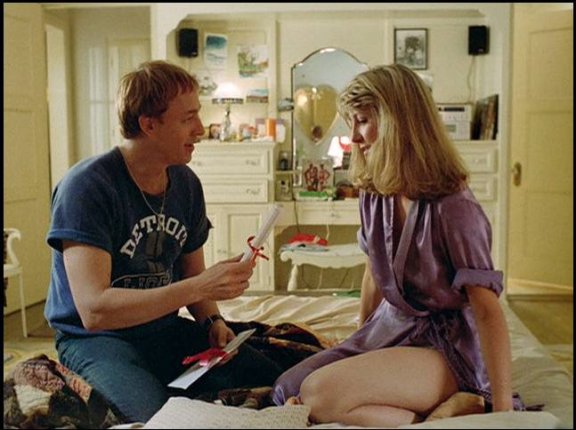
One From the Heart (1982, dir. Francis Ford Coppola)

forrest-garr-one-from-the-heart


Ambition in filmmaking is a dangerous tightrope. In the 1970s, there was a cascade of filmmakers who were highly ambitious and succeeded. Many of them (Spielberg, Lucas, Scorsese) continued their successes into the 1980s. Others were not so successful. Hal Ashby (Harold and Maude, Shampoo) became increasingly addicted to drugs and faded away. Michael Cimino translated his enormous success with The Deer Hunter into the bloated critical and box office failure of Heaven’s Gate. And there’s Francis Ford Coppola. The Godfather and The Godfather, Part II are held is such high esteem and Apocalypse Now has garnered a similar appreciation in the decades that followed its release. But something happened in the 1980s that caused Coppola’s star to dissipate. One From the Heart is widely considered the moment everything collapsed, but it’s more complicated than just one movie.

Continue reading “Movie Review – One From the Heart”

Movie Review – Dawn of the Planet of the Apes

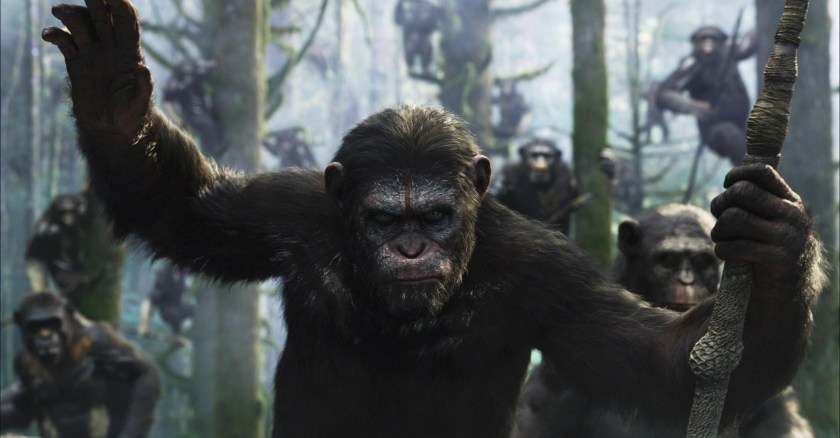
Dawn of the Planet of the Apes (2014, dir. Matt Reeves)

dawn-of-the-planet-of-the-apes-caesar-hold

Ten years has passed since the outbreak of the “Simian Flu” and humanity has dwindled to extinction level numbers. In the Muir Woods outside of San Francisco, Caesar leads a tribe of apes granted intelligence by the same scientists that created the flu. Their life is relatively peaceful until human intrude and kill one of them. Tensions mount between Caesar and the human colony in the ruins of the Bay City. One tribe member, Koba, becomes increasingly angry as his trauma at the hands of humans is reawakened, and everything heads toward a tragic ending.

Dawn is a film about two sides, arguably justified in their anxieties, who make terrible decisions that attempt to say the ends justify the means. Now past the origin story of Rise of the Planet of the Apes, we get into the meat of this series that makes it interesting, the conflict between humans and apes. The Apes, under Caesar’s leadership, have a non-aggression agreement. Caesar has established inter-tribal rules about how they will treat each other when an emphasis on doing no harm to each other. As the film goes on, this non-violence pact is tested and, depending on your reading of the film, abandoned. One theme throughout the film is Caesar’s self-reflection on his personal views. He seems assured of what he is doing at the start, and by the end, he seems profoundly resigned to going down a path that likely leads to oblivion and definitely leads to no possibility of man and ape allying.

Koba represents a very different perspective than Caesar’s. In the first film, Koba is brutalized by human scientists as part of their experimentation to develop an Alzheimer’s cure. He still bears the physical scars of their work across his body. Koba is entirely justified in hating the humans. Dreyfus, the leader of the San Francisco colony, is also justified in his hatred of the apes. His entire family was killed as a result of the Simian Flu outbreak. The greater world around him crumbled as the virus led to violence between desperate humans and their governments. Every character has a reasonable justification for their actions against others, but the film is not going to let them off that easy.

Koba’s actions cause hundreds of apes to be killed, and he is even called out on this. One ape tells him he is allowing his personal hate to be disguised as a great revolt. Caesar points out that the only thing Koba learned from the humans was hate. And it is Caesar who has the larger scope of understanding. In Rise, he has an adopted human father and has experienced the empathy and caring that humans are capable of. Koba ends up a tragic character, so broken down by his traumas and unable to find a way out, he is consumed, and his hatred damns him. The hard part is that he isn’t necessarily wrong because from his perspective humanity is this destructive monster. His fall begins when he decides that the ends justify the means and that he must do anything he can to “prove” all humans are liars by nature.

It’s almost impossible to watch Dawn without thinking of our current political climate. There are two tribes so amped up on fears and assumptions and misinterpretations that they live in a ticking time bomb. Caesar’s strength is that he is willing to listen to people that he should rightly run from or make an example of. In the early moments of the film, a human shoots, a young ape and Caesar could have easily killed the man. He chooses to let the man go because he looks at the larger picture. He sees where the path of violence would lead his people and it wouldn’t be to an ultimate victory.

The weakest part of the film were the humans. But this is sort of a common trend in the Apes movies. The human characters are merely plot vehicles. It’s in the development and growth of the apes that fascinate us. Dawn showcases strong CG motion capture that doesn’t muddle the performance but allows actors to break free of the constraints of oppressive makeup. The highlight here are the performances of Andy Serkis and Toby Kebbell as Caesar and Koba, respectively. They cause the potentially unreal to become more dimensional than the humans on screen.

Board Game Review – Die Macher

die-macher

After a recent session with our local roleplay group, my friend Jason remarked that he was looking to get four additional players to play a game he’d purchased recently. The game was Die Macher, one I’d never heard of, but he explained was about German parliamentary politics. The game is notoriously complicated and he was chomping at the bit to play. While these types of games are not necessarily my forte, I nevertheless agreed to give it a try. Maybe it would be fun?

Continue reading “Board Game Review – Die Macher”

Comic Book Review – Mae Volume 1

Mae Volume 1 (Dark Horse)
Writer: Gene Ha
Artist: Gene Ha

26832098Narnia. Wonderland. Oz. These are some of the more well-known dimensions storybook heroines travel to, where they go to partake in great adventures against terrible evils. Comic creator Gene Ha (Top Ten) is building a world like this of his own, but instead of telling us the story of the main female protagonist we enter in the middle of the story and see it through the eyes of her estranged younger sister, Mae.

For most of her life, Mae failed to keep up with her older sister Abbie. It seemed that the older girl was always running away from home and getting into trouble. It’s been seven years now since anyone in their small midwestern town has seen Abbie, and Mae has gone on with her life. Then Abbie shows up suddenly, clad in strange military garb and being pursued by inhuman creatures. It turns out Abbie is a major hero in the land of Mňoukové, a world populated by magical creatures and Eastern Europeans immigrants that accidentally crossed over a century ago. This is a world where science is merely a more unusual form of magic and city-states are at constant war.

The first volume of the series feels very much like a setting up of the pieces. The first couple issues stay in the mundane world and let us get to know Mae and her family and friends, as well as flesh out the strained relationship between her and Abbie. There is also some nice mystery building but nothing that is stretched out for too long. The payoff and journey to Mňoukové happen briskly into the series. Once we’re in the other world, some nice strokes of worldbuilding are delivered, but as I said before nothing is actually resolved, it’s mostly set up for where the series is going to go.

I’ve been a big fan of Ha since reading his work with Alan Moore on Top Ten in 1999. More engrossing than Moore’s writing was the rich, detailed world Ha built in the book. Every panel of Top Ten was crammed with details, easter eggs, and bits of minor but rewarding world building. Mňoukové is beginning to be fleshed out, but I get the sense Ha is taking a much slower burn pace with plans to carefully reveal the corned of this place. That said, the momentum feels a little stifled, and it is hard to get a sense of where the series is going.

I liked that the factions in Mňoukové are much more complicated than your typical storybook fare. There is no obvious Wicked Witch or Queen of Hearts. This is shown through Mae’s sense of being overwhelmed as her sister confidently navigates the hierarchy of nobles, allies, and enemies. The core mission for these two is to rescue their father, and because of this web of characters, I found myself forgetting that’s why they were there. I know that’s simply the conceit to get the sisters together and in Mňoukové, but I hope that future volumes build that sense of momentum and keep going in one direction.

Monsterhearts: Waterhole AP Part 1

27b1abfb8802e4668d1ee702eebbff43ba2012f41cd24ea1d5827c901ada077d

My wife started running a campaign of Monsterhearts a few weeks ago, and we have two sessions in so far (one session of worldbuilding and one of actual play). I will be chronicling it from my character’s perspective. So far it is a great group who really click with the nature of the game.

Continue reading “Monsterhearts: Waterhole AP Part 1”

Movie Review – The Handmaiden

The Handmaiden (2016, dir. Park Chan-Wook)

the-handmaiden-review-2

In the 1920s, Korea was under the control of Japan as part of its expanding empire. In this state of affairs lives Tamako, a pickpocket raised by a Fagin-esque house mother. Tamako is chosen by the art forger “Count Fujiwara” to be his accomplice in collecting the fortune of a young Japanese noble lady. This involves Tamako posing as her new handmaiden and traveling to live with the woman on her uncle’s rural estate. Tamako feels an almost immediate bond with her new mistress, Lady Hideko when they first meet. However, she begins to learn the relationship between Lady Hideko and Uncle Kouzuki is much more complicated and darker than she first expected. When Fujiwara arrives at the estate, Tamako finds herself forced to carry out a plan she is no longer comfortable with. But there is more going on here than our protagonist realizes.

I haven’t devoured the work of Park Chan-wook, but what I have seen I’ve loved. Oldboy is the title most film fans would recognize, but I enjoyed his vampire film Thirst more. His first English-language film Stoker was an engaging moody art house flick. But The Handmaiden feels like a pinnacle film. Much like, Moonlight which I just watched and reviewed, The Handmaiden is made by a filmmaker who is very confident in his work. Every technical, structural, and character element is finely crafted and presented. The story elements are woven with a subtext that speaks to colonialism, identity, and sexuality. What you end up with is a film that misses no marks and is near perfection.

The film is presented in three chapters, the first is focused on Tamako, the second on Lady Hideko, and the third acts as the denouement of the story. From the opening frames, Tamako is presented as a very captivating character. She is an incredibly confident young woman who quickly switches between her own personality and the submissive handmaiden, Sook-lee. Without giving away the second act reveal, our presentation of Tamako is colored in a very biased way and in the second chapter we see her in a very different light, the same is said for Lady Hideko.

Lady Hideko, the co-protagonist of the film, is an incredibly complicated character. She was raised by her Uncle and late Aunt, and the dark history she has in the estate is truly disturbing. Her Uncle treasures his vast book collection many than any human, his late wife included, and this obsession has ties to what led her to be found hanging from the cherry blossom tree in the yard. Hideko is a character who provokes emotions and reactions from everyone around her, a trait that is important as men come from Japan to hear her do dramatic readings from her Uncle’s collection. What she does to Tamako can at times seem cruel, but there is a dark secret behind her motives.

The Handmaiden is a very difficult film to talk about without giving away secrets. The film borrows heavily from the tone of classic Gothic literature (Rebecca, Jane Eyre) but also feels indebted to Noir like Double Indemnity. The estate itself is a fusion of Japanese and English architecture (the film is based on a British novel). Beyond the story is a commentary on the complicated history between Japan and Korea. Hideko’s Uncle is a Korean who desperately wishes to be Japanese. So much so he married a Japanese noblewoman and took her family name over his. He comments at one point that everything about Korea is filth and he wants to wash it away. Moments like that elevate a film that could be a simple thriller to a piece of filmmaking that has something to say about it’s creator’s cultural history. This is a film that once you see it, you’ll have frames frozen in your mind for a long time after.

Movie Review – Moonlight

a24 visions

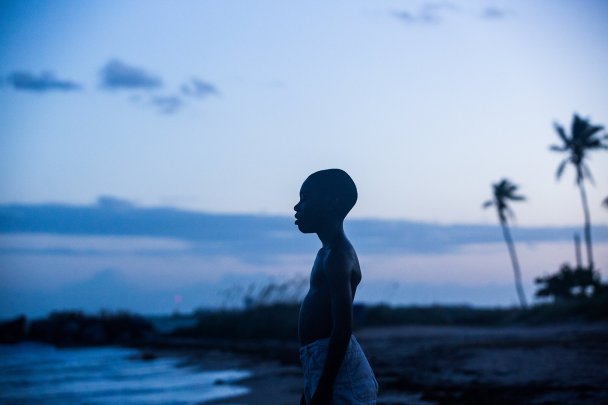
Moonlight (2016, dir. Barry Jenkins)

moonlight

Moonlight is an American masterpiece. Of films I’ve seen in the last ten years, I place it up there with The Master or The Witch, as a piece of cinema that is sure of itself on technical, thematic, and character levels. It tells a story that is primarily American, but yet not beyond connecting with people universally.

The film is told in three acts, each one chronicling a pivotal moment in the personal development of Chiron, a black youth living in Miami, Florida. We first glimpse Chiron (nicknamed “Little”) as he runs from school bullies and hides in a boarded-up tenement. It’s here he meets Juan, the head of the local drug sellers and the older man sees something inside this struggling kid. He takes Chiron to his home to meet his wife, Teresa, and they manage to get Chiron to share a little bit about his life. Later, Juan delivers Chiron home, and we meet the mother, Paula who knows what Juan does and attempts to shield her child from him. Later, we learn Paula is connected to Juan, and this knowledge shapes the relationship between Chiron and the man.

The second act catches up with Chiron in high school where the bullying has continued. Throughout both these acts, his one constant is his friend Kevin, a boy who doesn’t treat Chiron with the revulsion and hate the others do. It is made apparent that our protagonist is questioning his sexuality and finds himself attracted to Kevin and that attraction may be reciprocated. Their relationship comes to a painful conclusion in this act, and then we transition to adulthood. Here Chiron has made himself into the person he thinks he should be but is struggling with his past. This all leads to a reunion between himself and Kevin that will bring out their past and hint at their future.

I had to fight back the tears at two moments in this film. The final scene between Chiron and Juan is profoundly painful and the final scene between Chiron and Kevin is a release of emotions and honesty. The element of the film that I want to praise director Jenkins the most for was the refusal to have a villain. No one is the villain, but many people make horrible choices that hurt people. However, Jenkins chooses to reveal layers to these characters that make a reductive judgement of good/evil near impossible. Juan is a strong of example of this, and my overall favorite character in the film. He is responsible for crack cocaine being in the neighborhood and this business ends up having a direct adverse effect on Chiron. Juan is unaware at first and wants to be a father figure to this kid he sees in need of one. Chiron’s mother rightly suspects Juan is attempting to pull her child into the drug trade. But we learn more about her own connection to Juan and that becomes more complicated. Juan is not a villain but he is responsible for great harm in the community. The scene where he comes to this realization and then also has to admit it to young Chiron is heart-rending. This really highlights the idea that as often as we think we are the “hero” in our own story, we can so easily be the “villain” in another’s.

The acting throughout Moonlight is superb. Chiron is played by a succession of three actors: Alex R. Hibbert (Chiron at 9), Ashton Sanders (Chiron as a teen), and Trevante Rhodes (Chiron as an adult). It’s weird to say I was glad Rhodes didn’t get a Best Actor nomination for an Oscar, but that is only because the character is a collective of three commanding performances. The only way to do justice would have been to have a single nomination for three actors. I have not read much about the production and rehearsal process but the synchronicity between these performances is unlike anything I’ve ever seen. I have to wonder if the movie was made sequentially so that Hibbert set the foundation of the performance, Sanders studied that and adapted, and finally Rhodes was a culmination of his own thoughts of the character filtered through these two others. As a result, Chiron is one of the most fully realized characters I have ever seen on screen. He is a living breathing person who I feel like I’ve met.

As a public school teacher, I’ve worked mainly in the inner city for the seven years of my career. As a result, I have worked with some young men much like Chiron. I have also worked with young black men who are happy and healthy and have very supportive families. So, I don’t think we should view Moonlight as a universal truth of the “black male experience” so much as it is about how masculinity is framed for so many black men. The scenes where Chiron sits at Juan and Teresa’s kitchen table eating food and refusing to speak has been a part of my life. I’ve sat across from young men who are so tormented inside at such an early age. Food is about the only nurture some of them get. I’ve watched young black men crying because they’ve injured themselves only to have their mother smack them over the back of the head and spit “Stop crying and being a pussy! Men don’t cry!” Even with my current year’s class, I have a young black male student who finds it deeply difficult to verbalize his frustration even when it is just the two of us talking. He didn’t want to say sorry to another student he upset in front of everyone because he’d been taught that would make him look weak and his status among his peers is more important to his livelihood than his conscience. This sort of toxic masculinity is what Moonlight is all about. And it’s why the brief glimpse we get of Chiron being able to stop tensing, stop holding himself back is so emotionally cathartic.

I had seen Barry Jenkins’ previous feature film, Medicine for Melancholy, and while it is a great independent character focused film, he has made a significant leap across all elements of filmmaking with Moonlight. This is going to be a defining American film and is going to resonate for many years to come. The intersection of LGBT people and People of Color can be a tough one. Growing up in the South, I have been an outsider and observer of this intersection, and the deeply religious pockets of the black community can be as brutally homophobic as their white counterparts. At the same time, I have seen same sex relationships between women accepted without much strife. It is when men reveal their nature as gay that fear boils up, across all communities. Power is assumed to be heterosexuality, and Moonlight shows that strength doesn’t come from a particular sexual orientation, rather a personal resolve and determination, aided by people in your life who show you what love can be.

PopCult Book Club – February: The Pulse Between Dimensions and The Desert

The Pulse Between Dimensions and The Desert by Rios de la Luz

pulse-between

Rios de la Luz is a Xicana Oregonian who writes weird fiction. This is her debut collection and is purported to have a wild and exciting variety of the strange and supernatural. Join me, won’t you?

“In The Pulse between Dimensions and the Desert, Rios de la Luz’s writing is electric and alive. It grabs you and pulls you into her universe, one that is both familiar and foreign, a place where Martians find love, bad guys get their ears cut off, and time travel agents save lost children. In this innovative, heartfelt debut, de la Luz takes her place as a young author that demands to be read and watched.” —Juliet Escoria

PopCult Book Club January Review – A Once Crowded Sky

A Once Crowded Sky by Tom King
(Touchstone, 2012)

once-crowdedOver the course of 2016, I became enamored with the writing of Tom King. King was responsible for penning Marvel’s The Vision as well as The Omega Men, Batman, Grayson, and The Sheriff of Babylon (Vertigo). I have yet to read Grayson and still have half of Babylon to read, but I can safely say he has become one of those writers I will actively seek out. This led to my discovery of his 2012 novel A Once Crowded Sky. King was an intern to writer Chris Claremont before joining the CIA and becoming a counterterrorism officer. After a decade he left that position so he could write the novel we’ll be talking about. This would eventually transition into his current spot writing exclusively for DC Comics now.

A Once Crowded Sky feels like Watchmen and The Dark Knight processed through a post-9/11 lens. The world of the actual comic didn’t seem to produce a definitive work of this period like it did during that. While never directly addressing the War on Terror, the novel presents a world where the literal superpowers are gone, and a wave of bombings terrorize Arcadia City.

The story focuses on a number of character with chapters titled like issues of fictional comic books featuring them. Foremost is Penultimate, the sidekick of the deceased Ultimate. Ultimate was an android, much like The Vision or original Human Torch, whose creator was killed at the moment of creation. Inspired by a Superman comic he glimpsed early on, Ultimate became a caped crusader. He ends up being responsible for the death of Penultimate’s parents during a battle with a villain. He adopts the young boy, nd the two become the most iconic heroes in the city. An event occurs before the start of the novel where a cosmic force known as The Blue began to leak into the universe. This phenomenon caused villains to commit mass suicide and threatened to tear reality apart. Ultimate sacrifices himself by taking on the powers of all the other heroes and flying into the heart of the force. Penultimate became afraid in those final hours and fled leaving him the only remaining superhero, and a lot of resentment from his former allies.

One of Pen’s tenuous allies is Old Soldier, a version of Captain America who was kept in a sleeper state until the United State’s government needed his services, dating back to World War II. He is a deeply troubled figure who resorts to violence as instinct but always with a pained heart and full of regret. In the years before The Blue he was in a relationship with Masallah, a devout Muslim heroine. Their relationship is lightly touched upon and was one of those parts of the book I would have loved to see developed more.

Filling out the supporting cast are Strength, a combination of Shazam and Wonder Woman, who greatly resents Pen after how much she sacrificed. There’s Devil Girl, a very enigmatic young woman who Old Soldier seems to remember from throughout his life and claims to be the actual Devil. Star Knight is a successful businessman who uses his wealth to continue his crime fighting. There are a lot more and King is very good at filling in the blanks on each one just enough so it feels like a lived in world. He also has a penchant for ending their lives quickly and tragically, in line with the fear of terrorism the city is under through most of the book.

There are moments in the middle of the book where the story feels like it is a bit stalled. But when the third act begins things go fast and character’s have a heavy finality brought down on them. The themes of the book deal with sacrifice and facing your calling in life. So many of the characters either want to push away what they once were or desperately seek to get it back. Once upon a time they all knew who they were and then an event forever changed their world and left them stumbling about in the dark trying to relearn how to be a person. A Once Crowded Sky feels very much a piece of literature of our time, but with ideas and themes that keep it from becoming an irrelevant relic for future readers.