
With this new blog I’ll be looking at comic books, old and new, and reviewing them in the same way as I do film over on Shadows in the Cave. Hope you enjoy and get introduced to some new stuff that gets you to go out and find it yourself.
Author: Seth Harris
An immigrant from the U.S. trying to make sense of an increasingly saddening world.
Wild Card Tuesdays – The Living and The Dead

The Living and The Dead (2006, dir. Simon Rumley)
Starring Roger Lloyd-Pack, Leo Bill, Kathy Fahy
It’s very hard for me to write about this film after having just watched it today. It affected me in a deeply emotional way that very few films are able to. After cinema becomes a daily occurrence, you are naturally numbed to the typical emotional tricks of filmmakers. I was aware of this film first as a horror picture. The director, Simon Rumley came out of nowhere with this small picture that made the festival circuits. It never really the mainstream venues, instead traveling to the fringe horror festivals. I am very curious as to how it was received because more than anything this film is a deeply disturbing, yet also sensitive, portrayal of the pain of severe mental illness. The film achieved something very few have in recent years, it made me cry. There is a scene in the last third of the film that is so emotionally devastating I can’t see how anyone could watch it and not break down.
The former Lord Donald Brocklebank must leave his dreary estate in the middle of the English countryside for unknown reasons. His wife, Nancy is suffering from cancer and his son James is severely mentally challenged, requiring daily pills and injections to keep his delusions in check. Donald instructs James that Nurse Mary will round to tend to Nancy. However, James forgets his injections and decides to prove he can be the man of the house by locking Nurse Mary out and trying to tend to mother himself. It’s painful to watch James descend into madness while unknowingly hurting his mother again and again. The film makes a sudden major shift in the narrative about half way through that really cements the idea that we are seeing the story through the mind of a mentally ill person. And the finale is just jolting and ambiguous enough that I believe this film will stay with you for years.
Leo Bill should have received an Academy Award nomination for his portrayal of James. His face is recognizable as that of Darwin in Tarsem Singh’s The Fall, as well as the arranged suitor of Alice in Tim Burton’s recent Alice in Wonderland film. Here is firing on all cylinders, delivering a performance that is so powerful and unrestrained. Even now, just thinking about certain scenes I feel my gut in a knot and heart breaking all over again. James is both terrifying and sympathetic. I thought of the prayer of Christ on the cross, crying out “Forgive them Father, they know not what they do.” That is exactly how we and the other characters in the film inevitably have to view James. His reality is a different plane of existence than ours and he can hurt people while believe he’s simply giving them a hug.
I can’t emphasize enough what a profound piece of cinema this is. While labeled “horror” I would argue that there is no human monster in the film. The monster is mental illness and the shattering pain and emotional trauma we humans are forced to bear. I don’t know if I could ever watch The Living and The Dead again, much in the same way I am unable to revisit Requiem for A Dream. Both movies are so effective in getting across the helpless pain they want to portray that, while we acknowledge them as masterpieces, our psyches are too fragile to confront them again.
DocuMondays – This Filthy World

This Filthy World (2008, dir.Jeff Garlin)
Unlike the other documentaries I have looked at, where you have multiple interviewees and tightly edited footage to form a narrative, this is simply one man on stage in front of a crowd, talking to them. It’s basically a concert film, but while most of those feature either a music performer or comedian this is a film director. I guess the closest equivalent of this would be the Evening With Kevin Smith DVDs. Both are the result of directors whose personalities are as large as the reputation of their films. John Waters is definitely not a filmmaker who appeals to everyone, something he readily admits, but even if you don’t enjoy his films I think it would be hard not to enjoy this one-man show about his love of all things strange.
Waters was raised in and around Baltimore, Maryland, which is to him like New York is to Woody Allen. Baltimore, named the Ugliest City in America at the time which Waters proudly cites, provided him with a front row seat to the grotesque. Rather than being repulsed, Waters was drawn to the misshapen and demented natives and made them movie stars. His love of film also began in Baltimore when, as a child, he became enamored with the gimmickry of William Castle (House on Haunted Hill, House of Wax) and Kroger Babb. Babb was a filmmaker who had little skill with filmmaking, and more with being a salesman. He produced films like Mom and Dad, which the Catholic Church gave a Condemned rating, and features actual birth footage, one of the few ways of showing female nudity in those days. Babb would have an obvious influence in Waters later work, and Castle got a very gimmicky homage with the Odorama cards handed out at showings of Polyester.
My favorite piece of the performance was the second half, where Water discusses how he even he has lines he doesn’t think people should cross. This allows him to go into very poetic descriptions of teabagging, helicoptering, and other outer edges sexual practices that he gets pleasure from horrifying the audience with, but also seems to honestly think are too far. He addresses his child molestery appearance, which draws looks when he goes to see animated films at the theater. He talks about his love of attending trials and the little club of friends who try to one up each other about which they have attended (Waters got into one of 10 public seats at Watergate for a day, an elderly woman beat him, she was Nuremburg, the Super Bowl of courtroom trials). There’s a wonderful sequence where he talks about the influence The Bad Seed has on him, creating a desire to be a secretly evil child. Even now, he says he loves to encourage children to get into trouble, mentioning when he was attending a parade recently and tried to convince a little girl to help him go knock people’s bicycles over.
Like I said, Waters isn’t everyone’s cup of tea, nor should he be. If he was, then the entire agenda of his work would be subverted. He talks about how his career is now lauded in elite high society circles in New York and that he thinks its wrong. Even if you don’t care for his films, I don’t think you could watch this and not find some anecdote or piece of wry wisdom memorable. If you haven’t seen his work some segments might be confusing, but nevertheless this is an excellent piece of insight into one of the ground breaking directors in America.
Director in Focus: New Director Poll
As we wrap up my look at Brian DePalma’s career with Redacted on Friday, I’m looking ahead to the director I will spotlight beginning in August. Below are the four choices. Vote by leaving a comment below.

John Cassavetes – To many he was the father of modern American independent cinema, filming on New York Streets without permits, making films that would never receive major accolades, but would inspire filmmakers for decades to come. His wife, Gena Rowland starred in many of his pictures, and his children have all gone into the film industry. While he is most famous for his role as Guy in Roman Polanksi’s Rosemary’s Baby, Cassavettes is also one of the most independent voices film has ever seen.
Films I Have Seen: Faces.

Sam Fuller – He didn’t give a damn if they liked his work or not, he made films the way he wanted them. Fuller was a newspaper writer and crime novelist who joined up with the Army when World War II broke out and saw action in both the European and African theaters. It was during the liberation of a concentration camp that he made his first cinematic work, footage that was included in a documentary. Fuller focused on gritty crime drama and war films, but didn’t present pretty pictures of anything. Studios hated his work, and it was with the shelving of his controversial film White Dog, which tackled issues of racism, that he left America never to make another film here again.
Films I Have Seen: Pick Up on South Street

Derek Jarman – Jarman was a filmmaker that optimized the British punk movement. He made films that took cultural tradition (The Queen, Shakespeare) and turned them on their heads. Jarman was diagnosed with AIDs in 1986 and died in 1994. Despite his illness he continued making films till the ending, becoming more meditative and thoughtful in his latter work.
Films I Have Seen: None

Werner Herzog – Herzog is nuts. This is something I have learned through reading about and seeing only a few of his films. Herzog likes to play with the viewer, fooling us and confusing us. He is obsessive, meaning his films are tightly crafted. His battles with frequent acting collaborator and peer in insanity Klaus Kinski are the stories of movie legend. And he’s still making films.
Films I Have Seen: Strosek, Nosferatu, Bad Lieutenant: Port of Call New Orleans, Grizzly Man
Character Actor Month – Part 2
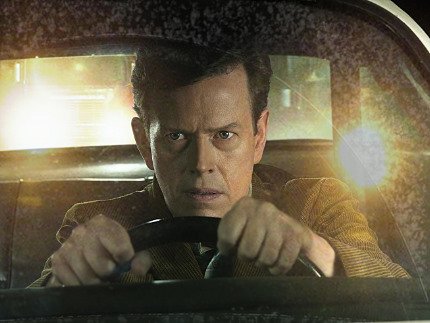
Dylan Baker (IMDB credits: 91, Planes Trains and Automobiles, Happiness, Requiem for a Dream, Thirteen Days, Road to Perdition, Spider-Man 2)
You know him as Dr. Curt Conners in the Spider-Man films, most likely. I remember him mainly for two roles: A pedophiliac psychiatrist in Todd Solondz’s dementedly hilarious Happiness and as the bizarrely backwoods ride in Planes, Train, and Automobiles. He had a modest upbringing in Lynchburg, Virginia and attended William and Mary before moving onto the Yale School of Drama, where his fellow classmates included Chris Noth and Patricia Clarkson. Like most character actors, Baker has garnered great success in live theater, even receiving a Tony nomination for his performance in La Bete, a comedic play inspired by Moliere and written in iambic pentameter. In addition, he’s married to Becky Ann Baker, who played the mother on the amazing ahead of its time television series Freaks and Geeks, seriously, if you haven’t seen it get ahold of the DVDs, I’m not asking you to, I’m commanding! One of Baker’s most recent, best, and I suspect most overlooked performances was as deeply dark and disturbed elementary school principal in the Halloween flick Trick R’ Treat.
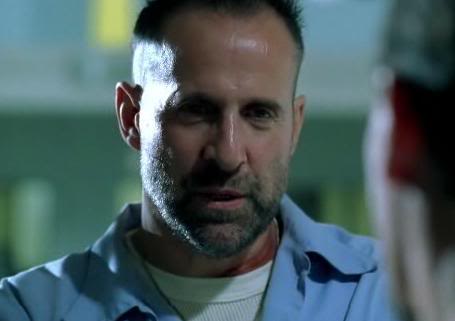
Peter Stormare (IMDB credits: 100, Fargo, The Big Lebowski, Dancer in the Dark, Minority Report)
He was one of the Nihilists Lebowski feared would take his balls, he was the man who put Buscemi through a wood chipper, and he was the doctor who replaced Tom Cruise’s eyeballs. Born in Sweden in 1953, Peter Stormare (formerly Rolf Peter Ingvar Storm), has had great success in Hollywood but it didn’t start until he was 43. Before then, worked with the Swedish Royal Dramatic Theater for 11 years and then the Tokyo Globe Theater (Where he worked as the Associate Artistic Director). He moved to New York, was discovered for films by Ingmar Bergman, and played the Swedish equivalent of James Bond. It was a few years later when he was cast by the Coen Brothers in Fargo and finally got the international attention he deserved for all these years. I find Stormare to have incredible comic timing and such a dry sense of humor. The first time I saw him I didn’t quite get it, but as he appeared in more and more films, it grew me on. His slightly doofy line deliveries and hollow eyed look. A style of comedy that is really much more about pulling back than going over the top.

O-Lan Jones (IMDB credits: 45, The Right Stuff, Edward Scissorhands, Natural Born Killers, Mars Attacks!, The Truman Show)
You probably know her as the fundamentalist wacko neighbor in Edward Scissorhands. Or maybe the waitress who won’t give back the autographed photo to Jerry Seinfeld. Or any number of countless waitresses she has played. Jones said once, “Most actresses make money waitressing while trying to find acting work. I’m the only one who makes her career waitressing on screen.” She was born in Los Angeles in 1950, started acting at age 16, she moved to New York where she met and married the brilliant writer Sam Shephard in 1969. The divorced in the early 80s, and she began making her appearances in numerous films, usually as a waitress. Recently, she has embarked on staging her own modern opera using all recycled materials to make props, costumes, and sets, featuring a live orchestra, and her own filmed video pieces. And about that odd first name. Her mother loved Pearl S. Buck’s The Good Earth so much she named her daughter after one of the characters.
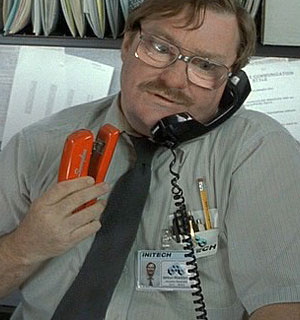
Stephen Root (IMDB credits: 109, Office Space, Newsradio, Beavis and Butthead, King of the Hill, O Brother Where Art Thou, Finding Nemo, No Country For Old Men, Idiocracy)
If you don’t recognize his face, I’m sure you know his voice. From television he is most known as Jimmy James, owner of the radio station in Newsradio and the perpetual loser Bill in King of the Hill. From films, you definitely know him as Milton, the man desperate to keep his stapler in Office Space. Born in Sarasota, Florida, Root didn’t have any sort of extraordinary acting background, other than majoring in theater at the University of Florida. It was his friendship with Mike Judge that really got his career going, voicing Milton as a cartoon in a series of crude shorts and doing voices for Judge in Beavis and Butthead. From there, his career saw skyrocketed in the 1990s. Office Space has cemented his place as a cult film figure, while he has befriended the Coen Brothers and been featured in many of their films. He’s one of the best comedic character actors out there, able to tackle a seemingly infinite range of types. His four episode run on True Blood was one of those you wish could have become a regular role.

Dick Miller (IMDB credits: 170 films, The Little Shop of Horrors, Rock N’ Roll High School, The Howling, Gremlins, The Terminator, Innerspace, The ‘Burbs, Pulp Fiction)
When I think Dick Miller, I think of poor Murray Futterman in Gremlins, a man who was convinced the little monsters existed but no one believed him. Miller got his start with the classic shlockmeister Roger Corman, most famously in the original The Little Shop of Horrors as Seymour. Director Joe Dante would cleverly wink at that film by casting the original Audrey (Jackie Joseph) as Miller’s wife in Gremlins, one of those things you don’t realize as a kid but love when find out about when you’re an adult. Miller moved from working with Corman in the late 1970s, to being a regular in Joe Dante’s mainstream Corman-like horror comedies. I absolutely love Miller in The ‘Burbs as a garbageman who has zero patience for the paranoid neighbors in a Chicago suburbs street. Its one scene but it is incredibly memorable due to Miller and co-star Robert Picardo’s perfect comedy timing together.
Director in Focus: Brian De Palma – The Black Dahlia
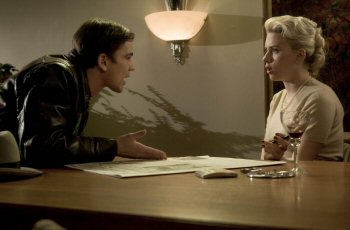
The Black Dahlia (2006)
Starring Josh Harnett, Aaron Eckhart, Scarlett Johansson, Hilary Swank, Mia Kirshner, Mike Starr, Fiona Shaw, Rachel Miner
Coming off of the Euro Noir Femme Fatale, De Palma steps right into classic L.A. Noir, where the entire bleak genre really began. The film is based on the James Ellroy novel, which is in turn based on the real life murder of a young wanna be actress named Elizabeth Short, nicknamed “The Black Dahlia” by the newspapers. For the picture, we find De Palma restrained much more than in Femme Fatale. I didn’t notice too many visual flourishes, instead a lot of post-production gauziness added to the film in an attempt to make the film resemble its counterparts in the 1940s. He manages to directly reference old movies, a trademark of De Palma’s love of cinema. It’s a long picture, over two hours and there are many sub plots and third act twists. So how does it all come together?
Bleichert (Hartnett) and Blanchard (Eckhart) are L.A. beat cops who meet during the 1947 Zoot Suit Riots (sailors versus hep cats). The two men are promoted to being bond agents and fate finds them a block away from the discover of Elizabeth Short’s body. Blanchard becomes obsessed, while Bleichert becomes enamored with Blanchard’s girl (Johansson). Feeling the pressure to keep his partner from going over the edge due to the case, Bleichert does some footwork and meets a young woman, Madeline Linscott who traveled in the same lesbian circles as Short. Through a series of “what a coinky-dink” sub plots, all of these characters become entangled, ending just like all good noir should end, most every dies. The only part that really diverges is the very final scene which felt very tacked on by the studio in an attempt to not let the film end on a “sad” note. Pshaw.
This is a real mess of a film. If we were judging it on style and production design it gets an A+. That’s one thing you can never fault De Palma, the man knows how to make a film ooze style. The cinematography is pitch perfect, thinking in particular of a crane shot where as part of the background we witness the discovery of Short’s body by a mother out pushing her baby carriage. It’s done as this little thing in passing, that you could easily miss if you weren’t paying attention. That sort of clever detail is hard to not love. The entire set and costume design is solid, no one looks out of place. As always, there are some interesting set pieces that had to involve thousands of shots and takes. So from a technical stand point, its an excellent film.
Plot wise this film is trying to do way to much and tie to many things together that don’t make much sense. Characters who have no connection through the majority of the film are suddenly revealed through clunky exposition to have been sleeping with each other the entire time or connected to the murder of Short. By the time you get to the end its all so ludicrous and over the top it becomes absurd. While coincidence is a big part of noir, it at least as to make some sort of sense with the story told so far. I did however enjoy an incredibly macabre and creepy old Hollywood family that plays a crucial role in the film. While we only get a glimpse of their utter insanity, I found myself wanting to see more about them. There’s also some references to The Man Who Laughs, a Lon Chaney, Sr horror picture that served as the inspiration for The Joker. All in all, a rather middle of the road with too much plot to cram into two hours.
Next: we wrap things up with a shockingly different film, revisting Casualties of War territory, this time in Iraq, Redacted
Criterion Fridays – Make Way For Tomorrow
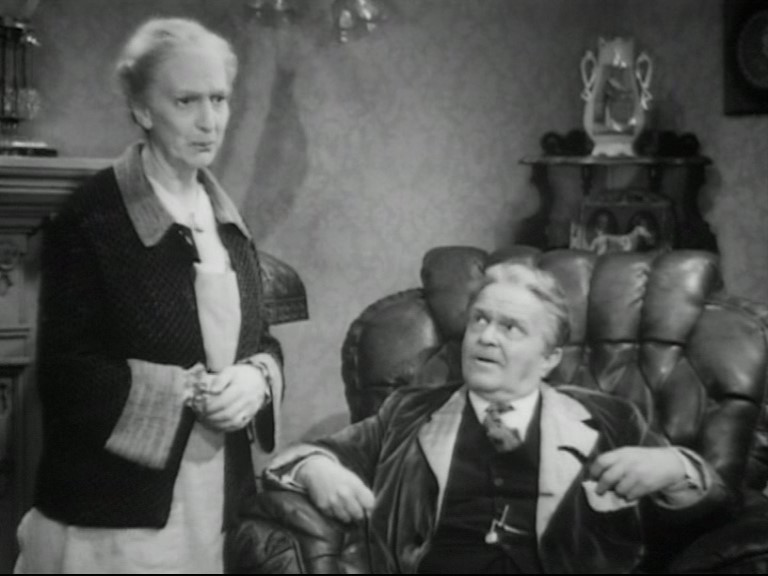
Make Way For Tomorrow (1937, dir. Leo McCarey)
Starring Victor Moore, Beulah Bondi
The economy is bad. Unemployment. The Housing Market. Small Businesses. Crashing every day. During The Great Depression, cinema reflected this moment in history where the common man was struggling to make ends meet. People were losing their homes, ending up jobless and on the streets, and Hollywood wasn’t afraid to put that up on the screen.There were many escapist pictures in the theaters during the Great Depression, particularly musicals, but even those had elements of the financial struggles people were under going. Not so now. Particularly during the summer, we have mindless film after mindless film, featuring people so distant and out of touch with our own reality that, for myself, I become disengaged. What I am shocked to see is reality reflected on the screen.
Barkley and Lucy have been married for fifty years when the bank notifies them that their home for all this time is being taken away. Barkley hasn’t worked in four years and he and Lucy don’t have enough money for a new place right away. They contact their four adult children and explain the situation. Behind the couple’s back, the children fight about who will take them, with it being decided that Lucy will go to stay with George, the eldest son, and Barkley will go to Cora, the eldest daughter. Lucy soon finds George’s wife and teenaged daughter don’t care for her presence in the home. Hundreds of miles away, Barkley has come down with a cold and is bedridden. Cora is infuriated she has to deal with him, but puts on the facade of a caring daughter when the doctor comes calling.
Make Way For Tomorrow introduces an idea that would still be controversial today in many circles: Do not live your life as a parent completely when you have children, you must have a definition outside of that. The children in the film are not monsters; stepping back when can see things from their point of view. But we also sympathize greatly with Barkley and Lucy, they truly gave every thing they had to their children and it may have not been the smartest move. Once their children became adults they vanished from their parents’ lives and only now have becoming aware of the financial situation back home. The relationship between Barkley and Lucy is deeply loving, its rare that I see a couple on screen when I completely buy their relationship. The paths the film leads them down are not happy ones, like the title suggests, it becomes about accepting change in your life.
Orson Welles said of this film that “it would make a stone cry”. He was exactly right. The love between these people is so pure and beautiful. The final sequence of the film involves them taking an unexpected car ride to the hotel where they honeymooned fifty years earlier. The coat check girl, the hotel manager, every one treats them in the way we wish their children did. The drinks are on the house, the band conductor plays an old tune when Barkley and Lucy hit the dance floor. Victor Moore and Beulah Bondi master these characters with a sly humor that undercuts a lot of the sadness that pervades the film. It doesn’t end on a hopeful note, but a realistic one, an admonition that life changes in ways don’t want. We are powerless to fight it, so instead we should embrace the people around us.
It Should Be A Movie – Girls

Girls (2005-2007)
24 issues, Written and Illustrated by Jonathan and Joshua Luna, Image Comics
In the 1970s there was a renaissance period for both horror and science fiction. Of course there was still schlock being made but there was also a lot of thought provoking speculative fiction presented to the movie going public. These films used the facade of the fantastic to talk about modern day issues and challenges. Nicolas Roeg’s The Man Who Fell To Earth looked at how fame corrupts once noble endeavors. Mad Max dealt with the fears of lawlessness. A Clockwork Orange chose to examine the ways in which society seeks to erase the individual by examining the most despicable element. A film adaptation of Girls would follow in the footsteps of these films as a picture looking at relevant social issues in a fresh inventive way and it would haunt the audience for a long time after.
In the fictional locale of Pennystown, USA the young Ethan Daniels is tossed out on ass after getting drunk and causing trouble at the local bar. Stumbling his way home, Daniels comes across a naked young woman who appears to not be able to speak. In his alcoholic haze he brings her to his house where he tries to get her to talk, instead she forces herself on him and they have sex. In the morning, Daniels gets the authorities but when they return to his home they find she has laid several eggs that hatch into full grown duplicates of herself. These strange women wander the town, killing any woman they come in contact and attempting to mate with any male. The townspeople attempt to leave Pennystown but find it surrounded by an opaque white dome that has cut off their communication with the outside world. In addition there is what appears to be a giant sperm in a field outside town. Tensions build as the women begin to see the men as weak and pathetic, as many of them succumb to the strange women, only exacerbating the problem and creating more of the savage creatures.
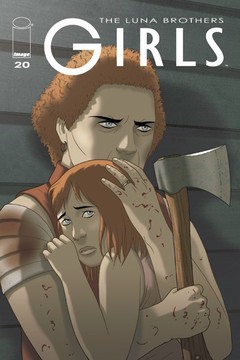
In a country where we hear permissive sex being blamed for all society’s ills, the Luna Brothers examine that idea more closely by sequestering these townspeople and discovering how they behave when sex becomes weaponized. While the actual science fiction elements don’t have a tight wrap up (things are left fairly ambiguous) , the story is a springboard for fascinating character interaction. The townspeople are variety of races, ages, and sexualities. One character is revealed as being gay in a rather gruesome way. This is comparable to films like Lifeboat or Cube, where you have people thrown into a pressure cooker and we sit back and watch how all the tension and building violence plays out.
The look of the comic is so crisp, clean, and symmetrical I was reminded of the way Kubrick would frame a shot. That in mind someone like a Paul Thomas Anderson would be already adept to film this. Even more than that, I see Duncan Jones, who brought us the minimalist science fiction masterpiece Moon being tailor made for a project like Girls. With Moon he showed us that the climax we expect for a film is not necessarily the one that is appropriate for the story. Throw in Joseph Gordon-Levitt as Ethan Daniels and think you would have a very fascinating film on your hands. In many ways it would be the opposite of Pandorum, released in 2009, where a awesome sci-fi premise was abandoned in favor of thoughtless action. So while we wait for Hollywood to greenlight a Girls film, do yourself a favor and pick up the collected volumes.
Newbie Wednesdays – The Last Airbender

The Last Airbender (2010, dir. M. Night Shyamalan)
M. Night and I have a long history together. The first film I saw my freshman year of college was The Sixth Sense. It terrified me. Now, with a decade of film obsession behind me, it takes a lot to creep me out that badly, and I look at The Sixth Sense as a very sad atmospheric film, still good though. His next film, Unbreakable, is still one of my favorite comic book films, in that is captures a certain idea of superheroes that I’ve never seen another film come close to. About there is where my love for the director ended. I’ve seen every film he’s made in the theater, the only other director who I have done that with is Christopher Nolan, sort of the antithesis of Shyamalan. While Nolan produces better and better films, Shyamalan only gives diminishing returns. This latest, his first foray into adapting an already established property, is an utter disaster.
If you haven’t seen the Nickelodeon animated series Avatar: The Last Airbender (I’ve only seen the first five episodes) here’s the premise. In a fantasy world, the planet is ruled by the four elemental nations: Fire Nation, Air Nation, Earth Nation, and Water Nation. A hundred years before the start, the Air Nation was wiped out and the Fire Nation began its quest to spread its empire across the globe. Two Water Nation children, Katara and Sokka, discover a little boy frozen in ice. Once thawed, they learn he is Aang, the last of the airbenders and the one destined be the Avatar, meaning control over all four elements. Searching for the Avatar is Prince Zuko, the exiled son of the Fire Nation king. He sails the world, hoping to prove his might to his father by bringing him the Avatar. Zuko’s forces become aware of Aang and epic battles ensue.
The concept here is ready made for a film franchise, and it has the potential to be as popular and well loved as Harry Potter. It’s a rich, complex universe that doesn’t pander to kids. It treats them like intelligent beings who can handle more than stand alone episodes. The film however, creates a narrative mess. One of the elements of screenwriting that you’ll find is seen as a no-no is voice over exposition. Its passable at the beginning of the film, just to set up the story, but when large chunks of the movie are rushed over and explained with voice over you have a major problem. The sort of things being summed up in a sentence by Katara, the narrator, are romantic relationships, something that you have to earn from your audience, make us care that these two people get together. Not so, and Shyamalan has never been too good with romantic relationships.
This is an incredibly faithful adaptation in terms of story elements, hence the rushed exposition as Shymalan tried to condense 20 episodes of the first season into 90 minutes. Motivations are cast out the window for the sake of hitting plot points. The most glaring omission from the the series though, is the sense of humor. In the cartoon Aang is a mischievous klutz who is both the hero and the comic relief. Katara and Sokka are also not great warriors and don’t master their abilities in the series near as quickly as their movie counterparts did. To delete the humor and sense of growing into these powers sort of turns the film into something that an unfamiliar audience member won’t enjoy and neither will a die hard fan of the cartoon. There really is no audience for this type of film, and its sad because the failure of this picture probably dooms the chances of a different director coming onboard and correcting things. And once again, we have to wonder how many chances does Shyamalan get before they revoke that DGA card?
Wild Card Tuesdays – Right At Your Door

Right At Your Door (2005, dir. Chris Gorak)
Starring Mary McKormack, Rory Cochrane
The concept of Right At Your Door has the makings of an amazing movie. The story is relegated to single home with a small number of cast (2 lead, 2 supporting) and brings up topics and themes very relevant to modern America. With all of these elements present, you would expect the film to be good. Sadly, it never really becomes about anything. It touches on a lot of ideas briefly, then abandons them, then collapses as film that never really goes anywhere. Its definitely working hard to be important but the substance isn’t there. It’s truly disappointing though, because it could have been one of the best films about post-9/11 America.
It’s a normal weekday morning in Los Angeles, Brad makes sure Lexi wakes up on time so she can head downtown for work. A few hours after she leaves, news reports come on talking about a series of coordinated explosions that have gone off in the most densely crammed traffic areas of the city. Authorities believe these were dirty bombs and that people need to stay in their homes, sealing their doors and windows off. Brad tries to head down but police have things blocked, so he gives up and waits in his home, terrified that Lexi is dead. However, Lexi turns up at the house, after Brad has sealed it off and now the heavy weight of confronting mortality is before them.
I see this as an awesome stage play. Two actors on stage, divided by a prop door. Very minimalist and very open to exploring lots of ideas about relationships, love, death, and the effects of terrorism and fear on contemporary America. Instead, the film has a great set up, I was completely onboard and ready to take this journey. And when Lexi first shows up after the explosion things are interesting, Brad is very torn. However, the film becomes repetitive in a way that is a technique of stalling. The picture is an hour and a half long and the screenplay doesn’t seem to know how to stretch that one day out in an interesting way. So all sorts of ludicrous things are thrown in. A friend of the couple shows up, a neighborhood child is wandering the street, there’s gestapo like military wandering the city. But it never adds up to a point, never reaches the profound pinnacle that it feels like it should. Instead we get a third act twist that is technically plausible, feels forced as a way to end the film on quasi interesting note.
 PopCult Reviews