Movie Review – West Side Story

popcult_twinpeaksmonth

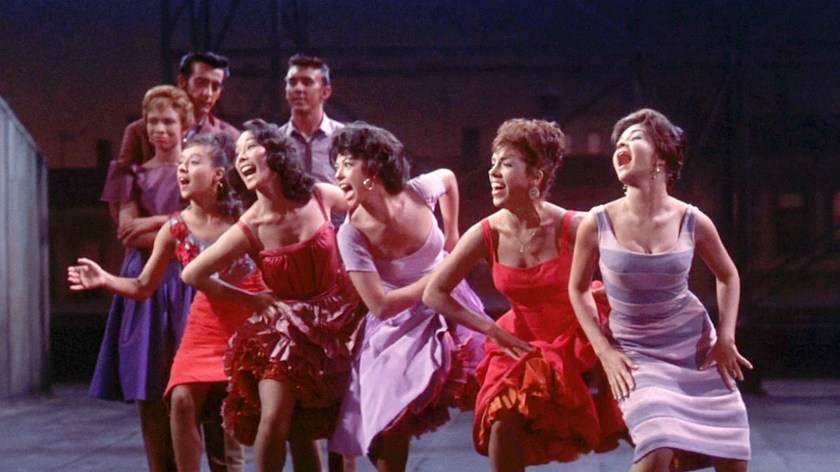
West Side Story (1961, dir. Robert Wise & Jerome Robbins)

WestSideStory_America

It’s 1957 in the West Side of Manhattan and tensions are brewing between the white American gang The Jets and their Puerto Rican rivals, The Sharks. The local police aren’t much better than the gangs but make a weak effort to stop these young men from becoming violent. In the midst of the brewing gang war are Tony and Maria. Tony is a former member of the Jets and still friends with them while Maria is the little sister of The Sharks’ leader Bernardo. Choreographer Jerome Robbins, Conductor and Musician Leonard Bernstein, Lyricist Stephen Sondheim and writer Arthur Laurents take the classic Shakespeare play Romeo & Juliet and place it in this setting, contemporary to them at the time, to find connections between that iconic play and the violence they saw erupting from urban youth.

Continue reading “Movie Review – West Side Story”

Movie Review – Ouija: Origin of Evil

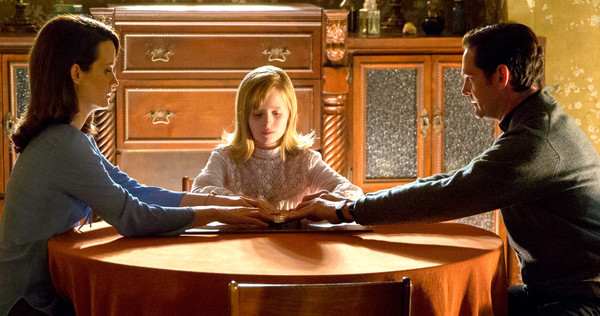
Ouija: Origin of Evil (2016, dir. Mike Flanagan)

ouija

It’s 1967, and Alice Zander works her spiritual medium con with help from her daughters, Lina and Doris. Since her husband died, Alice has struggled to make ends meet and manipulating grieving people eager to believe barely helping. Enter the Ouija board that young Doris quickly takes to, communicating with what she believes to be her father’s spirit. Well, as you can expect from a film like this, things get bad, and the entity using Doris becomes increasingly more malevolent as the plot progresses.

I’ve been watching director Mike Flanagan’s films since his 2011 debut Absentia and have always viewed his work as okay. It’s never risen to the top as my favorite horror, though he always has some interesting ideas in his scripts. Ouija is sadly the most generic of his films to date. It comes off as a Blumhouse styled horror film (Insidious, The Conjuring, etc.). And like those films, the horror is incredibly formulaic and predictable. If you have ever seen a horror film from the last decade, then you will be able to see the plot points coming miles away. As a result, Ouija commits the worst sin a horror film can: it’s not scary.

Stylistically it’s admirable that Flanagan attempted to make a pastiche of 1960s horror cinema. The title card, the warped soundtrack, the crackles in the audio track, the “burn marks” on the screen signaling reel changes in the projector room. However, the tone of the horror works in bold contrast to these stylistic flourishes. These are yawn-inducing jump scares that never make you jump. The evil entity becomes way too physically aggressive to be truly scary. I find the horror from Absentia to still linger with me because of its ambiguity and unpredictable nature. The same with the mirror in Oculus, the things it does are much more interesting and skin-crawling than just using invisible force to throw someone across a room.

The acting is fine with the main weight of the story being balanced between Elizabeth Reaser as Alice and Annalise Basso as Lina. They aren’t amazing, but I blame a lot of that on the weakness of the script. Henry Thomas pops up as a faithful Catholic priest who will be the inevitable Exorcist, another plot point you see coming as soon as he’s introduced. Doris is played by Lulu Wilson and does most of the villainous acting. She is painfully an “acting kid, ” and that is seen in the way she delivers her lines. After watching Dafne Keen in Logan show nuance and strength in her mainly silent performance, this is like looking at a Disney kid overemote. On top of that, the computer generated effects they use to make her monstrous end up being comically bad.

Ouija: Origin of Evil seems to be getting praised due to its juxtaposition with the first film in the franchise. I’ve successfully avoided the first picture due to the incredibly negative buzz it’s received. I assume it must be catastrophically bad if this sequel is being considered a magnificent film in comparison. Origin of Evil is not the worst film you could watch, but there are many other you would be better spending your time on.

Director in Focus: Werner Herzog – Signs of Life

Signs of Life (1968)

Before we jump into this first film, some background on Werner Herzog. Werner Stipetic was born in Munich in 1942 in a house that was destroyed by Allied bombing a couple years later. The family migrated to the Alps, where the father left the family, causing 12 year old Werner to take his grandmother’s last name, Herzog. Herzog showed a rebellious streak early on, when asked to sing in front of his class and refused. Till he was 18, as an act of defiance, he never sang, listened to music, or learned to play a single instrument. At the age of 14, Herzog encountered a simple encyclopedia entry on film making that infused the desire in him to create. He stole a 35mm camera from the Munich Film School in act he defends as a necessity for him to continue living. Herzog has been married three times, something you would expect based on his volatile personality. One more interesting note about the director, during a 2006 interview with BBC critic Mark Kermode, Herzog was shot by an unknown person with an air rifle. He seemed to brush it off and attempted to continue with the interview, despite Kermode freaking out over the incident.

Signs of Life is a war film without war, instead the soldiers are driven to madness through sheer boredom. Set on Crete during World War II, the film finds Strosek and two fellow German officers put in charge of a munitions depot nestled in ancient ruins. The main character here is the most blank canvas, while his compatriots, Becker and Maynard have more fully fleshed personalities. Strosek has ended up engaged to local Greek girl, Nora in a relationship that seems founded in their mutual lack of anything interesting to do. The film is narrated in a stoic, travelogue style that tempers the picture up until its last twenty minutes when Strosek becomes completely unhinged.

Signs of Life is cited as an inspiration for Kubrick’s The Shining, however I saw a lot of similarities with Polanksi’s Knife in the Water. Both films are of the same era and place their characters in a lifeless, desolate landscape where they are psychologically pushed to extremes. As we’ll see with the majority of Herzog’s work, he is incredibly interested in the psyche of men who have a break with reality and the role nature plays in that. Strosek is positioned against his desert setting as minuscule, he is insignificant, hence his position defending a post that is no danger of being attacked. Signs of Life is about humanity’s innate need to believe they are useful. When we feel that our society has no use for us it will inevitable cause a break from the social expectations and mores.

Up next: Even Dwarfs Started Small

Shadows in the Cave: The World of Henry Orient


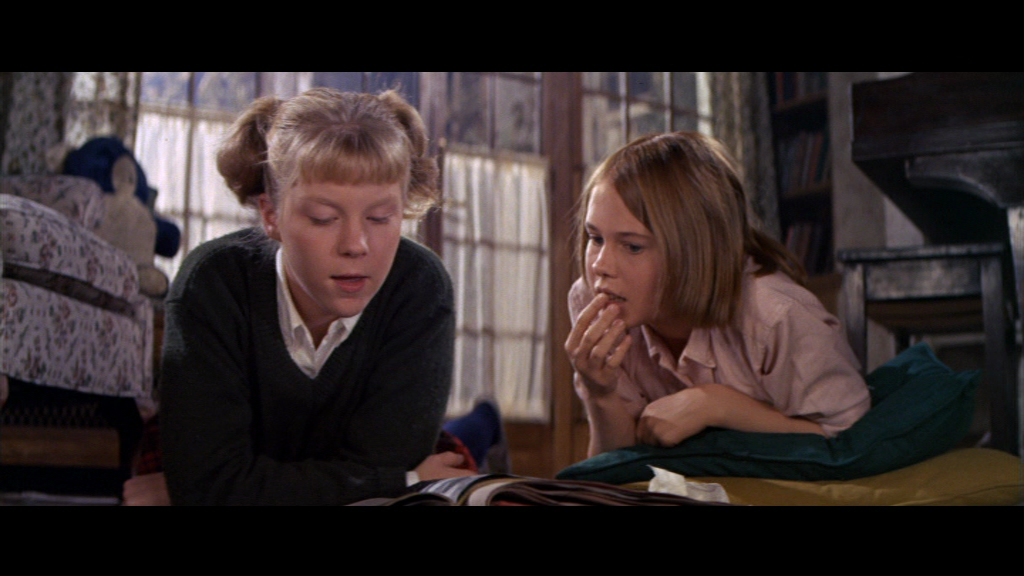
The World of Henry Orient (1964, dir. George Roy Hill)
Starring Tippy Walker, Merrie Spaeth, Peter Sellers, Angela Lansbury, Tom Bosley

When I see George Roy Hill’s name I think of The Sting or Butch Cassidy and the Sundance Kid. I never expected this small, delightful film. This is one of those pictures where New York City is a player along with the actors. There’s that sort of innocent magic about the city as seen through the eyes of our adolescent protagonists. And despite Peter Sellers receiving top billing, this is most definitely not his film. While I love Sellers, I would have hated for his character overshadow the performances of the two young women in the leads. He works perfectly as the awkwardly charismatic pianist paranoid over the two young girls he believes are stalking him. And as life imitates art, Sellers was actually dealing with a real life stalker during the filming of Henry Orient.

Marian (Spaeth) meets Val (Walker) one morning on the first day of school at St. Mary’s. The two hit it off splendidly and Marian quickly learns of Val’s highly imaginative nature and penchant to go on adventures in the city. During an excursion in Central Park, they happen across a man and woman in the throes of passion. The man spies them and they run off. Later the same day, they run into the man again and eventually learn this is Henry Orient (Sellers), a well known avant garde pianist. Val becomes obsessed with him and dreams that she will eventually woo the befuddled man. From Henry’s perspective these two little girls are harbingers of doom and possibly spies for the husband of the woman he is seeing. The film perfectly balances the comedic misunderstandings and the coming of age story that centers around Val. Her parents (Lansbury and Bosley) come into town and we immediately see that Val’s mother exhibits a strong coldness around her.

The film lives and dies on the performances of the two female leads, and thankfully they picked two great unknown actress for the roles. There’s some interesting elements, particularly in the third act that feel very much of the time, but I’d like to think director Hill was going against the grain up until that point in the film. The girls are very much kids, while parents pressure them to socialize with boys, they really have no interest. They would rather play and, when Val does develop a “crush” on Henry, its never done with any seriousness. Its simply a continuation of the imagined world she and Marian have invented. You can tell Hill actually cares about these two and shows them as three dimensional, intelligent young women, not yet bogged down by the seriousness of the adults. Its reflected in how scenes featuring adults in the movie are never as interesting as the ones with the kids.

It’s interesting to note that rather than casting “superstars”, Hill opted to go with two unknowns and Sellers who was famous, but not as much as other comedic actors. Originally, it looked like the three roles would go to Hayley Mills, Patty Duke, and Dick Van Dyke, and while they are all great actors, the film would not feel as special. The movie evoked such strong emotions of happiness from me, reminding me of the way it feels when summer starts to turn to fall and how intimate and safe the worlds you imagine as a youth can feel. The film has been retold with a contemporary slant in Ghost World (the film moreso than the comic book) and a poster for Henry Orient even pops up in that picture. The film’s greatest feat is balancing adult themes and ideas while never diminishing the sense of joy and play. A great picture that deserves to be known by a larger audience.

My 40 Favorite Film Moments – Part 3

11) Rhapsody in Blue (Manhattan, 1979, dir. Woody Allen)

New York is one of the great mythical cities, in that there is the New York that is real and there is the New York that is a fantasy of our minds. Allen captures this magical New York perfectly in the opening of Manhattan, using classic black and white photography as well as the signature George Gershwin tune.

http://www.youtube.com/v/uyaj2P-dSi8&hl=en_US&fs=1&

12) Please Don’t Tell My Mother (One Flew Over the Cuckoo’s Nest, 1969, dir. Milos Forman)

This was one of the first films to showcase the acting chops of Jack Nicholson, but I like this scene because of the performances Louise Fletcher and Brad Dourif bring to the table. It is rare you see a scene so perfectly acted. All of these actors are at the top of their game.

Criterion Fridays – Loves of a Blonde

Loves of a Blonde (1965, dir. Milos Forman)

My familiarity with director Milos Forman comes mainly from his work in English language cinema (One Flew Over the Cuckoo’s Nest, Amadeus, Man in the Moon), but I have been aware for a long time of the movies he honed his craft with in his native Czechoslovakia. I didn’t know much about them, other than from reviews and criticisms they were akin to the French New Wave youth culture movies, but with a more anti-authoritarian bite. One thing I’ve found in art that is hard to translate between languages and culture is humor. Jokes are a product of the experiences and philosophies of a specific group of people, and the broader the joke (i.e. slapstick comedy) the larger the audience you can appeal to. Humor of language or subtle situations is much harder to get a foreign audience to laugh at. However, Forman conquers that challenge with expertise.

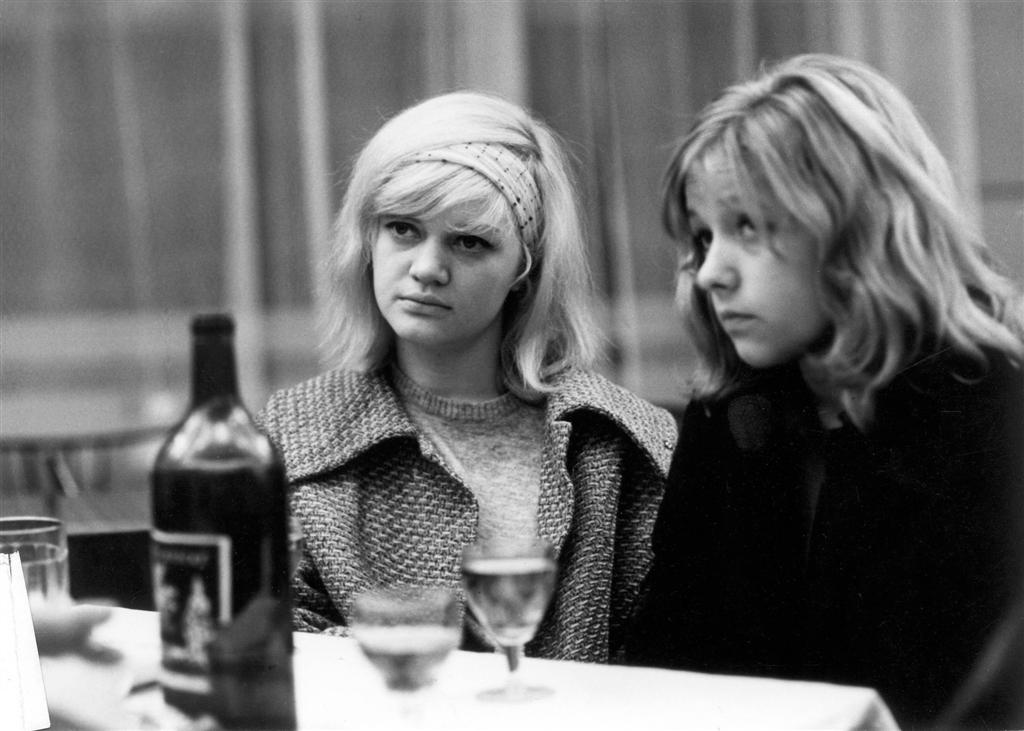
Hana lives and works in a rural Czech village whose economy revolves around a textile factory. The factory employs primarily women so the demographics are 16:1 in favor of women. The factory owner petitions the military to station some soldiers there as a way to provide some relief for the tension building amongst the workers. They get sent a group of thirty-something, slightly balding reservists and most of the girls decide to just go with the flow, despite their disappointment. Hana avoids the leers of these men, most of whom are married already, and ends up in the room of a visiting musician more her age. The problem with Hana is that every week she seems to have a new true love and these dreams and wishes get the best of her.

I found myself laughing many times at Loves, particularly in moments where the dialogue was greatly improvised. A trio of reservists looking to lure in some of the young women reveal themselves as inept buffoons as they waste most of their time debating how many of them should approach the table where their prey is sitting. They send a bottle of wine over, but it gets delivered to the wrong table and they tell it to take it from the women who believe they were picked. Soon after, one of the reservists slips off his wedding ring, its kicked across the dance floor and under the table of the spurned women which he must now crawl under.

It’s rare that I find a film from Europe during this period which doesn’t have sequences that seem to drag and pull me out of the picture. Here I was completely engaged from the start, due in part to some very skillful editing and language-transcendent humor. The circumstances that these characters experience are universal to all people: unwanted affections from suitors, allowing oneself to get caught up in what you think is love, and a general sense of dissatisfaction with mundane and repetitive life. Once again, Forman delivers a highly entertaining film with truly funny comedy.

My 40 Favorite Film Moments – Part 2

6) Waiting For a Train (Once Upon a Time in the West, 1969, dir. Sergio Leone)

Wordless, with a soundtrack provided by found objects in the setting. A squeaky windmill, a dripping water tower, the steady rhythm of a steam engine. It provides the perfect introduction to the film’s protagonist, Harmonica (Charles Bronson).

http://www.youtube.com/v/bW-jSa9_k3M&hl=en_US&fs=1&

7) Getting Baptized (Ed Wood, 1994, dir. Tim Burton)

Hack director Wood has gotten financing from an L.A. church. One of the conditions for the money to come through is that the entire cast and crew of Plan Nine from Outer Space will be baptized. The unaffected homosexual producer Bunny Breckenridge (Bill Murray) takes the hefty spiritual ritual with little thought in a cleverly funny moment. This is also Burton’s masterpiece in my opinion.

http://www.youtube.com/v/VdSFP9nu1R8&hl=en_US&fs=1&

8) Flowers (Harold and Maude, 1971, dir. Hal Ashby)

Ashby is one of the greats of the 1970s, and this scene featuring Ruth Gordon, Bud Cort, and the music of Cat Stevens is a picture of perfect composition. The transition from the field of flowers to the military cemetery is a very beautiful one.

http://www.youtube.com/v/h0FX_ROcNV4&hl=en_US&fs=1&

9) He’ll Keep Calling Me (Ferris Bueller’s Day Off, 1989, dir. John Hughes)

This scene is a perfect summation of the profound indecision and anxiety Cameron suffers from. Throughout the film, he’s a character who is simply pushed around by his off screen father or by Ferris or by authority in general. This is every thing going on in his brain.

http://www.youtube.com/v/CdcFYNe9U7A&hl=en_US&fs=1&

10) Make the Sun Rise (Black Orpheus, 1959, dir. Marcel Camus)
Set during Carnival in Brazil, the film retells the mythic story of Orpheus and Eurydice through an Afro-Brazilian guitarist and the woman he loves. In this final scene, we see that the tragic story of these lovers is part of a cycle and this children are beginning to play down a path that is both beautiful, but painful.

http://www.youtube.com/v/v0jZRkFtksI&hl=en_US&fs=1&

Criterion Fridays – Knife in the Water


Knife in the Water (1962, dir. Roman Polanksi)
Starring Leon Niemczyk, Jolanta Umecka, Zygmunt Malanowicz

It’s funny how across the Atlantic and behind the Iron Curtain, things were much the same in both the United States and Eastern Europe in the 1960s. If you are familiar with Mad Men, then you have seen the sort of character Niemcszyk is playing. He has the slicked back hair, the suit, he’s a professional. Yet, he is also a Hemingway-esque macho man, who isn’t going to let some young upstart get away with thinking he matters. Polanksi’s first splash on the international scene is a fable-like story about some archetypal characters and relationships.

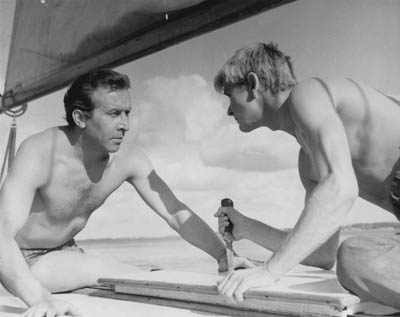
Andrezj (Niemczyk) and his wife are taking a drive through the countryside, on their way to their boat for a day of sailing. The tension is palpable in the care, neither speaks, until it is broken by a young hitchhiker standing in the middle of the road. Andrezj can tell that his wife is momentarily attracted to the young man so he offers to give him a ride, and eventually invites him onto their boat. This is all part of a disturbing psychological mind game is playing with his wife, using the hitchhiker to prove a point. As the young man flips between adolescent mood swings and is manipulated with ease by Andrezj, the older gentleman remains calm and poised, right up to the finale where both the characters and the audience are left wondering what happened and how these characters move on.

The rivalry between the two men is incredibly realistic. If you have been around immature adolescents (and sadly grown men even) you have seen the way they can get caught in a playful game of oneupmanship that devolves into a primitive fist fight. Through out the film, Andrezj intentionally puts the hitchhiker in a position of submission, giving him commands and emphasizing important maritime rules, while simultaneously breaking these same rules moments later in a bid to shove it in the young man’s face. Because of the wife’s initial flirtation with the hitchhiker we assume this is all about her, but I found that she recedes into the background till the final moments of the film. Instead, these young men are simply in a battle for alpha male status, not over a woman, but just in terms of their own relationship.

The wife is very enigmatic character, behaving without reaction for most of the film. She’s first presented as a prim and proper type, silent, not in subservience to Andrezj but in defiance of him. Once on the boat, she goes about her work mechanically, bringing about noshes when they are expected, preparing the soup when it  is needed, battening down the hatches at the approach of a thunderstorm. Very subtly, her inner sexuality is revealed until she is completely nude near the end of the picture. In this moment, she defies Andrezj in a very interesting way that further pushes him down, keeping him from attaining the status of alpha.

In such a simple plot, lies an infinitely complex series of ideas and themes. In many ways, this would work as a companion piece to the similarly psychological and deceptively simplistic Funny Games. Both films are exploring weighty ideas using a framework that is easy for any audience to understand.


Jolly Good Thursdays – Girly


Mumsy, Nanny, Sonny, and Girly (1969, dir. Freddie Francis)

If you never heard of this film, I can’t fault you. It is an obscure little British horror-comedy that has strong genetic ties to The Addams Family, but more macabre. Full of murder, mayhem, and some very unnerving incestous overtones, Girly (for short) is one of the funniest black comedies I have seen in awhile. In the US we tend to put the crazy killers of our films at the bottom rung of the socio-economic class and basically kick the poor while they’re down. The wonderful thing about the UK is the intense dislike of the aristocracy, even by a lot of the aristocracy themselves. Thus, a film as wonderfully insane as Girly can come about and skewer the 1950s nuclear family unit.

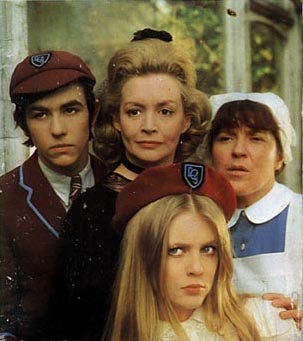
Somewhere on a palatial English countryside estate lives Mumsy, Nanny, Sonny, and Girly. Though Sonny and Girly are obviously in their twenties, they still dress and behave like schoolchildren. Sonny and Girly also have a rather queasy relationship that is hinted at but never made explicit. Also in the mansion live the Friends, homeless men and free love hippies lured to the house and locked up for the sadistic pleasure of the quartet. The introductory friend finds he is unwelcome when he can’t follow the rules Mumsy has set up to run her happy home. As a result he’s decapitated. But into their lives comes New Friend, a gigolo who through a series of gruesome circumstances ends up trapped. Unlike previous Friends, New Friend is a conniver and begins his quest to tear about this happy homicidal home.

Girly was the project of acclaimed cinematographer Freddie Francis, the lens behind such films as Tales of Hoffman, the Gregory Peck Moby Dick, and The Innocents. Francis transitioned into directing in the early 1960s and went on to helm some cult British horror films and established him as filmmaker who brought a lot of visual flair to his pictures. Francis would eventually return to working the camera and was responsible for the cinematography on such films as The Elephant Man, Dune, Glory, and Scorsese’s remake of Cape Fear. Girly was originally a stage play (you can feel the more theatrical moments in the film). The premise of the film is a lampooning of the “traditional” family unit at the hands of the 1960s counter culture.

The film is very fun, dark fare. It’s never truly horrifying, just the kind of violence that gives off a creepy vibe and elicits laughs more than gasps. The middle of the picture meanders a little bit, becoming a bit of a struggle to work through, but the way New Friend begins to tear apart the four members of the family by turning them on each other is enjoyable to watch. Definitely an odd, incredibly obscure picture worth a watch.

DocuMondays – The Weather Underground


The Weather Underground (2002, dir. Sam Green and Bill Siegel)

What is the line you would refuse to cross when it came to your beliefs about justice? Is it taking to the streets in protest? Is it standing up to the thug tactics of a corrupt cop? Is it killing in the name of your beliefs? No matter left or right on the political spectrum we can see multiple instances where once peaceful and calm movements were derailed by individuals desiring to commit acts of violence. There was Timothy McVeigh and the Oklahoma City bombing, The Unabomber, and various other extremists who either cling to an ideology or religion as their justification. This film is about one such group that used methods of terrorism against the US government in the late 1960s through the mid 1970s.

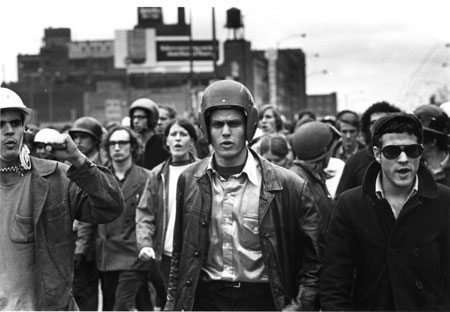
Through archival footage and interviews with the players in this story we are told of the rise and fall of a homegrown terrorist organization. It’s common knowledge that the 1960s were a period of cultural upheaval across the globe. In the United States, it was was student protests against the war in Vietnam that fueled the fire, and the government seemed bent on use brutal force to push them back. In 1969 the non-violent Students for a Democratic Society (SDS) held a convention in Chicago. The war in Vietnam was escalating and the current leadership of the SDS was trying to hold things together, while brasher elements in the group wanted to become violently pro-active. Out of this convention was born The Weathermen, a sub-group who clandestinely planned violent riots in the street and bombings of government buildings. At one point they were even hired to, and successfully did, break Timothy Leary out of a California prison. Their efforts had little effect on the government’s efforts in Vietnam, the ending of which was more influenced by the media’s release of graphic violence wrought on Vietnamese civilians. At the 1970s wound down, the members of the The Weathermen went into hiding, eventually turning themselves in at the onset of the 1980s.

The documentary was surprisingly balanced in how it presented this group. I personally would agree with many of the stances the Weathermen took on domestic and foreign policy up to the point where they brought violence into the mix. And while this is a left wing group, the mistakes made and regret felt year later transcend politics. At the time, this young men and women, including the much spoken about Bill Ayers, felt completely right and certain of their actions. One of the most fascinating interviews is with Brian Flanagan, a man who left the group shortly before Vietnam ended. He is able to sum up how things went from hopeful to cultish very quickly. He emphasizes that the leadership got so caught up in breaking the system completely, they failed to realize that lasting change comes in increments.

Mark Rudd, one of the leaders in the group, presents excerpts from his memoirs which detail a young man unsure of what he was getting into and heartbroken at the chaos he wrought, but not wavering in his political stance. I think this is a key point. While all the Weathermen regret the bombings and the riots, known as “The Days of Rage”, they have never stopped believing that many of the military conflicts the US has are not done with the best intentions. In our current political climate, we have a right wing movement with some members hinting at violence by brandishing weapons. The testimony of these men and women who have been there should be examined closely to understand the cost of violent actions and how they linger in the souls of those who commit them.