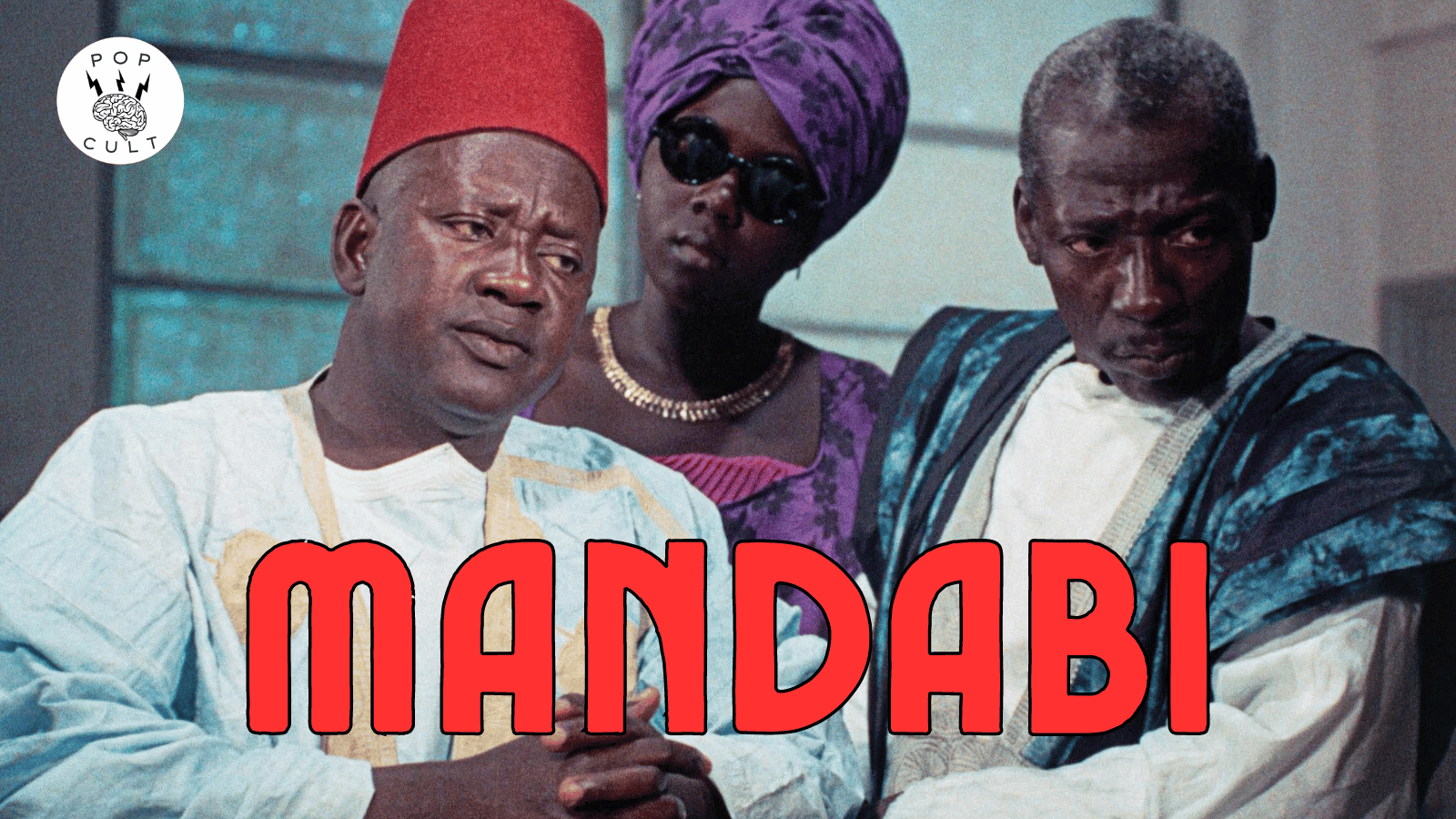
Movie Review – Mandabi

Mandabi (1968)
Written and directed by Ousmane Sembène

Despite the brutal French colonial presence in Senegal, most Senegalese do not understand or speak French. This led Ousmane Sembène to want to make a film entirely in the indigenous tongue of Wolof. Like most of Sembène’s work, it was almost lost to us. Film prints were locked away in vaults in France. Sembène’s son, Alain, and filmmaker Martin Scorsese worked together, slogging through bureaucratic hell to get the films in their hands for restoration. 

Continue reading “Movie Review – Mandabi”

Movie Review – Black Girl

Black Girl (1966)
Written and directed by Ousmane Sembène

I had never heard of this film until a few years ago. I didn’t learn the name of its writer-director, Ousmane Sembène (pronounced Oos-man Sem-ben), until last year. I have to ask why that is. Why do I know the names and filmographies of a whole host of directors, but if I were to be asked about African cinema, I would draw a blank? At most, I probably could have come with Neill Blomkamp, a white South African. But no indigenous African filmmakers? I should have known who Sembène was long ago; he’s considered the “father of African cinema” and has been named one of the greatest authors of that continent. The reason I didn’t know this person was because the society I grew up in is profoundly racist, and so someone like Sembène is seen as unworthy of attention.

Continue reading “Movie Review – Black Girl”

Movie Review – Law and Order

Law and Order (1969)
Directed by Frederick Wiseman

The police are not your friends. They are, in fact, an occupying force planted by those in positions of power who have tremendous wealth. The police are actually state-sponsored gangs, as you can see from their origins and the ongoing criminal money-making schemes so many of them have going on the side. Many articles on the Los Angeles County Sheriff’s Department’s deputy gangs and their activities can be found if you want to know more. This is standard practice when you give a select group of people in a society permission to commit nearly unaccountable acts of violence under the guise of “protect and serve.” In 2005, the U.S. Supreme Court ruled the police have no obligation to protect any person from harm. The police exist solely to protect the interests & investments of the ruling class. They would easily kill any one of us in service to that duty.

Continue reading “Movie Review – Law and Order”

Movie Review – High School

High School (1968)
Directed by Frederick Wiseman

While the asylum featured in Frederick Wiseman’s debut documentary Titicut Follies is not an institution most of us would ever experience firsthand, America’s education system is far more universal. Asylums and schools are strangely similar. They house people who would otherwise be deemed a danger to themselves and others if they roamed the streets unattended. They are run by rigid rule followers under the guise of caregivers. While the individual nurses and teachers at each respective institution may be doing their best, those higher up on the chain of command who control the purse strings often overlook great suffering that they could otherwise alleviate. In 1968, the American high school was a powder keg on the frontline of growing cultural discontent, making it a fascinating environment.

Continue reading “Movie Review – High School”

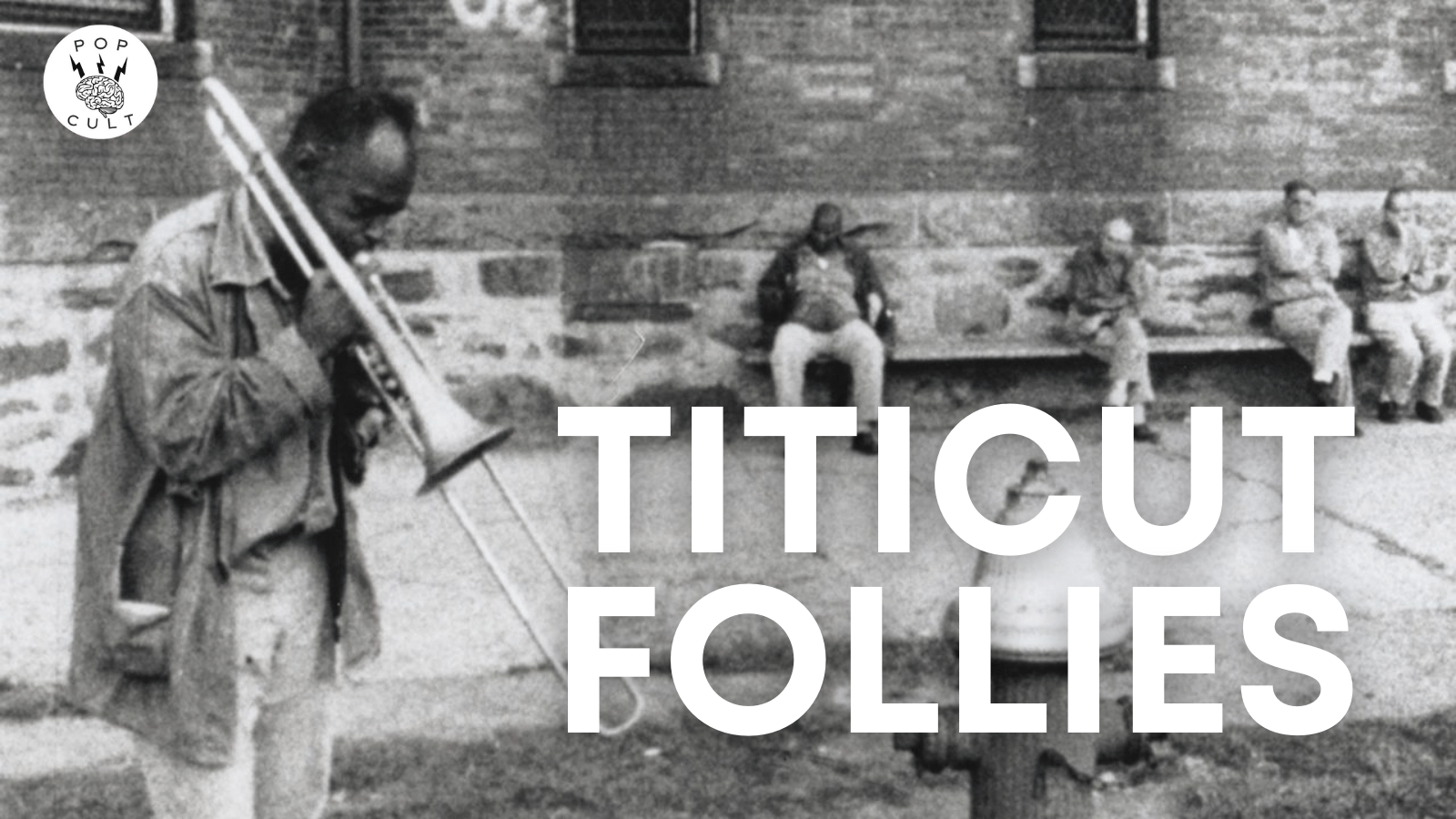
Movie Review – Titicut Follies

Titicut Follies (1967)
Directed by Frederick Wiseman

These days, you wouldn’t be blamed for thinking the documentary is purely a vessel for true crime. The media landscape has become saturated with docs that are akin to a segment on Dateline NBC about spouses becoming homicidal or people joining cults. While those things happen, they are far outside the norm of human experience. This is why I gravitate to the documentarians of the 60s and 70s when the form flourished and we got some incredible films. Few filmmakers in this corner of cinema do it better than Frederick Wiseman. During the first half of March, we will look at six of his most highly regarded works, which turn his eye towards the institutions and offices of authority that direct life in the States.

Continue reading “Movie Review – Titicut Follies”

Movie Review – Contempt

Contempt (1963)
Written and directed by Jean-Luc Godard

In doing a film series spotlighting Movies About Movies, there’s no way we could exclude Contempt from this list. Filmmakers like Jean-Luc Godard were lovers & critics of the medium first before they exploded the form and sent cinema hurtling down a magnificent track for about 20-30 years or so. Godard was a profoundly complicated person, and I think he was likely neurodivergent, or at least his work was inspired by a neurodivergent perspective. There’s an intense focus on what most people might see as unimportant or the constant repetitive movements or behaviors of people.

Continue reading “Movie Review – Contempt”

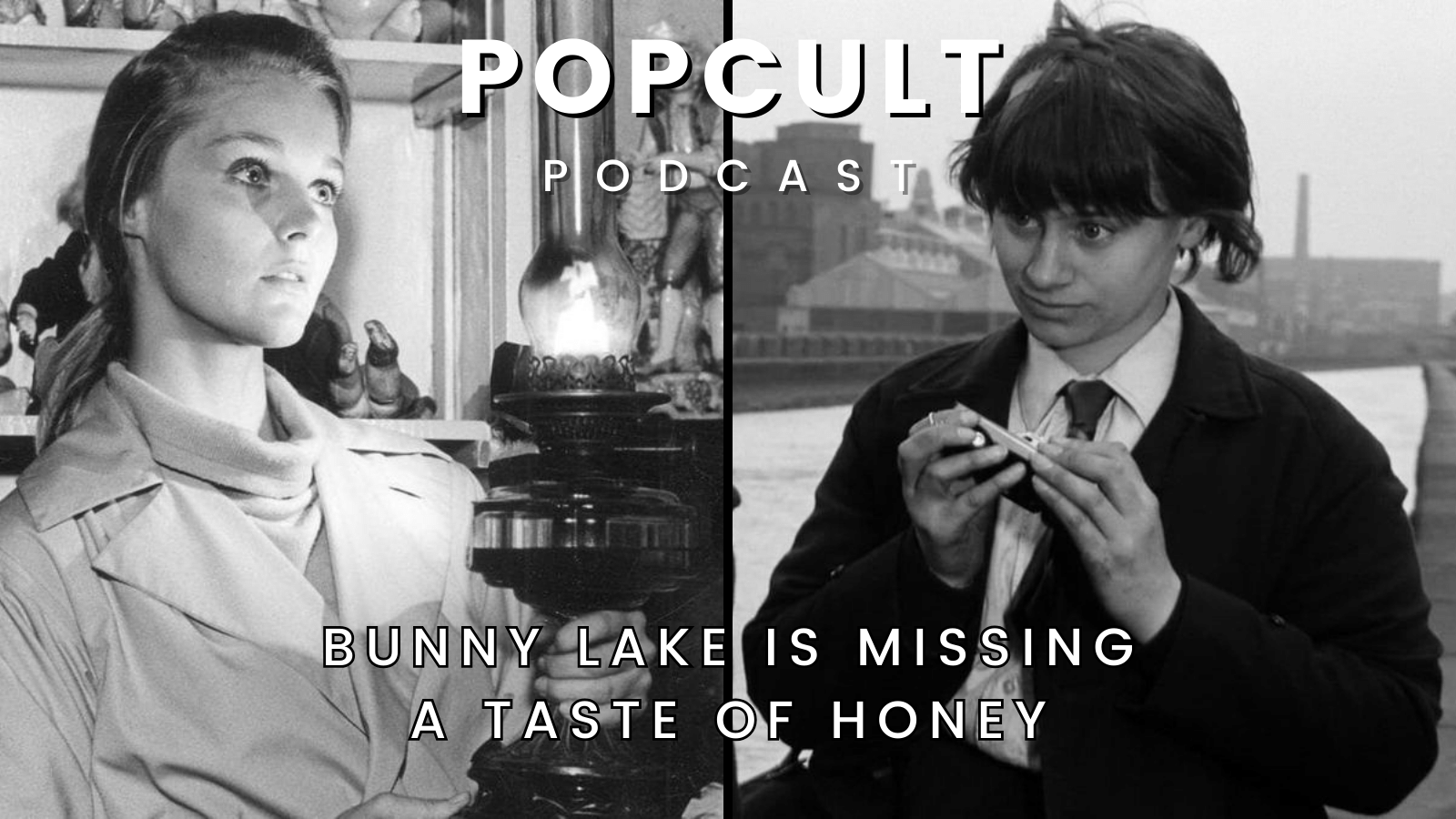
PopCult Podcast – Bunny Lake Is Missing/A Taste of Honey

It’s another week of pulling from the Letterboxd Watchlist, this time with the theme being the 1960s and England. One film is a thrilling mystery about a lost girl and the other is about a girl lost about what to do with her future.

Continue reading “PopCult Podcast – Bunny Lake Is Missing/A Taste of Honey”

Movie Review – Last Year at Marienbad

Last Year at Marienbad (1961)
Written by Alain Robbe-Grillet
Directed by Alain Resnais

Spoilers if you have not watched Twin Peaks: The Return. Like in the very next paragraph. You have been warned.

In the closing moments of David Lynch & Mark Frost’s Twin Peaks: The Return, Special Agent Dale Cooper stands with Laura Palmer outside her home in the titular town. They’ve just discovered the woman living there is not Sarah Palmer and has no clue who Laura is. Cooper does not know what to do next but is an investigator. He stands, staring into the distance, trying to grasp onto anything. He utters the final line of the show: “What year is it?” Laura screams. Darkness falls. Credits roll over the image of Cooper sitting in the red room, Laura whispering something in his ear. We are unmoored from time; past/present/future mean nothing. What do we have if we don’t have time to cling to?

Continue reading “Movie Review – Last Year at Marienbad”

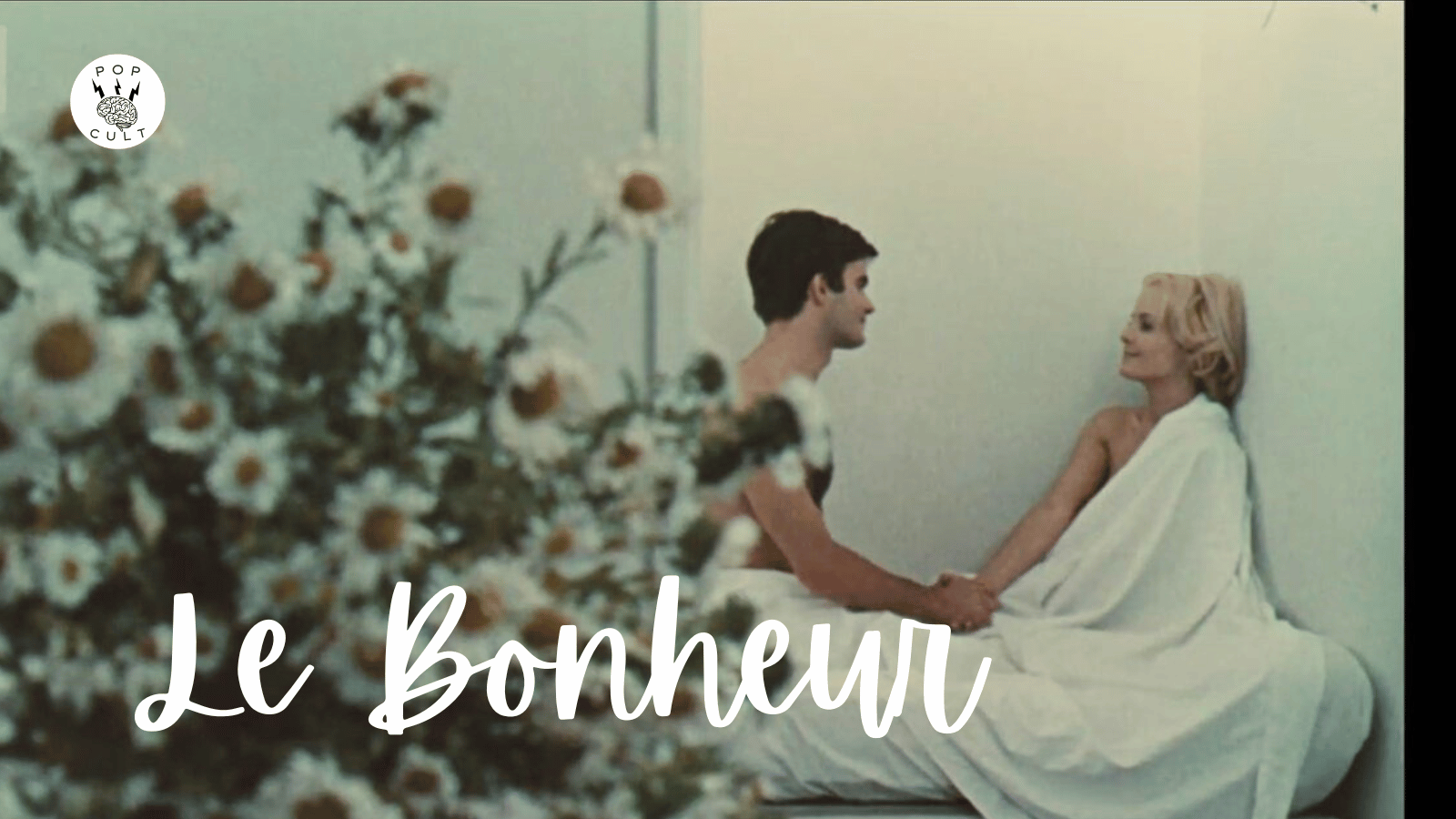
Movie Review – Le Bonheur

Le Bonheur (1965)
Written and directed by Agnes Varda

Translated into “happiness,” Le Bonheur is a pointed satire about marriage. Like good satire should, it is nuanced & subtle. I think American audiences have come to define satire as “parody” or just broad comedy when it is, in fact, building a case through narrative to support a particular point of view. There’s mockery here, but it’s not the kind that bellows loudly and makes a nuisance of itself. Agnes Varda was a filmmaker with such a strong filmmaking sensibility that she could unfold her story with finesse. It’s a feminist reading of male privilege with the husband as the central character. The female characters are supporting figures, but that makes it all the more damning and brutally hilarious.

Continue reading “Movie Review – Le Bonheur”

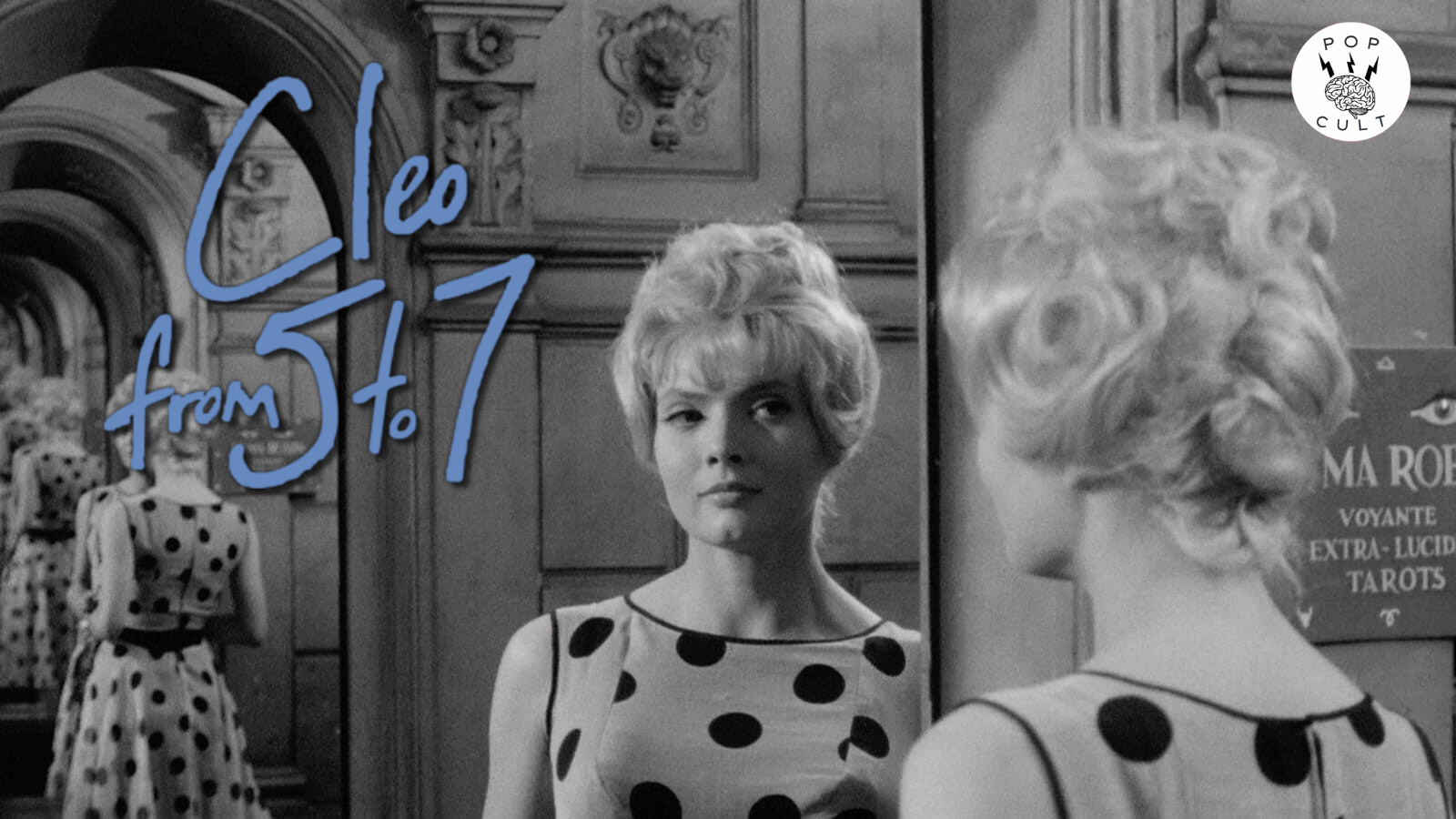
Movie Review – Cleo from 5 to 7

Cleo from 5 to 7 (1962)
Written and directed by Agnes Varda

I can’t say I have ever dived deep into the iconic French New Wave movement. In college, I watched some Truffaut and Godard, but I don’t think it clicked with me. I would be interested in revisiting it now, as with some maturity, I can appreciate the work better. This idea has come to me after finding out how much I’ve enjoyed the work of Jacques Demy and now his wife, Agnes Varda. From the opening moments of Cleo From 5 to 7, I knew this would instantly become one of my favorite films. 

Continue reading “Movie Review – Cleo from 5 to 7”