Movie Review – Drugstore Cowboy

Drugstore Cowboy (1989)
Written by Daniel Yost and Gus van Sant
Directed by Gus van Sant

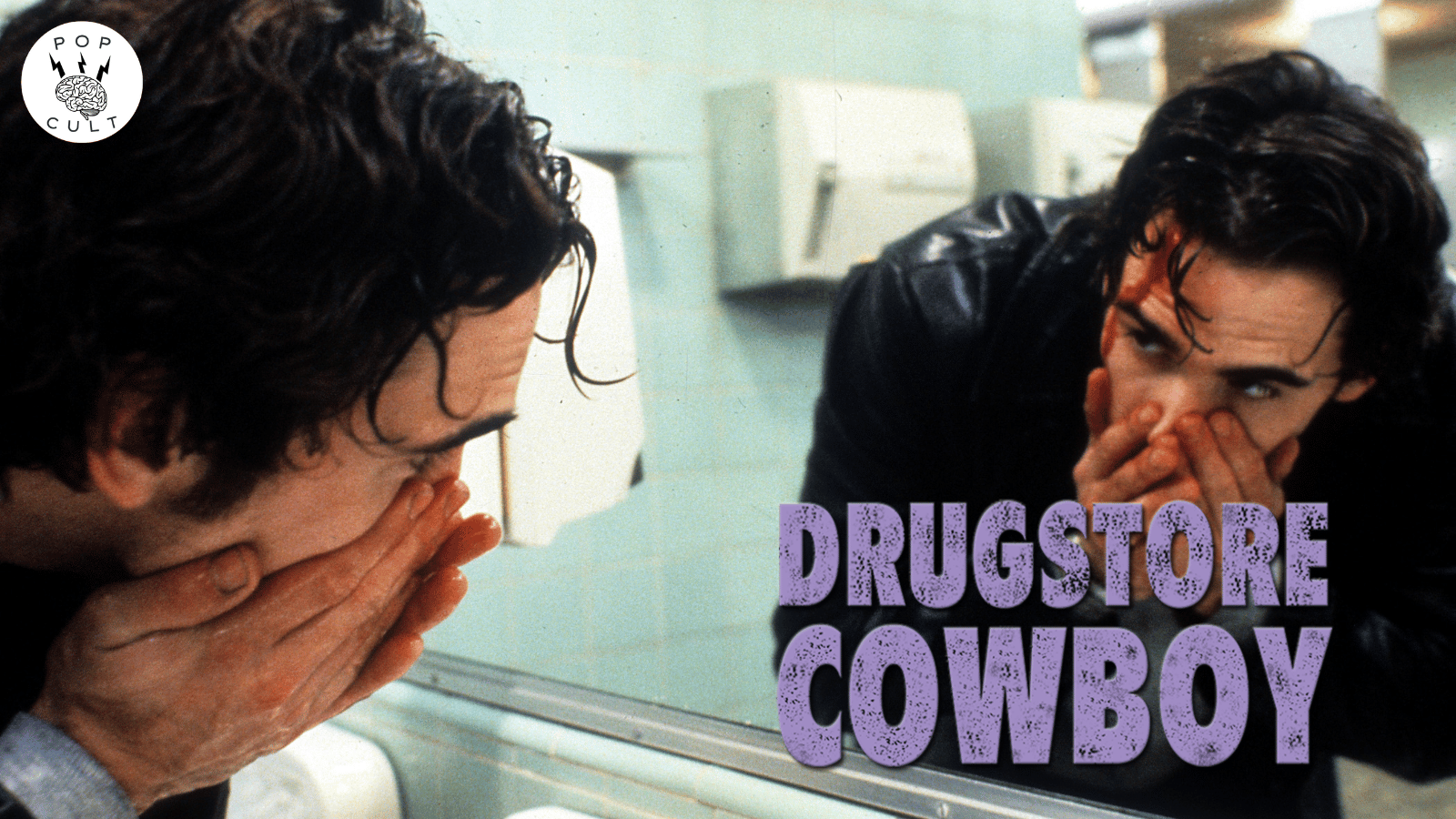
Gus van Sant joins a growing list of directors who came to the forefront in the late 80s/early 90s, and I’m not sure how I feel about them. Previously, I’d discussed this about Steven Soderbergh and sex, lies, and videotape. On the most recent episode of the podcast, we reviewed Richard Linklater’s Hit Man, and I remarked how I’m very up and down with his body of work. For Van Sant, My Own Private Idaho will forever be an impossible film to beat. It is a full-fledged American cinematic masterpiece, so I was very interested in stepping back into the film just before and seeing what he had made. A considerable section of his fanbase declares this as their favorite of his movies.

Continue reading “Movie Review – Drugstore Cowboy”

Movie Review – The Abyss

The Abyss (1989)
Written and directed by James Cameron

I think James Cameron is neurodivergent, and his prominent special interest is the ocean. This is apparent when you examine his work’s direction from The Abyss to the present. Water and the life that teems within it are fascinating to the man. We can see that coming to the forefront with this film as he spends more time showing off some early digital effects, but more so the gorgeous underwater photography. When you realize this was 1989, it really does sound like a film you would expect to see in the mid-1990s or later. In that way, Cameron is ahead of the curve. It’s a shame the story and the characters are given short shrift here.

Continue reading “Movie Review – The Abyss”

Movie Review – sex, lies, and videotape

sex, lies, and videotape (1989)
Written and directed by Steven Soderbergh

Steven Soderbergh is a filmmaker I feel ambivalent about. Of his prolific filmography, I’ve seen sixteen of his movies, and I still don’t have a strong opinion about him. This is likely because his subject matter, themes, and tone are profoundly eclectic. The director seems quite at ease making crowd-pleasing Hollywood fare as much as he enjoys experimenting with technology and structure. Often, I have a sense of the filmmaker as a person from their work. Directors like Scorsese, Kubrick, and Altman conjure specific emotions and images for me. Soderbergh remains a blank, an enigma that exists outside of any definitions I can articulate.

Continue reading “Movie Review – sex, lies, and videotape”

Movie Review – Heathers

Heathers (1989)
Written by Daniel Waters
Directed by Michael Lehmann

Screenwriter Daniel Waters originally envisioned Stanley Kubrick directing the screenplay he wrote while working at a Los Angeles video store in 1986. The initial script was three hours long, and the opening cafeteria scene, added in subsequent drafts, was meant to be an homage to the opening barracks scene in Full Metal Jacket. Well, Kubrick didn’t make Heathers, though I am fascinated by what the film would have been like. It is still a fantastic movie, a satire dripping with the most acidic venom toward its targets, a mockery of everything white, suburban, and middle-class in America. 

Continue reading “Movie Review – Heathers”

Patron Pick – Betty Blue

This special reward is available to Patreon patrons who pledge at the $10 or $20 monthly levels. Each month, those patrons will pick a film for me to review. If they choose, they also get to include some of their thoughts about the movie. This Pick comes from Bekah Lindstrom.

Betty Blue (1986)
Written and directed by Jean-Jacques Beineix

Certain movies don’t take long to reveal that they were written by a man who has difficulty seeing women as anything other than to make a man feel good about himself. Betty Blue is such a movie, rife with all the cliches of French cinema. That doesn’t make it a disposable, awful film. It comes across as more comical with how severe and melodramatic it sometimes takes itself. The film is also a great example of a very particular subgenre of cinema called Cinéma du look. The term was coined by critic Raphaël Bassan in 1989 and has been applied to the films of Luc Besson and Leos Carax. It’s style over substance, spectacle over narrative. It’s slick commercial aesthetics with a focus on the alienated in society. It’s also very male-gaze-y.

Continue reading “Patron Pick – Betty Blue”

Movie Review – Who Framed Roger Rabbit?

Who Framed Roger Rabbit? (1988)
Written by Jeffrey Price and Peter S. Seaman
Directed by Robert Zemeckis

There will never be a film like this one again. Warner Bros. and Disney allowing their characters on screen together makes it a rare event. Who Framed Roger Rabbit? was a celebration of classic American animation, both in the characters featured but also in animation legend Richard Williams overseeing that part of the production. Watching it now as an adult, it is surprisingly straightforward. It follows the noir genre closely with its plot while letting the tone be set by the zany premise. The story takes place over two days, and there’s never a lull; the pacing keeps us moving along with the characters, leading up to a very memorable conclusion.

Continue reading “Movie Review – Who Framed Roger Rabbit?”

Movie Review – High Hopes

High Hopes (1988)
Written and directed by Mike Leigh

To see Mike Leigh’s name credited as the maker behind a movie is to signify something. It means you will be treated to some of the best conversations between very human, grounded characters you’ve ever heard. The story will be focused on the working class, with an even-handed mix of misery and mirth. The whole thing will be very British but not in the nationalistic sense; in the communal sense, British people living quiet lives with moments of drama in them. High Hopes was not Leigh’s first picture. Previously, he directed Bleak Moments (1971) with his second feature, Meantime, but he did not come to theaters until 1983. Because Leigh’s preferred method of working is to allow the actors to improvise dialogue during rehearsal sessions, the filmmaker had trouble getting financial backing. But with High Hopes, Leigh’s career finally kicked off in full, leading to a string of fantastic movies that continue to come out today.

Continue reading “Movie Review – High Hopes”

Movie Review – Camp de Thiaroye

Camp de Thiaroye (1988)
Written and directed by Ousmane Sembene and Thierno Faty Sow

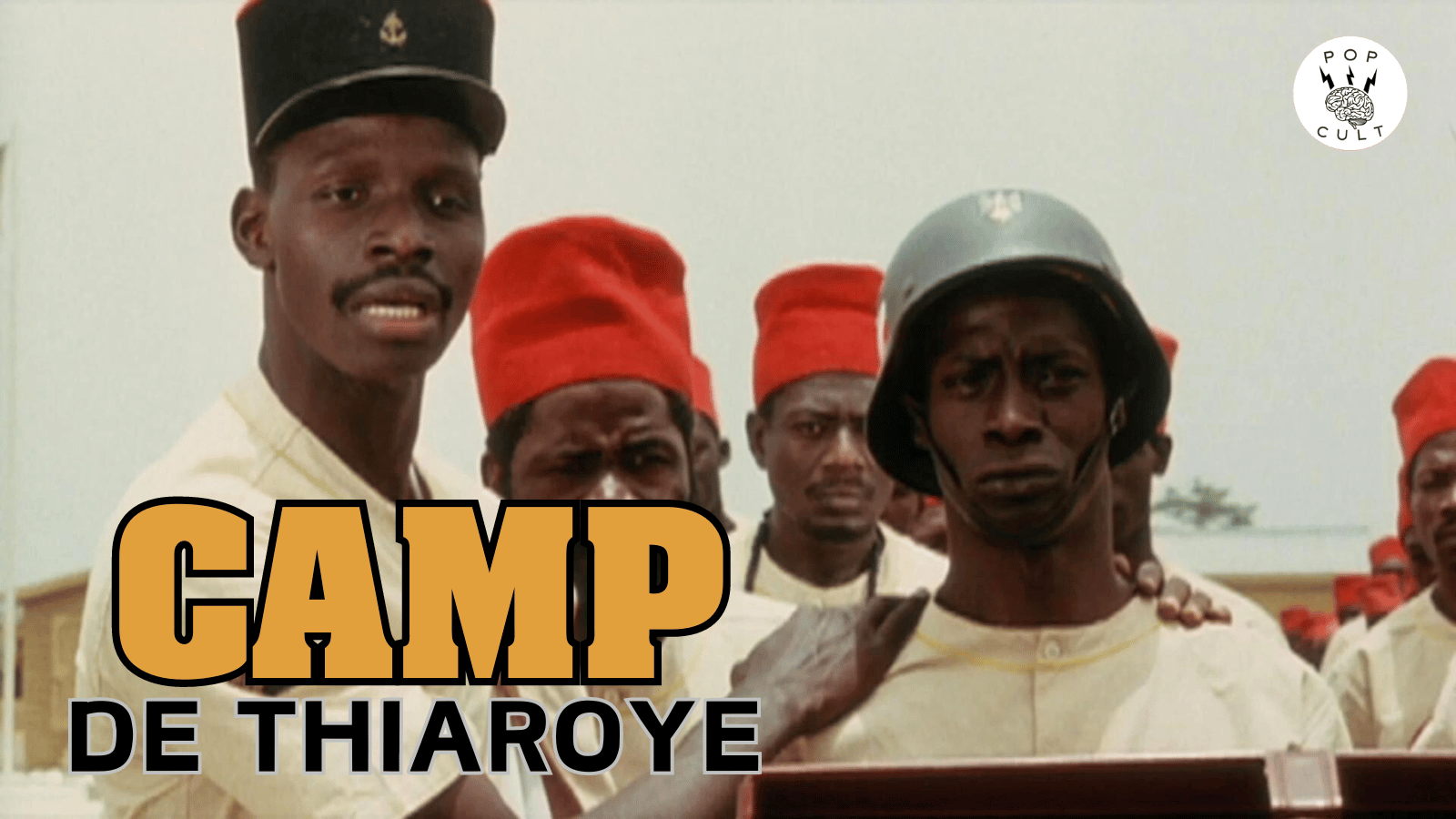
Few things are accepted as fundamental as a person being paid for their labor. However, it was not that long ago that slavery was an open practice in the West and its colonized territories. Don’t get me wrong. Slavery isn’t gone. The specific Transatlantic slave trade was dissolved, yes, but slavery persists to this day. Prison labor is a form of slavery. Debt of all kinds is used to keep people under the boot. Human trafficking is a rampant problem that sees no end in sight. The Thiaroye massacre should come as no surprise then, yet still, it outrages the decent among us.

Continue reading “Movie Review – Camp de Thiaroye”

Comic Book Review – X-Men: Fall of the Mutants Omnibus

X-Men: The Fall of the Mutants Omnibus (2022)
Reprints New Mutants #55-61, Uncanny X-Men #220-227, X-Factor #18-26, Captain America #339, Daredevil #252, Fantastic Four #312, Incredible Hulk #336-337 & 340, and Power Pack #35
Written by Chris Claremont, Louise Simonson, Peter David, Ann Nocenti, Mark Gruenwald, & Steve Englehart
Art by John Romita Jr, Marc Silvestri, Walt Simonson, June Brigman, Todd McFarlane, Sal Buscema, Jon Bogdanove, Kieron Dwyer, Keith Pollard, Kerry Gammill, & Bret Blevins

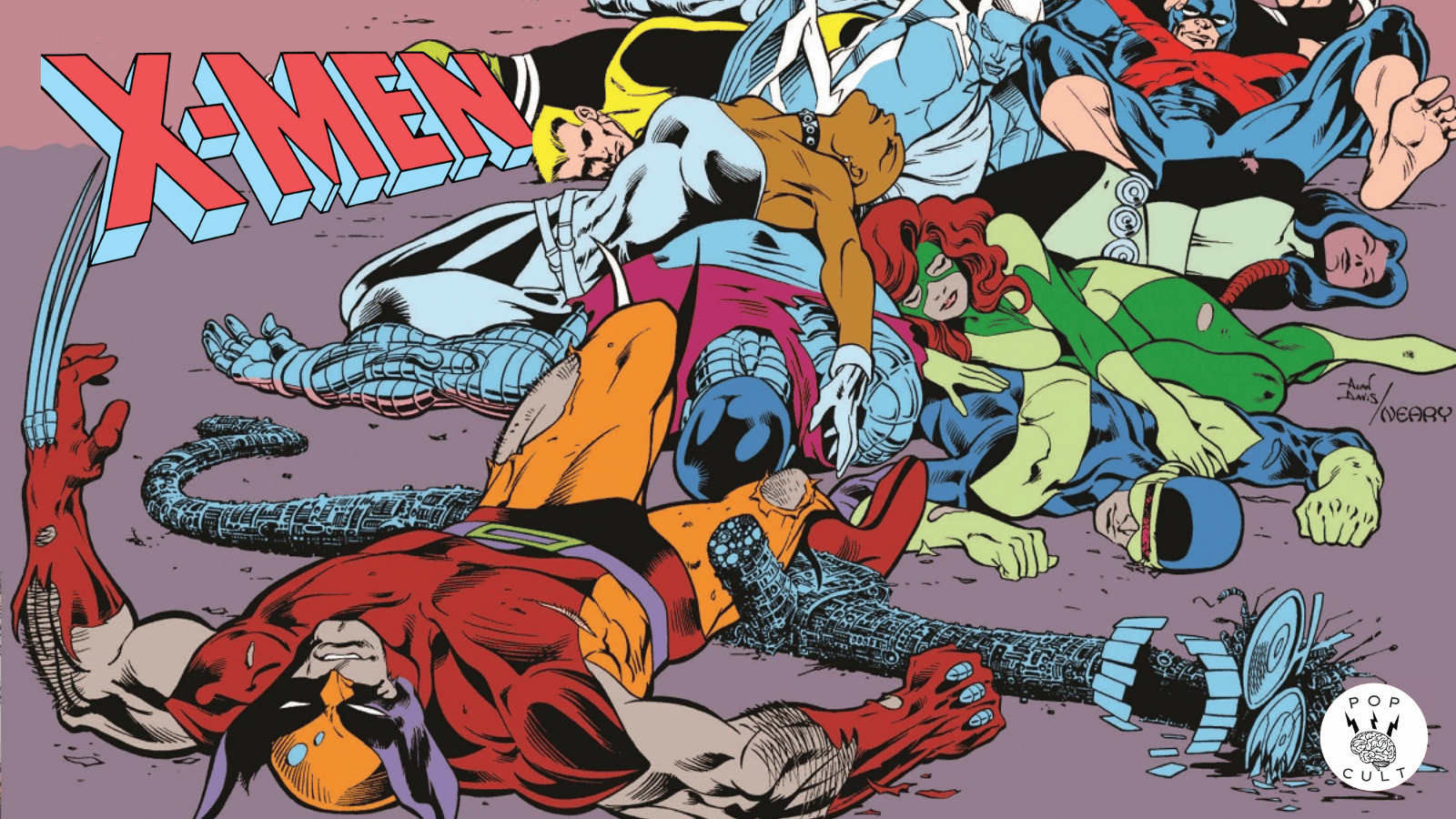
Mutant Massacre was not the end of the shake-up Claremont wanted with the X-Men books. With the pending launch of Excalibur and Wolverine’s solo ongoing set to start, the writer stepped away from New Mutants, handing the reins to X-Factor writer Louise Simonson. The Fall of the Mutants would be a crossover in theme only; each of the three X-books at the time would have a contained storyline to dramatically shift the status quo. There are some light mentions of events in the other books, but nothing that would force readers to buy all three. The tie-ins to other comics are even less necessary and can easily be skipped (as I did with many). 

Continue reading “Comic Book Review – X-Men: Fall of the Mutants Omnibus”

Comic Book Review – X-Men: Mutant Massacre Omnibus

X-Men: Mutant Massacre Omnibus (2022)
Reprints Uncanny X-Men #210-219, X-Men Annual #11, X-Factor #9-17, X-Factor Annual #2, New Mutants #46, Thor #373-374 and 377-378, Power Pack #27, Daredevil #238, Fantastic Four vs. The X-Men #1-4, and X-Men vs. The Avengers #1-4
Written by Chris Claremont, Louise Simonson, Walt Simonson, Ann Nocenti, Roger Stern, Tom DeFalco, and Jim Shooter
Art by John Romita Jr, Bret Blevins, Rick Leonardi, Alan Davis, Barry Windsor-Smith, Jackson Guice, Marc Silvestri, Terry Shoemaker, Walt Simonson, David Mazzucchelli, Jon Bogdanove, Sal Buscema, and Keith Pollard

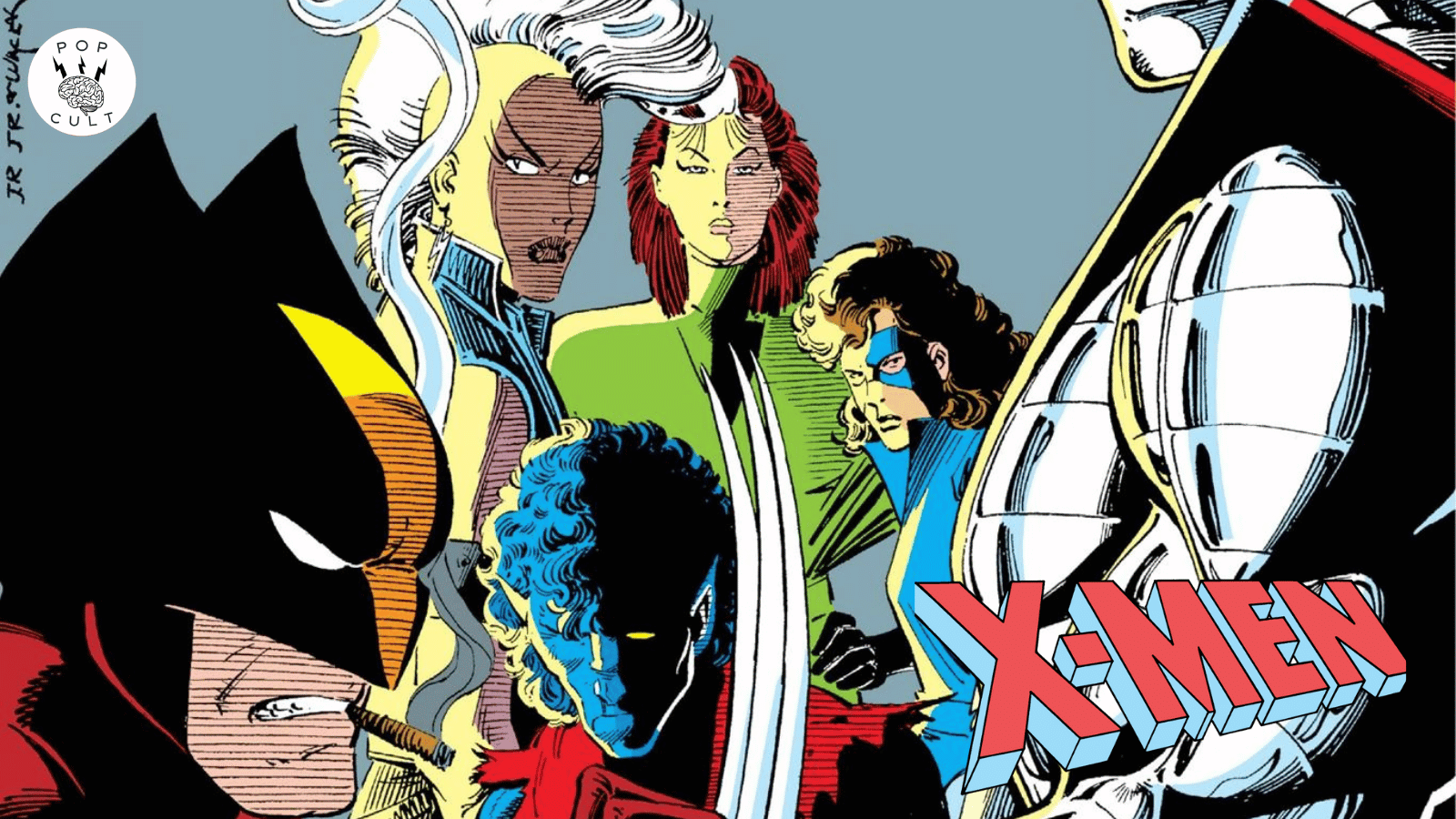
One of Chris Claremont’s goals with X-Men was that it would be a team constantly experiencing change. In an interview published around X-Men #200, the writer said he wanted it so that if you picked up issue 100, you’d get one version of the team. A hundred issues later, another version and a hundred issues after that would differ from the first two. This was a particularly refreshing viewpoint in superhero comics, where stagnancy is the default setting. Think about Uncanny X-Men just as the Mutant Massacre was happening. Cyclops was married and had left the book, Magneto had taken over Xavier’s role, and Storm had lost her powers and become a mohawk-wearing punk, bringing in characters like Kitty Pryde, Rachel Summers, and Rogue. There was another significant change coming.

Continue reading “Comic Book Review – X-Men: Mutant Massacre Omnibus”