Movie Review – Heartbeats

Heartbeats (2010, dir. Xavier Dolan)
heartbeats

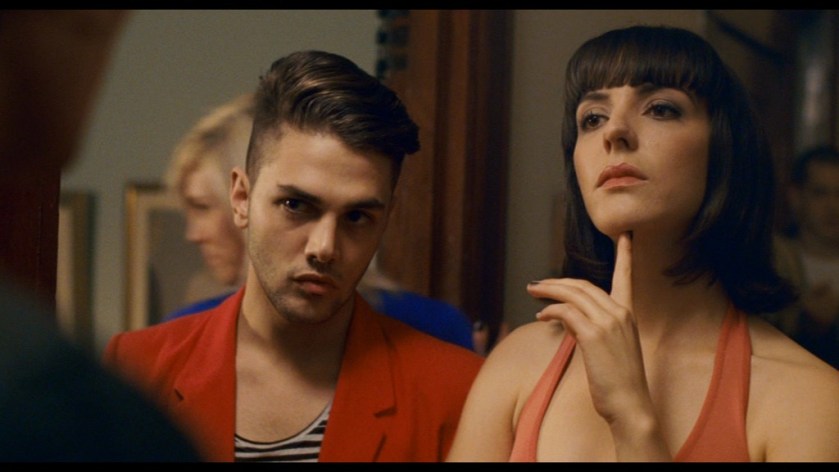
In watching I Killed My Mother, it was clear that Xavier Dolan had a sharp sense of humor. In Heartbeats he allows himself to make an overt comedy of manners that has delivered more laughs from me than most comedies I’ve watched this year. The story centers on Francis (Dolan), and Marie (Monia Chokri) are best friends who meet Nicolas (Niels Schneider), a young man who entrances them both. They begin a vicious back and forth to decide who gets Nicolas in the end.

The comedy in Heartbeats comes from Francis and Marie’s growing animosity with each other over Nicolas’ affections and the ongoing confusion his behavior and words illicit. During a playful game of hide and seek in the woods he manages to tackle Francis, pinning him to the ground. And keeps him pinned for a longer than usual amount of time before hurriedly rushing away, an act that builds confidence in Francis’ perceived chances with Nicolas. A few scenes later, Francis finds out Nicolas has invited Marie to see a play together without even asking Francis which throws him into confusion about his possible suitor’s intentions. At first, our protagonists attempt to play things cooly and not truly acknowledging the competition at hand. By the end of the film, they have devolved into wrestling on the ground decked in clothing out of place in the rustic, cabin setting they have ended up in.

Dolan has a very deft hand at the awkward moment, particularly zeroing in the desperation people take on when they are incredibly attracted to an individual they see as “cooler” than them or “out of their league.” At one point, Francis makes a completely inappropriately expensive purchase for Nicolas’ birthday and, while this fact is only known to Francis and the audience, it adds tension to the informal gift competition that springs up between him and Marie. As an actor, Dolan has the most perfect uncomfortable, awkward smile. He’s left behind at Nicolas’ apartment and has to receive a monthly allowance being delivered by Nicolas’ mother (played by the remarkable Anne Dorval, who played Dolan’s mother in his previous film). Dorval dominates most of the conversation, revealing her career as an exotic dancer, her broken relationship with Nicolas’ father, and other TMI. Dolan doesn’t fade into the background, though, and through his face and his body language, the audience is reminded of all those intensely awkward conversations we’ve ended up in, and especially those with a friend’s parent or some other acquaintance who shares far too much information.

The new element in this film for me was Monia Chokri as Dolan’s rival. Chokri was fantastic and kept up with her co-star and director by exuding an awkward confidence. As the tension increases, her chill unaffected nature begins to show cracks culminating in a scene where she runs into Nicolas on the street that will elicit the strongest empathic cringe from anyone watching. The awkward humor is never to the intensity that something like Curb Your Enthusiasm produces, it is continually softened through a lens of romantic idealism. Chokri’s Marie is presented as a very composed and intentional person, bearing an early 1960s appearance in both hairstyle and clothing. Coincidentally Nicolas mentions his love of Audrey Hepburn and Marie begins adding accessories that emphasize those aspects of her appearance.

The film is about friendship and the silliness of “profound love” and romanticism. It evokes the visual style of Wong-Kar Wai’s In the Mood For Love in particular moments, but instead of using this imagery to evoke a sense of serious simmering passion, Dolan uses it to cultivate a sense of irony with the protagonist’s actions. This is yet another Dolan film that highlights a different talent than I Killed My Mother and Tom at the Farm. The former is a wonderfully bittersweet character study, and the latter is an exercise in tension and psychology. Heartbeats are Dolan’s take on a romantic comedy, a modern remix of Jules and Jim with his own personal visual flair.

Film Review – Red, White, & Blue

Red, White, & Blue (2010, dir. Simon Rumley)
Starring Noah Taylor, Amanda Fuller, Mark Senter

British director Simon Rumley seems intent on shredding every last ounce of emotional energy I have. As you can read in my review of his 2006 film, The Living and The Dead, he is able to present a psychological horror film unlike any you will ever see. Here too, in Red, White, & Blue, Rumley takes the revenge/gore film made popular in 1970s and still alive and strong today, and goes down avenues no mainstream picture would ever think about. The result is another film that hammers itself into your mind and squeeze every ounce of composure from your soul. The last fifteen minutes left my heart pounding and my head feeling dizzy, shocked at the level of physical gore and psychological torment.

Continue reading “Film Review – Red, White, & Blue”

Film Review – Submarine

Submarine (2010, dir. Richard Ayoade)
Starring Craig Roberts, Yasmin Page, Noah Taylor, Sally Hawkins, Paddy Considine

The directorial debut of British comedic actor Richard Ayoade has drawn unfair criticism for “being too much like Rushmore or Amelie”. Its easy to see how you could mistake this film for something like that, but after viewing the film it becomes apparent Ayoade has made an homage to French New Wave cinema. Ayoade takes those hipster affectations he’d being excused of exploiting, and actually frames them in a poignant look at the hyper-urgency of the adolescent mind.

Continue reading “Film Review – Submarine”

Film Review – The Fighter

The Fighter (2010, dir. David O. Russell)
Starring Mark Wahlberg, Christian Bale, Melissa Leo, Amy Adams

What is interesting about David O. Russell’s current film, The Fighter, is how the way the story is told parallels the situation our lead, Micky Ward (Wahlberg) finds himself in. He is the younger half-brother of  Dicky Eklund (Bale), a former big time boxer whose career fell apart after he became addicted to heroin. The opening scene of the film is about Dicky’s pomposity and grandiose nature overshining Micky. This is the situation Micky finds himself in consistently. Despite Dicky’s failings as a son and a father, everyone seems to love him and give him an infinite number of chances. Even Micky’s boxing career seems to be one big stepping stone in Dicky’s comeback. While The Fighter treads into dark territory it still comes off as the feel good movie of the year, in an honest way with its audience.

Continue reading “Film Review – The Fighter”

My Top Films of 2010

Since 2005, I have been keeping track of the films I watch each year. I also come up with a list of my ten favorite films (old or new) that I saw for the first time that year. Here’s the list, with the full list of all 232 I saw this year after the break. Feel free to ask any questions about films on the big list, my freakish nerd memory will be able to answer you.

Top 10 Films of 2010
1. A Serious Man
2. Hunger
3. Mother
4. Un prophete
5. The White Ribbon
6. Black Swan
7. The Social Network
8. True Grit (2010)
9. The Heartbreak Kid (1972)
10. I Am Love

Continue reading “My Top Films of 2010”

2010: The Year in Television

Looking back at 2010 there were a lot of highlights from television. Here’s the ones that standout as the most memorable for me:

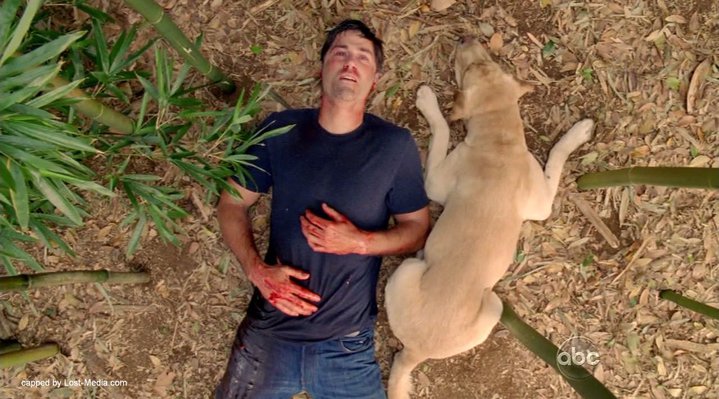
The Lost Finale (ABC): After six years, Lost came to an end with a three hour finale that didn’t seek to solve the myriad of mysteries built up during the show’s run. Instead, the creators chose to focus on emotional closure. There are some valid criticism of the show’s six season, but overall I felt very satisfied by the way things ended. It definitely evoked some of the same feelings I had years ago reading The Last Battle by C.S. Lewis. Despite my own personal views on religion, I found the “spiritual” ending to not come off as hackneyed. It was also the hardest I’ve ever cried while watching a single episode of television.

Continue reading “2010: The Year in Television”

Film Review – True Grit (2010)


True Grit (2010, dir. Joel and Ethan Coen)
Starring Hailee Steinfeld, Jeff Bridges, Matt Damon, Josh Brolin, Barry Pepper

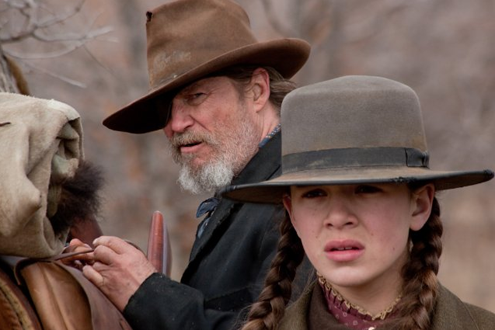
I’ve never seen the original True Grit, mainly because I am not such a big fan of John Wayne. I’ve only seen two films of his (The Searchers and The Man Who Shot Liberty Valance). I totally get Wayne as an icon, but as an actor he seemed a little weak. So I entered the remake of True Grit with no expectations and found it to be a great western and adventure story, with enough subtext to keep me thinking for a long time. Despite advertisements, this is Hailee Steinfeld’s film. The other actors are there to support her and she does a magnificent job keeping up with the likes of Bridges and Damon.

Mattie Ross (Steinfeld) is the 14 year old daughter of a man shot in cold blood by Tom Cheney (Brolin), a dim witted scoundrel. Mattie travels to the location of her father’s body under the pretense of preparing it to be sent back home, but is actually out to find a hired gun to help her track down and murder Cheney. She happens upon the grizzled federal marshal Rooster Cogburn (Bridges), a man who shoots first and asks questions later. After some convincing, he agrees to take Mattie into Choctaw territory where Cheney ran off to. Before they can depart, Texas ranger Le Boeuf (Damon) who is looking for Cheney in relation to his murder of a Texas state senator. The trio bickers and bonds as they draw closer to their prey, which in the end will test each of their resolves.

The Coens are employing their strongest tactics in this film: dialogue and character. The language of the characters is so precise and specific, and this is how they have created countless memorable and iconic characters. True Grit is a showcase for the complex figure of Mattie Ross, whom could easily become a “girl power” anachronism. Instead, through well placed pieces of dialogue, we learn about Mattie’s role in her home and the extra responsibility she has been strapped with. She is both courageous and vulnerable in a way many female characters in film rarely are. Beyond Mattie, the central and side characters all have unspoken histories that we catch glimpses of. As she and Rooster travel the wilderness they encounter characters who may have a line or two (or none at all) and are fully realized figures in this world. The Coens succeed in producing another film chock full of those things that cause the brains of film geeks like myself to salivate.

Film Review – Black Swan


Black Swan (2010, dir. Darren Aronofsky)
Starring Natalie Portman, Mila Kunis, Vincent Cassel, Barbara Hershey, Winona Ryder

With Darren Aronofsky you know you will get something ambitious, whether its ambitious in its drama (Requiem for a Dream), its scope (The Fountain), or its simplicity (The Wrestler). Are they always winners? Nope, but they always bring forth a completely unique vision and experience. With Black Swan, Aronofsky is bringing together elements from all his previous work. You have the severe schizophrenic breakdown of a character, you have a hallucinatory transformations, and you have the destruction of the physical body for the sake of one’s art. The film also breaks the boundaries of genre by being both one of the best dramas and one of the best horror films of the year.

Nina Sayers (Portman) is one of the many dancers that perform at New York’s Lincoln Center. The prima ballerina of the company (Ryder) is on her way and out and the manipulative director, Thomas (Cassel) is looking for his new “little princess”. A re-interpretive staging of Swan Lake is in the works and Nina finds herself in competition with the new girl, Lily (Kunis). Lily works against the conventions of the ballerina, staying out late, dropping ecstasy, and being very laid back with her work ethic. Nina must also contend with her mother (Hershey) who is babies her daughter and attempts to mold her into the dancer she failed to be. Nina is suffering from strange abrasions on her back and is beginning to have intense nightmares about the ballet. All of this is leading down a dark and destructive path….or is she merely fighting against those who have constrained her since she was a child.

Everything about this film clicks, the performances are pitch perfect and the direction from Aronofksy hits on all cylinders. There is the return of the shaky handheld cinematography of The Wrestler that adds that vérité feel to the story. In direct contrast to the realism of cinematography there is amazing use of makeup and CG effects. The films does a great job in balancing the psychological horror, and will make you question deeply what events actually happen to Nina and which are the product of a fragmented mind. I was most impressed with how Portman manages to infantilize Nina’s behavior in very subtle and nuanced ways. She doesn’t babytalk, but the way she interacts with her mother and her director bring out her childlike mentality. Her rebellion against these forces of control is played naturally and its horrific outcome resonates in the mind for a long time after.

Film Review – Catfish


Catfish (2010, dir. Henry Joost, Ariel Schulman)

Its strangely appropriate that at the same The Social Network is playing in theaters, this documentary about what Facebook hath wrought is making the rounds as well. It can be looked at a sequel in some ways: The Social Network are the origins and this is the results of its existence. Since the film premiered at Sundance earlier this year it has garnered mixed reviews. Some critics have seen it as a perfect slice of life in a society where identity has become malleable, while others question the very reality of the documentary, charging it as a meta piece that forces the audience to question if they are being fooled. Catfish was preceded by a mountain of hype and I approached the film with a tempered mind, thinking I would encounter something not quite as good as the trailer claimed.

Nev Schulman is a professional photographer who struck up a relationship with a young girl in Michigan who saw his work in a newspaper and made an oil paint reproduction of it. Through Facebook they converse, he meets her mother, and eventually her 19 year old sister, Megan. Nev and Megan hit it off and find themselves chatting online or over the phone frequently. As time goes on, Nev and his friends, who are documenting the experience, begin to question why Nev has never been able to talk to Abby. This causes a domino effect of other lies being revealed, and leads to the group driving to Michigan to surprise the family and learn the truth.

Whether the film is real or not, it is still an intriguing examination into what the anonymity of the Internet allows. I think the filmmakers do a good job in not passing judgment on anyone who is lying in the film, because they understand that all of us have exaggerated an aspect of ourselves in those moments of conversation where we feel that we can get away with it. The deceit in the film is not one of spite or cruelty, rather its someone seeking to create an universe to escape into. Being an artist, particularly in the small town the family lives in has to be a difficult and alienating situation. So for one of them, populating a Facebook microcosm with characters of your own invention seems like a freeing opportunity.

Film Review – Four Lions


Four Lions (2010, dir. Christopher Morris)

For fifteen years British satirist and comedian Christopher Morris skewered media culture and politics through a variety of radio and television programs. Most notably Brass Eye, a mock news magazine show that focused on the exploitative nature of news, and Nathan Barley, a series that followed a fictional web media hipster and looked at the buffoonish nature of a lot of tech people. It comes as no surprise that now Morris has taken on the current war on terrorism and Islamic extremism in our culture’s psyche. It sounds like an outlandish concept to make a slapstick comedy about Islamo-British terrorists, but Morris has the satiric chops to deliver it such a skilled way, and this kind of film demands a very subtle hand to make it work.

Omar is the head of a small unaffiliated terrorist cell in England. He and his friends are surprisingly sympathetic in how pathetic they are. All of them feel insignificant so when given the idea that to martyr themselves would make them heroes they jump on it. Sticking out like a sore thumb in the group is Barry, a man of British descent who is actually the most militant of them all. Omar and Barry clash when the former is invited to a training camp in Pakistan because his uncle is involved. The films jumps back and forth with an episodic nature, and will with out a doubt challenge you because its characters are incredibly endearing. Part of your brain roots for them because they are classic underdogs, but then the intellectual side steps in and says you can’t root for people who plan on blowing themselves and others up for an imaginary concept.

There are some great comedic moments in the film. I loved that to stay under the radar of British officials, the cell communicates via a Puffin Party webchat for children. The chat requires them to have multicolored puffin avatars. At one point, the car breaks down and Barry blames it on the Jews, at which point he is asked which part of the engine is Jewish, and a conversation ensues. Barry also demands they swallow the SIM cards from their cell phones, after which Omar reminds them the SIM cards can still be tracked inside them. Much comedy comes out of the training camp sequence, and I won’t ruin the big reveal of its largest gag but its a good one.

What shocked me was how, during the final sequence when the crew has assembled to perform the bombing during a cancer fun run in London, I felt incredibly sad for them all. Omar especially sees it as wrong to get Waj, the simpleton of the group, to blow himself up. The end credits are composed of fictional news reports about the events in the film, and they made the story feel even sadder. Instead of going the easy route and presenting terrorists as one dimensional monsters, Morris makes them painfully real and relatable. The result is that we still believe terrorism is wrong, but its because of the waste of life that is the result. Omar has a loving wife who is not an oppressed woman and a son who loves him unconditionally, so his sacrifice feels incredibly empty.