Movie Review – I Am Not a Serial Killer

I Am Not a Serial Killer (2016, dir. Billy O’Brien)

not a serial killer

John Wayne Cleaver (Max Records), a teenager with sociopathic tendencies, lives in a bleak Midwestern town, seemingly under a permanent blanket of snow. Against this wintery landscape, a series of killings begin. Cleaver gets a front row seat to examine the corpses due to his family’s prominence as the only mortuary in town. He quickly discovers each body is missing an internal organ or body part. The bodies also appear to have been cut apart with a chainsaw or toothed blade. And there’s that sizzling black oil at all the crime scenes. Cleaver struggles to control his own compulsions to hurt school bullies and the need to connect with others while trying to figure out whose sinister hand is behind the killings.

I did not expect what I got from this film. I knew going in from the atmospheric trailers that it was going to be moody and dark. There is plenty of gore due to the mortuary being a key location. We never see victim’s faces until more than halfway through the film. In many ways, this is from the perspective of Cleaver. He sees the bodies as simply hunks of meat at the beginning, parts of a mystery he wants to uncover. When the victims become people he personally knows the weight of the crimes set in.

Despite this darkness pervading the film, there is humor and softer moments. Cleaver frequently visits his psychiatrist, Dr. Neblin. Instead of Cleaver lying on a couch and unloading his feelings, the two meet in outdoor locations having sessions in a park or on a rooftop while birdwatching. The doctor comes across a very human and truly working to show empathy to the young man while attempting to stoke the fires of empathy in his patient. The family dynamics between Cleaver, his mother, aunt, and older sister feel very genuine with lots of tension around the holidays that the film knows it doesn’t have to get expository about.

The look of the film is grainy and textured. Handheld shots in moments of extreme horror and tension add to the despairing atmosphere of the crimes. It’s clear that slasher horror of the 70s and early 80s influenced the tone and visuals of the picture in all the most positive ways. The movie is also confident in letting itself wander through landscapes. There’s not hurry to wrap up the story. Instead story elements are allowed to simmer and we get some wonderful performances from young Max Records. His most notable role thus far has been as the lead in Spike Jonze’s Where the Wild Things Are. It’s apparent that he understands emotion and subtlety and gives a very honest performance of a very troubled character. Cleaver is never presented as angsty, he’s contemplative and seeks understanding of his condition, even if it means communing with a killer.

There is a major twist halfway through the film that is not presented in any of the trailers I saw and should be avoided at all costs. The shock of what the film becomes in that moment was one of the best elements of the picture. The director manages to take elements that could be eye-rollingly ludicrous and add some emotional weight. If you are looking for a horror film that lives in the “real world” I Am Not a Serial Killer will do the trick.

Comic Book Review – Paper Girls Volume 1

Paper Girls Volume 1 (Image Comics)

Writer: Brian K. Vaughan  |  Artist: Cliff Chiang
Purchase this book here!

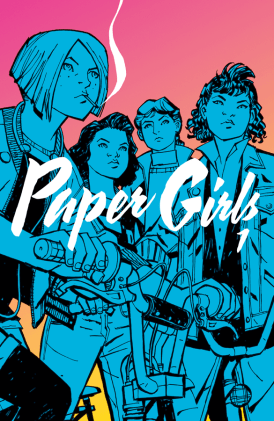
PaperGirls_Vol01-1I had no idea what Paper Girls was, not even who wrote or drew it. I just saw the cover and thought that looks interesting. To my joyous surprise, I learned it was written by Brian K. Vaughan (Saga, Y the Last Man, Lost) and illustrated by Cliff Chiang (Wonder Woman, Tales of the Unexpected). I also had wondered what the title meant by “Paper Girls” and found it was so clear I should have figured it out: They are girls who deliver papers.

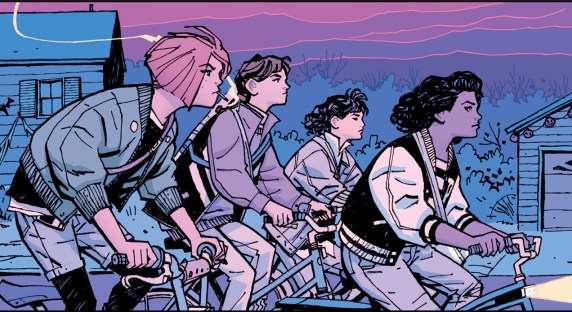
Paper Girls is a story set in 1988 and begins with its focus on Erin, a 12-year old paper girl going about her route in the pre-dawn darkness of November 1st. She runs into a trio of fellow paper girls who help her deal with some neighborhood bullies and things get…weird. Mysterious shrouded ninjas. A fleshy Cronenberg-esque device hidden in the basement of a home under construction. Pterodactyls. These are just some of the things our protagonists come across in the first arc of the series.

I hadn’t planned to read this right in the wake of finishing Netflix’s Stranger Things, but I’m very glad I did. It ended up being the perfect compliment and spotlighted a bit rougher edge to the 1980s. The girls in this series are a great balance between childhood badass posturing and vulnerability in the face of the unknown. It’s always grating if a series tries to present a tough girl or guy without layers and dimensions, but here we get to learn a lot about how each of these characters thinks as they put through some extreme and bizarre situations.

Vaughan is able to balance some pretty wild elements with grounded real life problems. While there are strange masked creatures wandering the neighborhood he takes the time to have a paper girl deal with her alcoholic step-mother. The visuals by Chiang are remarkable. He creates the sense of those early morning dawn hours so perfectly. And setting the story the morning after Halloween allows many characters to appear in costume and adds to the visual strangeness of the story.

The actual meat and potatoes plot of the first five issues is pretty crazy. I won’t go into a ton of detail but the series definitely goes places I wasn’t expecting. It was also refreshing to pick up a comic I had zero hype or real knowledge about and be delighted to find such a well-told story. Image Comics has become one of those companies that I am willing to do that more and more with. Their move to a home for stand alone creator-owned projects makes them a fertile soil for some of the best non-superhero comics work out there right now.

Much like Vaughan’s Saga, there is an immediate sense that this is the first chapter in a much larger and sprawling story. Tonally we’ll end up with something very different, more grounded but still with those more outlandish elements. If you are suffering from a lack of Stranger Things and wanting a wonderful companion piece, find this volume.
Paper-Girls-2-Header

The Childhood of a Leader (2016, dir. Brady Corbet)

priests-childhood-leader

By the final dizzying moments of The Childhood of a Leader, I was completely overwhelmed in a satisfying way. The film takes place in the temporary rural home of an American diplomat stationed in the French countryside at the close of World War I. His wife and child, Prescott, waste away the days with French lessons, performances at the local church, and malaise. Prescott has a series of tantrums with the film structuring this three fits as its chapters, with an epilogue that brings everything together decades later.

The film is the directorial debut of longtime child and indie actor, Brady Corbet. It is very apparent that Corbet’s work under directors like Michael Haneke and Olivier Assayas has been a masterclass in filmmaking. This is one of the strongest debut films I’ve ever seen. The cinematography is astounding, the performances are subtle but carry much weight, and every single aspect of the film is crafted with care. Add to this the nerve shattering score by veteran composer Scott Walker and you have a film that brings together a number of genres but defies to be defined by any of them. This is a horror film set in an alternate history of our world…or is it the mix of the real and the deluded visions of a troubled young boy?

It’s hard to pin down The Childhood of a Leader. The film keeps itself enigmatic to encourage the viewer to explore and think about what’s happening on screen. The two ways I saw to read the film during this viewing were as the literal story of a young boy at the center of world history who would rise to power one day. There’s also the idea that we’re dealing metaphor. The American Father, The French Mother, The English Reporter. All three seem oblivious to this ranting, tantrum-ing, seething child until it’s too late. With each tantrum, he increases his hostility and potential to do harm to those around him.

From the opening moments of the film to its conclusion, there is an unsettling tension building. Walker’s score for the film plays a major role in building that, but its juxtaposition to the dim visuals on screen following Prescott from behind as he runs through the woods, roams the empty halls of his house or wanders naked into the middle of his father’s meeting with important policy makers is what keeps the film at the edge. We never descend into complete horror until the final moments, but every second up to that point is fraught with terror. Highly recommended and with much potential to reveal more with subsequent viewings.

Batman: The Killing Joke (2016, dir. Sam Liu, Bruce Timm)

joke

Batman: The Killing Joke is an adaptation of the 1988 graphic novel by Alan Moore and Dave Gibbons. The original text tells the story of a possible final showdown between Batman and his arch-nemesis, The Joker. The battle hinges on the sanity of police commissioner Jim Gordon after The Joker shoots his daughter Barbara and tries to drive Gordon mad by taunting him over the randomness of the act. As this battle of ideologies rages on, we get distorted memories from the Joker about what his origin as a horrific villain could have been. The emphasis is on the idea that one bad day can destroy a normal person. Due to the short length of the comic, the writer of the film added an additional thirty minutes of content to flesh out Barbara Gordon’s career as Batgirl.

I first read The Killing Joke as a freshman in college in 1999. I had never encountered writer Alan Moore up until that point and I did find it a captivating read. This is mainly due to the way it turns the Joker into a tragically pathetic figure. The book also leaves the final moments up in the air as to what Batman does to the Joker. I’ve probably read it a half dozen times in total over the years. A valid point has been made in recent years about its treatment of Barbara Gordon. She is shot early on in the comic and pops up one more time for a doctor to declare her paralyzed. Essentially, Barbara is treated as a plot device to motivate Batman and torture her father. There’s no humanity in what happened to her and it took a few years before other writers redeemed the character. In retrospect, Alan Moore even views the comic as too violent and cynical. I can’t help but retain some love for the text due in part to what I find an interesting exploration of the Joker’s psyche, but I still recognize the mistreatment of Barbara Gordon.

The film has some huge problems in its attempts to “fix” this slight of Ms. Gordon. The thirty additional minutes of story focus on Batgirl pursuing the nephew of a Gotham City crime boss. Francesco is attracted to Batgirl despite her attempts to take him down and attempts to drug and force himself on her, which she dodges by locking herself in a vault. There’s also a subplot where she talks about her relationship with Batman, describing him as a yoga instructor, to a coworker while commiserating on her love life. This eventually escalates to Batman and Batgirl having sex on a rooftop. This is not something I was expecting to see happen as in the comics there has never been a relationship between the two. She’s closer to Robin’s age and has been more involved with him when they were adults. But here, Barbara is in her early 20s so it’s not illegal, but still cringey. Later in the film, she reaches out to Batman and he brushes her off and she realizes it’s connected to their sexual encounter. I understood Batman’s motivation of not wanting to become too close to anyone lest them become compromised, but the only sequence read very awkward and completely unnecessary.

The added Barbara material works even less in the final two-thirds of the film after she is shot. Just like the original graphic novel she fades into the background and it becomes a Batman/Joker story. The Joker doesn’t appear until about 40 minutes into the film which is another odd structure piece. The Joker’s dialogue is lifted straight from the original text and while, for the most part, it doesn’t play awkward there is one moment where he puts Gordon on a hellish ghost house ride and it is way too wordy and overbearing with philosophical content. It doesn’t feel like the Joker would say this out loud, particularly the voice of Mark Hamill as the Joker. On the page, it’s not bad, but page to film translations of comics are never a great idea.

The animation is a very mixed bag. There is a concerted effort to make the iconic moments from the original text pop on screen and it looks alright. The rest of the animation comes across as very cheap and continues the trend with so many of DC’s animated feature films looking subpar. There was a featurette released a few months ago where the creators explained that original artist Brian Bolland’s style was too hard to emulate in animation so they looked at other artists, including Kevin Nowlan. I didn’t see much of Bolland or Nowlan in any of this animation. It just looked very poorly done.

I can’t really recommend Batman: The Killing Joke animated film. There are just so many technical and narrative missteps that add up to make a mess of a film. I had high hopes for this one. DC Animated had surprised me with its Dark Knight Returns and Year One adaptations but really missed the mark here. I would still say the graphic novel is worth reading if you haven’t, but the philosophical study of the Joker has been covered elsewhere, particularly The Dark Knight Returns in a much more interesting way than this animated film.

TV Review – Stranger Things

Stranger Things (Netflix)
Created by Matt and Ross Duffer

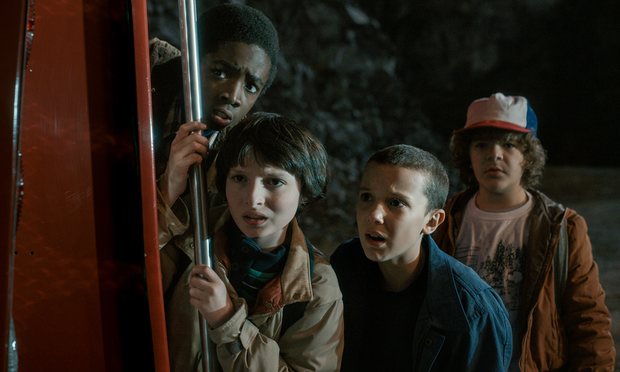
strangerStranger Things is an 8 episode series released by Netflix. It tells the story of the disappearance of Will Byers in the small town of Hawkins, Indiana and the bizarre phenomena that begins to occur around those affected. The series features an ensemble cast with David Harbour (The Newsroom) leading the cast as Sheriff Jim Hopper. Alongside Harbour are Winona Ryder as Joyce Byers, the mother of the missing boy, Finn Wolfhard as Mike Wheeler, Will’s best friend, and Millie Bobby Brown as a mysterious girl who know what happened to Will. The series is dripping in early 1980s nostalgia and plays out like a Stephen King novel or Spielberg film with a bit more darkness added.

The most noticeable aspect of the film is that it is firmly entrenched in creating an early 80s vibe. The title sequence’s music and visuals are tailored to mimic a dark synthy score of horror films and the font of a King novel cover. Because three of the series’ major characters are adolescent boys references to Star Wars and Dungeons & Dragons abound. There’s more tonal and thematic touches that bring E.T., Poltergeist, Alien, and other period films to mind. In fact, this probably the show’s highest selling point, the recreation of the feeling of the childhood of many of its viewers. As a child of the 80s, I definitely felt it, probably not as much as someone who was a peer to the featured children would. I am curious how millennials view the series due to not having the nostalgic buy in. It’s also impossible not to think of Super 8, a very similar homage to the sci-fi/fantasy films of the day. Super 8 is definitely enamored with the Spielberg vein exclusively, while Stranger Things is willing to go to darker places and play with Stephen King and David Cronenberg territory.

The plot is not necessarily revolutionary. Because the show is a nostalgia trip, it weaves together ideas from a number of sources. I was pleasantly entertained by the twists and turns, and there are some predictable moments that don’t detract from the pleasure of watching. The key piece of the story, what took Will and where he is, were the most original parts. Thankfully, there is never a large chunk of exposition to explain away what is happening and the series requires the viewer to piece together segments of plot over time to have a full understanding. I appreciate that the show respected my intelligence enough not to have the central human antagonist sit down and lay out the plot to another character.

The characters and acting were a slightly mixed bag. First off, Millie Bobby Brown is going to be a major actress in the future, and honestly, already is in my opinion. I always say the best way to tell how good an actor is would be to watch them in a scene without dialogue and see how well they convey emotion without being over the top. Ms. Brown knocks every scene out of the park. She tells a rich, nuanced story through her face and her eyes. I learned she was part of a BBC America series called Intruders where her character is possessed by an older evil man and cannot wait to dig in and see how amazing she plays that. David Harbour does a better than expected job as Hopper. So often the role of town sheriff in these sorts of stories comes across as a paint by the numbers character. Hopper’s story adds a tragedy that is never played up too huge and is only highlighted at just the right moments. The character’s descent into paranoia as he comes closer to the truth is very entertaining and if a second season comes, I am interested to see how his character develops. Winona Ryder did not feel natural in many of her scenes. She basically plays one note, hysterical grieving mother for the majority of the series. That is what her character is going through but it would have been interesting so see some more of her. She definitely knows her character’s motivation and it guides her acting in every scene. The trio of young boys are wonderful and they each have a specific dynamic in the group that doesn’t come off as a checklist.

Stranger Things is a very fun series. I’ve enjoyed most of the 1980s nostalgia media and particularly like when it is done with an attention to tone over nitpicky details. It felt like watching a very long film from my childhood and it kept me hooked the whole way through. The series ends with a number of hooks for the second series but I won’t be disappointed if we don’t get another. These eight episodes are a complete, satisfying story, very much in the vein British television where each series attempts to close off its plot. Stranger Things is a perfect recreation of 1980s summer cinema that you can get lost in.

Comic Book Review – The Ultimates: Omniversal Volume 1

The Ultimates: Omniversal Volume 1: Start With the Impossible
Writer: Al Ewing   |   Artist: Kenneth Rocafort
Purchase this book here

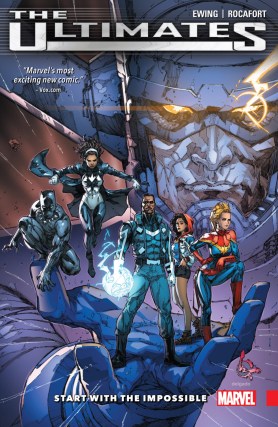
ulitmates vol1The Ultimates has been a superhero team name used in many different contexts in the last decade by Marvel Comics. The current incarnation is a drastic shift from the former. Led by Captain Marvel, the Ultimates is another one of those “pro-active” teams. It’s a concept that’s been done many times before and I’ve never felt it’s never been done too successfully. However, writer Ewing has figured out a format that allows everything to work. The team counts Blue Marvel, Spectrum, Ms. America, and Black Panther among its members and their focus right out of the gate is a huge one: complete the metamorphosis of Galactus that was hindered millennia ago.

Galactus is a carryover from the universe that existed pre-Big Bang. He was saved by his specialized spacecraft and became an omnipotent world devourer in the new reality. The problem was that various armadas from across the galaxy interrupted his gestation and that is why he now eats planets to survive. Blue Marvel has deduced that Galactus needs to be put back in his ship and the process will be completed. Every member contributes their skills to this might endeavor and it’s a very satisfying two-part story. The conclusion establishes a status quo for Galactus that me genuinely shocked and excited.

The remaining three issues in the collection focus on Blue Marvel’s quest to repair the damage done to the timestream in recent years. Between the original teenage X-Men running around in the present day, the timeline catching up with what used to be the “future”, and the reality rendering of the recent Secret Wars, the Marvel universe is operating on a razor’s edge. The team constructs a ship capable of traveling into the space beyond the universe where they plan to fix what’s wrong. What they find ties directly into Blue Marvel’s path and they get help due to some of their previous actions.

ultimates 02This was the first Marvel comic that felt like it was capturing some of the magic I used to love about DC. Having a team that tackles the cosmic and multiverse level problems is always so interesting to me. I also love when a writer takes well-worn concepts, like Galactus, and makes changes that will forever alter them and open up a whole new world of stories to tell. The sense of a growing universe is so much fun, better than comic books that feel stagnate or just kill characters off only to bring them back months later. Character growing and changing their mindset is much more interesting.

The stories here are definitely not new reader friendly. Even with an effort to fill in some backstory for Galactus or Blue Marvel, it’s still pretty essential to do some background reading if you want to fully understand who these characters are and what is happening. The final issue in the collection is particularly impossible to parse due to its focus on a character with a lot of complicated history in the Marvel Universe. So if you enjoy jumping in the deep end you’ll like this comic but if you prefer to have things explained detail you might look elsewhere.

If you read Jonathan Hickman’s work the last few years at Marvel (Secret Warriors, Fantastic Four, Avengers World, Secret Wars) then this takes the ball and keeps it rolling. Events happening in Civil War II were seeded right here. I will definitely be keeping the series on my reading list. It hits those high adventure, exploring the unknown notes that Fantastic Four provided in at its best, continuing an important tradition in the Marvel U.

Comic Book Review – Monstress Volume 1

Monstress Volume 1
Written by Marjorie Liu  |  Artist: Sana Takeda

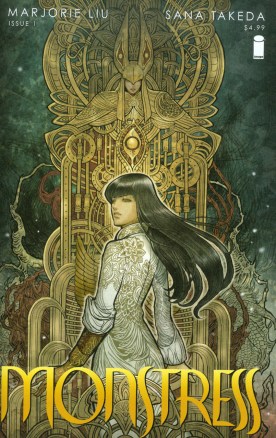
monstress 1At first glance, the protagonist on the cover of Monstress doesn’t look very monstrous at all. Maika is a beautiful young woman without horns or scales or anything denoting a monster nature. That’s sort of the point in this exploration of prejudice and feminism brought to us by writer Marjorie Liu and artist Sana Takeda. The beautiful art deco style cover is immediately given a counterpoint in the first full page panel: Maika naked, a chain collar around her neck, a riding crop under her chin, and the revelation that her right arm from the elbow down is missing. On her chest is a tattoo of a vertical eye. This rather ugly reveal presents what will be the theme of the series, a beautiful ornate baroque world that is hiding a society built on violence against the Other.

My initial reaction to Monstress was the same sort of disorientation I’ve felt watching most anime or reading manga. There is this push deep into the world where the reader is expected to catch themselves up as they go. Western media typically lays things out in a very deliberate fashion so it takes a little configuring of the brain to get involved. The world of Monstress is built on the divide between humans and the Arcanic. The Arcanic are a mixed race species between humans and a sort of interpretation of East Asian demons and animal spirits. Many Arcanic look perfectly human, they might be hiding a pair of wings or a foxtail, but if found out to not be fully human they lose all rights. Arcanic are part of a massive slave trade and some are even harvested for their essence called Illium.

Chief among the enemies of the Arcanic are The Cumea, a faction of female witches that are more like the Vatican than a coven. They have unlimited wealth and some even appear to be what I would consider Arcanic but avoid that label because they have power. An event occurred prior to the series, a great battle between the Arcanic and the Cumea that left some of these witches scarred by magic energies. They desperately want revenge for this transgression and it seems our hero, Maika is tied deeply to this past conflict.

There are very few male characters in the series and not a single one is in a position of power. All authority is held by women on both sides of the conflict. I particularly enjoyed how there is no sense of unity among the women of the two sides. They are truly human in that the concepts of tribalism and the Other are still going strong. How they choose to deal with problems comes from a different perspective but the hatred of the Cumea for the Arcanic is white hot and unflinching.

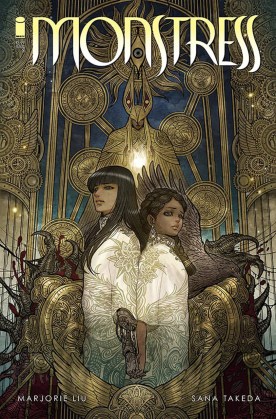
monstress 2The growth of Maika is the focus of the series. She starts single-minded and willing to let the innocent die if it means she gets closer to her goal of revenge. As she spends time with other characters she has a conflict with her inner nature and by the end of the first arc, she has learned the value of compromise. Her two companions, Kippa, an Arcanic with fox like attributes and Master Ren, a clever and witty cat, feel like paper thin characters. I was reminded of some forgotten animes that featured characters just for the cuteness appeal. There are hints at deeper levels and a rich history to the villains in The Cumea but it’s not explored very deeply in this first arc.

The pace of the series is very quick. We jump right into the story and hit major plot points every issue. There’s never a point where things feel dull or we lose momentum. You wouldn’t be blamed if you start to lose focus on what the larger conflicts are. The politics are so dense it can be overwhelming at points and it would have been nice to have the history of the world disseminated in a little more palatable manner. Each issue ends with mini “lectures” on some point of history in the world but I never found myself interested in reading these long passages of text when I was more interested in the core story.

Monstress is a very enjoyable first chapter in what looks to be a long sprawling saga. I think in hindsight, once the complete story is published, going back and reading these early issues will feel less challenging. The artwork alone is a great reason to pick up the book, it is so full of detail and movement. If you’re interested in jumping head deep into a complex and complicated new world give Monstress a chance.

TV Review – Orange is the New Black Season 4

Orange is the New Black: Season 4
Created by Jenji Kohan
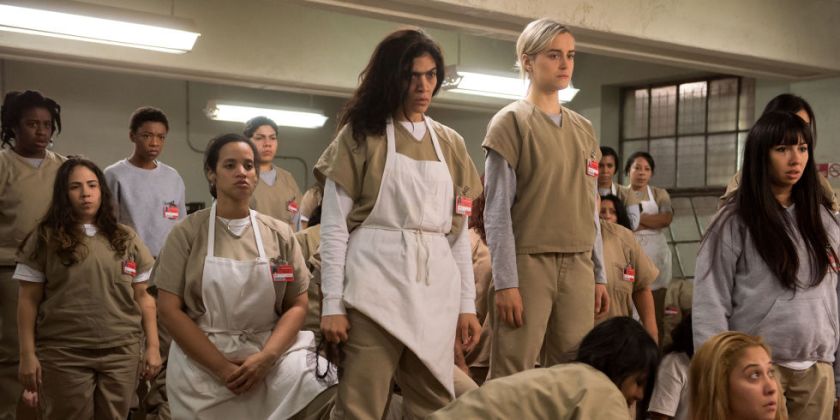
orange 01I have fully embraced the power of Netflix at this point. While I have not watched every original series they have released, I love the ones I have. When season one of Orange is the New Black came out I wasn’t very keyed up about it. The selling point at the time was “from the creator of Weeds” a series I didn’t find that interesting. I had watched the first two seasons of Weeds and it didn’t compel me to keep going. And I didn’t find Orange too intriguing in the first and second seasons mostly due to one character: Piper Chapman.

Piper Chapman. I get it. She’s meant to be an audience surrogate, the fish out of water through whom we will learn the ins and outs of Litchfield Prison. And this is no slight to actress Taylor Schilling, the character is grating. Even more grating than just Chapman is her relationship with Vause (Laura Prepon). I have never bought the thing these two have and the directions their plots have gone don’t help either. Is it bad that I have started the last two seasons hoping Chapman would get shivved at some point and then the series could just go on without her? She became more interesting separate from Vause and getting caught up in her panty-smuggling ring in Season 3. In Season 4 she continued to be interesting by having to deal with her inflated ego and the fallout of that attitude. But when the season concluded with she and Vause getting back together I had sigh annoyedly.

When Season 3 rolled around, something about the show just completely hooked me and reeled me in. I think the de-emphasis on Chapman’s character and the spreading out of storylines to the characters in the prison who are actually interesting. There’s no way I could say a single character stands out as my favorite because I am so happy when so many of them pop up on screen and we explore their lives. I love the friendships between characters: Taystee and Suzanne, Flaca and Ramos, Red and Nichols, Pennsatucky and Boo. In many ways, the reason I love Orange is because I love Lost. The moments when Lost really clicked for me was when it explored pairings of characters and how they played off each other and then, over time how those relationships evolved. Funny enough my least favorite character in Lost would probably be Jack for the same reasons I dislike Piper, main characters seem to start out as such bland ciphers.

Season 4 is probably my favorite run of Orange to date. I am excited to see where these characters go next and the season asked some very tough questions but didn’t feel the need to answer them. I love when a television show brings up complicated topics, creates difficult situations where there is no clear villain, and then lets the audience live in that space. Breaking Bad and Mad Men did this often and it is what made me love them, especially the latter. In real life there aren’t clear lines that define hero and villain, it’s more complicated. The conflict between Pennsatucky, Boo, and Donuts is a perfect example.

orange 02I genuinely believe that Donuts didn’t have bad intentions when he began his sexual encounters with Pennsatucky in Season 3, and I believe that at the start she was into him. But things became very complicated and messed up quickly. Donuts has a duty as a prison guard so their relationship should never have even gone to that place. In many ways, this relationship was offered as a counterpoint to Daya and Bennett, which I felt was a very dangerous portrayal. When one person has clear, direct authority over another there are clear lines that should not be crossed. So, on the one hand, I felt bad for Donuts, but I also totally sympathized with Boo’s stance on what had happened to her friend and knew she was right. It’s that sort of complicated writing that makes me love this show. It’s not going to answer the moral quandary, it’s going to pose the question.

Another thing Orange does so well is to rotate the spotlight on its cast, and it has an even larger and growing cast than Lost could have imagined. Season 4’s spotlight on Ruiz was very interesting and her evolution into a leader has me interested to see the fallout between her and Mendoza, the acting “mother” of the Latina group. The release of Diaz was one of those moments I hope we see more of in the next few seasons. A show set in a prison allows lots of flexibility from a casting perspective, prisoners can be released and new prisoners can be incarcerated. I do hope the show refrains from showing too much of life after prison on the outside. Keeping the focus on life on the inside is more important. Having moments where someone leaves and both the audience and characters know they will likely never see them again helps convey what these relationships are truly like. Prisoners bond with each other out of survival and need for companionship, but the system they are living in can pull these bonds apart at any moment.

I find Caputo is one of the most infuriatingly fascinating characters in the series. I can never exactly pin him down and that is what makes him so interesting. I believe he genuinely wants to do good, he has pure intentions, but he is so easily undone by crises. It reminds a lot of seeing upper-level leadership in teaching who deep down truly care about the students but get so tangled up in the absurdity of administrative policy and thinking they instead make destructive choices.

In that same vein is Healy, one of the most tragic figures in the series, and that is saying a lot. Here is another instance of Jenji Kohan and writing staff refusing to make someone an easy villain. Healy is both a victim of life and an abuser of his position of authority. He is what I wish Ben Linus had been able to be developed into on Lost. Someone who comes across as the obvious bad guy but as we peel back the layers becomes more and more broken and sad. Healy’s relationship with Lolly and it’s heartbreaking conclusion was one of those pinnacle moments in a season with so many great plots. My hope from a narrative and character point of view is that we just never see Healy again, maybe a short cameo in the final season by someone who gets released. The moment where he checks himself into the mental health facility is a perfect period on his story. He’s going to hopefully get the help he needs, but the audience, just like the inmates, will never know exactly where he vanished to.
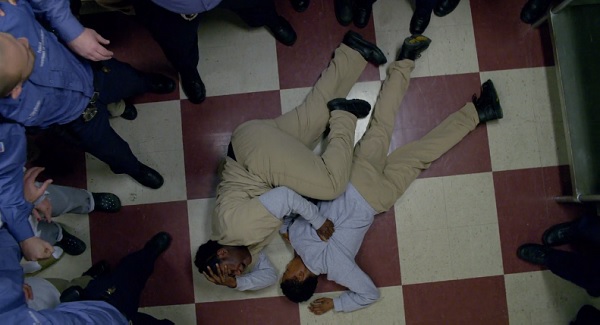
orange 03The moment everyone is going to remember of course will be the sudden death of Poussey. This was a very delicate moment and I think it was done in the right way. My only complaint was that a tragic ending for the character felt very telegraphed from about mid-season onwards. I suspected something would happen, I just didn’t know it would be so horrible. I’ve read a lot of criticism online about how the show dealt with Bayley, specifically that they made him too sympathetic. Much like I said earlier on how the show likes to raise difficult questions and present challenging situations, I believe that’s what this episode was about.

So often police brutality and murder is not the result of a malicious spirit but a frightened and improperly trained mindset. Bayley’s murder of Poussey was a result of leadership in the prison failing. Caputo kept leaving and not realizing things got worse when he did on top of Piscatella instituting a very cold, dispassionate policy of control in the prison. Add to that Suzanne’s trauma from being made to fight her ex by Humphreys and you had a confluence of people that could only end badly. If Bayley were a real person then I would expect he’d get charged with manslaughter, but he never wanted to kill Poussey. It’s a condemnation not of an individual but of corporations like MCC who cut corners on training and as a result, withdraw a sense of humanity from prisons. I think everyone’s grief and pain were touched on wonderfully and we saw the full spectrum of perspectives. What Bayley did was something we are all capable of, in a moment of extreme crisis if you can’t handle the pressure you can end up doing horrible things to another human being. You should be simultaneously held accountable to the full extent of the law but also shown compassion and love. Like a lot of the prisoners in Litchfield, Bayley had the worst day of his life and he’ll now pay for it. We could see that in the scene where he’s driven home by one of the army veteran guards and he looks genuinely broken when the man says he and Bayley are the same.

As a writer, it would have been extremely easy to make sadistic guard Humphreys the murderer. But that would not have had the emotional impact on the narrative that choosing Bayley did. Humphreys is easy to hate and he doesn’t challenge us. Including him as the focus of the final scene was a smart move. The dynamics in place bring up a lot of emotion. The audience truly hates Humphreys but does he deserve to die? Maybe you think he does. But Daya holding the gun not only gets her an extended sentence if she were to kill him she would also go to max and get life. She’ll never see her child on the outside if she does this. In the same way, Pennsatucky finds it in herself to forgive Donuts because *she* needs to do that, the audience has to find a way to let its hate go. Revenge killing a guard, even Humphreys, may satisfy a momentary emotional need for revenge but its long terms effects will be the destruction of Daya’s soul and her life. As in life, we don’t get to get back at those who have wronged us. Many times we don’t get proper justice is supposedly promised to us. What people have to do is find a way to forgive so that they can move on, so that they don’t have to live in that pain and hate for the rest of their lives.

I am very excited to see where Orange goes in its 5th season. I’d love for the opening to have let some time pass, to not show Daya or Humphreys right away. Slowly unfold those details, show the grieving process for Poussey continuing. Show Caputo facing the blame for what he is ultimately responsible for. Continue to tell these wonderful stories about these dynamic characters. And especially, I hope it continues to challenge the audience to think beyond black and white spectrums of morality, and be forced to face the fragile nuance of human existence.

Video Game Review – Asemblance

Asemblance
Developer/Publisher: Nilo Studios
Available on Steam and PS4

asemblance

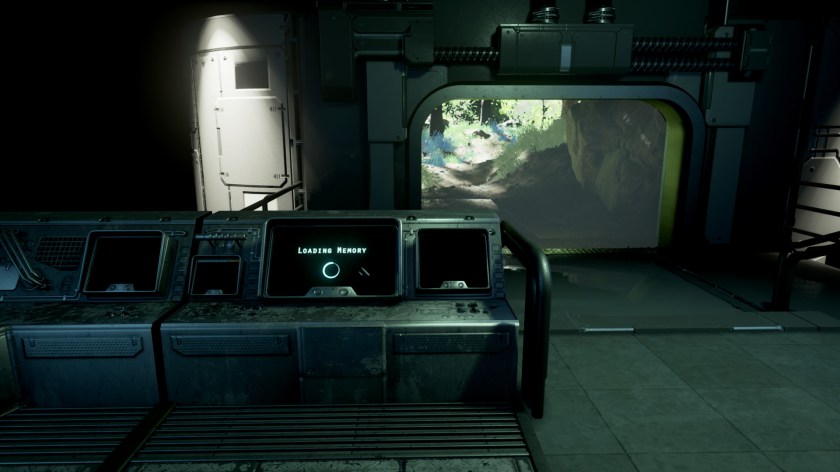
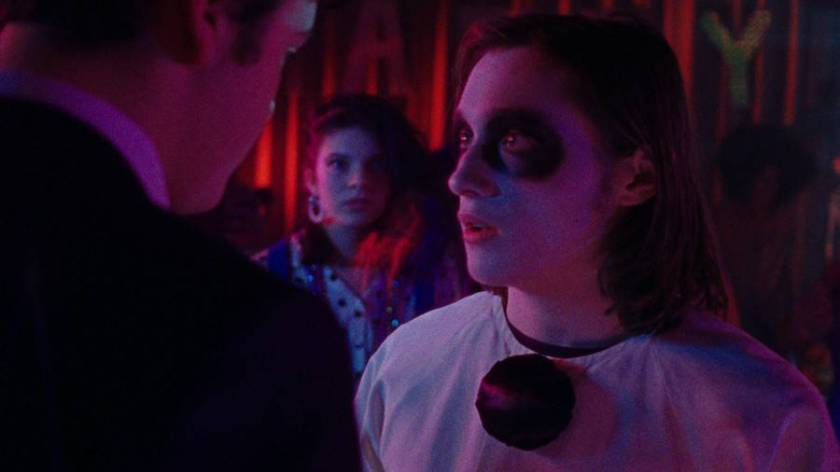
You’re immediately greeted by the sound of alarms and a computerized voice issuing warnings. As your vision goes from dark to blurry to focused you find yourself a dimly lit, cold metal chamber. A console sits in front of you, a room resembling Next Generation’s holodeck beyond that. This is the stage set for Asemblance, a game in the walking simulator genre that is heavily influenced by the mechanics and gameplay of P.T.

And like P.T., who you are is a big question. It would be easy to assume you’re the scientist who built all this equipment, the same scientist where the virtual memory simulations were harvested from. But the game is a mystery without clear answers. The first memory the computer allows you access to is a simple walk in the woods where you saw a butterfly. That butterfly serves as a motif through all the memories though it is not so easy to spot as in the first. The game is fairly small, only four memory files can be accessed in total. There are multiple endings though and each ending sheds light on different parts of the overall mystery.

During my own playthrough I found it became important to pay attention every single detail, no matter how significant. The contents of memos spread across office desks or placement and absence of framed photos were crucial in uncovering and progressing the story. The graphics are not spectacular. They are attempting to reproduce the near photo realism of P.T. but have some muddied textures and are rough around the edges. The biggest problem is the pacing of reveals. Early on you uncover one secret after the other and then suddenly there’s a wall. I spent an hour or so wandering back and forth between memories trying to figure out the next step. This is where those minor details play a crucial role.

The developer has said they see this as a potential anthology franchise, along the lines of the brilliant Black Mirror series. With some more polish I would be all in on something in that style. I’m personally a very big fan of the P.T. style of gameplay, particularly because I see good horror not as something where the protagonist can successfully fight back, but where exploration of the horror is encouraged and stepping into darkness is inevitable. Asemblance doesn’t break new ground but it provides a decent story and the promise of interesting things down the road.

Green Room (2016, dir. Jeremy Saulnier)

a24 visions

green room

There’s something dangerous about the woods. Yeah, the city is dangerous, but there’s something worse about the woods. You’re so far away from help. You’re isolated. The woods are cold and indifferent. So when the members of punk band The Ain’t Rights roll into the parking lot of neo-Nazi club plunked right down in the Oregonian forest there’s sinking feeling that hits your gut. I am ashamed to say I have not dedicated the time to watch Jeremy Saulnier’s previous picture Blue Ruin after hearing great things. Having seen Green Room, I must see this older film.

Green Room tells the story of a punk band that stumbles upon something they shouldn’t see in the back of a club. As mentioned before, neo-Nazis own the club and the band quickly become prisoners and involved in a brutal and violent standoff. Saying more would spoil the suspense of the film. The tension is built up beautifully through the moody ambient music of Brooke & Will Blair and the washed out cinematography of Sean Porter. Scenes are painted with pale green and blue ambiance and the tense drone that builds in the score. Right before all hell breaks lose all these elements come together and then explode into a nightmare.

The violence in Green Room reminded me a lot of Simon Rumley’s Red, White, & Blue. Harm to human beings is presented as realistically as possible, taking into account what actually happens to a body when hit with these sorts of traumas. There are many moments where you have to look away and the film doesn’t pull punches about who gets hurt and killed either. These are a group of young adults who aren’t trained to fight for their lives and they make the sorts of mistakes and show ineptitude with weapons that they truly would. I also loved the confidence of a couple characters going into extremely bad situations. That confidence is dealt with appropriately.

The acting is done very well with Patrick Stewart and the late Anton Yelchin heading up the cast. Stewart gives a great muted performance as the patriarch of this skinhead operation. He handles the band with just the right amount of calmness at the start, escalates as each side gets in their hits. Yelchin does a fine performance and is going for something very muted, unsure, and contemplative. You can’t watch his work now and not reflect on what we’ve lost. In the same way that seeing James Dean in Giant and East of Eden made me sad there weren’t films spanning decades featuring this actor, I feel the same way about Yelchin. I don’t believe we had truly seen his best work and films like Green Room show hints of that.

The supporting cast is excellent. Imogen Poots plays a local who ends up locked up with the band and brings a lot of physicality to the role that sold it. Her look and demeanor feel so real. The rest of the band does a great job, but it is the other neo-Nazis that are truly terrifying. Macon Blair plays Tad, the manager of the club and shows a lot of nuance. He’s not comfortable dealing with dead bodies and there’s a lot of unspoken and hinted at history that make him intriguing. Eric Edelstein plays an incredibly menacing skinhead that gets locked up in the room with the band. The stand out, though he is only on screen for a handful of minutes, would be Brent Werzner as Werm. He comes across a complete and total sociopath in his short screen time and is one of those people you pray to god you never meet in real life.

Green Room is a brutal story. But is is a very well told one. The narrative choices that are made help ratchet up the tension. Almost every moment of the film will leave you feeling the queasy, uneasiness, truly having no idea what horror is happening next. And this is definitely a horror film, not about the supernatural and not about a mindless slasher, but a horror story that preys on our fears of the big evil in the woods. This is what happens when you leave civilization and enter the realm of a vicious beast.