Film Review – Four Lions


Four Lions (2010, dir. Christopher Morris)

For fifteen years British satirist and comedian Christopher Morris skewered media culture and politics through a variety of radio and television programs. Most notably Brass Eye, a mock news magazine show that focused on the exploitative nature of news, and Nathan Barley, a series that followed a fictional web media hipster and looked at the buffoonish nature of a lot of tech people. It comes as no surprise that now Morris has taken on the current war on terrorism and Islamic extremism in our culture’s psyche. It sounds like an outlandish concept to make a slapstick comedy about Islamo-British terrorists, but Morris has the satiric chops to deliver it such a skilled way, and this kind of film demands a very subtle hand to make it work.

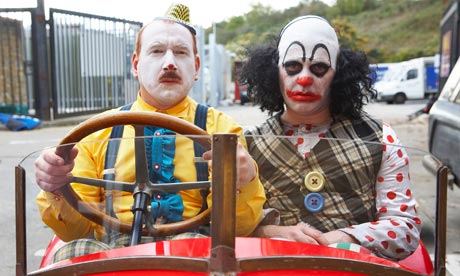
Omar is the head of a small unaffiliated terrorist cell in England. He and his friends are surprisingly sympathetic in how pathetic they are. All of them feel insignificant so when given the idea that to martyr themselves would make them heroes they jump on it. Sticking out like a sore thumb in the group is Barry, a man of British descent who is actually the most militant of them all. Omar and Barry clash when the former is invited to a training camp in Pakistan because his uncle is involved. The films jumps back and forth with an episodic nature, and will with out a doubt challenge you because its characters are incredibly endearing. Part of your brain roots for them because they are classic underdogs, but then the intellectual side steps in and says you can’t root for people who plan on blowing themselves and others up for an imaginary concept.

There are some great comedic moments in the film. I loved that to stay under the radar of British officials, the cell communicates via a Puffin Party webchat for children. The chat requires them to have multicolored puffin avatars. At one point, the car breaks down and Barry blames it on the Jews, at which point he is asked which part of the engine is Jewish, and a conversation ensues. Barry also demands they swallow the SIM cards from their cell phones, after which Omar reminds them the SIM cards can still be tracked inside them. Much comedy comes out of the training camp sequence, and I won’t ruin the big reveal of its largest gag but its a good one.

What shocked me was how, during the final sequence when the crew has assembled to perform the bombing during a cancer fun run in London, I felt incredibly sad for them all. Omar especially sees it as wrong to get Waj, the simpleton of the group, to blow himself up. The end credits are composed of fictional news reports about the events in the film, and they made the story feel even sadder. Instead of going the easy route and presenting terrorists as one dimensional monsters, Morris makes them painfully real and relatable. The result is that we still believe terrorism is wrong, but its because of the waste of life that is the result. Omar has a loving wife who is not an oppressed woman and a son who loves him unconditionally, so his sacrifice feels incredibly empty.

Film Review – The Heartbreak Kid (1972)


The Heartbreak Kid (1972, dir. Elaine May)
Starring Charles Grodin, Cybil Shephard, Jeannie Berlin, Eddie Albert

If you have only seen the 2008 remake of this film, then you are missing out. Where the Ben Stiller-driven version works to make you actively dislike his bride and everything is wrapped up in a nice neat package, Elaine May’s film makes Lenny a completely narcissistic prick. The result is a very dark, clever comedy that ends on a note of ambiguity. Unlike most comedies, this will remain in your head for a long time, thinking about what the result of this character’s choices will be. This is also the best performance from Charles Grodin I have ever seen, turning his smarmy asshole persona up to high.

Lenny (Grodin) meets and quickly ends up engaged and married to Lila (Berlin). As they head south for a honeymoon in Miami, Lenny grows quickly repulsed by her. Upon arriving, he meets young WASP Kelly (Shephard) and quickly falls for her. He begins coming up with absurd excuses to leave the hotel room as Lila treats a nasty sunburn. Lenny eventually decides he’s going to divorce Lila and follow Kelly back to Minnesota where they will start a life together. There’s just the matter of her father, who happens to hate Lenny.

In the remake Ben Stiller’s Lenny is a lovable schlub who has crazy best friends who help him out. In that film you’re made to want him to leave his horrible wife and be with the sunny, charming new girl. Here we get a much more realistic story, any one that would do this to their wife on their honeymoon is a pretty cruel, selfish person. There’s an implication that Lenny only ends up married to Lila because she won’t have sex before marriage, and after their wedding night, he begins actively looking for reasons to hate her. Grodin plays Lenny as a sociopath, a man who constantly lies to worm his way in and out of situations. He manages to balance his performance by making Lenny a likable guy too, the audience is meant to be conflicted. The same can be said about both female leads, too. Lila is a sweet, loving woman but also kind of obnoxious. Kelly is incredibly beautiful, but also very fickle and cold.

I haven’t seen too many Neil Simon films (he scripted this one), but I got the feeling this is not his typical type of writing. Director May has brought her comedy chops to the table, coming out of Second City and her comedy partnership with Mike Nichols. The humor here is nuanced and dry, and its perfect for this story. There’s no slapstick set pieces, just characters engaged in conversation that has the tempo of perfectly normal speech, but when we pay attention to what they are saying, we see just how screwed up they (particularly Lenny) are. Interestingly enough, this picture makes a great companion piece to Nichols’ own The Graduate, both about the ennui experienced by immature men.

Director in Focus: John Cassavetes – Big Trouble


Big Trouble (1986)
Starring Alan Arkin, Peter Falk, Beverly D’Angelo, Robert Stack, Charles Durning

Big Trouble feels like a defeat. It’s the defeat of an extremely independent personality who made films that he wanted to make, not caring about building a large audience. With Big Trouble, Cassavetes gives in to the studios and it seems poetically appropriate that he died after making this film. The picture is an unofficial follow up to Arthur Hiller’s The In-Laws (1979), and Hiller was originally attached to direct until fights with the studio caused him to leave. Bring in Cassavetes (such a bizarre choice, but I suspect his friendship with Peter Falk played a part) and you have a film that is shredded so brutally in the editing bay by the studio that any humor that might have been gleaned from its piss poor script is lost.

Leonard Hoffman (Arkin) is an insurance salesman with triplets who have all been accepted to the music program at Yale. This has sent him into a breakdown as he tries to gather the funds to get his boys into school. Cue the sultry Blanche (D’Angelo), a woman looking to purchased an insurance policy for her ailing husband, Steve (Falk). She confides in Leonard that she and Steve plan to have him die at home via pills, the stage it to look like an accidentally death. They need Leonard’s help so that Blanche will be provided for in the wake of Steve’s demise. Leonard agrees, especially when he will receive a cut of the policy after it is paid out. However, once the scheme is hatched Leonard learns the truth about this deal and painfully unfunny hijinks ensue.

You can feel Cassavetes on set, tossing the script aside and encouraging Falk and Arkin to improve a lot of their scenes together, but it never works. Whether is was a lack of rehearsal before filming or studio suits of set hindering Cassavetes. It also reeks of multiple script re-writes with the film shifting tone and plot about three times along the way. Characters show up and vanish, and a terrorism subplot is thrown in at the end as a deus ex machina. The film is purportedly a farce, but seems to only be in the loosest sense. I get the feeling the people behind the film believed all you needed for a farce was an incoherent plot. The film chokes and sputters to its weak conclusion.

Looking back at the work of John Cassavetes, I can’t say he is a director whose work I consistently enjoy. I respect the hell out of his very personal and independent style of filmmaking, but honestly I am relieved to be done with his films. There were lots of strong highlights for me: Shadows, A Woman Under the Influence, Love Streams. However, to get into his movies you need an incredibly strong sense of patience, but for many of them you will be rewarded if you stick with the picture. I am also in awe of Gena Rowlands, who is now one of my favorite actresses. She was unafraid to look “un-ladylike” and uses her age as a plus. I can’t see a woman in her twenties or thirties delivering the level of performance that Rowlands brought.

Viewing Habits

Here’s what my weekly tv habits look like. Feel free to comment on what you think about my choice of shows, or recommend something you think I would like. Remember, I am not a fan of the procedural drama.

Sundays
Mad Men (AMC)
True Blood (HBO)
Hung (HBO)
Delocated (Adult Swim)
Childrens Hospital (Adult Swim)

Tuesdays
Ideal (BBC)
Louie (FX)
Big Lake (Comedy Central)

Wednesdays
Top Chef (Bravo)

Netflix
Dexter (Showtime)
The State (MTV)

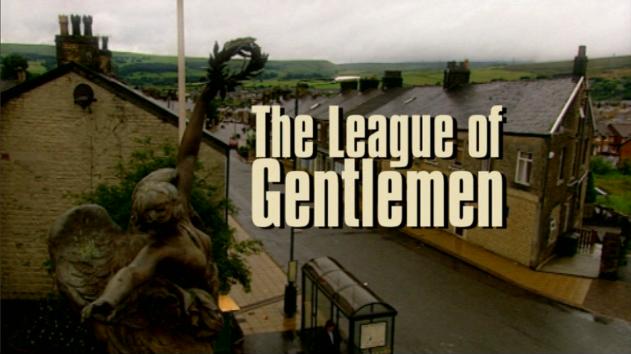
Across the Pond: The League of Gentlemen and Psychoville


The League of Gentlemen (1999-2002, 19 episodes)
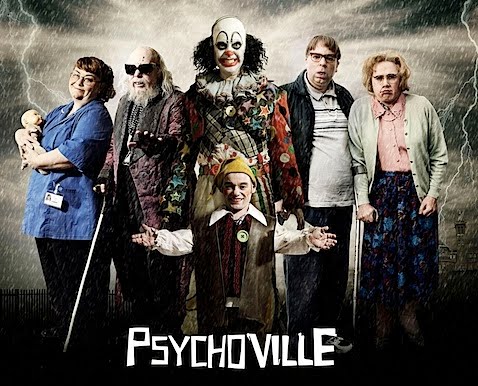
Psychoville (2009, 7 episodes)
Created by, Written by, and starring Mark Gattis, Steve Pemberton, and Reece Shearsmith

“Black comedy” doesn’t begin to describe the shear depths of depravity the work of Gattis, Pemberton, and Shearsmith reaches. There are moments in the latter seasons of League, and all throughout Psychoville, where the audience has to question if the shows are still comedies, or if they have become some other genre of television. The level of gore and perversity that occurs in the third and final season of League is extraordinary. Its as if the performers had held back for the first two years and then unleashed the show they truly wished to make: one where not a single character is without sexual or psychological damage, yet are painfully sympathetic. So too in Psychoville are characters who are even more disturbed and who you feel even sorrier for by the end of the series. These three British titans of comedy have managed to create an impressively larger fan base for the kind of shows American networks wouldn’t touch with a ten foot pole.

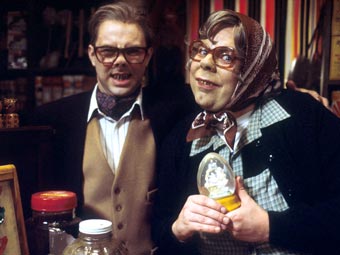
Gattis, Pemberton, and Shearsmith came together in 1994 and began developing a collection of eccentric and disturbed characters for stage and radio. By the end of the 1990s they had garnered enough attention for their own BBC series. The television show was set in the fictional Northern England town of Royston Vasey, where every citizen seemed to have a dark secret and proclivity. The first season centers around Benjamin, a young man who is visiting his aunt and uncle in Royston while hiking with his friend. Benjamin finds that as hard as he tries he can’t seem to get out of town. Along the way we meet Hilary Briss, the town butcher with a very special selection; Barbara, a pre-op transsexual cab driver; Mr. Chinnery, the town vet who kills every animal he tries to save, and many more. The most famous of the denizens are Edward and Tubbs, a pig-nosed couple who run “a local shop, for local people”. When outsiders wander in they are typically murdered in a brutal fashion by the couple. Needless to say, crews arriving to build a highway from London to Royston are met with some resistance.

The three seasons of League go through many aesthetic changes. In the first series there are a mixture of on location and studio filmed scenes. In series two things become much more on location, but the laugh track remains. By season three, every thing is on location and the laugh track is gone. The result is that season three highlights the darkness of the show’s premise. The creators also amp up the drama and make these characters three dimensional. Psychoville is a continuation of the themes of League with new characters. This time around the five main characters are all being stalked by a masked figure whom sends them letters hinting at a transgression that links them all. British comedy legend Dawn French plays a maternity nurse obsessed with bringing her dummy baby doll to life by feeding it human blood. Pemberton and Shearsmith play multiple roles, in particular an Oedpial mother-son serial killer team. Psychoville is not as collectively strong as League, but some individual episodes really stand out, particularly the fourth which is an homage to Hitchcock’s rope. The entire episode takes place in one room and is filmed in two takes. Pretty impressive.

The entire League of Gentlemen series is available on Netflix
Season One of League of Gentlemen is available for free on YouTube

In Theaters Now: Scott Pilgrim vs The World


Scott Pilgrim vs The World (2010, dir. Edgar Wright)
Starring Michael Cera, Mary Elizabeth Winstead, Kieran Culkin, Mark Webber, Alison Pill, Johnny Simmons, Anna Kendrick, Jason Schwartzmann, Brandon Routh, Aubrey Plaza, Chris Evans, Mae Whitman

EPIC!

This is the official film of the Nintendo Generation, from the opening Universal logo to the final battle, the film is painted with pixelated brush strokes of late 80s video game fandom. Its also the closest I’ve seen director Edgar Wright come to recreating the style of humor found in his wonderful British series Spaced. These are the same kinds of people that populated that television show, just born a couple decades later. They have the same idiosyncratic obsessions and quirks just colored in an 8-bit aesthetic. This also marks a major departure for Michael Cera who has made a career on playing the lovable loser. The Scott Pilgrim character is a real asshole, especially to the girls in his life, and Cera does a good job of shifting his style of acting to fit Pilgrim. Simply put, this is the best date movie/action flick of the year.

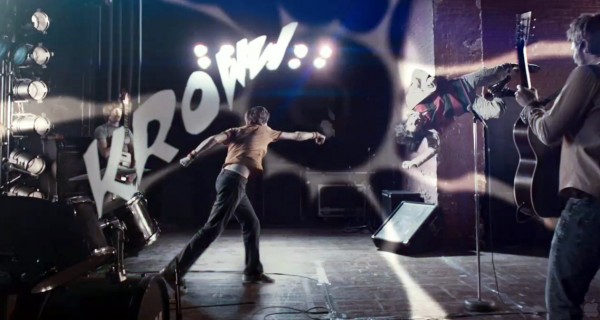
The story takes us to the snowy streets of Toronto where Scott plays bass in Sex Bob-Omb and has upset fellow bandmates by dating the 17 year old Knives Chow. His dalliance with Chow is usurped when the mysterious Ramona Flowers crosses his path. Once they start a relationship its quickly revealed that Ramona’s seven exs have formed a villainous league who are intent on destroying anyone who dares to date her next. In this world you don’t need to be a black belt to fight like a character out of Mortal Kombat, and no one questions when Scott drops his bass and flies into the air to clash with ex after ex. This is a world where the line between game console and reality are blurred.

The humor here is so wonderful, its geeky and silly and the film never takes it self too seriously. Its the kind of thing you expect from Edgar Wright. Characters talk in a hyper real way, popping in and out frame when ever they are needed. The standout in the cast for me was Kieran Culkin as Scott’s gay roommate Wallace. Wallace is devoid of stereotype and is simply a perfect compliment to Scott’s often immature relations with the female of the species. The rest of the cast hits every note they needed to. None of the characters are all that fleshed out, by the conceit of the film is that they don’t need to be. This is a live action video game so characters are more types rather than three dimensional. Despite that lack of character dimensionality, the film does an excellent job of world building. While the far edges are kept blurred, the world of this fictional Toronto feels like it is bursting with life with so many characters passing through the frame.

It’s a shame the film didn’t have a bigger opening and appears to be quickly fading from theaters. It is Wright’s highest opening film though, almost twice as much as Hot Fuzz. The thing about Scott Pilgrim is that it is not ever going to appeal to a mass audience. This is a film made squarely for people who were kids when the Nintendo was released and were obsessed with it. It doesn’t have the mass guy appeal of The Expendables or the mass gal appeal of Eat Pray Love. Though, I’m willing to bet it is much much better than either of those films.

Shadows in the Cave: A Town Called Panic


A Town Called Panic (2009, dir. Stéphane Aubier, Vincent Patar)

This is a singularly unique French language animated feature that highlights something I have always loved in French animated movies. They are able to construct an elaborate and rich universe in a little over an hour. A Town Called Panic is a surreal and bizarre picture that is using a style of stop motion animation that is hard to describe. The characters are designed to look like toy figurines of cowboys, Indians, farmers, and other people. There are no moving mouths and no facial animations, simply very frenetic body movement and voice acting that nails the weirdness of this world.

The appropriately named Town Called Panic is a place where crisis is an everyday occurrence. In one large house lives Cowboy, Indian, and Horse. Horse is the level headed of the trio and in love with a fellow equine who teaches music as the conservatory in town. Its Horse’s birthday, so Cowboy and Indian order 500 bricks to build a barbecue, however, a typing error makes that 5 million. The result is that their house is crushed by bricks. Every day they rebuild, but every night the entire house disappears. They stakeout one night and discover the weird truth behind things.

These are all hyperactive and manic characters, save Horse who keeps a level head. Part of the humor are Cowboy and Indian’s sudden leaps from passivity to complete and utter chaos. They scramble about trying to cover their errors but inevitably make things worse. There’s also a lot of humor from moments where you would expect characters to panic, that Cowboy and Indian are surprisingly unphased. Its comedy that doesn’t have any profound message or point, its akin to early Looney Toons where stories were given over to chaos and insanity.

The jokes never become vulgar or profane, so its a suitable substitute for typical maudlin family fare. In many ways I saw similarities to The Triplets of Belleville, both films created very specific characters that are richly detailed while using broad strokes. It’s also a statement against the current domination of CG animated features. At the end of the day, its not the bells and whistles an animated film can lay claim too but the creativity and inventiveness working behind the scenes.

Podcast Recommendations: Comedy and Everything Else

Comedy and Everything Else

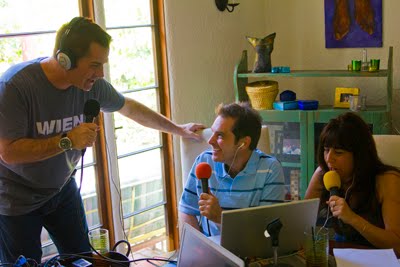
I am a big podcast nerd, particularly comedy podcasts. I love hearing my favorite comedians on a weekly/monthly basis instead of waiting for their next album, which might not ever come. I came across Comedy and Everything Else by accident while browsing through the podcasts on iTunes. What caught my eye was that it featured one of my favorite comedians, Todd Glass. The other two names attached (Jimmy Dore and Stefane Zamarano) were completely new to me at the time. What I discovered was a podcast that was both funny, but also explored the nuances of comedy and how comedians view their craft. The episodes are long, many topping over two hours, and I love it. The conversations these people are having are the kind I want to listen to for hours and hours more. The earlier episodes are a little rough in terms of sound quality, but they improve quickly.

The focal point of CEE is Jimmy Dore. Dore is a Chicago transplant to L.A. and comes from your typical large Irish-Catholic family. He’s worked with Doug Benson and Arj Barker’s Marijuna-logues and a highly rated Comedy Central special, Citizen Jimmy, in 2008. Dore’s focus in comedy is on the political, though he works to keep from becoming didactic and aims for a tone of satire in his work. His paramour is fellow comedienne and improvisationalist, Stefane (pronounced Steh-fuh-nay) Zamarano. The duo collaborate on the regular feature “Tuesdays With Moron”, wherein Jimmy has a conversation with himself as the ultra-conservative, Fox News uber-fan Moron. Stef plays Moron’s constantly nagging in the background wife, Terese. Sadly, Todd Glass left in the fall of 2009 after a falling out with Dore. The details of the bad blood has not been publicly released but the absence of Todd was definitely felt while the show worked to redefine and regroup. Glass recently returned to the show as a guest for the 100th episode and, since he suffered a heart attack a few months ago, has reunited with Dore and Zamarano and the conflict seems to have passed.

On the most recent episode, Dore has tackled a controversy in the comedy community surrounding a “Comedy Boot Camp” run by comedians Kyle Cease and Louie Anderson. The program came under fire after Doug Stanhope posted a strong missive about it on his blog, calling up notorious comedy class shills from the past. Dore’s three hour interview with Cease is very interesting and allows the comedian to explain what his program is. Cease doesn’t come off in a great light though, and at time sounds awfully defensive towards hypothetical criticisms Dore throws at him. Dore is also very upfront about his feelings towards comedy classes, particularly ones that cost upwards of $3000 for a week of workshops. There’s some interesting talk about when a comedian is ready to sell himself to the television/film industry and about how a comedian pays their dues and learns their craft. If you are a comedy geek like myself, and appreciate comedy as an art and craft, then I think you will enjoy the topics covered and guests who pop up on CEE.

Across the Pond: Snuff Box

Berry. Fulcher.

Odd words on their own, but when you know them in the context of Matt Berry and Rich Fulcher they mean “absurdist comedy”. In the great tradition of Monty Python and Cook & Moore comes this duo of such obscene and pointless humor. The two came to the public’s attention through other projects where they played supporting roles. For Matt Berry it was work on Garth Marenghi’s Darkplace, and Fulcher was an American out of the UCB comedy culture. They met while working on The Mighty Boosh and went on to make a single season of Snuff Box together. The result is some of the best, and often times completely confusing comedy out of Britain. It is definitely unlike anything you would ever see presented on American television, including the most obscure cable channels.

What is the premise of this series? Good question. At the surface level you have Berry and Fulcher, professional hangmen. Throughout the six episodes they will occasionally hang someone, but for the most part they hang out in a wood paneled gentleman’s club, sipping brandy. There’s a hallway they use to get from the club to the execution room that contains doors to other dimensions (?). There’s also skits that feature the actors but as one off characters. It’s a hard show to describe because it actively works to be difficult. And that’s part of the fun. There is really no way for a viewer to predict where a scene will lead. It’s definitely not a series for anyone who’s sensitive about language or sex. Snuff Box pushes boundaries and presents a beautifully dark parallel universe.

It’s hard to say which performer I enjoy best, I believe Matt Berry just barely edges out Fulcher. Berry plays himself as a suave and arrogant ladies’ man, and some of his best scenes are when he tries to woo a woman, discovers she is already taken, and has an incredibly harsh reaction to the news. There’s also a recurring series of skits with Berry entering a clothes shop to inquire about silver cowboy boots on order. Each visit a new, yet equally unhelpful employee calls Berry a name under his breath, Berry lashes out, and the whole thing ends with Berry bloodied in the fight. Fulcher is the dimwit to Berry’s pompous ass, he is constantly duped by Berry, and their is an ongoing mystery as to whom Fulcher’s deceased mother is that he receives a check from her estate every month. Fulcher also discovers a door that sends him back in time, allowing him to meet Berry’s ancestors. Each episode is a total surprise and, because of the amount of jokes packed into each one. Below I’ve posted a couple clips to give you a flavor for the show, because of Berry’s musical leanings the show has a lot of songs.

Shadows in the Cave: The World of Henry Orient


The World of Henry Orient (1964, dir. George Roy Hill)
Starring Tippy Walker, Merrie Spaeth, Peter Sellers, Angela Lansbury, Tom Bosley

When I see George Roy Hill’s name I think of The Sting or Butch Cassidy and the Sundance Kid. I never expected this small, delightful film. This is one of those pictures where New York City is a player along with the actors. There’s that sort of innocent magic about the city as seen through the eyes of our adolescent protagonists. And despite Peter Sellers receiving top billing, this is most definitely not his film. While I love Sellers, I would have hated for his character overshadow the performances of the two young women in the leads. He works perfectly as the awkwardly charismatic pianist paranoid over the two young girls he believes are stalking him. And as life imitates art, Sellers was actually dealing with a real life stalker during the filming of Henry Orient.

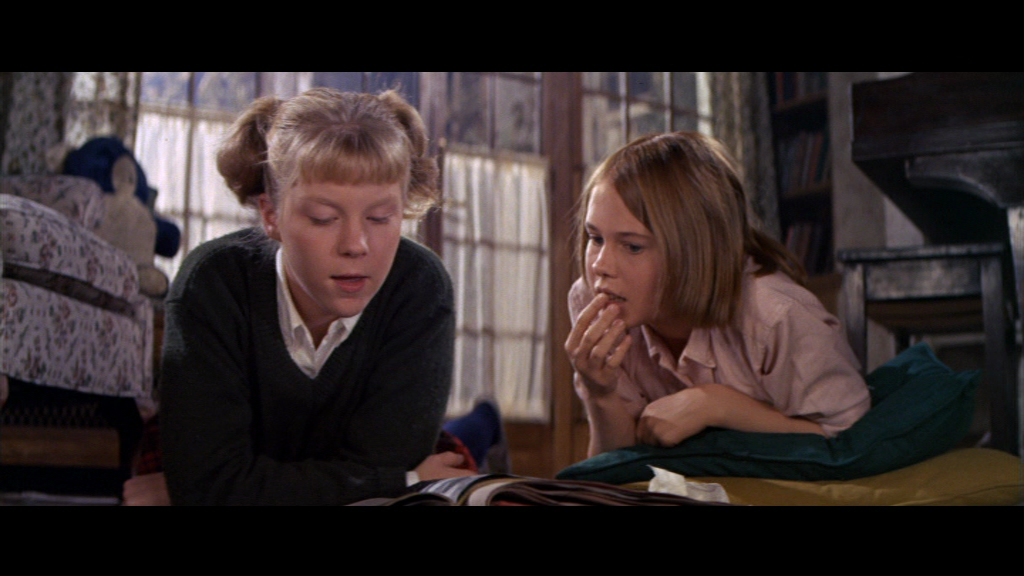
Marian (Spaeth) meets Val (Walker) one morning on the first day of school at St. Mary’s. The two hit it off splendidly and Marian quickly learns of Val’s highly imaginative nature and penchant to go on adventures in the city. During an excursion in Central Park, they happen across a man and woman in the throes of passion. The man spies them and they run off. Later the same day, they run into the man again and eventually learn this is Henry Orient (Sellers), a well known avant garde pianist. Val becomes obsessed with him and dreams that she will eventually woo the befuddled man. From Henry’s perspective these two little girls are harbingers of doom and possibly spies for the husband of the woman he is seeing. The film perfectly balances the comedic misunderstandings and the coming of age story that centers around Val. Her parents (Lansbury and Bosley) come into town and we immediately see that Val’s mother exhibits a strong coldness around her.

The film lives and dies on the performances of the two female leads, and thankfully they picked two great unknown actress for the roles. There’s some interesting elements, particularly in the third act that feel very much of the time, but I’d like to think director Hill was going against the grain up until that point in the film. The girls are very much kids, while parents pressure them to socialize with boys, they really have no interest. They would rather play and, when Val does develop a “crush” on Henry, its never done with any seriousness. Its simply a continuation of the imagined world she and Marian have invented. You can tell Hill actually cares about these two and shows them as three dimensional, intelligent young women, not yet bogged down by the seriousness of the adults. Its reflected in how scenes featuring adults in the movie are never as interesting as the ones with the kids.

It’s interesting to note that rather than casting “superstars”, Hill opted to go with two unknowns and Sellers who was famous, but not as much as other comedic actors. Originally, it looked like the three roles would go to Hayley Mills, Patty Duke, and Dick Van Dyke, and while they are all great actors, the film would not feel as special. The movie evoked such strong emotions of happiness from me, reminding me of the way it feels when summer starts to turn to fall and how intimate and safe the worlds you imagine as a youth can feel. The film has been retold with a contemporary slant in Ghost World (the film moreso than the comic book) and a poster for Henry Orient even pops up in that picture. The film’s greatest feat is balancing adult themes and ideas while never diminishing the sense of joy and play. A great picture that deserves to be known by a larger audience.