Movie Review – Other People

Other People (2016, dir. Chris Kelly)
other-people

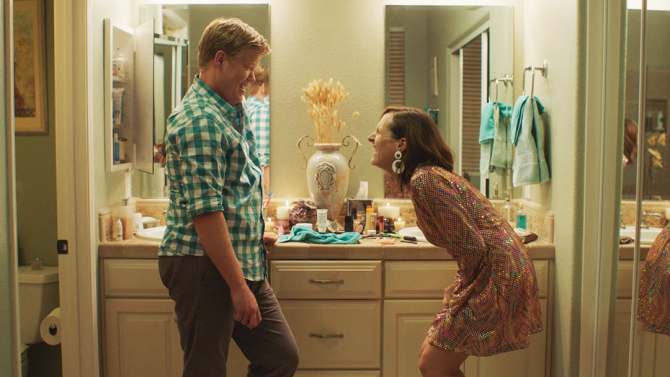
John David is back at his childhood home in Sacramento under heavy circumstances. His mother, Joanne has a severe form of cancer to treat, and the family is coming to terms with the fact that she will not last much longer. David had a falling out with the family in college when he came out as gay and that history resonates now. He feels awkward and out of place with his sisters and father. He does bond deeply with his mother though, and their story is the crux of the film.

Other People is the writing-directing debut of Chris Kelly, a former Saturday Night Live writer who bases the film on his own life and experiences with his late mother. I was admittedly a little trepidatious when starting this movie. The loved one dying of cancer trope has been mined pretty deep by Hollywood for decades, and the results usually feel like emotionally manipulative tripe. The disease is often a lazy way to quickly get the audience to feel for characters without actually building the relationships between the characters on screen. Kelly successfully avoids this and ends up with a beautiful character-focused film, carried firmly on the shoulders of Molly Shannon and Jesse Plemons.

I have never been quite a fan of Molly Shannon’s work on Saturday Night Live. Her style of hyper-maniac, emotionally awkward acting in that venue never clicked with me. Since then though, I have found her film work to be amazing. Her collaborations with Mike White (Year of the Dog, HBO’s Happiness) have been my favorite and it’s because she works so well with White. Other People reveals a new potential fruitful partnership because she arguably gives her best performance to date. Shannon’s sense of humor is present and meshes with the real world around her. She’s not over the top or larger than life. She plays Joanne like a real mother would be, hiding the worst of her illness at times and others allowing herself to vent, only later to feel a bit guilty. The journey she takes Joanne through is remarkable and the inevitable death scene is never played for cheap tears. It’s done off screen and we only see the family seconds after she has passed.

Jesse Plemons is another actor whom I have felt fairly neutral about. I didn’t watch much of Friday Night Lights but saw him in Breaking Bad, The Master, and a few other roles. I’d never actually seen him take a leading spot so I wasn’t quite sure how he would do in Other People. He ends up being quite captivating. The character of David is written so that he’s not an infallible protagonist. He’s often quite selfish and unthinking of anyone outside himself and his own neuroses. There’s definite justification for his hostility towards his father, but the film never just gives him full allowance to be an asshole without consequences. The resolution between he and his father isn’t neat and tidy, lots of questions still hang out there. Once again, like with Joanne’s portrayal, this feels incredibly true to life. Those deep cuts don’t ever get fully healed and family typically either splits or learns to adapt around them. The supporting cast of the film is one of those that you dream of. Lots of improv actors, faces from Saturday Night Live, and great character actors. Paul Dooley, Bradley Whitford, John Early, Matt Walsh, Paula Pell, Retta, Lennon Parham, Zach Woods and more.

Other People is a very well done family drama that exceeds the bar set by our last few illness-based comedy-dramas. It’s characters feel true to life, and they are allowed to breathe and develop so that the death of Joanne feels like it has consequence. You will likely tear up or cry, but the film earns those tears.

Movie Review – Blue Ruin

Blue Ruin (2014, dir. Jeremy Saulnier)

blue ruin

Blue Ruin opens on the image of a bearded man in a vulnerable state. He’s settled in for a bath when the sound of a door disturbs him. We quickly learn he doesn’t belong in this house and is, in fact, a homeless man. Dwight Evans is living along the East Coast, foraging from dumpsters and sleeping his car. An empathic police officer who knows Dwight lets him know a man convicted of murdering people close to Dwight has been released back home in Virginia. Dwight makes the decision to travel back and get revenge. But, to the film’s enormous credit, this man is not a trained assassin and is not taking into account the disastrous series of events he is about to trigger.

Before Green Room, director Jeremy Saulnier helmed this meditation on the price of retribution. Saulnier did not have many films under his belt, but his technical prowess is already apparent here (and if you have seen Green Room). Light and shadow are used effectively to set the tone, and figures emerge from shadows in a way that adds to their menace. Saulnier shows he has an excellent relationship with editor Julia Bloch (also on Green Room). Together they construct such palpable tension and anxiety through minimalistic cutting techniques. Shots linger for just the right excruciating amount of time and cut to the perfect reaction or follow-up shot. That strength in editing connects to the pacing of the script. The story doesn’t get too heavy too earlier. The dissemination of information to the audience is also heavily controlled. The full details of the crime committed that sent Dwight into a reclusive state isn’t revealed until over halfway into the picture.

The lead performance rests on the shoulders of Macon Blair, a loyal Saulnier collaborator. Blair delivers what audiences might misconstrue as “too subtle” or “non-emotional, ” but there is a density of emotion and history in what he is doing. Dwight is a character who crossed a line of emotional exhaustion years ago. He couldn’t survive in the world if he didn’t pass through the tears and rage. So now Dwight approaches each obstacle with a cold duty. He doesn’t care if he lives or dies anymore, he only feels he has to keep living to carry on an obligation. You might not notice, but he barely speaks for the first 20 minutes of the film, about only one line in that time. So the story is being told in his face, and thankfully Blair has a face, particularly eyes that tell a story.

What hit me hard about Blue Ruin is how relevant its themes are personally and globally. At first, this seems to be a straightforward revenge film, but the revenge comes very early in the movie. I found myself shocked at what the rest of this film would be about. Then both the audience and Dwight realize his first error which compounds into more and more. This compounding of errors leads to Dwight forced into killing more people, and this breaks him down. He seeks out help only to keep himself long enough to try and remedy his errors. When the full revelation of the inciting crime comes to light, we enter a space of moral ambiguity. People Dwight believes are guilty of things may not be the ones who did it. They are not innocent by any means, but the circumstances are significantly more complicated than first revealed.

In a world where we hear the phrase “good guy with a gun” uttered often or people spending hours of their lives attempting to justify an assault on people, they disagree with politically, Blue Ruin, without being didactic, asks us to question this. Someone most definitely harmed Dwight and people he loved, there is no doubt about this. But for every act of violence, he commits he doesn’t honor the memory of the people he lost or bring any peace to himself. Violence compounds violence, as I’ve talked about before in the context of Arya Stark. The film ends with a character who makes a choice not to commit violence. They walk away as others destroy each other. This character’s future, and could end up in the same situation we find Dwight in at the start, but by choosing not to kill they are free of the curse, two families have inflicted on each other for years.

Movie Review – Logan

Logan (2017, dir. James Mangold)

logan

I remember being between by freshman and sophomore years of college and going to see X-Men in the movie theater. This was our first introduction to Hugh Jackman as Wolverine. Jackman almost wasn’t this iconic mutant; it would have been Dougray Scott who dropped out of X-Men to play the villain in Mission Impossible III. But now Jackman and Wolverine are constants throughout the X-Franchise, even shoehorned in cameos in First Class and Apocalypse. He is the star of what is roundly considered the worst film of the lot: X-Men: Origins: Wolverine. With Logan, his tenure as this character, and Patrick Stewart’s role as Charles Xavier comes to a close.

We learn at one point that the year is 2029 and for a little, over a year James Howlett aka Logan aka Wolverine has been in hiding with Charles Xavier and another mutant, Caliban. Some catastrophic event occurred that forced these three into the Mexican wilderness. Logan is saving up cash to purchase a Sunseeker yacht and take Charles as far from humanity as possible. Time has caught up to our protagonist. He moves slower and stumbles more often. His claws are impeded by arthritis and injuries that aren’t healing like they used to. While trying to live a quiet life Logan’s path crosses with that of a nurse and a little girl who desperately need his help. There’s one final mission for Logan and Charles where they must struggle past their physical and psychological issues to be heroes again.

In contemplating this film, I realized that we haven’t had a big screen superhero send off like this ever. If we look back at the iconic comic book movie franchise, they more often than not fizzle out and just end with a whimper. Christopher Reeve ended his tenure as Superman with a dismal fourth installment. Michael Keaton left Batman due to creative disagreements. Tobey Maguire danced his way out of Spider-Man with Ted Raimi’s third installment. Christian Bale’s Batman seems to be the only movie superhero I can think of with a proper ending to their iteration, and that is not regarded too well. For close to two decades Hugh Jackman has played this character, even after some films that any of us would have forgiven him from not returning after. So there is a special sentimentality to Logan.

There’s no doubt I loved this film. Will it be on my top ten of the year at the close of 2017? Probably not. But if I were to make a list of best comic book films this is up there. What helps Logan transcend the weight of the convoluted X-Franchise is that it doesn’t need the other films to work. You could switch out the X-Men with any generic superhero team, and the allusions to past events still work just a well. Instead of looking at this as a piece of a larger franchise, writer-director James Mangold smartly chooses to make the film a character piece. I have much stronger memories of the character moments than the action set pieces and that is quite an accomplishment these days in big-budget studio fare. The relationships between the three core characters (Logan, Charles, and Laura) feel honest, and choices they make are affected by these relationships. Logan’s hesitance to take Laura in and embark on her quest is true to his character.

The acting from the three most important cast members is phenomenal. You likely won’t see better performances in another 20th Century X-Picture ever again. Jackman is very comfortable in the skin of Logan and adds more layers with the affliction of age. It would be interesting to go back and watch the action sequences in X-Men and X2, comparing them to the awkwardness and lumbering of Logan in this film. Killing is taking a physical and emotional toll on the protagonist, and we see it how he slows down, how he falls. I have to say I don’t think I have ever seen Patrick Stewart in a role quite like this. The staid, headmaster of previous films is gone, and now we have a very broken, crass, angry Charles Xavier. He floats between states of consciousness due to medication, and when he does gain clarity of mind, it brings up tragic truths Logan sought to bury from his mentor. Dafne Keen as Laura delivers a very powerful performance. She is forced to hold her own against Jackman who is giving probably his best work, and she never flinches. For the majority of the film Keen is non-verbal and how an actor does in a role that asks them to act through reacting is a great litmus test. She has the makings of someone very special because she understands Laura isn’t just an angry Lil’ Wolverine. There is history beneath the surface, and she chooses to reveal that in interesting ways.

There are strong allusions to other films. The most obvious is the 1953 Western film Shane which Charles and Laura watch in a hotel room. The ending monolog of Shane is quoted in Logan’s climax, and it pretty much spells out the themes and ideas Mangold is aiming for. I don’t enjoy this element of comic book films, where at some point characters or the director put up big neon signs that point at what we’re meant to learn from the picture. I’d prefer to infer theme from watching the story unfold, and this element is a big part of why Logan isn’t going to end up as one of my top favorites of the year. Just a personal preference, but one that has always had me keep comic book films at arm’s length. There is also a moment in the third act that is blatantly nodding to Mad Max Beyond Thunderdome, and I loved that film acknowledge it was taking a lot of inspiration from the structure of those films.

If I could just end the X-Men franchise with this film, I would. 20th Century Fox has other ideas it seems. I hope that they look at Logan not for what it is on the surface, but for what it represents in the way comic book properties can work beyond just four color summer tentpole action. In the hands of the right creative people, these characters can be elevated and be central to stories that go much deeper than audiences expect.

Movie Review – Entertainment

Entertainment (2015, dir. Rick Alverson)

entertainment-rick-alverson-gregg-turkington-1

Entertainment is an anti-film. It is the opposite of life affirming, life refuting. It is a road trip to nowhere, about a man who fails to find himself and instead lost forever. Entertainment is purgatory. This is the intent of director Rick Alverson, who helmed the abrasive 2012 independent film The Comedy. In the same way that Tim & Eric deconstruct comedy, Alverson is breaking down the aimless dreamer in search of their dream.

The focus of Entertainment is an unnamed Comedian (played by Gregg Turkington). While the protagonist may be nameless, fans familiar with Turkington’s stage persona of Neil Hamburger will know that this is a fictionalized version of the performer. The Hamburger persona is an assault on the audience of his comedy shows. His material is exaggeratedly homophobic, misogynistic, grossly sexual, and crude. The concept behind this is a comedian who thinks so little of his audience he believes this is the best they deserve. Contrasted with this is Turkington endlessly waiting between shows. He goes on local tours of industry in the Southwestern United States: an airplane graveyard, an oil field, a ghost town built as part of a mineral boom. The landscapes he walks through are husks.

The Comedian himself is a husk. He’s in his forties, performing at low-end dive bars or worse. The first location we see him at is a prison. His last location is at the birthday party of a spoiled rich, aggressive man (played by Tim Heidecker). That final performance concludes with The Comedian bursting out of a cake and bursting into tears. He ends up spending time with a financially successful cousin (John C. Reilly) who tries to advise him on his comedy act, continually saying it’s great but then talking about making it appeal to “all four quadrants.” As we get to know the cousin we see his misery come to the surface as well.

Two constants refrain throughout the film. The first is Eddie the Opener (Tye Sheridan) a clown/mime who opens The Comedian’s sets. Eddie hasn’t been worn down by the road yet. He shares the cynicism of The Comedian towards the audience but takes joy in the performance. The other refrain is The Comedian’s nightly voicemails to an unseen estranged daughter. He expresses frustration eventually at his inability to get a hold of her, the messages growing more and more desperate.

Both Turkington and Alverson have a keen interest in discomfort and provocation. In an interview with Vanity Fair, Alverson explains his personal view on “positive” cinema:

There’s a common insistence that representations of the positive lift us up and buoy us. I’ve never experienced that. At least not in a prolonged way. The idea of resolution has always seemed weird to me. I think if a movie has any naturalistic pretensions or elements in it at all, it needs to respect and represent the disjointed and difficult nature of the world. You can’t solely promote a fantasy version of the formal experience of living. There’s a necessity for a kind of balance in the field—90 percent of the fare for American audiences operates by those conventions and leaves the viewer satisfied in a very tidy, efficient way. They are unaltered in a way that is so disconnected with our daily experiences. Both The Comedy and Entertainment are in a long tradition of cinema flirting and pushing back against that impulse.

Entertainment is not a film that will appeal to everyone. Because some moviegoers have that expectation of films making them feel good, they are going to react angrily at movies like this. I suspect Alverson would welcome that reaction. The majority of movie studio fare is emotionless, just a series of dramatic formula plot points, but never anything that evokes honest emotion. It’s important that we have films like Entertainment and The Comedy because they remind us that the emotions that rise out of dissonance are some of the most real movies can make us feel.

Movie Review – Into the Forest

a24 visions

Into the Forest (2015, dir. Patricia Rozema)

into-the-forest

It’s hard to pinpoint just where Into the Forest goes wrong, but at some point, I found myself completely disengaged with the film. It tells the story of two sisters, Nell and Eva, stranded at their family home in Northern California, about 32 miles from the closest town after an unexplained global event destroys the power grid and sends society into chaos. The two sisters struggle to survive when they end up without anyone but each other. Through a series of trials and challenges, they learn to let go of their reliance on technology and reconnect with the natural aspects of the forest around them.

Continue reading “Movie Review – Into the Forest”

Movie Review – Krisha

Krisha (2015, dir. Trey Edward Shults)

krisha

Krisha is a story that could have easily fallen into cliche and melodrama, but the deft hand of first-time feature film director Trey Edward Shults elevates this story and these characters into something transcendent and horrifically beautiful. Krisha is a woman in her early 60s, reunited with her estranged family after an undetermined number of years. It’s Thanksgiving, so her sister Robyn has the house full of siblings, spouses, and children. A niece has just become a new mother, and the baby is a the center of everyone’s attention. Later in the day, even the matriarch is brought over from her nursing home. As most people can relate, there is a tension underlying the joyful reunions happening, particularly on the part of Krisha. She has suffered from substance abuse, and individual family members are not sure of what condition she is in at the moment.

Krisha’s arrival sets the stage for the tone of the film. The camera hovers above and floats down, following her as she goes to the wrong house and then drags her suitcase across the lawn to the right one. In both the aesthetics and details of the performance we are being informed about who this person is. Krisha is overly cheerful but a mess in her action, disorganized and overwhelmed. It’s explained she lives by herself, but it’s more than that. Her sister Robyn raised her son, Trey and the circumstances are never brought to light. It is apparently tied to Krisha’s substance abuse, though.

We’ve all likely met Krisha, either as a member of our family or a passing acquaintance. She just can’t seem to get her life in order, was probably labeled a “free spirit” when she was younger but now it’s worn on the people around her. Some small gestures and details develop her character without the film ever becoming expository. When she is finally reunited with her mother, the elder woman has a strange aside about her mother. She states that the great-grandmother was a gorgeous woman who always seemed ashamed of where she was from. This causes Krisha to step back in shock, and the implication is that this story may be very similar to Krisha’s experience and what led her away from her family.

Shults is powerfully skilled for such a young filmmaker, and it is evident he has influences from the American canon. The tension built with a wandering camera and taught percussion feels at home next to Paul Thomas Anderson’s Punch-Drunk Love. The naturalistic exchanges between family members and the overlapping family conversations is very much a stroke of Robert Altman across the screen. Star Krisha Fairchild is undoubtedly making reference to the great Gena Rowlands (A Woman Under the Influence, Gloria) in her performance. This film is a beautiful homage to the great directors of the American independent cinema.

One aspect of the film that may not be readily apparent while watching it is the personal connection it has to the director and actors. This is Shults’ real family. Krisha is his aunt, Robyn is his mom, the home is his mother’s house. In interviews, he’s explained that the central character is not based on any one person but a combination of troubled family members. His father was estranged from the family and died as a result of substance abuse a few years ago. The explosive incidents in the film are drawn from a cousin’s outburst at a family gathering, a cousin who ended their life months later.

Krisha is a tragic and powerful film. It is one of those works of film that embeds itself under your skin. Shults’ next work It Comes At Night looks to be a powerful exploration of human relationships in the face of horror. I am excited to see Shults expand his craft and continue developing this talent of building tension and atmosphere.

Movie Review – Hunt for the Wilderpeople

Hunt for the Wilderpeople (2016, dir. Taika Waititi)

1200 (1)

Ricky Baker is a young boy in New Zealand who has reached the end of the foster system. This brings him to a farm on the edge of Bush and into the lives of Bella and her husband, Hec. Bella immediately takes a shine to Ricky while Hec remains on the sides and grumpy. Events transpire that force Ricky and Hec to endure each other in the dark reaches of the Bush. The public believes Hec has kidnapped Ricky and manhunt ensues that forces the two to become family, yet not lose their respective abilities to irritate the other.

Director Taika Waititi gathered a significant amount of interest with his mockumentary What We Do In Shadows, chronicling the days of a quartet of vampire roommates in Wellington, NZ. Previously he had helmed smaller independent films Eagle vs. Shark and Boy. Throughout his work, he is a constant collaborator with Jemaine Clement of Flight of the Conchords fame. And, if you are familiar with that comedy duo then the style of humor present in Waititi’s work is strongly comparable. The jokes are very silly, very dry and everything holds a sense of endearment for the oddball quirks of the characters.

Wilderpeople is a film of many techniques and themes, and it could have easily fallen apart trying to carry so much weight. Miraculously, it balances all of these elements and presents a story that is both rife with pathos but never maudlin. There are sweeping epic helicopter shots of characters traversing the wild, yet the movie maintains a very intimate, independent tone. Characters are absolutely silly and absurd, but we never lose sight of the humanity the film is in touch with. In many ways, Wilderpeople feels like a movie you would have stumbled across in the 1980s, an emotional and smart cult classic that would grow in popularity year after year.

What so many American studio comedies get wrong is the idea that improv equals funny now. This is easily seen in the dozens of comedies released that have hours of deleted scenes where actors merely riff. Wilderpeople delivers its seemingly improvised comedy so effortlessly that the craftsmanship of writer-director Watiti is an invisible hand. And that is the hallmark of not just a good, but a great director, that they recede into the film and that its voice is singular yet diverse. The film has an overall sense of style and humor, but each character speaks in a way that is true to them. The supporting cast are remarkable, and my particular favorite is Rachel House (you probably heard her as the grandmother in Moana) as Paula, the absurd social worker who seems to simultaneously love and hate Ricky.

This picture has me excited to see what Waititi does with Thor: Ragnarok. Marvel Studios made headlines when Edgar Wright dropped out of Ant-Man citing the studio’s desire to focus on the franchise connections between its movies than allowing diverse voices to emerge out of the work. From the visuals I’ve seen, it appears this next Thor movie will be very different from its predecessor’s. My greatest hope is that Waititi’s sensibilities for voice and humor are allowed to come through.

Movie Review – Girl Asleep

Girl Asleep (2016, dir. Rosemary Myers)

girlasleep

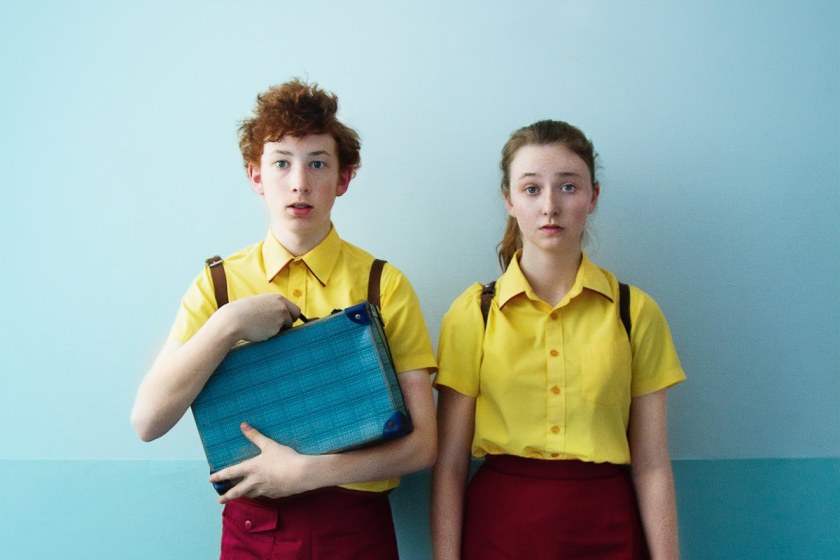
14-year-old Greta Driscoll has just moved to a new town and like many adolescents is having trouble fitting in. She makes friends with the kind, but awkward Elliott and quick enemies with Jade and her mean girl crew. Things get worse when her mother decides to invite everyone at her school to Greta’s 15th birthday party. Greta is crushed after being humiliated by Jade during the party and ends up slipping away into a magical world just beyond the woods of her home.

From the first moments, there is a strong Wes Anderson vibe to the aesthetics of the picture. But I knew there was something slightly different I couldn’t put my finger on. After a few more scenes it was apparent, this film has much more overt warmth than your typical Anderson fare. Don’t get me wrong, I love Wes Anderson, but I have rarely had a strong emotional reaction to any of his films. Girl Asleep has all the quirky characters and the style, but with a sense of life and energy, Anderson’s films intentionally refrain from. It is not a perfect movie, though, and while characters are warm and full of life, they are still painted in broad strokes.

Another piece of inspiration appears to the British television series The Mighty Boosh. The magical land of the woods and its inhabitants are presented in the style of a young child’s imagination. One central figure is clad in a banana yellow rain slicker with pink and blue crayon tones across their masked face. There’s a high similarity to the costumes seen in Moonrise Kingdom but with zanier, more fantastic visual accents.

The performances in Girl Asleep are excellent and capture the specific traits each character needs to present. Greta (Bethany Whitmore) is vulnerable and fierce, able to balance the many facets of her character going through a period of tremendous growth and change. Elliot (Harrison Feldman) is one of those actors who makes performance look easy. He is effortless and funny, awkward and genuinely charming. Greta’s parents, played by originators of the story on stage, Matthew Whittet, and Amber McMahon, are entirely exaggerated parents without being unsympathetic.

Girl Asleep won’t be my favorite film of the year, but it does take a very well-worn genre, coming of age, and adds some freshness to it. The magical aspects of the story make it something different. The performances, particularly Bethany Whitmore, are very charming and endearing. I could see this being an excellent film to introduce a neophyte film geek to art cinema and non-American films.

TV Review – The O.A.

The OA (Netflix, Season 1, created by Brit Marling and Zal Batmanglij)

585987beaca0591e008b4c65-1920

A young woman is caught on camera jumping off a bridge. She doesn’t die, and an older couple watching television coverage recognize the woman as their daughter, Prairie who has been missing for seven years. The biggest shock comes when they find she has been miraculously cured of her blindness. Prairie hunkers down in the unfinished subdivision her parents live in while meeting an eclectic assortment of young people and a high school teacher. This group becomes her greatest friends, the ones whom she confides the secret of what happened to her in the last seven years and why she no longer goes by Prairie but The O.A.

For the majority of the pilot episode, I wasn’t too keen on the series. Nothing stuck out as particularly interesting. There was a slightly intriguing mystery in The O.A. losing her blindness, but all the pieces felt very spread apart, and nothing was a great hook. Then the last fifteen minutes started. Out of nowhere a powerful musical score swells, the credits begin (which I hadn’t noticed did not play at the beginning of the episode), and we found ourselves in a place very different than where we started. This is where I was hooked. As The O.A. tells her story, it was pretty impossible for me not to become engrossed.

The series hits a note very reminiscent of Lost. Lost was and is one of my favorite television shows of all time. When I reflect back on the first season, I have realized that the mysteries (polar bears, smoke monster, the hatch) while intriguing were not the primary factor that caused me to come back week after week. The relationships between the characters and how they were revealed one piece at a time are what still resonates with me. So many Lost clones got that part wrong and overloaded their pilots with too many bits of strangeness and mystery hooks. They forgot that characters are the core of a good piece of fiction.

The O.A. is a show that is nothing without its characters and their relationships. The obvious center of the show is The O.A. and Homer, two captives who have been to the same places beyond most people’s understanding. Their compressed seven-year relationship is full of trials and struggles and an ending full of beautiful frustration, yet the hope that the story is not over yet. My personal favorite relationship was that of Steve and Betty. Steve begins the show as an incredibly unlikable teenage prick. He is a drug dealer, obsessed with the physical over the spiritual, quick to anger and jealousy. He assaults a fellow student for no particularly good reason. He is someone we should naturally root against.

Betty is a teacher at the local high school who has suffered a loss. None of her colleagues actually know about it, but through a series of circumstance, she and The O.A. meet to talk about Steve. Our protagonist’s supernatural empathy allows her to see beyond the strict authoritarian teacher and seek to understand. The way Betty changes and the way she sees Steve by the end of the series is beautiful. Playing Betty is the remarkable Phyllis Smith, who you may know as Phyllis from The Office. She is one of those wonderful character actors who endear themselves to you. It is easy for an actress like Ms. Smith to be typecast after a long run on a popular network series. But in The O.A. she breaks away from our preconceived notions. She portrays a regular person process a tremendous grief and coming out on the other end an incredibly empowered woman.

This is not a show for everyone. Another similarity it has with Lost is that it features a nebulous type of supernatural. Science and new age philosophy weave together to present ideas that ludicrous so to enjoy the show you have to suspend your disbelief. I would argue that the character development being done is heightened by the more fantastic elements of the show, so they are valuable parts of the overall piece. The O.A. ends on a cliffhanger and a second season has been announced. I am intensely eager to see where the series goes next because it spent its first eight episodes flipping my expectations around at every turn.

The Revisit – Unbreakable

The Revisit is a place for me to rewatch films I love but haven’t seen in years or films that didn’t click with me the first time. Through The Revisit, I reevaluate these movies and compare my original thoughts on them to how they feel in this more recent viewing.


Unbreakable (2000, dir. M. Night Shyamalan)

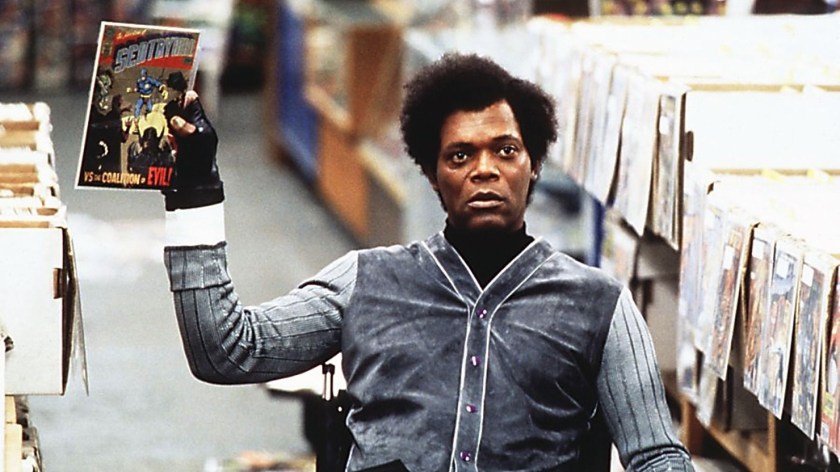
unbreakable-samuel-l-jackson

I can remember exactly when I decided I needed to see Unbreakable. I was in my sophomore year of college, and my friend Sam had seen the film over Thanksgiving Break. He insisted that I needed to see it because of my love of comic books. That struck me as odd because nothing I had seen in the promotion materials had made me think of comic books and superheroes. I had really loved Shyamalan’s previous film, The Sixth Sense, so I was totally up for it. We went to the theater a couple days later.

Rewatching Unbreakable, I was astonished at how many images from that film are burnt into my psyche. I loved the picture after that first viewing, purchased it as soon as it was DVD and watched it dozens of times for the next couple years. I was very likely over-hyped when Signs came out and found myself underwhelmed. Like many filmgoers, the following decade will cause the director to lose most of his cachet with the audience. But Unbreakable serves as a reminder of how amazing a director Shyamalan was/is/could be again.

What struck me the most on this viewing was how measured and quiet the film was. This was a couple years before Sam Raimi’s Spider-Man would shift the movie superhero paradigm and the late 1990s were very unkind to the genre. There is a deliberate sense of grounding the fantastic, but not in a way that disparages their roots. Comic books are lauded through the picture, but the conceit of the film is these four-color tales are exaggerations of a more sedate reality. Yes, David Dunn is incredibly strong but that means he can lift around 400 lbs not and entire jet airliner. The super heroics of Unbreakable are not global or against alien hordes. The evil that is being pointed out is racism, rape culture, sociopathic violence.

I also found myself reconnecting with every character in the film. The aforementioned quiet moments are always character-centered and are intended to build on what we know, either adding to our knowledge or subverting it. We deeply understand the strained relationship between David and Audrey, the admiration of Joseph for David, the tug of curiosity Elijah elicits from David. No character ever makes a move that feels contradictory to what is previously established and so you find yourself floating effortlessly through this organic story. There is the now cliche Shyamalan twist, but it doesn’t play as contrived. It fits with the groundwork lain through the entirety of the film. It also does something I find myself to drawn to more these days: forgoing having a purely black and white conflict.

The villain of Unbreakable isn’t even really the bad guy. He does evil things, but we spend a lot of time getting to know him, not as much as David, but the moments in his life we’re shown establish humanity and a particular, though skewed, perspective. It’s a perfect example of empathy, which is not agreement but understanding a perspective different than your own. You feel sorry for this person despite the horrible things they have done. I cherish that sort of internal conflict as a viewer, not being able to come down hard one way or another on the character.

I find this period of Shyamalan to be comparable to Nolan in the first part of his career. Both directors have an unyielding sense of aesthetics and the sort of stories they want to tell. They both enjoy building up expectations and then subverting them to varying degrees of success. Where they differ is in Shyamalan’s ability to connect the audience with the characters on an emotional level. He is much less interested in the gritty details and technicalities of the world and more in how these fantastic elements emotionally affect our characters. Nolan is very talented with building intelligent plot machines that unfold in exciting and interesting ways, but ultimately fail to make me feel anything about the characters. The closest I could say Nolan ever got to that was with The Prestige. I don’t think there is any argument that Shyamalan has not ended up with the level of critical acclaim Nolan has garnered, but these early films feel emotionally stronger than Nolan’s work.

If you haven’t watched Unbreakable recently, I highly recommend it. It has definitely held up, better than a lot of films from the early 2000s. It still has relevant things to say about the superhero genre and stands an example that the Marvel formula, as fun as it is, is not the sole method to tell these stories. With the buzz that Shyamalan is working on a direct follow up to Unbreakable, I really hope he understands that the tone and focus on characters is what made us fall in love with the picture in the first place. It would be an incredible shame if he ignores those facts and tries to deliver a more action-oriented film.