Lawless (2012) Written by Nick Cave Directed by John Hillcoat
In 1931, among the foothills of Virginia, the Bondurant brothers were successful moonshine runners. Forrest (Tom Hardy) runs the operations with a cool even hand making sure to reign in wild man Howard (Jason Clarke) the youngest and greenest brother Jack (Shia LeBeouf). They also have the local law under their thumb by sharing some of the product from time to time. Things change when U.S. Marshall Charley Rakes (Guy Pearce) is assigned to the region and works alongside the state’s attorney to pressure the Bondurants into handing over a more significant percentage of their profits. Meanwhile, Jack becomes obsessed with courting the preacher’s daughter (Mia Wasikowska) while Forrest strikes up a growing intimacy with city girl on the run Maggie (Jessica Chastain). Oh yeah, Gary Oldman plays a Chicago gangster who has moved into the area. Movie crowded enough yet?
Cleo is a maid in 1970s Mexico City, working at a home in the Colonia Roma neighborhood for a doctor and his family. The patriarch of the family leaves for a work trip to Quebec which is quickly revealed to be an excuse to leave his family. Cleo works to serve the family while living a private life beyond their gaze. She finds out she is pregnant after a series of dates with her new boyfriend, Fermin. He shows little interest in staying to gather her child and Cleo is left to reveal her condition to her employer. In the background, cultural and political strife in Mexico are unfolding, and from time to time these conflicts cross over into Cleo and her employers’ lives. Otherwise, Roma unfolds as an unassuming slice of life picture.
Cold War (2018) Written Pawel Pawlikowski & Janusz Glowacki (with collaboration from Piotr Borkowski) Directed by Pawel Pawlikowski
In 1949, Wiktor Warski and two colleagues traveled across rural Poland recording the folk music of the peasants. Using these recordings, they open a music school where they audition youths to become part of a traveling repertoire that will highlight the vanishing old world culture of the nation. Wiktor is instantly smitten by Zula, a young woman who shows remarkable will. The two quickly get caught up in a love affair. As the students perform they gain acclaim and interest from the Communist Party who pressures them to write a song about Stalin in the style of Polish folk music. This begins a fracturing and leads Wiktor to plan a defection when they travel to perform in the Soviet sector of Berlin. From there Wiktor and Zula start a thirteen-year-long struggle, falling in and out of love, drawn to each other by some invisible force greater than themselves.
This year I committed myself to read three books at a time: One comic book collection, one fiction book, and one non-fiction book. As a result, I read some very informative books, filling in my knowledge on subjects I realized I only understood tangentially. Here were my favorites, in no particular order, expect the last book which is my favorite.
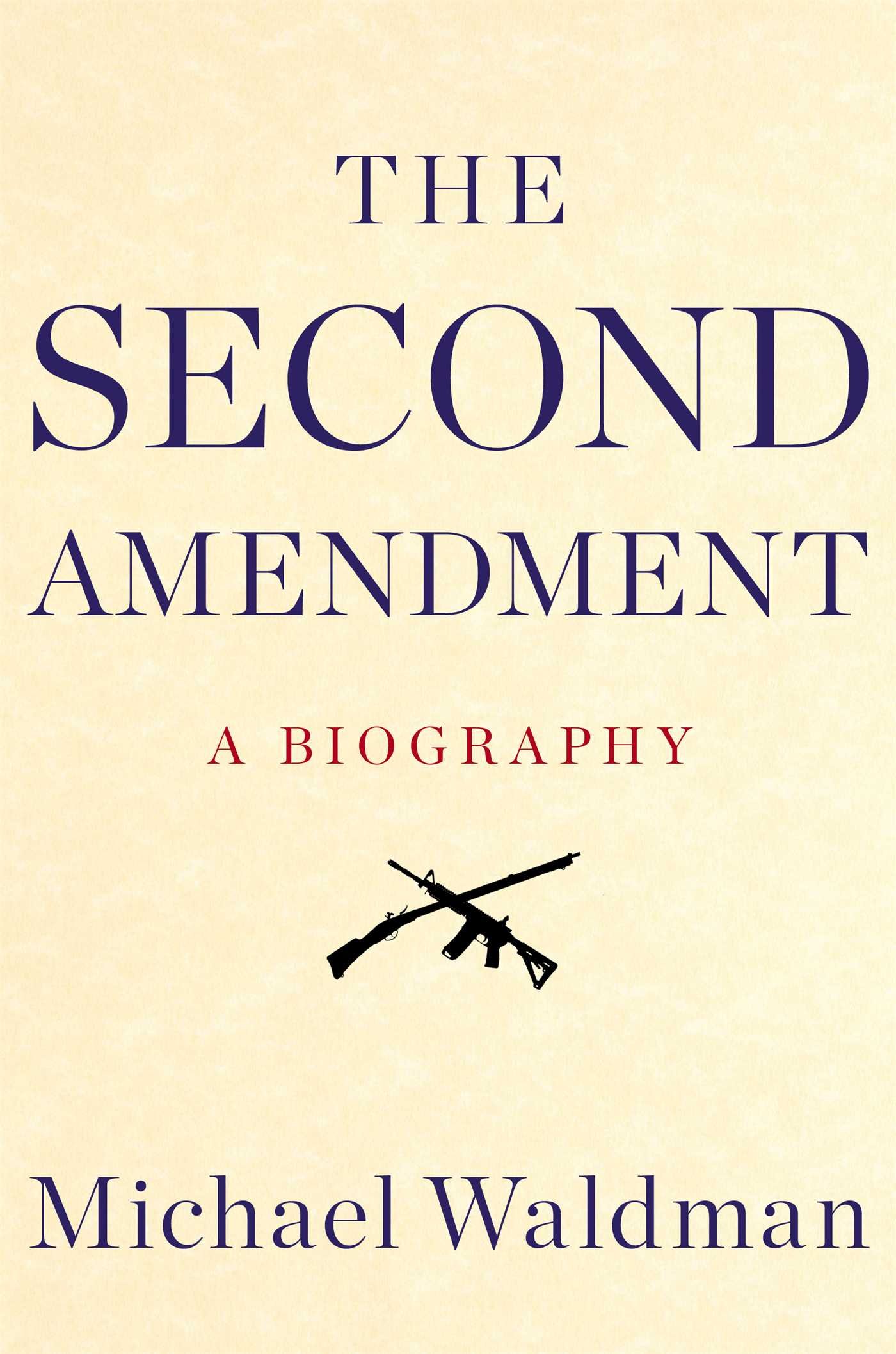
The Second Amendment: A Biography – Michael Waldman After the shooting at Majorie Stoneman Douglas High School in February was moved emotionally in a way that none of America’s previous school shooting tragedies had hit me. I think I’d chosen to be numb to what had gone before, notably Sandy Hook, despite being an elementary school teacher out of pure psychological survival. I knew I had issues with the proliferation of guns in the United States but was unable to articulate my views and wanted to clarify facts so that I could clarify or possibly change my understanding. Author Waldman does an excellent job of giving in-depth explorations of gun ownership from colonial America to the most recent Supreme Court cases surrounding the issue. I walked away having a firmer, never final, viewpoint on an issue and was able to navigate past my emotional response to holding a much more reasoned one, while not eschewing the humanity involved.
First Man (2018) Written by Josh Singer Directed by Damien Chazelle
Neil Armstrong was not averse to challenges. Working as a test pilot in the 1950s and early 60s instilled a seeming never-ending coolness over him. Even as his toddler daughter is dying from a brain tumor, he holds in everything, including from his wife. He only allows the emotions to break through in private. In the wake of his youngest passing, Neil applies to Project Gemini, wanting to put his mind and energies into what seems to be an impossible task, getting humans to the moon. Over the course of almost a decade, Armstrong and his fellow astronauts work through challenges and tragedies to achieve their goal. Finally, Neil and two others are chosen to be the ones to be the voyagers into the unknown.
Woman Walks Ahead (2018) Written by Steven Knight Directed by Susanna White
In 1890, Brooklyn-ite Catherine Weldon traveled to the Dakotas with a single goal: to paint the portrait of Cheif Sitting Bull. What she finds is the Lakota broken from pressures of the U.S. government, forced onto ever-shrinking reservations. Sitting Bull isn’t keen on sitting for this painting, feeling betrayed by the white men he’s been dealing with for most of his life. Weldon takes up the challenge of convincing him while dealing with U.S. forces that would prefer she return home and not become involved in the war that is on the verge of breaking out.
The Favourite (2018) Written by Deborah Davis and Tony McNamara Directed by Yorgos Lanthimos
In the early 18th century, Britain engages with France in war. All of that is unimportant because we are front and center in the court of the highly dysfunctional, depressed, and insecure Queen Anne. She is in the middle of a tug of war between the Whigs (who seek the war to continue until a victory is secured) and the Tories (who are tired of being taxed to fund a seemingly never-ending battle). Showing very little interest in all of these boring matters of state, Anne allows her longtime friend and confidante Lady Sarah Marlborough to handle them. Sarah is quite comfortable by the queen’s side and in her bed until her estranged cousin Abigail arrives. This wastrel finds a place as a scullery maid but wants to regain a position of import. Abigail cleverly listens and observes learning all she can about the court and in particular the specific whims of Anne. A power struggle begins between cousins, Sarah versus Abigail, a polite war that escalates quickly.
The Favourite is a film that left me thinking, without hesitation, “this is a masterpiece.” I am a rare fan of period pieces, particularly English historical ones. However, the lure of director Yorgos Lanthimos brought me to this one. His acidic humor has given us great films like Dogtooth, The Lobster, and The Killing of a Sacred Deer. The promise of more of his particular style combined with the talents of the three actresses helming this production (Rachel Weisz, Emma Stone, and Olivia Coleman) was enough to entice me to the theater with little argument. What I found was a profoundly complex comedy about depression and the nature of codependency. Overlooking the trimmings of the age, the story at the heart of The Favourite is both relevant for our modern political times and our personal experiences.
Queen Anne, played stunningly by Olivia Coleman, is a walking shambles of a human being. The only thing that keeps her going is the fact that she is the queen of England. She’s plagued by nighttime throbs of gout that have forced her to use either crutches or a wheelchair. Anne harbors an infection of sorrow and pain over the death of all seventeen of her children. She cannot even enjoy the simplest of sweets without her stomach going into fits forcing her to vomit it up. The combination of physical ailments and emotional ones has made every personal relationship she has a potentially dangerous one. Any person that gets into her good graces is going to have their lifeforce drained from them. Sarah appears to be managing this as well as anyone can, giving into Anne’s desires while using a stern hand to rebuke her honestly. The film, much to its benefit, never truly makes Sarah’s intentions clear. She’s been friends with Anne since they were little girls and keeps it real with the monarch. However, there is an ever-present unanswered question about what Sarah truly wants. The film makes it clear that no one at Court is there out of goodwill.
Sarah and Abigail prove to be proper foils for each other. Sarah is well versed in the political process, having been raised as a noble since birth. She dresses in a masculine manner after her husband leaves for the war, wearing pants and jackets, allowing her to slide into the realm of men without any question. Sarah can maneuver with ease when it comes to balancing the moodiness of the queen and the demands of Parliament. Abigail acts as a wrench in the gears practicing a more improvisational act to gain the affections of Anne. Abigail appeals to the emotions of Anne; her first gesturing is embracing an element of Anne’s life that Sarah rejects in the opening scene. Unlike Sarah, it is blatantly apparent to the audience that Abigail has a reason to manipulate the queen. She was lost by her father in a card game and spent years with an old man whom she worked to escape. Abigail tells a member of the court that she isn’t on anyone’s side except her own and that fate sometimes causes her side to coincide with another’s.
The Favourite keeps in tone with being a pitch black film as we would expect from Yorgos Lanthimos. He isn’t here to offer a happy ending, but rather an honest one. There’s no way these three characters, after the way they venomously manipulate and emotional torture each other, are going to see the light at the end of the tunnel. They orbit around a figure who is trapped in her neuroses and has been given near limitless power. There’s no real escape, and the hill they scale has no summit. Everything is the mire, and they are wallowing in it.
Lincoln (2012)
Written by Doris Kearns Goodwin and Tony Kushner
Directed by Steven Spielberg
The American Civil War has been slogging on for four years. Hundreds of thousands are dead, and many in the North want it to end. President Abraham Lincoln has been elected to a second term by a landslide and has one thing he wants to spend his political capital on The 13th Amendment. Members of his cabinet and the Republican party are highly skeptical of betting all their chips on this risky Constitutional move. Lincoln is steadfast and works every angle possible to garner the votes. Meanwhile, a peace commission has been sent by Confederate leader Jefferson Davis to end things, but Lincoln knows if peace without the freedom of slaves is on the table the legislators will likely go with peace and nothing else. Time is running out, more than even the President realizes.
W. (2008)
Written by Stanley Weiser
Directed by Oliver Stone
In 2002, President George W. Bush and his administration were seeking strong reasons to invade Iraq. Surrounded by people like Dick Cheney, Donald Rumsfeld, Colin Powell, and Condoleeza Rice, the President wants to avenge his father in a certain way, seeing the conclusion of Desert Storm as an anti-climax against Sadaam Hussein. Through flashbacks, we follow Bush from his fraternity days at Yale through his constant disappointments to his father, the development of his relationship with Laura, and finally his aspirations to seek higher office in Texas. All of this leads to the beginning of the Iraq War and realization of the military action’s failure and subsequent fallout.
The Exception (2017)
Written by Simon Burke
Directed by David Leveaux
Captain Stefan Brandt, a member of Hitler’s Third Reich, is assigned to protect the exiled Kaiser Wilhelm II at his country home in the Netherlands. Once there he finds a former monarch who is hesitant to throw his support behind the Fuhrer. The Gestapo shows up to check out a rumored English spy among the villagers, and Brandt seems rather uninterested in this side hunt. Instead, he becomes enamored with Mieke, a young maid in the Kaiser’s staff. Things suddenly become even more complicated when word comes that SS Commander Heinrich Himmler is coming to secure the Kaiser’s loyalty. Brandt finds himself torn between his duty to Germany, his admiration of the Kaiser, and his love for Mieke.













 PopCult Reviews