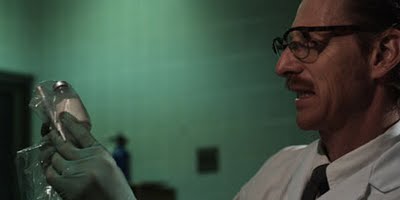
The Boy (2015, dir. Craig Macneil)

Jared-Breeze-The-Boy-Movie-2015

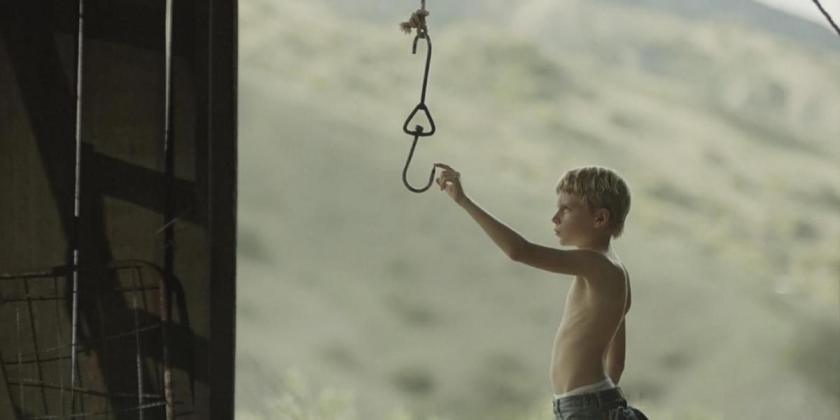
As someone who works with children approximately the age of the title character, watching The Boy is a very interesting experience. It’s fairly well known that during the Victorian Period, the cultural perceptions of childhood changed. Prior, children were seen as small adults and their exposure to hardship and cruelties of life was seen as the norm. In the late 19th century, social justice groups began to criticize the harsh conditions that children were forced to endure and demanded better. Childhood was now seen as a precious, fragile time for these angelic beings to develop. Even Peter Pan was born out of this mode of thinking, along with a myriad of literature aimed at children that approached its material from a place of gentleness. Craig Macneil’s The Boy attempts a character study focused on questions surrounding what happens to a child who has to live through the aforementioned brutality.

Set in 1989, The Boy points its watchful eye on Ted (played with remarkable coldness by Jared Breeze). Ted has grown up at the Mt. Vista Motel, located in some lonely corner of the American Southwest. Ted spends his days collecting roadkill for quarters and wandering the brush around the property. One rainy night, Ted causes a car crash that brings Colby (Rainn Wilson) to the motel for an indeterminate time. Colby is a mysterious figure who avoids the hospital and the local law and this intrigues Ted. At the same time, an anger is growing in Ted that troubles his father (David Morse) and is leading to a violent conclusion.

This is mostly definitely a character study and eschews any sort of heavy plotting towards that style of film making. The camera lingers on Ted and we intentionally view long moments of mundane wandering. As a result, the horror of the film is amplified by the slow burn. I would understand if a viewer became massively frustrated in the first half of the film because it does take its time putting all its pieces in place. Ted’s sociopathy is hinted at and I found myself questioning if there was anything wrong with him, if instead of being mentally ill he was simply a child who was working through feelings of confusion and alienation. The finale of the film removes any doubts yet still holds our lead character in a gray space where his actions could be viewed as justifiable revenge in the mind of an abused child.

The standout aspect of The Boy is the acting. When plot is secondary, a director must have a cast that can develop their characters in organic ways. Jared Breeze is so convincingly cold and distant as Ted, and brings out pathos and emotion only when absolutely necessary. It is incredibly unsettling how well this young actor brings out the complicated psyche of Ted. David Morse and Rainn Wilson, the actors who share the most screen time with Jared, both deliver subtle and powerful performances. Morse, a character actor whose face you know already, is pathetic and infuriating as Ted’s father. He lived the same life as Ted, raised by his father at the motel and admits he doesn’t want this life for his son, but an invisible guilt appears to shackle the patriarch to this place. Even more interesting is Rainn Wilson as the mysterious Colby. We never quite get the gritty details of Colby’s past but so much can be inferred by what we are told. He desperately doesn’t want the police to search his damaged car in the local junkyard and his kinship with Ted is left open for interpretation. Is he actually developing the fatherly relationship the boy doesn’t have with his actual dad? Or is Colby just using the boy to process his own guilt about his past crimes?

The Boy is an incredibly dry and slow film. Don’t expect a campy melodrama pastiche of Psycho despite the setting and themes. The film traffics in one of my favorite element of great art: ambiguity. Lots of questions are left on the table. We never really know “Why?”. And that is okay. So often that’s the question we’re left with in real life, in the wake of tragic violence committed by the grown men Ted might grow up to be. Here, we are allowed a microscope to examine the birth of such evil in detail. What we learn is that the origins of darkness in the soul are more complicated than we would like to think.

TV Review: American Horror Story

American Horror Story (created by Ryan Murphy, Brad Falchuk)
Starring Dylan McDermott, Connie Britton, Taissa Farmiga, Evan Peters, Denis O’Hare, Jessica Lange,  Frances Conroy, Jamie Brewer

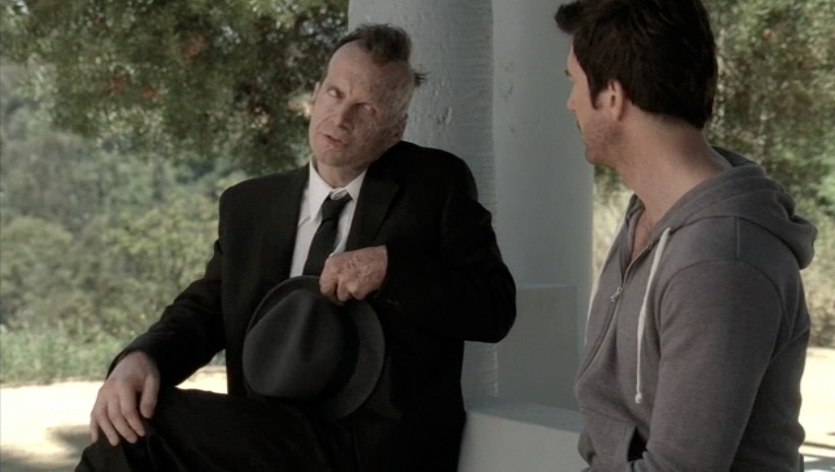
Horror is tricky genre to tackle on television. It traditionally ends up in the anthology format and the few occasions it hasn’t been an anthology it hasn’t stayed pure horror, typically becoming a drama with a horror veneer (Dark Shadows, The Walking Dead). The minds behind Glee and Nip/Tuck have decided to create a new horror serial that actually cements its legs firmly in the tropes of the genre. I have to admit, during the promotions of the show during the late summer I wasn’t really sold. However, after viewing the opening five minutes of the pilot I was hooked. Murphy and Falchuk have managed to create an ongoing series that actually gets what makes horror so horrific.

Continue reading “TV Review: American Horror Story”

Film Review – Red, White, & Blue

Red, White, & Blue (2010, dir. Simon Rumley)
Starring Noah Taylor, Amanda Fuller, Mark Senter

British director Simon Rumley seems intent on shredding every last ounce of emotional energy I have. As you can read in my review of his 2006 film, The Living and The Dead, he is able to present a psychological horror film unlike any you will ever see. Here too, in Red, White, & Blue, Rumley takes the revenge/gore film made popular in 1970s and still alive and strong today, and goes down avenues no mainstream picture would ever think about. The result is another film that hammers itself into your mind and squeeze every ounce of composure from your soul. The last fifteen minutes left my heart pounding and my head feeling dizzy, shocked at the level of physical gore and psychological torment.

Continue reading “Film Review – Red, White, & Blue”

Film Reviews – Amer and Sheitan


Amer
(2009, dir. Helene Cattet and Bruno Forzani)


Sheitan (2006, dir. Kim Chaprion)

I happened upon two very different, but equally stylish French horror films recently and these really show up the dull slasher flicks that American horror cinema has devolved into.

Continue reading “Film Reviews – Amer and Sheitan”

Film Review – The Bad Seed

The Bad Seed (1956, dir. Mervyn LeRoy)
Starring Patty McCormack, Nancy Kelly, Eileen Heckart, Evelyn Varden, Henry Jones

Contemporary audiences would probably be bored and not find this film scary. Contemporary audiences are dopes on the whole, though. This piece of pernicious, regressive cinema is one of the tightest horror pics I’ve seen. What makes it such a juicy little piece of evil is the context. Its the repressive Red Scare 1950s where wholesomeness and purity is slathered on suburban streets like whitewash. Children especially are angelic and your neighbors can pop in when ever they choose.  This is also the height of psycho-analysis, where Freud’s phallic fantasies are holy and it becomes acceptable, and encouraged to visit the shrink. Into this tense situation, we’re given Rhoda Penmark (McCormack), the sweetest little blonde in pigtails you ever did see. Rhoda is absolutely perfect, her parents and teacher agree. But Rhoda doesn’t like having what she wants withheld and she will take it, no matter the cost.

Continue reading “Film Review – The Bad Seed”

Film Review – Black Swan


Black Swan (2010, dir. Darren Aronofsky)
Starring Natalie Portman, Mila Kunis, Vincent Cassel, Barbara Hershey, Winona Ryder

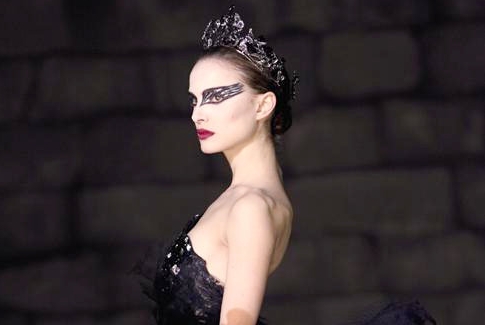
With Darren Aronofsky you know you will get something ambitious, whether its ambitious in its drama (Requiem for a Dream), its scope (The Fountain), or its simplicity (The Wrestler). Are they always winners? Nope, but they always bring forth a completely unique vision and experience. With Black Swan, Aronofsky is bringing together elements from all his previous work. You have the severe schizophrenic breakdown of a character, you have a hallucinatory transformations, and you have the destruction of the physical body for the sake of one’s art. The film also breaks the boundaries of genre by being both one of the best dramas and one of the best horror films of the year.

Nina Sayers (Portman) is one of the many dancers that perform at New York’s Lincoln Center. The prima ballerina of the company (Ryder) is on her way and out and the manipulative director, Thomas (Cassel) is looking for his new “little princess”. A re-interpretive staging of Swan Lake is in the works and Nina finds herself in competition with the new girl, Lily (Kunis). Lily works against the conventions of the ballerina, staying out late, dropping ecstasy, and being very laid back with her work ethic. Nina must also contend with her mother (Hershey) who is babies her daughter and attempts to mold her into the dancer she failed to be. Nina is suffering from strange abrasions on her back and is beginning to have intense nightmares about the ballet. All of this is leading down a dark and destructive path….or is she merely fighting against those who have constrained her since she was a child.

Everything about this film clicks, the performances are pitch perfect and the direction from Aronofksy hits on all cylinders. There is the return of the shaky handheld cinematography of The Wrestler that adds that vérité feel to the story. In direct contrast to the realism of cinematography there is amazing use of makeup and CG effects. The films does a great job in balancing the psychological horror, and will make you question deeply what events actually happen to Nina and which are the product of a fragmented mind. I was most impressed with how Portman manages to infantilize Nina’s behavior in very subtle and nuanced ways. She doesn’t babytalk, but the way she interacts with her mother and her director bring out her childlike mentality. Her rebellion against these forces of control is played naturally and its horrific outcome resonates in the mind for a long time after.

Wild Card Tuesdays – The Living and The Dead


The Living and The Dead (2006, dir. Simon Rumley)
Starring Roger Lloyd-Pack, Leo Bill, Kathy Fahy

It’s very hard for me to write about this film after having just watched it today. It affected me in a deeply emotional way that very few films are able to. After cinema becomes a daily occurrence, you are naturally numbed to the typical emotional tricks of filmmakers. I was aware of this film first as a horror picture. The director, Simon Rumley came out of nowhere with this small picture that made the festival circuits. It never really the mainstream venues, instead traveling to the fringe horror festivals. I am very curious as to how it was received because more than anything this film is a deeply disturbing, yet also sensitive, portrayal of the pain of severe mental illness. The film achieved something very few have in recent years, it made me cry. There is a scene in the last third of the film that is so emotionally devastating I can’t see how anyone could watch it and not break down.

The former Lord Donald Brocklebank must leave his dreary estate in the middle of the English countryside for unknown reasons. His wife, Nancy is suffering from cancer and his son James is severely mentally challenged, requiring daily pills and injections to keep his delusions in check. Donald instructs James that Nurse Mary will round to tend to Nancy. However, James forgets his injections and decides to prove he can be the man of the house by locking Nurse Mary out and trying to tend to mother himself. It’s painful to watch James descend into madness while unknowingly hurting his mother again and again. The film makes a sudden major shift in the narrative about half way through that really cements the idea that we are seeing the story through the mind of a mentally ill person. And the finale is just jolting and ambiguous enough that I believe this film will stay with you for years.

Leo Bill should have received an Academy Award nomination for his portrayal of James. His face is recognizable as that of Darwin in Tarsem Singh’s The Fall, as well as the arranged suitor of Alice in Tim Burton’s recent Alice in Wonderland film. Here is firing on all cylinders, delivering a performance that is so powerful and unrestrained. Even now, just thinking about certain scenes I feel my gut in a knot and heart breaking all over again. James is both terrifying and sympathetic. I thought of the prayer of Christ on the cross, crying out “Forgive them Father, they know not what they do.” That is exactly how we and the other characters in the film inevitably have to view James. His reality is a different plane of existence than ours and he can hurt people while believe he’s simply giving them a hug.

I can’t emphasize enough what a profound piece of cinema this is. While labeled “horror” I would argue that there is no human monster in the film. The monster is mental illness and the shattering pain and emotional trauma we humans are forced to bear. I don’t know if I could ever watch The Living and The Dead again, much in the same way I am unable to revisit Requiem for A Dream. Both movies are so effective in getting across the helpless pain they want to portray that, while we acknowledge them as masterpieces, our psyches are too fragile to confront them again.

My 40 Favorite Film Moments – Part 1

This month I will be looking at my favorite moments in movies. These are not necessarily the best ever in films, but they are my personal favorites. In no particular order, here we go:

1) Let Me Out (Young Frankenstein, 1974, dir. Mel Brooks)

Gene Wilder is at his best when he goes from calm to frantic in a split second. His red-faced blue blanket tirade from The Producers is a gorgeous moment. This one however goes up there as one of my all time faves. Wilder as the nephew of Victor Frankenstein shines. In this scene we see him go from calm, to manic, to desperate, and finally to confident in his macabre heritage.

http://www.youtube.com/v/pu1DMSqTLyk&hl=en_US&fs=1&

2) Mike Yanagita (Fargo, 1996, dir. Joel and Ethan Coen)

Two actors here who deserve a lot more credit. Frances McDormand won the Oscar for her role of Marge Gunderson, but this scene also showcases the chops of Steve Park. Park is able to create a three dimensional character in a single scene of this film, its amazing what he does. Its hard not to imagine the life of Yanagita after watching this. A powerful example of what happens when good writing and acting are paired up.

http://www.youtube.com/v/r_Ge4F4E9JE&hl=en_US&fs=1&

3) Oh, Are They? (Rushmore, 1998, dir. Wes Anderson)

The film that really broke Anderson out and still one of his best. Max Fischer (Schwartzmann) turns a post opening night dinner into a farce when his love interest invites her male nurse friend along. Would be nice if Anderson tried to go back to his more comedic roots, not that his current work is bad.

http://www.youtube.com/v/VbqgSjik9NE&hl=en_US&fs=1&

4) Binary Sunset (Star Wars, 1977, dir. George Lucas)

It’s a short scene, but it says a lot. The dual suns reinforce the alien nature of this world, the lighting sets the perfect tone as Luke Skywalker stares out across the vast landscape of Tatooine, and the music gets across his desire to explore. Simple and perfect.

http://www.youtube.com/v/wEUGF3NGbPg&hl=en_US&fs=1&

5) Come Play With Us, Danny (The Shining, 1980, dir. Stanley Kubrick)

A perfect horror movie scene. The music and cinematography are in perfect unison and there isn’t much more to say other than, experience the scene yourself.

http://www.youtube.com/v/jFVyAjj3Bs0&hl=en_US&fs=1&

Wild Card Tuesdays – Someone’s Knocking at the Door


Someone’s Knocking at the Door (2009, dir. Chad Ferrin)
Starring Noah Segan, Ezra Buzzington, Andrea Rueda, Elina Madison

You should probably not watch this movie. By that, I don’t mean this is a bad film, but it is definitely not a movie for your casual filmgoer. This exists in a very specialized realm of film, grindhouse, but even still it doesn’t strictly adhere to the tenets of that genre and even openly plays with the conventions. This is not to say the film is some masterpiece. It’s very cheap and very gritty, and that’s what it has to be to do what its trying to do. If you decide to see this movie, and can track it down, you’re going to discover a very disturbing, very funny, and in the end oddly moving low budget horror flick.

The first scene of the film features a young man shooting up with some strange drug and then being raped to death by a demonic looking man. Flash to the young man’s friends, a group of med school students who react with coldness towards news of his death. The only one who seems to feel anything is Justin (Segan), the most drugged out of all of them who has a dream/hallucination where his dead friend appears in a morgue blaming him for his death. The kids are called into the police station for questioning where its revealed a few nights prior to the murder they had been poking around the basement of a records building on their campus. Justin discovered files on John and William Hopper, a husband and wife serial killing duo who would rape their victims to death. The two were on an experimental drug which Justin finds a vial of and shares with his pals. It appears that the drug has somehow broken down a barrier to Hell, and now the Hoppers have returned in demonic form to wreak havoc.

While the film follows many of the tropes of grindhouse, particularly  beginning with a big horrific scene, then slowing down until one more final climactic act of grotesque, it also throws some new ideas. There are a lot of jump cuts, particularly when focusing on Justin, which serve the purpose of showing how his drug addled brain is processing things. Sound is also used in an incredibly effective way, sound being an element that is normally overlooked. In certain scenes, instead of hearing the dialogue, we can see that the characters are talking but the soundtrack is overtaken by ambient static. There’s a reason in the plot for this, but just in terms of atmosphere it gives an otherwise mundane scene an air of creepy surreality.

There’s a lot of explotative sex, as you would expect in a grindhouse styled film, and this film definitely goes places with it you wouldn’t expect. If you thought A Nightmare on Elm Street or Halloween was a crudely disguised warning to adolescents to refrain from sex and drugs, this picture will blow those ideas out of the water. The two supernatural killers of the film possess…*ahem* macabre transformations of their genital regions that render them brutal and demonic. William Hopper in particular has a very unique method of killing his victims. I absolutely loved how evil the villains in this film were. I don’t believe a studio horror film would ever allow a director to go as far and as horrible as Ferrin takes the Hoppers. At the end though, the film has a strangely sad and poignant. Though once again, I warn you to not watch this film unless your brain is truly ready for the horror.

Newbie Wednesday – Daybreakers


Daybreakers (2009, dir. The Spierig Brothers)
Starring Ethan Hawke, Sam Neill, Willem Dafoe

Vampires are on the brain of many a Hollywood screenwriter these days. From the Twilight franchise to CW teen drama The Vampire Diaries, the sanguine are a hot commodity. The vampire is one of those monsters that seems to have a couple different interpretations. You have the elegant sex object popularized by Dracula and the Anne Rice novels, you have the eerily inhuman humanoid seen in the classic Nosferatu, and then occasional we see a completely bestial form. What’s interesting about Daybreakers is that it touches on each of these forms; and while the film is high concept, does it live up to the ideas it presents?

In a world where humans were overtaken by vampirism about a decade earlier, humans are becoming extinct and without a steady blood supply, the vampires are experiencing a secondary mutation. The blood deprived vampires end up feeding on each other, poisoning their systems and becoming more animal than human. Edward Dalton (Hawke) is a corporate hematologist seeking to synthesize a blood substitute and tests are less than successful. He’s overseen by his intimidating boss (Neill) and army grunt brother. Eventually, Dalton crosses paths with the human resistance movement and their leader, Elvis (Dafoe). Elvis was once a vampire but through a random circumstance he reverted back to human. Dalton sets out to figure out why and see if he can cure humanity once and for all.

The film is chock full of amazing ideas. Life is lived at night or in a series of interconnected tunnels beneath the city where there are copious little cafes or newspaper stands. Life is fairly similar to our own, except for the whole needing to feed on blood part. It was also refreshing that there would be select vampires who retained empathy that outweighed their biological needs to feed. There’s even a senator featured on a news program whose big issue is humanity rights and wants to remove humans from being used a cattle. The cinematography is also very clean and sharp. The directors definitely know how to set up a stylistic shot and their previous special effects works comes through.

On the flip side, the actual story of the film is complete and total mess. The transformation of Dafoe’s character never gets a comprehensible explanation and seems to be boiled down to wrapping yourself in a wet blanket and being exposed to sunlight, literally. This is the elusive cure for vampirism. The twists and turns the plots takes are either incredibly forced with no real reason behind them or simply an excuse to show people being torn limb from limb. Its apparent early on that the actors in this film are better than the material they are working with, and they most definitely don’t raise it beyond its mediocrity.