
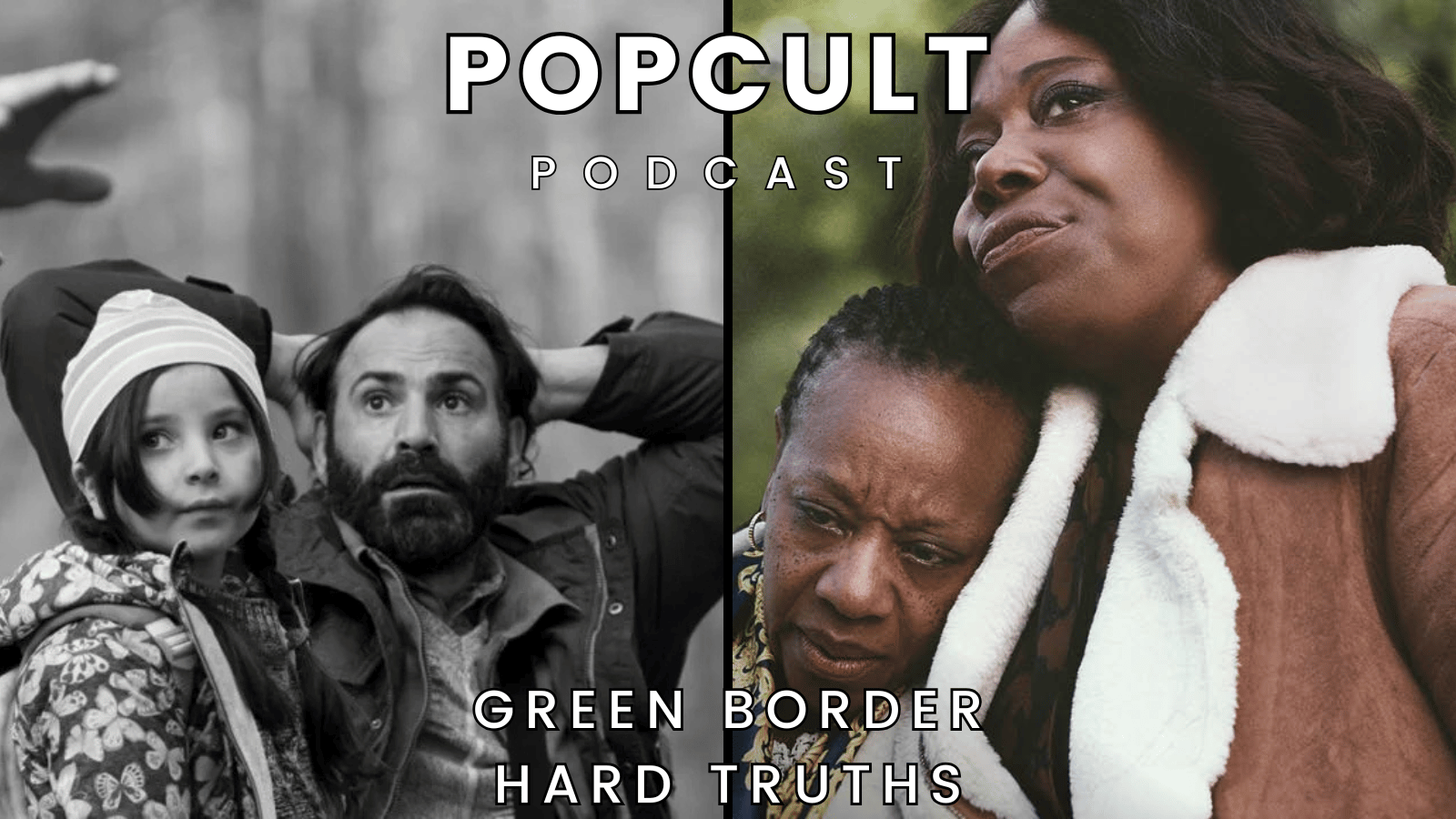
The plight of refugees at the Polish/Belarusian border is spotlighted. Then we spend time with a British woman stuck in her anxiety.
Continue reading “PopCult Podcast – Green Border/Hard Truths”The plight of refugees at the Polish/Belarusian border is spotlighted. Then we spend time with a British woman stuck in her anxiety.
Continue reading “PopCult Podcast – Green Border/Hard Truths”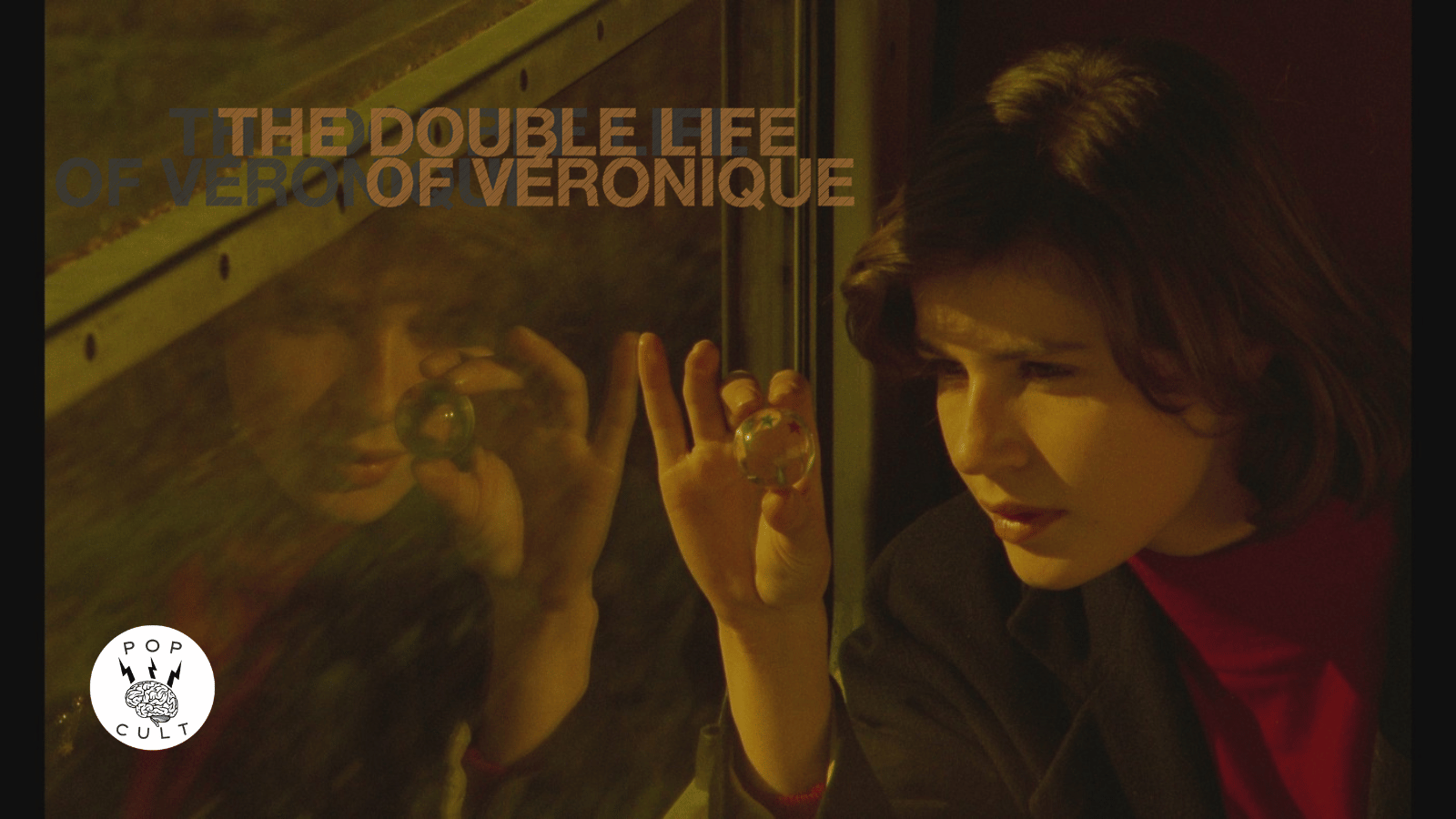
The Double Life of Veronique (1991)
Written by Krzysztof Kieślowski and Krzysztof Piesiewicz
Directed by Krzysztof Kieślowski
Ever since I was a kid, I’ve found the idea that people shouldn’t have regrets incredibly strange. I know that on my deathbed, there will be things I look back on with shame or think about what I could have done differently. I do these things now, and I believe I have quite a while before I pass. In my opinion, to live and never regret is to have never lived. It means you avoided the tough choices, one thing that lets us know we are alive. So many of those choices aren’t even up to us; they remain in the hands of chance. Why did I end up living where I do, married to this partner, and working this job? If I could go back in time, I would certainly change some things, but I would want other things to remain the same. Yet, those changes would make me a different person living a different life, right? Is our existence just a series of possible realities collapsing into a single material reality as we encounter each moment?
Continue reading “Movie Review – The Double Life of Veronique”
Three Colors: White (1994)
Written by Krzysztof Kieślowski & Krzysztof Piesiewicz
Directed by Krzysztof Kieślowski
There are multiple ways to look at the structure & its relation to the themes of the Three Colors trilogy. One of those is, of course, the three ideals of the French Revolution: liberté, égalité, fraternité. However, Krzysztof Kieślowski is intent on subverting our expectations about these concepts. Another is through the lens of a Europe that was in the process of being partially unified. Blue is about Western Europe, White is about Eastern Europe, and Red is set in the “neutral” nation of Switzerland. There are also mood associations with color. Blue tells the story of a woman who has lost her family (she feels “blue”). Red is about passion & love, which that color regularly symbolizes.
Continue reading “Movie Review – Three Colors: White”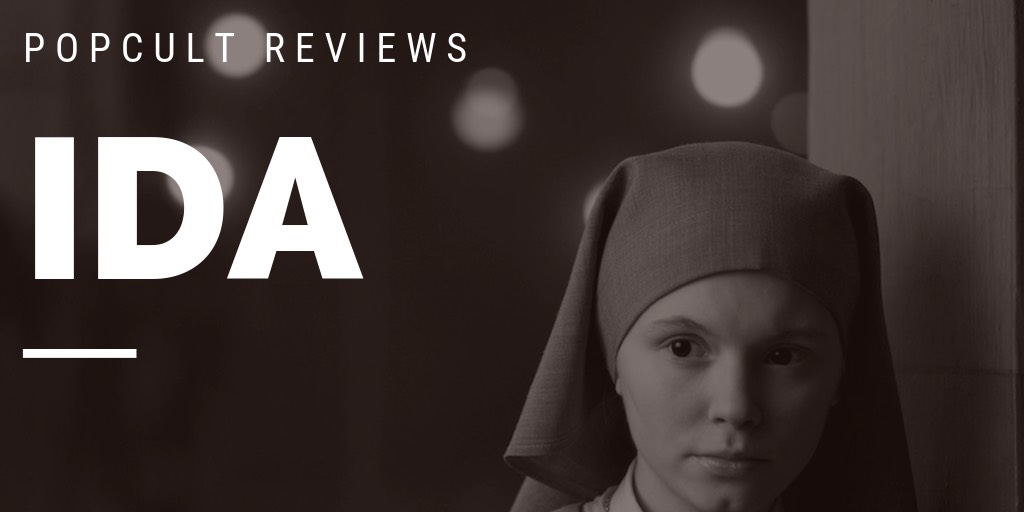
Ida (2013)
Written by Rebecca Lenkiewicz & Pawel Pawlikowski
Directed by Pawel Pawlikowski
Ida is about to take her vows as a nun when the prioress informs her they received word from her Aunt Wanda. This comes as a surprise as Ida is an orphan, raised in the church since she was an infant. She travels to her aunt’s home and learns Wanda is a judge living her days out drunk and in promiscuous encounters with random men. Wanda also divulges that she is a Jew, that her parents were killed when the Germans invaded during the war. The two women set out so that Ida may find her parents’ graves and have some closure with her now uncovered past. What they learn profoundly unsettles them, encounter anti-Semitic resistance and ultimately learning how Ida’s mother and father were murdered. Ida also finds herself tempted by the world outside the church, a place she has no experience with.
Continue reading “Movie Review – Ida”Cold War (2018)
Written Pawel Pawlikowski & Janusz Glowacki (with collaboration from Piotr Borkowski)
Directed by Pawel Pawlikowski
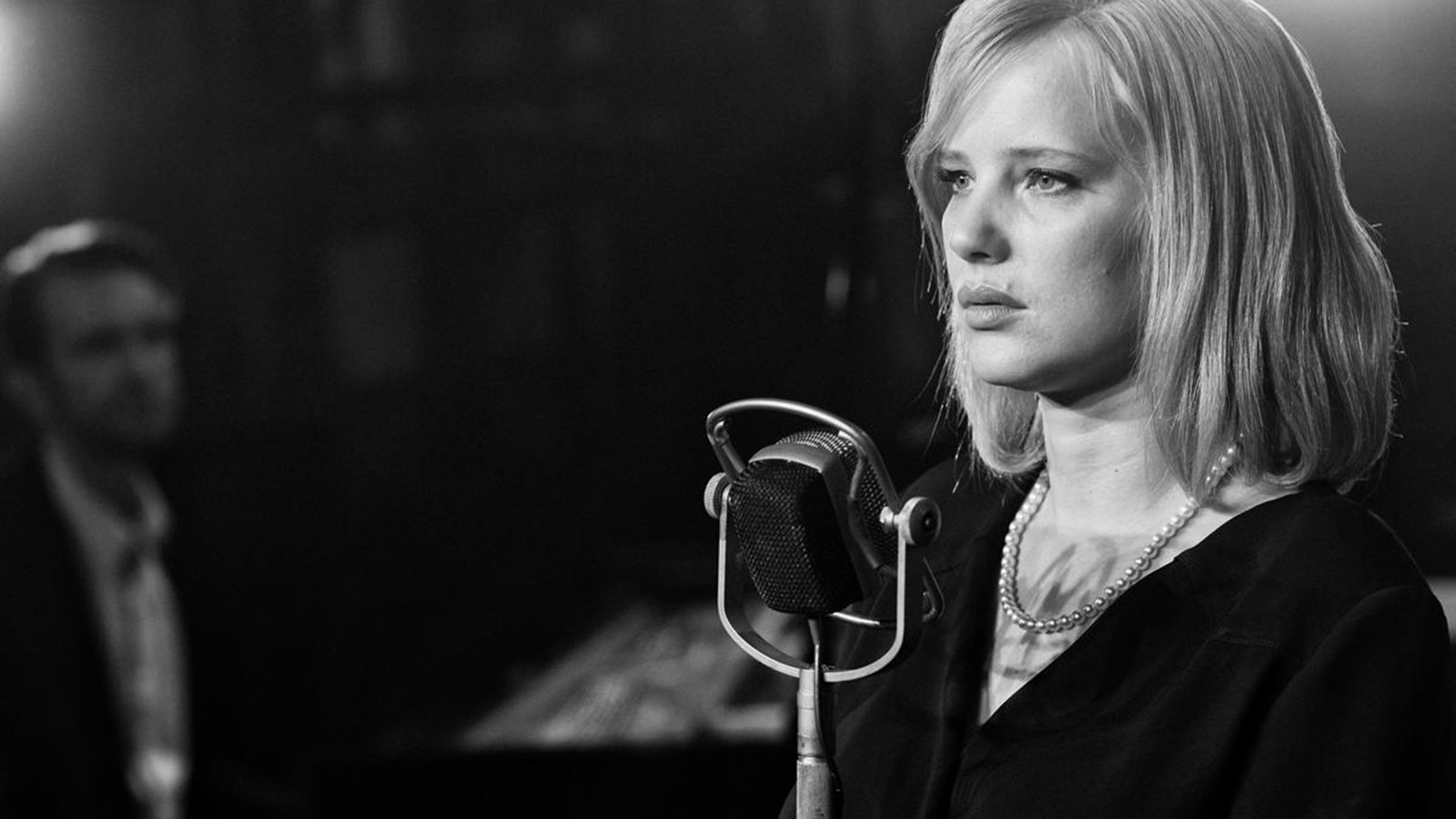
In 1949, Wiktor Warski and two colleagues traveled across rural Poland recording the folk music of the peasants. Using these recordings, they open a music school where they audition youths to become part of a traveling repertoire that will highlight the vanishing old world culture of the nation. Wiktor is instantly smitten by Zula, a young woman who shows remarkable will. The two quickly get caught up in a love affair. As the students perform they gain acclaim and interest from the Communist Party who pressures them to write a song about Stalin in the style of Polish folk music. This begins a fracturing and leads Wiktor to plan a defection when they travel to perform in the Soviet sector of Berlin. From there Wiktor and Zula start a thirteen-year-long struggle, falling in and out of love, drawn to each other by some invisible force greater than themselves.
Continue reading “Movie Review – Cold War”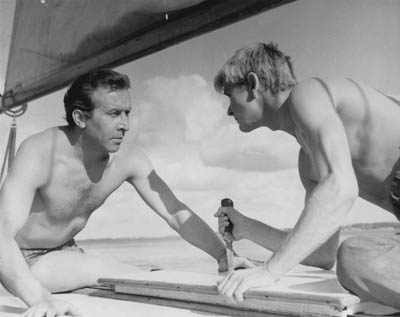
Knife in the Water (1962, dir. Roman Polanksi)
Starring Leon Niemczyk, Jolanta Umecka, Zygmunt Malanowicz
It’s funny how across the Atlantic and behind the Iron Curtain, things were much the same in both the United States and Eastern Europe in the 1960s. If you are familiar with Mad Men, then you have seen the sort of character Niemcszyk is playing. He has the slicked back hair, the suit, he’s a professional. Yet, he is also a Hemingway-esque macho man, who isn’t going to let some young upstart get away with thinking he matters. Polanksi’s first splash on the international scene is a fable-like story about some archetypal characters and relationships.
Andrezj (Niemczyk) and his wife are taking a drive through the countryside, on their way to their boat for a day of sailing. The tension is palpable in the care, neither speaks, until it is broken by a young hitchhiker standing in the middle of the road. Andrezj can tell that his wife is momentarily attracted to the young man so he offers to give him a ride, and eventually invites him onto their boat. This is all part of a disturbing psychological mind game is playing with his wife, using the hitchhiker to prove a point. As the young man flips between adolescent mood swings and is manipulated with ease by Andrezj, the older gentleman remains calm and poised, right up to the finale where both the characters and the audience are left wondering what happened and how these characters move on.
The rivalry between the two men is incredibly realistic. If you have been around immature adolescents (and sadly grown men even) you have seen the way they can get caught in a playful game of oneupmanship that devolves into a primitive fist fight. Through out the film, Andrezj intentionally puts the hitchhiker in a position of submission, giving him commands and emphasizing important maritime rules, while simultaneously breaking these same rules moments later in a bid to shove it in the young man’s face. Because of the wife’s initial flirtation with the hitchhiker we assume this is all about her, but I found that she recedes into the background till the final moments of the film. Instead, these young men are simply in a battle for alpha male status, not over a woman, but just in terms of their own relationship.
The wife is very enigmatic character, behaving without reaction for most of the film. She’s first presented as a prim and proper type, silent, not in subservience to Andrezj but in defiance of him. Once on the boat, she goes about her work mechanically, bringing about noshes when they are expected, preparing the soup when it is needed, battening down the hatches at the approach of a thunderstorm. Very subtly, her inner sexuality is revealed until she is completely nude near the end of the picture. In this moment, she defies Andrezj in a very interesting way that further pushes him down, keeping him from attaining the status of alpha.
In such a simple plot, lies an infinitely complex series of ideas and themes. In many ways, this would work as a companion piece to the similarly psychological and deceptively simplistic Funny Games. Both films are exploring weighty ideas using a framework that is easy for any audience to understand.
 PopCult Reviews