Movie Review – Trash Fire

Trash Fire (2015, dir. Richard Bates, Jr.)

TrashFire_Trailer

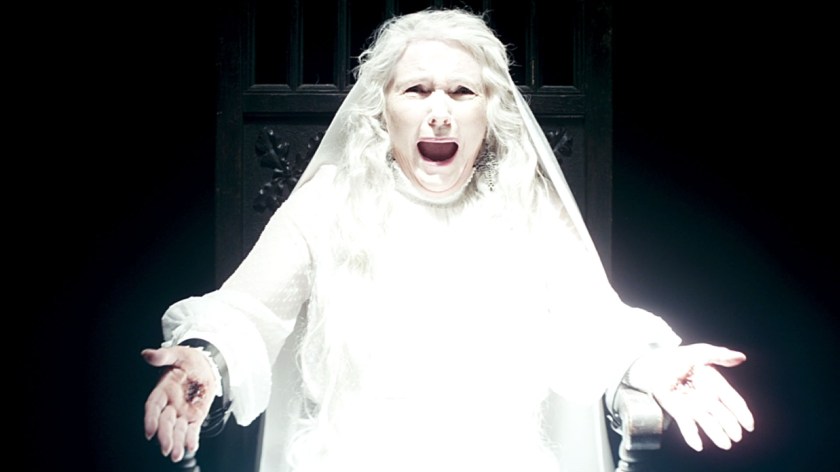
Owen and Isabel have an extremely unhealthy relationship. He has a laundry list of neurosis and treats Isabel like a doormat. She openly despises him. For some reason, they seem unable to break this relationship off, kept in each other’s toxic orbits. Everything changes when Isabel despondently reveals she is pregnant. Owen appears to change his tune, but she explains she wants him to get back in touch with his estranged family. When Owen was a child, his parents were killed in a house fire he blames himself for. His sister lived, but suffered third-degree burns over her entire body and now lives with the acidic grandmother. The couple makes a trip to visit these two strange family members, and the secret behind that house fire slowly comes to light.

Like many horror films these days, Trash Fire has a lot of interesting pieces but fails to come together as any enjoyable experience. It’s the greatest flaw is the inability to settle on the tone. The first third of the film presents itself as a pitch dark comedy and arrival at the grandmother’s home has enough quirky strangeness that it feels like this is what the film will be. However, the last third of the movie goes completely off the rails and bounces back and forth between comedy and horror, before finally settling on pure nihilistic horror for the finale. At some moments it seems to want to comment on relationships, in others, it seeks to be a satire of fundamentalist religion. And for all it’s plot spasms it ends up equaling nothing at all.

I had previously seen Bates’ Excision, a horror film with similar problems. There is no arguing that he has a distinct style. His scenes are framed in the static medium and wide shots, with subjects dead center in the camera. A line of symmetry splits the subject down the middle, and they are typically flanked by set details on either side. This type of framing is so associated with Wes Anderson at this point that we are subconsciously pushed towards expecting dry comedy, and that appears to be the case…at first. Bates continues to use this framing even in scenes that he intends to evoke great horror. It just falls so flat, so hard.

I don’t have a problem with a film featuring unlikable protagonists, as long as it knows how to handle them just right. Bates does not, so when the tragedy of the finale occurs, I didn’t care because he’d done nothing to frame his protagonists in legitimate conflict with the antagonists. I guess the protagonists weren’t murderous, but they didn’t even exhibit charisma or charm to make me root for them. Unlikable doesn’t mean they have to completely unrelatable. Bates also features his star from Excision, Annalynne McCord as Owen’s scarred sister. She does fine with the material she is given, but I can’t help but imagine how a more nuanced actress could have made the character more interesting.

The worst thing about Trash Fire is that it is a dumb film that thinks it is very clever (the same problem Excision had, hm). Mr. Bates is not a bad filmmaker; he is just aiming to make a kind of film he isn’t necessarily suited for. There is a sense that he is somehow elevating the material when at its heart it is pure horror shlock. If he could embrace it for the particular horror subgenre it is and have fun with the material, he might have a decent flick.

Masks: Refugees AP Part 3

masks

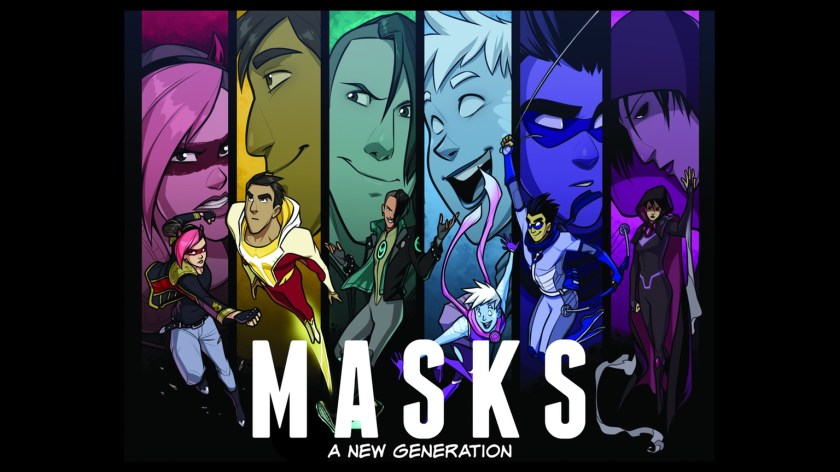
We began our session with anti-mutant protests right outside Dr. Green’s clinic, a known safe place for mutants. A counter protest also showed up in support of the mutants and police were present to keep things from escalating. Ajax and Monster were working at the time, and both had to temper their personal feelings. Though they did spy an unmarked armored truck out of which a small squad of SWAT-like soldiers emerged. They hung back, but something about them rubbed Ajax the wrong way. The shelter was located in a district called The Tumbledown, which came from a devastating earthquake decades ago. Ajax takes advantage of that fact and uses his geo-manipulation just to rattle the earth beneath the protestors enough that they are scared away by a minor tremor.


The Order - Shooting Star
Shooting Star, the speedster member of The Order

The next day, an explosion is heard in the skies of Halcyon City, and smoke is seen coming from The Panopticon, the floating island headquarters of The Order. Ajax and Shatterstorm are in class at Halcyon High. Shatterstorm is easily able to excuse himself due to his frequent work at his dad’s laboratory at the University. However, Vice Principal Quesada remembers Ajax ignoring him when he left the other day to deal with Risk Imsit. Quesada is hearing none of Ajax’s excuses and sends him back to class. To help, Shatterstorm sets off the fire alarm, and the entire student body is rushed outside. Quesada tries to keep an eye on Ajax and loses him in the crowd.


Ajax and Shatterstorm meet up with Sparks and Monster, and the four fly Sparks’ ship to dock with the Panopticon. On board they find American Steel battered and beaten. He tells them the “thing” is in the labs before passing out. Sparks’ AI D.A.D. brings Steel to the sickbay while the Refugees continue. They head to the anti-gravity generator and get it back online, so the island isn’t on the verge of crashing into the city. Then they head to the labs but get sidetracked on the way from cries of help in the holding cells. Risk Imsit, the alien bounty hunter who tried to return Sparks to Rio Prime, is being manipulated by strange disruptions in the gravitons on board. He’s rescued and accompanies the Refugees to the labs.

In the labs, the Refugees find Timekeeper containing a strange cloaked figure in one of her time bubbles. Shooting Star and The Badge lay unconscious on the ground. There’s no sign of the occultist Mr. Phantasmo. The block of Ifritium taken by the Order lays in chunks nearby, the team making the inference that this cloaked figure emerged from the stone. Sparks’ wrist device tells her the device is in the room and she identifies it as the ornate belt the cloaked one is wearing. Shatterstorm manipulates the gravitons around the time bubble and snatches the belt, which ends up containing a small piece of Ifritium. The time bubble shatters and Timekeeper goes hurtling through the walls of the facility.

The cloaked figure eyes the new challengers and acknowledges Shatterstorm by speaking an ancient form of Obrijianian, the language of Shatterstorm’s birthplace. He also appears to have the same powers as Shatterstorm, but more refined and able to manipulate gravitons on a much larger scale. The cloaked one refers to Shatterstorm as “grandson.” A battle ensues and ends with the cloaked one blasting a hole through the Panopticon and flying away. The Refugees message AEGIS who say they have a ship on the way, however, the cloaked figure intercepts and kills everyone onboard, crushing the vessel into a small piece of metal scrap.


Villain - Impetus
Impetus, master of gravity and ancestor of Shatterstorm?

After failing to get ahold of his father, Shatterstorm leads to the team to Dr. Batin’s lab at Ditko University. Dr. Batin is there working and appears shocked to see them, though his son senses something off in the gravitational field in the room. The cloaked one reveals himself, having manipulated the gravity of the light in the room to conceal himself. A second fight begins that leaves Ajax miles away with multiple fractures and unconscious. Through distraction and manipulation, the cloaked one is eventually taken down, but not before it is revealed that Dr. Batin is simply a graviton construct, an illusion. AEGIS arrive and lock the villain up, coding the name Impetus onto his cell. However, Dr. Batin is still missing.


Ajax is in the Halcyon metahuman hospital and receives a call from his parents that they will be having a conversation about his future with the Refugees. He also receives a video message from his villainous former mentor Croydon Samford (who is currently on trial for crimes against humanity). Samford hints that they will be seeing each other soon and attached an encrypted data file. Sparks is finally contacted by her father, The Grand LeBon of Rio Prime, who explains his desperation to get her back to her homeworld: He is dying and needs her to run the planetary industry. Senator Hu’s anti-mutant legislation has led to the development of a private security force, Vanguard, a subsidiary of BanCon Industries to help quell tension in urban areas. Things are looking dire for the Refugees with one more session before a hiatus.

Movie Review – Entertainment

Entertainment (2015, dir. Rick Alverson)

entertainment-rick-alverson-gregg-turkington-1

Entertainment is an anti-film. It is the opposite of life affirming, life refuting. It is a road trip to nowhere, about a man who fails to find himself and instead lost forever. Entertainment is purgatory. This is the intent of director Rick Alverson, who helmed the abrasive 2012 independent film The Comedy. In the same way that Tim & Eric deconstruct comedy, Alverson is breaking down the aimless dreamer in search of their dream.

The focus of Entertainment is an unnamed Comedian (played by Gregg Turkington). While the protagonist may be nameless, fans familiar with Turkington’s stage persona of Neil Hamburger will know that this is a fictionalized version of the performer. The Hamburger persona is an assault on the audience of his comedy shows. His material is exaggeratedly homophobic, misogynistic, grossly sexual, and crude. The concept behind this is a comedian who thinks so little of his audience he believes this is the best they deserve. Contrasted with this is Turkington endlessly waiting between shows. He goes on local tours of industry in the Southwestern United States: an airplane graveyard, an oil field, a ghost town built as part of a mineral boom. The landscapes he walks through are husks.

The Comedian himself is a husk. He’s in his forties, performing at low-end dive bars or worse. The first location we see him at is a prison. His last location is at the birthday party of a spoiled rich, aggressive man (played by Tim Heidecker). That final performance concludes with The Comedian bursting out of a cake and bursting into tears. He ends up spending time with a financially successful cousin (John C. Reilly) who tries to advise him on his comedy act, continually saying it’s great but then talking about making it appeal to “all four quadrants.” As we get to know the cousin we see his misery come to the surface as well.

Two constants refrain throughout the film. The first is Eddie the Opener (Tye Sheridan) a clown/mime who opens The Comedian’s sets. Eddie hasn’t been worn down by the road yet. He shares the cynicism of The Comedian towards the audience but takes joy in the performance. The other refrain is The Comedian’s nightly voicemails to an unseen estranged daughter. He expresses frustration eventually at his inability to get a hold of her, the messages growing more and more desperate.

Both Turkington and Alverson have a keen interest in discomfort and provocation. In an interview with Vanity Fair, Alverson explains his personal view on “positive” cinema:

There’s a common insistence that representations of the positive lift us up and buoy us. I’ve never experienced that. At least not in a prolonged way. The idea of resolution has always seemed weird to me. I think if a movie has any naturalistic pretensions or elements in it at all, it needs to respect and represent the disjointed and difficult nature of the world. You can’t solely promote a fantasy version of the formal experience of living. There’s a necessity for a kind of balance in the field—90 percent of the fare for American audiences operates by those conventions and leaves the viewer satisfied in a very tidy, efficient way. They are unaltered in a way that is so disconnected with our daily experiences. Both The Comedy and Entertainment are in a long tradition of cinema flirting and pushing back against that impulse.

Entertainment is not a film that will appeal to everyone. Because some moviegoers have that expectation of films making them feel good, they are going to react angrily at movies like this. I suspect Alverson would welcome that reaction. The majority of movie studio fare is emotionless, just a series of dramatic formula plot points, but never anything that evokes honest emotion. It’s important that we have films like Entertainment and The Comedy because they remind us that the emotions that rise out of dissonance are some of the most real movies can make us feel.

Movie Review – Spring

Spring (2014, dir. Aaron Moorhead & Justin Benson)

spring-alley

I began the filming expecting one thing but ended up delighted and surprised with what I got. Evan’s mother dies in front of him, succumbing to a two-year battle with cancer. He feels lost and without purpose, so this leads to a spontaneous trip to Italy, the place his parents wanted to take him before they died. Evan wanders to a small town on the coast where he meets Louise, a young student. The two click right away but there is something mysterious about her, for all her charm and wit she remains cagey about certain parts of her life.

I remember seeing the trailer for Spring before its release and got the sense it would be a dark, horror film. However, it ends up becoming a romance story without any traces of cynicism. It is a dark film, but there is an emotional truth underneath the surface. Early in the first act, after Evan first arrives in Italy there is a sense of Eli Roth’s horrid Hostel films, that creeping sense of dread. We worry Evan is winding his way down into a trap. The filmmakers establish a very gloomy mood. However, I find the film has more in common with Linklater’s Before Sunset. It ends up being lots of conversations about relationships and the nature of love between Evan and Louise. Yes, there is gore and violence, but it never overtakes the film and become the focus. Instead, character work is the meat, with violence punctuating dramatic moments.

Spring is a gorgeous looking film. Directors Moorhead and Benson previously worked on Resolution, a small indie horror flick that did similar genre play. It’s very clear they have developed their technique with some truly beautiful and well-choreographed shots. There is an explosive argument in the streets of the small village after Evan discovers Louise’s secret. It is a single take, but it is a dizzying race through the back alleys and narrow streets. They also make use of drones to produce some stunning, sweeping shots of the coastal town that stand up to an expensive crane and helicopter shots.

The bulk of the film rests on the shoulders of the two lead actors, Lou Taylor Pucci and Nadia Hilker. I have never been overly impressed by Pucci. I’d seen him in his early work (Thumbsucker, The Chumscrubber, Southland Tales) and felt he was fairly flat and have noticed him popping up from time to time. Here he reaches depths in his character I wasn’t expecting. Hilker was a discovery for me and is a perfect match for Pucci. You get caught up in the chemistry these two genuinely have. That chemistry, more than the horror elements, is what makes the film. While Spring is a definite play on genres, it teaches a valuable lesson that horror is stronger when it relies on the more human and character-focused elements of storytelling.

Spring is a film that benefits from mystery. I would highly encourage you to read as little about it as possible and just know that it’s a movie that is body horror, but also something more. It’s a film about a young man working past grief and aimlessness and the risk of love. Its whole concept is a metaphor about what we give up when we allow ourselves to fall in love, and weighing if that is worth the risk.

Movie Review – Into the Forest

a24 visions

Into the Forest (2015, dir. Patricia Rozema)

into-the-forest

It’s hard to pinpoint just where Into the Forest goes wrong, but at some point, I found myself completely disengaged with the film. It tells the story of two sisters, Nell and Eva, stranded at their family home in Northern California, about 32 miles from the closest town after an unexplained global event destroys the power grid and sends society into chaos. The two sisters struggle to survive when they end up without anyone but each other. Through a series of trials and challenges, they learn to let go of their reliance on technology and reconnect with the natural aspects of the forest around them.

Continue reading “Movie Review – Into the Forest”

Documentaries Watched in 2017 (So Far)

Bright Lights (2016, dir. Alexis Bloom & Fisher Stevens)

bright lights

In the Maysles Brothers’ 1975 documentary Grey Gardens we’re introduced to Edith and Edie Beale, a mother-daughter duo that is beyond simply dysfunctional. There are many parallels between the Beales and the focus of this film: Carrie Fisher and her mother, Debbie Reynolds. However, the Fisher-Reynolds are the Beales if they had the humility to seek out mental health care and begin the process of repairing their lives. Bright Lights was released in the wake of Fisher and Reynolds’ deaths and refrains from being a somber affair. It is full of life and hope and those sort of dreams of Hollywood you’d expect from one of Debbie’s old films. Fisher provides the biting, snarky wit while also being so open and frank about her trials. There could not have been a more perfect tribute to the late mother and daughter.

Continue reading “Documentaries Watched in 2017 (So Far)”

Movie Review – Krisha

Krisha (2015, dir. Trey Edward Shults)

krisha

Krisha is a story that could have easily fallen into cliche and melodrama, but the deft hand of first-time feature film director Trey Edward Shults elevates this story and these characters into something transcendent and horrifically beautiful. Krisha is a woman in her early 60s, reunited with her estranged family after an undetermined number of years. It’s Thanksgiving, so her sister Robyn has the house full of siblings, spouses, and children. A niece has just become a new mother, and the baby is a the center of everyone’s attention. Later in the day, even the matriarch is brought over from her nursing home. As most people can relate, there is a tension underlying the joyful reunions happening, particularly on the part of Krisha. She has suffered from substance abuse, and individual family members are not sure of what condition she is in at the moment.

Krisha’s arrival sets the stage for the tone of the film. The camera hovers above and floats down, following her as she goes to the wrong house and then drags her suitcase across the lawn to the right one. In both the aesthetics and details of the performance we are being informed about who this person is. Krisha is overly cheerful but a mess in her action, disorganized and overwhelmed. It’s explained she lives by herself, but it’s more than that. Her sister Robyn raised her son, Trey and the circumstances are never brought to light. It is apparently tied to Krisha’s substance abuse, though.

We’ve all likely met Krisha, either as a member of our family or a passing acquaintance. She just can’t seem to get her life in order, was probably labeled a “free spirit” when she was younger but now it’s worn on the people around her. Some small gestures and details develop her character without the film ever becoming expository. When she is finally reunited with her mother, the elder woman has a strange aside about her mother. She states that the great-grandmother was a gorgeous woman who always seemed ashamed of where she was from. This causes Krisha to step back in shock, and the implication is that this story may be very similar to Krisha’s experience and what led her away from her family.

Shults is powerfully skilled for such a young filmmaker, and it is evident he has influences from the American canon. The tension built with a wandering camera and taught percussion feels at home next to Paul Thomas Anderson’s Punch-Drunk Love. The naturalistic exchanges between family members and the overlapping family conversations is very much a stroke of Robert Altman across the screen. Star Krisha Fairchild is undoubtedly making reference to the great Gena Rowlands (A Woman Under the Influence, Gloria) in her performance. This film is a beautiful homage to the great directors of the American independent cinema.

One aspect of the film that may not be readily apparent while watching it is the personal connection it has to the director and actors. This is Shults’ real family. Krisha is his aunt, Robyn is his mom, the home is his mother’s house. In interviews, he’s explained that the central character is not based on any one person but a combination of troubled family members. His father was estranged from the family and died as a result of substance abuse a few years ago. The explosive incidents in the film are drawn from a cousin’s outburst at a family gathering, a cousin who ended their life months later.

Krisha is a tragic and powerful film. It is one of those works of film that embeds itself under your skin. Shults’ next work It Comes At Night looks to be a powerful exploration of human relationships in the face of horror. I am excited to see Shults expand his craft and continue developing this talent of building tension and atmosphere.

Book Review – The Worst Kind of Monster: Stories

The Worst Kind of Monster: Stories by Elias Witherow (Thought Catalog, 2016)

worst kindElias Witherow is an author who I first encountered through their presence in the NoSleep community on Reddit. His stories induce such a true fear in me I felt myself drawn to his work time and time again. In this collection, he takes many of those NoSleep stories, along with new material and delivers a very powerful short story collection. As I read through the collection, I felt like I was reading, not the masterpiece of a writer, but the first seeds planted on the path to that great work of horror. Here are my thoughts on some of the stories in The Worst Kind of Monster.

“The Tall Dog” – This is what I would call the most typical NoSleep story in the collection. Grieving widower dealing with his daughter waking up in the middle of the night complaining of the “tall dog” that comes in her room whispering horrible things in her ear. The father doubts but as the story progresses, he becomes convinced something is in his home. This opening story highlights a significant element of Witherow’s work: endings where protagonists don’t die but have to endure an even worse state of living.

“The House in the Field” – I first heard this story on the NoSleep Podcast, and it prompted me to buy this collection. A narrator tells a story from their youth about seeing an old farmhouse in a field on her family’s property. No one else can see the house, until one day another person can. The monster revealed behind this house is unlike any I have read about in horror. The description will give you chills. All I will say is that gigantic monsters usually don’t scare me, but this one is both hidden and massive at the same time.

“There’s Something Wrong With Dad” – Domestic horror is a common trope in Witherow’s work (see Tommy Taffy), and this is very bare bones version. Dad comes home from work, starts to behave increasingly erratic, hell on his poor family begins. And like Tommy Taffy, the violence visited upon the family is not directly by a family member. The perpetrator is a metaphor. Or, another way to read the story is that the fantastic “happy” ending is all delusion of a child being killed by their father.

“Feed the Pig” – The most surreal and fantastic of the stories in a pretty surreal collection. Our protagonist has hung himself and ended up in a bizarre afterlife. What I love here is the mythology building. Apparently, God felt the need to create a place for suicides separate from Hell. So he created the Black Farm and put The Pig in charge. He eventually forgot that he created this place, so The Pig attempted to become a god and shape a world in his image. The narrator’s journey through the world is obscured so we get the slightest of glimpses of a place that seems like Clive Barker would be right at home. This story also features a genuinely hopeful ending.

“horse/8min” – Another very NoSleep type of story. The narrator finds a strange DVD on his front step. The video contained on it shows a murky obscured scene. Nothing overtly horrific. Then the creeping fear and dread set in. This is a great mood piece. It’s short and to the point while leaving us hanging in the final moments.

A Different Kind of Monster spans some horror genres, but the common thread is “a fate worse than death.” No one gets out that easy, especially those who have done wrong by their fellow man. The worse a person is, the worse they will get in the end.

The Revisit – Starship Troopers

The Revisit is a place for me to rewatch films I love but haven’t seen in years or films that didn’t click with me the first time. Through The Revisit, I reevaluate these movies and compare my original thoughts on them to how they feel in this more recent viewing.

Starship Troopers (1997, dir. Paul Verhoeven)

STARSHIP-SPTI-20.tif

The late 1990s was a weird time in cinema. On the independent side of things, you had some interesting work produced, while on the studio big budget side there was some awful dreck being churned out. Take for instance 1997; the year Starship Troopers came out. Boogie Nights, L.A. Confidential, The Fifth Element, and Lost Highway were released, All films that I would argue are vital pieces of work from their respective creators. Simultaneously you have Batman and Robin, The Lost World, George of the Jungle, Spawn, and Spiceworld the Movie. All films that I would argue represents studio executives shaping films. In the middle of all this, you have Starship Troopers.

I think the first time I saw Starship Troopers was my first night in the dorm my freshman year of college. It was 1999, and the guy across the hall had the VHS tape so as about six of us were hanging out we decided to watch it. I hated this movie. I hadn’t done my deep dive into films yet, but I remember being very turned off by the cheesy nature of the movie and god awful acting. It was the ending especially that created friction with me. Something felt off and wrong about it. In my naivete, I discounted it as simply a bad film and have never actually revisited it til now. I was making up my list of movies to review for The Revisit and came across Starship Troopers. I had read things since 1999 that hinted at the film not being what it appears to be the surface level. It’s believed now that the audience has grossly misinterpreted the picture. So, I decided to give it a shot.

Paul Verhoeven, despite having a career directing films since the 1960s to the present. He was responsible for Elle, a film that came out last year starring Isabelle Huppert that has garnered significant praise (though I have not yet seen it). But for most of us that came of age in the 1980s and 90s, he feels like a director of that period. That is when he was hitting his peak as a big-budget director. Robocop. Total Recall, Basic Instinct. Showgirls, The Hollow Man. Those are the films his name is commonly associated with, but to understand Starship Troopers, you must understand some other things about Verhoeven.

He was born in the Netherlands in 1938, showing up just as the Third Reich began their march across Europe. War struck incredibly close to Verhoeven’s family. They lived near an installation for V1 and V2 rocket launchers so Allied forces bombed the area. His parents were almost killed. However, Verhoeven says as a child he viewed war as an adventure.Verhoeven states that he remembers the sight of charred corpses vividly and hollowed out buildings, but admits because his parents lived and he was not Jewish he doesn’t hold the trauma that others do. That sense of war as an exciting adventure existing alongside horrific violence and mutilation is a the core of Starship Troopers.

The opening frames of Starship Troopers are unquestioningly satirical. This is the first of many newsreels that will be used as an ingenious exposition device throughout the film. Each time one of these appears an unseen newsreader will click through related links to the videos we see unfolding before us. The important thing this first video establishes is the dichotomy between being a Citizen and a civilian. In the world of Starship Troopers, Citizenship is only obtained after serving in the armed forces. With Citizenship comes the right to vote as well as other rights that Americans and other developed nations currently hold as inalienable. One recruit gives her reason for joining is that one day she would like to have kids and getting a license to do so is much easier when you are a Citizen. We’re in a world where even nature is under the boot heel of the government. But for being such a dictatorial society we never truly see our protagonists question it.

Only one character speaks up against Rico, the protagonist, joining up with the Federal Service. Rico’s father has a brief moment where he chastises his son for choosing that path post-graduation. Later, both of Rico’s parents are killed by the enemy bugs who strike Earth with an asteroid launched from their system. The message of the film’s world is that Rico’s parents were wrong to question him and now he is emboldened to bring the wrath of humanity down on the bugs truly.

It is funny to think back at my reaction and the reactions of critics and audiences to Starship Troopers. From the start of the film, it is glaringly obvious what Verhoeven is saying about this world. Michael Ironside plays first the high school teacher to and commanding officer of Rico. In his Social Studies class at the opening of the film he states the following:

“This year we explored the failure of democracy. How our social scientists brought our world to the brink of chaos. We talked about the veterans, how they took control and established the stability that has lasted for generations since. You know these facts, but have I taught you anything of value this year? […] Why are only citizens allowed to vote? […] Something given has no value. When you vote, you are exercising political authority, you’re using force. And force my friends is violence. The supreme authority from which all other authorities are derived.”

A few moments later the teacher has this exchange:

Dizzy: My mother always told me that violence doesn’t solve anything.
Jean Rasczak: Really? I wonder what the city founders of Hiroshima would have to say about that.
[to Carmen]Jean Rasczak: You.
Carmen: They wouldn’t say anything. Hiroshima was destroyed.
Jean Rasczak: Correct. Naked force has resolved more conflicts throughout history than any other factor. The contrary opinion, that violence doesn’t solve anything, is wishful thinking at its worst. People who forget that always die.

Starship Troopers is not glorifying fascism or even oblivious to its presence in the film. The entire work is a direct commentary on fascism, and even further I believe the film is meant to be a piece of meta-fiction. We are watching a propaganda film made in the universe of Starship Troopers that is aimed at impressionable high school students.

The cast of “high school” students are apparently grown, adults. The acting is stiff and artificial. The music is overly bombastic. The characters exhibit no signs of empathy. Both the male and female lead lose people the film tells us they are romantically linked to, but at the end, they march off triumphantly. The meaningless nature of human death is highlighted even further in the newsreel segments. A cow is devoured by one of the Arachnid bugs and is censored. In the end, the brain bug has a tool inserted into her apparently vaginal mouth, and that is censored. One thing that is never censored throughout the film and the newsreels are human casualties. This is because one purpose of this propaganda is to desensitize the young viewers to the sight of human death. No one is ever truly grieved; the protagonist never appears to suffer any emotional or long-term physical consequences. As the teacher said, violence is the best way to solve every problem.

There is so much more I could write about Starship Troopers and eventually, I may. One big takeaway I did have was thinking about games inspired by material like Troopers and that they completely miss the point. Verhoeven did not intend for people to be inspired to run around and shoot bugs. I personally think this is one of the most transgressive studio films ever produced. He wanted us to be appalled through our laughter at the absurdity of fascist thought. He wants us to see what the characters fail to see, that this way of thinking leaves you blind to understanding the horrible implications of your actions on the world around you.