My Top Films of 2010

Since 2005, I have been keeping track of the films I watch each year. I also come up with a list of my ten favorite films (old or new) that I saw for the first time that year. Here’s the list, with the full list of all 232 I saw this year after the break. Feel free to ask any questions about films on the big list, my freakish nerd memory will be able to answer you.

Top 10 Films of 2010
1. A Serious Man
2. Hunger
3. Mother
4. Un prophete
5. The White Ribbon
6. Black Swan
7. The Social Network
8. True Grit (2010)
9. The Heartbreak Kid (1972)
10. I Am Love

Continue reading “My Top Films of 2010”

2010: The Year in Television

Looking back at 2010 there were a lot of highlights from television. Here’s the ones that standout as the most memorable for me:

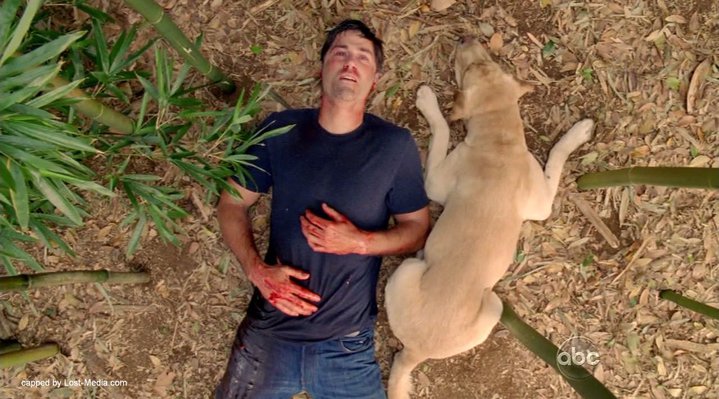
The Lost Finale (ABC): After six years, Lost came to an end with a three hour finale that didn’t seek to solve the myriad of mysteries built up during the show’s run. Instead, the creators chose to focus on emotional closure. There are some valid criticism of the show’s six season, but overall I felt very satisfied by the way things ended. It definitely evoked some of the same feelings I had years ago reading The Last Battle by C.S. Lewis. Despite my own personal views on religion, I found the “spiritual” ending to not come off as hackneyed. It was also the hardest I’ve ever cried while watching a single episode of television.

Continue reading “2010: The Year in Television”

Film Review – True Grit (2010)


True Grit (2010, dir. Joel and Ethan Coen)
Starring Hailee Steinfeld, Jeff Bridges, Matt Damon, Josh Brolin, Barry Pepper

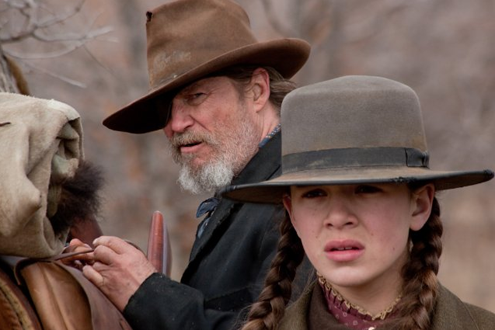
I’ve never seen the original True Grit, mainly because I am not such a big fan of John Wayne. I’ve only seen two films of his (The Searchers and The Man Who Shot Liberty Valance). I totally get Wayne as an icon, but as an actor he seemed a little weak. So I entered the remake of True Grit with no expectations and found it to be a great western and adventure story, with enough subtext to keep me thinking for a long time. Despite advertisements, this is Hailee Steinfeld’s film. The other actors are there to support her and she does a magnificent job keeping up with the likes of Bridges and Damon.

Mattie Ross (Steinfeld) is the 14 year old daughter of a man shot in cold blood by Tom Cheney (Brolin), a dim witted scoundrel. Mattie travels to the location of her father’s body under the pretense of preparing it to be sent back home, but is actually out to find a hired gun to help her track down and murder Cheney. She happens upon the grizzled federal marshal Rooster Cogburn (Bridges), a man who shoots first and asks questions later. After some convincing, he agrees to take Mattie into Choctaw territory where Cheney ran off to. Before they can depart, Texas ranger Le Boeuf (Damon) who is looking for Cheney in relation to his murder of a Texas state senator. The trio bickers and bonds as they draw closer to their prey, which in the end will test each of their resolves.

The Coens are employing their strongest tactics in this film: dialogue and character. The language of the characters is so precise and specific, and this is how they have created countless memorable and iconic characters. True Grit is a showcase for the complex figure of Mattie Ross, whom could easily become a “girl power” anachronism. Instead, through well placed pieces of dialogue, we learn about Mattie’s role in her home and the extra responsibility she has been strapped with. She is both courageous and vulnerable in a way many female characters in film rarely are. Beyond Mattie, the central and side characters all have unspoken histories that we catch glimpses of. As she and Rooster travel the wilderness they encounter characters who may have a line or two (or none at all) and are fully realized figures in this world. The Coens succeed in producing another film chock full of those things that cause the brains of film geeks like myself to salivate.

Film Review – Black Swan


Black Swan (2010, dir. Darren Aronofsky)
Starring Natalie Portman, Mila Kunis, Vincent Cassel, Barbara Hershey, Winona Ryder

With Darren Aronofsky you know you will get something ambitious, whether its ambitious in its drama (Requiem for a Dream), its scope (The Fountain), or its simplicity (The Wrestler). Are they always winners? Nope, but they always bring forth a completely unique vision and experience. With Black Swan, Aronofsky is bringing together elements from all his previous work. You have the severe schizophrenic breakdown of a character, you have a hallucinatory transformations, and you have the destruction of the physical body for the sake of one’s art. The film also breaks the boundaries of genre by being both one of the best dramas and one of the best horror films of the year.

Nina Sayers (Portman) is one of the many dancers that perform at New York’s Lincoln Center. The prima ballerina of the company (Ryder) is on her way and out and the manipulative director, Thomas (Cassel) is looking for his new “little princess”. A re-interpretive staging of Swan Lake is in the works and Nina finds herself in competition with the new girl, Lily (Kunis). Lily works against the conventions of the ballerina, staying out late, dropping ecstasy, and being very laid back with her work ethic. Nina must also contend with her mother (Hershey) who is babies her daughter and attempts to mold her into the dancer she failed to be. Nina is suffering from strange abrasions on her back and is beginning to have intense nightmares about the ballet. All of this is leading down a dark and destructive path….or is she merely fighting against those who have constrained her since she was a child.

Everything about this film clicks, the performances are pitch perfect and the direction from Aronofksy hits on all cylinders. There is the return of the shaky handheld cinematography of The Wrestler that adds that vérité feel to the story. In direct contrast to the realism of cinematography there is amazing use of makeup and CG effects. The films does a great job in balancing the psychological horror, and will make you question deeply what events actually happen to Nina and which are the product of a fragmented mind. I was most impressed with how Portman manages to infantilize Nina’s behavior in very subtle and nuanced ways. She doesn’t babytalk, but the way she interacts with her mother and her director bring out her childlike mentality. Her rebellion against these forces of control is played naturally and its horrific outcome resonates in the mind for a long time after.

Film Review – I Am Love

I Am Love (2009, dir. Luca Guadagnino)
Starring Tilda Swinton, Flavio Parenti, Edoardo Gabbriellini

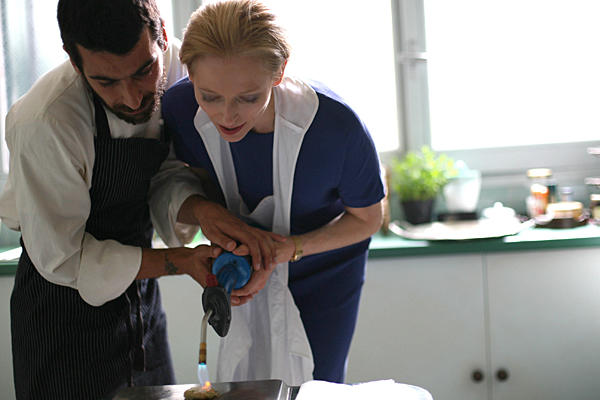
I Am Love is attempting to tread the same territory of Italian cinema in the late 1950s and 60s, in particular I was reminded of Visconti’s The Leopard. They were films about the aristocracy and the secrets that lied beneath the clean and constructed surface. I Am Love brings modern elements into its plot, but still manages to evoke a sense of the classical. Swinton is perfectly cast as a Russian-turned-Italian via marriage. And the cast around her does an excellent job in their roles. The plot is fairly straightforward, there are only a few twists, but its the cinematography and music that really raise the picture above the rest.

Emma Recchi (Swinton) is the matriarch of an Italian family who has made its fortune in textiles, even during the time of Mussolini, an element that plays a bit part sub-textually in the film. Her husband and son have inherited the business from the elderly father and a tension exists, as Emma’s husband believed he would be the sole inheritor. Emma has recently met her son’s friend, Antonio, an aspiring chef. Emma’s son is helping fund Antonio’s first venture into the restaurant business and so she and the young man become more acquainted, eventually starting an affair.

You will be an awe of the camera work in this film. It is some of the most lush and gorgeous work I have ever seen on film. Director Guadagnino is able to pull the warmth right out of his bright spring scenes and bone chilling cold from the winter ones. This is a very sensual film, constantly focused on sex and food, and to get those themes across you need powerful cinematography just like this. In addition, the choice to use musical pieces by John Adams was brilliant. Adams’ contemporary orchestral music helps to create momentum and then a sense of urgency, especially in the film’s surprisingly frantic finale. A great overlooked picture that every fan of good foreign cinema should check out.

Film Review – Catfish


Catfish (2010, dir. Henry Joost, Ariel Schulman)

Its strangely appropriate that at the same The Social Network is playing in theaters, this documentary about what Facebook hath wrought is making the rounds as well. It can be looked at a sequel in some ways: The Social Network are the origins and this is the results of its existence. Since the film premiered at Sundance earlier this year it has garnered mixed reviews. Some critics have seen it as a perfect slice of life in a society where identity has become malleable, while others question the very reality of the documentary, charging it as a meta piece that forces the audience to question if they are being fooled. Catfish was preceded by a mountain of hype and I approached the film with a tempered mind, thinking I would encounter something not quite as good as the trailer claimed.

Nev Schulman is a professional photographer who struck up a relationship with a young girl in Michigan who saw his work in a newspaper and made an oil paint reproduction of it. Through Facebook they converse, he meets her mother, and eventually her 19 year old sister, Megan. Nev and Megan hit it off and find themselves chatting online or over the phone frequently. As time goes on, Nev and his friends, who are documenting the experience, begin to question why Nev has never been able to talk to Abby. This causes a domino effect of other lies being revealed, and leads to the group driving to Michigan to surprise the family and learn the truth.

Whether the film is real or not, it is still an intriguing examination into what the anonymity of the Internet allows. I think the filmmakers do a good job in not passing judgment on anyone who is lying in the film, because they understand that all of us have exaggerated an aspect of ourselves in those moments of conversation where we feel that we can get away with it. The deceit in the film is not one of spite or cruelty, rather its someone seeking to create an universe to escape into. Being an artist, particularly in the small town the family lives in has to be a difficult and alienating situation. So for one of them, populating a Facebook microcosm with characters of your own invention seems like a freeing opportunity.

Film Review – Four Lions


Four Lions (2010, dir. Christopher Morris)

For fifteen years British satirist and comedian Christopher Morris skewered media culture and politics through a variety of radio and television programs. Most notably Brass Eye, a mock news magazine show that focused on the exploitative nature of news, and Nathan Barley, a series that followed a fictional web media hipster and looked at the buffoonish nature of a lot of tech people. It comes as no surprise that now Morris has taken on the current war on terrorism and Islamic extremism in our culture’s psyche. It sounds like an outlandish concept to make a slapstick comedy about Islamo-British terrorists, but Morris has the satiric chops to deliver it such a skilled way, and this kind of film demands a very subtle hand to make it work.

Omar is the head of a small unaffiliated terrorist cell in England. He and his friends are surprisingly sympathetic in how pathetic they are. All of them feel insignificant so when given the idea that to martyr themselves would make them heroes they jump on it. Sticking out like a sore thumb in the group is Barry, a man of British descent who is actually the most militant of them all. Omar and Barry clash when the former is invited to a training camp in Pakistan because his uncle is involved. The films jumps back and forth with an episodic nature, and will with out a doubt challenge you because its characters are incredibly endearing. Part of your brain roots for them because they are classic underdogs, but then the intellectual side steps in and says you can’t root for people who plan on blowing themselves and others up for an imaginary concept.

There are some great comedic moments in the film. I loved that to stay under the radar of British officials, the cell communicates via a Puffin Party webchat for children. The chat requires them to have multicolored puffin avatars. At one point, the car breaks down and Barry blames it on the Jews, at which point he is asked which part of the engine is Jewish, and a conversation ensues. Barry also demands they swallow the SIM cards from their cell phones, after which Omar reminds them the SIM cards can still be tracked inside them. Much comedy comes out of the training camp sequence, and I won’t ruin the big reveal of its largest gag but its a good one.

What shocked me was how, during the final sequence when the crew has assembled to perform the bombing during a cancer fun run in London, I felt incredibly sad for them all. Omar especially sees it as wrong to get Waj, the simpleton of the group, to blow himself up. The end credits are composed of fictional news reports about the events in the film, and they made the story feel even sadder. Instead of going the easy route and presenting terrorists as one dimensional monsters, Morris makes them painfully real and relatable. The result is that we still believe terrorism is wrong, but its because of the waste of life that is the result. Omar has a loving wife who is not an oppressed woman and a son who loves him unconditionally, so his sacrifice feels incredibly empty.

Game Review – Heavy Rain


Heavy Rain (2010, Quantic Dream, PS3 only)

In 1999, I was very excited about the release of Shenmue on the Dreamcast console. The conceit behind that game was you were in a completely open world where you could interact with everything. That had me very interested, while the game’s action mechanic didn’t seem as appealing. For instance, if you were in a footchase with someone, buttons would flash on screen and you would have a couple seconds to press the corresponding one on your controller. At the time, I found that style of play a little stressful and not very fun. Heavy Rain doesn’t have the freedom and openness, but makes that initially frustrating game play riveting.


In an unnamed metropolitan city, we find ourselves in the shoes of architect Ethan Mars, a family man with a beautiful wife and two sons. His happy life turns to tragedy when his eldest, Jason is hit by a car and put in a coma. Ethan’s marriage falls apart and he ends up sharing custody of his younger son, Shaun. A second horrific tragedy strikes when Shaun disappears and appears to be the victim of the Origami Killer, a criminal plaguing the city. You will simultaneously play as Madison Paige; a journalist who befriends Ethan, Norman Jayden; an FBI agent using experimental VR tech to investigate the Origami Killer, and Scott Shelby; an ex-cop turned crusading P.I. out to avenge the victims of the Origami Killer. The game is divided into alternating chapters as these characters pursue their individual paths, while occasionally crossing over.

What stands out most about Heavy Rain over traditional video games, is that you can’t die in a way that ends the game. Instead, characters can be wounded and make mistakes that branch the story in different directions. Near the end of the game the possibility of death becomes a major reality, but up until then you constantly feel progression even if you aren’t making headway in the case. For example, Shelby and his partner visit a local repair shop where things go bad. Before they can leave you (as Shelby) have to wipe your prints from everything you touched in the store. If you fail to wipe down everything the story branches into you being brought in for questioning. This type of game play comes across as a more complex version of a Choose Your Own Adventure.

There are other types of play moments that involve a limited amount of time. Fights with characters consist of a button flashing on the screen, which you must hit within seconds or you miss a block or the chance to throw a punch of your own. Occasionally you end up in a grapple with a foe which requires you to quickly tap a button to break through. Other moments involve the physically movement of the controller to emulate a character’s on screen action. There’s also certain challenges that involve your hands contorting unnaturally on the controller as your avatar on screen must contort to escape being bound or restrained.

Heavy Rain manages to deliver an interactive cinematic story that will pull you deep into the drama. From the excitement of footchases and fights, to the shocking reveal of the Origami Killer’s identity I was completely absorbed.

Film Review – The Heartbreak Kid (1972)


The Heartbreak Kid (1972, dir. Elaine May)
Starring Charles Grodin, Cybil Shephard, Jeannie Berlin, Eddie Albert

If you have only seen the 2008 remake of this film, then you are missing out. Where the Ben Stiller-driven version works to make you actively dislike his bride and everything is wrapped up in a nice neat package, Elaine May’s film makes Lenny a completely narcissistic prick. The result is a very dark, clever comedy that ends on a note of ambiguity. Unlike most comedies, this will remain in your head for a long time, thinking about what the result of this character’s choices will be. This is also the best performance from Charles Grodin I have ever seen, turning his smarmy asshole persona up to high.

Lenny (Grodin) meets and quickly ends up engaged and married to Lila (Berlin). As they head south for a honeymoon in Miami, Lenny grows quickly repulsed by her. Upon arriving, he meets young WASP Kelly (Shephard) and quickly falls for her. He begins coming up with absurd excuses to leave the hotel room as Lila treats a nasty sunburn. Lenny eventually decides he’s going to divorce Lila and follow Kelly back to Minnesota where they will start a life together. There’s just the matter of her father, who happens to hate Lenny.

In the remake Ben Stiller’s Lenny is a lovable schlub who has crazy best friends who help him out. In that film you’re made to want him to leave his horrible wife and be with the sunny, charming new girl. Here we get a much more realistic story, any one that would do this to their wife on their honeymoon is a pretty cruel, selfish person. There’s an implication that Lenny only ends up married to Lila because she won’t have sex before marriage, and after their wedding night, he begins actively looking for reasons to hate her. Grodin plays Lenny as a sociopath, a man who constantly lies to worm his way in and out of situations. He manages to balance his performance by making Lenny a likable guy too, the audience is meant to be conflicted. The same can be said about both female leads, too. Lila is a sweet, loving woman but also kind of obnoxious. Kelly is incredibly beautiful, but also very fickle and cold.

I haven’t seen too many Neil Simon films (he scripted this one), but I got the feeling this is not his typical type of writing. Director May has brought her comedy chops to the table, coming out of Second City and her comedy partnership with Mike Nichols. The humor here is nuanced and dry, and its perfect for this story. There’s no slapstick set pieces, just characters engaged in conversation that has the tempo of perfectly normal speech, but when we pay attention to what they are saying, we see just how screwed up they (particularly Lenny) are. Interestingly enough, this picture makes a great companion piece to Nichols’ own The Graduate, both about the ennui experienced by immature men.

Director in Focus: Werner Herzog – Signs of Life

Signs of Life (1968)

Before we jump into this first film, some background on Werner Herzog. Werner Stipetic was born in Munich in 1942 in a house that was destroyed by Allied bombing a couple years later. The family migrated to the Alps, where the father left the family, causing 12 year old Werner to take his grandmother’s last name, Herzog. Herzog showed a rebellious streak early on, when asked to sing in front of his class and refused. Till he was 18, as an act of defiance, he never sang, listened to music, or learned to play a single instrument. At the age of 14, Herzog encountered a simple encyclopedia entry on film making that infused the desire in him to create. He stole a 35mm camera from the Munich Film School in act he defends as a necessity for him to continue living. Herzog has been married three times, something you would expect based on his volatile personality. One more interesting note about the director, during a 2006 interview with BBC critic Mark Kermode, Herzog was shot by an unknown person with an air rifle. He seemed to brush it off and attempted to continue with the interview, despite Kermode freaking out over the incident.

Signs of Life is a war film without war, instead the soldiers are driven to madness through sheer boredom. Set on Crete during World War II, the film finds Strosek and two fellow German officers put in charge of a munitions depot nestled in ancient ruins. The main character here is the most blank canvas, while his compatriots, Becker and Maynard have more fully fleshed personalities. Strosek has ended up engaged to local Greek girl, Nora in a relationship that seems founded in their mutual lack of anything interesting to do. The film is narrated in a stoic, travelogue style that tempers the picture up until its last twenty minutes when Strosek becomes completely unhinged.

Signs of Life is cited as an inspiration for Kubrick’s The Shining, however I saw a lot of similarities with Polanksi’s Knife in the Water. Both films are of the same era and place their characters in a lifeless, desolate landscape where they are psychologically pushed to extremes. As we’ll see with the majority of Herzog’s work, he is incredibly interested in the psyche of men who have a break with reality and the role nature plays in that. Strosek is positioned against his desert setting as minuscule, he is insignificant, hence his position defending a post that is no danger of being attacked. Signs of Life is about humanity’s innate need to believe they are useful. When we feel that our society has no use for us it will inevitable cause a break from the social expectations and mores.

Up next: Even Dwarfs Started Small