Director in Focus: John Cassavetes – A Woman Under the Influence

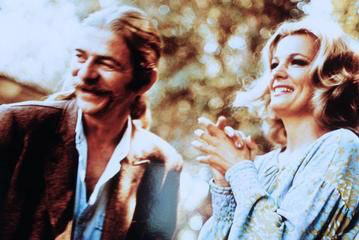
A Woman Under the Influence (1974)
Starring Gena Rowlands, Peter Falk

Every film since 1959’s Shadows feels like a warm up act for this masterpiece. Cassavetes frequently played with the themes of infidelity and crumbling marriages, as well as featuring characters whose grip on sanity was weak to say the least. Once again we have Cassavetes’ wife, Gena Rowlands as the female lead and alongside her is Peter Falk as the harried husband. Both actors bring the naturalism that Cassavetes strove to have in all his films. This is a film born out of emotional truth, given a framework and allowed to grow and stretch in the directions it finds comfortable. There’s a lot changing aesthetically in Cassavetes’ work at this point, bits of artifice are becoming more apparent, most notably a soundtracks that doesn’t come from music in the environment. The dialogue is delivered with a real tongue though, people stutter, people start into a sentence only to abandon it half way through. In the same way Altman created naturalistic satires, Cassavetes was defining the naturalistic slice of life drama.

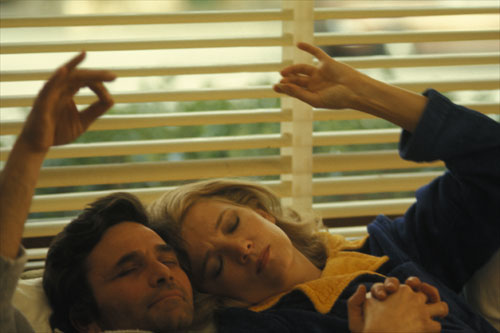
Nick Longhetti (Falk) is a construction worker in Southern California who is forced to spend most of the day away from his family. His wife, Mabel (Rowlands), is a frenzy of a mother, both desperately wanting intimacy with her husband but terrified to leave her kids for one night. Over a period of a few days, it becomes more and more obvious that Mabel is suffering from a complete mental breakdown. Her moods are changing on a dime, she is forgetting the names and faces of people she has known for years, and she is so angry with Nick all the time. How this family deals with mental illness is presented in a brutally honest way. There’s no heroes in this film, only very damaged people. While Mabel’s condition is more obvious, it becomes apparent by the end of the film that Nick’s grasp on sanity may be just as weak, he’s just learned how to hide it better.

The core of the film is Gena Rowlands’ performance. Rowlands is one of those beautiful leading women you see rarely in Hollywood now. There’s a lot of pretty faces in the movies that hit your cineplex, but its not often they carry the depth of acting chops Rowlands shows off so effortlessly in A Woman. Not even Nicole Kidman, who has followed a similar career of offbeat films, can rise above the coldness of her portrayals. While it would be easy to make Mabel out as either cold or over the top, Rowlands walks an incredibly fine line with the intent to show that Mabel is a loving wife and mother. She demands that the audience withhold from judging the character and let her stand on her own. The structure of the story starts us in the last few days before Mabel is committed, and Nick has suspected something. Nick uses physical violence to “smack it out of her”. Cassavetes seems to be making a statement against the macho conceit of the time (and sadly even still today) that a woman needed to be handled like a child. If his films are anything to go on, in Husbands he seems to be stating that the true adult children are the men, with their unease when dealing with the pain of reality and mortality.

It’s hard to watch a Cassavetes film and not think about Mad Men. These films of the early 1970s feel like many of the character types from that series and possibly previews of where they might be headed emotionally. Mabel came across as very much in the same situation as Betty Draper, yet the other end of the spectrum. Mabel is very much a blue collar girl, and she has an effervescence of life that makes her a great wife and mother and charming flirt to the workers her husband brings home from time to time. Betty is an East Coast blue blood, who sees the people around her as fitting into a personal caste system established by a cold, intolerant mother. Yet as drastically different as these women’s backgrounds and personalities are, they are victims of the 1950s culture. They were young and pretty then, and were objects for men to have. Their identities revolved around being a wife and eventually a mother. Each of them breaks down in their own way: Mabel literally and Betty through her confrontation and divorce from Don. Cassavetes has to applauded for making a film so complex and honest about women in his society, when from an entertainment standpoint it went against everything that works.

Next up: The Killing of a Chinese Bookie
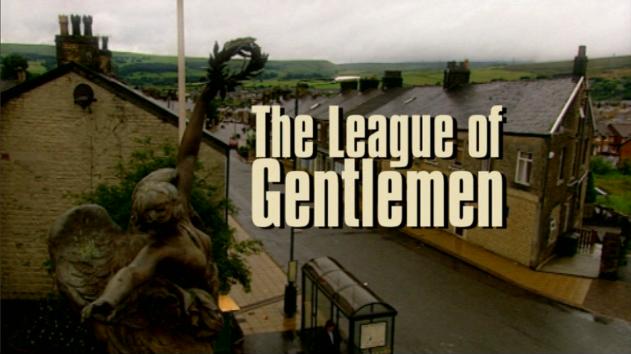
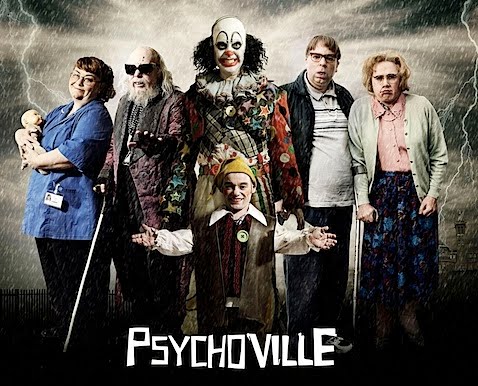
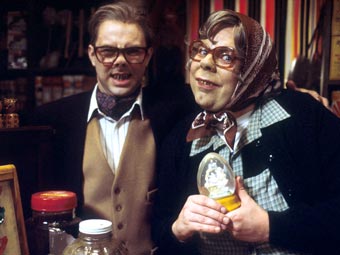
Across the Pond: The League of Gentlemen and Psychoville


The League of Gentlemen (1999-2002, 19 episodes)
Psychoville (2009, 7 episodes)
Created by, Written by, and starring Mark Gattis, Steve Pemberton, and Reece Shearsmith

“Black comedy” doesn’t begin to describe the shear depths of depravity the work of Gattis, Pemberton, and Shearsmith reaches. There are moments in the latter seasons of League, and all throughout Psychoville, where the audience has to question if the shows are still comedies, or if they have become some other genre of television. The level of gore and perversity that occurs in the third and final season of League is extraordinary. Its as if the performers had held back for the first two years and then unleashed the show they truly wished to make: one where not a single character is without sexual or psychological damage, yet are painfully sympathetic. So too in Psychoville are characters who are even more disturbed and who you feel even sorrier for by the end of the series. These three British titans of comedy have managed to create an impressively larger fan base for the kind of shows American networks wouldn’t touch with a ten foot pole.

Gattis, Pemberton, and Shearsmith came together in 1994 and began developing a collection of eccentric and disturbed characters for stage and radio. By the end of the 1990s they had garnered enough attention for their own BBC series. The television show was set in the fictional Northern England town of Royston Vasey, where every citizen seemed to have a dark secret and proclivity. The first season centers around Benjamin, a young man who is visiting his aunt and uncle in Royston while hiking with his friend. Benjamin finds that as hard as he tries he can’t seem to get out of town. Along the way we meet Hilary Briss, the town butcher with a very special selection; Barbara, a pre-op transsexual cab driver; Mr. Chinnery, the town vet who kills every animal he tries to save, and many more. The most famous of the denizens are Edward and Tubbs, a pig-nosed couple who run “a local shop, for local people”. When outsiders wander in they are typically murdered in a brutal fashion by the couple. Needless to say, crews arriving to build a highway from London to Royston are met with some resistance.

The three seasons of League go through many aesthetic changes. In the first series there are a mixture of on location and studio filmed scenes. In series two things become much more on location, but the laugh track remains. By season three, every thing is on location and the laugh track is gone. The result is that season three highlights the darkness of the show’s premise. The creators also amp up the drama and make these characters three dimensional. Psychoville is a continuation of the themes of League with new characters. This time around the five main characters are all being stalked by a masked figure whom sends them letters hinting at a transgression that links them all. British comedy legend Dawn French plays a maternity nurse obsessed with bringing her dummy baby doll to life by feeding it human blood. Pemberton and Shearsmith play multiple roles, in particular an Oedpial mother-son serial killer team. Psychoville is not as collectively strong as League, but some individual episodes really stand out, particularly the fourth which is an homage to Hitchcock’s rope. The entire episode takes place in one room and is filmed in two takes. Pretty impressive.

The entire League of Gentlemen series is available on Netflix
Season One of League of Gentlemen is available for free on YouTube

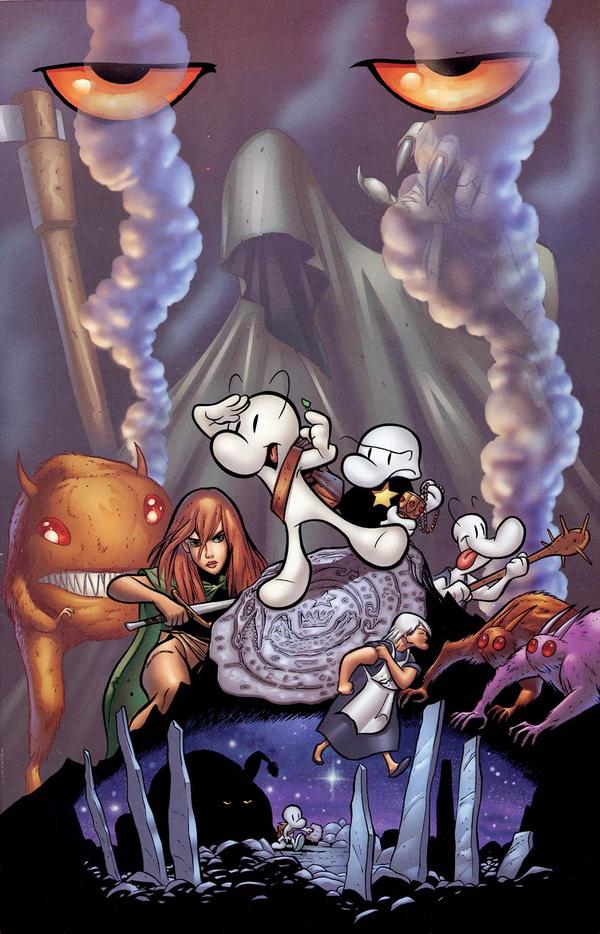
Back Issue Bin: Bone


Bone (1991 – 2004, 55 issues)
Written and Illustrated by Jeff Smith

It might not look like it, but Jeff Smith’s magnum opus, Bone is a contemporary Lord of the Rings in comic book form. For years, I saw the images from the series: The funny looking cartoonish protagonist, the menacing rat creatures, the great red dragon. It wasn’t until 2005 that the complete collection was released that I purchased it and began the series. And its taken me five years to finish the series, with many starts and stops along the way. The complete collected edition is designed perfectly for that with about ten “books” within it, and the story grows denser and more history rich as you progress. The end result is a work of high fantasy that is one of the best of the late 20th century/early 21st.

The story centers around three beings from the unseen town of Boneville: The scheming Phoney Bone, the happy go lucky Smiley Bone, and the hero of the story Fone Bone. The series opens on them journeying out of Boneville as a result of one of Phoney’s schemes. To avoid being lynched they have gone into a mysterious forest, in which they encounter the rat creatures, a talking flea, and the Great Red Dragon. Eventually they emerge in the town of Barrelhaven where the story really kicks into gear. Fone meets and develops a crush on farm girl Rose, and Phoney draws the ire of Rose’s guardian, Gran’ma Ben. The early parts are much lighter and mix elements of fantasy and silly cartoon plots. By the the time you reach the second third of the story the fantasy has been amped up and the true plot has been revealed.

Bone draws a lot of its style from the Carl Barks Disney comics of the 1940s and 50s. These were serialized adventure stories that feature cartoon beings. While the slapstick style jokes were there, the emphasis was much more on the mystery and action surrounding the plots of pirate treasure and haunted castles. Here the high fantasy novels of the 1970s and 80s are merged with the “funny book” characters to produce a very original work. Smith is a comic creator who truly has an independent mindset, the entire premise behind Bone is one that could never really sell at one of the big companies. For a short time, Bone was published as part of Image Comics, but Smith pulled the title and brought it back to his own publishing house, Cartoon Books.

I could easily see people passing the series over who would actually really enjoy it if they gave it a chance. The universe created by Jeff Smith is very rich and immersive. By the end of the story you truly feel like you’ve made this epic journey across the land, from a small town in the forest to the great city-fortress to the south. There’s an intricate history that mirrors the story of Aragorn and the broken lineage of royalty in the land. Fone Bone ends up playing a major role in the restoration of this royal line. The artwork in the book is amazingly intricate as well. The series experienced numerous delays, but when you sit down with the whole story before you it is worth it. Not a single issue’s art if below par, and it still stands as one of the most beautiful looking comics I’ve ever read.

Director in Focus: John Cassavetes – Minnie and Moskowitz

Minnie and Moskowitz (1971)
Starring Seymour Cassel, Gena Rowlands, John Cassavetes, Timothy Carey, Val Avery

The first time I ever remember being aware of Seymour Cassel was in Wes Anderson’s Rushmore. When I look back, I realize it was one of those instances where an actor has an incredibly distinguished career in film, but, because its not mainstream cinema, you don’t discover them until they appear in a contemporary movie. In Anderson’s films Cassel is so muted, always a background player, with not much to do. In Cassavetes’ Faces, Cassel plays a young hipster, and this is that same character a few years down the road, a little older, but still full of energy and oddity. This is also the first (but definitely not last) film where we get to talk about Gena Rowlands, Cassavetes wive and figurehead of independent cinema in her own right. This is a film where we start to see the cinéma vérité elements pushed away for just a little bit more structure.

Seymour Moskowitz (Cassel) is a parking garage attendant in New York City who not only enjoys his job, he loves it. Moskotwitx happily jogs from one care to the next, bringing them to their owners. He visits his mother on ocassion and, as the film opens, borrows $400 to move to Los Angeles on a whim. In L.A. he meets museum curator Minnie Moore (Rowlands). Moore’s most recent relationship has been with a married man and her personal life is a shambles. Moskowitz is the last guy you would expect her to end up with, but through their bickering and frustration they see the better parts of each other and very strange romance takes root.

With Minnie and Moskowitz, Cassavetes took the bickering couple sub-genre made popular in the 30s and 40s and recast it with a 1970s filmed on the fly aesthetic. Moskowitz is his mother’s angel but lives as if he is a ramblin’ hippie. Minnie is a woman who has had nothing but problems with men, and when she meets Moskowitz its during a fight with her overly aggressive and manic date (Avery) in a restaurant parking lot. It’s Moskowitz who is the fickle one in the relationship, Minnie is typically exasperated by him. And then, through trial and error, after working through their problems everything clicks. Its a romantic comedy done in non-cliched manner, it ends on a happy note, but it also ends on an honest note.

Once again, Cassavetes is not a filmmaker who would ever appeal to a mass audience. But for people who feel that today’s romantic comedies are being spat out of a screenplay factory, his work can provide a fresh breath of air that keeps you surprised and presents characters who behave just irrationally as we all really do. There’s also great little side moments that have nothing to do with the overall narrative but still work. In particular, Moskowitz visits a diner at the beginning of the film and has a conversation with a vagrant (Carey). This scene alone could be cut out and framed as its own short film and the homeless man is a rich character unto himself that never gets fully explored.

Next up: A Woman Under the Influence

In Theaters Now: Scott Pilgrim vs The World


Scott Pilgrim vs The World (2010, dir. Edgar Wright)
Starring Michael Cera, Mary Elizabeth Winstead, Kieran Culkin, Mark Webber, Alison Pill, Johnny Simmons, Anna Kendrick, Jason Schwartzmann, Brandon Routh, Aubrey Plaza, Chris Evans, Mae Whitman

EPIC!

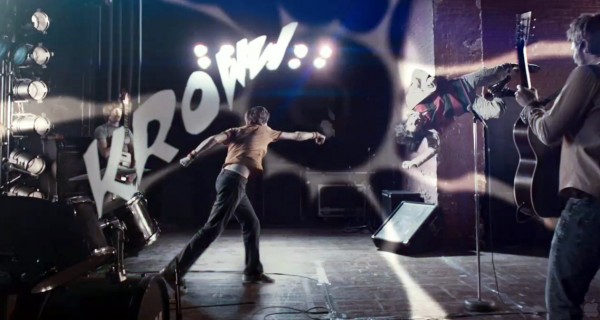
This is the official film of the Nintendo Generation, from the opening Universal logo to the final battle, the film is painted with pixelated brush strokes of late 80s video game fandom. Its also the closest I’ve seen director Edgar Wright come to recreating the style of humor found in his wonderful British series Spaced. These are the same kinds of people that populated that television show, just born a couple decades later. They have the same idiosyncratic obsessions and quirks just colored in an 8-bit aesthetic. This also marks a major departure for Michael Cera who has made a career on playing the lovable loser. The Scott Pilgrim character is a real asshole, especially to the girls in his life, and Cera does a good job of shifting his style of acting to fit Pilgrim. Simply put, this is the best date movie/action flick of the year.

The story takes us to the snowy streets of Toronto where Scott plays bass in Sex Bob-Omb and has upset fellow bandmates by dating the 17 year old Knives Chow. His dalliance with Chow is usurped when the mysterious Ramona Flowers crosses his path. Once they start a relationship its quickly revealed that Ramona’s seven exs have formed a villainous league who are intent on destroying anyone who dares to date her next. In this world you don’t need to be a black belt to fight like a character out of Mortal Kombat, and no one questions when Scott drops his bass and flies into the air to clash with ex after ex. This is a world where the line between game console and reality are blurred.

The humor here is so wonderful, its geeky and silly and the film never takes it self too seriously. Its the kind of thing you expect from Edgar Wright. Characters talk in a hyper real way, popping in and out frame when ever they are needed. The standout in the cast for me was Kieran Culkin as Scott’s gay roommate Wallace. Wallace is devoid of stereotype and is simply a perfect compliment to Scott’s often immature relations with the female of the species. The rest of the cast hits every note they needed to. None of the characters are all that fleshed out, by the conceit of the film is that they don’t need to be. This is a live action video game so characters are more types rather than three dimensional. Despite that lack of character dimensionality, the film does an excellent job of world building. While the far edges are kept blurred, the world of this fictional Toronto feels like it is bursting with life with so many characters passing through the frame.

It’s a shame the film didn’t have a bigger opening and appears to be quickly fading from theaters. It is Wright’s highest opening film though, almost twice as much as Hot Fuzz. The thing about Scott Pilgrim is that it is not ever going to appeal to a mass audience. This is a film made squarely for people who were kids when the Nintendo was released and were obsessed with it. It doesn’t have the mass guy appeal of The Expendables or the mass gal appeal of Eat Pray Love. Though, I’m willing to bet it is much much better than either of those films.

Comics 101: Hawkman and Hawkgirl/woman

Simply two of the most confusing characters in the DC stable. Here goes my attempt to boil Hawkman and Hawkwoman down to simple and understandable heroes.

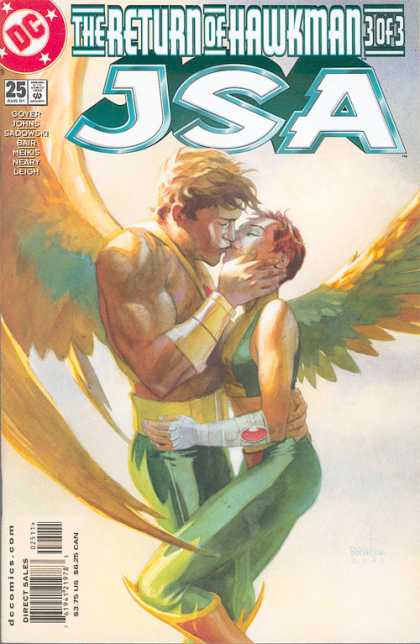
It begins in ancient Egypt during the reign of Ramesses, and with Prince Khufu and his wife, Chay-Ara. The two happen across a strange vessel that has crashed in the desert and find that the metal it is composed of possesses anti-gravitational properties. The ship is melted down to make a scarab, a knife, and a glove which imbue the user with flight. The metal also seems to link the souls of Khufu and Chay-ara, even in the aftermath of their murder at the hands of the evil priest Hath-Set. For centuries they are reborn and reunited; from the Dark Ages to the times of the marauding pirates to the Old West. Eventually Khufu is reborn in the body of an archaeologist named Carter Hall. Carter is excavating royal burial sites in Egypt in the 1940s when he meets fellow archaeologist Shiera Saunders. The two come to a realization of their past lives and fall in love, using the metal uncovered to form wings and take to the skies as Hawkman and Hawkgirl. They join the Justice Society of America during World War II and eventually have a son together, Hector, who becomes the superhero Silver Scarab. During the 1950s, the JSA comes under fire by House Un-American Activities Committee, led by Joe McCarthy, and decide to disband and abandon their superhero identities.

Decades later, Hawkman would join the Justice League of America to work as a mentor for the new generation of heroes. This tenure would be short lived when he and the newly reunited JSA became trapped in a limbo universe. During this period, a new Hawkman, with a partner named Hawkwoman came onto the scene. During the 1940s, Carter was visited by a Thanagarian, one of the aliens whose culture had made the ship discovered all those centuries ago in Egypt. This Thanagarian was so impressed by Carter’s exploits that he named his first born son after him: Katar Hol. Katar grew up on Thanagar to become a police officer there. On Thangar, the alien immigrant class were treated as slaves and upon coming of age Katar realized the evil in this act. Katar rebelled against his society and found a partner in a lower caste woman named Shayera Thal. Eventually the two convinced Thanagar to grant equal rights to the aliens on the planet, and became ambassadors to Earth. These alien Hawks operated on Earth for a couple years until the original pair returned.

During a major event in the DC Universe that caused time to disrupt, Carter and Shiera’s souls were merged with Katar and that of an ancient Hawk God to form a new being that called itself Hawkman. This Hawkman lasted only a short time until he was driven insane by the combined pain of the souls that inhabited him and was given a mercy killing at the hands of Martian Manhunter. Shiera finds her soul reborn again in the body of her teenaged grand-niece Kendra Saunders. Kendra becomes Hawkgirl and is an active member of the JSA and JLA. Eventually, Carter is reborn in a younger body but finds Kendra has no attraction for him, breaking the cycle of he and his beloved being reunited. The two worked side by side with the Justice Society for awhile and eventually felt a slight rekindling of their feelings, which were snuffed out when Kendra left to join the JLA and started a relationship with Red Arrow. Finally, on the eve of Blackest Night, the two admitting their love for each other, only to be brutally killed by the zombies awakened by the event.

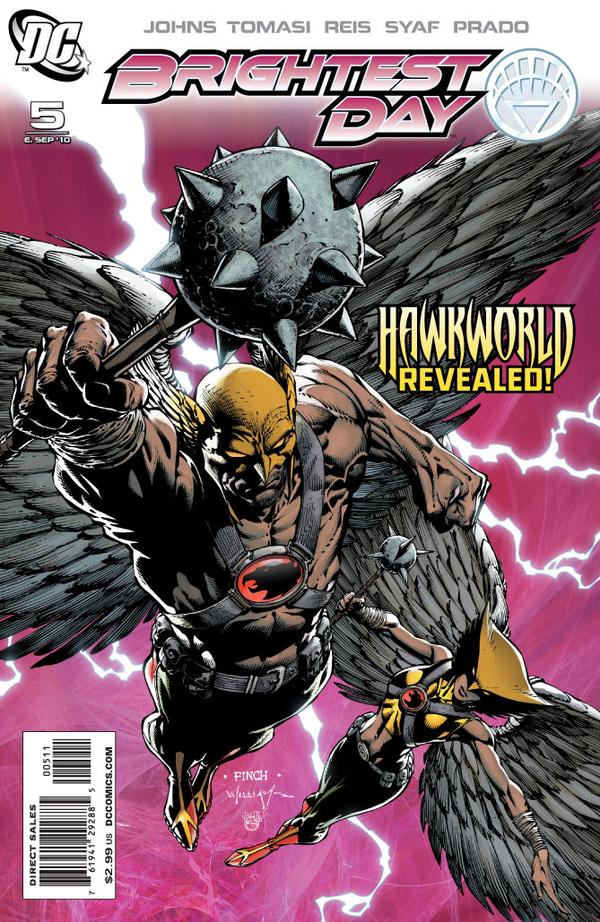
The reanimated husks participated in the battle against the heroes and at the close of the event, when a White Lantern appeared to counteract the evil, Carter and Shiera were reincarnated in their original forms from the 1940s. They have found that their ancient nemesis Hath-Set has also been reborn and he lures them into a parallel universe rules by humanoid Lions and Hawks. The true agenda behind Hath Set’s plan is not yet revealed but he has captured Sheira in his citadel while Carter rallies the Lion people to help him save her.

Shadows in the Cave: A Town Called Panic


A Town Called Panic (2009, dir. Stéphane Aubier, Vincent Patar)

This is a singularly unique French language animated feature that highlights something I have always loved in French animated movies. They are able to construct an elaborate and rich universe in a little over an hour. A Town Called Panic is a surreal and bizarre picture that is using a style of stop motion animation that is hard to describe. The characters are designed to look like toy figurines of cowboys, Indians, farmers, and other people. There are no moving mouths and no facial animations, simply very frenetic body movement and voice acting that nails the weirdness of this world.

The appropriately named Town Called Panic is a place where crisis is an everyday occurrence. In one large house lives Cowboy, Indian, and Horse. Horse is the level headed of the trio and in love with a fellow equine who teaches music as the conservatory in town. Its Horse’s birthday, so Cowboy and Indian order 500 bricks to build a barbecue, however, a typing error makes that 5 million. The result is that their house is crushed by bricks. Every day they rebuild, but every night the entire house disappears. They stakeout one night and discover the weird truth behind things.

These are all hyperactive and manic characters, save Horse who keeps a level head. Part of the humor are Cowboy and Indian’s sudden leaps from passivity to complete and utter chaos. They scramble about trying to cover their errors but inevitably make things worse. There’s also a lot of humor from moments where you would expect characters to panic, that Cowboy and Indian are surprisingly unphased. Its comedy that doesn’t have any profound message or point, its akin to early Looney Toons where stories were given over to chaos and insanity.

The jokes never become vulgar or profane, so its a suitable substitute for typical maudlin family fare. In many ways I saw similarities to The Triplets of Belleville, both films created very specific characters that are richly detailed while using broad strokes. It’s also a statement against the current domination of CG animated features. At the end of the day, its not the bells and whistles an animated film can lay claim too but the creativity and inventiveness working behind the scenes.

Director in Focus: John Cassavetes – Husbands


Husbands (1970)
Starring Ben Gazzara, Peter Falk, John Cassavetes

Husbands is a very flawed, self-indulgent picture. And it is hard to talk about without bringing up the only Cassavetes film I had seen before this spotlight, Faces. So for this review we will look at where Faces gets right what Husbands fails on. Just like Shadows, both Husbands and Faces adopt the cinéma vérité style, though only Faces really lives up to the tenets of the form. Where Faces is an honest examination of the horrible cruelties couples visit upon each other, Husbands is a self-indulgent mess with occasional moments of brilliance that are snuffed out by moments that drag on without purpose for too long.

Husbands‘ opening credits are a series of still photos of four male friends in their early forties. The photos cut to a cemetery where we learn one of the men died of a heart attack. From there, the three remaining men embark on a series of drunken escapades that typically involve them bothering other people, and eventually traveling to London where they attempt to sleep with some women and fail. In a lot of ways these men are where I see Don Draper headed on Mad Men, except there it will be comprehensible and not a messy blur of film. In Faces, we follow a middle-aged couple who are on their last straw. In the course of one night, they both become involved in trysts that end with their lives changed forever. Both films incorporate loosely improvised dialogue and scenes. In the case of Husbands its a complete and total mess.

Husbands could have said a lot about its time, and the role of husbands and fathers coming out of the 1960s, but it completely fails. It ends up coming across as a Mailer-esque Machofest, where women are treated as objects without a second thought. Yes, Cassavetes doesn’t seem to condone that behavior, but the narrative thread of the film is such a mess its hard to figure out what he intends. I think Cassavetes got so caught up in the aesthetics of the film, he forgot to put a story in there. Both Shadows and Faces are the same cinéma vérité style and have heavy improvisation, but they still had stories you could follow. With a film like Husbands you expect some sort of realization on the part of the characters, they don’t necessarily have to change or grow, but the audience at least should understand something about them better. We get none of that, one man stays behind in London, the other two come home, stocking up on trinkets for the kids and preparing to be chewed out by their wives and that’s it.

I know my mother’s father died when she was twelve and he was only forty-five. His death was around the same time of this film and, after seeing certain shows like Mad Men and other period pieces, you can see that excessive drinking and smoking were a common part of the culture. It would have been interesting for these three to be forced into some self-analysis in the wake of their friends’ death, and this could have been played out in the same settings and scenarios, just reigned in by a tighter story structure. This was the last generation to have participated in a war they believed was honorable in America (The Korean War) and in the time that followed military service became just one way of defining manhood. For these men, hard drinking, hard smoking, and promiscuity outside their marriage was what defined them. Despite their friend, who surely engaged in these behaviors, dying as a result, they indulge and learn nothing. And the story is told in a way that challenges us to even keep watching. A missed opportunity.

Comics Review: Doom Patrol v5 #1-13


Doom Patrol v5 #1-13
Written by Keith Giffen
Art by Andy Clarke

Almost simultaneously Marvel and DC introduced bizarre misfits teams in 1963. Marvel brought the world the X-Men, led by the wheelchair bound Professor X. DC Comics presented Doom Patrol, led by the wheelchair bound Chief. As you well know, only one of these two concepts skyrocketed into great success. That’s not to say Doom Patrol hasn’t been a perennial favorite in the decades that followed. Since the late 1980s, there have been four separate shots at resurrecting the Doom Patrol idea. The most successful was spearheaded by Grant Morrison who took over the second series and brought into the mature readers imprint Vertigo. He injected bits of dadaism and surreality into the series and created a critically acclaimed run. But it didn’t last for much longer after he left. Now Keith Giffen and Andy Clarke are tackling the characters with yet another new angle.

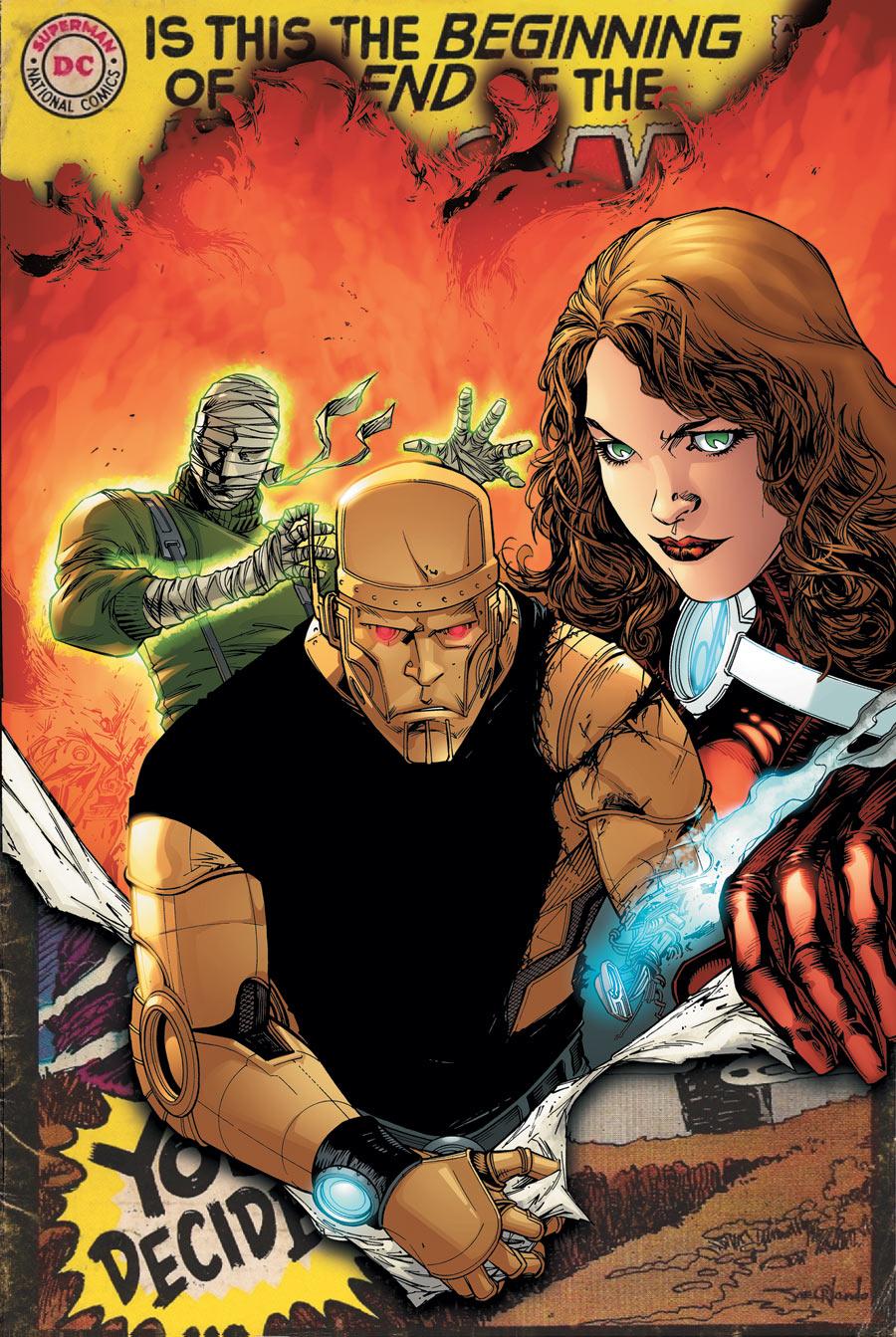
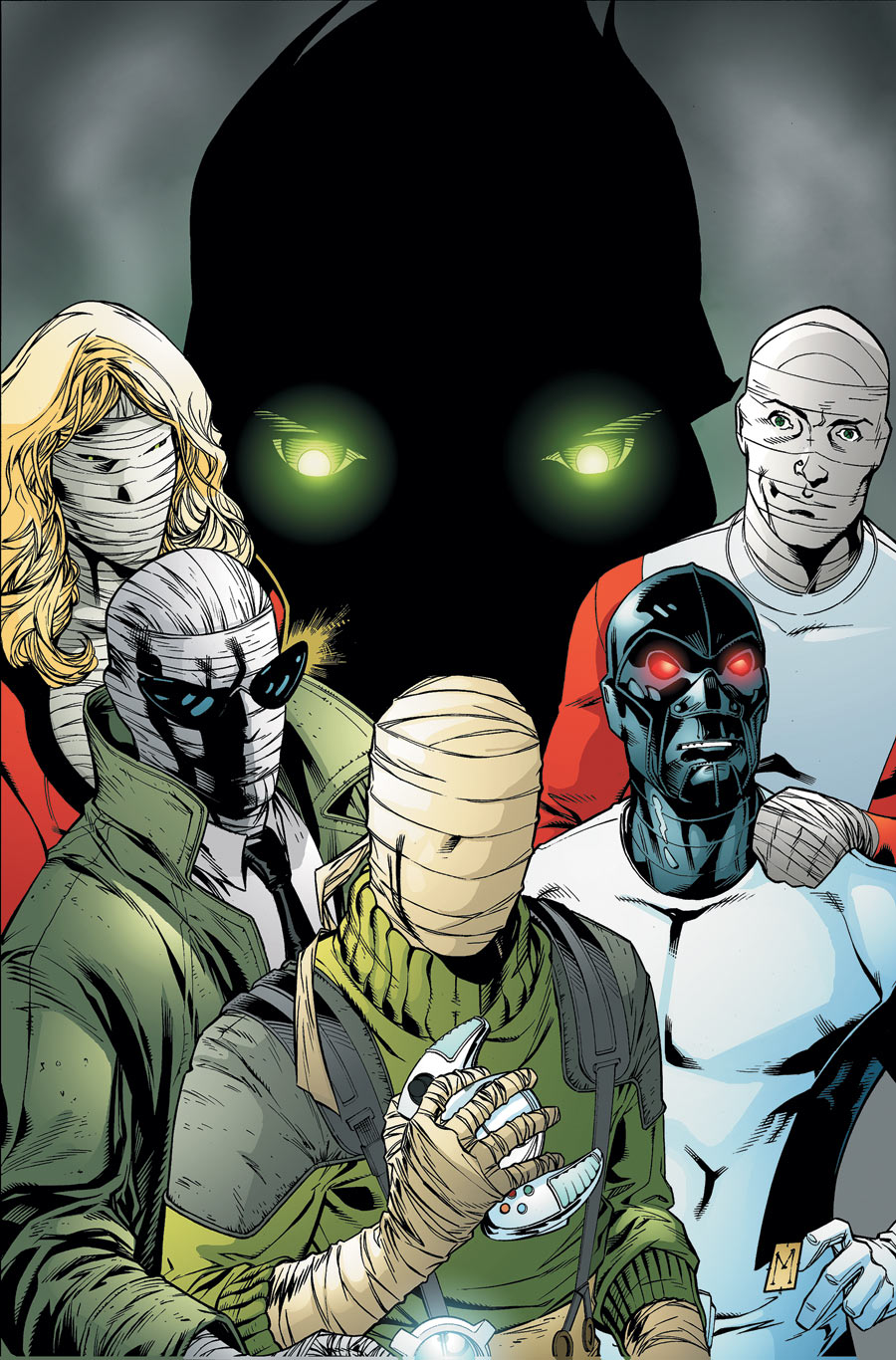
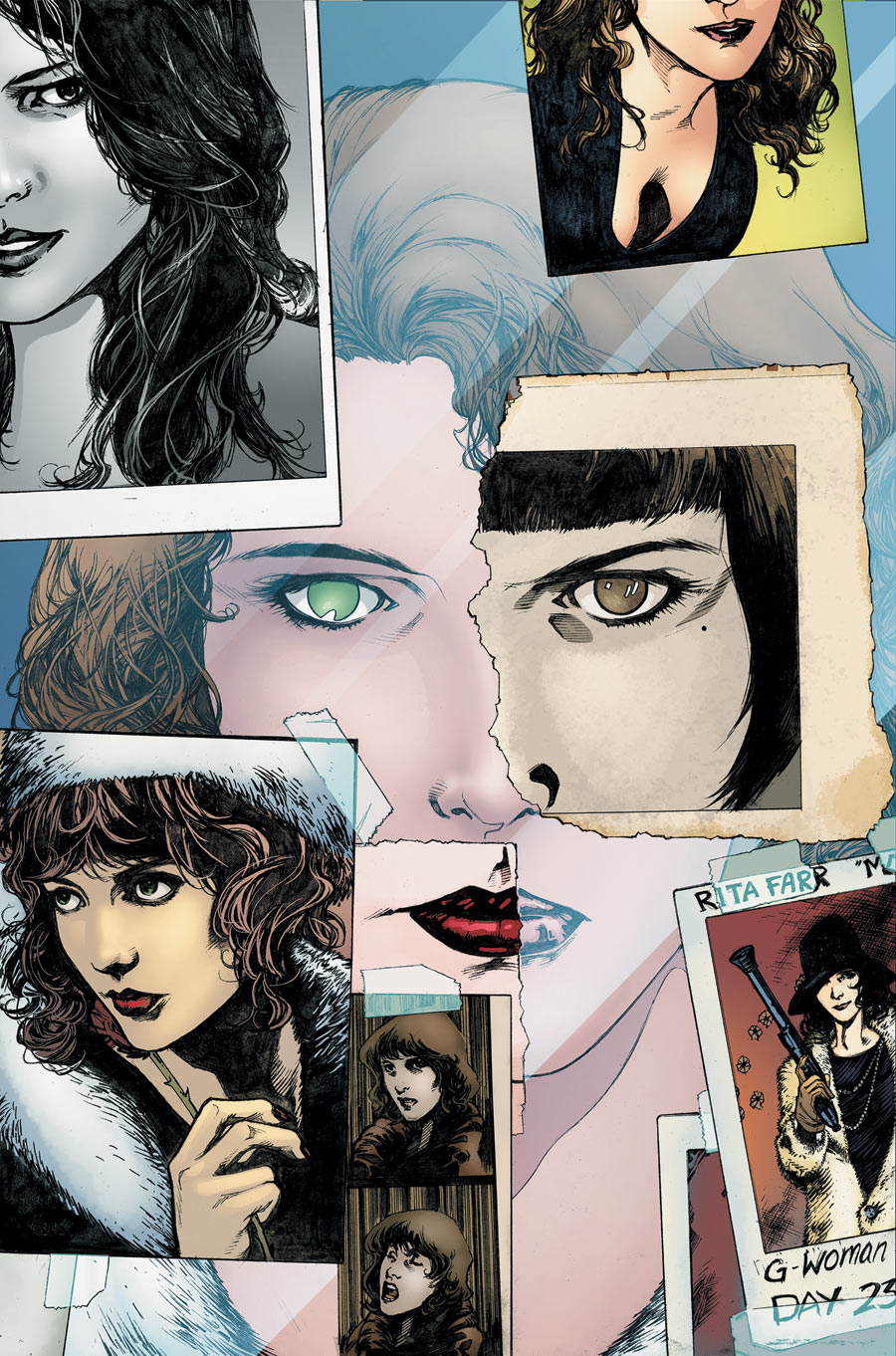
The premise of the Doom Patrol revolves around Niles Caulder aka The Chief. Caulder was a reclusive scientist who had bitterness towards the world. In the interest of his own scientific interests, with a side interest in helping the world, he gathered together three individuals transformed by freak accidents. Pilot Larry Trainor was blasted with strange radiation, forced to wear specially treated bandages to contain his radiation, and could projects hard light version of himself from his body. Rita Farr was a movie actress on the set of her latest picture when she accidentally bathed in mysterious waters and found she could shrink and grow at will. Finally, Cliff Steele was a race car driver fatally injured in an accident. Caulder witnessed it and helped transfer Cliff’s brain is a massive robot body. This trio were often the reluctant aides of Niles Caulder.

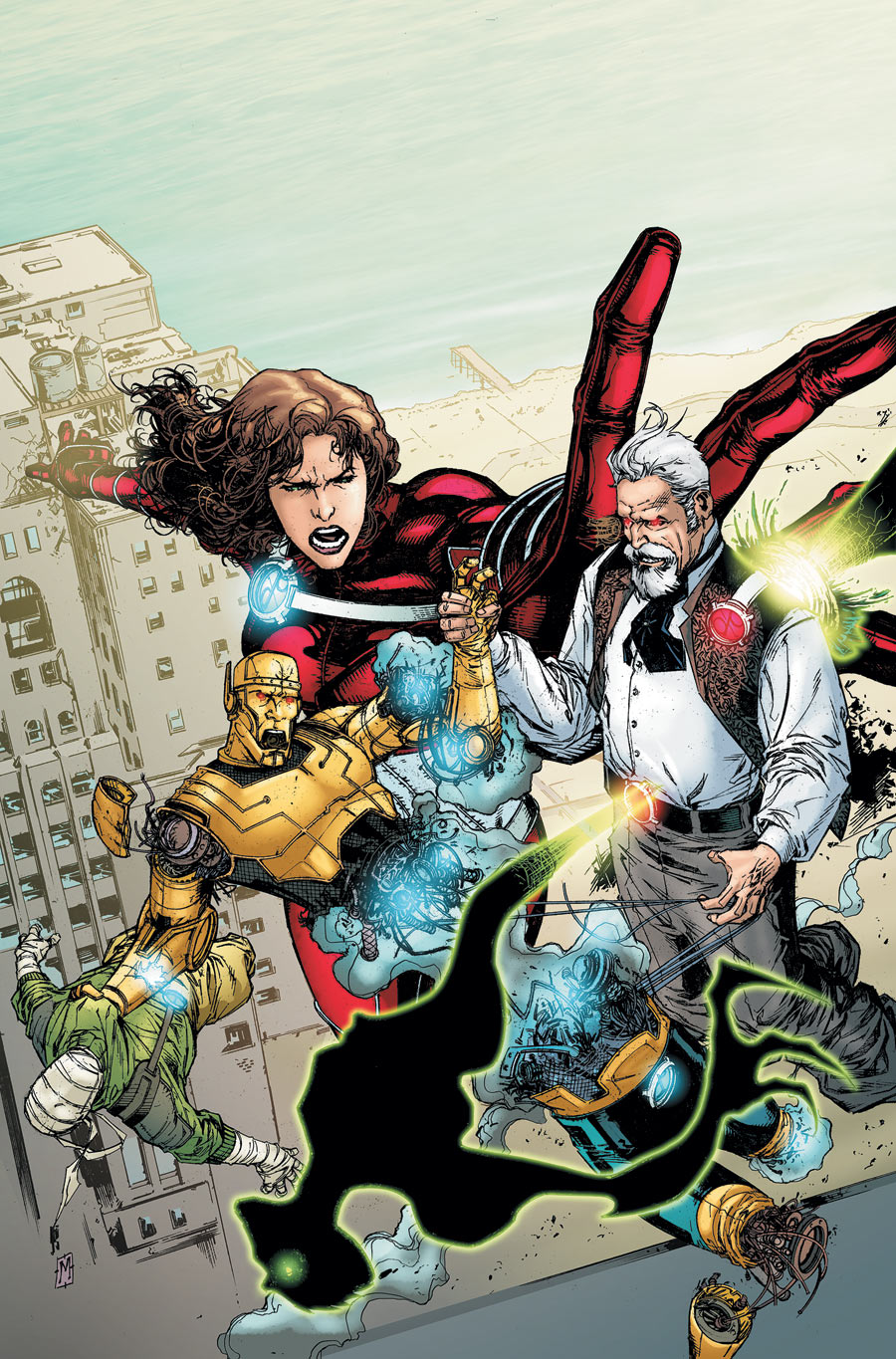
In the current series, the Doom Patrol have relocated to Oolong Island, a locale in the DC Universe most recently used as a haven for various mad scientist supervillains. The Island has been “legitimized” and Caulder brings his team in and uses the newly founded nation as his staging ground for illegal experimentation and missions. The trio of members underneath him are completely mistrustful of him and Rita is especially angered when she learns Caulder has brought her ex husband, Steve Dayton along. Dayton is a telepath who originally used his powers to convince Rita to marry him, they even adopted the Teen Titans’ Beast Boy as their son. Once Dayton’s ruse was revealed the marriage fell apart. Now Caulder uses Dayton to attempt to control Rita.

The plots have been pulled into joining the Blackest Night story running through the books as well as delving into dense Doom Patrol continuity. I can’t see someone who hasn’t read the last twenty years of Doom Patrol stories being able to understand this series. There’s a villain reveal in one of the more recently issues that will fall with a thud for anyone who didn’t read the Morrison run. Though Giffen attempts to provide recaps for new readers: there’s a single issue spotlight on Larry Trainor and another on Rita Farr, 32 pages is simply not enough to create an understanding of these vastly difficulty histories. Despite my love of the strangeness of these characters, I have a feeling we will being seeing the cancellation of the series soon. Its odd because DC attempted a complete reboot in 2004 and it failed miserably as well. I will defend the concept of these characters, and I believe they can work. I just have no idea what it would take for them to lead a successful ongoing series.

Comics Review: S.H.I.E.L.D.


S.H.I.E.L.D. #1-3
Written by Jonathan Hickman
Art by Dustin Weaver

Remember reading in the history book about how Galileo fought back the invasion of Galactus on Earth? You probably don’t, as such stories have been hidden in the shadows by the cabal of S.H.I.E.L.D. This mysterious organization operates from the catacombs of Rome, in the city of Urbis Immortalis. They have discovered how the world will end and fight those forces that seek to bring it about too early. In addition they push humanity’s evolution forward by giving support to all the great minds through out history. In the opening of this series its 1953 and a young man named Leonid is recruited by Agents Nathaniel Richards and Howard Stark.  Leonid learns his father was a super being named the Night Machine who has been in battle with S.H.I.E.L.D. for years. Night Machine causes Leonid to question the true purposes of S.H.I.E.L.D. and the first issue ends with the young man meeting Leonard da Vinci, who has traveled through time to deliver a mysterious device.

S.H.I.E.L.D has all the trappings of a great Grant Morrison comic and these first few issues have already made me think of series like The Invisibles and Morrison’s Batman. These are comics where you have an avalanche of ideas in a single issue, that force you to re-read just to make sure you got each and every little concept. The original premise of S.H.I.E.L.D, created by Stan Lee and Jack Kirby, the group was created by  Nick Fury as a espionage version of the United Nations that worked in the shadows. Hickman’s series purports to do a little retroactive continuity work (retcon) by establishing that the organization was around long before Fury. It remains to be seen if this series in the greater continuity of the Marvel Universe, or its own little pocket, but it does seem to feature cameos by a lot of mainstays.

Why S.H.I.E.L.D stands out so strongly from the rest of the Marvel titles may be because it was originally a creator-owned idea. Hickman hadn’t tied to the MU until his work on Secret Warriors and Fantastic Four gained him acclaim at the company. He’s managed to create a little corner for himself at Marvel and for the incredibly nerdy-minded of us if you pay close enough attention you see references in one book to something going on in the other. Smartly, these are not details that hinge on you understanding the plot, but make you grin when you realize the connections. Its outstanding work from a writer who is still early in his career. Very excited to see what Hickman gets up to in the coming years.