Director in Focus: Brian De Palma – The Black Dahlia


The Black Dahlia (2006)
Starring Josh Harnett, Aaron Eckhart, Scarlett Johansson, Hilary Swank, Mia Kirshner, Mike Starr, Fiona Shaw, Rachel Miner

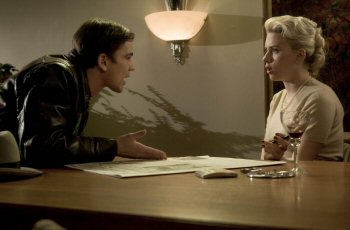
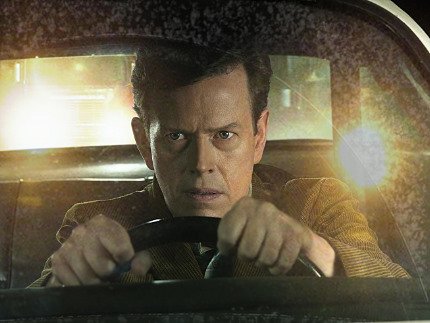
Coming off of the Euro Noir Femme Fatale, De Palma steps right into classic L.A. Noir, where the entire bleak genre really began. The film is based on the James Ellroy novel, which is in turn based on the real life murder of a young wanna be actress named Elizabeth Short, nicknamed “The Black Dahlia” by the newspapers. For the picture, we find De Palma restrained much more than in Femme Fatale. I didn’t notice too many visual flourishes, instead a lot of post-production gauziness added to the film in an attempt to make the film resemble its counterparts in the 1940s. He manages to directly reference old movies, a trademark of De Palma’s love of cinema. It’s a long picture, over two hours and there are many sub plots and third act twists. So how does it all come together?

Bleichert (Hartnett) and Blanchard (Eckhart) are L.A. beat cops who meet during the 1947 Zoot Suit Riots (sailors versus hep cats). The two men are promoted to being bond agents and fate finds them a block away from the discover of Elizabeth Short’s body. Blanchard becomes obsessed, while Bleichert becomes enamored with Blanchard’s girl (Johansson). Feeling the pressure to keep his partner from going over the edge due to the case, Bleichert does some footwork and meets a young woman, Madeline Linscott who traveled in the same lesbian circles as Short. Through a series of “what a coinky-dink” sub plots, all of these characters become entangled, ending just like all good noir should end, most every dies. The only part that really diverges is the very final scene which felt very tacked on by the studio in an attempt to not let the film end on a “sad” note. Pshaw.

This is a real mess of a film. If we were judging it on style and production design it gets an A+. That’s one thing you can never fault De Palma, the man knows how to make a film ooze style. The cinematography is pitch perfect, thinking in particular of a crane shot where as part of the background we witness the discovery of Short’s body by a mother out pushing her baby carriage. It’s done as this little thing in passing, that you could easily miss if you weren’t paying attention. That sort of clever detail is hard to not love. The entire set and costume design is solid, no one looks out of place. As always, there are some interesting set pieces that had to involve thousands of shots and takes. So from a technical stand point, its an excellent film.

Plot wise this film is trying to do way to much and tie to many things together that don’t make much sense. Characters who have no connection through the majority of the film are suddenly revealed through clunky exposition to have been sleeping with each other the entire time or connected to the murder of Short. By the time you get to the end its all so ludicrous and over the top it becomes absurd. While coincidence is a big part of noir, it at least as to make some sort of sense with the story told so far. I did however enjoy an incredibly macabre and creepy old Hollywood family that plays a crucial role in the film. While we only get a glimpse of their utter insanity, I found myself wanting to see more about them. There’s also some references to The Man Who Laughs, a Lon Chaney, Sr horror picture that served as the inspiration for The Joker. All in all, a rather middle of the road with too much plot to cram into two hours.

Next: we wrap things up with a shockingly different film, revisting Casualties of War territory, this time in Iraq, Redacted

Criterion Fridays – Make Way For Tomorrow

Make Way For Tomorrow (1937, dir. Leo McCarey)
Starring Victor Moore, Beulah Bondi

The economy is bad. Unemployment. The Housing Market. Small Businesses. Crashing every day. During The Great Depression, cinema reflected this moment in history where the common man was struggling to make ends meet. People were losing their homes, ending up jobless and on the streets, and Hollywood wasn’t afraid to put that up on the screen.There were many escapist pictures in the theaters during the Great Depression, particularly musicals, but even those had elements of the financial struggles people were under going. Not so now. Particularly during the summer, we have mindless film after mindless film, featuring people so distant and out of touch with our own reality that, for myself, I become disengaged. What I am shocked to see is reality reflected on the screen.

Barkley and Lucy have been married for fifty years when the bank notifies them that their home for all this time is being taken away. Barkley hasn’t worked in four years and he and Lucy don’t have enough money for a new place right away. They contact their four adult children and explain the situation. Behind the couple’s back, the children fight about who will take them, with it being decided that Lucy will go to stay with George, the eldest son, and Barkley will go to Cora, the eldest daughter. Lucy soon finds George’s wife and teenaged daughter don’t care for her presence in the home. Hundreds of miles away, Barkley has come down with a cold and is bedridden. Cora is infuriated she has to deal with him, but puts on the facade of a caring daughter when the doctor comes calling.

Make Way For Tomorrow introduces an idea that would still be controversial today in many circles: Do not live your life as a parent completely when you have children, you must have a definition outside of that. The children in the film are not monsters; stepping back when can see things from their point of view. But we also sympathize greatly with Barkley and Lucy, they truly gave every thing they had to their children and it may have not been the smartest move. Once their children became adults they vanished from their parents’ lives and only now have becoming aware of the financial situation back home. The relationship between Barkley and Lucy is deeply loving, its rare that I see a couple on screen when I completely buy their relationship. The paths the film leads them down are not happy ones, like the title suggests, it becomes about accepting change in your life.

Orson Welles said of this film that “it would make a stone cry”. He was exactly right. The love between these people is so pure and beautiful. The final sequence of the film involves them taking an unexpected car ride to the hotel where they honeymooned fifty years earlier. The coat check girl, the hotel manager, every one treats them in the way we wish their children did. The drinks are on the house, the band conductor plays an old tune when Barkley and Lucy hit the dance floor. Victor Moore and Beulah Bondi master these characters with a sly humor that undercuts a lot of the sadness that pervades the film. It doesn’t end on a hopeful note, but a realistic one, an admonition that life changes in ways don’t want. We are powerless to fight it, so instead we should embrace the people around us.

It Should Be A Movie – Girls


Girls (2005-2007)
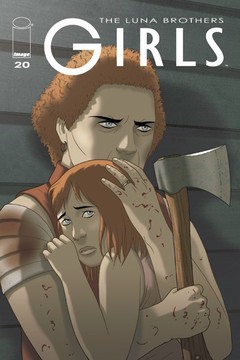
24 issues, Written and Illustrated by Jonathan and Joshua Luna, Image Comics

In the 1970s there was a renaissance period for both horror and science fiction. Of course there was still schlock being made but there was also a lot of thought provoking speculative fiction presented to the movie going public. These films used the facade of the fantastic to talk about modern day issues and challenges. Nicolas Roeg’s The Man Who Fell To Earth looked at how fame corrupts once noble endeavors. Mad Max dealt with the fears of lawlessness. A Clockwork Orange chose to examine the ways in which society seeks to erase the individual by examining the most despicable element. A film adaptation of Girls would follow in the footsteps of these films as a picture looking at relevant social issues in a fresh inventive way and it would haunt the audience for a long time after.

In the fictional locale of Pennystown, USA the young Ethan Daniels is tossed out on ass after getting drunk and causing trouble at the local bar. Stumbling his way home, Daniels comes across a naked young woman who appears to not be able to speak. In his alcoholic haze he brings her to his house where he tries to get her to talk, instead she forces herself on him and they have sex. In the morning, Daniels gets the authorities but when they return to his home they find she has laid several eggs that hatch into full grown duplicates of herself. These strange women wander the town, killing any woman they come in contact and attempting to mate with any male. The townspeople attempt to leave Pennystown but find it surrounded by an opaque white  dome that has cut off their communication with the outside world. In addition there is what appears to be a giant sperm in a field outside town. Tensions build as the women begin to see the men as weak and pathetic, as many of them succumb to the strange women, only exacerbating the problem and creating more of the savage creatures.

In a country where we hear permissive sex being blamed for all society’s ills, the Luna Brothers examine that idea more closely by sequestering these townspeople and discovering how they behave when sex becomes weaponized. While the actual science fiction elements don’t have a tight wrap up (things are left fairly ambiguous) , the story is a springboard for fascinating character interaction. The townspeople are variety of races, ages, and sexualities. One character is revealed as being gay in a rather gruesome way. This is comparable to films like Lifeboat or Cube, where you have people thrown into a pressure cooker and we sit back and watch how all the tension and building violence plays out.

The look of the comic is so crisp, clean, and symmetrical I was reminded of the way Kubrick would frame a shot. That in mind someone like a Paul Thomas Anderson would be already adept to film this. Even more than that, I see Duncan Jones, who brought us the minimalist science fiction masterpiece Moon being tailor made for a project like Girls. With Moon he showed us that the climax we expect for a film is not necessarily the one that is appropriate for the story. Throw in Joseph Gordon-Levitt as Ethan Daniels and think you would have a very fascinating film on your hands. In many ways it would be the opposite of Pandorum, released in 2009, where a awesome sci-fi premise was abandoned in favor of thoughtless action. So while we wait for Hollywood to greenlight a Girls film, do yourself a favor and pick up the collected volumes.

Newbie Wednesdays – The Last Airbender

The Last Airbender (2010, dir. M. Night Shyamalan)

M. Night and I have a long history together. The first film I saw my freshman year of college was The Sixth Sense. It terrified me. Now, with a decade of film obsession behind me, it takes a lot to creep me out that badly, and I look at The Sixth Sense as a very sad atmospheric film, still good though. His next film, Unbreakable, is still one of my favorite comic book films, in that is captures a certain idea of superheroes that I’ve never seen another film come close to. About there is where my love for the director ended. I’ve seen every film he’s made in the theater, the only other director who I have done that with is Christopher Nolan, sort of the antithesis of Shyamalan. While Nolan produces better and better films, Shyamalan only gives diminishing returns. This latest, his first foray into adapting an already established property, is an utter disaster.

If you haven’t seen the Nickelodeon animated series Avatar: The Last Airbender (I’ve only seen the first five episodes) here’s the premise. In a fantasy world, the planet is ruled by the four elemental nations: Fire Nation, Air Nation, Earth Nation, and Water Nation. A hundred years before the start, the Air Nation was wiped out and the Fire Nation began its quest to spread its empire across the globe. Two Water Nation children, Katara and Sokka, discover a little boy frozen in ice. Once thawed, they learn he is Aang, the last of the airbenders and the one destined be the Avatar, meaning control over all four elements. Searching for the Avatar is Prince Zuko, the exiled son of the Fire Nation king. He sails the world, hoping to prove his might to his father by bringing him the Avatar. Zuko’s forces become aware of Aang and epic battles ensue.

The concept here is ready made for a film franchise, and it has the potential to be as popular and well loved as Harry Potter. It’s a rich, complex universe that doesn’t pander to kids. It treats them like intelligent beings who can handle more than stand alone episodes. The film however, creates a narrative mess. One of the elements of screenwriting that you’ll find is seen as a no-no is voice over exposition. Its passable at the beginning of the film, just to set up the story, but when large chunks of the movie are rushed over and explained with voice over you have a major problem. The sort of things being summed up in a sentence by Katara, the narrator, are romantic relationships, something that you have to earn from your audience, make us care that these two people get together. Not so, and Shyamalan has never been too good with romantic relationships.

This is an incredibly faithful adaptation in terms of story elements, hence the rushed exposition as Shymalan tried to condense 20 episodes of the first season into 90 minutes. Motivations are cast out the window for the sake of hitting plot points. The most glaring omission from the the series though, is the sense of humor. In the cartoon Aang is a mischievous klutz who is both the hero and the comic relief. Katara and Sokka are also not great warriors and don’t master their abilities in the series near as quickly as their movie counterparts did. To delete the humor and sense of growing into these powers sort of turns the film into something that an unfamiliar audience member won’t enjoy and neither will a die hard fan of the cartoon. There really is no audience for this type of film, and its sad because the failure of this picture probably dooms the chances of a different director coming onboard and correcting things. And once again, we have to wonder how many chances does Shyamalan get before they revoke that DGA card?

Wild Card Tuesdays – Right At Your Door


Right At Your Door (2005, dir. Chris Gorak)
Starring Mary McKormack, Rory Cochrane

The concept of Right At Your Door has the makings of an amazing movie. The story is relegated to single home with a small number of cast (2 lead, 2 supporting) and brings up topics and themes very relevant to modern America. With all of these elements present, you would expect the film to be good. Sadly, it never really becomes about anything. It touches on a lot of ideas briefly, then abandons them, then collapses as film that never really goes anywhere. Its definitely working hard to be important but the substance isn’t there. It’s truly disappointing though, because it could have been one of the best films about post-9/11 America.

It’s a normal weekday morning in Los Angeles, Brad makes sure Lexi wakes up on time so she can head downtown for work. A few hours after she leaves, news reports come on talking about a series of coordinated explosions that have gone off in the most densely crammed traffic areas of the city. Authorities believe these were dirty bombs and that people need to stay in their homes, sealing their doors and windows off. Brad tries to head down but police have things blocked, so he gives up and waits in his home, terrified that Lexi is dead. However, Lexi turns up at the house, after Brad has sealed it off and now the heavy weight of confronting mortality is before them.

I see this as an awesome stage play. Two actors on stage, divided by a prop door. Very minimalist and very open to exploring lots of ideas about relationships, love, death, and the effects of terrorism and fear on contemporary America. Instead, the film has a great set up, I was completely onboard and ready to take this journey. And when Lexi first shows up after the explosion things are interesting, Brad is very torn. However, the film becomes repetitive in a way that is a technique of stalling. The picture is an hour and a half long and the screenplay doesn’t seem to know how to stretch that one day out in an interesting way. So all sorts of ludicrous things are thrown in. A friend of the couple shows up, a neighborhood child is wandering the street, there’s gestapo like military wandering the city. But it never adds up to a point, never reaches the profound pinnacle that it feels like it should. Instead we get a third act twist that is technically plausible, feels forced as a way to end the film on  quasi interesting note.

DocuMondays – Prodigal Sons


Prodigal Sons (2008, dir. Kimberly Reed)

It is impossible to watch this film and not be affected in someway. It is one of the most inside looks at a family and their struggles, particularly with mental illness. I can’t say I have ever seen a documentary that captured such intensely intimate and violent moments on film. While the details of this particular family may seem drastically different from your own, when looking at the core nature of the relationships it is like any other: there is a lot of emotional pain and little done to resolve it for years. It’s one of those documentaries that is bound to ignite arguments about what is incited by the director and what is the natural progression of these people in this situation.

Kimberly used to be Paul, the high school quarterback and basketball center. After leaving Helena, Montana as a teen, she moved to San Francisco and embraced her life as a woman. Meanwhile, older adopted brother Marc was in a car accident that left him permanently brain damaged. Marc has trouble building new memories and for him Kim is Paul. In addition, youngest brother Todd he came out of the closet and moved away to California. The center of the film is the three brothers issues of identity as it relates to their relationships with each other. Marc is having trouble with medication that is used to balance him and lashes out repeatedly in violent ways that chill you to the bone. This is told through the filter of Kim, who is angry that Marc still thinks of her as Paul, and its unsure if this is a choice Paul is making or if he is physically incapable of permanently processing this.

The documentary is sold in its trailer as being about the discovery of Marc’s biological family. It turns out he was the son of Rebecca Welles, daughter of director Orson. Kim follows with her camera as Marc travels to Croatia and meets Welles’ lover Oda Kodar. Kim and Marc seem to bond over this trip and it appears that he has control over his temper. The next time they meet up though, Marc flips out about a broken gas gauge on a truck and physically assaults Kim, all of it recorded on camera. Things continue downhill at the family Christmas when Marc brutally tackles Todd from behind, police are called, and Marc grabs a knife. He ends up in a mental institution. Tragically, Marc died as the result of a seizure in May of 2010.

The film has to re-find its footing a few times as it starts out as being about Kim returning to Helena for the first time as a woman. It quickly becomes about she and Marc’s relationship, in particular his jealousy at never being the “good one”. Kim was the straight A student and star athlete. Marc was held back in preschool and drank and partied to excess. Now that Marc has suffered this injury he has faded from being able to impress, now he appears to use his disability to make every family get together about himself. But how much does Kim incite and how much is Marc manipulating? The film never completely answers this, but it will stay in your mind for a long time.

Character Actor Month – Part 1

What is a Character Actor, you ask? Think of a Coen Brothers film, O Brother Where Art Thou? for example. George Clooney is the lead. Clooney will always be the lead of almost whatever film he is in. You can say the same about Brad Pitt or Julia Roberts and so on. These actors have been categorized as “lead actors” meaning its general accepted that they are relatable enough to carry a film on their own. Yawn. Lead actors are incredibly boring, in my opinion. The most interesting roles are those of the character actor; an actor who has so captured a certain type or one who has taken the role of supporting characters in films. In O Brother Where Art Thou? John Tutturo and John Goodman are the character actors. These are the Ned Beatties, the Luis Guzmans, the Amy Sedarises. And many times, its the character actors who can make a terrible film actually watchable.

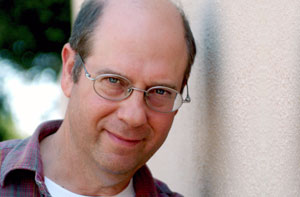
Stephen Tobolowsky (IMDB credits: 200 roles; Groundhog Day, Memento, Deadwood, Glee)

“That first step is a doooozy.” For most of this is the line that cemented Stephen Tobolowsky into our psyches, I know it was for me. It was Ned Ryerson, the annoying insurance salesman and former high school classmate of Bill Murray in Groundhog Day. In that role, Tobolowsky was able to repeat the same performance again and again, and somehow made Ned increasingly more annoying with each iteration. Tobolowsky is a Dallas native and made his film debut in 1976. It wasn’t until later pictures, like Spaceballs, that audiences really took notice of his face. Beyond simply being an actor, Tobolowsky has become a well known personality in Hollywood due to his skilled abilities as a storyteller. He co-wrote True Stories with David Byrne after, according to Mr. Tobolowsky, staring at Byrne worldlessly for two hours and making pencil drawings related to plot ideas. If you can track it down, and I never have been able to, there is a documentary featuring his storytelling titled Stephen Tobolowsky’s Birthday Party.


Michael Lerner
(IMDB credits: 158 roles; The Candidate, Barton Fink, Newsies, Elf, A Serious Man)

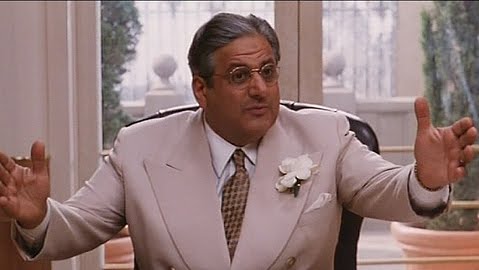
Lerner is known by his trademark silver hair and an educated Brooklyn accent. I remember him best as Jack Lipnick, the fast talking Hollywood producer who expresses his utter confidence in screenwriter Barton Fink, that is until Fink actually turns in his first script which transforms Lipnick into an apocalyptic figure of rage. Lerner got his start as a television guest spotter, popping up on The Brady Bunch and The Rockford Files, before transitioning to films as a supporting actor. No matter where he shows up, he is instantly recognizable, in particular I remember him in Safe Men (1995), a very small independent film, where he plays crime boss Big Fat Ernie Gayle who accidentally hires two singers (Sam Rockwell and Steve Zahn) as safe crackers. Gayle has a son, Bernie, Jr. who dresses and behaves like his father minature clone, as well as a henchmen named Veal Chop (Paul Giamatti). A very odd film, but full of great work from other character actors as well.


Beth Grant (IMDB credits: 142, Rain Man, Donnie Darko, The Rookie, Little Miss Sunshine, No Country For Old Men, Wonderfalls, Pushing Daisies, King of the Hill)

She really doubts your commitment to Sparklemotion. The role of the uptight conservative Christian schoolteacher in Donnie Darko has cemented itself in the minds of many of my peers and it was definitely a standout in an amazing career like Beth Grant’s. Grant was born in Alabama and its hard to believe she is 60 years old. The character type that she seems to have captured is the one mentioned above, a rules stickler and a Bible thumper. As a youth she was an incredibly accomplished young woman, working as a page in the North Carolina Senate and being recognized as a talented and gifted student by the North Carolina governor. Grant is a staunch liberal and enjoys creating these characters audiences love to hate, which she admits are based off certain people she grew up around who expressed very narrow minded views. Grant has taken her energy from years involved in politics and transferred them into a career that would exhaust the most energetic twentysomething, not only taking on multiple film and television roles a year, but also working in live theater for which she has won multiple awards.


Brad Dourif (IMDB credits: 133, One Flew Over the Cuckoo’s Nest, Dune, Blue Velvet, Child’s Play, Alien: Ressurection, The Lord of the Rings)

One of the most recognizable actors I’ll be talking about, Dourif has had a character actor’s dream of a career. His second film was his breakout role as poor tragic Billy in One Flew Over the Cuckoo’s Nest and he has kept working ever since. Even in film duds like David Lynch’s Dune or the dismal tv mini-series Wild Palms, Dourif is always a standout. He’s just one of the actors with the wonderful combination of an interesting look and awesome talent. Dourif lent his voice to the killer doll Chucky in the Child’s Play series which has garnered him a huge following in the horror film community and, what is likely his biggest role to date, he played the bewitching Grima Wormtongue in The Two Towers and The Return of the King. Dourif dipped his toe in playing the lead early in his career, most prominently in John Huston’s Wise Blood, a film that is by no means perfect but showcases the intensity Dourif brings to every role.


Margo Martindale (IMDB credits: 71, Lonesome Dove, The Rocketeer, Dead Man Walking, The Hours, Million Dollar Baby, Dexter, Paris Je’Taime, Walk Hard, Hung, Hannah Montana: The Movie)

Margo Martindale is one of those actors, that when I see them on the screen, I am immediately happy. There is something about her persona and the types of characters she plays that are comforting. She looks like your mom, but she has taken on such a variety of roles, playing everything from doctors to prostitutes to a woman soliciting a prostitute to mothers to nuns. Beyond film, she has led an amazing career in the theater, getting a Tony nomination in 2004 for the role of Big Mama in a revival of Tennessee Williams’ Cat on a Hot Tin Roof. She was also in the original stage production of Steel Magnolias in 1987 and her role was played by Dolly Parton in the theatrical version. Martindale hails from Jacksonville, Texas and started, like many actors, in commercials, her most well known being a Downy fabric softener series that first made her a recognizable face to the public. My favorite performance of Martindale’s has to be from Alexander Payne’s segment in the short film collection Paris Je’Taime. It’s a thing of beauty and you should find it…right now…go!

Director in Focus: Brian De Palma – Femme Fatale

Femme Fatale (2002)
Starring Rebecca Romijn, Antonio Banderas, Peter Coyote, Eriq Ebouaney

De Palma came off of Snake Eyes and went in a total 180 to make Mission to Mars. I don’t think any one could have really predicted that film from him: A science fiction film set in the future involving a rescue mission to Mars with aliens and special effects and so on. It was definitely a risky move on his part, and ultimately it failed. There were moments that worked, in particular a planetfall sequence involving risky maneuvers using a deep knowledge of gravity and physics. It had a lot of tension in and drew me in, but overall the film was a mess. So for his second film of the 21st century, De Palma revisited some Hitchcock elements, but more he dipped fulling into the Noir genre, something he had skirted his entire career but never gone full bore into.

The film opens on a heist being taken by a trio of anonymous figures. The main element in the heist is a tall, attractive blonde posing as a photographer. She lures the arm candy of a director at a film premiere in Cannes to the bathroom, and the two women begin having a tryst. The photog undresses her from the flimsy gold and diamond encrusted chest ornament (its not really a shirt or bustier, its like gold snake that doesn’t cover all the bits and such). A second person takes the pieces of the ornament at it drops to the floor. Things go wrong and the photog double crosses the man running things and heads off with the diamonds. Through a case of mistaken identity she ends up in the place of a French woman whose husband and daughter have just been killed. Her life diverges onto a very strange path that culminates seven years later in a series of double crosses and cons.

This film is one where De Palma’s camerawork completely meshes with the plot. The opening heist sequence, taking place in a lavish theater in Cannes is so much fun. Its obvious that Mission: Impossible was the practice, and this heist is its culmination to perfection. Seeing all the devices and methods employed to get the ornament is lots of fun. Its also full of that nervous tension that makes those types of scenes enjoyable to watch. We root for the thieves and wriggling in our seats as security inches closer and the chance that every will fall apart goes higher. The entire sequence is near wordless and, like many of De Palma’s top film moments, could be presented as short film unto itself.

Rebecca Romijn is not a great actress, I know I shocked you with that statement. But, when you think about it, neither was Grace Kelly, but she made a hell of a Hitchcock female lead. Romijn does what she needs to do here, the classic film noir femme fatale is not really a three dimensional figure. And I have to say she fooled me during many of her double crossing, well both she and De Palma together fooled me. Like any great noir female she creates stories that make her sympathetic and earn the trust of those around her. She is duplicitous and evil, yet we root for her. Antonio Banderas’ tabloid photog on the other hand is not quite as charismatic or interesting, even though he makes for a more plausible protagonist.

The third act twist seemed a bit out of left field and reminded me of the much better Mulholland Drive (if we’re talking metaphysical identity mysteries, its is better). There are clues sprinkled in the first half of the film that hint at two interpretations of what happens in the rest of it. This could be a Dorothy Gale instance of imposing faces onto figures in one’s psyche or it could all be literal. De Palma never says for sure but he leaves the door open so that either makes sense within the universe of the film. There are set pieces galore here and a real admittance that this is not about substance, its about style. The fact that the director pulls this off in such a technically clever way makes it heaps more enjoyable than whatever a style focused director like Michael Bay offers up. The film was a colossal financial failure for De Palma, however, something he hasn’t recovered from in the eight years since.

Next Up: The Black Dahlia and De Palma bombs again

Criterion Fridays – Close-Up


Close-Up (1990, dir. Abbas Kiraostami)

In America, its not uncommon to see a film “based on a true story”. The audience has come to expect that while names and events are real, screenwriters have “punched up” the script with dramatic tropes and formulas designed to add drama to what they see as dull, uninteresting reality. On the opposite end of things, you have documentaries like Capturing the Friedmans where the reality of the situation is so horrific and dramatic we have to wonder how much is exaggerated and manipulated by the director. In Abbas Kiraostami’s film Close-Up he takes an approach to the “based on a real story” movie that is some sort of amalgamation of narrative film and documentary. This is one of few times I have watched a film unable to figure out what was reality and was staged.

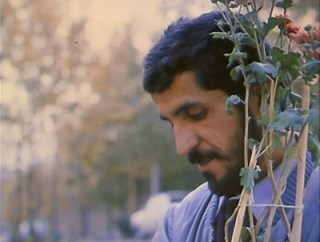
The film revolves around the case of Ali Sabzian, a man posing as Iranian film director Mohsen Makhmalbaf, and receiving the good will and shelter of the a family in Tehran as a result. The films opens with an obviously staged scene, the reporter, who first published the story that brought it Kiraostami’s attention, is traveling with police via taxi to the family’s home to witness the arrest of Sabzian. From there the film becomes a patchwork of the actual video footage of Sabzian’s trial and re-enactments of the events. The re-enactments actually feature the real people involved, including Sabzian. The reason this could happen is, that Sabzian never stole from the family he stayed with and the crime was non-violent. By the end of the film, we learn what Sabzian’s motivation was and see the family show great sympathy for him in court.

While most films about real crimes attempt to illuminate and make the mystery something that can be understood, Close-Up works to confuse things and make Sabzian a harder and harder character to pin down. What it becomes is a meditation on why someone not involved in the Arts would feel such a strong connection to someone who made their living off of cinema. Sabzian lives with his mother in the wake of divorce. His wife took one child, his mother raises the other. He works in a dead end job as a printer, and Sabzian claims that in director Makhmalbaf’s work he finds his own suffering put into words he cannot explain. Sabzian is an incredibly sympathetic figure, but even he confuses us because he talks about how he feels drawn to be an actor, that the idea of losing himself in a character is appealing. So, is the Sabzian speaking court truly his honest self, or another persona he has taken on?

This was not going to be the film Kiraostami was supposed to make at the time. However, after reading about the story in the paper he became obsessed with it and couldn’t sleep. So he contacted the parties involved and began making the film. As much as he wants to capture reality on film, he unabashedly manipulates certain scenes. When Sabzian is released from jail at the end of the film, he meets the real Makhmalbaf there are “audio difficulties” with the microphone equipment. Kiraostami has admitted freely after the fact that the audio problems was a manufacturing of him out of respect for the conversation between the two men, but instead of simply saying he was doing this, he made it another layer in the reality and fiction of the film. This is definitely a film that challenges the perceptions of the audience and will make them constantly question the reality or artifice of each and every scene.

Hypothetical Film Festival – Unreliable Narrators

There’s a very interesting plot device called the Unreliable Narrator, wherein the point of view you are getting the story from comes from a person who is possibly skewing the facts in their favor, creating a story that is not quite true. Here’s some films that use that idea to great effect.


Rashomon (1950, dir. Akira Kurosawa)
Rashomon was the introduction of Kurosawa and post-war Japanese cinema to the world. The framing of the story was unlike anything that had really been seen in cinema, but had roots in older literature, particularly Shakespeare (whose works would be a major influence on Kurosawa throughout his career). A woodcutter and priest are seeking shelter in the husk of an old building while it storms outside. A passerby enters and they explain a strange murder of a samurai and the court case in which his wife, the bandit being accused, and the spirit of the samurai himself all testify. Through the three differing viewpoints we get three different pictures, with the added framing of these figures telling us the story. It’s a like a hedge maze of narrative.

Amadeus (1984, dir. Milos Forman)
The elderly composer Salieri tries to kill himself but is stopped. Later he is visited by a young priest and the old man tells the tale of his rivalry with Wolfgang Amadeus Mozart and how Salieri believes he killed the virtuoso. Salieri of course frames himself as pious and obedient, devoted to tradtion. Amadeus is seen a lewd and bawdy figure. Salieri sees his craft as a gift from God and cannot comprehend how someone as heathen and ribald as Amadeus was given a gift that far surpasses his own. The question we must ask is, how honest is this portrayal of the composer, and is this Salieri’s attempt to justify his hand in Amadeus’ death?


Memento (2001, dir. Christopher Nolan)
Both the film that introduced us to director Nolan (The Prestige, The Dark Knight) and what presents probably the most unreliable of unreliable narrators. Leonard is a man without the ability to form new memories. This was the result of a break-in at his home years prior that also resulted in the death of his wife. Now Leonard is on a hunt for the man responsible. Because of his lack of new memory he has tattooed key facts about the assailant on his body. Beyond that, he carries a Polaroid camera where ever he goes, photographing acquaintances and scribbling notes about them on the pictures. But what does Leonard really know? As we experience time in the same way Leonard does, we will ask lots of questions and when the disturbing conclusion comes about we will be left questioning Leonard himself.

Spider (2002, dir. David Cronenberg)
Dennis Cleg (Ralph Fiennes) has just been released from a mental asylum. The reason why he was there in the first place is not revealed at first, instead we follow him to the work home he has been assigned to in an attempt to transition back into society. He immediately draws the ire of the housekeeper and befriends housemate Terrence (John Neville). Mixed into his day to day life are nightmarish flashbacks to his childhood, focusing on his alcoholic father (Gabriel Byrne) and his beaten down mother (. The story of their tumultuous relationship is what forms Dennis and ultimately drives him to the asylum. The reason behind his nickname, Spider, is tied directly to this childhood incident. But then you must ask yourself, how reliable are the childhood flashbacks of a psychopath?


Bubba Ho-Tep (2002, dir. Don Coscarelli)
The film is told from the perspective of Elvis Presley (played brilliantly by Bruce Campbell), or it could be mechanic Sebastian Haff. Presley explains that he traded places with Haff in the 1970s to get away from the business, and for some reason the staff of his nursing home doesn’t believe him. Also living in this home is a black man who claims to be President Kennedy (Ossie Davis), explaining that he was dyed black and abandoned in the nursing home after the assassination attempt. Terrorizing the elderly at night in this home is an ancient Egyptian mummy who, for some reason, has taken on the garb of a cowboy. The two men, unable to get the staff on their side, take matters into their own hands and battle the mummy. But what if they are simply just two crazy people?