My 40 Favorite Film Moments – Part 4

16) Interrogation (The Dark Knight, 2008, dir. Christopher Nolan)

My favorite comic book based film, and an all around great movie. The screenplay is one of the tightest I’ve ever encountered and this is a great scene that really gets to the heart of the relationship between The Joker and Batman. The Joker is in love with Batman, not that he wants to have sex with him, but he is emotionally fulfilled by Batman’s existence. Without Batman, The Joker would have no one worthy of him to combat.

http://www.youtube.com/v/YPuToZT0vfY&hl=en_US&fs=1&

17) What’s In The Box (Se7en, 1995, dir. David Fincher)

This is one of those instances where every one is hitting their mark and it all comes together to make such a great film. I’m usually not a fan of Fincher, but the cinematography and editing here plus the actors all delivering make for one of the best climactic film scenes ever.

Newbie Wednesdays – Toy Story 3


Toy Story (2010, dir. Lee Unkrich)
Starring Tom Hanks, Tim Allen, Joan Cusack, Don Rickles, Wallace Shawn, John Ratzenberger, Ned Beatty, Michael Keaton, Jodi Benson, Estelle Harris

In 1970, Japanese roboticist Masahiro Mori coined the term “The Uncanny Valley”. Basically, it refers to the point when a robot or human facsimile (CG animated character) resemble real humans so closely it evokes a sense of revulsion in the viewer. CG animation walks that very fine line, and in the case of Robert Zemeckis’ animated works (The Polar Express, Beowulf) it reaches the revolting atmosphere. This is where Pixar gets it right, in that it never tries to make its humans look like exact copies of humans. Instead, the real humanity in the film is infused in the inanimate who have a larger ability to express emotion than ever before. For me, Toy Story 3 marks a clear point in history where, in the right hands, CG animation is a clear challenger to live action cinema.

Andy is eighteen and about to head off to college. The time to cast out his toys, which have been long ignored anyway, has come. All but Woody end up in a trash bag destined for the attic, while the cowboy ends up in Andy college-bound boxes. With the fear of being separated from his pals, Woody makes a daring escape and goes to save Buzz and company who have accidentally been put out for the trash. They all avoid the landfill but end up in Sunnyside Daycare, which is ruled over by Losto Hugs Bear, a 80s relic. They also meet a host of other toys, more generic than specific products and engage in what is essential a prison break movie, with some very strong themes about aging and obsolescence threaded throughout.

The situation the toys are placed in is one that speaks across generations. The children, whom most assume the film is squarely marketed at, will see their own feelings of powerlessness reflected in the plight of the toys. When faced with the circumstances of simply moving to a new town all the way to dealing with the divorce of parents, children are without any say in where they go. The same theme is applied to children transitioning into adulthood, like Andy, who are pressured by society to abandon toys and play. The issues Andy is grappling with reflect a lot of those who were children when the first Toy Story came out. Bumping up another generation, the themes of a child leaving home are very palpable and those wistful feelings as days when your child was little and playful. Laurie Metcalf and the animators behind her character deliver a very short, but beautiful performance in the moment where she enters Andy’s now empty bedroom. Finally, through Lotso we have the resentment of elderly and those who are left behind. Lotso has taken the moment he realized he was no longer wanted by his owner, and has allowed those feelings to become anger and rage, which is merely a form of hurt.

Pixar is a company that makes perfect films (I refuse to acknowledge Cars). They are writing scripts that are light years (no pun intended) richer and more complex than the majority of those shopped around Hollywood. The production staff also has a strong sense of creating rich worlds, they fill their universes with so many details that we want to inhabit them just a little bit longer. The Toy Story trilogy now stands a perfect trilogy, with themes that develop and mature just like Andy. The technical side of the animation has also evolved in a similar fashion. While buzz of Toy Story 4 has recently hit after the current release’s box office success, but I hope the Pixar crew treads carefully in adding on to an already complete masterpiece.

Wild Card Tuesdays – Afterschool

Afterschool (2009, dir. Antonio Campos)
Starring Ezra Miller, Michael Stuhlbarg, Jeremy Allen White, Addison Timlin

Stanley Kubrick, probably my favorite director of all-time, once said, “A film is – or should be – more like music than like fiction. It should be a progression of moods and feelings. The theme, what’s behind the emotion, the meaning, all that comes later.” The kind of films Kubrick made the most closely followed this philosophy, 2001 comes to mind immediately, were not films that met the aesthetic of pleasurable cinema. They were meant to provoke a reaction, positive or negative, and I suspect the negative would have interested Kubrick more. This is not to say director Antonio Campos is working at the same level of Kubrick, but is definitely more interested in cinematic language than plot or characters or dialogue. This sort of film is never going to appeal to a mass audience, but that doesn’t mean it isn’t incredibly well made and through provoking.

Rob is a sophomore at Bryton, a fictional East Coast prep school where is a quiet, reclusive young man, preferring to spend his time watching viral videos and porn on his desktop computer. His interest in video leads him to joining the A/V Club after school pressures to participate in after-school activities. Amy, the girl he has a slight attraction to, is partnered with him to film B-roll exterior shots of the school for a collective club project. Amy can’t make it to one session, so Rob goes it alone and happens to witness twin seniors stumbling into frame, bleeding profusely from their noses and mouths. Rob silently walks over to where they collapsed and that is where the teachers and other students find him. It turns out the girls died of drugs that had been tainted with rat poison. Add to the mix that Rob’s roommate Dave is the known supplier in the dorms, and Rob must contemplate what he should do.

Don’t for a second think this is going to be some sort of taut thriller. This is a incredibly meditative and slow paced film, that isn’t about the death of the girls, rather it is about this young man and his personal psychosis. Rob is of a generation who filters reality through the pixelated grain of buffered video. We see portions of the film told through the lens of the digital video cameras handed out in class and through cell phone video. When Rob finally has a moment alone with Amy and they begin to get amorous, he mimics the actions he has seen on an incredibly misogynistic internet porn site. Amy is obviously shocked, but surprisingly not phased, as we can infer she has seen the same being from the same generation. Rob is an incredibly neutral protagonist, which has an odd effect on the viewer. While he does nothing to appear noble or heroic, I found myself rooting for him because of how I have been trained to view movies. Campos seems to be working to make us aware of this fact, that we have no reason to be on Rob’s side.

Michael Stuhlbarg, who made an incredible turn as the lead in the Coen Brother’s A Serious Man, plays Bryton’s headmaster and is a darkly phony figure. Afterschool definitely draws parallels to the archetypal teen stories like A Catcher in the Rye and Heathers, where the maudlin sentiment of the adults is seen through the stark, cold eyes of adolescents. Stuhlbarg expresses false sympathy for Rob’s condition after witnessing the deaths of the twins, and it is obvious every decision the dean makes is about saving face for the school, and making sure those parents who have influence are  not offended. He reveals his true colors to Rob when the young man produces a video that does reflect the false regret and sympathy the dean wishes. The guise of a compassionate and sensitive educator melts away and he chastises Rob in an incredibly cruel manner.

Once again, I emphasize that this is not a film that will appeal to everyone. I suspect the audience that will “enjoy” the film will be quite small. It forces the audience to question their relationship between the tangible and the virtual, and beyond that how our view of the tangible can be distorted and effect the way we interact with the world around us. The ending of the film is incredibly chilling and unnerving and would do the great Kubrick proud, as it shrugs off the plausible and chooses to focus more on creating an honest tone. For those who are fans of Michael Haenke, I suspect parallels will be drawn between this and his contemporary classic, Cache.

DocuMondays – Dogtown & The Z-Boys


Dogtown & The Z-Boys (2001, dir. Stacy Peralta)
Narrated by Sean Penn

As anyone who knows me well can tell you, I am by no means a sports enthusiast. However, even I know the names Stacy Peralta, Tony Alva, and Jay Adams. I can’t say I knew a lot about them before I watched this documentary, but I did know they were big names in the world of skateboarding. In the early 1990s, skate culture was a big deal. I was about 9 or 10 years old and in all of child-focused media you had skateboard bound characters; from Nintendo’s Skate or Die to the skateboard bound Michelangelo in TMNT. There was an entire aesthetic movement backing it as well: Chicano graffiti inspired neon clothing is what I remember most vividly. All of that started back in 1971 in South Venice Beach, California.

The story of the Zephyr Skate Team is the story of the class divide in America. The young men and women who skated on Zephyr were children of broken homes who lived in the “wrong side of the tracks” part of Venice Beach. The shoreline there was not one tourists ever visited and its most prominent landmark was the decrepit hulking skeleton of an abandoned theme park. The figures in the film began by surfing amongst the treacherous collapsing roller coasters and pier, and were forced to seek recreation elsewhere as the waves only came in at a very specific time of the day. As a lark they took up skateboarding, which had faded away as a fad in the mid-60s. The invention of polyurethane wheels, replacing the easily chipped and locking up clay ones, allowed the boards to grip the pavement and provide a smoother ride. Thus, many surfing techniques were brought in by the skaters. Basically, the modern skateboarding aesthetic is a direct result of the play these young people engaged in day after day.

The economic conditions of the key figures seemed to be one the largest driving forces. Many of the young men who skated on Zephyr came from homes where the fathers had left or, poor economic conditions resulted in, aggressive and abusive fathers. They found the Jeff Ho Surfboard Shop as a second home, where proprietors Jeff Ho, Skip Engblom, and Craig Stecyk encouraged the skaters to develop their own individual styles of the riding the boards. South Venice was a community envious of the North Venice mansions, and as fate would have it, a heavy drought struck California during the early 1970s. This left a lot of dried out pools and some of the more inventive skaters began to see the similarities between the flourishes and curves of the cement pools and the waves they were used to riding. And so, vertical skateboarding was born, skaters attempting to leave but one wheel touching the very rim of the bowl they rode in.

Much like a VH1 Behind the Music episode, we’re given a traditional Rise and Fall story, but what makes it so remarkable is that the key players were all teenagers for both the Rise and Fall portions. Stacy Peralta came out as the most successful, going on to champion and mentor skaters like Tony Hawk. Tony Alva struck out as a very successful entrepreneur, becoming the first skater to break away from the companies and start his own. The saddest of the lot was Jay Adams, whom all the interviewees agree could have been the best in history, but he got caught up in a drug lifestyle that included crystal meth that sent him to some rather difficult places. The film does an excellent job of structuring its narrative, and does everything I want from a good documentary: It causes me to have interest in a subject I have thought little about, tells me an interesting story about very human people, and leaves me wanting to know more.

My 40 Favorite Film Moments – Part 3

11) Rhapsody in Blue (Manhattan, 1979, dir. Woody Allen)

New York is one of the great mythical cities, in that there is the New York that is real and there is the New York that is a fantasy of our minds. Allen captures this magical New York perfectly in the opening of Manhattan, using classic black and white photography as well as the signature George Gershwin tune.

http://www.youtube.com/v/uyaj2P-dSi8&hl=en_US&fs=1&

12) Please Don’t Tell My Mother (One Flew Over the Cuckoo’s Nest, 1969, dir. Milos Forman)

This was one of the first films to showcase the acting chops of Jack Nicholson, but I like this scene because of the performances Louise Fletcher and Brad Dourif bring to the table. It is rare you see a scene so perfectly acted. All of these actors are at the top of their game.

Director in Focus: Brian De Palma – Carlito’s Way


Carlito’s Way (1993)
Starring Al Pacino, Sean Penn, Penelope Ann Miller, Luis Guzman, John Leguizamo, Viggo Mortensen

In the wake of Bonfire of the Vanities, De Palma returned to Hitchcock-land with Raising Cain, an odd film about twins and multiple personalities that in many ways hearkened back to Sisters. It was another failure for the director, albeit not as quite a large scale one as Bonfire. With a sense of humility about him, De Palma embarked on adapting a novel by a federal judge called After Hours. The film would be renamed Carlito’s Way (to distinguish it from Scorsese’s After Hours) and would return De Palma to some themes and ideas from Scarface. However, instead of the rise and fall of a crimelord who is brash and aggressive, Carlito’s would tell the story of a man once neck deep in crime, now trying to work his way out and go legit.

Carlito Brigante (Pacino) has just finished five years of a thirty year sentence. He has successfully been released when an appeal is issued proving the D.A. illegally made the recordings that sent him up the river. Now, with a re-evaluation of his life, Carlito has his sights set on raising enough cash to join a former inmate’s car rental business in the Bahamas. He buys into a nightclub set up by Kleinfeld (Penn), his attorney and reconnects with his lost love (Miller). Along the way, he draws the ire of Benny Blanco (Leguizamo) an up and coming street tough and must question his loyalty to the ever more frenetic Kleinfeld, whose life in danger of being taken by angry mobsters. The entire time Carlito is trying to make the right choices, stay on the path of good, so that he and his girl can escape.

The first thing that struck me about this film is how phenomenally better and more modern it was than Bonfire. One thing that kept getting to me as I was watch Bonfire was how it felt very dated. Typically if a film is set in the 1980s you’re supposed to feel that through the set design, tone, etc. Bonfire pulled it off in a way that made the picture feel too out of touch with any sort of universal truth. Carlito, on the other hand,despite being set in the 1970s, feels like an incredibly modern film. I think a lot of this is due in part to it being subject matter that De Palma is much more capable of handling. The director himself admitted he was planning on turning it down because on first glance he saw it as a Scarface retread. When he finally sat down to read it, he saw the film was going to be the antithesis of Scarface.

The acting here is a mixed bag, though. Sean Penn as Kleinfeld is spot on. He never exaggerates his character but is able to get across the transition from cool, calm and collected to on the verge of a nervous breakdown without breaking a sweat. It’s interesting to note, that at this point in his career, Penn had all but retired from acting to pursue directing (He was working on The Crossing Guard with Jack Nicholson at the time). His return to the screen was a big deal at the time and his performance definitely caused some people to encourage him to keep acting. It’s a strange thing for people of my generation to think about, as I was not aware of Carlito at all on its original release and have grown up with a viewpoint that you can count on Penn to be in all sorts of Oscar bait type pictures. On the other hand, Pacino nails the character of Carlito but has a persistently annoying accent problem. In his attempt to conjure up a Puerto Rican flair to his voice he ends up sounding at times like a Southerner, and then at others a bizarre interpretation of a stereotypical New Yorker. Accent aside, this a is a complete 180 from Scarface. Carlito is incredibly likable and charming, and it is impossible for you not to root for him to escape.

All the typical De Palma tricks are on display, and while they felt forced in Bonfire, here they feel exciting and fresh. There’s some great looking deep focus shots, just a little POV, and some wonderful Steadicam work, particularly in the final scene in Grand Central. The editing in the film is also some of the best of any De Palma movie. I found myself literally clutching my fists in anxiousness during the final tense moments of the film, which could not have been possible if it was wasn’t for some stellar camerawork and editing. While plots and actors may fail the director at times, his camera is his most loyal friend and you can always count on him to know exactly how to shoot a scene that gets the most out of it.

Next: De Palma does Mission: Impossible and closes out the 90s with Snake Eyes

Criterion Fridays – Loves of a Blonde

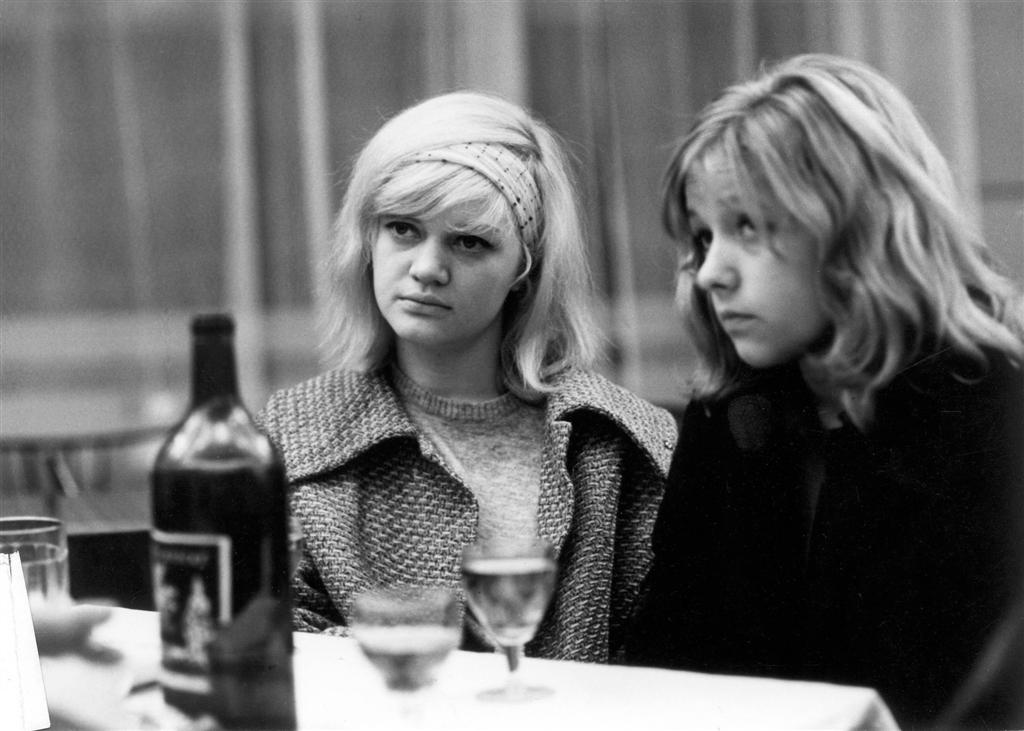
Loves of a Blonde (1965, dir. Milos Forman)

My familiarity with director Milos Forman comes mainly from his work in English language cinema (One Flew Over the Cuckoo’s Nest, Amadeus, Man in the Moon), but I have been aware for a long time of the movies he honed his craft with in his native Czechoslovakia. I didn’t know much about them, other than from reviews and criticisms they were akin to the French New Wave youth culture movies, but with a more anti-authoritarian bite. One thing I’ve found in art that is hard to translate between languages and culture is humor. Jokes are a product of the experiences and philosophies of a specific group of people, and the broader the joke (i.e. slapstick comedy) the larger the audience you can appeal to. Humor of language or subtle situations is much harder to get a foreign audience to laugh at. However, Forman conquers that challenge with expertise.

Hana lives and works in a rural Czech village whose economy revolves around a textile factory. The factory employs primarily women so the demographics are 16:1 in favor of women. The factory owner petitions the military to station some soldiers there as a way to provide some relief for the tension building amongst the workers. They get sent a group of thirty-something, slightly balding reservists and most of the girls decide to just go with the flow, despite their disappointment. Hana avoids the leers of these men, most of whom are married already, and ends up in the room of a visiting musician more her age. The problem with Hana is that every week she seems to have a new true love and these dreams and wishes get the best of her.

I found myself laughing many times at Loves, particularly in moments where the dialogue was greatly improvised. A trio of reservists looking to lure in some of the young women reveal themselves as inept buffoons as they waste most of their time debating how many of them should approach the table where their prey is sitting. They send a bottle of wine over, but it gets delivered to the wrong table and they tell it to take it from the women who believe they were picked. Soon after, one of the reservists slips off his wedding ring, its kicked across the dance floor and under the table of the spurned women which he must now crawl under.

It’s rare that I find a film from Europe during this period which doesn’t have sequences that seem to drag and pull me out of the picture. Here I was completely engaged from the start, due in part to some very skillful editing and language-transcendent humor. The circumstances that these characters experience are universal to all people: unwanted affections from suitors, allowing oneself to get caught up in what you think is love, and a general sense of dissatisfaction with mundane and repetitive life. Once again, Forman delivers a highly entertaining film with truly funny comedy.

Newbie Wednesdays – MacGruber


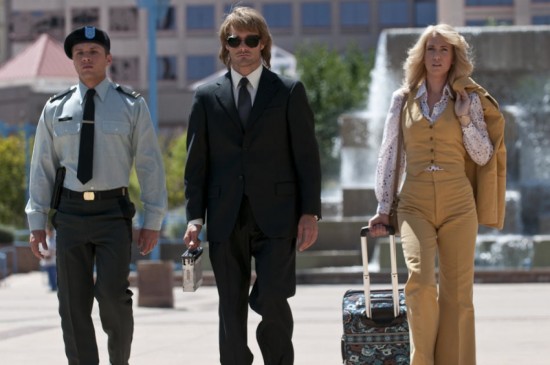
MacGruber (2010, dir. Jorma Taccone)
Starring Will Forte, Kristen Wiig, Ryan Phillippe, Val Kilmer, Powers Boothe, Maya Rudolph

It began with The Blues Brothers and it was a long time before another one was made. Then with Wayne’s World, followed by The Coneheads, Night at the Roxbury, Superstar, and The Ladies’ Man. The idea of adapting a skit from Saturday Night Live series is not new, but never has the source material been so brief. MacGruber is originally a thirty second bumper to commercials, so the idea of making a feature film around the character is a bit of an oddity. It’s also a very simply parody of the MacGyver television series, which itself is almost twenty years past. So how does this longshot stack up as a full length movie?

The premise borrows its plot from films like Rambo, with MacGruber (Forte) as a former Pentagon agent who has been living in a monastery for the last decade after the tragic death of his bride. When the villainous Dieter Von Cunth (Kilmer) steals a Russian nuclear missile, MacGruber is called back into action alongside straight arrow Lt. Dixon Piper (Phillippe) and his former sidekick Vicki St. Elmo (Wiig). The trio engage in a series of episodic attempts to either get in contact with Von Cunth and foil his plans. These typically involve Piper suggesting a reasonable military tactic, while MacGruber does something outlandish (i.e. hopping naked with a piece of celery sticking out of his butt). The plot hits all the expected points, and delivers a very hard R-rated comedy.

The sources being parodied here are done by people who know those sources well. Director Taccone, part of The Lonely Island and a writer for SNL, most definitely grew up watching the awful Golan-Globus military action films of the 1980s (Death Wish, Cobra, American Ninja). From that perspective, its an amusing film but nothing terribly special. I believe I chuckled once or twice, but for the most part I felt myself slogging through the picture, simply trying to make it to the end. Of all the current cast of SNL, Will Forte is far and away my favorite, but when he is constrained by SNL material he’s never as funny as he could be. Such is the case here, the jokes feel very lazy and the payoffs are never clever or surprising. In the end, its a case of a flimsy premise being stretched beyond its abilities to hold together, resulting in an incredibly disappointing and forgettable film.

Wild Card Tuesdays – Three Days of the Condor


Three Days of the Condor (1975, dir. Sydney Pollack)
Starring Robert Reford, Faye Dunaway, Cliff Robertson, Max Von Sydow, John Houseman

In the wake of Watergate in the early 1970s, a trend began in films made by younger directors towards anti-government conspiracy thrillers. You had the “based on a true story” variety like All The President’s Men, the naturalist conspiracy like The Candidate, and the more Hitchcock-ian conspiracy in The Conversation. Here Sydney Pollack takes a crack at adapting a novel to the screen about a man on the more paperwork side of the CIA. It begins with some intriguing moments, but slowly devolves into a formulaic studio picture, only to deliver a very prescient twist.

Joe Turner (Redford) works for the American Literary Society, a front for a group of translators who spend their days literally reading everything and looking for any oddities that could be a way of encoding messages. Turner has discovered such an oddity, a book that was only published in Arabic, Dutch, and Spanish with no logically reason why. He receives a message from his superior telling him the Agency believes it is not of importance. Later that same day a group of men show up and kill all of Turner’s coworkers, while he escapes, now on the run. As he delves further into the conspiracy he learns that there is possible a subgroup within the CIA and that he has stumbled upon some vitally important secrets. He uses his technical knowledge and book smarts to stay ahead of his pursuers and eventually learns the reason why his coworkers were murdered.

The conspiracy part of the film is spot on and kept me very engaged. The part of the film that I zoned out during was the very forced love story between Redford and Dunaway. Dunaway was a woman he simply kidnaps to use her car and stay in her apartment. For some reason they inexplicably have sex the first night they meet and she helps me out, despite the implausibility of a person in this situation would do such a thing. Other than the forced romantic subplot (methinks I smell studio intervention), Dunaway has some interesting things to do and is able to move the conspiracy plot along by helping Redford identify the man behind his misery.

Max Von Sydow’s German mercenary is a character interesting enough to have his own film, and delivers an interesting speech near the end of the film about the peacefulness of his life, and how his job has a sort of meditative quality. Robertson does a great job as Redford’s callous superior and gets to deliver a chilling warning to Redford in the film’s final scene. Redford has uncovered the truth of the book translation and why his colleagues were murdered at this point, and Robertson talks about the coming decades in America, and how the unscrupulous actions of the CIA in the present won’t be judge by the citizens in the future. Definitely worth a view and will make you think about the state of the world in comparison.

My 40 Favorite Film Moments – Part 2

6) Waiting For a Train (Once Upon a Time in the West, 1969, dir. Sergio Leone)

Wordless, with a soundtrack provided by found objects in the setting. A squeaky windmill, a dripping water tower, the steady rhythm of a steam engine. It provides the perfect introduction to the film’s protagonist, Harmonica (Charles Bronson).

http://www.youtube.com/v/bW-jSa9_k3M&hl=en_US&fs=1&

7) Getting Baptized (Ed Wood, 1994, dir. Tim Burton)

Hack director Wood has gotten financing from an L.A. church. One of the conditions for the money to come through is that the entire cast and crew of Plan Nine from Outer Space will be baptized. The unaffected homosexual producer Bunny Breckenridge (Bill Murray) takes the hefty spiritual ritual with little thought in a cleverly funny moment. This is also Burton’s masterpiece in my opinion.

http://www.youtube.com/v/VdSFP9nu1R8&hl=en_US&fs=1&

8) Flowers (Harold and Maude, 1971, dir. Hal Ashby)

Ashby is one of the greats of the 1970s, and this scene featuring Ruth Gordon, Bud Cort, and the music of Cat Stevens is a picture of perfect composition. The transition from the field of flowers to the military cemetery is a very beautiful one.

http://www.youtube.com/v/h0FX_ROcNV4&hl=en_US&fs=1&

9) He’ll Keep Calling Me (Ferris Bueller’s Day Off, 1989, dir. John Hughes)

This scene is a perfect summation of the profound indecision and anxiety Cameron suffers from. Throughout the film, he’s a character who is simply pushed around by his off screen father or by Ferris or by authority in general. This is every thing going on in his brain.

http://www.youtube.com/v/CdcFYNe9U7A&hl=en_US&fs=1&

10) Make the Sun Rise (Black Orpheus, 1959, dir. Marcel Camus)
Set during Carnival in Brazil, the film retells the mythic story of Orpheus and Eurydice through an Afro-Brazilian guitarist and the woman he loves. In this final scene, we see that the tragic story of these lovers is part of a cycle and this children are beginning to play down a path that is both beautiful, but painful.

http://www.youtube.com/v/v0jZRkFtksI&hl=en_US&fs=1&