Asian Cinema Month – Thirst


Thirst (2009, dir. Chan-wook Park)
Starring Kang-ho Song, Ok-bin Kim, Hae-sook Kim, Ha-Kyun Shin

What if Double Indemnity was a vampire flick? That’s part of the premise going on in this visually startling South Korean horror flick. I’ve only seen one other Chan-wook Park film (Oldboy) and now after Thirst, I know I need to see more. No other country in the South Asian region produces films that excite me as strongly as South Korea. Unlike their neighbors, South Korea seems to find a perfect balance between the craftsmanship or artsier fare and the dynamic storytelling of Hollywood films. So how does this vampire noir stack up?

Father Sang-hyun is living in a world infected by the Emmanuel virus, a plague that behaves like a sort of super leprosy, affecting only men. Sang has grown tired of seeing the patients of his Catholic hospice dying and volunteers to be a guinea pig for vaccine tests. He ends up being the only one of 500 test subjects to survive, after receiving a life saving blood transfusion. Sang returns to his parish only to be greeted by a throngs of devotees believing him to be some sort of savior. Sang has doubts but nevertheless comes to the hospital bed of a cancer patient. As fate might have it, the patient is Sang’s childhood friend Kang-woo, who is married to Tae-ju, a girl they both fancied years ago. Along with this, Sang has developed an unnatural thirst as a result of the transfusion, he now craves blood. First, he gets it from a coma patient in his hospice but the hunger grows stronger and after ending up in a illicit relationship with Tae-ju it is obvious things will not end well.

The first thing you’ll notice about this feature is the strength of the visuals. No matter what anyone thinks of the quality of story and character development, you have to give up for some crazy and inventive camera play. In many ways Park is disciple of the Tarantino-aesthetic. The camera will maneuver in ways that are not physically possible, yet Park is able to hide the CG trickery in a way that never takes you out of the film. Thirst is also not short on gore, but more in the sound department than visual. When Sang suckles on an IV or an open wound, the noise of his slurping swallows up the screen. There is a lot of blood and some moderate subtle gore, but it will be the sounds that linger with you.

The two main characters, Sang and Tae-ju are perfect counterbalances to each other, a sort of Korean Macbeth and Lady Macbeth. Sang is contemplative and worried about his condition while Tae-ju is desperate and manic about exploiting his vampirism for her own gain. The film balances its horror with some comedy and the mix of the two is very disturbing. A great piece of counter-programming to Twilight and would be an awesome double feature with Let the Right One In.

Jolly Good Thursdays – Girly


Mumsy, Nanny, Sonny, and Girly (1969, dir. Freddie Francis)

If you never heard of this film, I can’t fault you. It is an obscure little British horror-comedy that has strong genetic ties to The Addams Family, but more macabre. Full of murder, mayhem, and some very unnerving incestous overtones, Girly (for short) is one of the funniest black comedies I have seen in awhile. In the US we tend to put the crazy killers of our films at the bottom rung of the socio-economic class and basically kick the poor while they’re down. The wonderful thing about the UK is the intense dislike of the aristocracy, even by a lot of the aristocracy themselves. Thus, a film as wonderfully insane as Girly can come about and skewer the 1950s nuclear family unit.

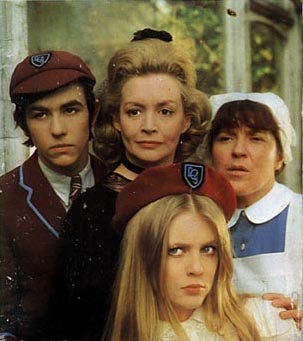
Somewhere on a palatial English countryside estate lives Mumsy, Nanny, Sonny, and Girly. Though Sonny and Girly are obviously in their twenties, they still dress and behave like schoolchildren. Sonny and Girly also have a rather queasy relationship that is hinted at but never made explicit. Also in the mansion live the Friends, homeless men and free love hippies lured to the house and locked up for the sadistic pleasure of the quartet. The introductory friend finds he is unwelcome when he can’t follow the rules Mumsy has set up to run her happy home. As a result he’s decapitated. But into their lives comes New Friend, a gigolo who through a series of gruesome circumstances ends up trapped. Unlike previous Friends, New Friend is a conniver and begins his quest to tear about this happy homicidal home.

Girly was the project of acclaimed cinematographer Freddie Francis, the lens behind such films as Tales of Hoffman, the Gregory Peck Moby Dick, and The Innocents. Francis transitioned into directing in the early 1960s and went on to helm some cult British horror films and established him as filmmaker who brought a lot of visual flair to his pictures. Francis would eventually return to working the camera and was responsible for the cinematography on such films as The Elephant Man, Dune, Glory, and Scorsese’s remake of Cape Fear. Girly was originally a stage play (you can feel the more theatrical moments in the film). The premise of the film is a lampooning of the “traditional” family unit at the hands of the 1960s counter culture.

The film is very fun, dark fare. It’s never truly horrifying, just the kind of violence that gives off a creepy vibe and elicits laughs more than gasps. The middle of the picture meanders a little bit, becoming a bit of a struggle to work through, but the way New Friend begins to tear apart the four members of the family by turning them on each other is enjoyable to watch. Definitely an odd, incredibly obscure picture worth a watch.

Newbie Wednesday – Iron Man 2


Iron Man 2 (2010, dir. Jon Favreau)
Starring Robert Downey Jr., Gwenyth Paltrow, Mickey Rourke, Don Cheadle, Sam Rockwell, Scarlett Johansson, Samuel L. Jackson, John Slattery, Jon Favreau, Paul Bettany, Garry Shandling

In 2008, two major comic book based films were released: The Dark Knight and Iron Man. By the end of the summer I had seen The Dark Knight three times, Iron Man only once. Now, I admit a predisposition towards the DC Comics characters, but I have enjoyed many of the Marvel movies (X-Men 1 & 2, Spider-Man 1 & 2). The first Iron Man was an enjoyable film, I just never found it as amazing as it seems much of the movie-going populace did. Robert Downey Jr. is a great, witty actor but the character is where my problems lie, because Iron Man/Tony Stark just isn’t that interesting.

It’s been two years since Tony Stark went public with his superhero identity of Iron Man. The news made its way to Russia, where Ivan Vanko, son of a Soviet physicist betrayed by Stark’s father sees his pop’s designs being used in the Iron Man armor. Vanko spends awhile building his own cobbled together suit to attack Stark but is arrested. The second villain in the picture is Justin Hammer, a military industrial complex billionaire who is frustrated with being unable to copy Stark’s technology. These two forces will inevitably come together to create a force that will challenge Stark’s resources. And these are two of the myriad of half-hatched plots and sub-plots that turn the film into a complicated mess.

Iron Man 2 is definitely suffering from sequel-itis. The pressure to up the ante in comic book franchises is hard to fight and so many new elements are introduced to try to keep the series feeling fresh. The part that is missing though are motivations. Stark is given a very weak motivation do something in the film and it definitely comes across as a plot element thrown in about a dozen drafts into the screenplay. Hammer’s motivation is only a few shades different from Obadiah Stane’s in the first film and Vanko’s reasons for revenge are just as hackneyed. Every thing felt like pieces in a jigsaw puzzle you had pieced together so many times that it just wasn’t fun anymore.

What the picture did have was a lot of “sound and fury signifying nothing”. There were “hot babes” and “sweet rides” but for an hour and a half that’s pretty boring. There were a lot of attempts to hint at the Thor movie coming next summer (all the mentions of New Mexico from the SHIELD people) and of course more hinting at the inevitable Avengers film. But all the actual material dealing with Tony Stark fell flat. Vanko didn’t ever come across as a formidable enemy and Hammer was the sort of character you knew was doomed to fail from the moment he showed up on screen. Scarlett Johansson was stage prop, but her stunt double did an amazing job. Looking at it all together, its not much better than some of the mediocre Marvel movies (Daredevil, Fantastic Four), sadly not even the power of RDJ could save it.

Asian Cinema Month – Ponyo


Ponyo (2009, dir. Hayao Miyazaki)
Starring (English dub) Noah Cyrus, Frankie Jonas, Tina Fey, Matt Damon, Cate Blanchett, Liam Neeson, Betty White, Cloris Leachman, Lily Tomlin, Carlos Alazraqui

It was freshman year of college and it was a Friday night. We decided to see a movie. We let Clint pick, usually a bad choice…however, he decided on a Japanese animated feature called Princess Mononoke. I make no bones about the fact that I pretty much detest anime. I’ve tried to watch multiple series and can barely make it past the first episodes. Anime films, however, I have been able to tolerate fairly well. Well, that evening as we settled in to the barely occupied theater, I was overcome with amazement at the lush imagery before me. This blew anything Disney made right out of the water. The themes were complex and aimed more at adults than children. After that I would go to see Nausicca of the Valley, Spirited Away, Kiki’s Delivery Service, and Howl’s Moving Castle. All of these are the work of master animator Hayao Miyazaki.

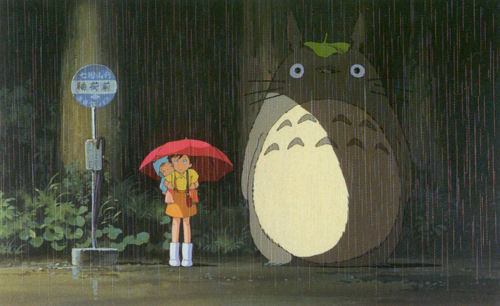
Deep beneath the ocean lives Fujimoto (Neeson), an wizard who has abandoned the surface world and raises his fish daughters to fear humanity. The eldest of these guppy-like creatures escapes and is found by Sosuke, the young son of a navy officer and a nursing home attendant. Sosuke names the fish girl Ponyo and has to avoid her being taken away by a number of human forces. Eventually, Fujimoto surfaces and wants his daughter back while Ponyo has come to enjoy the surface and wants to become human. Some of these elements sound familiar? Yes, this is a Japanese re-imagining of The Little Mermaid.

The plot of the film is incredibly simple and I was reminded of the lighter Kiki’s Delivery Service. There’s never any real peril or chance anyone might actually die. You would think with the stakes being so low the picture would be a bore, but it most definitely isn’t. What pulls you in is the seemingly infinite imagination of Hayao Miyazaki and epic skill of his animators. Every film Miyazaki releases reveals why CG animation will never trump the power of high quality cel animation. It might not be as quick, but when given the proper time and skill you have unparalleled works of art. The wordless opening sequence of the picture is breathtaking, featuring the nighttime migration of jellyfish then transitioning to a panorama of sea life.

The adventures of Ponyo and Sosuke are pure wish fulfillment. I was particularly enamored with their excursion of a tiny steamboat through a flooded village. It felt like that exact thing so many kids would imagine while playing on the couch or in the backyard, the idea of freedom to travel and explore. Ponyo is a delightful character, she is constantly discovering the surface world and find joy in such simple things. Her first sip of hot cocoa drives her wild, her first warm meal puts her into a sleepy coma, and there’s never an adult admonishing for such exuberance. While you may think this is a film made for children, its just as much for adults, tapping into that time of discovery and play I think many of us miss.

DocuMondays – The Weather Underground


The Weather Underground (2002, dir. Sam Green and Bill Siegel)

What is the line you would refuse to cross when it came to your beliefs about justice? Is it taking to the streets in protest? Is it standing up to the thug tactics of a corrupt cop? Is it killing in the name of your beliefs? No matter left or right on the political spectrum we can see multiple instances where once peaceful and calm movements were derailed by individuals desiring to commit acts of violence. There was Timothy McVeigh and the Oklahoma City bombing, The Unabomber, and various other extremists who either cling to an ideology or religion as their justification. This film is about one such group that used methods of terrorism against the US government in the late 1960s through the mid 1970s.

Through archival footage and interviews with the players in this story we are told of the rise and fall of a homegrown terrorist organization. It’s common knowledge that the 1960s were a period of cultural upheaval across the globe. In the United States, it was was student protests against the war in Vietnam that fueled the fire, and the government seemed bent on use brutal force to push them back. In 1969 the non-violent Students for a Democratic Society (SDS) held a convention in Chicago. The war in Vietnam was escalating and the current leadership of the SDS was trying to hold things together, while brasher elements in the group wanted to become violently pro-active. Out of this convention was born The Weathermen, a sub-group who clandestinely planned violent riots in the street and bombings of government buildings. At one point they were even hired to, and successfully did, break Timothy Leary out of a California prison. Their efforts had little effect on the government’s efforts in Vietnam, the ending of which was more influenced by the media’s release of graphic violence wrought on Vietnamese civilians. At the 1970s wound down, the members of the The Weathermen went into hiding, eventually turning themselves in at the onset of the 1980s.

The documentary was surprisingly balanced in how it presented this group. I personally would agree with many of the stances the Weathermen took on domestic and foreign policy up to the point where they brought violence into the mix. And while this is a left wing group, the mistakes made and regret felt year later transcend politics. At the time, this young men and women, including the much spoken about Bill Ayers, felt completely right and certain of their actions. One of the most fascinating interviews is with Brian Flanagan, a man who left the group shortly before Vietnam ended. He is able to sum up how things went from hopeful to cultish very quickly. He emphasizes that the leadership got so caught up in breaking the system completely, they failed to realize that lasting change comes in increments.

Mark Rudd, one of the leaders in the group, presents excerpts from his memoirs which detail a young man unsure of what he was getting into and heartbroken at the chaos he wrought, but not wavering in his political stance. I think this is a key point. While all the Weathermen regret the bombings and the riots, known as “The Days of Rage”, they have never stopped believing that many of the military conflicts the US has are not done with the best intentions. In our current political climate, we have a right wing movement with some members hinting at violence by brandishing weapons. The testimony of these men and women who have been there should be examined closely to understand the cost of violent actions and how they linger in the souls of those who commit them.

Director in Focus: Brian DePalma – Scarface


Scarface (1983)
Starring Al Pacino, Steven Bauer, Michelle Pfieffer, Robert Loggia, F. Murray Abraham, Mary Elizabeth Mastrantonio

Certain films permeate the pop culture consciousness so deeply that you never have to see them to know them. I was 13 and watching an episode of The Simpsons where Homer ends up in possession of a large pile of sugar. He becomes power hungry as the episode progresses and at one point says. “First you get the sugar. Then you get the money. Then you get…the women.” At the time I found the line hilarious and filed it away as simply something those clever Simpsons writers came up with. Years later I would learn it was reference to Brian De Palma’s trend setting foray into big budget Hollywood movies.

Its 1980 and Fidel Castro has opened up Cuba temporarily to send away those unwilling to conform to his particular brand of Communism as well as a large number of convicts. One of these convicts is Antonio Montana, a small time thug. Very quickly Tony and his pal, Manny come into the employ of Miami druglord Frank Lopez. Tony proves himself a tenacious and ambitious figure and it comes as no surprise that any gangster that crosses his path is in danger of his life. Tony weds his rival’s woman, sets his sister up with beauty salon of her own, and establishes strong ties to a Columbian cocaine grower. However, this film is based on the style of a Greek tragedy, meaning for every rung Tony climbs on the ladder of power he has that hard of a fall waiting for him when it all goes bad.

It’s incredibly interesting watching Scarface in the context of twenty-seven years after its release. Stylistically it bleeds the 1980s. It’s separated by De Palma’s last film, Blow Out, by only three years but the distance between the films feels like a decade. While Blow Out owed much to the paranoiac anti-establishment pictures of the mid to late 1970s, Scarface is a trailblazing film, inventing its own style as it goes. This is an even bigger accomplishment after De Palma was basically tagged as “the new Hitchcock” and produced films that were highly derivative of classic cinema. The choices De Palma makes firmly entrench this picture in a very specific time and place, and there is no way it could ever be called “timeless”. Choices of music and cinematography here basically invent the 80s aesthetic. Everything is neon and harsh and brutal, and underneath it all driven by greed.

The screenplay was penned by a 36 year old Oliver Stone (pre-directorial debut) and reflects a lot of themes he would further explore in his own films. Greed is the driving force here, just as in Wall Street. While Stone hits his criticism of American capitalism right on the nose in that picture, the commentary is much more disguised in Scarface. Tony’s story is the immigrant story; he comes to our shores and works his way up the ladder to become a rich and powerful man. Yet, that classic immigrant story is soaked with corruption and acts of vile depravity. While this picture is very much surreal in how it deals with its characters, its themes lie in utter truth. It’s interesting to note that Tony’s story, while very apropos looking back at the Miami drug trade going on in the 1980s, was also reflective of the Hollywood system and Wall Street, where cocaine was a daily part of life.

It’s not a surprise that this picture was incredibly divisive. The main character is a man who is a danger not because he is a physical threat, but because he is frustratingly stubborn. The power of his personality was bound to turn off audiences expecting their title figure in a mainstream film to be a protagonist to root for. Not once did I find myself wanting Tony to succeed. Instead, I found a character to root for in Manny and Tony’s sister, Gina. For De Palma, this film changed everything. The days of Hitchcock-ian pastiche were coming to a close, and now he was a golden boy amongst the Hollywood studios. However, he has one last major nod to his beloved influence in the form of Body Double.

Director in Focus will be back in two week with Body Double. Next week, get ready for a birthday surprise!

Asian Cinema Month – In the Mood For Love


In the Mood For Love (2000, dir. Wong Kar Wai)
Starring Maggie Cheung, Tony Leung

In writing poetry or prose you have a toolbox called language. This toolbox contains things like grammar, syntax, meter, rhyme, etc. Film has a toolbox as well, but is much much larger. And the idea of having more to work with sounds like it would be easier than writing, however more does not equal easier. In the film toolbox you have elements like sound and images. And subsets of sound would be dialogue, character’s accents, soundtrack, sound effects, sound mixing. Under images we find art direction, costume design, lighting, and the most vital of all cinematography. For even the most seasoned artist, misusing these tools is an easy thing to slip up and do. With this feature from director Wong Kar Wai every single tool is used perfectly and produces a flawless example of how rich style can blend with very clear, stated substance.

The film opens in Hong Kong in 1962. Chow (Leung) is renting a room in an apartment building on the same day as So (Cheung). They pass in the hall, barely acknowledging each other. Cut to a few days later and they happen to both be moving in on the same day. Chow’s wife is seen only from behind, her face intentionally not revealed. So’s husband travels abroad to Japan almost every other week and is glimpsed in a similar fashion. The months roll on and both Chow and So become convinced that their spouses have begun an affair. Not knowing how to deal with this they attempt to recreate the circumstances that led their spouses astray with themselves to understand what happened.

The plot is very loose and is carried mostly by the atmosphere created by Wong Kar Wai and his cinematographers, Christopher Doyle and Pin Bing Lee. You rarely see cinema filmed so beautifully and with such delicate craft. I found this to be the kind of film where I don’t remember scenes of dialogue or action, rather I remember images like paintings. Chow sits over his typewriter working on a story and the smoke from his cigarette billows up above his head. The rich detail of every gray tendril of smoke is captured on screen and I felt excitement at such a profoundly beautiful image. The film’s simple theme (a longing tune played on violin) is used repeatedly in scenes where Chow and So are navigating past each other, both physically and emotionally. The camera peeks around door frames, into crowded rooms of neighbors gathered to play cards. We see Chow and So separated by these people who are caught up in raucous laughing, and the tension bleeds off the screen.

The film is able to convey the conservative social pressures of the time. Chow and So meet in his bedroom, merely to share food and must be cautious of Chow’s landlord. They are unable to touch, made clear in a scene where So reaches for Chow’s hand after being caught up in a rare moment of happiness and then quickly withdraws. The film is greatly concerned with absence: the absence of the spouses, the absence of companionship or love, the absence of the spouse’s full identities. A title card that introduces the film reads “the past was something he could see but not touch”, a phrase that sums up what this lush film is all about.

Jolly Good Thursdays – Nil By Mouth


Nil By Mouth (1997, dir. Gary Oldman)
Starring Ray Winstone, Kathy Burke, Charlie Creed-Miles, Laila Morse

I didn’t plan it this way, but Nil By Mouth is the perfect co-feature for yesterday’s Harry Brown. Both films take place in the government funded estate housing and focus on some of the harsh and brutal realities of life there. While Brown goes for a more Death Wish, hyper-violent tone, Nil By Mouth is a documentary-like look at the people Harry so eagerly murders. The film’s violence is not constant but comes in explosive and jolting moments. Every thing orbits around a single act of violence that takes place in the middle of the picture.

Ray (Winstone) is an ox, a violent brute of a man who is having his second child with Valerie (Burke). He maintains a disinterested relationship with her, going out at night with his mates, ingesting all sorts of drugs, drinking copious amounts of booze, and soliciting women at seedy strip clubs. When Valerie stays out to play pool with friends, Ray explodes. Also living in this war zone is Billy (Creed-Miles), Valerie’s brother and Janet (Morse), Valerie’s mother. Billy is a heroin addict who is constantly borrowing money from his mom and sleeping on a roulette wheel of couches. Janet is a helpless figure, standing back and watching her children’s lives decay and, in Billy’s case, driving him to drug dealers’ houses so he can score.

The most obvious element that carries the film is Ray Winstone. I’ve seen Winstone in films like Sexy Beast and The Proposition and in both of those he plays more of the simmering, muted type. Here he is like a British Jake Lamotta, exploding but never in a showy way, more of a man who has never seen men react anyway other than with violence. There’s a moment in the film when he has a conversation with his best mate Mark and talks about how unloving his father was. This monologue lays it out on the table that these men exist in a cycle of brutality. Why should we expect them to know how to show affection or control their rage when they have never seen a man do so, and when they live in a world where you prove yourself through the violence you inflict on others.

Not to be overshadowed is Kathy Burke as Valerie. Burke knows how to tap into the working class up bringing of her character. Valerie knows that her safety is dependent on Ray’s presence. She overlooks his nightly outings and has a pretty strong suspicion he cheats on her with other women. Their relationship has come to the point where she simply doesn’t care. She is pregnant with their second child and states that she wanted to have another child, but didn’t want to find a different father. There’s no love for Ray, he’s just there. And Ray is with her so he has an anchor point to return to at the end of the night.

The film is soaked in profanity, but that is an accurate depiction of this world and the natural grammar of the place. I was reminded of Mike Leigh’s films about the English working class and how often they are cited as “brutally true to life”. They really have nothing on the grim reality of Oldman’s directorial debut. It’s not an easy film to watch. The accents are thick and require the American viewer to play close attention, and the subject matter is not pretty. However, we have to see the full view of these people so that we don’t slip into the Harry Brown mentality.

Newbie Wednesday – Harry Brown


Harry Brown (2009, dir. Daniel Barber)
Starring Michael Caine, Emily Mortimer, Charlie Creed-Miles, David Bradley, Ben Drew, Jack O’Connell

In the States we call government housing The Projects, in the UK they have the Estates. This is setting of this bleak and tragic story of a man who is alone. The film doesn’t flinch from showing shocking acts of brutality and doesn’t raise up one figure as a champion over another. Harry does what he does, but why? The motives for the killing spree remain vague when you begin to examine things closely. Is it in retribution for his friend? Or is their something much darker going on?

Harry Brown, is ex-marine and pensioner living in the Estates. His wife is living in the hospital stuck in a catatonic state. He has one friend in the world, Leonard, whom he meets at the corner pub for a pint everyday. Leonard is fed up with the way drugs are sold openly and people like himself are harassed by the hoodlums that roam the estates. One morning, Harry wakes up to learn Leonard was found stabbed to death in a pedestrian tunnel. This seems to be the final straw for Harry and he embarks on a crusade to avenge his friend, killing young men where ever he goes.

The film eventually goes down a fairly predictable road with Harry’s action parallel by a police investigation about them. What is more interesting is all the subtext brought to the film, possibly not intentionally. There is a lot of work put into making the world Harry inhabits grimey and flithy and despicable. So we are naturally appalled by the various denizens he encounters. As an audience we are clearly set up to cheer for Harry and boo all those nasty villains (see Gran Torino). However, there is a moment near the end of the film where Harry asks a character to kill him. This immediately caused me to re-evaluate what had gone before. Here’s a man whose wife is gone and has just lost his best friend. He lashes out, presumably because he wants but he then wants to simply die at the end. His entire crusade was a nihilistic one. Harry lost all he loves and now he wants to explode, hitting what ever he can in his path.

If it wasn’t for Michael Caine this would have been a forgettable film. There is something about just his subtle looks that elevates the film. In one scene he sits across from a drug dealer whose girlfriend is overdosing on heroin. The slight glances and looks he makes around the room feed the audience tons of information. While Clint Eastwood seemed one note through Gran Torino, Caine delivers a multi-layered performance. Emily Mortimer is also wonderful as the detective in charge of Caine’s case. By the end, she’s the only virtuous character in the film. She has been devoted to her job and wants to solve the murders. However, we can see the world crumble around her.

Harry Brown definitely wants to be a lofty film, but its very much a continuation of the Death Wish premise. I admit there is some greater emotional depth here. The disappointment for me came from how undeveloped characters are. There is no motive for anyone save Harry and it left me feeling like the picture was very hollow.

Asian Cinema Month – Eat Drink Man Woman

All this month, in honor of Asian Heritage Month, I will be looking at some major films from the contemporary Asian cinema canon. While the term “Asia” can refer to areas as diverse as the Middle East, India/Pakistan, and the South Pacific, I will be focusing mainly on films out of China, South Korea, Japan, and Hong Kong. In the future I definitely plan on having a month devoted to Middle Eastern cinema….maybe not so much India, just not a fan of their pictures, too many crazy musicals.


Eat Drink Man Woman (1994, dir. Ang Lee)
Starring Sihung Lung, Kuei-Yei Yang, Chien-lien Wu, Yu-Wen Wang

Mealtime is a proven way of bonding with others. Whether its over a campfire, at a booth in a diner, or around the family dinner table, the act of breaking bread with others unites people in a very beautiful way. Even many animals hunt and dine together in packs, with somewhat of an understanding of the bonding that occurs when they do. Ang Lee presents the story of how food and the act of eating cobbles together a group of disparate people into a family.

The film is set in Taipei, Taiwan and focuses on Chu, the partiarch of a family made up of three daughters. Chu’s wife died years earlier and now his three daughters live at home with him, each feeling the burden of watching after their obstinate and independent father. Every Sunday, Chu prepares a lavish feast of traditional Chinese cuisine, much more than enough for this small group. Chu has also unofficially adopted his middle daughter’s old schoolmate and her daughter. As the story progresses, his three daughters begin to find men with whom they contemplate leaving home for. In many ways, this story is a variation of Fiddler on the Roof, very much about family and tradition.

I really liked this film, much more than I anticipated. I’ve been sort of back and forth with Ang Lee (didn’t care for Crouching Tiger, Hidden Dragon but love Brokeback Mountain) so I wasn’t sure how I would feel about this picture. I think Lee is best when he is dealing with small, character driven stories. The family surrounding Chu are very complex and real. There are no easy solutions and no acts of serendipity. The high drama you would expect from a Hollywood version of this tale is non-existent, yet there are emotional stakes. Chu has lost his sense of taste and so the act of preparing this meal has a deeper meaning to it. The eldest daughter is also a wonderful chef, but no thanks to Chu. He makes sure the kitchen is off limits to his children, so she learned from Chu’s best friend and fellow chef when she was a child.

The way Lee films the cooking sequences is an example of a director at their peak. Everything about the methodical ways Chu prepares his dishes and the care he puts into them is absolutely apparent. The flavor of the dishes comes through the screen somehow and you can feel the steam coming off the dumplings and rich flavor of the stews and steamed fish. If you were putting together a list of films about food, this one definitely make it high on the list.

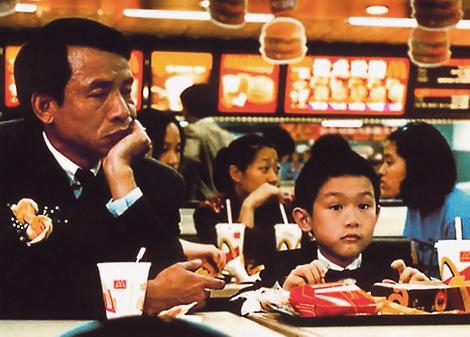
There honestly wasn’t much about this film I didn’t enjoy. It’s a little over two hours, yet I was so engaged by it I never felt like checking the timecode to see how much was left. I was completely absorbed in the world and especially the characters Lee was presenting. While he has gone on to make bigger budget films, my hope is that Lee can always remain close to his early roots, making films that found their wonder in people, rather than effects.