Wild Card Tuesday – Dead Silence


Dead Silence (2007, dir. James Wan)
Starring Ryan Kwanten, Amber Valetta, Donnie Wahlberg

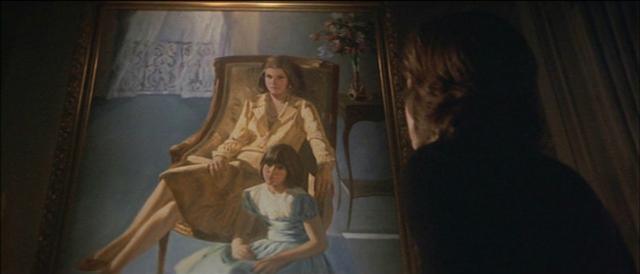
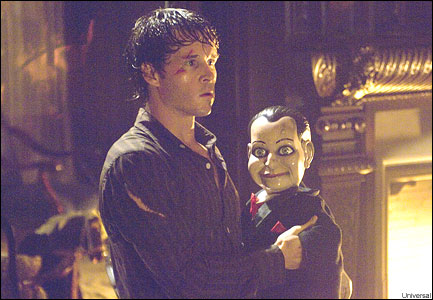
There is just something frightening about facsimiles of humans (i.e. dolls, dummies, mannequins). They have been fodder for horror since the 1920s when both Lon Chaney and Erich von Stroheim played ventriloquists using their wooden cohorts for nefarious purposes. This film seeks to find itself amongst the best of this style of horror and is helmed by the creative team behind the Saw franchise. It begins with a promising opening sequence that evokes a strong atmosphere, but eventually falls into the same chasms contemporary horror can’t seem to help but seek out. A lot style and technique over any substance.

Jamie receives a package at his apartment with a ventriloquist’s dummy inside. He leaves the house to pick up some food and while he is gone the dummy appears to murder his wife, taking her tongue. The police of course suspect Jamie is behind it and a detective is assigned to follow Jamie. Our protagonist returns to his hometown of Raven’s Fair, which happens to have a ventriloquist-related curse behind it. It seems a Depression era performer named Mary Shaw was murdering children and the townspeople assembled a mob who killed her and cut her tongue out. Now her ghost, through the dummies is killing off the members of Jamie’s family as revenge.

James Wan is not a bad cinematographer. Using the best cameras available today and tight editing he generates the perfect amount of atmosphere. The set design is top notch and I especially liked the set piece of he Guignol Theater set in the face of a cliff, alongside a lake. Even the dummies presented throughout the film are very effective. Everything came off with the tone of a great, over the top William Castle horror flick. However, the rest of the film is horrendously terrible.

Wan falls back on the same cliche scares again and again. If you have watched even a minimal amount of horror films in the last decade you could easily write the rest of the script after the first 20 minutes of the picture. There seemed to be a plethora of evil things underneath sheets and dummies menacingly turning their eyes to stare at a potential victim. The attempt to add quirks to characters extends no further than having Donnie Wahlberg’s character act like an obsessive facial hair trimmer. And the final “shocking” reveal of the picture has so many plotholes you can see straight through it. The movie ends up being yet another contemporary horror film to be thrown into the $5 bin at Wal-Mart.

DocuMondays – Kurt and Courtney


Kurt and Courtney (1998, dir. Nick Broomfield)
Featuring Kurt Cobain, Courtney Love, and a cast of thousands…of junkies

I was thirteen when Kurt Cobain killed himself, and honestly the front man for Nirvana existed on my periphery. The whole grunge scene has never been a music genre I enjoyed, I’m more of a 90s BritPop fan (Oasis, Blur, The Verve). But I can understand why the movement was so big, as it was a big deviation from the musical norms of the time. This docu, by Brit filmmaker Broomfield seeks to stir up some of the conspiracy theories surrounding Cobain’s death and in the end isn’t really about Kurt or Courtney, but about famewhoredom.

What stands out most about the film is the shoddiness. Made on the cheap, the documentary is narrated by Broomfield who doesn’t do much to play the neutral observer, but pretty much interjects his personal opinions throughout. That doesn’t make the film any less fascinating though, especially with its parade of “friends” of the Cobains. In particular, one young woman who takes Broomfield to a club where Kurt performed during his early days, and whom talks with expertise about seeing the Cobain couple shoot heroin. She promises Broomfield photographic evidence, and when he returns to her apartment later she is anxious and befuddled and has a million excuses as to why she hasn’t been able to provide the photos. The woman is incredibly reminiscent of how Courtney Love is described throughout the documentary.

Broomfield pursues some wild leads, including the claim by S&M band member El Duce that Courtney offered him $50,000 to kill Kurt and “make it look like a suicide”. A less reliable source you couldn’t ask for. There’s Courtney’s former private investigator who now has “scientific” evidence that the amount of heroin in Kurt’s blood made it impossible for him to handle the shotgun. However, Broomfield provides actual scientific evidence proving that it is possible, to which the investigator simply ignores. The most awful of Broomfield’s interviewees is Courtney’s father, a man writing and publishing books condemning his daughter for the murder of Kurt in what he explains as a way to keep in touch with his daughter.

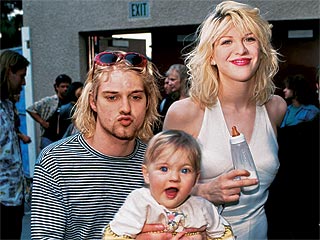
Broomfield reasonably comes to the conclusion in the film’s epilogue that Kurt most likely did commit suicide and that Courtney didn’t pay anyone to kill him. What the documentary revealed to me was that at the end of the day both people came from incredibly messed up homes where a strong parental presence was absent. Kurt seems like a very personable, intelligent guy in some of the interview archival footage, and Courtney seems like a sad woman who made a habit of latching onto local musicians in the hope of grooming them into the next Sid Vicious, as a compliment to her Nancy Spungeon. The person you feel the saddest for is poor Frances, their daughter, whose childhood couldn’t have been an easy one.

Kurt and Courtney is currently available to view on Hulu.com

Hypothetical Film Festival #11 – Ernest Saves the Film Festival

Yes, it’s a film festival dedicated to one of the greatest thespians of the late 20th century: Mr. Jim Varney aka Ernest P. Worrell. KnowhutImean?


Ernest Goes to Camp (1987, dir. John R. Cherry III)
Starring Jim Varney, John Vernon, Iron Eyes Cody, Gailard Sartain

The Ernest character got his start as a pitchman for various local businesses in the Middle Tennessee and Kentucky areas. Eventually there were a series of straight to video skit compilation films that made way for this first theatrical endeavor. Ernest is a camp handyman, who wants to be a counselor. He gets his chance with a group of juvenile delinquents which leads to a series of slapstick sight gags. Meanwhile, an evil mining corporation wants to buy and shut down the camp to get to a rich vein of the fictional petrocite underneath it. Ernest rallies the juvies together for a big showdown with the corporate head, where our hero displays the Native American combat skills he learned along the way. A great start to the Ernest franchise.


Ernest Saves Christmas (1988, dir. John R. Cherry III)
Starring Jim Varney, Gailard Sartain, Billy Byrge, Douglas Seale, Oliver Clark

Arguably the high point of the entire Ernest franchise. In the same way The Godfather, Part II outshines its predecessor, so too does the first Ernest sequel trump the original. A jack of all trades, Ernest is now a cabbie working in Orlando, Florida who happens to pick up an old man from the airport claiming to be Santa Claus. It appears Santa is in town to name local children’s television host Joe Curruthers as his replacement. Joe of course doesn’t believe and is duped into starring in a Xmas themed film which betrays his ethics as a role model for children. The film actually has a very interesting meta-commentary on what Hollywood producers try to do to children’s films like this one, by interjecting foul language or gory violence to appeal to older audiences. The one thing about the Ernest films is they never sold out on their trademark live action Looney Toons feel.


Ernest Goes To Jail (1990, dir. John R. Cherry III)
Starring Jim Varney, Gailard Sartain, Billy Byrge

This is my personal favorite out of all the Ernest films. Here our protagonist works as a bank janitor who is a double for death row inmate Felix Nash (also played by Varney). Ernest ends up in prison with Nash on the outside with plans to rob the bank. Two things makes this film phenomenal: Gailard Sartain and Billy Byrge as Chuck and Bobby, the Rosencrantz and Guildenstern to Ernest’s doofy Hamlet, and Ernest gaining magnetic superpowers during the jailbreak sequence. The Ernest franchise amped up the similarities to Pee Wee Herman in this film as well, with Ernest owning a home filled with Rube Goldberg-like devices.


Ernest Scared Stupid (1991, dir. John R. Cherry III)
Starring Jim Varney, Eartha Kitt, Billy Byrge

Meant to be a Halloween companion piece, Scared Stupid was shot in the Nashville, Tennessee like all the previous films (except for Saves Christmas). Ernest is a garbageman tasked with cleaning up the land owned by a strange old woman. Through a series of mishaps, Ernest releases a group of trolls that have cursed the land and finds out the old lady is a sorceress. The film’s plot gets a lot more complicated than it deserves to be and makes it one of the weaker entries in the Greater Ernest Oeuvre. It is also hurt by the absence of Gailard Sartain as Chuck, yet keeps Bobby and gives him a new partner. They needn’t have bothered. The series goes downhill from here…


Slam Dunk Ernest (1995, dir. John R. Cherry III)
Starring Jim Varney, Kareem Abdul Jabbar

Two films were released before this one (Rides Again, Goes To School) and they were lackluster. This picture isn’t great compared to the first few films but was one of the last highlights in a dying franchise. Ernest is laundry worker, employed by the Charlotte Hornets, who dreams of becoming a pro-basketball player. He’s visited by an angel (Jabbar) who gives him magic shoes that make Ernest a phenom. Of course Ernest dominates with the shoes, realizes the importance of teamwork and ends up scoring without the magic shoes. Hoorah! This was to be followed by the woefully racist Ernest Goes to Africa and the final Ernest in the Army.

Director in Focus: Brian DePalma – Sisters


Sisters (1973)
Starring Margot Kidder, Jennifer Salt, Charles Durning, William Finley

Sisters is director De Palma standing up and yelling, “I love Hitchcock!”. He got Bernard Hermann, Hitch’s composer and most famous for the the slashing string crescendo of Psycho, he gives us murder enigmatically glimpsed from an apartment window, he gives us crazy camera tricks such as split screen wherein figures meet between both views, and many more flourishes that express his admiration for the great suspense director that Hitchcock was. And this film is as disturbing, if not more than Hitch at his most macabre.

The film uses a Hitchcock bait and switch technique of making us believe one character is our protagonist only to kill them off about 20-30 mins into the film. The focus of the story is Dominique (Kidder), a French-Canadian model who is plagued by a possessive ex-husband. Her current date, Phillip, a gentleman she met while working on a game show, escorts her home and helps her ditch the ex-husband. Phillip spends the night and goes out to pick up some medication for Dominique. It’s at this point the film goes into psycho overdrive and it is so much damn fun. A neighbor, reporter Grace Collier sees a murder take place through her window and into Dominique’s. The police show up and there’s no blood or body.

What makes the picture so much fun is how unashamedly de Palma is referencing Hitchcock’s work. A murder clean up scene is straight out of the overlooked Hitchcock picture Rope and the way the director plays the idea can’t help but get your adrenaline going. Jennifer Salt as Grace plays the traditional Hitchcock style protagonist perfectly. She is determined and focused, despite the skepticism of others around her. She even gets a Grace Kelly (a la Rear Window) in the form of Charles Durning. Durning plays a P.I. hired by her editor to help gather facts for her story.

Alongside all the blatant Hitchcock imagery, there’s some interesting subtext about women and their subjugation. Both Danielle and Grace are victims of being forced into a particular societal role. Danielle’s is much more external, while Grace’s is a psychological one. Having that subtext in mind makes Grace’s final scene in the film even more chilling, as it appears she has been defeated. The film ends in a strangely ambiguous way, referencing its opening game show sequence titled “Peeping Tom”, a nod to both the Michael Powell film and the act of voyeurism in general. The finale features a character watching, and waiting, with the solution to our mystery hanging up in the air with it.

Import Fridays – Mother (2009)


Mother (2009, dir. Joon-ho Bong)
Starring Hye-ja Kim, Bin Won, Ku Jin, Yoon-jae Moon

The premise of Joon-Ho Bong’s Mother doesn’t seem to be anything out of the ordinary from any other murder mystery flick: A concerned mother whose mentally disabled son is accused of murder decides she will pursue the case the police refuse to and find her son innocent. In the hands of Joon-Ho Bong, whose 2006 film The Host similarly played with genre expectations, this becomes a taught Hitchcock-style thriller.

Mother (she is never given a formal name in the film) is fiercely protective of her son, Do-joon. Do-joon still sleeps in the bed as Mother and relies on her for his day to day survival. His friend Jin-tae manipulates Do-joon and uses him to escape from trouble, knowing the boy won’t understand what is happening. One night, Do-joon arrives home late and drunk, the next morning the police arrest him in the murder of a local teenage girl. Mother makes it her duty to prove her son’s innocence.

Hye-Ja Kim delivers a magnificent performance as Mother. She is small and timid, yet when circumstances call for it she is a force to be reckoned with. Yet she is never unrealistic. The things Mother does are all things a frail middle-aged woman would be capable of. That fragility and humanity is what makes the character so compelling. The audience knows that if she truly comes up against a murderous, powerful force she is not going to get away. In that way, the film offers wonderful counter-programming to American cinema which commonly seeks to mythologize its protagonists by turning them into people capable of supernatural feats. Even in our most “realistic” contemporary cinema, we are commonly given moments that force to ignore their implausibility.

If you have never seen Korean cinema before, then I would recommend starting with this, or The Host even. Joon-Ho Bong is a director who walks that fine line between commercial and artistic film perfectly. He creates enough tension that it pulls us in, and the payoffs to the tension never feel dishonest. The film is also clever, in the same way Mother would have to be to navigate the dangerous journey she is on. The climax of the film and its mystery will leave you stunned and completely flip your perceptions of the characters in the story. A definite must see!

Charlie Chaplin Month – The Women

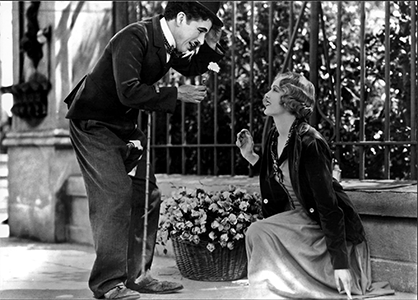
Charlie Chaplin had a very tumultuous relationship with the women in his life, and seemed to be frozen in a moment from his youth when it came to them all. The woman considered to be his first love was a dancer named Hetty Kelly, whom he met when he was 19 and she 15. Eventually, he worked up the courage to ask her to marry him and she refused causing Chaplin to become despondent and never see her again. It was reported that in 1921, when he learned she died from the influenza epidemic that devastated the globe, he was  heartbroken. That 15 year old girl seemed to be an image in Chaplin’s mind that guided all his relationships. He would become involved with many a 15 or 16 year old looking to get her break in Hollywood through the actor and more than not these relationships ended in publicly sour notes.

The woman most people assumed he would end up with was Edna Purviance. During his short film work with Essenay and Mutual they starred alongside each other often and appeared to have great affection for each other. Their romance ended three years before he would direct her in A Woman in Paris and that is attributed to his marriage to 16 year old Mildred Harris. Harris was a popular adolescent actress (think a Miley Cyrus type) and she gave birth to their first child at the age of 17. Norman Chaplin only lived three days. The death of child is assumed to have contributed to the crumbling of the marriage with Charlie filing for a separation in 1919. The subsequent divorce with Harris was publicly brutal, with Harris disclosing sexual indiscretions of Chaplin’s before the press. He seemed to harbor no ill will towards her and settled for $100,000.

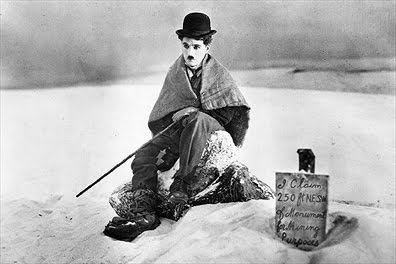
At one point Chaplin was rumored to be involved with William Randolph Hearst’s mistress Marion Davies but that relationship appeared to be one of many short lived ones. His second marriage was to actress Lita Grey, a co-star in The Kid, who was only 16 at the time. While he prepared for The Gold Rush she became pregnant and they married. She gave him two sons: Charlie, Jr. and Sydney, and the marriage was unmitigated disaster. Chaplin was undergoing a tax evasion investigation at the same time the divorce trial was going on. Grey made it her mission to reveal all of Chaplin’s dirty secrets before the public. He gave in and settled for $825,000, however Grey tried to keep Chaplin from being involved in his sons’ lives as an act of vindictiveness.

It was actress Paulette Goddard, who he became involved with years later, that was able to talk to Grey and convince her to allow the boys to spend time with Chaplin. Chaplin and Goddard were rumored to have been secretly married but neither admitted to the fact, while parting ways amicably in 1942. The saddest of all Chaplin’s relationships was with actress Joan Barry, whom he had considered casting in a film until she began showing signs of severe mental illness, something that triggered painful memories of Chaplin’s mother. Barry broke into Chaplin’s home later, and held him at gunpoint. Charlie, Jr. has recounted being there and watching his father remain completely calm and talk Barry into handing him the gun before she hurt anyone. She eventually gave birth to a child, whom blood tests showed was not the actor’s, but the court ruled that the test was inadmissible and he had to pay support. Chaplin support the child till it was 18 and reportedly never complained, believing he had plenty of money to help a needy child out.

Chaplin’s last relationship was with Oona O’Neill, daughter of playwright Eugene O’Neill. It’s disturbing to note that Chaplin was 54 to Oona’s 18. However, it seems to have been a deep and long lasting marriage. They were together for 34 years, decades longer than any relationship he had ever had before. They had eight children, the last born when Chaplin was 73. At this point he had had his Visa revoked because of political beliefs and had settled in Switzerland with his large family.

Charlie Chaplin Month – A Woman of Paris


A Woman of Paris (1923, dir. Charlie Chaplin)
Starring Edna Purviance, Carl Miller, Adolphe Menju, Lydia Knott

This is not the sort of film you expect to see in a series on Charlie Chaplin. The main reason being Chaplin only makes an uncredited cameo, face away from the camera as a bellhop. The second reason being this is a very straight drama, with a few moments of humor woven into it. A Woman of Paris was Chaplin’s first production with United Artists, an independent film production company founded by he, Mary Pickford, Douglas Fairbanks, and D.W. Griffith. Because there was no studio pressuring Chaplin to make a slapstick comedy, he decided to write, direct and produce a film for his longtime romantic interest, Edna Purviance.

The film follows Marie St. Clair, a young French girl living in a rural village, about to leave with Jean, her fiancee and move to Paris. Both youths’ parents disapprove, and Jean’s father drops dead the night he planned to leave with Marie. Marie is left at the train station by herself, believing Jean has become scared, so she leaves on her own. Cut to a couple years later, and Marie is the mistress of Parisian businessman Pierre Revel. Marie is invited to a party in an unfamiliar quarter of the city and ends up knocking on the wrong door. It ends up being Jean’s apartment with his mother. Jean is now a painter and Marie, hoping to rekindle something they once had before commissions him to paint her portrait. Marie becomes caught up in the comfort provided by Pierre and her lost love for Jean.

The interesting part for me was how the two rivals for Marie are meant to be portrayed one way, but come across the exact opposite. Jean is supposed to be the passionate, compelling artist and Pierre the philanderous cad. However, Pierre is always much more fun to see on screen, even though he treats Marie as a passing fancy. Jean is just too brow beaten by his mother to be sympathetic or likable at all.

The film was a commercial disaster for Chaplin and Purviance both. The public had so solidified Chaplin in their mind as the Little Tramp, so when a film advertising it as his next venture was seen, the audience expected a comedy. It’s by no means a masterpiece, but it is a unique piece of cinema in his filmography. Chaplin has anticipated the public reaction and on the night of the premiere, and even in the opening credits, there are notices that he does not appear in the picture.

What A Woman in Paris represents in a larger context is Chaplin’s personal declaration of independence. He has fought against the constraints of studios since he took the screen, and now with his own company and crew he could make any film he wanted. The failure of this picture would cause him to return to more familiar territory for his next few ventures, but he would experiment again with the audience’s expectations.

Newbie Wednesday – How To Train Your Dragon


How To Train Your Dragon (2010, dir. Dean DeBlois, Chris Sanders)
Starring Jay Baruchel, America Ferrara, Gerard Butler, Craig Ferguson, Jonah Hill, Christopher Mintz-Plasse, T.J. Miller, Kristen Wiig

In 1981 we got Dragonslayer, which was a step up in the medieval film genre in terms of effects. In 1996 Dragonheart was released, and while its hard to dislike a film with both David Thewlis and Sean Connery, the picture never stuck with me as a re-watchable one. In 2002, the movie was Reign of Fire…and well, lets try to forget that one. The latest dragon-centric film is Pixar Animation’s How To Train Your Dragon, from the writer/director team behind Lilo and Stitch and Mulan. And how does this flick stack up against its fire-breathing brethren?

Hiccup (Baruchel) is the son of a gruff Viking king (Butler) whose village is regularly attacked by a variety of diverse dragons. During one of these attacks, Hiccup witnesses an elusive go down in the forest outside of his village and ventures into the wilderness to find it. The two are confrontational at first, but grow on each other. Simultaneously, Hiccup is being pressured by his father into being a dragonslayer. What is he to do as he begins to understand this creatures better than anyone in his village?

What this movie does best is put you on the back of a dragon. The flying scenes are far and away the best aspect of the picture, many times done from the POV of Hiccup. There’s also an interesting variety of dragons presented in the film, each with quirk that makes them unique and different. The look of the flick is thanks to cinematographer Roger Deakins (“No Country for Old Men”, and pretty much every other Cohen Brothers film ever). I also liked that the film focused on thinking your way through a problem over just rushing into battle. Hiccup’s tendencies to go to books and conduct scientific study pay off and save his father and the entire village.

I liked that the film shied away from previous Dreamworks ventures, which seem to rely so heavily on modern pop culture references. It felt more like a Pixar film in establishing its own universe. However, every character except for Hiccup feels underdeveloped. It would have been nice to get some backstory on the village and how their conflict with the dragons developed. Despite these hiccups (pun intended) in the story, its still one of the better and more intelligent films marketed towards kids.

Wild Card Tuesday – Eve’s Bayou


Eve’s Bayou (1997, dir. Kasi Lemmons)
Jurnee Smollet, Samuel L. Jackson, Meagan Good, Lynn Whitfield, Debii Morgan, Diahann Carroll, Vondie-Curtis Hall, Branford Marsalis

The thesis statement of Eve’s Bayou is declared early on in the main character’s voice over as an adult, recalling the events that transpired in her 10th year. “Memory is a selection of images, some elusive, others printed indelibly on the brain”. This is a story told through the filter of years gone by and originally seen through the eyes of a child. Adult Eve tells us that when she was 10 she killed her father and the film gives us a couple explanations for this, emphasizing the distortion that occurs as a result of experiencing time passing.

The story begins with young Eve (Smollett), a resident of a Creole parish in Louisiana who lives comfortably on the estate of her doctor father (Jackson). It’s the early 1960s and the patriarch of the family is caught by Eve having sex with one of his patients in the carriage house during a party in the home. He negotiates with the little girl afterwards, trying to convince her she didn’t see what she thought and making promises of lavishing her with more attention than her older sister, Cicely (Good). More and more people in their small town become aware of what is going on within Eve’s family and it becomes apparent that things will end on a dark note.

Eve’s Bayou is full of classic Southern Gothic atmosphere, yet evoked a lot of European slow paced family dramas. Think William Faulkner meets Ingmar Bergman. The film is stylistic rich and uses the Creole religious practices as a framework for foreshadowing and mixing the dreamed up with the real. When Eve is told stories by her family we see them acted out around her, the characters appearing suddenly in mirrors and Eve standing in the middle of them. The film can can delve into the overly melodramatic at times, but because of the setting and general tone it doesn’t seem too out of place.

Eve’s Bayou isn’t a perfect film, but for a first time venture into directing it is incredibly impressive. Director Simmons uses many African-American female crew member (including an amazing cinematographer) and focuses her story around the women of the family. What is so fascinating to me is the otherworldly nature of the place and time Simmons is capturing. The Creole culture has always occupied a different place in the racial history of our nation, and it is interesting to see a pocket of America where the economy and culture were driven by African-Americans. Eve’s Bayou is about these places that seem unreal and about how our minds retain and discard the details of our history.

DocuMondays – The Nomi Song


The Nomi Song (2004, dir. Andrew Horn)

In 1963, author Walter Tevis wrote the novel The Man Who Fell to Earth, and 13 years later David Bowie starred in the film adaptation. Little did anyone realize that the premise of the story: an alien being appears out of nowhere and goes on to achieve fame before dying prematurely was to be copied by a fellow Earthling who would lose his identity in the alien persona. Nomi’s story was much like the operas he loved, very beautiful at its heights, but destined to end in tragedy.

Born Klaus Sperber in Bavaria in 1944, the film really only focuses on his days in New York City in the late 1970s when his career as a New Wave artist occurred and ultimately ended in death. There is wonderful archival footage provided, albeit very low quality, but have footage of performances in the East Village at its cultural height is a treat. The Nomi persona came from the mind of Klaus who combined elements of his native German cabaret, classical opera, Japanese kabuki makeup, and retro 50s futurism. This melange of concepts worked together perfectly, and his set lists would consist of 1930s pop songs, 1960s pop, and his own otherworldly inspired tunes. But what truly made him such a unique act was the mastery of his voice, singing in both a tenor and counter-tenor/falsetto.

The man behind the cleverly designed persona was a conflicting mix and seemed to become much colder and distant as he became more popular. Nomi possessed an androgyny that one interviewee describes as more than sexual, but a removal from normal human emotion. He truly behaved like the alien or robot he pretended to be. There are candid moments caught on film when that fades away. On particular scene involves his appearance in a local access music show in NYC where, instead of singing, he showed off his second talent, making cakes and pies. There are also stories from his back up band and friends of how he hungered for fame, at his heart he wanted to be an opera diva.

Nomi also hungered for companionship, but even his persona was viewed as outsider one to the gay community in the late 1970s. They loved what he did but it seemed that his alien nature made it hard for any man to find him sexually attractive. Friends report in the documentary about his proclivity to go “cruising” and they warned him about the potential for disease by doing this. In the early 1980s, after beginning to compromise his work to be able to put out a marketable album, Nomi discovered strange lesions on his arm and was taking an increasing amount of antibiotics to stay healthy. He was eventually diagnosed with what was called at the time “gay cancer”, more commonly known as AIDs. His final months were sad, as he had turned his back on bandmates earlier and sought out any one who would show him compassion.

While the documentary does an excellent job of telling the story of Nomi’s musical career. However, I found myself wanting to know more about Klaus Sperber and how this young man from Germany developed this psychological mindset. What was the appeal of the idea of retreating into the alien persona? It seems that a lack of companionship fueled but how did it begin. This is an excellent documentary and can be viewed for free on Hulu.

The Nomi Song (Hulu)