Shadows in the Cave Digest #03 – March 2010
I’m Here
Next Month:
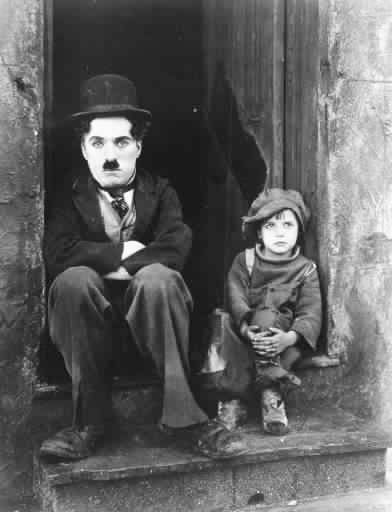
– Charlie Chaplin Month!
– A Look at the films of John Waters!
Changes for Next Month:
– Saturdays become Director in Focus Saturdays
– Hypothetical Film Festivals become a regular feature on Sundays
– Jolly Good Thursdays will shift to focus on British actor/director Charlie Chaplin
Newbie Wednesday – Bunny and the Bull
Bunny and the Bull (2009, Paul King)
Starring Edward Hogg, Simon Farnaby, Veronice Echegui, Richard Ayoade, Julian Barrett, Noel Fielding
Note: This film has no planned release date for either theaters or DVD in the US. So, your best bet is to torrent the sucker.
“Come with us now on a journey through time and space”. If you are familiar with the immensely popular British series The Mighty Boosh then those are familiar words to you. The director of that series, Paul King, embarks on his feature film debut, bringing with him some familiar faces in supporting roles as well as the quirky aesthetic sensibilities of his television series.
The premise puts agoraphobic Stephen in the midst a year long hermit period. He is dealing with a trauma that occurred in Europe while he was on holiday with his friend Bunny. The two follow Stephen’s idea of fun by touring the various museums of the continent, but once Bunny takes the wheel things become a lot crazier. They meet waitress Eloisa who is looking for a way back home to Spain, and Bunny decides that once they arrive there, he is going to fight a bull.
The strongest thing this picture has going for it are the inventive visuals. King is definitely a peer to a director like Michel Gondry, in the way he intentionally lets the audience in on the hacked together set pieces. A fast food delivery bag becomes the setting for a flashback in a restaurant. A snow globe becomes the Swiss mountain chateau the men stayed in. A photograph of their train becomes a chain of photos, set against a landscape made of similar snapshots. The Mighty Boosh did the same, and it caused the universe to feel like a timeless fantasy-scape.
The plot on the other hand is not very strong. There’s no real depth to the two main characters, Stephen is a very stereotypical neurotic and Bunny is the typical crazy risk-taker. There’s not attempt to give us more about these characters or attempt to explain their motivations. The rest of the film is populated with set piece characters, such as the dog-milking Polish man, an innkeeper overly fond of her stuffed bear, and a former matador who uses a shopping cart with horns for practice. The film is very pretty to look at, and showcases the cleverness of the director aesthetically, I just hope he can find a richer level of writing for his next film.
Director in Focus: John Sayles – Passion Fish
Passion Fish (1992, dir. John Sayles)
Starring Mary McDonnell, Alfre Woodard, David Strathairn, Vondie Curtis-Hall, Angela Bassett, Nora Dunn, Sheila Kelly
John Sayles makes films that are a bizarre phenomenon amidst Hollywood culture. His characters are all adults, usually in their late 30s, early 40s. They actually behave like adults. The conflict in these films is muted and commonly unresolved. It’s no wonder he is forced to make films independently. This particular film features the “umarketable” combo of two women in their late 30s and a conflict that is never truly resolved.
May-Alice (McDonnell) is a soap actress paralyzed from the waist down after a car accident. This is the last in a series of disappointments that sends the obstinate woman back to her family home on the Gulf in Louisiana. She goes through a series of in-home caregivers that are driven away by her temper, until she meets Chantelle (Woodard). The two women bond after Chantelle shows May-Alice she’s going to make her work to rehabilitate her body. Each woman learns about the other’s past and through these revelations they grow closer and learn to put down their aggressive facades.
This could have been a very overwrought melodrama, but Sayles is able to make very fleshed out, three dimensional characters. The friends and uncle of May-Alice who come to visit feel very unique in this world. The love interests of both characters feel very real as well, despite not having all that much screen time. Each of these characters feels like they could support a feature, or at least a short, of their own. And May-Alice plays a different role with each person, revealing that the only time she isn’t acting is when it is just she and Chantelle.
This is not a film for the CG driven and big explosion crowd. If you are looking for a thoughtful film about something, and a film that really highlights strong female acting, then I would definitely recommend you pick this up.
Some final thoughts about John Sayles: Sayles is most definitely an independent spirit. His films are not the kind Hollywood would ever think to make, and its a good thing he is there to make them. I can see how his style of muted filmmaking has influenced a lot of similar indie filmmakers today. He never felt a need to be too stylistic with his camera, preferring to make it clean and crisp, while focusing on fleshed out characters who are real people.
Films I watched by this director: Lone Star, Matewan, Men With Guns, Silver City, and Passion Fish
Director in Focus – New Director Poll Results
So the vote for my next Director in Focus is complete and the results are as follows:
Francois Ozon – 9%
Claire Denis – 18%
Pier Pasolini – 27%
Brian DePalma – 45%
So Brian DePalma it is! The April schedule looks as follows:
April 3rd – Carrie
April 10th – The Fury
April 17th – Sisters
April 24th – Dressed to Kill
DocuMondays – Examined Life
Examined Life (2009, dir. Astra Taylor)
Featuring Judith Butler, Cornel West, Slavoj Zizek, Kwame Anthony Appiah, Michael Hardt, Martha Nussbaum, Avitall Ronell, Peter Singer, Sunaura Taylor
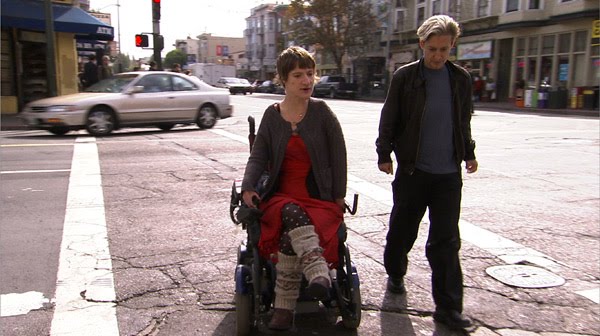
Fans of Michael Bay’s work will no doubt be rushing out to see this one. That was sarcasm. Canadian-American filmmaker Astra Taylor has assembled 8 philosophers and given them ten minutes a piece to muse on some aspect of existence. This could have been pretentious drivel, but Taylor is able to make herself the subject of the film early on in an effort to point out that such an endeavor is imperfect and we should simply sit back and enjoy the mistake. While walking through a park with NYU literature professor Avital Ronell, the subject becomes the interviewer, asking Taylor what the goal of all this is. Taylor responds that philosophy is such an oral exercise, yet it is communicated primarily in printed words, where there is time and space for it to be stretched out and examined. Taylor states she wanted to see if something similar might be accomplished on film, where the philosophers can speak.
The three standouts for me were Judith Butler, Slavoj Zizek, and Cornel West. Cornel West has had vast experience as a media personality so he has the charisma and verbage to make what could have been a dry seminar into a witty musing on the nature of democracy and authority. Judith Butler is also very interesting, with her segment involving a discussion between Taylor sister, Sunastra, who is a painter and disability advocate. Their talk hinges on the idea of “going for a walk”, and what that means for a wheelchair bound person such as Sunastra. This evolves into the nature of being disabled in a contemporary context and then to an exploration of what the manner in which people walk tells us, and how human behavior is regulated by social expectations.
The best was Slavok Zizjek, a Croatian philosopher whose A Pervert’s Guide to Cinema is a great documentary introduction to film criticism. Zizek delivers his dialogue from a landfill somewhere in New York. He talks about the conflict between humanity and nature, and the trend in some groups to desire a “return to nature”. His argument against this is that Nature is simply an ongoing series of violent biological interactions. He cites oil being such a large part of contemporary life, and how we never contemplate the sheer level of violence that had to occur to destroy so much living matter to produce the oil in the earth. The conclusion of this talk is that it is in humanity’s best interest to create further and further artificial environments that it can control, and that this will involve a redefining of beauty from a pastoral standard to one in which hills of garbage can be found to have a pleasing aesthetic.
The documentary is obviously not for someone needing an escapist film, yet it is not a film for someone who has attained a degree in philosophy. I found it fairly apparent that Taylor is trying to reach out to the contemporary individual who has an interest in continuing their education and not moving through life drone-like. The film is full of idea candy, some interesting questions to contemplate and savor after seeing the picture.
Maybe Sundays – Blind Date (2007)
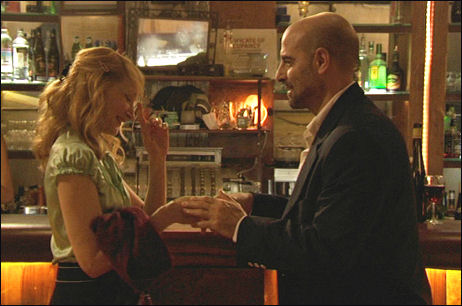
Blind Date (2007, dir. Stanley Tucci)
Starring Stanley Tucci, Patricia Clarkson
Navigating the waters of a relationship, especially one that has gone on for decades is a dangerous and fragile thing. It is almost instinctual on many people’s part to use the vulnerabilities of their mates in verbal combat, attempting to make painful digs. External circumstances can also damage both parties in a way that makes their relationship irreparable. This very quiet, simple film examines those moments of conflict by combining emotional realism but aesthetic surreality.
Don (Tucci) works in a bar/theater where he performs an intentionally bad magic act. He will regularly place and respond to singles ads in the newspaper, placed by he and his wife Janna (Clarkson) as part of a strange game they play. They always meet at the theater, where their ads have determined what roles they will play. In a few strange episodes, they play psychiatrist to each other. These meetings are revealed as ritual torture around the half way point when a tragedy is revealed as the reason why they do this back-and-forth routine. The rendezvous typically end in frustration on the part of Janna, unable to forget the pain that birthed this dance.
Despite the complex ideas and concept the film is very rough. The surreality of the setting the repetition, which on one hand is crucial to telling this story, feels tedious and the momentum of the film suffers. The acting is amazing, I wouldn’t expect less from these performers though. The film is part of a series which works to release English language remakes of Dutch filmmaker Theo van Gogh’s work. Van Gogh was murdered by an Islamic extremist in 2004 after releasing a film highly critical of the Islamic community’s treatment of women. Despite the flaws in this remake, it does have me interested in seeing the original and the rest of van Gogh’s work.
Cinematic Television – Science Fiction & Fantasy
One of the television genres to really rise to the level of cinematic programming are those based around science fiction and fantasy. Television is full of shows that either go the hard sci-fi route (Stargate, Battlestar Galactica) or incorporate their elements more subtly (Lost).
Twin Peaks (1990 -1991, created by David Lynch and Mark Frost)
Starring Kyle MacLachlan, Michael Ontkean, Sherilyn Fenn, Madchen Amick, Sheryl Lee, Lara Flynn Boyle, Jack Nance, Grace Zabriskie, Ray Wise
There had never been a show like, and probably never will be another show like, Twin Peaks. The series was a perfect combination of the avant-garde sensibilities of filmmaker David Lynch and primetime soap producer Mark Frost. The show is at moment high camp and melodrama, then switching to tense neo-noir thriller, and over to creep-infused cinematic horror. The premise is incredibly simple: Young girl’s body washes up on the shores of her small Washington state town, FBI eventually called in to investigate. Out of this premise rises one of the most eclectic casts ever assembled on the small screen. Kyle MacLachlan plays Special Agent Dale Cooper, an investigator the likes of which you have never seen. He doesn’t put much stock in typical detective work, but rather relies on Eastern philosophy and his enigmatic dreams to guide the case. The series will introduce you to the wonders of the Log Lady, the Backwards Talking and Dancing Midget, The One-Armed Shoe Salesman, and a coffee percolator with a trout inside. You’ll never have coffee and pie the same way again. Though the series lacks horribly in the middle of its second season (Lynch was away from the series to work on a film), it is still light years better than anything you’ve ever seen on TV.
Battlestar Galactica (2004 – 2009, created by Glen A. Larson, Ronald Moore, and David Eick)
Starring James Edward Olmos, Mary McDonnell, Katie Sackhoff, Jamie Bamber, James Callis, Tricia Helfer, Grace Park, Michael Hogan, Tamoh Penikett, Aaron Douglas
When I first heard they were doing a remake of the cheesy Star Wars knock-off Battlestar Galactica I was a bit suspect. It wasn’t till 2006 that I actually sat down and began to work my way through the first two seasons of the series and was amazingly surprised. The names were the same, and original premise was fairly intact (Cylons destroy the Twelve Colonies, forcing a small fleet of ships to begin searching for a new home), but the themes and tone of the remake was startlingly fresh. What was done so well in BSG was that is stayed true to the great science fiction trope of being more about our present society and context, much more than any future environs. The series manages to capture a lot of tension in post-9/11 America, with characters finding it easy to dehumanize their enemies, debating if authority has the right to seize power in the midst of crisis, and approaching issues of religious conflict. Despite the first half of the third season being one of the most brilliant things ever, the show begins to crumble in the second half and never recovers during the final season. The show’s focus began to get tied up in trying to explain its overly dense mythology and characters behaved in erratic ways. The series is definitely one of the best science fiction series ever aired and spawned a spin-off prequel series, Caprica.
Lost (2004 – 2010, created by Jeffery Lieber, JJ Abrams, Damon Lindeloff, and Carleton Cuse)
Starring Matthew Fox, Terry O’Quinn, Michael Emerson, Josh Holloway, Evangeline Lilly, Jorge Garcia, Daniel Dae-Kim, Yunjin Kim, Naveen Andrews, Henry Ian Cusick
I must admit my bias. Lost is one of my favorite things ever. EVER! I was less than interested when I watched the premiere during its original airing, but returned to the series when my roommate ‘s obsession pulled me back in at the start of the 2nd season. I have been hooked ever since. What makes Lost great is that it took its time to get to its big mysteries. The entire first season is all character based, with slight touches of mystery sprinkled throughout. Because we have an emotional investment in these people when the trouble goes down, we feel it more. The production values of the series are astonishing. Every episode features beautiful cinematography, gorgeous music, and writing that is very clever and knows how to dole out pieces of a mystery perfectly. The show has a dragging point in the first half of season three, but quickly recovers and hasn’t let up since. The current and final season has been carefully pulling the layers of the onion back before the full reveal is made. The creators of the series have an apparent love of classic crazy sci-fi TV, particularly the shows of Irwin Allen (Land of the Giants, Lost in Space, Time Tunnel). That is mixed with some fascinating spiritual themes and literary references, that make the show enjoyable if you want to simply watch for fun or mine it for all its thematic richness.
True Blood (2008 – present, created by Charlaine Harris and Alan Ball)
Starring Anna Paquin, Stephen Moyer, Sam Trammel, Ryan Kwanten, Rutina Wesley, Chris Bauer, Nelsan Ellis, Todd Lowe, Carrie Preston
If Tennessee Williams wrote a vampire novel, this would be what was produced. The accents are garish, the acting sickeningly melodramatic, and the plots are over the top. But I can’t stop watching it! Set in the fictional hamlet of Bon Temps, Lousiana, True Blood focuses on Sookie Stackhouse, a dive bar waitress with psychic powers and in love with a Civil War era vampire, Bill. In the world of the series, vampires have “come out of the coffin” and are attempting to become integrated into modern society. The impetus behind this is that scientists have managed to synthesize blood, meaning vampires can crack open a cold one rather than gnawing on a warm one. However, there are certain vampires who see this as selling out to the establishment, and there are humans who have fetishized being the playthings of the living dead. The heart of the show are not the leading romantic pair, but all the supporting citizens of Bon Temps. The short order cook is secretly dealing “V”, vampire blood used to trip like acid but better. His replacement is an Iraq War veteran suffering from PTSD. The bar’s owner vanishes on certain nights, showing up naked in the middle of nowhere. A voodoo priestess lives in a trailer just outside of town performing exorcisms. This is not for people looking for Mad Men, though you can enjoy both shows. If you like some supernatural insanity then definitely check this one out.
I’d like to know what dramas, comedies, and sci-fi/fantasy series YOU are watching that I haven’t included and you believe should be. Reply to the comments here or e-mail me at huckabees@gmail.com
The Burton/Depp Collaborations – The 2000s
Director Tim Burton’s style of filmmaking began to change in a not so wonderful way in the new millennium. His work became much more adaptation and remake based, rather than producing original ideas and scripts. Stylistically he fell into a major rut, reusing the same aesthetics over and over again, which felt much more bland now that we had been consuming them for a decade already. However, he did have films that rose above the repetition of his tropes.
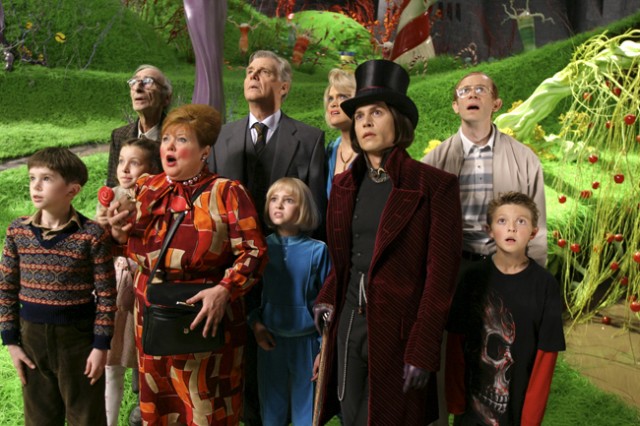
Charlie and the Chocolate Factory (2005)
Starring Johnny Depp, Freddie Highmore, Helena Bonham Carter
This remake had been in production limbo for around a decade. At one point, Marilyn Manson had been attached for the Wonka. Now that would have been an interesting pic. The studio decided on Burton, who brought along his old collaborator Depp and new wife Helena Bonham Carter. Despite earlier shakiness with the Planet of the Apes remake, I was still fairly confident in Burton. Big Fish had been a huge departure from his typical style of filmmaking. However, upon seeing this picture I found that the visual flourishes that had once captivated me caused me to literally fall asleep. The first time I saw this film, it was the middle of the day and I actually fell asleep in my chair, something that never happens to me when I am watching a film. Afterwards, I realized that Burton seemed to using his aesthetics as a crutch, providing us no real meat to the film. Oh yes, there was some half-assed attempt at giving Wonka an origin story (such a terrible idea), but if you had seen the first film there was nothing here that added to it except updated CG graphics.
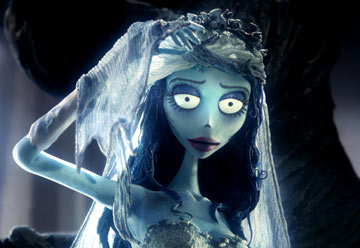
The Corpse Bride (2005)
Starring Johnny Depp, Helena Bonham Carter, Emily Watson, Tracey Ullman, Albert Finney, Christopher Lee
The Nightmare Before Christmas is one of the most beautiful and perfectly made stop-motion films in history. Its an art style of animation that is rarely attempted, compared to its CG brethern, but when done right it stands above all else (Also remember, Burton only produced and did design work for that film, not direct). I was very excited to see Burton returning to that method of filmmaking and interested to see the story he told this time. For the second time in a year I was utterly bored. The film’s look was basically Victorian Nightmare Before Xmas, the shape of characters and the way ghosts were designed. I don’t remember much of the plot of this film, because I found my mind wandering and uninterested. It’s definitely a beautiful film. Let it never be said Burton doesn’t know how to fill a frame. However, like with Charlie, it lacked substance underneath the surface. The humor and characters were both ultimately forgettable.
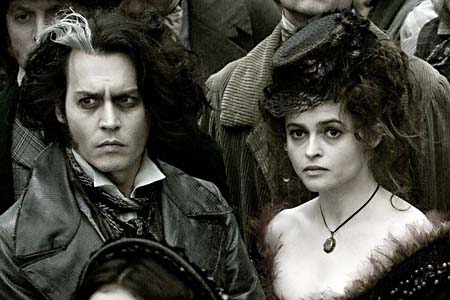
Sweeney Todd (2007)
Starring Johnny Depp, Helena Bonham Carter, Jeremy Irons, Sacha Beren Cohen
This was a semi-return to form for Burton. The key this time wasn’t his aesthetics (they were as bland and repetitive as usual), but the writing of Stephen Sondheim that caused this picture to rise above the rut. Because this film was an operatic tragedy, the bleak landscapes of Burton felt perfectly at home. London came across the dirty, grime-covered hellhole Sondheim originally tried to get across on stage. The casting for the film was wonderful, though Depp wouldn’t have been my first choice for the lead. He does a good job, but its the supporters who really carry the film here. For me, this was the single true highlight of Burton’s in the 2000s. It kept my interesting throughout every frame and has a truly devastating and heartbreaking finale. It’s my hope that Burton is able to reproduce this sort of emotional resonance in his coming work.
Seventies Saturdays – Little Big Man
Little Big Man (1970, dir. Arthur Penn)
Starring Dustin Hoffman, Faye Dunaway, Chief Dan George, Martin Balsam, Richard Mulligan
At the height of the conflict in Vietnam, American filmmakers were ensconced in counter-cultural material. The 1970s were also a renaissance period in American cinema as well, influenced particularly by the French New Wave of the 1960s. Both social and aesthetic revisionism is at the heart of Arthur Penn’s adaptation of this novel, which results in a film that is both clever and funny, and at other times muddy and unsure of itself.
As a young boy, Jack Crabb’s family are massacred by Indians, however he and his sister are rescued by the friendly Cheyenne. Jack grows up amongst the Indians and eventually is pulled into the white man’s world, where is to be properly educated in good Christian morals. For the rest of Crabb’s life he goes back and forth, between being a “civilized white man’ and a “savage Cheynne”. A sort of Western Expansionism Forrest Gump, Crabb runs across historical figures like Wild Bill Hickok and General Custer, the latter of whom he serves under three separate times.
Penn allows the Cheyenne to speak in plain English, but within the rules of the film, its their native tongue translated so that we may hear. This was a big change in film at the time, as Indians had been portrayed as speaking in broken English and using tired, clichéd phrases. However, the film does fall into some common cliches of another kind when dealing with the tribe’s single homosexual member, who’s portrayed as a limp-wristed effeminate dandy. It would have been more interesting to have a common brave amongst the tribe end up being attracted to his fellow warriors.
The film is infused with a biting sense of humor, and definitely plays up the common myths of the frontier for laughs. General Custer, historically known for being pompous and grandiose, is played wonderfully by Richard Mulligan. Dustin Hoffman does a very convincing job as Jack Crabb, and shines particularly in the physical comedy gags. At one point he operates as a gunslinger (The Soda Pop Kid), and has a nervous encounter with Wild Bill, which highlights the small stature of Crabb. It’s a very fun film, that rushes over so much, and that it keeps it from becoming a true classic.