
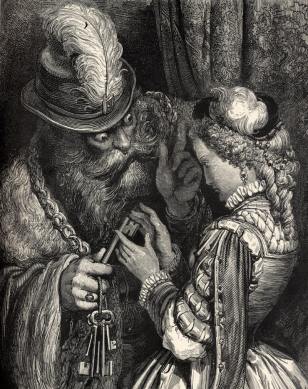
 If you know the overlooked fairy tale Bluebeard then you are good. If you don’t, let me summarize: A young maiden is convinced to marry a brutish, ugly aristocrat named Bluebeard. After their wedding, the maiden is left alone in Bluebeard’s home and told the place is her’s, except for one room that must remain closed at all times. As in all fairy tales, she succumbs to her temptation and discovers an abattoir of Bluebeard’s former wives. The husband returns and vows to kill her. Depending on the version, a family member arrives and saves the maiden.
Bluebeard’s Bride (designed by Whitney Beltran, Marissa Kelly, and Sarah Richardson, to be published by Magpie Games) takes this fairy tale and explores and turns the message of the original on its head. Intended to be a warning to young girls to obey their husbands, Bride is an exploration of the female experience through a lens of body horror. The game is yet another using the Powered by the Apocalypse engine, with some very interesting variations to the mechanics. The players are all a singular character, The Bride, but choose playbooks modeled after aspects of her mind: The Virgin, The Fatale, The Witch, The Animus, and The Mother. A physical “wedding” ring is used to represent which aspect is dominant at the moment and is passed voluntarily or when triggered by certain moves. This was our game for the Friday afternoon session of Games on Demand and we were lucky enough to have Sarah Richardson as our GM.
Game play consists of the controlling aspect describing a key on the key-ring left to her by Bluebeard, the GM referring to an oracle type sheet, and then describing the room. Once inside the room, the Bride may not leave until she declares a Truth about what is going on. The truth can either be one that strengthens her trust in her husband or grows the distance between them. While most PBtA games are open ended, Bluebeard’s Bride has two tracks that, once one is completed, bring about a series of endgame moves and decisions to be made.
It is difficult to talk about the game because in my personal experience it was a very visceral, emotional session. As my friend Mick said in a write up about the game: “[..] it felt like the kind of thing I’ve always been taught Eucharist is supposed to be like[..]”. It did feel a bit like moving through the stations of the cross or similar religious rite but much more interactive. Very quickly, based on the Moves and explanation from the GM, you realize that the typical response of fighting back is not an option. Instead you’re encouraged to explore and illuminate the purpose of each room or object. The Truth revealed before exiting takes your discovery and gives them context in the larger meaning of the Bride’s experience.
I don’t know if I could ever play Bluebeard’s Bride again. Not a slight to the game but a compliment to both the design of the piece and Sarah, our GM. I view the game in the same category as Requiem for a Dream or the films of Simon Rumley. They are perfectly made and one of their purposes is to interact with parts of your brain you aren’t used to experiencing in “entertainment”. Bluebeard’s Bride is one of those games that challenges the notion that all games should be “fun”, in the same way some films aren’t made to help you escape from reality but to examine it from new perspectives and with a creative twists.
The body horror of the game was not what affected me on such a deep level. The existential horror was what lingers with you in the wake of the session. I immediately thought about the works of some of my favorite horror author, Laird Barron foremost, who manage to find ways to disturb and shake me. For a piece of writing to wield that sort of power is admirable. Helplessness against a looming horror is profoundly more disturbing than any monster the mind can conjure up. In a climate where people are overfed stimulus through media it takes a deft and creative hand to fashion something that can shake a viewer/reader/player.
I would imagine Bluebeard’s Bride is a delicate game to run. You need the right GM and players with open minds who are ready to explore dark places. Like all games run at Games on Demand, the X Card is present for players who get uncomfortable if triggering subject matter is broached. A good GM would need to be agile in making sure the content strongly affects the players without venturing into territory that would bring up personal traumas. But I personally believe good horror can’t be too delicate. It loses its power when it is too restrained in the same way it loses power if it is allowed to go completely gonzo. The work exists as both a playable game and a poetic piece. I compare it to my purchase of Black Sun Death Crawl, something from a system I would never likely run, but a quality work of writing and craft
Bluebeard’s Bride has not yet been published, but a Kickstarter is coming. I would recommend backing it because you’re going to help get a game out there that deals with subject matter not often touched upon in tabletop gaming. For more on the game and the place to look out for the Kickstarter’s launch visit here – http://www.magpiegames.com/bluebeards-bride/
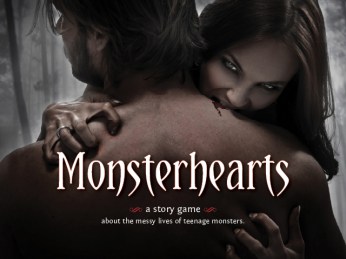 Friday morning rolled around and I knew exactly what table I would be at. We had the great honor of playing Monsterhearts with Joe Beason. Joe has been a Google Plus friend for awhile and I’d been very interested in his variation on Monsterhearts, Elderhearts which focuses on a retirement home rather than a high school. However, we were feeling the original that morning.

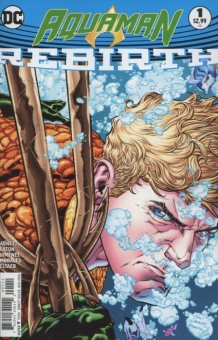 I felt like I was in familiar territory because this issue seems to tread the same notes most modern Aquaman stories always do: Hey, he’s a super serious hero, you guys! This need to make meta-commentary on jokes about Aquaman does more to diminish the character than just telling good stories about him. This comic also didn’t seem very open to new readership with some elements, like the Deluge, not being defined well or the reveal of the villain at the end feeling awkward. At the end, I felt like it was all set up for Aquaman to just fight one of his old villains again, but not the sense that something new was going to happen. Probably my least favorite of this week’s releases.
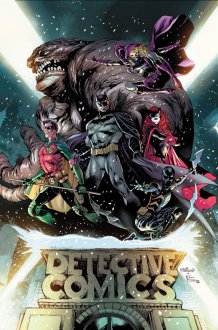 appears to be a focus on a team of Bat-related characters. Featured in the series will be Batman, Batwoman, Red Robin, Spoiler, Orphan, and Clayface. Clayface is the interesting outlier, a character shaped more by his appearances in the 90s animated series, than much of anything in the comics. His role in the team hasn’t been revealed yet but Tynion does a good job of making him sympathetic right from his first moment in the film. I used to truly hate the work of artist Eddy Barrows but he has made some significant improvements. Action feels fluid and energetic and the world is full of detail. There’s a slot of story potential for the interaction and relationships between these characters and this will be one I continue following.
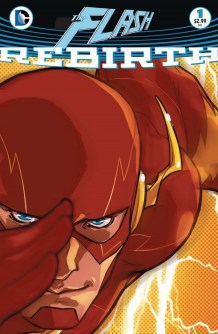 It can be argued that DC Rebirth #1 was a Flash-centric story, with its lost Wally West at the heart of it all. The Flash Rebirth is an interesting artifact in that it takes place before, during, and after the events of DC Rebirth. Right away Williamson is making the title new reader friendly by using a contemporary murder scene to recap Barry Allen’s own loss of his mother. It would be easy to just make the comic a facsimile of the popular tv show but effort is put into referencing those important elements but keeping the comic its own. There are a couple beats that take us out of the story, the Barry/Wally reunion retold and Barry’s visit to Batman who happens to be analyzing that familiar smiley face pin. Artist di Giandomenico was someone I didn’t care for much on the recent X-Factor title for Marvel, but here his style lends itself to the spend and energy of the Flash. While not a singularly cohesive story, Flash Rebirth is a good introduction to the character.
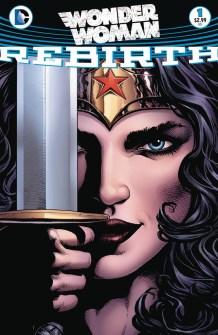 Greg Rucka is bringing up the contradictions and fluctuations in this character’s past. Rucka’s past work on the title also dealt with finding a unique place for Princess Diana in a world of supermen. And he did a great job at it, playing up her role as a warrior and an ambassador to the world of men. Right away Rucka is saying we are going to examine this character again and redefine her. Another thing I loved was the use of multiple artists. Often new artists pop up in a jarring non-essential way, but here we switch to a new artist the moment Diana dons her new costume. If you really want a comic that is beckoning you in for a new story,but with recognition of the history that has come before, this is it. You also have a great pedigree with Greg Rucka at the helm. The ongoing series will be doing something a bit odd, alternating issues between the present day story and a Year One origin reboot. Definitely on my list to follow. Hands down the best release of the week.

 PopCult Reviews