TV Review – The O.A.

The OA (Netflix, Season 1, created by Brit Marling and Zal Batmanglij)

585987beaca0591e008b4c65-1920

A young woman is caught on camera jumping off a bridge. She doesn’t die, and an older couple watching television coverage recognize the woman as their daughter, Prairie who has been missing for seven years. The biggest shock comes when they find she has been miraculously cured of her blindness. Prairie hunkers down in the unfinished subdivision her parents live in while meeting an eclectic assortment of young people and a high school teacher. This group becomes her greatest friends, the ones whom she confides the secret of what happened to her in the last seven years and why she no longer goes by Prairie but The O.A.

For the majority of the pilot episode, I wasn’t too keen on the series. Nothing stuck out as particularly interesting. There was a slightly intriguing mystery in The O.A. losing her blindness, but all the pieces felt very spread apart, and nothing was a great hook. Then the last fifteen minutes started. Out of nowhere a powerful musical score swells, the credits begin (which I hadn’t noticed did not play at the beginning of the episode), and we found ourselves in a place very different than where we started. This is where I was hooked. As The O.A. tells her story, it was pretty impossible for me not to become engrossed.

The series hits a note very reminiscent of Lost. Lost was and is one of my favorite television shows of all time. When I reflect back on the first season, I have realized that the mysteries (polar bears, smoke monster, the hatch) while intriguing were not the primary factor that caused me to come back week after week. The relationships between the characters and how they were revealed one piece at a time are what still resonates with me. So many Lost clones got that part wrong and overloaded their pilots with too many bits of strangeness and mystery hooks. They forgot that characters are the core of a good piece of fiction.

The O.A. is a show that is nothing without its characters and their relationships. The obvious center of the show is The O.A. and Homer, two captives who have been to the same places beyond most people’s understanding. Their compressed seven-year relationship is full of trials and struggles and an ending full of beautiful frustration, yet the hope that the story is not over yet. My personal favorite relationship was that of Steve and Betty. Steve begins the show as an incredibly unlikable teenage prick. He is a drug dealer, obsessed with the physical over the spiritual, quick to anger and jealousy. He assaults a fellow student for no particularly good reason. He is someone we should naturally root against.

Betty is a teacher at the local high school who has suffered a loss. None of her colleagues actually know about it, but through a series of circumstance, she and The O.A. meet to talk about Steve. Our protagonist’s supernatural empathy allows her to see beyond the strict authoritarian teacher and seek to understand. The way Betty changes and the way she sees Steve by the end of the series is beautiful. Playing Betty is the remarkable Phyllis Smith, who you may know as Phyllis from The Office. She is one of those wonderful character actors who endear themselves to you. It is easy for an actress like Ms. Smith to be typecast after a long run on a popular network series. But in The O.A. she breaks away from our preconceived notions. She portrays a regular person process a tremendous grief and coming out on the other end an incredibly empowered woman.

This is not a show for everyone. Another similarity it has with Lost is that it features a nebulous type of supernatural. Science and new age philosophy weave together to present ideas that ludicrous so to enjoy the show you have to suspend your disbelief. I would argue that the character development being done is heightened by the more fantastic elements of the show, so they are valuable parts of the overall piece. The O.A. ends on a cliffhanger and a second season has been announced. I am intensely eager to see where the series goes next because it spent its first eight episodes flipping my expectations around at every turn.

Masks: Refugees AP Part 2


masks

We kicked off our first full session of Masks: Refugees with our characters in their personal lives. Sparks has offered up her home/spaceship to Monster, who is actually homeless. Sparks, whose entire race has been inspired by pop culture from the 1980s, as her ship taking the form of a suburban home complete with a white picket fence and a tree house in the backyard. However, her ship is parked in the middle of a gentrified urban

dad
D.A.D, the artificial intelligence on Sparks’ ship.

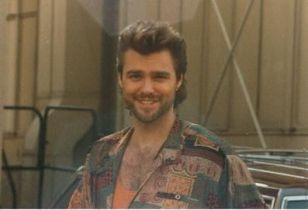
block, so it sticks out like a sore thumb, saves the hypno-inducer that causes people to just glance over it most of the time. Her onboard A.I. is named D.A.D. and appears as Greg Evigan from My Two Dads. His personality is modeled after cool sitcom dads from the 1980s though he shifts into a stoic mode when emergencies occur. Her race is known as the Duranians. We also established that Sparks’ native language would destroy human brains, so human minds have evolved to mishear the words and replace them with common nouns. Her mother’s name is heard as Queen Diamond when spoken, for example.


Since the first game session, I’ve built out the Duranians a bit more. Their homeworld is Rio Prime, and Sparks’ dad holds the title of The Grand LeBon. A cultural revolution was occurring at the same time transmissions of Earth culture from the 1980s were intercepted. As a result, their society now looks like America circa 1985.

Across town, Akil Batin aka Shatterstorm is helping his father, Professor Batin at Halcyon University with a shipment that has arrived from their home country of Obrijan. Despite the ongoing civil war there, the Professor was able to obtain a block of a pure element with a strong effect on gravitons. The Professor believes this element may be tied to his family’s abilities to manipulate gravity. Mishaps occur when he attempts to break a chunk off, and Akil begins to hear a voice emanating from the massive monolith, beckoning him to come closer and embrace his power. Akil holds back and gets a great excuse to leave when an alien vessel arrives at Sparks’ place demanding her return to Rio Prime.


garryn_bek
Risk Imsit, intergalactic bounty hunter

Ajax is in the middle of class when the alien invasion lockdown drill occurs. He skips school despite protestations from Vice Principal Quesada and meets up with the Refugees. The alien ship, an obvious junker, unloads some refurbished strike drones who blast open the door of Sparks’ house. Monster plows into them creating an opportunity for Sparks to reconfigure an old block cell phone into a one use teleporter that pops the team onto the ship. Shatterstorm and Ajax use their powers to crush and destroy mecha-tentacles that emerge from the walls to bind them while Sparks and Monster find the engine room and disconnect the fusion core. The Refugees storm the control deck and find bounty hunter Risk Imsit there, having taken up the reward offered by The Grand LeBon to bring his daughter back. Sparks uses her pheromone powers to enamor Imsit and convince him to leave Earth.


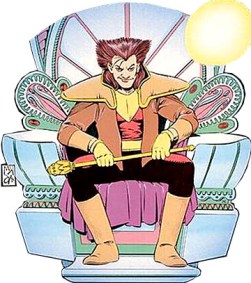
However, The Order arrives this time with The Badge (shield bearer), Shooting Star (speedster), and Mr. Fantasmo (occultist) in their line up. They immediately screw up the headway the Refugees made with Imsit and demand that he must be turned over to AEGIS. Sparks tries to use a holographic communication with her mother citing intergalactic treaties about extradition, but The Badge counters with a more masterful knowledge of the law. Sparks is obviously pissed and Imsit, still in his charmed stupor is taken off.

Monster and Ajax head off to their regular volunteering at a clinic/shelter run by Dr. Green. Dr. Green is an Iraq war vet who had her skin turned green from toxic chemical agents. No powers, just green skin. She is incredibly empathic and focuses on helping vets, runaway kids, and battered women at her shelter. She counsels Ajax about defying authority at school and how he needs to think about doing what will lead him to a better future, not returning to who he used to be. The calm is interrupted by a special announcement about anti-mutant legislation proposed by Halcyon’s own Senator Victor Hu. Senator Hu speaks from the floor of the Senate explaining that self-made metahumans are real heroes, while mutants born from accidents or mistakes of nature need to be curtailed and more aggressively vetted. The legislation gives BanCon Industries a contract to construct Mutant Evaluation Centers to temporarily displace America’s mutant populations til they can be registered and partnered with a metahuman mentor. Monster is so angry she destroys the television.


the-order-american-steel
American Steel, one of The Order

Sparks is fuming from The Badge when DAD suddenly announces that a Duranian artifact has been detected within the city. His triangulation leads her to Professor Batin’s office and the block of what is now being called Ifritium. Shatterstorm has a rough interaction with his sister Amira who is reaching a boiling point about being boxed out of the family’s heritage. He and Ajax debate with Sparks about how to deal with the element. They settle on contacting The Order for help, despite Sparks’ protestations. Arriving from their floating base, The Panopticon, The Order (this time Shooting Star, Mr. Fantasmo, and American Steel) want to crack the Ifritium open. Ajax tussles with American Steel and, despite no one ever have before, wrests Steel’s Atomic Sledgehammer from his hands. The Order is visibly pissed and announced they will be taking the Ifritium with them. Shatterstorm thinks it’s for the best despite the fact that how angry his father will be and Ajax is in supreme cocky mode.


Movie Review – Come and See

Come and See (1985, dir. Elem Klimov)

come-and-see-child

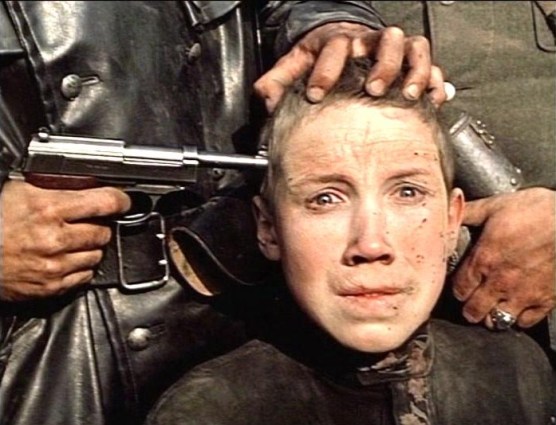
As we get older, we’re told our views on life will change. That is a somewhat accurate assessment I’ve found. However, as I was told by older people I would become more conservative in my thinking as I aged, I discovered the opposite to be true, at least in the sense they implied. One thing I have become very conservative about is the act of war, conservative in the sense I abhor it. I find people who have a war hawkishness about them to be very liberal about the deployment of soldiers and the dropping of bombs. I am thankful that I have never had to personally experience war and have great sympathy for those who have taken lives and had lives taken from them. I cannot fathom the trauma a person carries with them in the wake of that experience. Come and See is possibly the best war film ever made in my opinion because it is directly about that trauma.

Continue reading “Movie Review – Come and See”

Masks: Refugees AP Part 1

masks

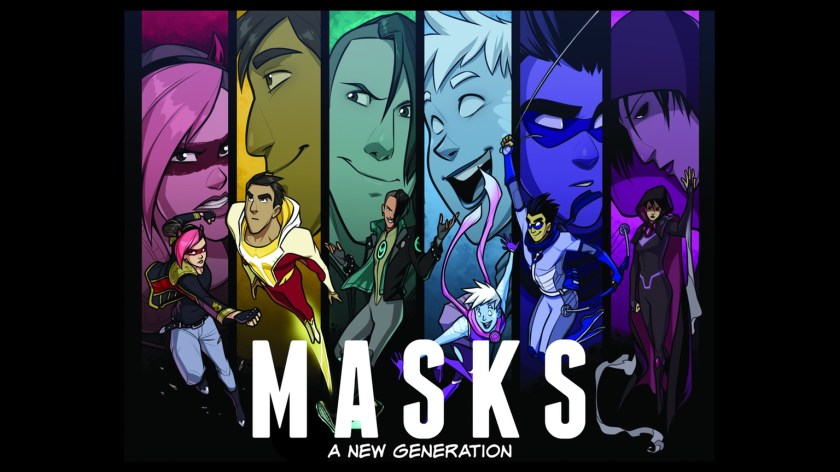
This weekend I kicked off a new game of Masks, the Powered by the Apocalypse tabletop roleplaying game by Brendan Conway. Like most first sessions of PBtA games, it is mostly world building and learning the fundamental dynamics and relationships of the characters. The line up for our team of teen heroes is made up of:

Continue reading “Masks: Refugees AP Part 1”

Movie Review – Moana

Moana (2016, dir. Ron Clements, John Musker)

homepage_trailerthumbnail_moana_720_f3266261

Moana is captivated by the stories her grandmother tells about her people and their mythology. The story of the demigod Maui particularly inspires a sense of exploration in the young woman. However, she is the daughter of the village leaders and is expected to maintain life on the island as it is. The ocean begins to communicate with Moana, and she learns from her grandmother that their people used to sail across the ocean living on different islands. When Maui stole the heart of Te Fiti, the island goddess, darkness began to spread across the world. That darkness has reached the shores of their island and Moana cannot stay put any longer. She sets out to find Maui and restore the heart of Te Fiti, saving her people.

In 1989, Disney released The Little Mermaid, a film that would serve as the template for princess movies to come for the next 25+ years. Moana very closely follows that formula: A young woman expected to follow the expectations of her parents, she feels a yearning to travel beyond the borders of the land she knows, an event occurs that pushes her beyond the boundaries, she has a weird/silly/funny pet, she conquers a great evil despite feeling apprehensions. It is the traditional hero’s journey story that has cleverly replaced the original Disney style of princess stories. If you haven’t seen movies like Cinderella or Sleeping Beauty recently then you may have forgotten how annoying the characters are. Those earlier animations seem more like an exercise in animation technique more than a story about characters with arcs. So, while I greatly appreciate Disney presenting stories about more active rather than reactive princesses, I hope that we continue to see diversity in character but also in the way stories are told and the types of stories being told. Zootopia highly impressed me as a kind of story I haven’t seen from Disney before.

Moana is a lot of fun, but I know I am not the intended audience for this film. It’s a children’s film and thus the story arcs are very evident and classical. There’s not a lot of character complexity but that wouldn’t be appropriate for the intended audience. One element I greatly appreciated was that the film doesn’t have a villain that follows the characters through the whole movie. This lets the movie feel like an actual myth being retold and keeps the focus on Moana’s arc rather than subplots. There are some antagonists who show up, my personal favorite being the Kakamora, animated coconut pirates. The sequence where these monsters attack has been revealed to be a direct reference to Mad Max: Fury Road and it is just subtle enough that it doesn’t come across as a crass pop culture reference. The film’s final obstacle in the form of Te Ka the lava demon has a clever twist that shies away from the act of killing the “final boss”. Lately, I’ve found myself drawn more and more to films that don’t follow the traditional black/white good/evil dichotomy. And it is very refreshing to see this in a children’s film.

I was very impressed with the level of computer animation. It took me awhile to be sold on the aesthetic as a replacement to classic cel animation for Disney pictures, but at this point, they have really perfected it. I’m not one who expects CG to be “realistic,” I’d rather see the technology be used to create the fantastic and impossible. Why recreate something we can already see in the real world when you can make something look real that could never be. While watching Moana, I was captivated by the texture and weight of objects. The previously mentioned Kakamora looked more like stop motion animation than something that was flat and two dimensional. People still look flat to me, but the world around them (grass, trees, water, man-made objects) looked like you could lift and hold them.

With Moana and Zootopia up against each other at the Oscars, I would still have to give it to Zootopia. This is not a slight to Moana, but an acknowledgment that Zootopia was a kind of story we have never had in as much depth and relevance from Disney before. Moana, while an excellent example of Disney creating more diverse characters, follows a very traditional and unsurprising story arc. It’s a film I’m sure kids and parents will enjoy watching again. Zootopia is a larger statement that I suspect will be remembered and studied in a way Disney films don’t traditionally do.

The Revisit – Unbreakable

The Revisit is a place for me to rewatch films I love but haven’t seen in years or films that didn’t click with me the first time. Through The Revisit, I reevaluate these movies and compare my original thoughts on them to how they feel in this more recent viewing.


Unbreakable (2000, dir. M. Night Shyamalan)

unbreakable-samuel-l-jackson

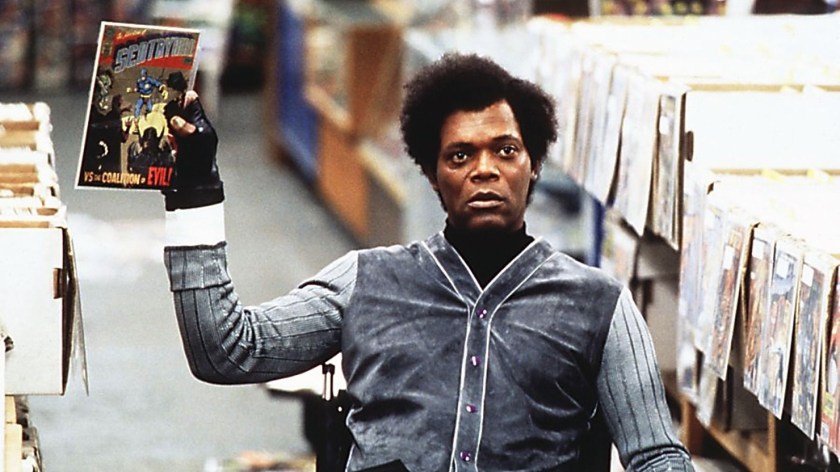
I can remember exactly when I decided I needed to see Unbreakable. I was in my sophomore year of college, and my friend Sam had seen the film over Thanksgiving Break. He insisted that I needed to see it because of my love of comic books. That struck me as odd because nothing I had seen in the promotion materials had made me think of comic books and superheroes. I had really loved Shyamalan’s previous film, The Sixth Sense, so I was totally up for it. We went to the theater a couple days later.

Rewatching Unbreakable, I was astonished at how many images from that film are burnt into my psyche. I loved the picture after that first viewing, purchased it as soon as it was DVD and watched it dozens of times for the next couple years. I was very likely over-hyped when Signs came out and found myself underwhelmed. Like many filmgoers, the following decade will cause the director to lose most of his cachet with the audience. But Unbreakable serves as a reminder of how amazing a director Shyamalan was/is/could be again.

What struck me the most on this viewing was how measured and quiet the film was. This was a couple years before Sam Raimi’s Spider-Man would shift the movie superhero paradigm and the late 1990s were very unkind to the genre. There is a deliberate sense of grounding the fantastic, but not in a way that disparages their roots. Comic books are lauded through the picture, but the conceit of the film is these four-color tales are exaggerations of a more sedate reality. Yes, David Dunn is incredibly strong but that means he can lift around 400 lbs not and entire jet airliner. The super heroics of Unbreakable are not global or against alien hordes. The evil that is being pointed out is racism, rape culture, sociopathic violence.

I also found myself reconnecting with every character in the film. The aforementioned quiet moments are always character-centered and are intended to build on what we know, either adding to our knowledge or subverting it. We deeply understand the strained relationship between David and Audrey, the admiration of Joseph for David, the tug of curiosity Elijah elicits from David. No character ever makes a move that feels contradictory to what is previously established and so you find yourself floating effortlessly through this organic story. There is the now cliche Shyamalan twist, but it doesn’t play as contrived. It fits with the groundwork lain through the entirety of the film. It also does something I find myself to drawn to more these days: forgoing having a purely black and white conflict.

The villain of Unbreakable isn’t even really the bad guy. He does evil things, but we spend a lot of time getting to know him, not as much as David, but the moments in his life we’re shown establish humanity and a particular, though skewed, perspective. It’s a perfect example of empathy, which is not agreement but understanding a perspective different than your own. You feel sorry for this person despite the horrible things they have done. I cherish that sort of internal conflict as a viewer, not being able to come down hard one way or another on the character.

I find this period of Shyamalan to be comparable to Nolan in the first part of his career. Both directors have an unyielding sense of aesthetics and the sort of stories they want to tell. They both enjoy building up expectations and then subverting them to varying degrees of success. Where they differ is in Shyamalan’s ability to connect the audience with the characters on an emotional level. He is much less interested in the gritty details and technicalities of the world and more in how these fantastic elements emotionally affect our characters. Nolan is very talented with building intelligent plot machines that unfold in exciting and interesting ways, but ultimately fail to make me feel anything about the characters. The closest I could say Nolan ever got to that was with The Prestige. I don’t think there is any argument that Shyamalan has not ended up with the level of critical acclaim Nolan has garnered, but these early films feel emotionally stronger than Nolan’s work.

If you haven’t watched Unbreakable recently, I highly recommend it. It has definitely held up, better than a lot of films from the early 2000s. It still has relevant things to say about the superhero genre and stands an example that the Marvel formula, as fun as it is, is not the sole method to tell these stories. With the buzz that Shyamalan is working on a direct follow up to Unbreakable, I really hope he understands that the tone and focus on characters is what made us fall in love with the picture in the first place. It would be an incredible shame if he ignores those facts and tries to deliver a more action-oriented film.

Movie Review – Toni Erdmann

Toni Erdmann (2016, dir. Maren Ade)

toni-erdmann

German music teacher Winfried Conradi is happy in his simple life, playing oddball pranks that no one actually falls for and just create awkward moments. His favorite prop is a pair of novelty teeth he wears and fails to get a laugh out of anyone. His daughter, Ines, is a business consultant working out of Bucharest, Romania currently trying to outsource labor for the oil industry. Winfried decides to surprise her with a visit and discover she not the sort of person he hoped she’d become. Ines has been consumed by her work and adopted a very corporate philosophy through every aspect of her life. The trip goes south when Ines sleeps through a meeting with a client because he father wanted her to get her rest. He retreats back to Germany and Ines goes about trying to salvage things on her end. But then man in a tangled messy wig and novelty teeth pops up calling himself Toni Erdmann. He claims to be a life coach and looks a hell of a lot like Ines’ father.

Toni Erdmann is being referred to as a comedy, but it does everything it can to defy many audiences’ expectations of what makes a film comedy. The traditionally set up and pay off formula for gags is not present. Scenes open without any clear sense of where we are going, and sometimes we get a pin on some moment. Other times the scene just ends, and we move onto the next one. This is all very intentional and not the sign of poor writing. Rather this is a deliberate subversion and makes the film a representation of everything Winfried is trying to do to his daughter. There are some scenes where he pulls the omnipresent novelty teeth from his pocket, pops them in his mouth, begins to play out a bit, and just as quickly slumps his shoulders, and the teeth go back in the pocket. He perpetually seems to be met with incredulity by Ines and her associates. An incidental laugh will occasionally occur but never for the reasons Winfried intends.

Ines is forever frustrated by her father and focuses on gaining the respect she believes she deserves in her very male dominated profession. Her adherence to stepping in line with Western capitalism elicits a quandary from her father about her humanity. That comes at a very tense moment and acts as the crux on which the film flips. She has tolerated him to this point but after this she tells him he must leave. Later, her boss labels her a feminist as he goes on about the direction he believes their business proposal should take. Ines replies “I’m not a feminist, or I wouldn’t tolerate guys like you.” This is less a commentary on a feminism than it is the way in which the world she finds herself is systematically erasing a sense of self. Every decision she makes is calculated based on the effect it will have on her career interests. Winfried seems to believe he can save her through his shtick and that eventually her shell will crack.

Toni Erdmann is a long film, just short of three hours. This is also a part of the subversion. Jokes are meant to be punchy and quick. The film, like Winfried, lingers longer than we expect it to. The awkwardness increases and we wonder when this nuisance will just move along. We also see Ines as the pestered working parent and Winfried as the obnoxious child fawning for attention. Through all of this subversion and intentional annoyance, there is a genuinely real story about parent and child trying and failing to reconnect. It’s a situation many of us have faced as we get older and find ourselves distanced physically, emotionally, and ideologically. Even the way the film brings about it’s “happy ending” doesn’t follow the conceits you would expect to see. Toni Erdmann is a truly bizarre but fantastic film that earns the “it’s not for everyone” motto.

Movie Review – XX

XX (2016, dir. Jovanka Vuckovic, Annie Clark, Roxanne Benjamin, Karyn Kusama)

1280_xx_anthology_the_box_still

Okay, horror anthologies. I keep wanting to love you but, dammit, you keep fucking it up. I was looking forward to this one quite a bit, much more than the last few anthologies I’ve sat down to view. It had only four films meaning we should have some good quality control, not flooding the picture with too many. You had Kusama has your big headliner and a first time director in the form of Annie Clark (aka St. Vincent). One of the shorts was based on a great story by Jack Ketchum. The trailer had me hooked the first time I saw it. So what went wrong?

Continue reading “Movie Review – XX”

Book Review – Lost Signals

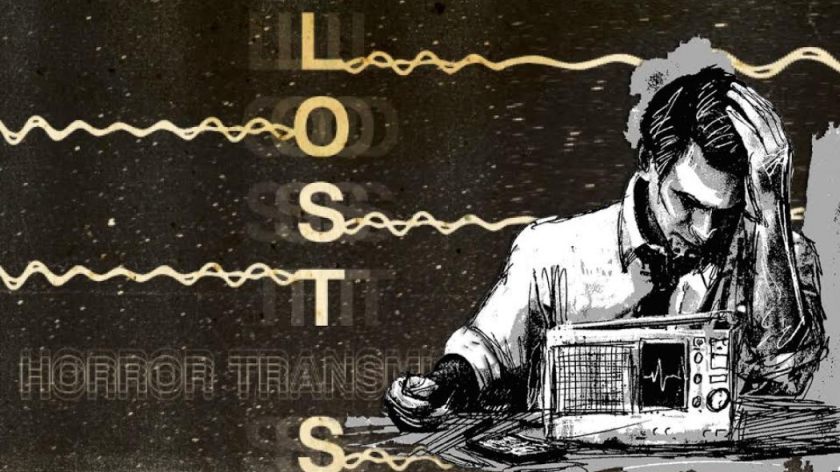
Lost Signals: Horror Transmissions (2016, Perpetual Motion Machine Publishing)

Edited by Max Booth III and Lori Michelle

lost-signals-header-2_1050_591_81_s_c1

Certain things click with me as horror tropes more than others. Numbers stations, haunted baby monitors, signals coming from the deep dark woods. Something about radio waves can be genuinely creepy. No matter how secure your door is, they can get in. That’s why I was delighted to discover this anthology full of stories that touch on these very elements.

Some of the highlights of the collection are:

“If He Summons His Herd” by Matthew M. Bartlett

Finn Groomer is obsessed with the legends surrounding his small town community. One of these is a phantom FM station that comes and goes and seems connected to the disappearances of some kids. Finn is also troubled by the death of his mother and believes that through this station he can speak to the dead. There are some great classic devil worship type notes in this story but how it ends is unexpected and deeply disturbing.

“Transmission” by T.E. Grau

Max is zooming through the Nevada desert in the middle of the night when he stumbles upon what he thinks is fire and brimstone religious station. Something bolts across the road and forces the man off the road, but despite his predicament, something about this station keeps him from going for help. The more he listens, the more he realizes this isn’t about saving your soul but about being awakened to reality most can’t see.

“How the Light Gets In” by Michael Paul Gonzalez

A filmmaker and her partner are traveling through and documenting the people who live in the Salton Sea. They meet one strange, older woman who claims her husband discovered something in the area that was responsible for his death, a strange shimmer in the sky, a place where reality bends. Deciding to investigate for fun the couple ends up an abandoned hotel and experience a night of horrors as the sky splits open.

“Eternity Lies In Its Radius” by Christopher Slatsky

Molly is roommates with her fellow punk bandmates when one of them, Mark, discovers a strange pirate radio station he finds songwriting inspiration from. Now the music is evoking visions when she closes her eyes of railroad tracks leading off into a jagged cave in the side of a mountain. The images are so vivid she’s unnerved and discovers the place in her dreams is real and in their small town. All the while, Mark is spending more time locked in his room and getting lost in this strange radio station.

“All That You Leave Behind” by Paul Michael Anderson

A couple is living in the aftermath of a miscarriage. Told from the wife’s perspective, she is becoming increasingly distressed that her husband spends all day on a computer listening to the ultrasound heartbeat recording on a loop. She keeps trying to throw away objects that are connected to the late child, but her husband appears to be digging them back out of the trash. As their relationship deteriorates, she begins to have significant questions about her sense of reality. A horror story that ends with some poignancy.

More than just a one-note collection, Lost Signals gets a lot of mileage about of its concept. In our current era, there are a lot of signals crossing the globe and the opportunity to glean some horror from that is perfect.

Valiant Comics – X-O Manowar and Archer & Armstrong

valiant_comics_logo_april_2012-svgWhen I was growing up in the 1980s and 90s, there were two big comic companies, DC and Marvel. Very little has changed. Now we have Image, metamorphosing from a garish pastiche of the big two to the incubator of great creator-owned work. Dark Horse has become a steady presence, churning out Hellboy/BRPD among some other small titles.

When I was a kid, I remember seeing Valiant Comics, the company owned by wunderkind Jim Shooter. The stories of his career in comics are legendary: a teenager sick in the hospital brought some Legion of Super-Heroes comics, wrote and sent in pitches, and ends up a writer on the series while he is still in high school. By the 1990s, Shooter was a very established writer and editor, particularly due to his run as “the boss” at Marvel Comics. He oversaw the Claremont/Byrne X-Men run, John Byrne’s Fantastic Four, Frank Miller’s Daredevil, Walt Simonson’s Thor, and many other iconic periods of Marvel characters.

In 1989, Shooter gathered enough investors to strike out on his own with Valiant Comics. They initially began with licensed material (WWE, Nintendo) but broke into the superhero market. In 1992, Shooter was ousted by his board. The video game developer/publisher purchased the company in 1994, turning the line into “Acclaim Comics.” By 2004, Acclaim filed for bankruptcy and with it went the Valiant line. In 2012, after a lengthy court battle to figure out who owned what from Valiant, the company was relaunched into the current incarnation: Valiant Entertainment.

Many of the characters from the 1990s were back, albeit with rebooted and updated origins. As of this writing, I’ve read 27 volumes of this line and will be talking in generalities about each series. After my writing catches up with my reading, I will likely focus on specific trades. For this first article, I’ll be talking about X-O Manowar and Archer & Armstrong.

Continue reading “Valiant Comics – X-O Manowar and Archer & Armstrong”