You might have noticed in the last week the additional links at the top of the page: Support this Blog on Patreon and Beloved Patrons.
After doing some reading online about crowdfunding and blogging I decided to take the plunge. My goal in this is definitely not to “get rich blogging”. I’m under no delusion that I’m building any sort of internet empire. My main goal is to grow a community and connect with other fans of popular media and especially film. My secondary goal is work to get enough monthly donations via Patreon to be able to have movie giveaways and possibly other prizes.
I know through personal experience that employment and income are not a sure thing these days. If you decide to give even a $1 of your own money, know how grateful I am for your contribution. The fact you would even given me that much for the work on my blog stuns me. I will continue to produce content regardless of the donations I receive, probably scaling back when the school year starts.
Workplace Bully is a two player tabletop role playing game written by Steve Hickey. The game uses Vincent Baker’s Apocalypse World as a basis, but also more importantly Avery McDaldno’s Dream Askew, which gets rid of the dice involved.
In Workplace Bully, one player is the Manager (MGR) and the other player is the Employee (EMP). An audience can be included and will actually have ways to contribute to the game.Players contribute in a rotating series of Goes, verbal exchanges referring to a list of actions exclusive from each other. When the story comes to the point that neither knows what happens next the scene ends and Evaluation begins.
Evaluation is made up of a series of subjective decisions made about the scene that just occurred. The MGR could be rewarded with Stress points and the EMP might get some Insight points based on their growing understanding of what is happening at work. If the MGR gets stress points during Evaluation they decide if the EMP has become more Broken or Transformed (into a bully). The EMP does have three uses of a Panic Button to avoid this, but in turn the MGR can spend Stress to still force the EMP to have some sort of public outburst at work.
Stress and Insight are spent during additional goals to use special moves and permanently unlock moves. For every point of Stress the MGR uses, the EMP gains a point of Insight. This means the more active the bullying the more the EMP learns about what their MGR is doing and their methods. The game ends when either the MGR has blown through all their methods of deflecting and defending themselves from confrontation or the EMP is either Broken or Transformed by the MGR.
Workplace Bully is a great, and sometimes overwhelming, example of asymmetrical play: a game where players have opposing goals and ways to play the game. My wife, Ariana, and I played the game twice, each of us taking a turn in each role.
In our first game I was Manager, Mrs. Farnsworth and Ariana was Employee, Mr. Felt. Our place of business was Heartstrings, an online dating Service, I took the stance of being over concerned with details to mask my personal incompetence as a leader. My main strategy as the bully was to turn everyone against Mr. Felt. Mr. Felt finally gained enough Insight to purchase a cell (more than three victims of my bullying in the office). This led to a complaint filed with the Human Resources department and ended with me begging Felt to back off. Felt didn’t have much sympathy for me and rejected those. Eventually I resigned and left the office quietly.
Ariana said we had to take a break because she was getting stressed out at the passive aggressive attacks from my Manager, so I guess I was pretty effective. Because the game is a playtest we had some confusion about how to activate tags, the main way a MGR defends themselves and an EMP confronts. Before our second game, we sat down and made sure every tag had an explicit way to earn them, which helped the second game run more smoothly.
In our second game, I was the Employee, Stanley and Ariana was the Manager, Jenny. Our place of business was Reassurance Inc., an insurance adjuster. As the employee I was starting a new career after working as a teacher for a number of years. I had a disabled son and was a single parent. I was able to find allies in fellow employees Rhonda and Stan, as well as Jenny’s own secretary, Megan. Ariana’s strategy was that every time I claimed an ally she spent Stress to make that ally neutral and in one case turned that ally into her pawn. For most of the game Stanley was moving speedily down the Broken path. I accrued a good amount of Insight and began to confront the MGR on a daily basis, faster than she could spend Stress to defend herself. In the end I barely beat the MGR who was fired and left in a very destructive way.
Workplace Bully is a very interesting game about a phenomena we encounter in our lives from time to time. While most games we play are escapist, it is interesting to play a scenario of such real weight. It was also a mental hurdle to get into the Stress/Insight points method after being so used to dice rolling. As mentioned above, Workplace Bully is an alpha playtest so it is rough around the edges and requires players to take an active role in shaping the game if you encounter errors or absences. With people of the right mindset this can be an intriguing experiment into stepping in the shoes of other people.
“To assert as truth that which has no meaning is the core mission of humanity”
– The Vision, Issue 1
Cover for The Vision #1. Art by Mike del Mundo.
The title character of the series shares this philosophy with his wife early on and it remains above their heads afterwards. It’s a clear reveal of what this character, who strives be more like us, actually thinks of humanity. I see it as very cynical view of our species, but that may be because of how accurate it is. The “truth hurts” they say.
The Vision, by Tom King and Gabriel H. Walta, is about the classic Avenger and the family he has constructed for himself. The Vision is not a robot; this is made explicit in a conversation between the first neighbors to visit them. Instead he is a synthezoid, a being made from synthesizing solar energy into Horton Cells, the same material used to create the original Human Torch. Synthezoids contain internal organs and a nervous system like humans, but have no need to eat or sleep. After shaking The Vision’s hand, a neighbor remarks that it felt like shaking hands with a plastic bag. What we are dealing with are like humans, but very much not humans.
Filling out the family are Virginia and their two adolescent children Viv and Vin. Looking at the covers for issues 1 thru 6 we’re shown very Norman Rockwell-esque presentations of the family but always with some drastic twist that constantly reminds us of their defining lack of humanity. In issue 1 The Vision alludes that Virginia’s brain patterns are modeled on someone he knows, fairly obvious if you are familiar with the character’s history. The children are as close to human children as two synthezoids could make: a combination of their brainwaves.
Right away writer King makes is obvious this is not going to be a series about characters in capes
Cover for The Vision #2. Art by Mike del Mundo.
and tights fighting global threats. The Vision is much less about the title character than it is about these beings he brought into the world and the hell their life is becoming. Virginia is in constant fear of how the external world will react to she and the children. She questions why they must be sent off to attend school and her husband explains it is important in their development to become like humanity.
And this is the core tension of the whole series: Can a family that is obviously not human be accepted by a society that has historically feared and shunned the Other? And in addition, can a family survive if its members are building their relationships on a series of lies? The Vision hesitantly believes the former is possible and his spouse lies on the opposite side of the argument, while fixing herself firmly in the latter category of lying to survive. While The Vision is ever stoic and logical when he speaks to his family, Virginia shows outbursts of violence and rage when outsiders threaten her children. And while Vision constantly emphasizes the need to assimilate he uses his abilities to phase through walls and fly constantly. Throughout the first volume, characters present their ideas of what being human is and then do the opposite, while claiming their desire to be human. Is being human being a bundle of contradictions? Vision may not realize it, but the readers will inevitably come to this conclusion.
It’s not essential to know the details of the Vision’s history but some foreknowledge leads
Cover for The Vision #4. Art by Mike del Mundo.
to a deeper understanding of the text. The Vision’s previous family with Scarlet Witch ended in a unmitigated disaster that has haunted the character since. By building his own family he is trying to right those wrongs, but also becoming more like his “father” Ultron, a villain notorious for building family members. From the start, his constructions are volatile, but also very human in the quickness of their tempers. Every act of violence is in the context of protecting another member of the family. And when actual death occurs there are circumstances that justify the outcomes. Virginia phases to avoid a bullet and an innocent dies. A villain attacks the family and brutally killed after he almost kills Viv. The Vision is the story of immigrants in a strange land. When violence and trouble occurs they are the first to be blamed because of their Otherness.
I haven’t recommended a comic book as strongly in a long time as I do The Vision by Tom King and Gabriel H. Walta. Of all Marvel’s All-New, All-Different line, The Vision has consistently been my favorite and one of those title you read immediately after you get the new issue. Tom King’s writing feels like a great tv show that you want to binge watch to see where these characters end up. Gabriel H. Walta’s art is simple and messy, but full of emotion. The faces of the Vision family are essentially identical but he gives life and personality to each one. Sadly, King has signed an exclusive contract with DC Comics and will be writing Batman. It’ll be great to read his Batman work, but he has stated his run on The Vision will end with #12 later this year. I’m so intrigued by his work I will be spending the summer reading through his runs on Omega Men, Nightwing, and The Sheriff of Babylon with more reviews to come.
I knew I had read literature that fell into the genre of magical realism, but it wasn’t until I read One Hundred Years of Solitude the summer of 2004 and followed that up with a ravenous consumption of Jorge Luis Borges’ short fiction that really came to understand, and in turn fall in love with, the genre. Magical realism is a style of storytelling that presents a normal world where there are extraordinary occurrences that the populace views as simply mundane. This is often used as an extended metaphor to be dissected and explored,usually a commentary on our own perspectives of the world. There are many everyday practices that to alien eyes would pop out as bizarre and unreal, but for us it’s simply life.
The Lobster falls strongly into the category of magic realism, without it become a “cute” gimmick. The film tells the story of David (Colin Ferrell), a divorced man who must stay in a hotel for singles for 45 days and find a partner. If he is unable to find a partner he’ll be transformed into the animal of his choice. In David’s case, he chooses a lobster (They stay fertile their entire lives). There is an eclectic cast of characters that we watch interact, with moments of brilliant dark comedy and painful heartrending tragedy. The film has a very defined split as David makes a drastic decision about his place in the Hotel as well as the society midway through.
This is the second film I’ve viewed from Yorgos Lanthimos, the Greek director. His breakout film, Dogtooth, explores the nature of family units focused on a couple who have kept their adult children locked up on the property for their entire lives. It balances the same comedic tones and horrific violence, but I think The Lobster elevates that to a masterful level. It also continues the director’s work examining the cultural norms of Western society, in this instance the concept of falling in love in the modern era.
Personality is absent from every character in the film. Conversations are monotonous and devoid of emotion. A character is violently punished for self-pleasure and his reaction is fairly muted for what happens. Characters fall in love and barely crack a smile. Characters die and are killed and everyone essentially walks away with a shrug. There’s no room for sentimentality in the world, dating, marriage, and having children are like business transactions. It is expected and frankly demanded of everyone in the world of the film. David is faced with a choice of severe sentimentality at the film’s conclusion and as I simmered on it afterwards it struck me that by not committing this act he would show the strongest sense of individualism in the entire film. So while, the culture around him is unsentimental he would possibly conform to it in the end.
What is most interesting are the “rebel” group in the woods, whose leader (Lea Seydoux) imposes a system of rules between the other loners, especially no physical or romantic contact. We see the bloody results of a simple kiss and worse is implied. While the Leader believes she is shirking the status quo of required relationships, she is actually creating a parallel system of dogmatic social norms that are punished with the most extreme methods. This leaves us to wonder if individualism is even a workable concept in this world.
The couples that do end up together are driven by the requirement of a match up of defining characteristics. David is nearsighted and seeks out a partner who shares that trait. Another character is saddled with a limp (the result of trying to find his mother who was turned into a wolf after a failed matchmaking attempt). Yet more characters present themselves this way: She has chronic nosebleeds, he has a pronounced lisp, she is emotionally distant, she loves butter cookies. Even in the film’s credits a multitude of characters are named by their defining trait. Almost the way, when filling out an online profile for a dating service, you would highlight aspects of yourself that you want to present, aspects that are intended to provide others with a definition of you.
Lanthimos is exploring the way people form romantic relationships in our current era. If you look at the business of matchmaking, whether it is OKCupid or speed dating or Match.com, people are boiled down to their essentials. Personality is near imperceptible and a person’s true nature is impossible to convey through these methods. But Lanthimos isn’t happy to simply comment on technology’s relationship to our relationships, he goes deeper, to the very core of why anyone ends up with anyone else. Characters lie about their defining trait in desperation to end up with someone else. The Hotel guests routinely arm themselves with tranquilizer guns and hunt the band of guerrilla Loners in the surrounding forest. And the Loners in turn sneer at those foolish guests who stupidly pursue companionship. All of these characters are deluded and define themselves based on cultural expectations, whether in conformity or opposition to. The Lobster ends on a suspended note, blatantly letting us stew on what happens next. Is their any way to succeed in this world, or is the best you can hope for to become a lobster?
Shane Black is one of the fathers of what would become the 1980s buddy cop genre. His addition was Lethal Weapon, written when Black was 23 years old. Black’s career experienced a slump in the 90s and early 2000s when he wrote and directed Kiss Kiss Bang Bang. With this film, Black returned to play with the genre he helped create while poking fun at the movie industry. Some critics disliked the self-awareness of the picture even though it had very sharp, funny dialogue. The Nice Guys has found a nice middle ground, where it plays with genre conventions while also delivering a self-contained mystery film.
Jackson Healy (Russell Crowe) is a grizzled private investigator who specializes in helping young women and girls deal with creeps. This crosses his path with who he believes is a creep, Holland March (Ryan Gosling). March is actually a fellow private eye, except he’s a buffoon. The two, along with March’s precocious early teens daughter (Angourie Rice) become embroiled in a mystery that involves the death of a porn star, an enigmatic college student on the run, and the Detroit auto industry.
The Nice Guys does a lot right. It balances being a 1980s buddy cop film set in the late 1970s, as well as being a variation on the film noir genre. There are a lot of failures in the film. Our protagonists are very flawed, as every good noir should have, and they comically fumble and deal with more serious dramatic character flaws. Healy is a man who goes to violence as his first resort and has to deal with a challenge to that way of thinking. March is more of the comic relief, but has his own guilt about the way he’s raised his daughter and how he caused his marriage to go to ruins. The balance between these two and the lynch pin of the entire film is Holly, March’s daughter played by the remarkable Angourie Rice. If this film had been made in the 1970s this is the Tatum O’Neal role.
The mystery is complex and labyrinthine, but with enough clues being delivered through dialogue that a viewer can figure things out as they go. The film does present a hyper-realized 1970s. Driving down Hollywood Boulevard we see posters for a litany of films from the era, characters read newspapers talking about the gas crisis and Los Angeles’ severe smog. In the end, not much of these elements add to up to anything life changing. The resolution of the mystery is fairly straightforward, but keeping in line with the down endings of traditional noir. What The Nice Guys does provide is a fun alternative to the more overblown CGI-fests that typically flood our movie screens this time of year. The film is an enjoyable throwback to a style of film not made often.
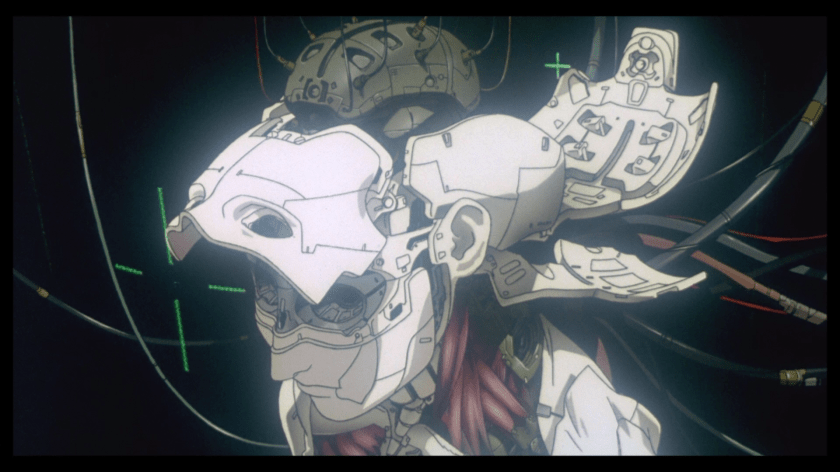
I have a complicated history with anime. First off, I am not an anime fan. There are specific works that I have enjoyed, but as a genre I rarely seek it out. In childhood, I got caught up in the super sentai (think Power Rangers) cartoon serial Ronin Warriors when it aired in syndication one summer. In college I saw the standards (Akira, Vampire Hunter D, lots of Miyazaki). It was in college that one of my roommates rented Ghost in the Shell, but decided to watch it at 3am in the morning and I only remembered faint images. With the upcoming Scarlett Johanssen adaptation I thought it would be good to sit down and watch this now classic anime film.
Motoko Kusanagi is a team leader in Section 9, a paramilitary police organization in an unnamed urban sprawl of the future. Kusanagi is a full body cybernetic being, meaning she was once a human with an organic body who went through a process to transfer her consciousness into a Shell, a la she is the Ghost in the Shell (words are fun). The main case that our protagonist is pursuing is to track down the Puppet Master, a notorious terrorist hacker who has caused deadly trouble across the globe. This leads her into an exploration of her understanding of what makes her human and in turn what she will become.
There’s no argument that Ghost in the Shell is visually stunning. There is minimal computer generated animation, used in the internet and map visualizations. For the most part this is gorgeous hand drawn cel animation and reminds us what a glorious craft and art that style of animation still is. At the halfway mark, there is a famous break in the action for a tour of this future cityscape. This sequence could be cut and out and used as complete short film. As a piece of animation the film stands as a work that transcends the idea of animation as a exclusively children’s genre or something that is schlock.
When we get the themes of the film I start to get less enthusiastic. There is no way you can miss the themes of the film because they are wielded like a sledgehammer. Characters regularly talk in a hyper-philosophical manner, not as terrible as The Architect monologue from Matrix Reloaded, but in the same vein. The film was based on a manga so I suspect, as I found when I read Akira after seeing the film, volumes of content had to be cut to make the run-time. The brevity of the film also left me feeling little connection to the characters. I understood who the Puppet Master was and what happens to Kusanagi but it felt like it all happened so fast I had little time to connect with them.
I am able to see why Ghost in the Shell is such an important work, it builds upon groundwork laid by Philip K Dick and William Gibson in positing not just the technical conceits of our future, but in the philosophical and psychological future of humanity. It also has obviously inspired directors like the Wachowskis and James Cameron in the way they explore notions of human consciousness and altering our forms. I can see revisiting this film in the future to glean more and I am even inclined to delve into the manga to see this world fleshed out further.
If you haven’t been watching the excellent Welcome to the Basement film series on YouTube, start doing that. Hosted by Matt Sloan (Chad Vader) and Craig Johnson, the series has the men watching a film that either both or one of them has never seen before. In one of the episodes, Mr. Sloan brings up the Cinematic Immersion Tank, a variant on some previous challenges where a person would watch a film for a consecutive 30 days or 7 days. Sloan’s variant sets it at five days, a more reasonable accomplishment. The goal of the CIT is that the viewer will begin to extrapolate a greater understanding of themes and more subtle elements of the picture upon viewing it so many times, so close together.
So, whether this is foolish or not, I am going to let you good readers vote on which film I shall go into the tank with. The dates of my immersion will be June 21st thru 25th. The choices you can vote on are listed below with a brief description if you aren’t familiar with the film. I have seen all of these only once. My theme is mysterious films released in the last five years.
It is not a stretch to say that the five years of DC Comics’ New 52 relaunch and subsequent DCYou series of additions have not gone smoothly. I stand among those who had moderately dissatisfied reactions to the choices made in both the content of stories and the creators that were brought on board. So, when DC announced their “lite” reboot Rebirth was very skeptical about what the end result would feel like.
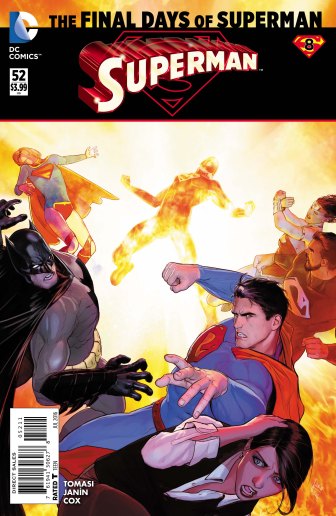
Two storylines are explicitly brought up in Rebirth #1 as essential to read, The Last Days of Superman and The Darkseid War. We’ll discuss The Last Days here, but I have a separate review down the road for Darkseid because of how massive it is.
About a month ago, writer Tomasi kicked off The Last Days of Superman across many Superman-centric titles. The purpose of this storyline admittedly served a more cynical corporate purpose for the upcoming Rebirth. The current Superman would be killed off, while a previous incarnation of Superman would step in and take up the mantle. This Superman was the one introduced in 1986’s John Byrne-penned Man of Steel miniseries, who would go on to marry Lois Lane. Now the couple have a son, Jonathan, who is set to become the current Superboy.
For the first time since Grant Morrison’s run on the New 52 Action Comics, I found myself enjoying a story featuring this Superman. It’s no slight against the character but mainly against the creative teams that DC editorial chose to work on Superman. He always felt like an ever shifting blank, little to no consistency in his portrayal from title to title and story to story. That’s why I was so surprised at how deeply the death scene in Superman #52 affected me. I admit I was very choked up in those final panels as his allies and supporting cast surrounded the Man of Steel, and Wonder Woman’s final words sent me over that emotional crest.
I would agree that this move was not from a genuine love of DC history, but more of a brand damage control issue to bring readers back. Maybe it’s because I’ve reached a certain age of sentimentality but I am genuinely excited to see the Superman I consider the one from my generation of readership returning. But I admit I do feel that it may not be fair to new and younger readers that they are not allowed to have a Superman born out of an interpretation of our current times. If DC suddenly decided to change course in 1991 and trash the Byrne Superman in order to bring back the Mort Fleischer/Curt Swan version I wouldn’t have been too happy.
How permanent of a change this is remains to be seen. Even the old Superman admits he was killed once, replaced, only to return and take back his mantle. Comic books are colorful soap operas at their heart and if the New 52 Superman is to return, my hope is that a fresh and innovative creative team is put on the titles to help create this generation’s hero.
As someone who works with children approximately the age of the title character, watching The Boy is a very interesting experience. It’s fairly well known that during the Victorian Period, the cultural perceptions of childhood changed. Prior, children were seen as small adults and their exposure to hardship and cruelties of life was seen as the norm. In the late 19th century, social justice groups began to criticize the harsh conditions that children were forced to endure and demanded better. Childhood was now seen as a precious, fragile time for these angelic beings to develop. Even Peter Pan was born out of this mode of thinking, along with a myriad of literature aimed at children that approached its material from a place of gentleness. Craig Macneil’s The Boy attempts a character study focused on questions surrounding what happens to a child who has to live through the aforementioned brutality.
Set in 1989, The Boy points its watchful eye on Ted (played with remarkable coldness by Jared Breeze). Ted has grown up at the Mt. Vista Motel, located in some lonely corner of the American Southwest. Ted spends his days collecting roadkill for quarters and wandering the brush around the property. One rainy night, Ted causes a car crash that brings Colby (Rainn Wilson) to the motel for an indeterminate time. Colby is a mysterious figure who avoids the hospital and the local law and this intrigues Ted. At the same time, an anger is growing in Ted that troubles his father (David Morse) and is leading to a violent conclusion.
This is mostly definitely a character study and eschews any sort of heavy plotting towards that style of film making. The camera lingers on Ted and we intentionally view long moments of mundane wandering. As a result, the horror of the film is amplified by the slow burn. I would understand if a viewer became massively frustrated in the first half of the film because it does take its time putting all its pieces in place. Ted’s sociopathy is hinted at and I found myself questioning if there was anything wrong with him, if instead of being mentally ill he was simply a child who was working through feelings of confusion and alienation. The finale of the film removes any doubts yet still holds our lead character in a gray space where his actions could be viewed as justifiable revenge in the mind of an abused child.
The standout aspect of The Boy is the acting. When plot is secondary, a director must have a cast that can develop their characters in organic ways. Jared Breeze is so convincingly cold and distant as Ted, and brings out pathos and emotion only when absolutely necessary. It is incredibly unsettling how well this young actor brings out the complicated psyche of Ted. David Morse and Rainn Wilson, the actors who share the most screen time with Jared, both deliver subtle and powerful performances. Morse, a character actor whose face you know already, is pathetic and infuriating as Ted’s father. He lived the same life as Ted, raised by his father at the motel and admits he doesn’t want this life for his son, but an invisible guilt appears to shackle the patriarch to this place. Even more interesting is Rainn Wilson as the mysterious Colby. We never quite get the gritty details of Colby’s past but so much can be inferred by what we are told. He desperately doesn’t want the police to search his damaged car in the local junkyard and his kinship with Ted is left open for interpretation. Is he actually developing the fatherly relationship the boy doesn’t have with his actual dad? Or is Colby just using the boy to process his own guilt about his past crimes?
The Boy is an incredibly dry and slow film. Don’t expect a campy melodrama pastiche of Psycho despite the setting and themes. The film traffics in one of my favorite element of great art: ambiguity. Lots of questions are left on the table. We never really know “Why?”. And that is okay. So often that’s the question we’re left with in real life, in the wake of tragic violence committed by the grown men Ted might grow up to be. Here, we are allowed a microscope to examine the birth of such evil in detail. What we learn is that the origins of darkness in the soul are more complicated than we would like to think.
My first encounter with Charlie Kaufman, like most who know his work, came in the film Being John Malkovich. Kaufman wrote the screenplay and it was a truly off kilter, intriguing film. It seemed that more of his work came in quick succession via Human Nature, Adaptation, Confessions of a Dangerous Mind, and Eternal Sunshine of the Spotless Mind. After a brief lull he released his directorial debut: Synecdoche, New York. And now is his strangest visual work, Anomalisa.
Anomalisa is the story of Michael Stone (the voice of David Thewlis), the author of books on effective customer service. He’s come to Cincinnati, Ohio to promote his latest book at some sort of convention (the film keeps those details vague). Michael has a problem when it comes to other people, something I won’t spoil here, that causes him to never fully connect or interact in a meaningful way. He eventually meets Lisa (the voice of Jennifer Jason Leigh) and he begins to think things are turning around for him.
Like all of Kaufman’s work, this film has already burrowed itself into my mind and I know it will stay with me for a long time. His greatest talent is his ability to mine such unpleasant and neurotic landscape of our psyche in ways that make it difficult to look away. Synecdoche examined a man’s yearning to find a deeper connection with others, but Michael doesn’t seem to desire a means to overcome his personal issues. He wants the connection, he knows vaguely what is wrong with him, but he inevitably gives up. Everyone around Michael is very pleasant, even when they get angry they sound soothing. This lack of emotion seems drive Michael deeper into need to be separate, while frustratingly want to communicate. It is intentional that the only scenes in the film that don’t have an annoying level of background noise are when Michael escapes to his hotel room.
The choice to make Anomalisa a stop motion animated film might seem like a bit of visual vanity if you’ve just seen the trailers. The filmmakers strive for realism out of the characters, which they truly achieve. It is the context of Michael’s disorder when he views others that makes the animated elements essential. There is no way the film could have been done in live action and get across the alienation that the animation choices provide. A crucial scene between Michael and Lisa in the film’s third act is the ultimate realization of why stop motion was essential to the film.
This is not a “fun” movie to watch, much of Kaufman’s work is not. There was a backlash as the film made its way through the film festival circuit about the unsavory aspects of the Michael character and speculation as to what moral judgments Kaufman was attempting to convey. In my own viewing, I never felt that it was communicated to the audience that Michael was a positive character and I do not believe Kaufman was attempting to make him sympathetic. The director simply wanted to make him a “true” character. What Michael does is what hundreds if not thousands of despondent, aimless, middle aged men do every day. It doesn’t make them right, but the film is not intending to promote an idealized view of the world. At it’s core, this is anti-indie film. When you look at works that exemplify the “Manic Pixie Dream Girl” genre you find an absence of real emotion. Kaufman’s response in Anomalisa is to show the truth of those scenarios playing themselves out. Your life will not be saved through a fateful meeting with a spirited young woman who will awaken something in you. Young women are not thresholds through which middle aged men pass to rediscover themselves.
If you allow yourself to view Anomalisa on Kaufman’s terms you will end up with a film experience that will not leave you easily. If you are uncomfortable, then that is good because that was the intent of the film. Anomalisa is about the narcissistic malaise most privileged people find themselves in after achieving a certain level of success. It is about the struggle humanity continually has in forging real connections with others that don’t focus on what emotional energy you can take from them.






 of stories and the creators that were brought on board. So, when DC announced their “lite” reboot Rebirth was very skeptical about what the end result would feel like.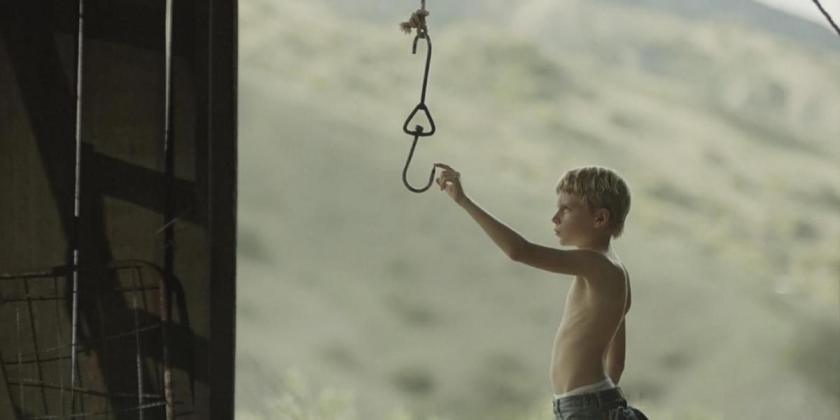

 PopCult Reviews