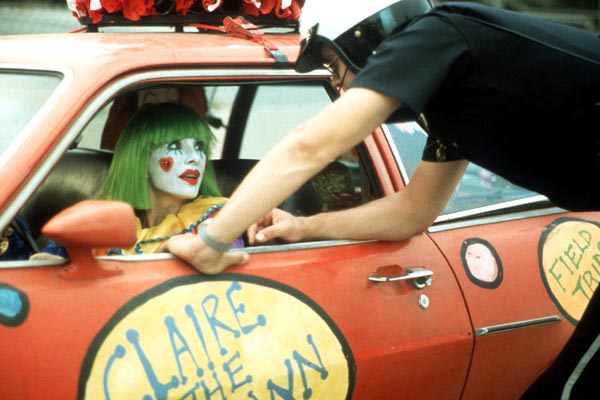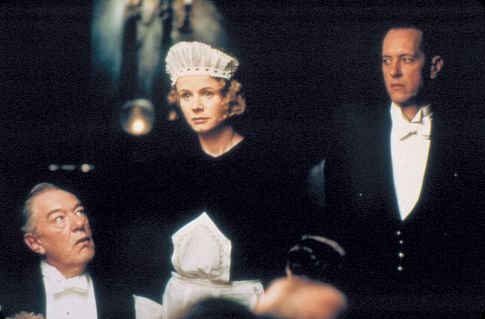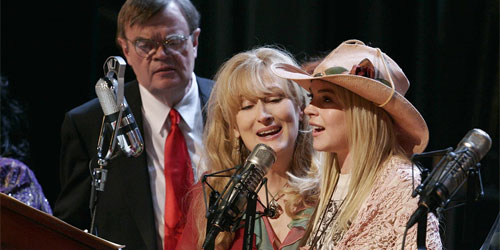
Fish Tank (2009, dir. Andrea Arnold)
Category: 2000s
Newbie Wednesday – The Hurt Locker

The Hurt Locker (2009, dir. Kathryn Bigelow)
DocuMondays – Beautiful Losers

Beautiful Losers (2008, dir. Aaron Rose, Joshua Leonard)
Robert Altman: Chorus of Voices Part Four
1993 – 2006

Short Cuts (1993)
Starring Andie McDowell, Bruce Davidson, Jack Lemmon, Julianne Moore, Matthew Modine, Fred Ward, Jennifer Jason Leigh, Chris Penn, Lili Taylor, Robert Downey Jr, Madeline Stowe, Tim Robbins, Lily Tomlin, Tom Waits, Frances McDormand, Peter Gallagher, Lyle Lovett, Huey Lewis, Buck Henry
Film 2010 #31 – The Constant Gardener

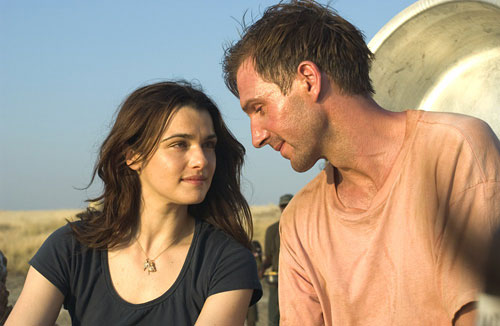
The Constant Gardener (2005, dir. Fernando Meirelles)
Starring Ralph Fiennes, Rachel Weisz, Danny Huston, Bill Nighy, Pete Postlethwaite
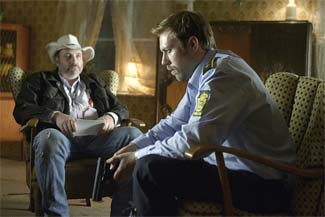
Film 2010 #22 – Terribly Happy
Terribly Happy (2008, dir. Henrik Ruben Genz)
My Top 50 Favorite Films of the Decade – #5 – 1
This is it!

5) There Will Be Blood (2007, dir. P.T. Anderson)
Starring Daniel Day-Lewis, Paul Dano
From my review of the film in 2008: “P.T. Anderson feels like a director who should have been working in the 1970s along his artistic soulmates. His films are so distinctly his vision, fighting against the conventions of what we’ve been taught to accept as movie entertainment. He gives us long silences that, while absent of dialogue, are rich with information about our main character. He is a director who knows exactly when to build to a moment of tension and when to give in and let it shatter on the screen. What is great is that the film refrains from becoming didactic. There is no message being telegraphed with big glaring neon signs, as in most Oscar bait films. A story is told and, while am certain Anderson has a very clear idea of what he thinks it is about, he lets us make our own decisions. I’ve found that the great eyes of modern cinema (PT Anderson, Lynch, Kubrick, Malick to name a few) are amazingly gifted at abstaining from overtly teaching lessons. Daniel Day Lewis is at his most brilliant here; he seems to be one of those actors who hits the bullseye every time out. He creates one of those characters that is immediately picked up by and mimicked by the mainstream culture. If Daniel Plainview feels grossly over the top at moments and absurd I think that’s exactly what Lewis is aiming for. The character simmers for most of the film and when it does explode it’s almost laughable. It’s simply one of the best films of the decade and another perfect ten from PT Anderson.”

4) The Dark Knight (2008, dir. Christopher Nolan)
Starring Christian Bale, Heath Ledger, Aaron Eckhart, Maggie Gyllenhaal, Michael Caine
From my review of the film: “What’s to say about this film that hasn’t been yet? Not much really. It’s the highest grossing film of the decade and deservedly so. It’s one of those times I love when a director with distinct vision is rewarded for his work by the public and critics alike. I have been a big fan of Christopher Nolan since Memento and I have to say, I don’t think he has made a bad film in his career so far. There are some I prefer over others but they are all of a high quality and artistic merit. As the comic book film is concerned I have a little worry about the effect of this film. Warner Bros. has said the next Superman film should have a darker tone in line with this film. I think that would be a huge mistake. The studio executives fail to see why The Dark Knight was so successful and that was because it matched the correct tone with its iconic character. Joel Schumacher’s Batman films failed because the tone was so drastically opposite of what a Batman film feels like it should be. So, if one were to apply this dark tone to a Superman film it would tank. Anyways, I loved Heath Ledger as the Joker but I feel Aaron Eckhart has been overshadowed. He played the consummate Harvey Dent, he had made us sympathize and like the character so that his fall is that much more tragic for us. My one disappointment about the film was that Two Face didn’t get more screen time. The character was interesting enough that I sort of wish it had been carried over into another film. That said, this is hands down the best superhero/comic book film ever made. It takes it source material seriously and shows how the superhero genre is a great platform for big ideas.”

3) Waltz With Bashir (2008, dir. Ari Folman)
For my views on this film, check out my in-depth review: http://shadowsitcave.blogspot.com/2009/11/film-2009-20-waltz-with-bashir.html

2) City of God (2002, dir. Fernando Meirelles)
Based on the semi-autobiographical novel by Paulo Lins, City of God transcends the Rio de Janeiro ghetto where it takes places and works as an examination of all societies where the poor are marginalized and pushed out of sight. The story follows Rocket, a youth becoming interested in photography and Lil Ze, a boy who finds his calling in running the gangs of the City of God. The City is a real life slum in Rio,Brazil, planned in 1960 to systematically remove favelas (slums) from the city center. This plan focused on making Rio look like a city made up of the standard metropolitan and suburban areas, while effectively ignoring the poor. The film shows the path most young men commonly choose, joining up with gangs and Rocket’s desperate struggle to get out of the City of God and find a way to report the horror there to others. Instead of presenting a purely issue driven film, Meirelles adds stylistics to the narrative, beginning with a moment from the finale of the film and then tracing backwards to the main characters’ childhoods. The story is also told out of linear sequence, jumping around as new characters are introduced to give us important backstory about them. Meirelles never shies away from the violence that takes place in this world. All of these elements together are what City of God a film impossible to forget.

1) Children of Men (2006, dir. Alfonso Cuaron)
Starring Clive Owen, Julianne Moore, Michael Caine
There are many films that have hopeful endings, and there are plenty of bleak movies, but rarely are they blended in ways that retain the weight of each tone. Children of Men is one of those films that doesn’t hesitate to show a dark vision of the future, yet also holds up the idea that there is hope even the most desolate of situations. Set in the U.K. of 2027, we’re presented with humanity given a death sentence after two decades of global infertility. The sense of hopelessness has pervaded the citizenry and martial law has been declared in a futile attempt to control the chaos about to explode. It’s on the eve of this explosion that Theo Faron (Owen), a former activist is pulled back into the cause by his estranged wife, Julian (Moore). Julian reveals to Theo that a young African woman has been brought into her rebel group and has been found to be pregnant. It’s of utmost importance that the young girl get to The Human Project, a group that many suspect is an urban legend, where she can get the medical attention she needs and birth the first child in twenty years. What follows is a mesmerizing odyssey, documented in cinematic brilliance by one of the finest filmmakers working today. Cuaron has shown his deft skill at tackling small scale character work (Y Tu Mama Tambien) and big budget fantasy franchise (Harry Potter and the Prisoner of Azkaban) and this is his most stunning work to date. The film never delves into the maudlin or melodramatic, and fights its damnedest to stay grounded in the gritty nature of its universe. In this single film, I saw the reactions and emotions of myself and those around me post-9/11 reflected. And in turn, I saw the great hope we all desire, that no matter how bleak things become, the infinitesimal chance that we can be a part of the change for the better, whether we live to see it or not, is possible
My Top 50 Favorite Films of the Decade – #10 – 6

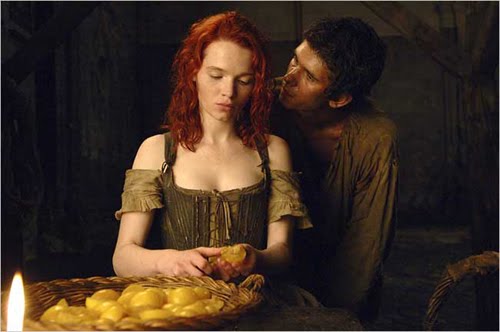
10) Perfume: The Story of a Murderer (2006, dir. Tom Twyker)
Starring Ben Whishaw, Dustin Hoffman, Alan Rickman, Rachel Hurd-Wood, John Hurt
This picture will probably be overlooked on most best of the decade lists, and has probably never registered in the minds of most film audiences, but for myself it was one of the most enjoyable cinematic experiences I had in the 2000s. From the trailer, I had the assumption this would be a run of the mill historical drama but I underestimated the skill of director Tom Twyker. Twyker brought us the cutting edge film Run, Lola, Run and has since failed to be given the acclaim such a master filmmaker deserves. In Perfume, we’re taken to 18th century France and introduced to Jean Baptiste Grenouille, a young man possessing a sense of smell beyond that of any other man. His entire world is defined by scent and Twyker uses some beautiful camerawork to show us how an olfactory universe would feel. Along with his enhanced nostrils, Grenouille has a lack of understanding social norms. Raised in an orphanage where he fights for his life and then sold to a tannery as an adolescent, Grenouille is subject to the most brutal circumstances. A chance discovery of perfume during a delivery to an upscale area of Paris leads him into the perfume business. However, he become disturbingly obsessed with creating a perfect scent…and is willing to kill for it. A heart-breakingly beautiful and tragic tale and one deserving of much more acknowledgment that it has received to date.

9) Amelie (2001, dir. Jean-Pierre Jeunet)
Starring Audrey Tatou, Mathieu Kassovitz, Dominique Pinon
The perfect blend of classic French cinema and contemporary stylistics. With its roots firmly planted in the work of Truffaut and Godard, Jeunet composes this love letter to Paris. Young Amelie Poulain appears on the surface to be the typical introverted wallflower. Made fearful of risk by her widower father, Amelie quietly works in a cafe populated by eccentric characters. Fatefully, the equally quiet and quirky Nino, a young man whom Amelie fancies, appears in her life one day. It’s not necessarily the story that is the captivating part, but the way in which it is told. Jeunet is able to use computer-generated effects in a way that does not distract, but enhances. While Amelie can be viewed as the prototypical pixie girl, she is in reality a very craft, clever, and vicious young women. Her revenge on the grocer stands out in particular as an example of how snarky she could be. The perfect compromise between a date movie and an art film.

8) Dogville (2003, dir. Lars von Trier)
Starring Nicole Kidman, Lauren Bacall, Chloe Sevigny, Paul Bettany, Stellan Skarsgard, Udo Kier, James Caan, Ben Gazzara
Dogville is a minimalist masterpiece, shot on a sound stage with only chalk outlines to represent walls and a variety of objects in the world. The story follows Grace, a young woman on the run, who ends up in the small town of Dogville, located somewhere in the Rocky Mountains. The citizens of the town are suspicious, yet welcoming to Grace, in particular the young philosopher, Tom (Bettany). Grace’s presence becomes a risk to the townsfolk and slowly they begin to reveal their darker nature when threatened. The film is the first in a trilogy by director von Trier and is part of his examination of true human nature, which is a very bleak one or positive, depending on how you look at it (I mean the townspeople do find something to unite them). Traditionally, kind townspeople would be the heroes against some sort of more powerful oppressive force, but in von Trier’s hands he blows that concept up and shows that *anyone* pushed into a threatening situation can become viciously sadistic and cruel, even the children. Grace is put through horrendous torture which sets up a very inevitable and very chilling finale.

7) Let the Right One In (2008, dir. Tomas Alfredsson)
European cinema time and time again seems to take concepts that have been run into the ground in American film and inject them with an entirely new angle. This Swedish film coincidentally was released at a similar time as the first Twilight film and could arguably be said to be the European version of that flick. Twelve year old Oskar lives with his mother in Stockholm, and is chronically bullied by classmates. He plays outside at night, knowing it is one of the few times of day he can go out safely. One evening, he meets his new neighbor, Eli, a girl who has the same strange nocturnal habits. The two become friends, and their burgeoning adolescent romance is inter cut with the lengths Eli’s father goes to to satisfy his daughter’s macabre hunger. Let the Right One In is such an original picture, presenting angles and twists on the vampire genre not presented on film before. And it’s all done in a quiet, patient way, even down to an almost non-existent musical score. A horror film that knows leaving the audience with questions is the best way to be remembered.

6) No Country For Old Men (2007, dir. The Coen Brothers)
Starring Tommy Lee Jones, Josh Brolin, Javier Bardem, Woody Harrleson
The Coen Brothers were born to make movies. And all the movies they make owe a debt of gratitude to the films of they were inspired by in their youth. Whether it be gangster pics in Miller’s Crossing or Hepburn/Tracy comedies in Intolerable Cruelty or L.A. detective tales in The Big Lebowski. With No Country For Old Men, they took the acclaimed novel by Cormac McCarthy and made a film reminiscent of the 70s Westerns of Sam Peckinpah, as well as the operatic and tragic Westerns of Anthony Mann. Llewellyn Moss (Brolin) comes across the scene of a shoot out over drug money on the Texas/Mexico border. Moss foolishly takes the money, and quickly realizes whom ever it actually belongs to will be coming for it. Moss goes on the run while pursued by the insane and sadistic hit man Anton Chigurh (Bardem) and the noble sheriff Ed Tom Bell (Jones), who wants to save Moss before Chirugh gets to him. The Coens know exactly how to build tension in quiet, still moments and managed to create a both exciting and deeply contemplative film.
My Top 50 Favorite Films of the Decade – #15 – 11

15) Pan’s Labyrinth (2006, dir. Guillermo del Toro)
While many critics will place Peter Jackson’s Lord of the Rings trilogy as the height of fantasy, my personal pic for the top fantasy film of the decade would be this wonderful Spanish language film. Del Toro impressed audiences greatly with Cronos and The Devil’s Backbone. His mainstream adaptation of Hellboy was entertaining and displayed an adept skill he possesses to develop worlds, but it was hindered by the typical flaws found in mainstream Hollywood fare. Pan’s Labyrinth is set against the the wake of the Spanish Civil War in the 1940s, when the country was under fascist oppression. The new wife of a cruel general is relocated, with her daughter from a previous marriage, Ofelia to a secluded house in the countryside. It’s there that Ofelia encounters Pan, a demonic being who claims that she is the princess of mystical realm and was banished the world of the mundane and struck with amnesia. Ofelia is given a series of tasks to perform to gain entry back. The general/stepfather plagues Ofelia at every turn and rebels wait in the woods for a moment to strike. Del Toro crafts a world existing between the real and supernatural so well that the seams that join them are invisible. And by placing the story in the midst of brutality, the tragic nature of the events that unfold hold an even higher level of pain.

14) American Psycho (2000, dir. Mary Harron)
Starring Christian Bale, Willem Dafoe, Reese Witherspoon, Chloe Sevigny, Jared Leto, Justin Theroux, Josh Lucas, Samantha Mathis
They said Bret Easton Ellis’ novel was unfilmable. And in a way, they were right. A majority of the book’s more graphic content (think a lengthy scene involving a length of PVC pipe and a live rat)had to be cut from the script. While the full depravity could not be captured on film, Mary Harron still managed to craft an enjoyably disturbing film nonetheless. It’s 1987 and Patrick Bateman is a successful investment banker and engaged to a beautiful young woman. What people don’t know about Bateman, or choose to ignore, is that he is a sadistic serial killer who only seems to derive true pleasure when slaughtering a person. Bale delivers a career defining performance which set him up as one of the major players in film of the 2000s. Bateman is a man so concerned with appearances that the slightest one up from a colleague can drive him into a murderous rage. He’s also a man who’s viewed with little respect by his peers and, particularly in the finale, is shown to be someone of such little consequence his own friends don’t recognize him.

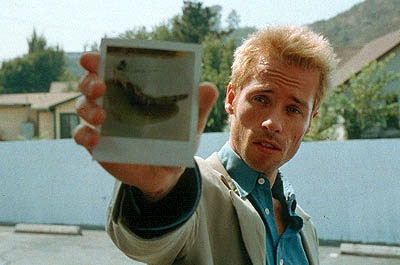
13) Memento (2000, dir. Christopher Nolan)
Starring Guy Pearce, Carrie Ann Moss, Joe Pantoliano
Once again, Nolan appears on the list, but don’t think this is the last time. This non-linear picture was Nolan’s big coming out. Based on his brother, Jonathan’s short story, Memento follows Leonard Shelby (Pearce), an insurance fraud investigator whose wife was raped and murdered. Leonard was also injured and suffers from retrograde amnesia, the inability to form new memories. This means Leonard forgets where he is and what is happening every fifteen minutes or so. This unique situation allows the film to be told in a mix of standard linear storytelling, mixed a moving backwards from the ending the of the film. The result is that the linear ending of the film is actually the story’s middle, where the two points converge and it becomes clear what is going on with Leonard and who the real villain is.

12)Talk to Her (2002, dir. Pedro Almodovar)
I discovered Almodovar in the latter half of the 2000s and fell in love. His films are visually amazing, rich and colorful and very different from anything American cinema offers. Almodovar also knows how to write for and direct women in a way that keeps them from becoming male analogues, retaining their femininity without objectifying them. In this film we have Marco, a journalist in love with the fierce matador Lydia. Lydia is violently gored while in the ring and ends up in a coma. Marco meets Benigno, a male nurse in the hospital who is overseeing the care of Alicia, a promising dancer who is now in a coma after an accident. The stories of these two men and the women in their lives is played out through flashbacks and flash forwards and even some fantasy sequences based on dreams. There are some events that take place that may be shocking to someone unfamiliar with a lot of Almodovar’s film, especially the way he handles aspects of sex which is in a very matter of fact way. However, this is truly the best film in a film career that is full of major accomplishments.

11) The Royal Tenenbaums (2001, dir. Wes Anderson)
Starring Gene Hackman, Anjelica Huston, Owen Wilson, Luke Wilson, Gwenyth Paltrow, Bill Murray, Danny Glover, Ben Stiller
It has become a hipster flick providing inspiration for easy Halloween costumes for the uncreative collegiate. However, it was Wes Anderson’s follow up to 1998’s Rushmore and its fairytale aesthetic still delights me. Anderson is not a director for everybody and is incredibly stylistic in a way that can turn off a lot of viewers. For myself though, it’s eye candy that I devour like mad. The story follows the Tenenbaum family (loosely based on Salinger’s Glass Family stories), a clan of failed prodigies headed up by the pompous Royal (Hackman). Royal is faking cancer in an effort to get his family to love him again before he dies, but such a ruse is bound to go wrong. The standouts for me have always been Hackman and Huston, the two have perfect chemistry, particularly during their walk through the park and you can see why she would have ended up with such a charismatic guy in the first place. Once the hipster cred has worn away, I have the utmost confidence Anderson’s films will remain recognized as a wonderful piece of American cinema.
My Top 50 Favorite Films of the Decade – #20 – 16

20) The Proposition (2005, dir. John Hilcoat)
Starring Guy Pearce, Ray Winstone, Danny Huston, Emily Watson, David Wenham, John Hurt
In the late 19th century, Australia was experiencing a parallel to the United States era of lawlessness in the West. The continent down under was being civilized by the British Empire and numerous clashes with the descendants of those imprisoned there earlier occurred. This particular story, scripted by acclaimed musician Nick Cave, tells the tale of Charlie Burns (Pearce), a man torn between his love for his younger brother and the loyalty to his older, sociopathic brother (Huston). The life of Charlie’s younger brother is what is at stake, when British Captain Stanley (Winstone) tells Charlie he must bring in the elder Burns brother to atone for the horrific murder/rape of a settlement family. The film has a dreamlike quality, with long patches of meditative views of the Outback. It evokes an otherworldly, mystical feel the land seems to possess. Hilcoat and Cave manage to convince that their is much fertile ground for more of the Western genre in Australia.

19) Brick (2005, dir. Rian Johnson)
Starring Joseph Gordon-Levitt, Lucas Haas, Emilie de Ravin, Nora Zehetner
Talk about a strong debut film. Johnson mixes equal parts hard boiled detective story, Leone spaghetti Western, and Lynchian suburb creepiness and creates a fresh blend of all three. The log-line for this flick could simply be “Dashiel Hammett writes a high school movie”. The dialogue is lightning quick and full of anachronistic slang that intentionally confounds a bit at first. Brendan (Levitt), is a high school student in an unnamed California town. He receives a disconcerting phone call from his ex-girlfriend (de Ravin) late one night and this pushes him into the middle of a murder mystery. The characters are all archetypal from stories like The Maltese Falcon and The Long Goodbye, but re-imagined in inventive, clever ways. And while the film has a very wry sense of humor, it contains a serious thru line that delivers a punch to the gut in the finale.

18) Rabbit-Proof Fence (2002, dir. Phillip Noyce)
Starring Kenneth Branagh
This is a film that I feel certain will be lost a bit in the coming decades, but one I hope to keep some people aware of when I can. Another piece of Australian cinema, the setting here are the 1930s, during a period known as The Stolen Generations. At the time, the Australian government was literally trying to breed the Aborigine people out of existence. Three young girls are kidnapped from their home in Jigalong Village (Northern Australia) and taken to the Moore River settlement (Southwest), where they were to be retrained into basically becoming a servant class. The girls escape and begin to make the 1,500 mile journey back home. Based on the true story of author Doris Pilkington Garimara’s mother, Rabbit-Proof Fence is a beautiful story of the drive of three children to get back home no matter the brutal conditions around them and, simultaneously, a condemnation on a period of history the Australian government would like to ignore.

17) Sexy Beast (2000, dir. Jonathan Glazer)
Starring Ray Winstone, Benjamin Kingsley, Ian MacShane
The screen crackles with this film. Music video director Glazer uses a camera like dynamite, present images you want to frame and put up on the wall. You can feel the broiling heat of the opening sequence like you were there. The story follows Gal (Winstone), a retired British safecracker who has relocated to Spain with his wife. Their idyllic life is interrupted by the arrival of Don Logan (Kingsley) who has a big job and needs Gal for it. Gal declines but Logan is like a yapping rat dog who doesn’t let up on Gal for a second. Kingsley defines “ferocious” in this performance. I’m sometimes confused by his choice of roles (see Thunderbirds or Bloodrayne), but pictures like this remind me how damn good he is. Everything is magnified to the level of brilliance by Glazer’s deft directorial hand. The only downside is that the genius director only managed to produce two films during the decade (Birth) and has his audience salivating for more.

16) Synecdoche, New York (2008, dir. Charlie Kaufman)
Starring Phillip Seymour Hoffman, Katherine Keener, Michelle Williams, Tom Noonan, Emily Watson, Samantha Morton
Writer Charlie Kaufman had a very good decade. Of his scripts, he had Human Nature, Adaptation, Confessions of a Dangerous Mind, Eternal Sunshine of the Spotless Mind, and this feature released. A pretty amazing track record. This feels like the most psychologically personal of all his works, with Adaptation being the closest we had been to Kaufman’s psyche before. Caden Cotard (Hoffman)is in the middle of staging a new play when he learns he has cancer. Having recently received a genius grant to develop a new work, Caden feels spurred on by his sickness. He rents out a warehouse and begins building a recreation of the city around him, Schenectady. The production grows to gargantuan proportions and Caden’s real life becomes more and more neglected. The film is one large nesting doll, in which one artifice contains another which contains yet another. Kaufman stretches and dissolves the boundaries of identity and reality, with Caden even assuming the role of another person in the latter half of the film.