Movie Review – Free Fire

a24 visions

Free Fire (2017)
Written by Amy Jump and Ben Wheatley
Directed by Ben Wheatley

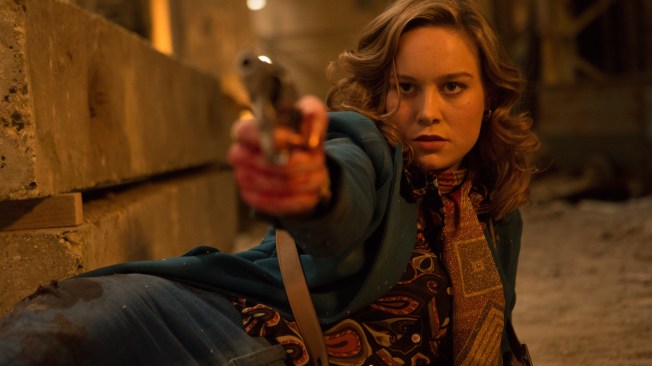
free fire larson

It was Boston in 1978, two members of the Irish Republican Army, Chris, and Frank (Cillian Murphy and Michael Smiley, respectively) are making a rendezvous with a South African arms dealer, Vern (Sharlto Copley) in an abandoned factory to purchase weapons for the civil war back home. Their intermediary, Justine (Brie Larson) assures them the deal is right and this is backed up by Vern’s representative, Ord (Armie Hammer). However, as the moment of truth nears closer, money exchanges hands, irregularities about the weapons are addressed, and the various members of each side interact it becomes apparent that something is about to blow.

Continue reading “Movie Review – Free Fire”

Movie Review – Dredd

Dredd (2012, dir. Peter Travis)

Judge Dredd Still Image

Mega-City One is an urban sprawl filled with crime and poverty. Enforcing the rule of law in this crumbling post-apocalyptic landscape as the Judges, a natural combination of judge-jury-executioner. The most famous of these brutal lawmen is Judge Dredd, an enigmatic figure who is more of a justice-dispensing machine than a human being. He’s charged with testing rookie Judge Anderson on what ends up being one of his toughest days. The call comes from the large tenement Peach Trees that there has been a triple homicide. The Judges quickly learn these murders are tied to a threat is plaguing all of Mega-City One.

Most movie-savvy people are aware of Sylvester Stallone’s 1995 trash fire of a film, Judge Dredd. His adaptation of the popular UK comic book made a ton of errors that betrayed the spirit of the source material. He rarely wore his Judge’s helmet after the opening action sequence, and the script gave a lot of backstory to the Judge. These story elements are pretty antithetical to the nature of the comic book. The film ended up highlighting the more absurd elements and has become a perennial entry of the Worst Films of All Time lists. So, this reboot had a tremendously bad reputation to overcome.

Dredd manages to stay very faithful to the source material, even the more fantastic parts while delivering a character-centered story. Apparently inspired by The Raid, Dredd focuses its action within the walls of Peach Trees, a housing complex that provides plenty of set pieces and a palpable tension. When you have nowhere to run from the forces out to kill you, it will inevitably bring out more ferocious elements in humans. With a character like Judge Dredd, he is absolutely in his environment with this scenario. To say Dredd is a violent film is an understatement. This is a gory, visceral, kill fest. Yet, it tells a compelling story, particularly through Judge Anderson.

In the same way, Max in the Mad Max films is merely a cipher through which to tell a story, writer Alex Garland fashions Dredd into the same type of protagonist. It is entirely unimportant what Dredd was like as a child or the what the moment was that he forfeited his humanity to become an arbiter of justice. Instead, he is the vessel that helps tell the story of Judge Anderson’s loss of innocence. Actor Karl Urban takes on a role many actors would shirk at, the majority of his face covered with the entire film. But Urban, a fan of the comic, expressed that he understood why keeping Dredd’s identity obscured was essential to the character. Olivia Thirlby as Anderson first appears as your typical by the book, nervous rookie but by the end of the film, she is able to hold onto her humanity while acknowledging the violence that people can be pushed towards. The exact route her character will take within the fiction of the film is left for us to wonder about.

Lena Headey plays the movie’s central antagonist, Mama. I was absolutely thrilled with the choices she made in playing this crime boss villain. The minute she spoke I knew I was going to love her performance because she chose to be quiet in the way she spoke. This wasn’t the godawful Eddie Redmayne in Jupiter Rising sort of calm quiet then SHOUTING performance. We learned a lot about Mama through how she communicated. In the environment where she grew up, words carried little currency. For people in places like Peach Trees, a threat is worth nothing if there isn’t a physical punishment behind it. Mama makes sure to inflict brutal horrors on people who cross her. Even in the final showdown between Dredd and Mama we have her maintaining a very calm, quiet hate in her voice.

Dredd succeeds and undoing and helping the audience forget everything about the 90s attempt to adapt the property. It is definitely elevated above your average comic book fare as well. It has tons of social commentary cleverly embedded in amongst the brutal violence. It is definitely one of those futures that, while extreme and different than our modern day, still feels unsettlingly familiar and far too close to our lifetimes.

Movie Review – My Beautiful Laundrette

My Beautiful Laundrette (1985, dir. Stephen Frears)

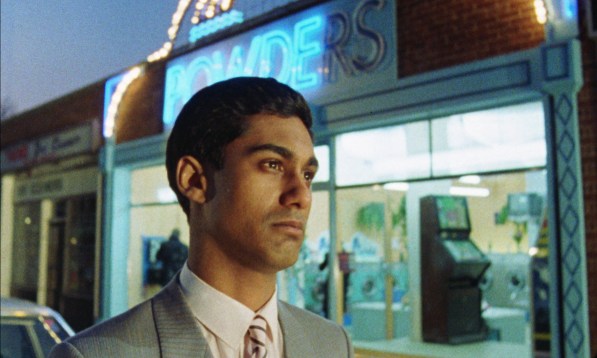
laundrette8_original

Omar Ali (Gordon Warnecke) is a young Londoner adrift. He’s dropped out of school and spends his time caring for his father Hussein, bed-ridden and increasingly inclined to drink since the suicide of his wife the previous year. Hussein realizes his son needs to expand his horizons, so he sends Omar to Uncle Nasser who sets him to work washing cars in a parking garage before handing over his failing laundrette. Omar envisions this facility becoming a place the reinvigorates the neighborhood and beginning his fortune. Through circumstance, he reunites with Johnny (Daniel Day-Lewis), an old schoolmate who got caught up in the right-wing nationalist movement. Johnny breaks away from his mates but struggles. He and Omar have romantic feelings for each other but exist in two very different communities in their city.

Laundrette is a film very much of its time. Within minutes, the hardships brought by Margaret Thatcher’s tenure as Prime Minister are felt. London is run down, slum lords rule the roost, and anyone who can’t find a job is tossed out on their ass. The Pakistani community is not feeling the purse strings tighten as much and are seeking out fairly non-glamorous avenues to keep the money rolling in. Omar’s father is a socialist and journalist, two things that stand in contrast to the other highlighted members of his community’s ideals. While Hussein rails against Thatcher to Omar, Nasser talks with delight about how he has benefitted from her policies. Many Pakistani characters admit they feel torn between two homes, but Nasser bluntly states that as Pakistan became increasingly theocratic, it was obvious that people like him who enjoyed Western values had to leave.

However, these ideas are never really explored in depth. This is because Laundrette is a film so stuffed with ideas and wanting to say so much about them it never gets the opportunity to say much about anything. It intends to be a slightly light slice of life type film, but also a commentary on contemporary politics, but also a love story, but also a movie about Anglo-Pakistani identity. I kept thinking the picture had all the potential to be a fantastic mini-series, a Pakistani Shameless, about communities in the poor neighborhood in conflict. The romance between Omar and Johnny is meant to be the core of the film based on promotions but I felt it was secondary to the exploration of racial identity in Thatcher’s England.

When the film comes up in conversation, it is often to highlight the breakout performance of Daniel Day Lewis. I found him to be a little dull and nothing spectacular. He wasn’t terrible, the film just didn’t have the time to develop his character to become anything interesting. Omar, the protagonist of the movie, is more interesting but I never felt the deep struggle between his love for Johnny and his community in the way I believe Frears intended. The romance is never something the characters suddenly begin confronting their family about. It’s left a little ambiguous as to where they go from here. The third act shows that life isn’t going to run smoothly for the couple. When the film ends the story doesn’t. You can feel that life will continue for these people and it won’t go smoothly. But in times of government austerity life is a struggle that only those we love can help us through.

Movie Review – The Girl With All the Gifts

The Girl With All the Gifts (2016, dir. Colm McCarthy)
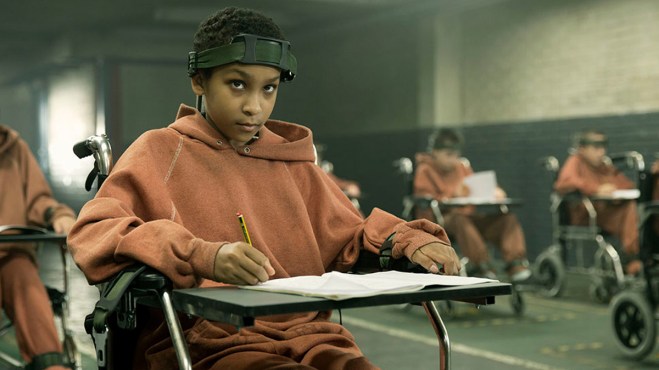
girlwithallthegifts

Zombies. I don’t really get it. They seem to have an endless appeal to a large enough group of people that creators keep coming back to them. They’ve never really scared me which probably has to do with how I see them in that category of conflict of Man vs. Nature which isn’t interesting to me. A few have broken through and managed to interest me: Pontypool, 28 Days Later, Deadgirl. But for the most part, they seem to play out the same tired cliches and tropes.

The Girl With All the Gifts (based on the novel by Mike Carey) starts us out in the twilight of man’s fight against a fungal outbreak that has turned humans into ravenous hordes. The film is told through the eyes of Melanie, an 11-year-old girl who, with dozens of other children are kept in a subterranean prison, observed by scientists, and held at gunpoint by paranoid soldiers. As things often do in zombie films, the proceedings get chaotic, and our human characters are on the run. However, they survivors bring Melanie along who isn’t entirely human and whose origins reveal something much bigger about the fungal outbreak.

The overarching theme of the film is about the power of the older generation being lost and handed off to the younger generation. This particular passing of the torch is not one done willingly, and it is easy to see the conflict reflective of generational clashes in our own history. There is also some impressive play with the idea of how one generation processes the behavior of the new as mindless and evil when they simply don’t understand the underlying motives at play. Sadly, these themes are about the only good thing in this film.

The most frustrating aspect of The Girl With All the Gifts is the lack of strong character development. Instead, the script focuses on hitting plot points and moving characters from location to location. There are never enough still enough, quiet moments to develop the relationships between characters, most importantly Melanie to her teacher Ms. Justineau. That relationship feels like it’s meant to be the crux of the entire story and it is so lightly touched upon it feels inconsequential. The film’s ending behaves as though we have a high investment in these two and ends up feeling shallow because the foundations were never laid to evoke the strong emotional response the filmmakers except.

Melanie is played by newcomer Sennia Nanua, and she feels very much like a child actor. Maybe I was spoiled by Royalty Hightower’s naturalistic style in The Fits, but Nanua isn’t as hammy as a stereotypical “Broadway kid, ” but she just doesn’t seem to have a handle on realistically emoting. It never feels like anything that happens in the story lands with weight on her. There is a scene where Melanie has to take a life, nd it should play as dark and heavy, but the performance just feels like an actor doing “actor tears”. The supporting cast has some strong names: Paddy Considine, Gemma Arterton, and Glenn Close. However, even they aren’t given much to do outside hitting plot points to advance the story.

The flaws in this film likely come from the inexperience of the director in feature work. Colm McCarthy has primarily done television work which isn’t necessarily a bad thing but it does come with a lack of interesting cinematography and different type of pacing with character development. The look of The Girl is disappointingly bland. The majority of shots are either medium shots or long shots when there could be some more interesting ways to show this story unfold. The setting of the third act is full of interesting visual potential but never seizes it.

I was very excited to see this film and expected some interesting twists on the tired zombie genre. While there are lots of interesting themes and ideas brought up, nothing is ever developed particularly through the characters.

Movie Review – Nina Forever

Nina Forever (2015, dir. Ben & Chris Blaine)

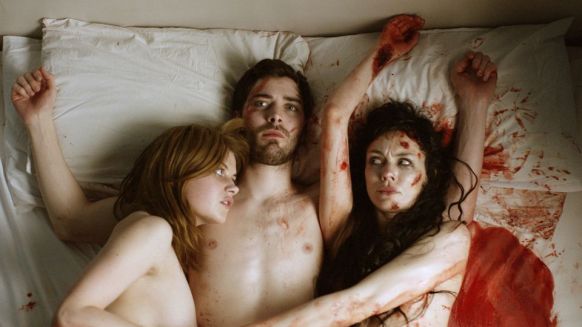
960

Holly is in love with Rob. They both work at a local grocery store, and she learns he recently tried to kill himself out of the pain and guilt he still feels from his girlfriend, Nina’s death a couple of years ago. Holly is attracted to the angsty darkness of Rob, and the two find themselves hooking up in Rob’s bed a few days later. They don’t seem to notice the large, bloody stain forming on the sheets but take note when the specter of Nina manifests in the bed. From there we get a unique take on dealing with past relationships while attempting to forge a new one.

Nina Forever could have easily become a farce, but there is a concerted effort to maintain a tone that acknowledges the absurdity but takes the relationships of the three characters very seriously. The concept: a new lover haunted by their love’s old dead partner is not an entirely new idea. It’s been the subject of many romantic comedies, but this story doesn’t take the route you might expect. There is the proper reaction from the two leads to Nina’s arrival, shock and disgust, but after a few days, they begin to accept her. This moment is where the film gets truly interesting in the way it explores the haunting.

Holly becomes incredibly proactive in making Nina a part of she and Rob’s relationship, believing this will heal Rob’s pain and allow Nina to pass on. Her first attempt is to make the best of Nina interrupting she and Rob’s lovemaking by incorporating Nina. The ghost informs her that the only thing she feels is the persistent pain of her injuries from the car accident that killed her. Holly is a very persistent character while Nina seems only concerned with ensuring that Rob remains her property.

I particularly liked the incorporation of Nina’s parents into the narrative. Rob has grown even closer to them in the wake of her death, but his relationship with each is very particular. Nina’s father acts as almost a guiding father figure to Rob encouraging him to return to his Master’s degree in mathematics while sharing his amateur attempts at novel writing. Nina’s mother has a much more intimate relationship with Rob, while not sexual, there is this ever present tension when they speak.

One of the core themes of the film is Holly’s frustration with how others perceive her. One of the first scenes of the film is her boyfriend breaking up with her citing Holly as being “Just so nice.” She is determined after this to embrace her dark side and make sure Rob knows how dark she is. The film never plays this up for laughs and lets us see Holly struggle with shaping her self-perceptions. Where her character ends up may be surprising for the viewer, and it’s played for an interesting contrast with how Rob closes out the narrative.

Nina Forever is a nicely done, independent horror drama. It has plenty of gore for the fans of that, but it also has an engaging and thoughtful storyline. Characters feel fully dimensional, and the directors trust us to disseminate information about them through off the cuff remarks and little glimpses of moments. This is not a feel-good movie where love conquers all. The Blaine Brothers are telling a story about a relationship, and it’s a very honest story that brings us to an inevitable conclusion.

High Rise (2015, dir. Ben Wheatley)

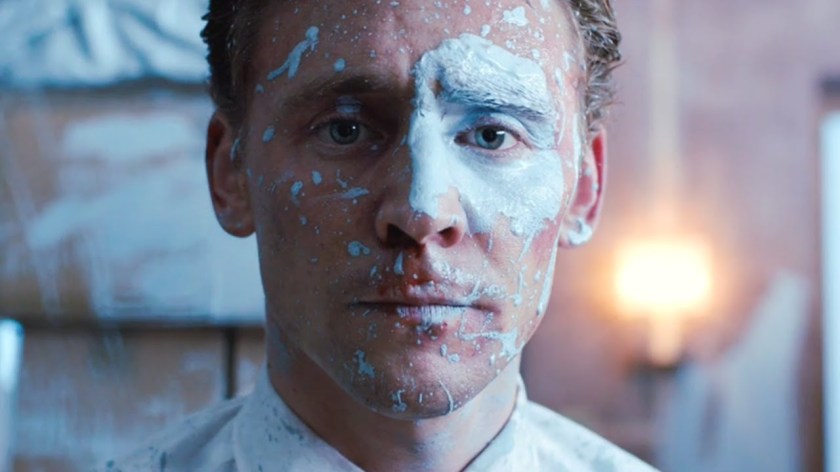
ofhighrise
The feeling of being alienated from a group perceived as “better” can elicit the most raw of emotions. I see it in my students when one thinks they are not only being excluded from a clique, but believe they have become an object of ridicule. Ben Wheatley’s latest film, High Rise presents characters in this situation, but also places the audience there as well through intentionally obtuse storytelling styles.

Based on the darkly satirical novel by J.G. Ballard, the film centers around Laing (Tom Hiddleston), a doctor who has purchased an apartment in a revolutionary new high rise complex. The building is mixed income, with the poorest residents living on the bottom while the wealthiest reside above the clouds on top. Laing floats somewhere around upper middle class and is very much excluded from the exclusive, extravagant parties in the penthouse. There’s also Royal (Jeremy Irons), the crippled architect of the building who seems to simultaneously loathe his fellow aristocrats while never desiring to visit those at the bottom. Finally, there is Wilder (Luke Evans) a roughneck documentarian that lives in the squalor of the bottom floors. Very suddenly life devolves into tribal warfare among the occupants, resulting in murder, rape, and finally roasting the dog.

Ben Wheatley is a director I have come to love in the last few years, My first exposure to his work was the dark comedy Sightseers, the story of a star crossed couple who bond through murder. This was followed by A Field in England, a psychedelic horror story set in the midst of the English Civil War. This year I finally managed to visit his first major work, Kill List, a horror film about the tragedy that befalls a hitman. All of his work is complex and challenging, often upsetting, but ultimately rewarding for the ideas they put forward.

From the first moments of High Rise it is apparent we are entering a world resembling our own, but not. When the full heft of the madness goes down we lose all contact with the world outside of the high rise. It’s very easy to start to wonder how the external world would react to the brutality going on inside. But the film is not attempting to ground itself. This is Swiftian satire that is going to clobber you over the head with most extreme exaggeration of the ideology it wishes to rail against.

Every visual aspect of the film is perfection. The 1970s are wonderfully reproduced and then twisted into a post-apocalyptic nightmare. Mark Tildesley, the brilliant production designer behind 28 Days Later and Sunshine, is responsible for taking these mundane spaces and transforming them into grim abattoirs.The most chilling aspect of the film is how easily the characters transition from annoyance with others misuse of the garbage chute and jockeying for prime parking spaces to planning raids on lower floors and abducting residents to force them into servitude.

It would be easy to take High Rise as a meditation on the corporate gentrification going on in major cities across the United States and in London. Or it could be seen, as the film teases in its final moments, as a prelude to Thatcher era class warfare. But I see the source material and director Wheatley’s take on it as deeper and more contemplative of our most primal and basic selves. High Rise is a film about the default tribalism society falls into when a crisis overtakes us, and how those who endure and retain some semblance of dignity must step away from the crumbling world around them.


Film Review – Submarine

Submarine (2010, dir. Richard Ayoade)
Starring Craig Roberts, Yasmin Page, Noah Taylor, Sally Hawkins, Paddy Considine

The directorial debut of British comedic actor Richard Ayoade has drawn unfair criticism for “being too much like Rushmore or Amelie”. Its easy to see how you could mistake this film for something like that, but after viewing the film it becomes apparent Ayoade has made an homage to French New Wave cinema. Ayoade takes those hipster affectations he’d being excused of exploiting, and actually frames them in a poignant look at the hyper-urgency of the adolescent mind.

Continue reading “Film Review – Submarine”

Film Review – Four Lions


Four Lions (2010, dir. Christopher Morris)

For fifteen years British satirist and comedian Christopher Morris skewered media culture and politics through a variety of radio and television programs. Most notably Brass Eye, a mock news magazine show that focused on the exploitative nature of news, and Nathan Barley, a series that followed a fictional web media hipster and looked at the buffoonish nature of a lot of tech people. It comes as no surprise that now Morris has taken on the current war on terrorism and Islamic extremism in our culture’s psyche. It sounds like an outlandish concept to make a slapstick comedy about Islamo-British terrorists, but Morris has the satiric chops to deliver it such a skilled way, and this kind of film demands a very subtle hand to make it work.

Omar is the head of a small unaffiliated terrorist cell in England. He and his friends are surprisingly sympathetic in how pathetic they are. All of them feel insignificant so when given the idea that to martyr themselves would make them heroes they jump on it. Sticking out like a sore thumb in the group is Barry, a man of British descent who is actually the most militant of them all. Omar and Barry clash when the former is invited to a training camp in Pakistan because his uncle is involved. The films jumps back and forth with an episodic nature, and will with out a doubt challenge you because its characters are incredibly endearing. Part of your brain roots for them because they are classic underdogs, but then the intellectual side steps in and says you can’t root for people who plan on blowing themselves and others up for an imaginary concept.

There are some great comedic moments in the film. I loved that to stay under the radar of British officials, the cell communicates via a Puffin Party webchat for children. The chat requires them to have multicolored puffin avatars. At one point, the car breaks down and Barry blames it on the Jews, at which point he is asked which part of the engine is Jewish, and a conversation ensues. Barry also demands they swallow the SIM cards from their cell phones, after which Omar reminds them the SIM cards can still be tracked inside them. Much comedy comes out of the training camp sequence, and I won’t ruin the big reveal of its largest gag but its a good one.

What shocked me was how, during the final sequence when the crew has assembled to perform the bombing during a cancer fun run in London, I felt incredibly sad for them all. Omar especially sees it as wrong to get Waj, the simpleton of the group, to blow himself up. The end credits are composed of fictional news reports about the events in the film, and they made the story feel even sadder. Instead of going the easy route and presenting terrorists as one dimensional monsters, Morris makes them painfully real and relatable. The result is that we still believe terrorism is wrong, but its because of the waste of life that is the result. Omar has a loving wife who is not an oppressed woman and a son who loves him unconditionally, so his sacrifice feels incredibly empty.

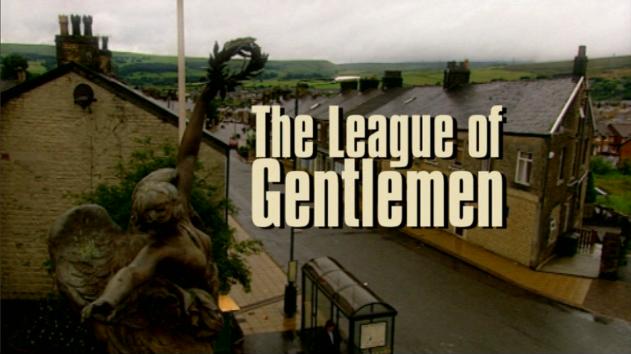
Across the Pond: The League of Gentlemen and Psychoville


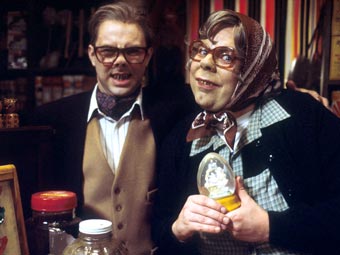
The League of Gentlemen (1999-2002, 19 episodes)
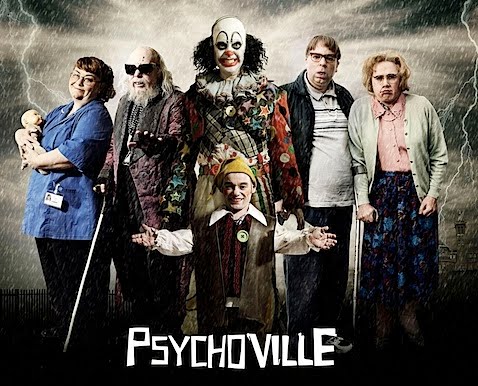
Psychoville (2009, 7 episodes)
Created by, Written by, and starring Mark Gattis, Steve Pemberton, and Reece Shearsmith

“Black comedy” doesn’t begin to describe the shear depths of depravity the work of Gattis, Pemberton, and Shearsmith reaches. There are moments in the latter seasons of League, and all throughout Psychoville, where the audience has to question if the shows are still comedies, or if they have become some other genre of television. The level of gore and perversity that occurs in the third and final season of League is extraordinary. Its as if the performers had held back for the first two years and then unleashed the show they truly wished to make: one where not a single character is without sexual or psychological damage, yet are painfully sympathetic. So too in Psychoville are characters who are even more disturbed and who you feel even sorrier for by the end of the series. These three British titans of comedy have managed to create an impressively larger fan base for the kind of shows American networks wouldn’t touch with a ten foot pole.

Gattis, Pemberton, and Shearsmith came together in 1994 and began developing a collection of eccentric and disturbed characters for stage and radio. By the end of the 1990s they had garnered enough attention for their own BBC series. The television show was set in the fictional Northern England town of Royston Vasey, where every citizen seemed to have a dark secret and proclivity. The first season centers around Benjamin, a young man who is visiting his aunt and uncle in Royston while hiking with his friend. Benjamin finds that as hard as he tries he can’t seem to get out of town. Along the way we meet Hilary Briss, the town butcher with a very special selection; Barbara, a pre-op transsexual cab driver; Mr. Chinnery, the town vet who kills every animal he tries to save, and many more. The most famous of the denizens are Edward and Tubbs, a pig-nosed couple who run “a local shop, for local people”. When outsiders wander in they are typically murdered in a brutal fashion by the couple. Needless to say, crews arriving to build a highway from London to Royston are met with some resistance.

The three seasons of League go through many aesthetic changes. In the first series there are a mixture of on location and studio filmed scenes. In series two things become much more on location, but the laugh track remains. By season three, every thing is on location and the laugh track is gone. The result is that season three highlights the darkness of the show’s premise. The creators also amp up the drama and make these characters three dimensional. Psychoville is a continuation of the themes of League with new characters. This time around the five main characters are all being stalked by a masked figure whom sends them letters hinting at a transgression that links them all. British comedy legend Dawn French plays a maternity nurse obsessed with bringing her dummy baby doll to life by feeding it human blood. Pemberton and Shearsmith play multiple roles, in particular an Oedpial mother-son serial killer team. Psychoville is not as collectively strong as League, but some individual episodes really stand out, particularly the fourth which is an homage to Hitchcock’s rope. The entire episode takes place in one room and is filmed in two takes. Pretty impressive.

The entire League of Gentlemen series is available on Netflix
Season One of League of Gentlemen is available for free on YouTube

Across the Pond: Snuff Box

Berry. Fulcher.

Odd words on their own, but when you know them in the context of Matt Berry and Rich Fulcher they mean “absurdist comedy”. In the great tradition of Monty Python and Cook & Moore comes this duo of such obscene and pointless humor. The two came to the public’s attention through other projects where they played supporting roles. For Matt Berry it was work on Garth Marenghi’s Darkplace, and Fulcher was an American out of the UCB comedy culture. They met while working on The Mighty Boosh and went on to make a single season of Snuff Box together. The result is some of the best, and often times completely confusing comedy out of Britain. It is definitely unlike anything you would ever see presented on American television, including the most obscure cable channels.

What is the premise of this series? Good question. At the surface level you have Berry and Fulcher, professional hangmen. Throughout the six episodes they will occasionally hang someone, but for the most part they hang out in a wood paneled gentleman’s club, sipping brandy. There’s a hallway they use to get from the club to the execution room that contains doors to other dimensions (?). There’s also skits that feature the actors but as one off characters. It’s a hard show to describe because it actively works to be difficult. And that’s part of the fun. There is really no way for a viewer to predict where a scene will lead. It’s definitely not a series for anyone who’s sensitive about language or sex. Snuff Box pushes boundaries and presents a beautifully dark parallel universe.

It’s hard to say which performer I enjoy best, I believe Matt Berry just barely edges out Fulcher. Berry plays himself as a suave and arrogant ladies’ man, and some of his best scenes are when he tries to woo a woman, discovers she is already taken, and has an incredibly harsh reaction to the news. There’s also a recurring series of skits with Berry entering a clothes shop to inquire about silver cowboy boots on order. Each visit a new, yet equally unhelpful employee calls Berry a name under his breath, Berry lashes out, and the whole thing ends with Berry bloodied in the fight. Fulcher is the dimwit to Berry’s pompous ass, he is constantly duped by Berry, and their is an ongoing mystery as to whom Fulcher’s deceased mother is that he receives a check from her estate every month. Fulcher also discovers a door that sends him back in time, allowing him to meet Berry’s ancestors. Each episode is a total surprise and, because of the amount of jokes packed into each one. Below I’ve posted a couple clips to give you a flavor for the show, because of Berry’s musical leanings the show has a lot of songs.