Newbie Wednesdays – I Love You Phillip Morris


I Love You Phillip Morris (2009, dir. Glenn Ficara and John Requa)
Starring Jim Carrey, Ewan MacGregor, Leslie Mann

Audiences love a great scoundrel. Con men able to take on the persona of figures of power, then use that power to one up “The Man” have been archetypal figures. Most recently Steven Spielberg’s Catch Me If You Can proved again that audiences love a good scam. At last year’s Sundance Film Festival, audiences were shown I Love You Phillip Morris, a feature film based on the true story of a man who never met a swindle he didn’t like. Since then the feature has struggled to find distribution and has been thrown around the schedule by studios frightened of its content, finally with a July 30th release date it looks like the general public will finally get to see what is a surprisingly clever and funny picture.

Steven Russell (Carrey) was an easy going clean cut suburbanite with a beautiful wife and daughter and steady job. However, he was hiding his sexuality from his wife, sneaking off for trysts with men when he had the chance. This all changed with a car accident where he had an epiphany. He was honest with his wife and left Texas for Florida where he met a handsome Latin man and showered him with gifts. Steven also had another secret: he was a damn good conman. He resorts to purposefully injuring himself in department stores and using fake credit cards to finance his life. The authorities catch up to Steven and he is tossed in prison where he meets the titular Phillip Morris (MacGregor). Steven falls madly in love and makes it his mission to get both he and Phillip out of prison. What follows are a series of scams that are so outlandish its hard to believe this is all based on a true story, and that the real Steven Russell was actually able to do these things.

It’s very interesting that the screenwriters of the snarky and vicious Bad Santa, Ficara and Requa both penned and directed this incredibly funny and, in certain moments, tear-inducingly poignant film. There is definitely the self-aware and sarcastic tone of Bad Santa present, but the characters here feel much more fleshed out and sympathetic. The film never shies away from the sexuality of its leads but it also doesn’t make them spokesmen for the LGBT community. These are just two people in love who are living their lives. That’s not to say the more prudish elements in our society will be lured into the theater. The scene where we learn Russell is gay involves him in the middle of coitus with one of his late night trysts.

The picture suffers in the structure department, though. It appears that Ficara and Requa wanted to be as true to the chronology of events as possible, and real life just doesn’t translate into a traditional cinematic story arc. The film comes off as episodic and a series of acts: act one is Steven’s coming to terms with his sexuality, act two is Steven meeting Phillip, and so on. I have to say the film is better than I expect it would have been if its original director, Gus Van Sant, has stayed on. As much as I love Van Sant, I can’t see him creating a film as entertaining as this. While it does it entertain, Carrey refrains from being schitck-y and is more in line with his performance in Man in the Moon. It’s inevitable that the film is going to lack the publicity push it deserves and be dumped at the end of the summer in theaters, so if you have the chance to see it definitely go.

My 40 Favorite Film Moments – Part 1

This month I will be looking at my favorite moments in movies. These are not necessarily the best ever in films, but they are my personal favorites. In no particular order, here we go:

1) Let Me Out (Young Frankenstein, 1974, dir. Mel Brooks)

Gene Wilder is at his best when he goes from calm to frantic in a split second. His red-faced blue blanket tirade from The Producers is a gorgeous moment. This one however goes up there as one of my all time faves. Wilder as the nephew of Victor Frankenstein shines. In this scene we see him go from calm, to manic, to desperate, and finally to confident in his macabre heritage.

http://www.youtube.com/v/pu1DMSqTLyk&hl=en_US&fs=1&

2) Mike Yanagita (Fargo, 1996, dir. Joel and Ethan Coen)

Two actors here who deserve a lot more credit. Frances McDormand won the Oscar for her role of Marge Gunderson, but this scene also showcases the chops of Steve Park. Park is able to create a three dimensional character in a single scene of this film, its amazing what he does. Its hard not to imagine the life of Yanagita after watching this. A powerful example of what happens when good writing and acting are paired up.

http://www.youtube.com/v/r_Ge4F4E9JE&hl=en_US&fs=1&

3) Oh, Are They? (Rushmore, 1998, dir. Wes Anderson)

The film that really broke Anderson out and still one of his best. Max Fischer (Schwartzmann) turns a post opening night dinner into a farce when his love interest invites her male nurse friend along. Would be nice if Anderson tried to go back to his more comedic roots, not that his current work is bad.

http://www.youtube.com/v/VbqgSjik9NE&hl=en_US&fs=1&

4) Binary Sunset (Star Wars, 1977, dir. George Lucas)

It’s a short scene, but it says a lot. The dual suns reinforce the alien nature of this world, the lighting sets the perfect tone as Luke Skywalker stares out across the vast landscape of Tatooine, and the music gets across his desire to explore. Simple and perfect.

http://www.youtube.com/v/wEUGF3NGbPg&hl=en_US&fs=1&

5) Come Play With Us, Danny (The Shining, 1980, dir. Stanley Kubrick)

A perfect horror movie scene. The music and cinematography are in perfect unison and there isn’t much more to say other than, experience the scene yourself.

http://www.youtube.com/v/jFVyAjj3Bs0&hl=en_US&fs=1&

Newbie Wednesdays – Mystery Team


Mystery Team (2009, dir. Dan Eckman)
Starring Donald Glover, DC Pierson, Dominic Dierkes, Aubrey Plaza

I read through the Encyclopedia Brown books voraciously as a child. And out of the dozens published and the hundreds of mysteries contained in them, I think I only solved one without having to look at the answers in the back. The titular team of this newly released independent comedy were probably like me. They loved the possibility of solving the crime but when it came down to the actual investigation it was over their heads. Mystery Team is the first feature from YouTube comedy troupe Derrick Comedy. They were one of the first to upload videos to the now uber-popular website and because of their early adopter status they garnered an impressive fan based. So how does the transition from 5 minute web video to 90 minute feature film work out?

Once upon a time, Jason, Duncan, and Charlie were a beloved staple of their small town, solving harmless mysteries like “who ate the pie?” or “who stole Timmy’s lunch money?”. Now they are seniors in high school, on the precipice of adulthood, yet still behaving like scrappy tweens. They are suddenly hit with a case way out of their league when a young girl asks them to find out who killed her parents. Duncan, the brains of the outfit, immediately wants to turn this over to the police, but Jason, after becoming smitten with the girl’s older sister, demands that they take on the case. The result is a very high insanity journey into the suprisingly dark underbelly of their small town. It’s a mixture of grossout humor and eccentric characters, including a cameo by UCB alum Matt Walsh.

Donald Glover, who was a writer on 30 Rock before being cast in Community, has always been the standout in Derrick Comedy. He has an enthusiasm and charisma that make him incredibly likable. When I watch Glover acting I see the future of American comedy. He’s definitely a young actor with the potential to make it as big as someone like Eddie Murphy or Adam Sandler, with the hope that he remains true to his comedy roots rather then make a series of throwaway pictures (I’m looking at you Grown Ups). A recent Twitter trend popped up calling for Glover to be cast in the lead of the Spider-Man reboot. While I consider myself a traditionalist when it comes to the physical makeup of comic book characters on film, this is a casting move I am behind 100%. That’s how enjoyable it is to see Glover act, and he would make a hell of a Peter Parker.

The strength of the film is that it isn’t mean spirited towards its leading trio. It would be easy for a group of socially stunted teenagers to be cast in a mocking light, and while humor is found in their awkwardness, we’re meant to love them. And its impossible to resist liking these three guys, as they are living out the childhood fantasy of being a detective, finding clues, and being wrapped in a big mystery. The acting all around is spectacular. Bobby Moynihan, currently of SNL, appears as Jordy, a convenience store clerk who was an informant for the boys for years. Moynihan’s performance is phenomenal, getting across the pathetic nature of man who gave up on his dreams and is smothered by this small town, but playing it with over the top enthusiasm. It’s one of the best and most layered comedy performances I’ve seen in years. If you looking to see where film comedy is going in the next decade, this is it.

Wild Card Tuesdays – Someone’s Knocking at the Door


Someone’s Knocking at the Door (2009, dir. Chad Ferrin)
Starring Noah Segan, Ezra Buzzington, Andrea Rueda, Elina Madison

You should probably not watch this movie. By that, I don’t mean this is a bad film, but it is definitely not a movie for your casual filmgoer. This exists in a very specialized realm of film, grindhouse, but even still it doesn’t strictly adhere to the tenets of that genre and even openly plays with the conventions. This is not to say the film is some masterpiece. It’s very cheap and very gritty, and that’s what it has to be to do what its trying to do. If you decide to see this movie, and can track it down, you’re going to discover a very disturbing, very funny, and in the end oddly moving low budget horror flick.

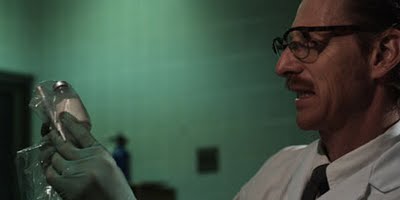
The first scene of the film features a young man shooting up with some strange drug and then being raped to death by a demonic looking man. Flash to the young man’s friends, a group of med school students who react with coldness towards news of his death. The only one who seems to feel anything is Justin (Segan), the most drugged out of all of them who has a dream/hallucination where his dead friend appears in a morgue blaming him for his death. The kids are called into the police station for questioning where its revealed a few nights prior to the murder they had been poking around the basement of a records building on their campus. Justin discovered files on John and William Hopper, a husband and wife serial killing duo who would rape their victims to death. The two were on an experimental drug which Justin finds a vial of and shares with his pals. It appears that the drug has somehow broken down a barrier to Hell, and now the Hoppers have returned in demonic form to wreak havoc.

While the film follows many of the tropes of grindhouse, particularly  beginning with a big horrific scene, then slowing down until one more final climactic act of grotesque, it also throws some new ideas. There are a lot of jump cuts, particularly when focusing on Justin, which serve the purpose of showing how his drug addled brain is processing things. Sound is also used in an incredibly effective way, sound being an element that is normally overlooked. In certain scenes, instead of hearing the dialogue, we can see that the characters are talking but the soundtrack is overtaken by ambient static. There’s a reason in the plot for this, but just in terms of atmosphere it gives an otherwise mundane scene an air of creepy surreality.

There’s a lot of explotative sex, as you would expect in a grindhouse styled film, and this film definitely goes places with it you wouldn’t expect. If you thought A Nightmare on Elm Street or Halloween was a crudely disguised warning to adolescents to refrain from sex and drugs, this picture will blow those ideas out of the water. The two supernatural killers of the film possess…*ahem* macabre transformations of their genital regions that render them brutal and demonic. William Hopper in particular has a very unique method of killing his victims. I absolutely loved how evil the villains in this film were. I don’t believe a studio horror film would ever allow a director to go as far and as horrible as Ferrin takes the Hoppers. At the end though, the film has a strangely sad and poignant. Though once again, I warn you to not watch this film unless your brain is truly ready for the horror.

Jolly Good Thursdays – Girly


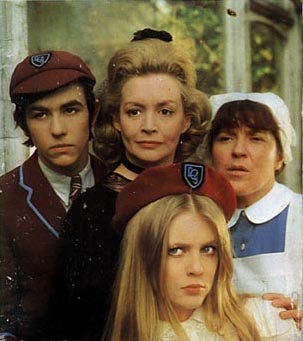
Mumsy, Nanny, Sonny, and Girly (1969, dir. Freddie Francis)

If you never heard of this film, I can’t fault you. It is an obscure little British horror-comedy that has strong genetic ties to The Addams Family, but more macabre. Full of murder, mayhem, and some very unnerving incestous overtones, Girly (for short) is one of the funniest black comedies I have seen in awhile. In the US we tend to put the crazy killers of our films at the bottom rung of the socio-economic class and basically kick the poor while they’re down. The wonderful thing about the UK is the intense dislike of the aristocracy, even by a lot of the aristocracy themselves. Thus, a film as wonderfully insane as Girly can come about and skewer the 1950s nuclear family unit.

Somewhere on a palatial English countryside estate lives Mumsy, Nanny, Sonny, and Girly. Though Sonny and Girly are obviously in their twenties, they still dress and behave like schoolchildren. Sonny and Girly also have a rather queasy relationship that is hinted at but never made explicit. Also in the mansion live the Friends, homeless men and free love hippies lured to the house and locked up for the sadistic pleasure of the quartet. The introductory friend finds he is unwelcome when he can’t follow the rules Mumsy has set up to run her happy home. As a result he’s decapitated. But into their lives comes New Friend, a gigolo who through a series of gruesome circumstances ends up trapped. Unlike previous Friends, New Friend is a conniver and begins his quest to tear about this happy homicidal home.

Girly was the project of acclaimed cinematographer Freddie Francis, the lens behind such films as Tales of Hoffman, the Gregory Peck Moby Dick, and The Innocents. Francis transitioned into directing in the early 1960s and went on to helm some cult British horror films and established him as filmmaker who brought a lot of visual flair to his pictures. Francis would eventually return to working the camera and was responsible for the cinematography on such films as The Elephant Man, Dune, Glory, and Scorsese’s remake of Cape Fear. Girly was originally a stage play (you can feel the more theatrical moments in the film). The premise of the film is a lampooning of the “traditional” family unit at the hands of the 1960s counter culture.

The film is very fun, dark fare. It’s never truly horrifying, just the kind of violence that gives off a creepy vibe and elicits laughs more than gasps. The middle of the picture meanders a little bit, becoming a bit of a struggle to work through, but the way New Friend begins to tear apart the four members of the family by turning them on each other is enjoyable to watch. Definitely an odd, incredibly obscure picture worth a watch.

Charlie Chaplin Month – The Great Dictator


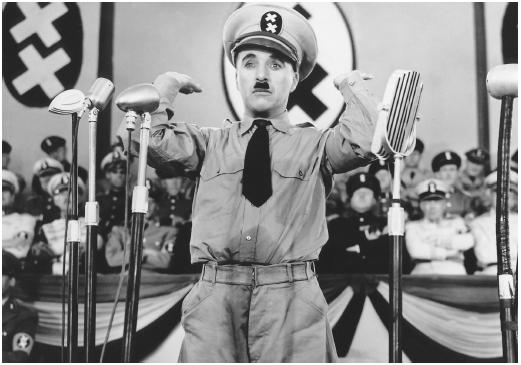
The Great Dictator (1940)
Starring Charlie Chaplin, Paulette Goddard, Reginald Gardiner

The comparison was all because of the toothbrush mustache. That little flourish is what linked Charlie Chaplin and Adolf Hitler at the time. Chaplin was disgusted by Hitler, and the way the American and British governments tried to keep him happy or ignore what he was doing at the time. It was also noted that Hitler was jealous of Chaplin’s popularity during a Berlin visit the actor made. To further rub it in, Chaplin wrote, directed and produced The Great Dictator, a send up of the Nazi actions in the build up to World War II.

The Little Tramp is now a Jew living in the fictional nation of Tomainia, fighting against the Americans in World War I. He’s clunked on the head and ends up in a military hospital unaware that on the outside dictator Adenoid Hynkel has come to power and is blaming the Jews of his nation for the post-War depression. The Tramp is eventually released from the hospital and is disheartend by the world he discovers on the outside. He eventually falls in love with fellow resident of the ghetto, Hannah and is spared execution by a Tomainian whose life he saved in the War. All along the way the film bounces back and forth with the Hitler parody of Hynkel, leading up to a Prince and the Pauper-esque role reversal.

This was probably the least funny of all Chaplin’s films I have seen, and most definitely the longest, hitting the two hour mark. I can see the challenge Chaplin would have making this picture, because he wants to make a comedy but he also wants to skewer Hitler and convey some sense of the pain being inflicted on the Jewish people. Later Chaplin admitted if he had known the extent of the treatment of the Jews and in particular the Holocaust he would have never made this film. Interestingly, the Jewish community was very welcoming to the film and its portrayal of their people despite Chaplin’s injection of comedy into the proceedings. The jokes in the film never create the sense of hilarity of early works because they typically involve the Little Tramp being brutalized by Tomainan storm troopers.

The film has a lot of heart and that hurts its comedy in comparison to the earlier films. The chief redeeming moment is one where Chaplin is playing the Tramp and completely drops the persona and it is Chaplin speaking. He conveys his concerns with the direction of humanity and reaffirms his belief that we are capable of so much more. While definitely harmful to the picture as a film, it is a very strong and well thought out political statement.

Newbie Wednesday – Kick Ass


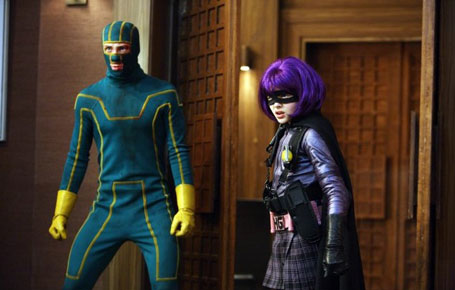
Kick Ass (2010, dir. Matthew Vaughn)
Starring Aaron Johnson, Nicolas Cage, Chloe Moretz, Christopher Mintz-Plasse, Mark Strong

There’s a sort of geek wish deep down in those that read comics that somehow, someway they could don a cape and cowl and fight the criminal element of this world. The superhero idea goes all to the mythological heroes and into figures like King Arthur and Robin Hood to the Three Musketeers and the pulp mystery men and finally into comics. So our protagonist proposes a very legitimate question early on “How come no one has ever tried to be superhero?” It’s obvious that there are plenty of crazy people in this world and it comes as no surprise that there actually *are* people who have tried this. You can check them out at the World Superhero Registry. So how does the hero of our film try to tackle the nuances of masked crime fighting?

Dave is a high school student who is invisible to the opposite sex, but very visible to the bullies and street thugs of his city. After being robbed one to many times, Dave purchases a few essential components and becomes the mystery man known as “Kick Ass”. Kick Ass is immediately sent to the emergency room after his first battle and has steel rods and plates put in him that ironically grant him a certain level of invulnerability. And this is where the film completely goes off the tracks of its premise “What if superheroes were real?” and decides to be no more different than any other comic book flick. The duo of Big Daddy and Hit Girl are introduced, a father-daughter team of armed to the teeth avengers as well as The Red Mist, the son of a local mafia don who suckers his pop into stocking him up. The film goes through a lot of tonal changes and shifts, finally settling into a fairly predictable final battle sequence.

The movie is only shades different than Superhero Movie, a descendant of the Scary Movie parody genre. Whereas that film knew it was a comedy and behaved thusly, Kick Ass seems to want to be aloof and post-modernly ironic, yet still be a “bad ass” super hero movie. I’m not willing to go as far as Roger Ebert in his review, calling the film “morally reprehensible”. After watching the 2006 remake of Hills Have Eyes I think it could serve as a contender for that. I didn’t have a problem with the concept of this young girl, trained to be a super soldier by her father, slaughter masses of mob men on screen.

My problem with the film came from a couple elements that diverged from the comics which actually lent it real world credence. If you know me well, you know that I am not one of those comic book geeks who natters on about minutiae that differs slightly from the source material. I’m a geek who can be reasonable about conceits that have to be made in the process of adaptation. However, the first divergence from the original mini-series that irked me was when Dave reveals he is not truly gay to his love interest, she has mistaken him as such for the majority of the film. In the film, she is unnaturally forgiving and its implied the two have sex, after which they are a couple. In the comic book, she is pissed and eventually has her new boyfriend beat Dave up. That would be the actual real world way the story would play out. So while the film wants to be a wry commentary on the implausibility of superheroes in the real world, through this change it actually invalidated its premise to me.

The second divergence colors the audience’s entire perceptions of a character in a disturbing manner. In the film, Big Daddy was a police officer whose career was ruined by the mob, sending him to prison, while his wife went broke and died on the table giving birth to Hit Girl. Once out of prison, Big Daddy began training Hit Girl. In the comics, Big Daddy raised Hit Girl with this story. In reality, he was a no body, an accountant who had a mid-life crisis and kidnapped his daughter to create this more exciting existence. Once again, the film compromises its original intent for the sake of “superhero-ing” it up. I found the film to be enjoyable, but nothing I would watch again. Because it is too scared to make its characters truly real and give then the downbeat ending that naturally would happen it ultimately fails and ends up being yet another generic comic book movie.

Hypothetical Film Festival #12 – 80s Comedies for Grown-Ups

A major part of 1980s cinema were high school comedies. From Fast Times at Ridgemont High to Ferris Bueller, teens were a prominent element of the successful comedy films. However, there are a lot of comedies, often overlooked, from the 1980s that stand as some of the best ever made. This film festival is devoted those movies:


All of Me (1984, dir. Carl Reiner)
Starring Steve Martin, Lily Tomlin, Victoria Tennant

Roger Cobb (Martin) is a successful lawyer who is called in to help with the final arrangements of the eccentric, dying heiress Edwina (Tomlin). Through a mystic mix-up Edwina’s dying soul ends up taking over the right side of Roger’s body. The rest of the film hinges on Martin’s excellent physical comedy chops. While Tomlin provides the voice in Roger’s head, there are moments where Martin must switch back and forth between Edwina and Roger in an argument, and then have them physically fight. All of this takes place with just Martin on screen. It was also the fourth teaming of Martin and director Carl Reiner, and the two work wonderfully together.


Lost in America (1985, dir. Albert Brooks)
Starring Albert Brooks, Julie Hagerty

In my opinion, one of the best comedies ever made! Brooks doesn’t always succeed with his very specific style of humor, but all the elements come together here. David Howard (Brooks) has crunched the numbers and found that he and his wife Linda (Hagerty) can quit their jobs, buy an RV, and travel the country, with plenty of money to start them up where ever they decide to settle. However, one night in a casino and things go downhill. Brooks is absolutely hysterical in this film, but Hagerty matches him as well. Julie Hagerty has always been one of the most overlooked female comedy talents and this film showcases why is right up there at the top.


Planes, Trains, and Automobiles (1987, dir. John Hughes)
Starring Steve Martin, John Candy

John Hughes, most well known for his high school comedies, employed the talents of John Candy in many of his late 80s films. This picture, set around Thanksgiving, follows Neal Page (Martin) and Del Griffith (Candy) as two business whose fates become entangled as they try to make their way home for the holiday. The conceptual nature of the humor isn’t revolutionary, its basically the Odd Couple formula, but its the chops of its leads that make it good. This is also the first film I can recall where we are introduced to the curmudgeonly Martin persona. Typically he played the goofball, but here we get the easily irritated character to play off of Candy’s happy go lucky everyman.


Dirty Rotten Scoundrels (1988, dir. Frank Oz)
Starring Michael Caine, Steve Martin, Glenne Headly

Lawrence Jamieson (Caine) is a con man who has full control of his territory, the French Riviera. That is until brash and crude American Freddie Benson (Martin) shows up in town. At first, Lawrence tries to scare him out of town, then volunteers to teach him what he knows. They partner for awhile till an incredibly wealthy mark hits the scene and then its every man for himself. Martin definitely gets the bigger comedy bits in the film, but don’t underestimate Caine. He is forced to be more subtle, but delivers huge laughs of his own. Frank Oz, is a director with major ups and downs in his career but this is definitely the high point of all his work. The comedy feels classy, yet not pretentious. And I’ve always been surprised that no one thought to team Caine and Martin together in at least one more picture after this.


A Fish Called Wanda (1988, dir. Charles Crichton)
Starring John Cleese, Jamie Lee Curtis, Kevin Kline, Michael Palin

The greatest thing this film did was was introduce us to the comedy power of Kevin Kline. Kline plays Otto, a parody of American arrogance who is helping mob moll Wanda (Curtis) plot against her criminal boyfriend, abscond with the cash he stole, and flee the UK. Her boyfriend’s attorney, Archie Leach (Cleese) proves to be a nuisance and she attempts to seduce him. There’s also Michael Palin as chronic stutterer Ken Pile, a man who loves his exotic fish more than life itself. All of these characters mingle in a film that reaches the thresholds of great farce. The script was penned by Cleese and works on the same level of intelligence as Monty Python, yet grounds itself in a real world that is slightly off. The highlight is Kline though, who typifies the way Americans come off to their British cousins.

Charlie Chaplin Month – The Other Films

While I am giving in-depth reviews to the Chaplin films I haven’t seen, I would be wrong in leaving out films of his I have seen previously, especially because they are some of his best work.


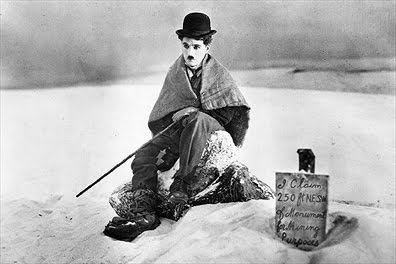
The Gold Rush (1925)
Starring Charlie Chaplin, Mack Swain, Georgia Hale

Made after the box office failure that was A Woman of Paris, Rush has Chaplin conjuring up some of his most iconic comedy moments. The dancing rolls bit, which has been referenced continuously in pop culture since. At one point starving miner imagines Chaplin transforming into a human sized turkey. We also have Chaplin boiling and eating a shoe. Chaplin originally intended to shoot the film on location in Alaska but nature had other plans. There is one on location shot in the film and its a gorgeous one. The rest was filmed on Chaplin’s United Artists sound stages. If you are looking to make a list of must see films for historical significance, this is a must for that list.


City Lights (1931)
Starring Charlie Chaplin, Virginia Cherrill, Harry Meyers

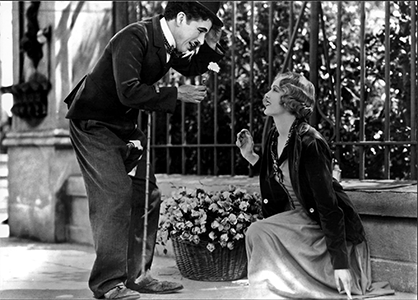
This is my personal favorite Chaplin picture and I think its one of the best romantic comedies ever made. The Little Tramp befriends a blind flower girl whom mistakes him for a millionaire. The Tramp promises he will raise enough money for the young woman to have a costly procedure. To do so he signs up for a boxing tournament and the crux of the comedic action revolves around that. The film features one of the best scenes in cinema at its climax when the young woman, now sighted, learns the truth about the Little Tramp. I actually brought a girl to tears in college simply by describing in detail this scene. A beautiful film with a big heart.


Modern Times (1936)
Starring Charlie Chaplin, Paulette Goddard

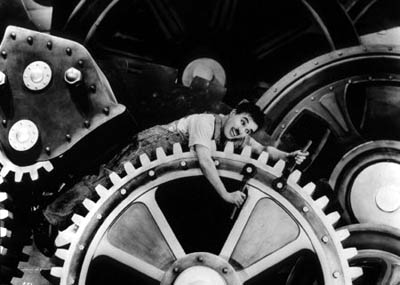
This is the last major American film to make uses of silent movie title cards (ignoring silent film parodies that would come after). Chaplin billed this as his first “talkie” but plays with audience expectations while making a point. The only voices heard come from the abstract machinery of the factory the Little Tramp works in. It was all part of Chaplin’s ideas about how technology was being used improperly and, instead of empowering mankind, it was being used to take their humanity away. Chaplin also wrote the film’s ending song “Smile”, which has become a standard since (“Smile though your heart is aching Smile even though its breaking”).


Monsieur Verdoux (1947)
Starring Charlie Chaplin, Mady Correll

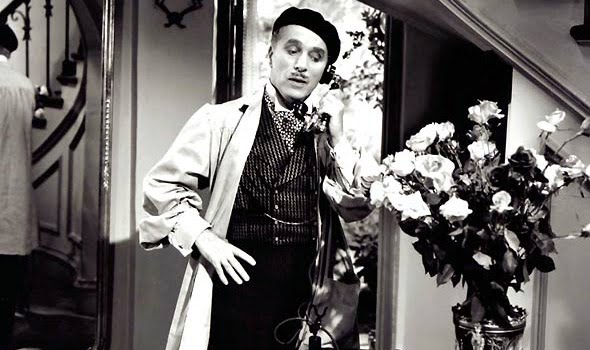
This was a drastic departure for Chaplin. There was no Little Tramp present here. Instead, he plays recently fired banker Henri Verdoux. Struggling to support his family, he decided to begin marrying rich women, murdering them, and absconding with their money. Chaplin plays the picture as a pitch black comedy and had a lot of difficulty with the Production Code on this one. The point behind the picture came from the idea that if a man murders a few people for money he is a criminal, however if he mass murders as in a war he is a hero. The film proved that Chaplin had little concern for box office returns, and really want to make films that were of interest to him.

Charlie Chaplin Month – The Circus


The Circus (1928, dir. Charlie Chaplin)
Starring Charlie Chaplin, Merna Kennedy, Al Ernest Garcia, Harry Crocker

This was to be the last true silent film made by Chaplin. The era of the Talkie had begun and audiences were no longer content to have their actors speechless. Chaplin’s following films would have elements of silent pictures in them and could easily be categorized that way, but make use of sound. Chaplin leaves the silent era with a bang, though. He pulls out all the stops, referencing the theater acts of his youth and adding the trademark Chaplin twist to them.

The Little Tramp happens upon a circus and become charmed with the ringmaster’s horse-riding daughter. The ringmaster sees potential in the Tramp as a clown in his show so he hires him one. The Tramp observed the ringmaster cruelly beating his daughter and sneaks her food when he can. Eventually, a handsome tightrope walker joins the circus and woos the daughter away. The Tramp begins to lose his edge as the hit of the circus and through a series of zany circumstances ends up having to step in for the tightrope walked in the film’s climactic sequence.

I laughed harder at this than I have most contemporary comedies. It’s not the slapstick, its the way Chaplin’s Tramp adds little flourishes of personality. The most symbolic sequence in the film is when the ringmaster has his troupe of clowns perform classic Vaudeville and dance hall comedic routines. The humor doesn’t come from the routines, but in how the Tramp bungles them up when it is his turn to perform. Chaplin understands that in the moments where another comedian would ham it up the Tramp will get the bigger laugh by playing dumb. What is also wonderful about the film is the feisty personality of the Tramp. He can be very feminine in his behavior, particularly when he attempts to woo the ringmaster’s daughter. Its very interesting that Chaplin takes the traditionally female role when courting, coyly casting his gaze downward, batting his eye lashes, and literally prancing. Juxtapose this against moments when the Tramp has had enough of his poor treatment from the ringmaster and he delivers comical blows.

While The Circus is one of the purest Chaplin comedies I’ve ever seen, it is not without its moments of  typical Chaplin poignancy. The final scene of the film, as the Tramp sits alone in a field that the circus wagons once occupied, standing, then walking into the dusklight is very beautiful. The background of the film is marred with difficulty. Sets were rained out or burnt down. Footage was scratched beyond usage. And Chaplin was dealing with a messy public divorce and an IRS lawsuit. None of this is visible on the screen though, showing Chaplin was the consummate professional.