Comic Book Review – Omega Men by Tom King

Omega Men (DC Comics)
Writer: Tom King
Artist: Barnaby Bagenda, Toby Cypress (#3)
Omega Men: The Complete Series will be released August 30th, 2016

omega men kalista

You’re meant to be disoriented when you start Tom King’s Omega Men. You’re tossed into the midst of war, specifically a military strike on suspected terrorist outpost. Even if you had followed previous incarnations of the Omega Men, you will feel just like the soldiers on the dropship: jostled around, anxious, not exactly sure what happens when the door drops down. Omega Men follows the titular outlaws of the Vega System, composed of Karna, Hy’nxx, Voorl, Ogyptu, and Changralyn. You will explore these planets in light touches over the course of the series but never truly know them. In the same way, you will explore aspects of our characters’ pasts but never really know them. In fact, the protagonist of the series, former Green Lantern Kyle Rayner, won’t even come to the forefront til the third issue. Omega Men subverts expectations you have about “superhero” comics at every turn, mainly because it is not about superheroes.

Continue reading “Comic Book Review – Omega Men by Tom King”

DC Rebirth: Weeks 4 & 5

Book of the Week!!!: Batman #1 (Writer: Tom King  Artist: Matt Banning, David Finch)

batman 01Continuing threads laid in Batman: Rebirth, our story begins with Batman and Gordon meeting on the police station rooftop to discuss a raid on a nearby military base. The police have not located all the stolen weapons and fate would have it one of them is launched and strikes a commercial airliner over Gotham. The rest of the issues is tightly written action sequence that has Bats communicating with Alfred and his new partner, Duke Thomas (formerly of We…Are Robin). Alfred and Duke runs ops from the Batcave and guides Batman through the process of literally lassoing the plane and steering it around Gotham. The big twist is the final panel introduction of Gotham and Gotham Girl, apparent Superman and Supergirl analogs? The weakest part of this issues is some of David Finch’s art, I have never been a huge fan of his work. I definitely disliked his recent Wonder Woman run and really hated his Batman: The Dark Knight ongoing. There’s some stronger panel structure here and it does look like he is working well with Tom King. Probably the DC ongoing I am most excited to keep reading, mainly due in part to what a phenomenal writing of Tom King!

Continue reading “DC Rebirth: Weeks 4 & 5”

DC Rebirth Week #3

Author’s Note: I include Action Comics and Detective Comics because their creative teams did not directly work on last week’s Superman and Batman Rebirth issues. I won’t be following those titles here on the blog, but may read their full storylines and review them at a later date. So for now, just a quick look at how they are starting their Rebirth storylines.

Action Comics #957 (Writer: Dan Jurgens  Artist: Patrick Zircher)

Might be my second favorite of this week but also the one I feel the most trepidation.action
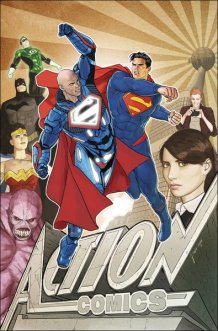
Returning for the tenth time or so to write Superman is Dan Jurgens, most famous for penning the now classic Death and Return of Superman storyline. The pace of the comic is just right, lots of stuff happens and many plots are set up. This feels the most like classic DC in the Rebirth roll out. The big plot points are Luthor taking up the mantle of Superman, using his time with Justice League as leverage, and Pre-New52 Superman finally making his debut in costume. I am very interested in finding out where this story will go but am praying this isn’t going to be another hard reset to status quo in a year’s time. We’ve seen Luthor in this role not to long ago (Paul Cornell’s run on Action kept coming back to me as I read) so I want to see something familiar but with fresh new direction.

Aquaman Rebirth (Writer: Dan Abnett  Artist: Scot Eaton, Oscar Jimenez, Mark Morales and Gabe Eltaeb)
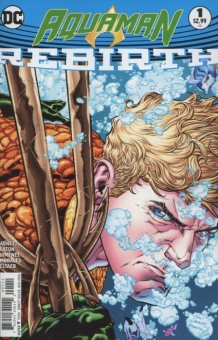
aquamanI felt like I was in familiar territory because this issue seems to tread the same notes most modern Aquaman stories always do: Hey, he’s a super serious hero, you guys! This need to make meta-commentary on jokes about Aquaman does more to diminish the character than just telling good stories about him. This comic also didn’t seem very open to new readership with some elements, like the Deluge, not being defined well or the reveal of the villain at the end feeling awkward. At the end, I felt like it was all set up for Aquaman to just fight one of his old villains again, but not the sense that something new was going to happen. Probably my least favorite of this week’s releases.


Detective Comics #934 (Writer: James T Tynion IV  Artist: Eber Ferreira, Eddy Barrows)

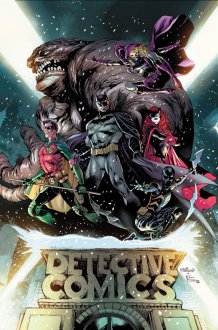
If this series had to get a new title it would be Batman Family. The conceit of Detective Detective-934appears to be a focus on a team of Bat-related characters. Featured in the series will be Batman, Batwoman, Red Robin, Spoiler, Orphan, and Clayface. Clayface is the interesting outlier, a character shaped more by his appearances in the 90s animated series, than much of anything in the comics. His role in the team hasn’t been revealed yet but Tynion does a good job of making him sympathetic right from his first moment in the film. I used to truly hate the work of artist Eddy Barrows but he has made some significant improvements. Action feels fluid and energetic and the world is full of detail. There’s a slot of story potential for the interaction and relationships between these characters and this will be one I continue following.
The Flash Rebirth (Writer: Joshua Williamson  Artist: Carmine di Giandomenico)
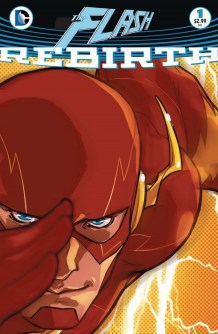
the flashIt can be argued that DC Rebirth #1 was a Flash-centric story, with its lost Wally West at the heart of it all. The Flash Rebirth is an interesting artifact in that it takes place before, during, and after the events of DC Rebirth. Right away Williamson is making the title new reader friendly by using a contemporary murder scene to recap Barry Allen’s own loss of his mother. It would be easy to just make the comic a facsimile of the popular tv show but effort is put into referencing those important elements but keeping the comic its own. There are a couple beats that take us out of the story, the Barry/Wally reunion retold and Barry’s visit to Batman who happens to be analyzing that familiar smiley face pin. Artist di Giandomenico was someone I didn’t care for much on the recent X-Factor title for Marvel, but here his style lends itself to the spend and energy of the Flash. While not a singularly cohesive story, Flash Rebirth is a good introduction to the character.

Wonder Woman Rebirth (Writer: Greg Rucka  Artist: Liam Sharp, Paulo Siqueira)

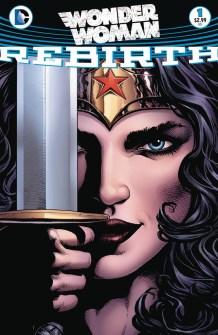
The award for most meta Rebirth comic this week goes to Wonder Woman. From page one,wonder woman Greg Rucka is bringing up the contradictions and fluctuations in this character’s past. Rucka’s past work on the title also dealt with finding a unique place for Princess Diana in a world of supermen. And he did a great job at it, playing up her role as a warrior and an ambassador to the world of men. Right away Rucka is saying we are going to examine this character again and redefine her. Another thing I loved was the use of multiple artists. Often new artists pop up in a jarring non-essential way, but here we switch to a new artist the moment Diana dons her new costume. If you really want a comic that is beckoning you in for a new story,but with recognition of the history that has come before, this is it. You also have a great pedigree with Greg Rucka at the helm. The ongoing series will be doing something a bit odd, alternating issues between the present day story and a Year One origin reboot. Definitely on my list to follow. Hands down the best release of the week.
Next Week: I will be at Origins most of the week so I’ll be reviewing weeks 4 & 5 together in two. Titles will be Batman #1, Green Arrow #1, Green Lanterns #1, Superman #1, Titans Rebirth, Flash #1, Aquaman #1, and Wonder Woman #1

DC Rebirth: Week #2

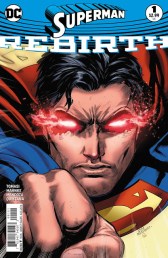
Superman: Rebirth (Writer: Peter J. Tomasi  Artist: Doug Mahnke)

superman rebirthOf the four titles, this felt the least like the beginning of something new, or the reintroduction of some element from DC Comics past. The story focuses on the Pre-New 52 Superman and Lana Lang unearthing the recently deceased Superman’s ashes. Lana made a promise that if he died before her, she would make sure his remains were with his adopted parents, The Kents, in Smallville. The two characters talk about old Superman’s experience with death and rebirth, and he’s pretty insistent this world’s Superman is going to be reborn eventually. It comes across a little meta-contextual about the silly nature of death and rebirth in comics.
The story feels like an epilogue to the previous Superman story arc, rather than the beginning of something new and interesting. There’s never an effort made to establish what made the dead Superman such a great hero or why the old Superman is a great replacement. The story keeps things simple but didn’t do anything to get me excited about the large range of directions the Super-titles are going this summer.


Batman: Rebirth (Writers: Tom King, Scott Snyder  Artist: Mikel Janin)

batman-rebirth-1This was much more interesting and fresh than Superman: Rebirth. Tom King is able to reinvigorate some elements of the Batman mythos. The most stark change is to Calendar Man, a jokey gimmick whose crimes revolved around the seasons or holidays. Now Calendar Man is like Cronenberg body horror, his body shedding its entire skin seasonally. The best Batman villains are ones that unsettle us. With the whole Batman concept being so deeply embedded in human psychology, having horrors that poke around and disturb our minds is when the series shines.
The issues also brings in Duke Thomas, formerly of We Are…Robin. In that series Duke was part of a group of young people who adopted the Robin moniker and iconography to fight street crime. Duke responds to an invite from Batman and the two form what is much more of a mutual partnership rather than a lead hero/sidekick dynamic. Thomas gets a new costume, but no codename established yet. Batman: Rebirth is more about tone setting than plot development. It give a very clear sense of what Batman in the Rebirth period will be


Green Lanterns: Rebirth (Writers: Geoff Johns, Sam Humphries  Artist: Ed Benes, Ethan Van Sciver)

GLs_RB_Cv1What this issue has going for it are two very underdeveloped characters. Simon Baz was introduced in 2012 but fell off into obscurity after a year. Jessica Cruz was introduced a year ago as Power Ring, the host to an otherworldly evil. In last week’s Justice League #50, she shook off her possession and was rewarded with Green Lantern ring. The two leads are used to emphasize the GLs as space cops, with a very reluctant and combative partnership.

It’s difficult to tell here what Sam Humphries brings to the table because so much of this reads like classic Geoff Johns GL storytelling.There is a lot of plot setup: reveal that the Guardians of the Universe have a super secret ring, references to the Dominators and the Manhunters, and some GL history dropped. Other than the characters, this doesn’t feel like much new. It feels like a return to the Johns era GL stories that started back in 2005 until he left the title in 2013. There’s an effort to set up the Hal Jordan & The Green Lantern Corps series as well. I am looking forward to seeing more of our two leads but not sure about the rest.


Green Arrow: Rebirth (Writers: Benjamin Percy  Artist: Otto Schmidt)


green arrow rebirthOf the four Rebirth one-shots, this one felt like the best blend of a fresh style of writing while incorporating classic DC elements. The classic element is front in center in the form of a rekindling of the relationship between Green Arrow and Black Canary. There’s fun banter back and forth between these two and that makes the book. It’s also a done in one story, while the other Rebirth titles are just setting up their core titles.
What’s also interesting is how Green Arrow’s Seattle is fleshed out here. We’re given a very creepy, sinister underworld populated by tree house villages of homeless people and sewer dwelling Nosferatu-like creatures. I’m hoping Percy continues exploring this darker side. I was also unaware that Percy had already been writing Arrow for the last year. This one-shot now has me wanting to go back and explore that year of work.

Comic Book Review – Superman #52 & DC Universe Rebirth #1


Superman #52

Writer: Peter J. Tomasi

Artist: Mikel Janin

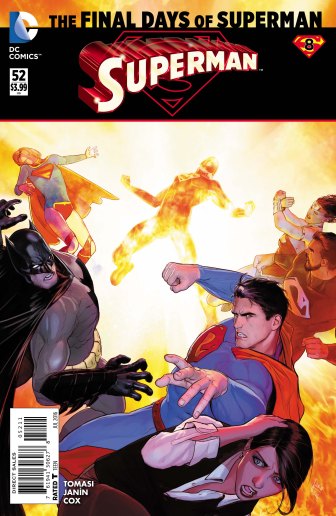
It is not a stretch to say that the five years of DC Comics’ New 52 relaunch and subsequent DCYou series of additions have not gone smoothly. I stand among those who had moderately dissatisfied reactions to the choices made in both the content superman52of stories and the creators that were brought on board. So, when DC announced their “lite” reboot Rebirth was very skeptical about what the end result would feel like.
Two storylines are explicitly brought up in Rebirth #1 as essential to read, The Last Days of Superman and The Darkseid War. We’ll discuss The Last Days here, but I have a separate review down the road for Darkseid because of how massive it is.

About a month ago, writer Tomasi kicked off The Last Days of Superman across many Superman-centric titles. The purpose of this storyline admittedly served a more cynical corporate purpose for the upcoming Rebirth. The current Superman would be killed off, while a previous incarnation of Superman would step in and take up the mantle. This Superman was the one introduced in 1986’s John Byrne-penned Man of Steel miniseries, who would go on to marry Lois Lane. Now the couple have a son, Jonathan, who is set to become the current Superboy.

For the first time since Grant Morrison’s run on the New 52 Action Comics, I found myself enjoying a story featuring this Superman. It’s no slight against the character but mainly against the creative teams that DC editorial chose to work on Superman. He always felt like an ever shifting blank, little to no consistency in his portrayal from title to title and story to story. That’s why I was so surprised at how deeply the death scene in Superman #52 affected me. I admit I was very choked up in those final panels as his allies and supporting cast surrounded the Man of Steel, and Wonder Woman’s final words sent me over that emotional crest.

I would agree that this move was not from a genuine love of DC history, but more of a brand damage control issue to bring readers back. Maybe it’s because I’ve reached a certain age of sentimentality but I am genuinely excited to see the Superman I consider the one from my generation of readership returning. But I admit I do feel that it may not be fair to new and younger readers that they are not allowed to have a Superman born out of an interpretation of our current times. If DC suddenly decided to change course in 1991 and trash the Byrne Superman in order to bring back the Mort Fleischer/Curt Swan version I wouldn’t have been too happy.

How permanent of a change this is remains to be seen. Even the old Superman admits he was killed once, replaced, only to return and take back his mantle. Comic books are colorful soap operas at their heart and if the New 52 Superman is to return, my hope is that a fresh and innovative creative team is put on the titles to help create this generation’s hero.


Continue reading “Comic Book Review – Superman #52 & DC Universe Rebirth #1”

Comics Review: Doom Patrol v5 #1-13


Doom Patrol v5 #1-13
Written by Keith Giffen
Art by Andy Clarke

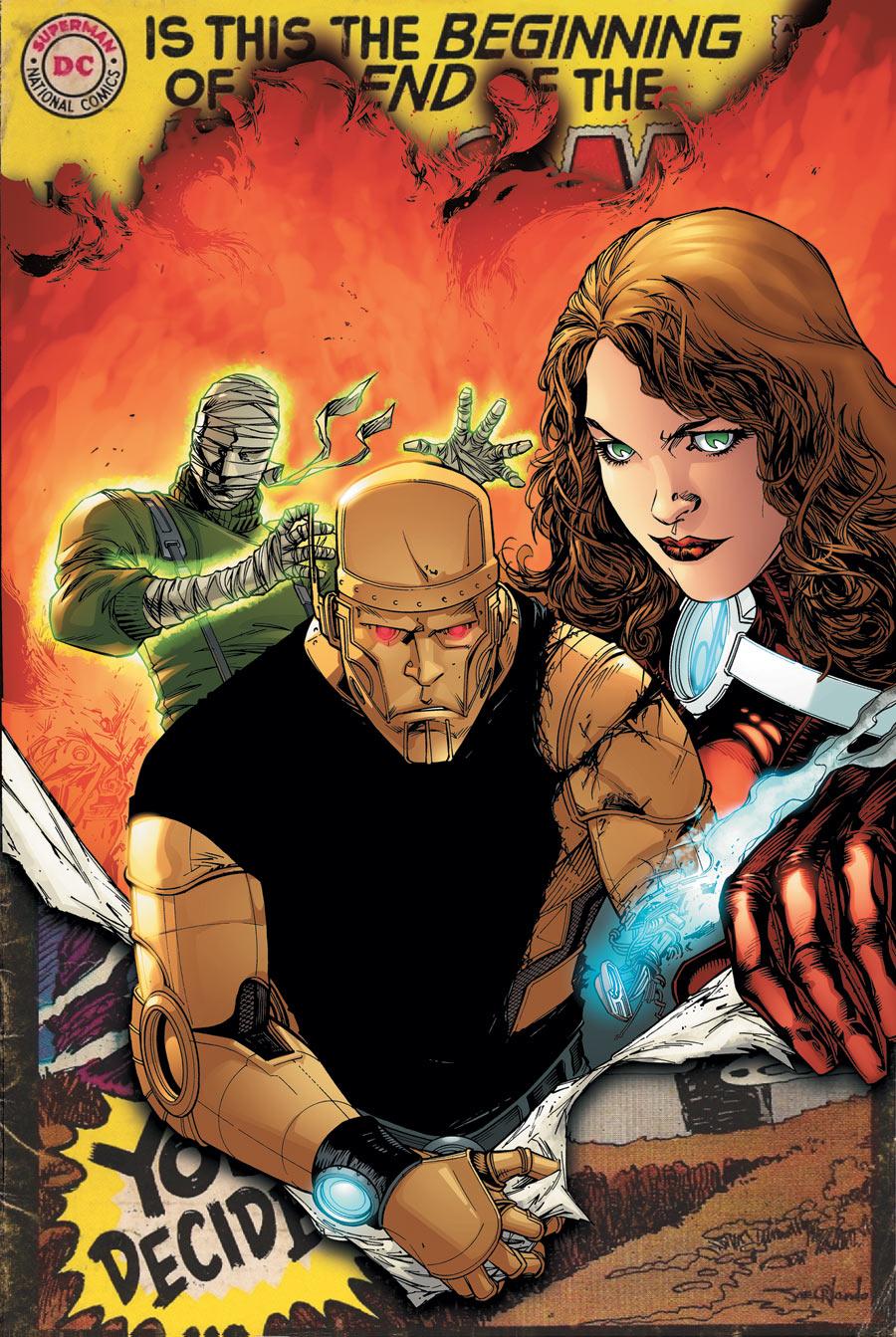
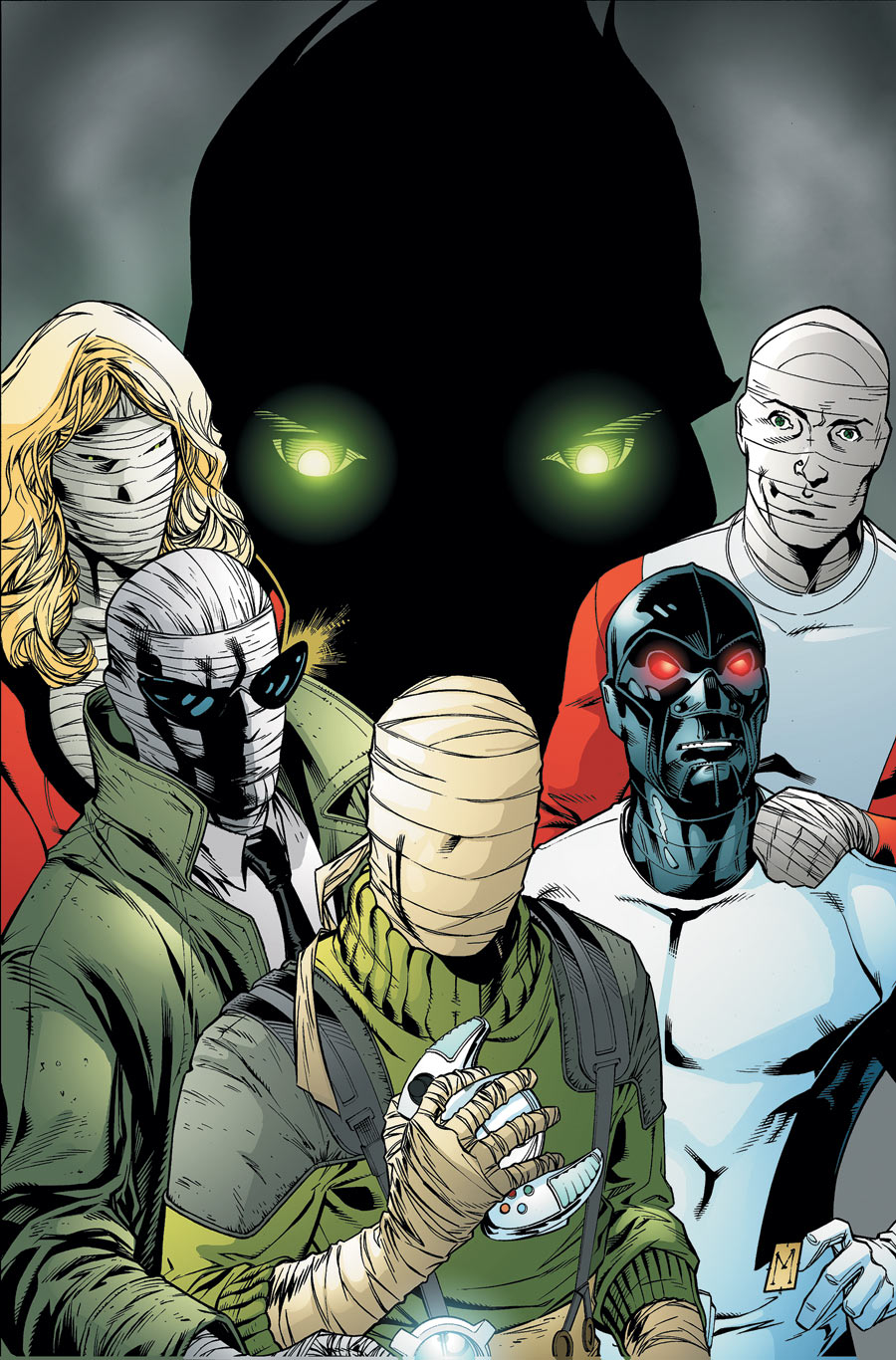
Almost simultaneously Marvel and DC introduced bizarre misfits teams in 1963. Marvel brought the world the X-Men, led by the wheelchair bound Professor X. DC Comics presented Doom Patrol, led by the wheelchair bound Chief. As you well know, only one of these two concepts skyrocketed into great success. That’s not to say Doom Patrol hasn’t been a perennial favorite in the decades that followed. Since the late 1980s, there have been four separate shots at resurrecting the Doom Patrol idea. The most successful was spearheaded by Grant Morrison who took over the second series and brought into the mature readers imprint Vertigo. He injected bits of dadaism and surreality into the series and created a critically acclaimed run. But it didn’t last for much longer after he left. Now Keith Giffen and Andy Clarke are tackling the characters with yet another new angle.

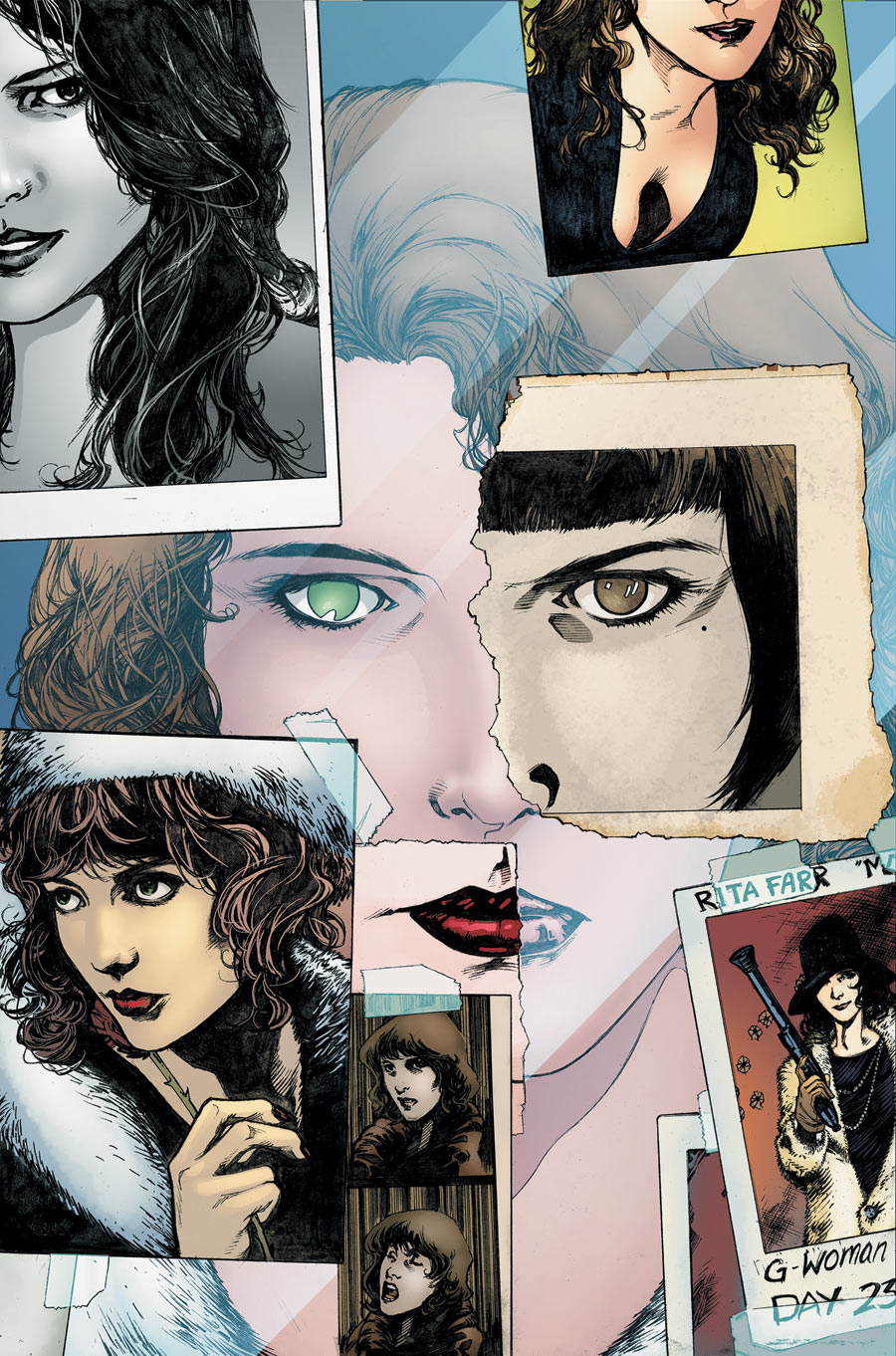
The premise of the Doom Patrol revolves around Niles Caulder aka The Chief. Caulder was a reclusive scientist who had bitterness towards the world. In the interest of his own scientific interests, with a side interest in helping the world, he gathered together three individuals transformed by freak accidents. Pilot Larry Trainor was blasted with strange radiation, forced to wear specially treated bandages to contain his radiation, and could projects hard light version of himself from his body. Rita Farr was a movie actress on the set of her latest picture when she accidentally bathed in mysterious waters and found she could shrink and grow at will. Finally, Cliff Steele was a race car driver fatally injured in an accident. Caulder witnessed it and helped transfer Cliff’s brain is a massive robot body. This trio were often the reluctant aides of Niles Caulder.

In the current series, the Doom Patrol have relocated to Oolong Island, a locale in the DC Universe most recently used as a haven for various mad scientist supervillains. The Island has been “legitimized” and Caulder brings his team in and uses the newly founded nation as his staging ground for illegal experimentation and missions. The trio of members underneath him are completely mistrustful of him and Rita is especially angered when she learns Caulder has brought her ex husband, Steve Dayton along. Dayton is a telepath who originally used his powers to convince Rita to marry him, they even adopted the Teen Titans’ Beast Boy as their son. Once Dayton’s ruse was revealed the marriage fell apart. Now Caulder uses Dayton to attempt to control Rita.

The plots have been pulled into joining the Blackest Night story running through the books as well as delving into dense Doom Patrol continuity. I can’t see someone who hasn’t read the last twenty years of Doom Patrol stories being able to understand this series. There’s a villain reveal in one of the more recently issues that will fall with a thud for anyone who didn’t read the Morrison run. Though Giffen attempts to provide recaps for new readers: there’s a single issue spotlight on Larry Trainor and another on Rita Farr, 32 pages is simply not enough to create an understanding of these vastly difficulty histories. Despite my love of the strangeness of these characters, I have a feeling we will being seeing the cancellation of the series soon. Its odd because DC attempted a complete reboot in 2004 and it failed miserably as well. I will defend the concept of these characters, and I believe they can work. I just have no idea what it would take for them to lead a successful ongoing series.

Comics 101: Booster Gold

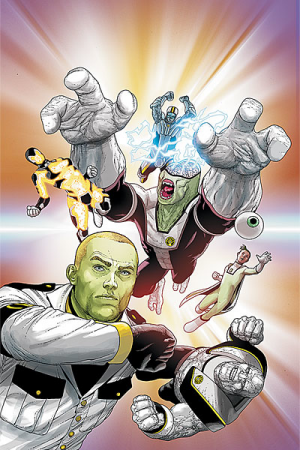
Superheroes are honorable and trustworthy figures of great upstanding morals, right? Not in Booster Gold’s case. The hero from the distant future has always been an opportunist, looking for a way to parlay his heroism into corporate endorsements. He came about in the mid-1980s, the perfect super capitalist for the Reagan era. In the two decades since, Booster has gone through many changes and volleyed back and forth between being a humorous or serious character. His partnership with Blue Beetle is legendary, and his ties to the history of the DC Universe are epic. But in the end, he’s just a guy looking to make a buck.

Booster’s story starts in Gotham City of the 25th Century. Michael Jon Carter grew up without a father, his was a drunk who left when he was a child. The pressure to provide for him family started early and Michael eventually gets into Gotham University on a football scholarship, with dreams of going pro. At this point, Papa Carter shows up and convinces Michael to throw his games so his father can win big on bets. Michael tentatively agrees and gets caught, thrown out of the university and forced to get a job as a night watchmen at the Metropolis Space Museum. After getting a good look at all the devices on display, Michael realizes he could take them, use the Time Bubble that is kept in the museum and start a lucrative career in the the past. Employing a security robot named Skeets, Michael jumps back to the late 20th century where he debuts as the superhero Goldstar. When he gains the accolades of President Ronald Reagan, he receives a name change due to the president’s growing senility. Michael’s nickname as a football player was “Booster”, and the president confusingly introduces him as Booster Gold.

During Booster’s early years, he teams with his little sister Michelle Carter who takes his original name “Goldstar” as her own. Booster amasses a large quantity of wealth through his fame, but suffers two tragedies: first, Michelle is killed in battle and second, the CEO of Booster Gold International embezzles all the funds leaving the hero broken and on the streets. His luck changes when businessman Maxwell Lord approaches Booster to join a new incarnation of the Justice League. This allows him to fight alongside such legends as Batman, Martian Manhunter, and Black Canary as well as beginning his long-running friendship with Blue Beetle. Booster and Beetle frequently steal Max’s money to invest in get rich quick schemes, like building Club JLI on the living island of Kooey Kooey Kooey. Booster leaves the Justice League at one point to form the corporate team The Conglomerate, but quickly finds his way back to the JLI. Another dark period began for Booster with the arrival of the alien Doomsday on earth. As the behemoth trudged toward Metropolis, the Justice League tried to stop him. Booster’s futuristic suit, the source of his power was damaged beyond repair. Blue Beetle, a tech whiz ala Tony Stark, builds a bulkier armor for Booster to use.

For a short time, Booster joins an offshoot of the Justice League led by Captain Atom. He goes back to being a solo hero and is able to get a replica of his original costume made for him. The current period of Booster’s life kicked off with the brutal murder of his best friend, Blue Beetle. The murder was the work of their former boss Max Lord, and Booster set off to learn what was going on. He found that Max was working to eliminate superhumans from the Earth, and used normal humans unwittingly fused with a nano-virus. When activated, these humans became OMACs (Observational Metahuman Activity Constructs). A global battle followed, that pitted Earth’s heroes against the OMACs and the giant satellite controlling them, Brother Eye. Booster teams with Batman and the new teenaged Blue Beetle to take down the satellite and they succeed. In the aftermath of this battle, Superman, Wonder Woman, and Batman all take a leave of absence causing Booster to attempt to fill the void of Superman’s absence in Metropolis.

Booster had always relied on Skeets historical database to give him the edge against the enemies, but suddenly Skeets is reporting the wrong information. He also receives competition when the mysterious new superhero Supernova appears in Metropolis and quickly becomes beloved. Looking for answers, Booster travels to the desert bunker of DC’s chief time traveler, Rip Hunter. There he finds a photo of himself circled with the words “All his fault” written next to it. While Booster thinks it is about him, it is revealed Rip has discovered that Skeets has been compromised. The robot sidekick turns on Booster, trapping him in a time loop and beginning a hunt for Supernova and Rip Hunter. When he finally finds Supernova, the enigmatic unmasks himself as…Booster Gold?! Booster escaped the time loop with help from Rip, then traveled back a few weeks to debut as Supernova. It turns out Skeets is actually carrying the minute alien villain Mr. Mind, who has evolved into a new more dangerous form. The monstrous new Mr. Mind chases Booster and Rip through time, accidentally birthing the multi-verse (parallel universes). Skeets is restored, Mr. Mind is defeated, and Booster and Rip begin a partnership.

Most recently, Maxwell Lord has returned from the dead and manipulated Booster and his former Justice League teammates into reuniting. Max has shown a less villainous side, telling Booster he considers him his friend and that all of this has a purpose. It remains to be seen whether Max is playing his former employee or legitimately trying to help him.

Between the Panels: REBELS v2


REBELS v2 #1-18
Written by Tony Bedard
Art by Andy Clarke and Claude St. Aubin

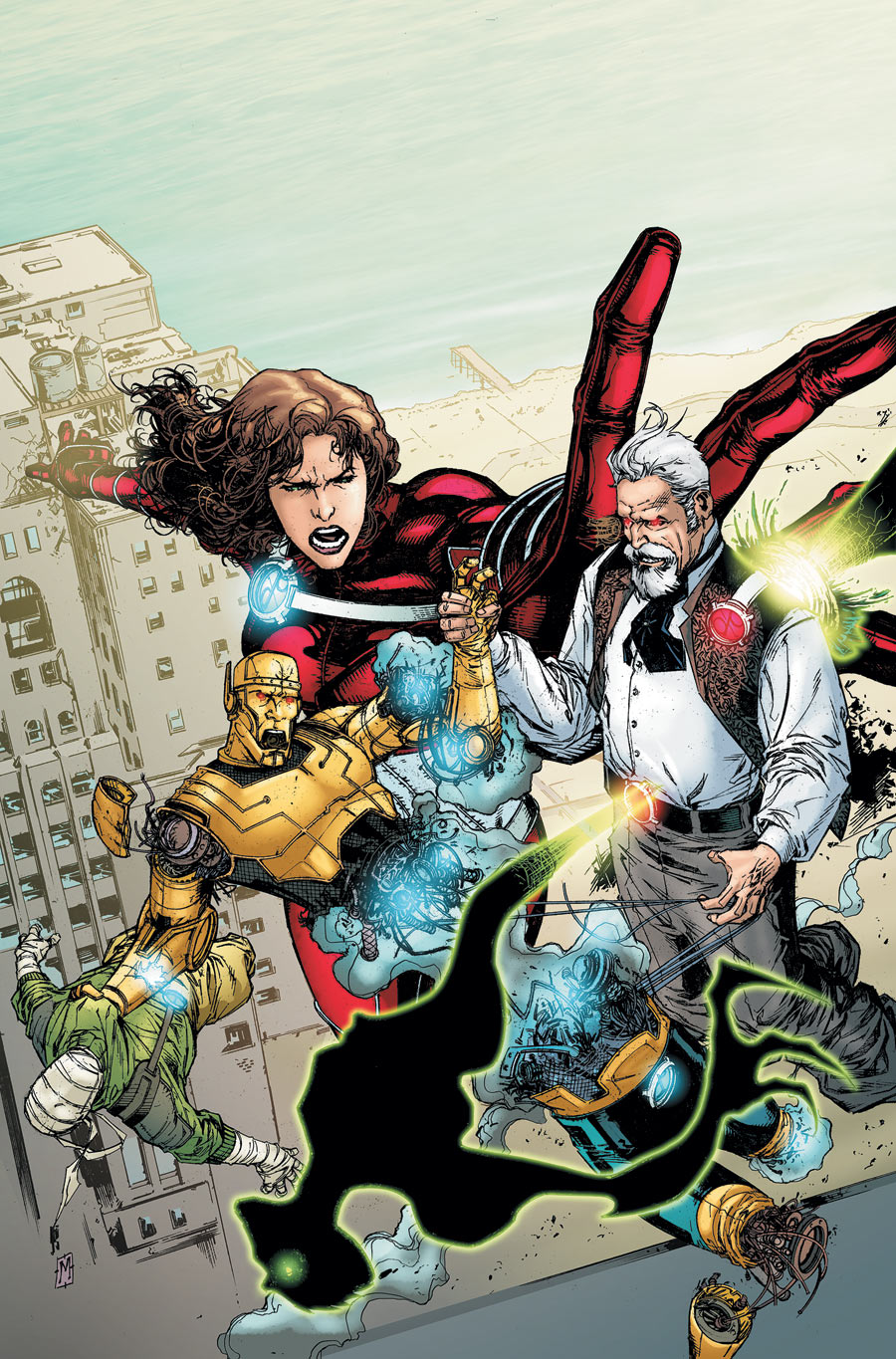
DC Comics has been building a rich science fiction mythos since the 1950s with characters like Captain Comet and Adam Strange. In the 1960s, we were given the futuristic teen team the Legion of Super-Heroes. In the 1980s, elements from the present day DC Universe and alien races introduced in Legion stories came together in an event called Invasion! In this story we were introduced to Vril Dox and a group of aliens all imprisoned by beings bent on invading the Earth. By the end, Dox and company escaped and would go on to form LEGION (Licensed Extra-Governmental Interstellar Operatives Network). These galactic peace-keepers would eventually be usurped by Dox’s rapidly intelligent newborn, Lyrl and form the REBELS (Revolutionary Elite Brigade to Eradicate L.E.G.I.O.N. Supremacy). The entire series met with cancellation in the mid-90s, though the characters would continue to pop up from time to time. Recently, the concept was revived and it is hitting on all cylinders, making sure to avoid the mistakes of its predecessors.

The new series opens with Vril Dox being chased to Earth by his soldiers that used to work for him in LEGION. It’s quickly revealed that the majority of planets under LEGION’s protection have been taken over by the Star Conqueror, a parasitic species of starfish parasites that attach themselves to humanoid hosts and communicate collectively. Dox goes about recruiting aliens who have escaped the infestation, including his now adolescent son, Lyrl. The group works to defeat the Star Conqueror through schemes developed by Dox. Along the way he recruits Captain Comet, Adam Strange, Starfire, and many obscure alien species. The entire first year of the series is taken up by the battle with the Star Conqueror and, while that seems like a long time to stretch a story out it is very entertaining.

Vril Dox is one of those anti-heroic characters that is so much fun to read. He’s the son of Superman villain Brainiac, but instead of going for galaxy conquering through mechanical beasties like his pop, Dox has opted for using diplomacy and backroom deals to conquer. He does offer peace for the systems that get LEGION protection, but there always seems to be an interesting catch. More often than not, his schemes involve putting his closest comrades in the path of destruction without them being aware til the moment has passed. He also possess zero sentimentality, as exhibited in the way he doesn’t hesitate to turn on his equally nefarious son Lyrl.

Because the series is part of the shared DC Universe, its inevitable that big events will crossover. During Blackest Night, where black rings were resurrecting the dead, Dox encountered the deceased mother of his child, Stealth. The issue plays with some of the ideas Geoff Johns has developed with various colors of the Universal Spectrum, and Dox ends up in possession of a yellow Sinestro Corps ring for a short time. Another bit of fallout from the Green Lantern comics is that the Vega System, an area of space that was allowed to be autonomous for millenia is now opened up, and Dox quickly swoops in and gets involved in an arranged marriage with matriarch of Tamaran, Komand’r to bring the planet under the umbrella of LEGION. The most recent storyline finds Dox’s father, Brainiac being placed in a prison on their home planet Colu, but of course escaping and this time going after his offspring.

If you are looking for a fun space faring series that focuses on one of the smartest villains in DC this would be your thing. In addition to Dox, there was some interesting work done with Captain Comet recently. He was a superhero in the 1950s, who left earth in the early 60s, and returns to visit the graves of his family. There’s some interesting things being said about the cost of immortality when those around you aren’t, and it makes me hopeful to see the development of that character in the series as well.

Back Issue Bin: Alan Moore’s Swamp Thing


Swamp Thing #20-53, 60-61, 63-64
Written by Alan Moore
Art by Stephen Bissette and Rick Veitch

Before Watchmen, Alan Moore was simply known as the guy who saved Swamp Thing from cancellation. The series was born out one story in the horror anthology House of Secrets in the 1970s. The unnamed Swamp Monster proved so popular that creator Len Wein recast the story in the present day and gave the character an origin. He was Dr. Alec Holland, a scientists working in the bayous of Lousiana on a “bio-restorative” formula. Its end purpose would be to turn arid environments into lush forests. His lab is attacked and a fire is started, engulfing Holland. The poor man runs into the waters of the swamp where he dies from the burns, blood loss, and trauma. However, he was coated with the formula during the attack and his essences mixes with the swamps. He is reborn as a plant humanoid, with the memories of Alec Holland. All in all, it wasn’t too spectacular of a series and sales reflected it. That is until the British comics writer Alan Moore said he would taking over writing the series. He was given a handful of issues to turn sales around and that’s just what he did.

Moore’s first issue (Saga of Swamp Thing #21) is very reader inaccesible, but he had tie up the plot point left by the previous writer and he did so fairly well in one issue, ending with the death of the main character. Odd way to start a run on a series. The next issue is where he really kicks into gear. In this single issue, Moore completely resets the status quo of the series, with Swamp Thing learning he isn’t Alec Holland, but merely a mass of vegetation given sentience by the dying Holland’s consciousness and the formula. Now that Swamp Thing realizes he isn’t human, his behavior becomes increasingly alien. The series itself switches from a standard superhero comic into some mish mash of that and a horror series. Artist Steve Bissette is incredibly effective with his macabre, otherworldly illustrations. The enemies the creature fights from this point are not one who can be defeated through brute force alone, and stories take on a very philosophical bent.

One of the standout issues deals with Swamp Thing’s long running relationship with Abby Cable. Even upon discovering he is not the man she thought he was, Abby refuses to abandon him, seeing goodness in the human nature of his soul. They have sex which is one of the strangest love scenes I guarantee you have ever seen. It involves Swamp Thing growing strange fruit on himself, and Abby eating some. The fruit secretes hallucinogens and cause Abby’s consciousness to leave her body temporarily and merge with the plant life. Its a very clear example of how Moore writes comics in a more intelligent and mature way than most writers. He acknowledges the superhero tropes but he also doesn’t feel constrained by them. On the other hand, he doesn’t see spandex outfits and extraordinary powers as “cheesy” or “lame”. He is a great appreciator of the depth and breadth of comic books.

While Saga of Swamp Thing was on the verge of cancellation around issue 30, it went on to run until issue 171, a feat that would have been impossible without Alan Moore’s writing. Moore didn’t change or reinvent comics, he simply wrote them better than they had ever been written before. All the melodrama and soap opera are there, they’re just done in a skilled and crafty way. I particularly remember the inclusion of Golden Age villain Solomon Grundy (familiar if you grew up watching Super Friends). Despite being created forty years apart, Swamp Thing and Grundy had suspiciously similar origins. Moore, being a comic book fan, knew this and made it part of the story. It is such a smart little note of continuity for him to have picked up on and its something that continues to resonate with the Grundy character today. If you are looking for an amazingly literary comic you’ll find no better than Moore’s work on this series.

Mature Reading: Fables


Fables #1-96
Written by Bill Willingham
Art by Mark Buckingham, Lan Medina, Steve Leialoha, and Craig Hamilton

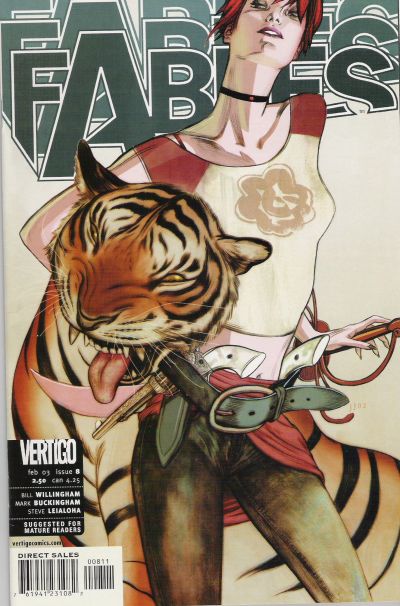
Once upon a time, there was a land where all the fairy tales you grew up reading were real. All your favorite characters lived side by side and everything was happy. That is until The Adversary appeared, a shadowy figure who gathered the aberrant armies of these realms and effectively took over. Those storybook characters afraid of what he would do now that he was in power migrated to the world of the Mundies, or our world. On a couple blocks in New York City, cloaked with expert magicks, is Fabletown, the home of the exiles. Here they plot a way to take back their homeland while dealing with discovery at the hands of the Mundies and their own evil fable brethren. This is the setting that kicks off Bill Willingham’s magnum opus (still being published today).

While the series is an ensemble piece, the main characters would be Snow White and Bigby Wolf (Big Bad Wolf). Snow is Deputy Mayor of Fabletown, the mayor is Old King Cole. Snow is in charge of settling disputes between the Fables and dealing with security issues in the neighborhood. The first arc of the series finds Snow believing her sister, Rose Red to have been murdered. She enlists the help of Bigby Wolf, who has taken a human form and is the acting sheriff of Fabletown. They go after suspects Jack Horner (Jack of Jack and the Beanstalk, Jack Frost, Jack Be Nimble) and the murderous Bluebeard. Its revealed in the end that Rose Red has been faking the whole thing, which drives a wedge between she and Snow.

Also amongst the cast are Boy Blue; Snow’s personal assistant, Flycatcher; the janitor in the mayor’s office and the former Frog Prince, Pinocchio; permanently stuck as a little boy due to the Blue Fairy’s spell, and Cinderella; a shoe store owner by day and super spy by night. Snow will come into conflict with her, and many of the other fable princesses’ ex-husband Prince Charming. In upstate New York, there is a farm dedicated to the talking animal fables, the ones who couldn’t blend in in the city. The Farm is the site of an animal revolution in the second arc, with Goldilocks leading them in revolt against Snow and her forces.

The first 75 issues of the series are focused around telling the story of how the Fables came to be in the Mundie world and how they fight to return to the homeland. Willingham showcases a deep breadth of knowledge by incorporating fairy tale characters who are probably unfamiliar to most but are actually found in old folktales and amongst the Brothers Grimm collections. I’ve always enjoyed the darker aspects of all those stories and characters, and that’s what we definitely get in this series. Fables has proven so popular its garnered an ongoing spin-off (Jack of Fables) and two mini-series (Cinderella, The Literals). The Jack of Fables series further expanded the Fables universe by bringing in characters like Humpty Dumpty, The Oz and Wonderland characters, as well as introducing a family of beings who can rewrite history. There’s even the Genres, the embodiment of genres of writing. If you are looking for a clever, funny, and many times exciting series written for mature audiences, I think Fables will definitely satisfy you.