Top 10 Documentaries of 2011 as of June

Thanks to Netflix I have had much more access to documentaries and have enjoyed enough that I didn’t want any to be buried by the narrative features. So starting this year, I will do a separate top 10 list for these amazing docs. Tomorrow, I’ll look at my favorite tv from the first half of the year.

Continue reading “Top 10 Documentaries of 2011 as of June”

Film Review – Catfish


Catfish (2010, dir. Henry Joost, Ariel Schulman)

Its strangely appropriate that at the same The Social Network is playing in theaters, this documentary about what Facebook hath wrought is making the rounds as well. It can be looked at a sequel in some ways: The Social Network are the origins and this is the results of its existence. Since the film premiered at Sundance earlier this year it has garnered mixed reviews. Some critics have seen it as a perfect slice of life in a society where identity has become malleable, while others question the very reality of the documentary, charging it as a meta piece that forces the audience to question if they are being fooled. Catfish was preceded by a mountain of hype and I approached the film with a tempered mind, thinking I would encounter something not quite as good as the trailer claimed.

Nev Schulman is a professional photographer who struck up a relationship with a young girl in Michigan who saw his work in a newspaper and made an oil paint reproduction of it. Through Facebook they converse, he meets her mother, and eventually her 19 year old sister, Megan. Nev and Megan hit it off and find themselves chatting online or over the phone frequently. As time goes on, Nev and his friends, who are documenting the experience, begin to question why Nev has never been able to talk to Abby. This causes a domino effect of other lies being revealed, and leads to the group driving to Michigan to surprise the family and learn the truth.

Whether the film is real or not, it is still an intriguing examination into what the anonymity of the Internet allows. I think the filmmakers do a good job in not passing judgment on anyone who is lying in the film, because they understand that all of us have exaggerated an aspect of ourselves in those moments of conversation where we feel that we can get away with it. The deceit in the film is not one of spite or cruelty, rather its someone seeking to create an universe to escape into. Being an artist, particularly in the small town the family lives in has to be a difficult and alienating situation. So for one of them, populating a Facebook microcosm with characters of your own invention seems like a freeing opportunity.

DocuMondays – This Filthy World

This Filthy World (2008, dir.Jeff Garlin)

Unlike the other documentaries I have looked at, where you have multiple interviewees and tightly edited footage to form a narrative, this is simply one man on stage in front of a crowd, talking to them. It’s basically a concert film, but while most of those feature either a music performer or comedian this is a film director. I guess the closest equivalent  of this would be the Evening With Kevin Smith DVDs. Both are the result of directors whose personalities are as large as the reputation of their films. John Waters is definitely not a filmmaker who appeals to everyone, something he readily admits, but even if you don’t enjoy his films I think it would be hard not to enjoy this one-man show about his love of all things strange.

Waters was raised in and around Baltimore, Maryland, which is to him like New York is to Woody Allen. Baltimore, named the Ugliest City in America at the time which Waters proudly cites, provided him with a front row seat to the grotesque. Rather than being repulsed, Waters was drawn to the misshapen and demented natives and made them movie stars. His love of film also began in Baltimore when, as a child, he became enamored with the gimmickry of William Castle (House on Haunted Hill, House of Wax) and Kroger Babb. Babb was a filmmaker who had little skill with filmmaking, and more with being a salesman. He produced films like Mom and Dad, which the Catholic Church gave a Condemned rating, and features actual birth footage, one of the few ways of showing female nudity in those days. Babb would have an obvious influence in Waters later work, and Castle got a very gimmicky homage with the Odorama cards handed out at showings of Polyester.

My favorite piece of the performance was the second half, where Water discusses how he even he has lines he doesn’t think people should cross. This allows him to go into very poetic descriptions of teabagging, helicoptering, and other outer edges sexual practices that he gets pleasure from horrifying the audience with, but also seems to honestly think are too far. He addresses his child molestery appearance, which draws looks when he goes to see animated films at the theater. He talks about his love of attending trials and the little club of friends who try to one up each other about which they have attended (Waters got into one of 10 public seats at Watergate for a day, an elderly woman beat him, she was Nuremburg, the Super Bowl of courtroom trials). There’s a wonderful sequence where he talks about the influence The Bad Seed has on him, creating a desire to be a secretly evil child. Even now, he says he loves to encourage children to get into trouble, mentioning when he was attending a parade recently and tried to convince a little girl to help him go knock people’s bicycles over.

Like I said, Waters isn’t everyone’s cup of tea, nor should he be. If he was, then the entire agenda of his work would be subverted. He talks about how his career is now lauded in elite high society circles in New York and that he thinks its wrong. Even if you don’t care for his films, I don’t think you could watch this and not find some anecdote or piece of wry wisdom memorable. If you haven’t seen his work some segments might be confusing, but nevertheless this is an excellent piece of insight into one of the ground breaking directors in America.

DocuMondays – Prodigal Sons


Prodigal Sons (2008, dir. Kimberly Reed)

It is impossible to watch this film and not be affected in someway. It is one of the most inside looks at a family and their struggles, particularly with mental illness. I can’t say I have ever seen a documentary that captured such intensely intimate and violent moments on film. While the details of this particular family may seem drastically different from your own, when looking at the core nature of the relationships it is like any other: there is a lot of emotional pain and little done to resolve it for years. It’s one of those documentaries that is bound to ignite arguments about what is incited by the director and what is the natural progression of these people in this situation.

Kimberly used to be Paul, the high school quarterback and basketball center. After leaving Helena, Montana as a teen, she moved to San Francisco and embraced her life as a woman. Meanwhile, older adopted brother Marc was in a car accident that left him permanently brain damaged. Marc has trouble building new memories and for him Kim is Paul. In addition, youngest brother Todd he came out of the closet and moved away to California. The center of the film is the three brothers issues of identity as it relates to their relationships with each other. Marc is having trouble with medication that is used to balance him and lashes out repeatedly in violent ways that chill you to the bone. This is told through the filter of Kim, who is angry that Marc still thinks of her as Paul, and its unsure if this is a choice Paul is making or if he is physically incapable of permanently processing this.

The documentary is sold in its trailer as being about the discovery of Marc’s biological family. It turns out he was the son of Rebecca Welles, daughter of director Orson. Kim follows with her camera as Marc travels to Croatia and meets Welles’ lover Oda Kodar. Kim and Marc seem to bond over this trip and it appears that he has control over his temper. The next time they meet up though, Marc flips out about a broken gas gauge on a truck and physically assaults Kim, all of it recorded on camera. Things continue downhill at the family Christmas when Marc brutally tackles Todd from behind, police are called, and Marc grabs a knife. He ends up in a mental institution. Tragically, Marc died as the result of a seizure in May of 2010.

The film has to re-find its footing a few times as it starts out as being about Kim returning to Helena for the first time as a woman. It quickly becomes about she and Marc’s relationship, in particular his jealousy at never being the “good one”. Kim was the straight A student and star athlete. Marc was held back in preschool and drank and partied to excess. Now that Marc has suffered this injury he has faded from being able to impress, now he appears to use his disability to make every family get together about himself. But how much does Kim incite and how much is Marc manipulating? The film never completely answers this, but it will stay in your mind for a long time.

Criterion Fridays – Close-Up


Close-Up (1990, dir. Abbas Kiraostami)

In America, its not uncommon to see a film “based on a true story”. The audience has come to expect that while names and events are real, screenwriters have “punched up” the script with dramatic tropes and formulas designed to add drama to what they see as dull, uninteresting reality. On the opposite end of things, you have documentaries like Capturing the Friedmans where the reality of the situation is so horrific and dramatic we have to wonder how much is exaggerated and manipulated by the director. In Abbas Kiraostami’s film Close-Up he takes an approach to the “based on a real story” movie that is some sort of amalgamation of narrative film and documentary. This is one of few times I have watched a film unable to figure out what was reality and was staged.

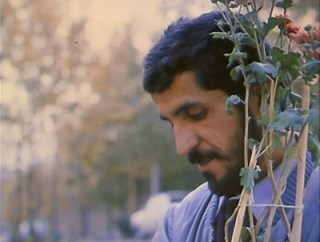
The film revolves around the case of Ali Sabzian, a man posing as Iranian film director Mohsen Makhmalbaf, and receiving the good will and shelter of the a family in Tehran as a result. The films opens with an obviously staged scene, the reporter, who first published the story that brought it Kiraostami’s attention, is traveling with police via taxi to the family’s home to witness the arrest of Sabzian. From there the film becomes a patchwork of the actual video footage of Sabzian’s trial and re-enactments of the events. The re-enactments actually feature the real people involved, including Sabzian. The reason this could happen is, that Sabzian never stole from the family he stayed with and the crime was non-violent. By the end of the film, we learn what Sabzian’s motivation was and see the family show great sympathy for him in court.

While most films about real crimes attempt to illuminate and make the mystery something that can be understood, Close-Up works to confuse things and make Sabzian a harder and harder character to pin down. What it becomes is a meditation on why someone not involved in the Arts would feel such a strong connection to someone who made their living off of cinema. Sabzian lives with his mother in the wake of divorce. His wife took one child, his mother raises the other. He works in a dead end job as a printer, and Sabzian claims that in director Makhmalbaf’s work he finds his own suffering put into words he cannot explain. Sabzian is an incredibly sympathetic figure, but even he confuses us because he talks about how he feels drawn to be an actor, that the idea of losing himself in a character is appealing. So, is the Sabzian speaking court truly his honest self, or another persona he has taken on?

This was not going to be the film Kiraostami was supposed to make at the time. However, after reading about the story in the paper he became obsessed with it and couldn’t sleep. So he contacted the parties involved and began making the film. As much as he wants to capture reality on film, he unabashedly manipulates certain scenes. When Sabzian is released from jail at the end of the film, he meets the real Makhmalbaf there are “audio difficulties” with the microphone equipment. Kiraostami has admitted freely after the fact that the audio problems was a manufacturing of him out of respect for the conversation between the two men, but instead of simply saying he was doing this, he made it another layer in the reality and fiction of the film. This is definitely a film that challenges the perceptions of the audience and will make them constantly question the reality or artifice of each and every scene.

DocuMondays – Art and Copy


Art and Copy (2009, dir. Doug Pray)

It’s everywhere. You experience it almost every hour of the day, and it is usually while you are in a passive state. It persists and nags at your brain without you ever realizing it, but when you see it done exceptionally well you sit up and make note. Advertising is a modern psychological virus. The majority of it is terrible, which makes sense when you think about how much of it there is. As the film states, we experience 5,000 advertisements a day in multiple mediums. When it is done well, we slip out of passivity, sit up, and make note. What’s interesting is the best advertising either sets an atmosphere without every directly referencing the product, or is completely direct about the product and the emotion that goes along with it. This documentary interviews the pioneers of modern advertising from the mid-1960s to the 1980s.

The documentary is structured in a very clean way. Each section of the film is divided with a scene without dialogue and statistics on advertising placed over scenes of urban meditation. The first section of the film talks about the environment the featured advertisers came into. We’ve all seen ads from the 1950s which have an air of a false stereotypical salesman’s pitch. With the young turks that took over in the 1960s, they began to create provocative ads that didn’t necessarily give the viewer information on the product, but evoked curiosity and emotion in them. The Volkswagen Beetle ads of the late 60s were a major breakthrough in American advertising, where the quirkiness of the product was acknowledged. Very straightforward taglines were used instead of just making the logo swallow up the space.

It was the firm Doyle Dane Bernach that brought us the Beetle ads, and the shockingly harsh (for its time) American Tourister luggage ad, as well as the hyper arty Braniff airline campaign and finally the I (Heart) NY image. Mary Wells, the Peggy of her time, was an incredibly inventive and creative copy editor who took her background in theatrics and applied it to advertising. The sense of drama in commercials is something that sticks with us today (think Budweiser frogs, Taster’s Choice soap opera). At the time these ideas were presented, the good old boy network in charge were confounded and even the clients were often times frightened at the possibility of risking their brand on such ideas.

The documentary focuses a lot on the divide between the business side and the creative side, particularly how in the old paradigm, the accounts people were over creative. In the 1960s, this was subverted with the creative types either becoming more aggressive or striking out on their own. The East Coast was also the mecca of advertising so no one was noticing when the West Coast firms began rolling out revolutionary campaigns. It was one of these firms that got the Apple Computers contract and brought up the “1984” Superbowl ad, introducing the Mac to us through a Ridley Scott directed ad. You never see the Mac once. This firm still holds the Apple account and came up with “Think Different” in the 1990s and the current silhouette iPod campaign.

The final segment of the film deals with the ethical responsibilities of the advertiser, in specifics how it ties to politics. They feature the Morning in America Regan ads from 1984 that are unlike anything out today, and epitomize the way an incumbent can run and win again. Some of the interviewees agree that the ads works, but from an ethical perspective they find it misleading because of the facts it ignored. Hal Riney, the man behind the Morning in America ad confesses that his habit of going purely emotional in his ads goes back to a childhood where affection was held back from him. In the majority of his work images of the Rockwell America is evoked in a cleverly deceptive way. If you are at all interested in media and the way humanity’s decisions can be shifted by the creative this would be a very insightful film to digest.

DocuMondays – Dogtown & The Z-Boys


Dogtown & The Z-Boys (2001, dir. Stacy Peralta)
Narrated by Sean Penn

As anyone who knows me well can tell you, I am by no means a sports enthusiast. However, even I know the names Stacy Peralta, Tony Alva, and Jay Adams. I can’t say I knew a lot about them before I watched this documentary, but I did know they were big names in the world of skateboarding. In the early 1990s, skate culture was a big deal. I was about 9 or 10 years old and in all of child-focused media you had skateboard bound characters; from Nintendo’s Skate or Die to the skateboard bound Michelangelo in TMNT. There was an entire aesthetic movement backing it as well: Chicano graffiti inspired neon clothing is what I remember most vividly. All of that started back in 1971 in South Venice Beach, California.

The story of the Zephyr Skate Team is the story of the class divide in America. The young men and women who skated on Zephyr were children of broken homes who lived in the “wrong side of the tracks” part of Venice Beach. The shoreline there was not one tourists ever visited and its most prominent landmark was the decrepit hulking skeleton of an abandoned theme park. The figures in the film began by surfing amongst the treacherous collapsing roller coasters and pier, and were forced to seek recreation elsewhere as the waves only came in at a very specific time of the day. As a lark they took up skateboarding, which had faded away as a fad in the mid-60s. The invention of polyurethane wheels, replacing the easily chipped and locking up clay ones, allowed the boards to grip the pavement and provide a smoother ride. Thus, many surfing techniques were brought in by the skaters. Basically, the modern skateboarding aesthetic is a direct result of the play these young people engaged in day after day.

The economic conditions of the key figures seemed to be one the largest driving forces. Many of the young men who skated on Zephyr came from homes where the fathers had left or, poor economic conditions resulted in, aggressive and abusive fathers. They found the Jeff Ho Surfboard Shop as a second home, where proprietors Jeff Ho, Skip Engblom, and Craig Stecyk encouraged the skaters to develop their own individual styles of the riding the boards. South Venice was a community envious of the North Venice mansions, and as fate would have it, a heavy drought struck California during the early 1970s. This left a lot of dried out pools and some of the more inventive skaters began to see the similarities between the flourishes and curves of the cement pools and the waves they were used to riding. And so, vertical skateboarding was born, skaters attempting to leave but one wheel touching the very rim of the bowl they rode in.

Much like a VH1 Behind the Music episode, we’re given a traditional Rise and Fall story, but what makes it so remarkable is that the key players were all teenagers for both the Rise and Fall portions. Stacy Peralta came out as the most successful, going on to champion and mentor skaters like Tony Hawk. Tony Alva struck out as a very successful entrepreneur, becoming the first skater to break away from the companies and start his own. The saddest of the lot was Jay Adams, whom all the interviewees agree could have been the best in history, but he got caught up in a drug lifestyle that included crystal meth that sent him to some rather difficult places. The film does an excellent job of structuring its narrative, and does everything I want from a good documentary: It causes me to have interest in a subject I have thought little about, tells me an interesting story about very human people, and leaves me wanting to know more.

DocuMondays – Objectified


Objectified (2009, dir. Gary Hustwitt)

Take the toothpick. There is a particular design, Japanese in origin, where the toothpick had a designed head, almost like ridges. This head can be broken off as a signal that the toothpick is in use, always a good thing. It can also be used as a rest for the toothpick so that the point doesn’t touch any surfaces, like so. I doubt many of us view toothpicks with much contemplation on a daily basis, yet we use them fairly frequently. Objectified is a documentary looking at all those aspects of an object we spend zero time thinking about, but the interviewees has devoted their lives to examining.

Director Hustwitt, responsible for the similar and interesting documentary Helvetica, explores a very modernist approach to design. Apple is mentioned many times as a company on the cutting edge of premier, sleek design. One on the interviewees is Jonathan Ive, the man behind the iMac in all its iterations and talks about the focus on monitor tube of the first iMac to the now self-contained flat screen monitor of the current. We see the raw aluminum slate that is processed to create the frame of the MacBook laptop and Ive emphasizes all the thought that went into these particular materials in this particular shape, and how the average user will never think or realize this.

While there is much focus on industrial design, many of the commentators talk about the need to create new sustainable objects while simultaneously learning to find appreciation in the objects we already have. One of the interesting ideas in relation to sustainability is presented by Karim Rashid, a rather flamboyment and dynamic designer. Rashid posits that to solve the problem of landfills brimming over with garbage we design objects that are disposable from the start, and he includes high end electronics like cell phones and laptops. I have to say its intriguing to think of a cell phone with a high quality cardboard shell that could easily be tossed out and its sim chip placed in a new shell for cheap. Or even a laptop where you boot from a thumb drive and the computer itself is merely a way to interact with the data on that drive and access the internet.

Critic Rob Walker was the most enjoyable to listen to, as he presented the side of realizing that the objects one has already accrued contain more emotional value to the user than the Now object which is new and we are told we must have. He presents the scenario where your house is on fire and the things you grab as you run out are not those things that scored particularly well in a review you read somewhere, rather they are things that inform you about yourself in someway. Walker also discusses the corporate marketing around objects that he believes causes the quality of materials to be downgraded. He refers to this idea of desiring new as the New Now, which is designed to make the previous New Now become Then. All in all, a lot of interesting ideas presented by people who are experts in every sense of the word about design.

DocuMondays – loudQUIETloud


loudQUIETloud (2006, dir. Steven Cantor, Matthew Galkin)
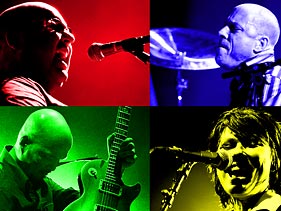
Featuring The Pixies (Charles Thompson, Kim Deal, David Lovering, Joey Santiago)

Kelly Deal, sister of Pixies’ bassist Kim Deal, sums up the nature of the band in very simple terms. She tells her sister, “You are four of the worst communicators I have ever seen!” And she is most definitely correct in this summation of the group. Throughout their 2004 Pixies Sell Out tour, the bandmates communicate with each other the barest minimum, retreating into their individual solo projects when not on stage in front of fans. What the documentary confirms is that there is no new Pixies material coming any time soon, and that the band simply got back together because, like most of us, they have bills to pay.

The Pixies were formed in the late 80s and fell apart in the early 90s, particularly from in-fighting between Charles Thompson and Kim Deal. As the film opens, Deal has recently come off a rehab stint for alcoholism and is accompanied by Kelly on the tour. They travel in a separate buses from the guys in the band because Kim must stay away from alcohol. Drummer David Lovering is also dealing with issues of substance abuse, though he hasn’t come to that realization. The rest of the band is visibly uncomfortable in his presence and eventually confront him about his constant cocktail of booze and Valium. The film is a meditation on what happens when a group of people who produce great art end up absolutely hating each other.

The most telling aspect of the picture is Kim Deal and her sister in this separate bus, following the guys. Even on the guys’ bus, Charles is caught up in negotiation a switch to a new recording label, Joey is working on the soundtrack for his documentary film, and David is unnatural chipper from the drugs in his system. These were the twentysomethings of the 1990s, now in their late thirties and completely self absorbed. Kim plucks away on demos for the new Breeders album, writing songs for it, never once thinking about new songs for the Pixies. At one point a reporter from Rolling Stone interviews Charles and asks about new material. Charles says he’s been keeping his solo demos around and letting the band hear them to hint about getting some new stuff together, but from seeing the rest of the film he seems disinterested, and often times annoyed to work with these people.

It’s interesting to see the enthusiasm of the high school and college aged fans who became aware of the Pixies years after the band fell apart. In their eyes the Pixies are a single unit and unreal. One girl brings a sign reading “Kim Deal is God”. She manages to slip Kim a copy of Brave New Girl, a novel whose protagonist is an obsessive fan of the Pixies. The camera is on Kim later in her bus as she thumbs through the book. Her reaction is one of distress, she quickly puts the book down and lights a cigarette. These people are simply that, people. Nothing more. They are in the middle of divorces, struggling with addictions, and trying to get by.

DocuMondays – Koko: A Talking Gorilla


Koko: A Talking Gorilla (1978, dir. Barbet Schroeder)

I have faint memories of being a little kid and seeing video of Koko the gorilla and her cat/adopted child All Ball. I also remember seeing Dr. Penny Patterson with Koko and years later came across an article that reminded me I was familiar with this story already. Now, as an adult, I go back to where the story began, the days before Koko was an internationally known figure and simply part of study at Stanford to teach a gorilla sign language. What she became is a mirror to put our own ideas of personhood and intelligence up against.

Koko was born in captivity in the San Francisco Zoo. She was lent to Stanford, but as the movie explains, she was kept past the agreed upon stay and things between the zoo and the college got very tense. Dr. Patterson, 28 at the time of the documentary, bonded with Koko deeply, and shows an obvious maternal instinct with the ape. Director Schroeder explains in the film that the entire documentary had to be kept quiet, lest the zoo contact authorities to have Koko removed.

Koko is shown going about her daily routine with Patterson, who we are told has to be there when Koko wakes up and when she falls asleep to keep their bond airtight. Patterson has in effect devoted her entire life to the care and development of Koko, same as a devoted parent to a child. Patterson even disciplines Koko with a fearlessness that shows an absence of distinction between man and ape. For us laymen, should a gorilla misbehave we would try to back out of the room slowly. For Patterson, she actually strikes Koko to reprimand her for tearing up her room.

The evidence in support of Koko being considered a “person” with the rights that come inherent to that is her ability to apparently synthesize language. She knows 1,000 American Sign Language signs and 2,000 words of spoken English. For objects she has no words for, Koko has shown the ability to merge two signs to describe the object. She had no word for “ring” so she called it “finger-bracelet”. She had no word for “duck” so it became “water-bird”. Fairly impressive. While there can be valid arguments back and forth about Koko being a person or not,  I found Patterson’s wish that Koko not be seen as something that could be owned a statement I would be in support of. The zoo sees Koko as their property, Patterson sees Koko has her child. Both may be a little presumptuous in their ideas of Koko. Once an animal gains the ability to use a human developed language to communicate it should cause us to step back and question many things. If Koko expressed a desire to leave both Stanford and the zoo, would she be granted this request?

A very thought-provoking documentary from one of the premiere documentary makers. Barbet Schroeder, much like the Maysles or Barbara Kopple, is not a character in his own film, but an observer. We hear the occasional question, but the subjects are truly the focus of his work.