Movie Review – Star Trek Beyond

Star Trek Beyond (2016, dir. Justin Lin)
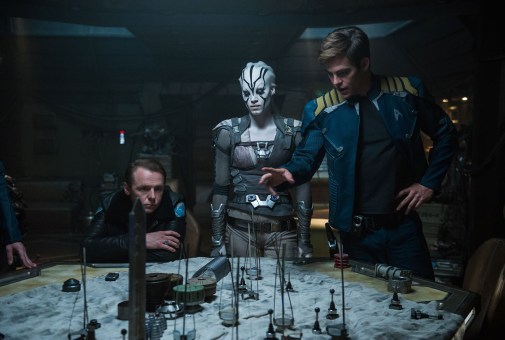
STAR TREK BEYOND

Three years into the five-year mission to seek out new worlds and civilizations we find Captain James T. Kirk incredibly bored and feeling useless. Commander Spock learns his future self; Ambassador Spock has died, leaving him to confront both the mortality of himself and the Vulcan people. It’s a very reflective time for the crew of the Enterprise as they dock at the starbase Yorktown. Things pick up when the captain of a lost alien vessel shows up and asks for help, traveling through a nearby nebula, to retrieve her vessel. Kirk jumps at the chance but quickly finds there is a more evil plan at work.

I’ve been moderately pleased with the rebooted Star Trek franchise. I was never a full-blown Trekkie, but I owned the oversized Star Trek Encyclopedia when I was a kid (I’ve always been a sucker for reference tomes about fictional worlds). I was in no way tied to the original concepts with severe loyalty, so I was excited to see something a little fresher. While 2009’s Star Trek was a hell of a lot of fun, I bristled at the clunkiness of Into Darkness. It so desperately wanted to evoke The Wrath of Khan, but it didn’t have the years of character development that invested us in that film. Plus, it undercut its significant emotional loss with the ending. I was very moderate in my expectations for the film. Knowing Simon Pegg had a hand in the script gave me some assurance that it was in good hands.

Star Trek Beyond feels like a great episode of The Original Series and is takes a standard series trope and remixes it. Idris Elba does an excellent job as the mysterious villain Krall and the adventure moves along at a nice steady pace. The character beats for our main cast feel very much like the original films, our two main players facing existential crises against the backdrop of a threat to the Federation. There were some visuals and the main baddie’s weapon that reminded me of Star Trek Nemesis, but not enough to ruin the film.

This is not a deeply intellectual film, but the Star Trek movies, when they were good, never were. The films are at their best when they balance intelligence concepts with high adventure in space. The very first Star Trek movie tried too hard to be on the same level as 2001: A Space Odyssey and ends up incredibly boring. The Wrath of Khan established the idea that starship combat could be a fun spectacle added to the series. Star Trek Beyond is mostly definitely a modern film, but one element I loved immensely is that it doesn’t feel like a part of a franchise that the studio is trying to milk. Star Trek Beyond is a single story, beginning, middle, and end. No hints at the next part or spin-offs. And these days that is very refreshing.
TV Review – Stranger Things

Stranger Things (Netflix)
Created by Matt and Ross Duffer

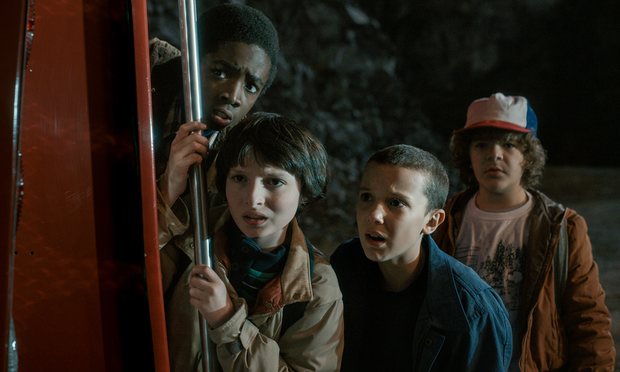
strangerStranger Things is an 8 episode series released by Netflix. It tells the story of the disappearance of Will Byers in the small town of Hawkins, Indiana and the bizarre phenomena that begins to occur around those affected. The series features an ensemble cast with David Harbour (The Newsroom) leading the cast as Sheriff Jim Hopper. Alongside Harbour are Winona Ryder as Joyce Byers, the mother of the missing boy, Finn Wolfhard as Mike Wheeler, Will’s best friend, and Millie Bobby Brown as a mysterious girl who know what happened to Will. The series is dripping in early 1980s nostalgia and plays out like a Stephen King novel or Spielberg film with a bit more darkness added.
The most noticeable aspect of the film is that it is firmly entrenched in creating an early 80s vibe. The title sequence’s music and visuals are tailored to mimic a dark synthy score of horror films and the font of a King novel cover. Because three of the series’ major characters are adolescent boys references to Star Wars and Dungeons & Dragons abound. There’s more tonal and thematic touches that bring E.T., Poltergeist, Alien, and other period films to mind. In fact, this probably the show’s highest selling point, the recreation of the feeling of the childhood of many of its viewers. As a child of the 80s, I definitely felt it, probably not as much as someone who was a peer to the featured children would. I am curious how millennials view the series due to not having the nostalgic buy in. It’s also impossible not to think of Super 8, a very similar homage to the sci-fi/fantasy films of the day. Super 8 is definitely enamored with the Spielberg vein exclusively, while Stranger Things is willing to go to darker places and play with Stephen King and David Cronenberg territory.

The plot is not necessarily revolutionary. Because the show is a nostalgia trip, it weaves together ideas from a number of sources. I was pleasantly entertained by the twists and turns, and there are some predictable moments that don’t detract from the pleasure of watching. The key piece of the story, what took Will and where he is, were the most original parts. Thankfully, there is never a large chunk of exposition to explain away what is happening and the series requires the viewer to piece together segments of plot over time to have a full understanding. I appreciate that the show respected my intelligence enough not to have the central human antagonist sit down and lay out the plot to another character.

The characters and acting were a slightly mixed bag. First off, Millie Bobby Brown is going to be a major actress in the future, and honestly, already is in my opinion. I always say the best way to tell how good an actor is would be to watch them in a scene without dialogue and see how well they convey emotion without being over the top. Ms. Brown knocks every scene out of the park. She tells a rich, nuanced story through her face and her eyes. I learned she was part of a BBC America series called Intruders where her character is possessed by an older evil man and cannot wait to dig in and see how amazing she plays that. David Harbour does a better than expected job as Hopper. So often the role of town sheriff in these sorts of stories comes across as a paint by the numbers character. Hopper’s story adds a tragedy that is never played up too huge and is only highlighted at just the right moments. The character’s descent into paranoia as he comes closer to the truth is very entertaining and if a second season comes, I am interested to see how his character develops. Winona Ryder did not feel natural in many of her scenes. She basically plays one note, hysterical grieving mother for the majority of the series. That is what her character is going through but it would have been interesting so see some more of her. She definitely knows her character’s motivation and it guides her acting in every scene. The trio of young boys are wonderful and they each have a specific dynamic in the group that doesn’t come off as a checklist.

Stranger Things is a very fun series. I’ve enjoyed most of the 1980s nostalgia media and particularly like when it is done with an attention to tone over nitpicky details. It felt like watching a very long film from my childhood and it kept me hooked the whole way through. The series ends with a number of hooks for the second series but I won’t be disappointed if we don’t get another. These eight episodes are a complete, satisfying story, very much in the vein British television where each series attempts to close off its plot. Stranger Things is a perfect recreation of 1980s summer cinema that you can get lost in.

The Purge: Anarchy (2014, dir. James DeMonaco)

the-purge-anarchy-default-1920

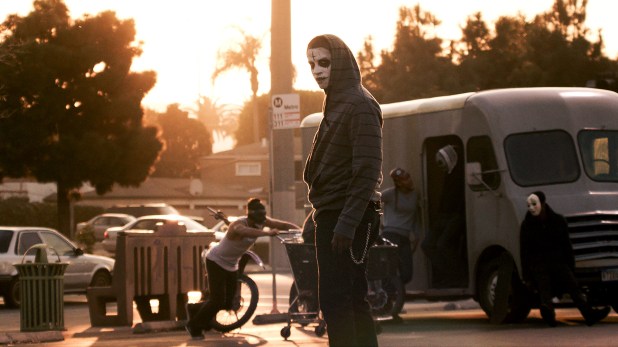
Whenever I’m playing through a video game and it suddenly forces me to engage in an escort mission, bringing a character I can’t control from point A to point B and keeping them alive, I will groan and slog my way through it. The Purge: Anarchy is a video game escort mission as a feature length film. I have not seen the first Purge film but was told it was unnecessary viewing and that this second film would fill me in. That was true, they deliver a lot of first act exposition to explain what is going on.

The film tells the story of the night of the sixth Purge. The Purge is an annual event instituted by an upstart extreme Libertarian political party as a way to help people release their rage. For twelve hours, all crimes are legal and the use of most weapons in committing these crimes is permitted. In Anarchy, we have an unnamed man (Frank Grillo) embarking on a mission of revenge. On his way, he makes the decision to help out a mother and her daughter and his Purge night takes an extreme divergence from his plans. A couple more characters join up with the group and they make their way across Los Angeles trying to survive the slaughter and mayhem around them.

It was probably not a good idea to make this my very next film after Green Room because the former definitely highlights the huge problems with the latter. Read my review of Green Room here. The Purge: Anarchy has five protagonists and none of them die until the last 15 minutes of the film and then it is only one. If the goal of the film is to make me feel that the event is the most dangerous and insane thing I could go through then it fails big time. Green Room kills off the most well prepared and confident character in a snap of your fingers. Here we have Frank Grillo essentially playing The Punisher and making it to the end and, spoiler, he’s the main protagonist of the third one currently in theaters. The film undercuts any sense of true fatality by keeping its main character alive the entire film.

Then we get to the metaphor of the film, and by god, it’s pretty hard to miss because they have shaped it in the form of a Mack truck. When I was in college, I stumbled across the film Mississippi Burning about the murder of three civil rights activists and directed by Alan Parker. I was astonished at how on the nose and disingenuous the message of the film felt. They kept beating you over the head with “Racism is bad”. Yes, I know that. But what interesting avenues in regards to racism do you plan to explore? Oh, none. Ok. Then why make this movie? But at least Parker’s film had a cogent message. I can’t tell you what Purge: Anarchy was attempting to say about anything. I suspect writer/director James DeMonaco is a little confused himself.

The first guess you might have is a message about Americans and their addiction to guns and the violence in our culture. Well, we have an allegedly anti-Purge group led by Carmelo (the always awesome Anthony K. Williams) telling us that the Purge concentrates its violence on the poor and minorities. Okay, a little on the nose, but let’s go with it. However, in the third act Carmelo and his group show up at a warehouse where One Percenters are hunting people down and state “It’s our time to Purge”. And the film portrays this as good and justified. I don’t think messages can get more mixed than that. They’re moments where we find young black men rounding up people from their own communities and selling them to the rich. We have two battling sisters who end up spilling blood over their shared love, one of the sister’s husbands. There’s a dude in an American flag baseball cap traveling around in a semi-truck with a personal army and mowing people down with a minigun. But the film never manages to compose a semi-cohesive point about any single thing it brings up. They’re bits of fictional media sprinkled throughout that build up the world but I never saw an underlying statement to any of it.

Even without a coherent thesis, the film could have done something stylistically interesting. The cinematography is sloppy and derivative. The pacing is dull and it becomes a movie where you are checking the time to see how much is left. If they had gone the route of Pulp Fiction-esque anthology that could have been interesting, playing with time and narrative order. They could have had the main character in one story as mere cameos in another. There were some points where we could have delved deeper into the racial impacts of the Purge but the film never has the guts to. I think having a late 40s white male director is going to keep the film from exploring those elements in any interesting way. I thought of a very different film, Lawrence Kasdan’s Grand Canyon (1990), that wanted to say something about race relations and came off as one the most insultingly dumb movies I’ve ever seen. This is sort of like Grand Canyon but with more guns, and even then I never felt the flinching and queasy sense of danger I got from Green Room.

The only moment in the film that got me truly interested were the final moments between Grillo and his target. There could have been some amazing themes explored there, some really complex and challenging performances. But then it just whimpers out and we cut away. The resolution is implied but I frankly would have rather seen a one room film set on the night of The Purge about Grillo and his target. Explore how people use the Purge to enact revenge and explore the psychological effects on those who do purge. The film just ends up being less than the sum of its parts. It didn’t make me interested in watching the newest film. Even looking at it as an ultra-violent escapist film you have to note it took the whole movie for even one of the five main characters to die! It just feels like a very surface level dip into sociology that other films have explored in more interesting ways.

Video Game Review – Asemblance

Asemblance
Developer/Publisher: Nilo Studios
Available on Steam and PS4

asemblance

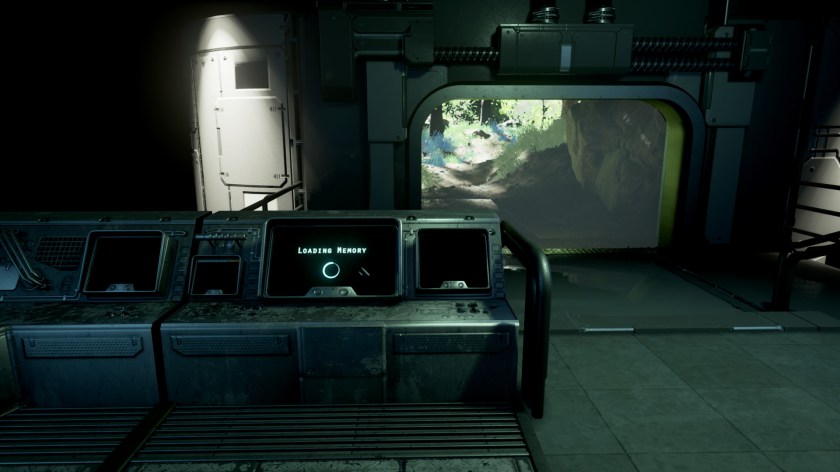
You’re immediately greeted by the sound of alarms and a computerized voice issuing warnings. As your vision goes from dark to blurry to focused you find yourself a dimly lit, cold metal chamber. A console sits in front of you, a room resembling Next Generation’s holodeck beyond that. This is the stage set for Asemblance, a game in the walking simulator genre that is heavily influenced by the mechanics and gameplay of P.T.

And like P.T., who you are is a big question. It would be easy to assume you’re the scientist who built all this equipment, the same scientist where the virtual memory simulations were harvested from. But the game is a mystery without clear answers. The first memory the computer allows you access to is a simple walk in the woods where you saw a butterfly. That butterfly serves as a motif through all the memories though it is not so easy to spot as in the first. The game is fairly small, only four memory files can be accessed in total. There are multiple endings though and each ending sheds light on different parts of the overall mystery.

During my own playthrough I found it became important to pay attention every single detail, no matter how significant. The contents of memos spread across office desks or placement and absence of framed photos were crucial in uncovering and progressing the story. The graphics are not spectacular. They are attempting to reproduce the near photo realism of P.T. but have some muddied textures and are rough around the edges. The biggest problem is the pacing of reveals. Early on you uncover one secret after the other and then suddenly there’s a wall. I spent an hour or so wandering back and forth between memories trying to figure out the next step. This is where those minor details play a crucial role.

The developer has said they see this as a potential anthology franchise, along the lines of the brilliant Black Mirror series. With some more polish I would be all in on something in that style. I’m personally a very big fan of the P.T. style of gameplay, particularly because I see good horror not as something where the protagonist can successfully fight back, but where exploration of the horror is encouraged and stepping into darkness is inevitable. Asemblance doesn’t break new ground but it provides a decent story and the promise of interesting things down the road.

Comic Book Review – Omega Men by Tom King

Omega Men (DC Comics)
Writer: Tom King
Artist: Barnaby Bagenda, Toby Cypress (#3)
Omega Men: The Complete Series will be released August 30th, 2016

omega men kalista

You’re meant to be disoriented when you start Tom King’s Omega Men. You’re tossed into the midst of war, specifically a military strike on suspected terrorist outpost. Even if you had followed previous incarnations of the Omega Men, you will feel just like the soldiers on the dropship: jostled around, anxious, not exactly sure what happens when the door drops down. Omega Men follows the titular outlaws of the Vega System, composed of Karna, Hy’nxx, Voorl, Ogyptu, and Changralyn. You will explore these planets in light touches over the course of the series but never truly know them. In the same way, you will explore aspects of our characters’ pasts but never really know them. In fact, the protagonist of the series, former Green Lantern Kyle Rayner, won’t even come to the forefront til the third issue. Omega Men subverts expectations you have about “superhero” comics at every turn, mainly because it is not about superheroes.

Continue reading “Comic Book Review – Omega Men by Tom King”

10 Cloverfield Lane (2016, dir. Dan Trachtenberg)

cloverfield5-xlarge

Out of nowhere, in March of 2016, J.J. Abrams announced a sequel to Cloverfield had been made in secret. Cloverfield was a found footage movie released in 2008 under similar secretive methods. And I hated the original, mainly because it was yet another found footage movie. It had characters who made stupid decisions that merely happened so that the next plot point was possible. It lacked a meaningful resolution and didn’t even leave things ambiguous enough to think about after the film was over. So, you could say I was cautious about 10 Cloverfield Lane.

10 Cloverfield Lane has incredibly loose ties to the original, and I wouldn’t even call it a sequel, more of a distant relative. It’s not found footage (thank god!). It has characters making intelligent decisions. It has themes and layers of plots and even an ending with some ambiguity. Its story is clearly focused on Michelle (Mary Elizabeth Winstead), a young woman running from her fear about a relationship who ends up, after a car accident,  trapped in a survival bunker. She’s told by the owner of the bunker, Howard (John Goodman) that he rescued her and that outside the bunker there’s been an attack on the entire nation. These claims are backed up by Emmett (John Gallagher, Jr.), a contractor who helped build the bunker, that yes, something bad did go down. Claims are made that the air is toxic and everyone is kept locked up inside. But there’s more going on here below the surface.

The film was the first major feature from Dan Trachtenberg. I’ve been following Trachtenberg since way back in 2007 t0 2012 when he was a part of the Totally Rad Show, a web series that reviewed popular media of all kinds and was a sort of inspiration to me. I was very happy with the work our director delivers. Every actor delivers a believable and nuanced performance. The film is full of clever camerawork and pacing, that never comes across as showing off. Everything here is a completely solid piece of tense thrilling film making.

Mary Elizabeth Winstead is the big star of the show. One thing I look for in actors, to really see how good their performances are, is to watch them when they are not the one talking in a scene, when their job is to react. Winstead gives a perfect emotional performance and has a quite a few scenes, the majority of the third act for instance, where she only gets to emote and react. It reads as very real and honest. John Goodman was given a tricky role, he has to play someone we need to trust and believe while simultaneously being unhinged. Up until the final moments of the film it is impossible not to have an internal debate about what is really going on with his character.

The plot has three very clear levels: what is going with Winstead’s character emotionally, the interpersonal conflicts between the three characters in the bunker, and the larger global situation outside the bunker. All three are developed wonderfully, given just enough that each deserves. Where the original Cloverfield came across as a glorified amusement park ride, this picture knows character development is key so that when the bigger, spectacular elements start happening we actually give a damn what happens to the people on screen. In an age where we have films that end in citywide killfests, it’s refreshing to have a movie approaching the same world ending subject matter in such an isolated, quiet way.

The Lobster (2016, dir. Yorgos Lanthimos)

a24 visions

lobster2-xlarge

I knew I had read literature that fell into the genre of magical realism, but it wasn’t until I read One Hundred Years of Solitude the summer of 2004 and followed that up with a ravenous consumption of Jorge Luis Borges’ short fiction that really came to understand, and in turn fall in love with, the genre. Magical realism is a style of storytelling that presents a normal world where there are extraordinary occurrences that the populace views as simply mundane. This is often used as an extended metaphor to be dissected and explored,usually a commentary on our own perspectives of the world. There are many everyday practices that to alien eyes would pop out as bizarre and unreal, but for us it’s simply life.

The Lobster falls strongly into the category of magic realism, without it become a “cute” gimmick. The film tells the story of David (Colin Ferrell), a divorced man who must stay in a hotel for singles for 45 days and find a partner. If he is unable to find a partner he’ll be transformed into the animal of his choice. In David’s case, he chooses a lobster (They stay fertile their entire lives). There is an eclectic cast of characters that we watch interact, with moments of brilliant dark comedy and painful heartrending tragedy. The film has a very defined split as David makes a drastic decision about his place in the Hotel as well as the society midway through.

This is the second film I’ve viewed from Yorgos Lanthimos, the Greek director. His breakout film, Dogtooth, explores the nature of family units focused on a couple who have kept their adult children locked up on the property for their entire lives. It balances the same comedic tones and horrific violence, but I think The Lobster elevates that to a masterful level. It also continues the director’s work examining the cultural norms of Western society, in this instance the concept of falling in love in the modern era.

Personality is absent from every character in the film. Conversations are monotonous and devoid of emotion. A character is violently punished for self-pleasure and his reaction is fairly muted for what happens. Characters fall in love and barely crack a smile. Characters die and are killed and everyone essentially walks away with a shrug. There’s no room for sentimentality in the world, dating, marriage, and having children are like business transactions. It is expected and frankly demanded of everyone in the world of the film. David is faced with a choice of severe sentimentality at the film’s conclusion and as I simmered on it afterwards it struck me that by not committing this act he would show the strongest sense of individualism in the entire film. So while, the culture around him is unsentimental he would possibly conform to it in the end.

What is most interesting are the “rebel” group in the woods, whose leader (Lea Seydoux) imposes a system of rules between the other loners, especially no physical or romantic contact. We see the bloody results of a simple kiss and worse is implied. While the Leader believes she is shirking the status quo of required relationships, she is actually creating a parallel system of dogmatic social norms that are punished with the most extreme methods. This leaves us to wonder if individualism is even a workable concept in this world.

The couples that do end up together are driven by the requirement of a match up of defining characteristics. David is nearsighted and seeks out a partner who shares that trait. Another character is saddled with a limp (the result of trying to find his mother who was turned into a wolf after a failed matchmaking attempt). Yet more characters present themselves this way: She has chronic nosebleeds, he has a pronounced lisp, she is emotionally distant, she loves butter cookies. Even in the film’s credits a multitude of characters are named by their defining trait. Almost the way, when filling out an online profile for a dating service, you would highlight aspects of yourself that you want to present, aspects that are intended to provide others with a definition of you.

Lanthimos is exploring the way people form romantic relationships in our current era. If you look at the business of matchmaking, whether it is OKCupid or speed dating or Match.com, people are boiled down to their essentials. Personality is near imperceptible and a person’s true nature is impossible to convey through these methods. But Lanthimos isn’t happy to simply comment on technology’s relationship to our relationships, he goes deeper, to the very core of why anyone ends up with anyone else. Characters lie about their defining trait in desperation to end up with someone else. The Hotel guests routinely arm themselves with tranquilizer guns and hunt the band of guerrilla Loners in the surrounding forest. And the Loners in turn sneer at those foolish guests who stupidly pursue companionship. All of these characters are deluded and define themselves based on cultural expectations, whether in conformity or opposition to. The Lobster ends on a suspended note, blatantly letting us stew on what happens next. Is their any way to succeed in this world, or is the best you can hope for to become a lobster?

Midnight Special (2016, dir. Jeff Nichols)

MIDNIGHT SPECIAL

You wouldn’t be wrong if you mistook Midnight Special for a peer to the early film works of Steven Spielberg or akin to something like John Carpenter’s Starman. It’s a film that wears its inspirations close to its heart without becoming a pastiche like Super 8. The shot of a 1972 Chevrolet Chevelle speeding across the wilderness of the Gulf is intended to evoke the sense of the familiar, like a movie you would come across on a Saturday afternoon that you remember from your childhood.

Midnight Special is the story of Alton, an eight year old boy, who is held up as a messiah figure by a religious cult in Texas. He’s kidnapped by his father (Michael Shannon) and a family friend (Joel Edgerton). They embark on a multi-state race against the religious cult and the U.S. government, both of whom have ideas about what Alton is and what he knows. The secret of Alton is something that will change the world’s understanding of the universe, but he had to reach a location in the Florida Everglades by a certain date or his purpose will remain a mystery.

There is very little modern technology present in the film which adds to its timeless feel. Alton reads early 1980s DC Comics during the road trip. A bank of payphones play an important role in bringing a character into the fold. This is a film that, while obvious not in the 1980s, makes you question that face throughout. Adam Driver, as an NSA analyst, comes across as the role Richard Dreyfus would have played had this been made thirty plus years ago. A moment near the end of the film involving a military roadblock of an important access road immediately rang familiar in my head as something out of Close Encounters.

It’s very obvious Nichols is a fan of that and Spielberg’s earlier films. But where the two men split is in the way they portray wonder. Spielberg has his famous slow push in on the awestruck face of a character. Nichols plays things very subtle, which is not always a positive. While, we never feel pushed into sentimentality about the characters there is a sense of distance with them. Withholding a more profound connection with the characters can be frustrating, but in other ways Nichols’ creating an absence of details can add to the mystery. Early on, Alton’s father stands before a man with a gun drawn. The man is in a chair pleading for himself. The scene ends without a resolution. Halfway through the film we learn the man is still alive and never shot. The way it is played works as a surprise and deepening of the mystery that draws us in further.

Nichols is a director intrigued with messiah figures. In Take Shelter (2012) he presents us with a potentially schizophrenic visionary, making us question the reality of the main character’s point of view. He subverts our expectations in the finale of that film and leaves us asking lots of questions. Midnight Special feels more straightforward. We are never meant to question the unearthly power of Alton and see evidence of it from early in the film. This messiah is a tragic figure and I started to view the film through the lens of a story about parents dealing with the death and loss of their child. In the end, our characters are left changed, their faith reshaped. We never truly learn the details around Alton and we are in the survivors’ shoes. Left to wonder about the purpose of this world we inhabit.

Film Review – Super 8 and Close Encounters of the Third Kind


Super 8
(2011, dir. JJ Abrams)


Close Encounters of the Third Kind
(1977, dir. Steven Spielberg)

Movie nerd confession: I had not seen Spielberg’s Close Encounters until a night ago. It was one of those films that I never felt compelled to watch as a child, and now after seeing it, I think it isn’t a movie for kids. In many ways its a fairy tale for adults. Yet, it still evokes that same sense of awe and mystery all of Spielberg’s work does. Super 8 is most definitely a massive nostalgia trip for my generation, accurately mimicking the tropes and tone of the Amblin films of my youth.

Continue reading “Film Review – Super 8 and Close Encounters of the Third Kind”

Tube Time: The Lost Room


The Lost Room (2006, 3 episodes)
Starring Peter Krause, Julianna Marguiles, Kevin Pollak, Elle Fanning

Something happened in the motel room in New Mexico back in 1961. But no one is quite sure what it was. The scientific minded believe some sort of event that bent space-time. Others say that God died in that motel room. Whatever happened the room vanished from our reality, but some how the small everyday trinkets inside made their way into the world. A ballpoint pen. A plastic comb. A wristwatch. A room key. They appear to be nothing special. But they are. This is the universe created in the Sci-Fi Channel mini-series The Lost Room. While Sci-Fi has an incredibly erratic track record for original programming, see sawing back and forth between incredibly horrible movies about giant animals killing people and thoughtful, interesting series. The Lost Room definitely belongs in the latter category, but sadly, as much as the mini-series serves as a pilot to an ongoing program Sci-Fi passed. Even though not all of its plot threads are tied up, The Lost Room is an incredibly interesting program that does exactly what great sci-fi should: throw a ton of ideas at you.

Detective Joe Miller, Pittsburgh PD, responds to the scene of homicide. The two victims are covered in horrible burns and appear to be partially phased through the walls and ceiling. Miller investigation leads him into the possession of a motel room key that, when inserted in any tumbler lock door, opens on a motel room existing outside of natural space time. Any object left in the room vanished when the door is closed, the room resetting itself. Powerful forces want this key and as a result Miller’s daughter is in the room without the key when the door closes. She vanishes into thin air and the detective abandons his career to find her again. This journey leads him to discovering the story of the room, the violent cabals that seek to possess the magical items in the room, and finally to a figure whose essence is tied to the birth of this modern legend. Parallel to Joe’s journey is his colleague and forensic scientist Dr. Martin Ruber who becomes obsessed with tracking down objects and believe he has a higher calling. These two stories intersect in some interesting ways and its Ruber’s story that appears to have been the plot line that would have fed into a regular series.

What makes The Lost Room work is that it is unafraid to be science fiction in that it worldbuilds with expertise and presents ideas that you would never think of, but that make complete sense when you think about them. I was reminded by classic sci-fi writers: Bradbury, Ellison as well as a heavy dose of Stephen King as well. The writers cleverly worked to not overpower the Objects, an example being The Comb. The plastic comb can stop time, but only for 10 seconds, and if used in succession too frequently induces vertigo in the user. To use the Objects successfully a person must be able to think outside of typical thought. There’s also the added twist of what happens with objects are used in conjunction, having properties that are unpredictable. The mini-series really left me wanting to know more about this world and what clever Object combinations could be.

Acting wise you have Peter Krause doing an excellent job. Julianna Marguiles has never been an actress I cared for and her character just doesn’t fit in this story very well. Kevin Pollak is one of those solid character actors who, despite or because of his strong comedy background, can play a character as walking the tenuous line between good and evil. Dennis Christopher (Breaking Away), a wonderful character actor was the standout for me. His role of the obsessed Dr. Ruber really hooked me and wanted me to learn where that character would go in the regular series. This is a a great overlooked science fiction story that has begun to find its audience on DVD. The creators recently announced at the San Diego Comic Con that a comic book continuing the story of The Lost Room is in the works so we may very well get a continuation of Dr. Gruber’s story.