TV Review – The Young Pope (Season 1)

The Young Pope – Season 1 (2016)
Created by Paolo Sorrentino
the-young-pope

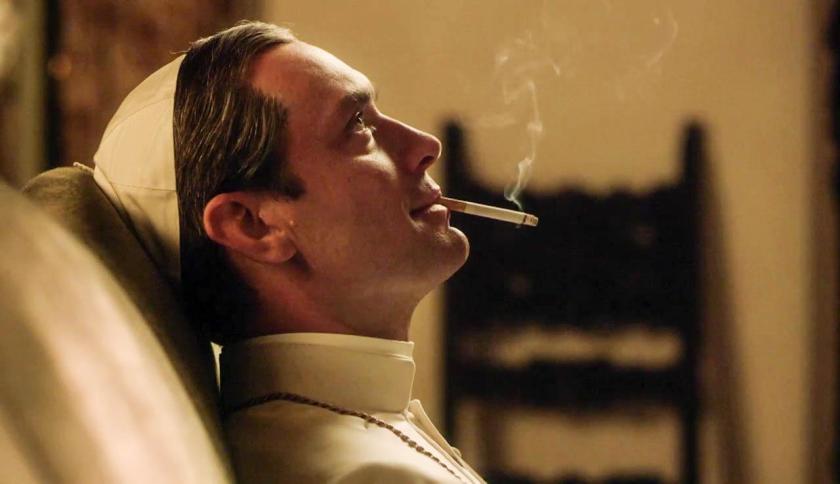
Lenny Belardo (Jude Law) has just been ordained as Pope Pius XIII, and his first act as the head of the Catholic Church is to do…nothing. He’s not giving a big speech in St. Peter’s Square. He won’t talk to the press. He won’t even allow his photograph to be taken. The leadership at the Vatican quickly learns that Pius plans to close the Church off from the public, an attempt to reverse any progressive ideas pushed by former popes. As we delve further, we learn that Pius is an orphan, raised by Sister Mary (Diane Keaton), whom he brings to his new papal palace to act as his chief of staff. There is also his mentor, Cardinal Spencer (James Cromwell) who was considered the traditional favorite to be chosen as pope. Due to back door machinations and Spencer having ill will from some of the other cardinals, a bet was taken on the wild card, Belardo. What follows is the strange story of Pope Pius, the orphan pope, the mysterious Pope, The Young Pope.

I had a passing familiarity with the work of Paolo Sorrentino but had never actually watched any of his films. I have to say I was happily blown away with my first introduction. Throughout the entire ten-episode run I was reminded of David Lynch and Twin Peaks. In the same way that that television series was so singularly an introduction to the style and storytelling of a sole creator, The Young Pope is a fresh, energetic opening to the work of Sorrentino. From the first scene your expectations are challenged, and with each subsequent episode, as soon as you think you know what this show is, it shakes its head and pulls the carpet out from underneath you. I think such an inventive and surprising style of show matches the surreal nature of the Vatican itself. The institution is such a strange thing to think about existing in a 21st-century context so a show about it shouldn’t attempt pure realism. There are many flashbacks, dreams, and visions and Sorrentino doesn’t necessarily concern himself about signaling when we are switching into one or away from one. The audience’s intelligence is respected enough that the literal and the metaphor intermingle and we are expected to understand the larger meaning.

The visuals of The Young Pope are so striking. In the first episode, we have a fantasy benediction played out in the daydreams of Pius that features the Cardinals falling backward as they faint, their feet up in the air. Later, a kangaroo is frequently seen hopping around the papal gardens. The phantom of a young woman being offered up for sainthood rushes past Pius on his walks. The pope is visited by a Congress of popes from history whom he asks for and receives lackluster advice. Sorrentino’s camera is so fluid, reminiscent of Kubrick and Malick. The music of the series is also entirely unexpected and playful. Modern tracks appear throughout, most notably LMFAO’s “I’m Sexy, and I Know It” as Pius prepares for his first address to the College of Cardinals. Andrew Bird’s “Logan’s Loop” is used multiple times to convey moments of levity or the softening of the Pope. The opening credits of the series are a cover of “All Along the Watchtower” that is an immediate sign this is not going to be a stoic observation of what life is really like inside the Vatican.

It is not an exaggeration for me to say I think this is Jude Law’s finest performance to date. Pius is a tremendously difficult character to portray. He is a direct contradiction to what the audience might expect. A young, American pope is anticipated to be a modernist and progressive, but Pius seeks to bring the Church back to an era thought gone forever. He is highly acerbic and unlikable, yet deep into the series events conspire that cause a shift in the Pope’s mindset. My early perceptions of the series are that it would be the story of forces working against Pius and his battle against them. Instead, the show becomes one of redemption and about how people can change, given time and people who will listen to them. And more importantly, people who will challenge them.

I can confidently say there is nothing on television like The Young Pope. It is a type of show that asks questions about spirituality and God most networks seem nervous to let a program ask. It’s a show that is most definitely about human beings, the fallibility, and the power to come back from those failings and try again.
Movie Review – Other People

Other People (2016, dir. Chris Kelly)

other-people

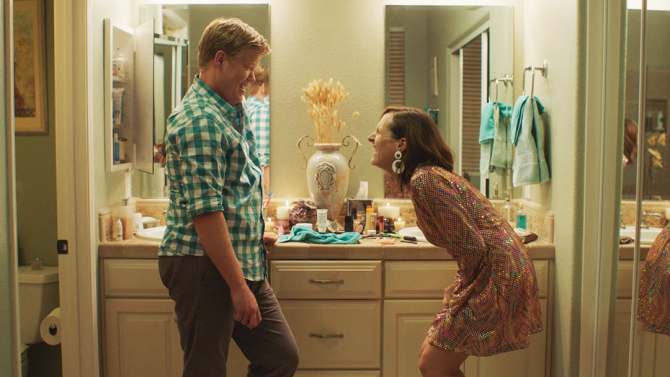
John David is back at his childhood home in Sacramento under heavy circumstances. His mother, Joanne has a severe form of cancer to treat, and the family is coming to terms with the fact that she will not last much longer. David had a falling out with the family in college when he came out as gay and that history resonates now. He feels awkward and out of place with his sisters and father. He does bond deeply with his mother though, and their story is the crux of the film.

Other People is the writing-directing debut of Chris Kelly, a former Saturday Night Live writer who bases the film on his own life and experiences with his late mother. I was admittedly a little trepidatious when starting this movie. The loved one dying of cancer trope has been mined pretty deep by Hollywood for decades, and the results usually feel like emotionally manipulative tripe. The disease is often a lazy way to quickly get the audience to feel for characters without actually building the relationships between the characters on screen. Kelly successfully avoids this and ends up with a beautiful character-focused film, carried firmly on the shoulders of Molly Shannon and Jesse Plemons.

I have never been quite a fan of Molly Shannon’s work on Saturday Night Live. Her style of hyper-maniac, emotionally awkward acting in that venue never clicked with me. Since then though, I have found her film work to be amazing. Her collaborations with Mike White (Year of the Dog, HBO’s Happiness) have been my favorite and it’s because she works so well with White. Other People reveals a new potential fruitful partnership because she arguably gives her best performance to date. Shannon’s sense of humor is present and meshes with the real world around her. She’s not over the top or larger than life. She plays Joanne like a real mother would be, hiding the worst of her illness at times and others allowing herself to vent, only later to feel a bit guilty. The journey she takes Joanne through is remarkable and the inevitable death scene is never played for cheap tears. It’s done off screen and we only see the family seconds after she has passed.

Jesse Plemons is another actor whom I have felt fairly neutral about. I didn’t watch much of Friday Night Lights but saw him in Breaking Bad, The Master, and a few other roles. I’d never actually seen him take a leading spot so I wasn’t quite sure how he would do in Other People. He ends up being quite captivating. The character of David is written so that he’s not an infallible protagonist. He’s often quite selfish and unthinking of anyone outside himself and his own neuroses. There’s definite justification for his hostility towards his father, but the film never just gives him full allowance to be an asshole without consequences. The resolution between he and his father isn’t neat and tidy, lots of questions still hang out there. Once again, like with Joanne’s portrayal, this feels incredibly true to life. Those deep cuts don’t ever get fully healed and family typically either splits or learns to adapt around them. The supporting cast of the film is one of those that you dream of. Lots of improv actors, faces from Saturday Night Live, and great character actors. Paul Dooley, Bradley Whitford, John Early, Matt Walsh, Paula Pell, Retta, Lennon Parham, Zach Woods and more.

Other People is a very well done family drama that exceeds the bar set by our last few illness-based comedy-dramas. It’s characters feel true to life, and they are allowed to breathe and develop so that the death of Joanne feels like it has consequence. You will likely tear up or cry, but the film earns those tears.

Movie Review – The Void

The Void (2016, dir. Jeremy Gillespie, Steven Kostanski)

THE_VOID

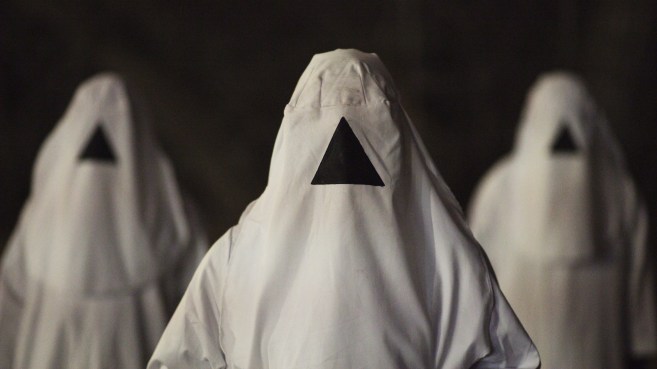
Deputy Daniel Carter is enjoying a quiet night in his squad car on the side of the road when it’s interrupted by a crazed man stumbling out of the woods. Carter quickly delivers the man to the hospital which is being staffed by his estranged wife, two other nurses, and Dr. Powell, a beloved town physician. Things get weird when one nurse seemed to be possessed by an evil presence, and strange hooded figures appear en masse outside the hospital. Everything’s coming up Lovecraft in this homage to everything from cosmic horror to Lucio Fulci.

If you are a fan of pulpy cosmic horror, then The Void has been made for you. It hits every trope you can think of Crazed Cultists? Yup. Portal to the other realm? Got it. Body horror/gore? It’s all here. There’s even some nods to John Carpenter’s The Thing but also Assault on Precinct 13 and even the underrated Prince of Darkness. In fact, The Void as a whole is a massive homage to low-budget 1980s horror films.

The practical effects are pretty top notch. Almost no CG is used, and the craftsmanship of puppets and makeup effects is very impressive. The gore is very much that Kayro syrup style lost to the popularity and expediency of computer effects. Physical gore in a horror film of this genre is so much more effective in making the audience feel the revulsion.

While The Void is an homage, it is still an original story on its own. It plays some clever tricks on our perceptions by starting with a scene where we are intentionally not told all the facts. The story is very simplistic with a few twists along the way, but it keeps you entertained as you go. Moments seem unimportant at first, and then later they end up being critical to the plot.

Where the film began to lose in was in some of the less than stellar cinematography. It starts out great, but somewhere in the middle of the movie it becomes very sloppy and hard to follow in some of the action sequences. The story is also such a great build up only to fizzle when we learn the villain’s master plan. For all the dread that was developed it left me with just an “oh, that’s it?” The Void ends up being one of those films that are a fantastic showcase for the physical effects crew but falls prey to a weak story.

Movie Review – Split

Split (2017, dir. M. Night Shyamalan)

Split-2

It takes only seconds for Casey and her two classmates to get abducted. They wake up in a bunker, being held captive by a strange man with apparent OCD about cleanliness. Later, they overhear conversations between this man and a woman. The door opens to reveal the same man as before but now posing as a woman. Casey quickly realizes they are dealing with a man that is experiencing dissociative personality disorder. The man is also seeing Dr. Karen Fletcher, a psychiatrist who is beginning to understand that the stability she believes she has instilled in her patient may be falling apart.

Split is not a great film. It is an entertaining movie. And I find it impossible to discuss the movie outside the context of Shyamalan’s body of work. Not too long ago I did a Revisit on Unbreakable and found myself remembering how much I loved the director’s early 2000s work. It wasn’t without significant flaws. The Sixth Sense and Unbreakable are pretty flawless in my opinion, but starting with Signs the “twist” element of the work begins to wear thin. However, the aesthetic and technical aspects of this film, The Village, and even Lady in the Water is strong. The shots are interesting, music adds to the movie, and (sans Lady in the Water) they are cohesive narratives that make sense.

Then we entered the next period of Shyamalan’s work The Last Airbender/After Earth. These feel like the bid to become the Spielbergian blockbuster director, and I think most people agree they are disasters. Then he shifts again with The Visit and now Split, both produced by Blumhouse. One thought I had after watching Split last night was that if you showed me this film and Unbreakable, I would never think the same director made both movies. Unbreakable shows restraint and an intentional absence of clear exposition. Split is a film with too much exposition, and it feels like it is embarrassed about itself and needs to explain that it is “really super serious, you guys.”

Betty Buckley’s role of Dr. Fletcher mainly seems like an exposition delivery device. Rather than trusting the audience to figure out what is going on, the script has her spell out exactly what the man’s disorder is and even states how to bring back the original personality if there was a need to do so. As many reviews have pointed out, the entire picture feels like a higher budget exploitation film from the 1970s/80s. There’s nothing wrong with making that sort of pastiche/homage film, but something feels off throughout the entire experience.

Anya Taylor Joy plays Casey, and it is nowhere near as interesting a role as the one she had in The Witch. She is still an excellent actress given the material offered to her. And she is the only actor in the cast who gets to exhibit an iota of subtlety. She gets a lot of silent moments to show her reactions and thoughts. The final “twist” feels horribly crass and almost seems to say “Oh thank goodness for childhood abuse and trauma, it saved the day.” There is ambiguity about what Casey will choose to do in her final scene and to leave that open isn’t terrible though.

While Anya Taylor Joy plays things subtle, James McAvoy as the mysterious man turns it up to eleven and keeps it there the entire film. His performance is simultaneously impressive and embarrassing. He does show skill transitioning smoothly between personalities in the same scene, complete with facial expressions melting from one to the other. The problems are less with McAvoy and more with the script’s handling of mental illness which is incredibly exploitative and not clever in any way.

I am never opposed to a director changing their aesthetic and experimenting, however, what Shyamalan is doing in the last decade seems not to be moving towards a stronger mastery of his craft. His current work feels more amateurish than the films that initially garnered him acclaim. It’s hard to see what the future holds for Shyamalan, and a deep part of me hopes he can find some grounding because I believe he has a great talent for filmmaking.

Movie Review – Blue Ruin

Blue Ruin (2014, dir. Jeremy Saulnier)

blue ruin

Blue Ruin opens on the image of a bearded man in a vulnerable state. He’s settled in for a bath when the sound of a door disturbs him. We quickly learn he doesn’t belong in this house and is, in fact, a homeless man. Dwight Evans is living along the East Coast, foraging from dumpsters and sleeping his car. An empathic police officer who knows Dwight lets him know a man convicted of murdering people close to Dwight has been released back home in Virginia. Dwight makes the decision to travel back and get revenge. But, to the film’s enormous credit, this man is not a trained assassin and is not taking into account the disastrous series of events he is about to trigger.

Before Green Room, director Jeremy Saulnier helmed this meditation on the price of retribution. Saulnier did not have many films under his belt, but his technical prowess is already apparent here (and if you have seen Green Room). Light and shadow are used effectively to set the tone, and figures emerge from shadows in a way that adds to their menace. Saulnier shows he has an excellent relationship with editor Julia Bloch (also on Green Room). Together they construct such palpable tension and anxiety through minimalistic cutting techniques. Shots linger for just the right excruciating amount of time and cut to the perfect reaction or follow-up shot. That strength in editing connects to the pacing of the script. The story doesn’t get too heavy too earlier. The dissemination of information to the audience is also heavily controlled. The full details of the crime committed that sent Dwight into a reclusive state isn’t revealed until over halfway into the picture.

The lead performance rests on the shoulders of Macon Blair, a loyal Saulnier collaborator. Blair delivers what audiences might misconstrue as “too subtle” or “non-emotional, ” but there is a density of emotion and history in what he is doing. Dwight is a character who crossed a line of emotional exhaustion years ago. He couldn’t survive in the world if he didn’t pass through the tears and rage. So now Dwight approaches each obstacle with a cold duty. He doesn’t care if he lives or dies anymore, he only feels he has to keep living to carry on an obligation. You might not notice, but he barely speaks for the first 20 minutes of the film, about only one line in that time. So the story is being told in his face, and thankfully Blair has a face, particularly eyes that tell a story.

What hit me hard about Blue Ruin is how relevant its themes are personally and globally. At first, this seems to be a straightforward revenge film, but the revenge comes very early in the movie. I found myself shocked at what the rest of this film would be about. Then both the audience and Dwight realize his first error which compounds into more and more. This compounding of errors leads to Dwight forced into killing more people, and this breaks him down. He seeks out help only to keep himself long enough to try and remedy his errors. When the full revelation of the inciting crime comes to light, we enter a space of moral ambiguity. People Dwight believes are guilty of things may not be the ones who did it. They are not innocent by any means, but the circumstances are significantly more complicated than first revealed.

In a world where we hear the phrase “good guy with a gun” uttered often or people spending hours of their lives attempting to justify an assault on people, they disagree with politically, Blue Ruin, without being didactic, asks us to question this. Someone most definitely harmed Dwight and people he loved, there is no doubt about this. But for every act of violence, he commits he doesn’t honor the memory of the people he lost or bring any peace to himself. Violence compounds violence, as I’ve talked about before in the context of Arya Stark. The film ends with a character who makes a choice not to commit violence. They walk away as others destroy each other. This character’s future, and could end up in the same situation we find Dwight in at the start, but by choosing not to kill they are free of the curse, two families have inflicted on each other for years.

PopCult Book Club – April 2017 Announcement: The Secret History of Twin Peaks

The Secret History of Twin Peaks by Mark Frost
(2016, Flatiron Book)

twinpeaks history

27 years ago, David Lynch and Mark Frost brought Twin Peaks to television. Sadly, after a lackluster second season, ABC canceled the series on an intense cliffhanger. Now, Showtime is bringing the series back for one final season of 19 episodes to wrap up what was started all those years ago. To begin the journey back, I will be reading co-creator Mark Frost’s The Secret History of Twin Peaks for this month’s book club. The review will go up May 1st to kick off Twin Peaks Month on my blog. Hope you will join us in reading and getting hyped up for the revival.

Movie Review – Ouija: Origin of Evil

Ouija: Origin of Evil (2016, dir. Mike Flanagan)

ouija

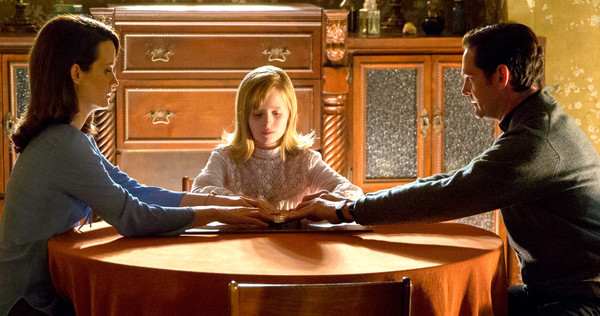
It’s 1967, and Alice Zander works her spiritual medium con with help from her daughters, Lina and Doris. Since her husband died, Alice has struggled to make ends meet and manipulating grieving people eager to believe barely helping. Enter the Ouija board that young Doris quickly takes to, communicating with what she believes to be her father’s spirit. Well, as you can expect from a film like this, things get bad, and the entity using Doris becomes increasingly more malevolent as the plot progresses.

I’ve been watching director Mike Flanagan’s films since his 2011 debut Absentia and have always viewed his work as okay. It’s never risen to the top as my favorite horror, though he always has some interesting ideas in his scripts. Ouija is sadly the most generic of his films to date. It comes off as a Blumhouse styled horror film (Insidious, The Conjuring, etc.). And like those films, the horror is incredibly formulaic and predictable. If you have ever seen a horror film from the last decade, then you will be able to see the plot points coming miles away. As a result, Ouija commits the worst sin a horror film can: it’s not scary.

Stylistically it’s admirable that Flanagan attempted to make a pastiche of 1960s horror cinema. The title card, the warped soundtrack, the crackles in the audio track, the “burn marks” on the screen signaling reel changes in the projector room. However, the tone of the horror works in bold contrast to these stylistic flourishes. These are yawn-inducing jump scares that never make you jump. The evil entity becomes way too physically aggressive to be truly scary. I find the horror from Absentia to still linger with me because of its ambiguity and unpredictable nature. The same with the mirror in Oculus, the things it does are much more interesting and skin-crawling than just using invisible force to throw someone across a room.

The acting is fine with the main weight of the story being balanced between Elizabeth Reaser as Alice and Annalise Basso as Lina. They aren’t amazing, but I blame a lot of that on the weakness of the script. Henry Thomas pops up as a faithful Catholic priest who will be the inevitable Exorcist, another plot point you see coming as soon as he’s introduced. Doris is played by Lulu Wilson and does most of the villainous acting. She is painfully an “acting kid, ” and that is seen in the way she delivers her lines. After watching Dafne Keen in Logan show nuance and strength in her mainly silent performance, this is like looking at a Disney kid overemote. On top of that, the computer generated effects they use to make her monstrous end up being comically bad.

Ouija: Origin of Evil seems to be getting praised due to its juxtaposition with the first film in the franchise. I’ve successfully avoided the first picture due to the incredibly negative buzz it’s received. I assume it must be catastrophically bad if this sequel is being considered a magnificent film in comparison. Origin of Evil is not the worst film you could watch, but there are many other you would be better spending your time on.

Valiant Comics – Harbinger and Bloodshot

harbingerHarbinger (Volumes 1 thru 5)
Writer: Joshua Dysart
Artists: Khari Evans, Barry Kitson, others

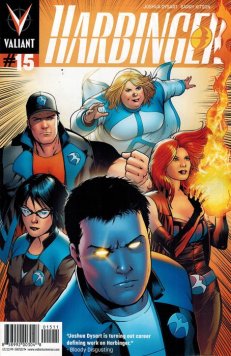
Harbinger is a team book but begins as a solo one. Peter Stanchek is a teenage runaway who developed telekinetic/telepathic abilities. This has garnered the attention of Toyo Harada, a billionaire philanthropist and founder of the Harbinger Foundation. Peter learns that there is an entirely new variation of humanity, Harbingers, who are evolving abilities beyond what normal humans can do. Things go south between Peter and Harada fairly quickly, and the former ends up on the run once again, this time gathering Harbingers in his travels to form a group counter to Harada’s.

Harbinger is one of the better books Valiant puts out, or at least one of my favorites. It scratches that X-Men itch of angsty teenage superheroes. There’s lots of conflict between the teammates that fuels the story. Then you have the over-arching global/corporate battle with Harada that adds scope to the series. There are moments where it suffers from some cliche, those sort of early 90s Image Comics moments with lame character names, powers, and personalities that are paper thin. Overall, the basic concept is intriguing enough to provide some enjoyable stories.

The fifth volume actual brings closure to series, and someone does die in a meaningful way, a rarity in comics these days. But in ending this first iteration of Harbinger, it opens the concept up to a variety of different directions, those of which I’ll look at in a later installment.

2458321-prv12494_covBloodshot (Volumes 1 thru 5)
Writer: Duane Swierczynski, Christos Gage
Artists: Joshua Garcia, others

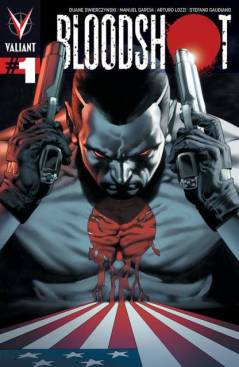
I don’t like Bloodshot. First, the name is the most generic moniker for a comic book super soldier. DC has Deathstroke, Marvel has Deadpool, Image had Deathblow, and Valiant has Bloodshot. Additionally, the character is a retread of a lot of cliches. Bloodshot is a genetically enhanced super soldier who was augmented by an evil clandestine group known as Project Rising Spirit. His main power is advanced healing due to the nanobots injected into his body. He has had his memories wiped and struggles to remember who he is. So he’s essentially Wolverine, a character who already makes these elements annoying. Placing them on a super generic character doesn’t make them more attractive.

Bloodshot has no personality and pretty much no character. There is no reason to like this character. His supporting cast is impressive at certain times. Early on a civilian woman ends up pulled into the story and she provides some of the only humanity. Later, during a crossover with Harbinger, there are some Harbinger kids that Project Rising Spirit was experimenting on that provide personality and interesting character bits. The supporting cast gets particularly dreadful and flat when the book briefly becomes Bloodshot and the HARD Corps.

Overall, I didn’t enjoy much of Bloodshot. I have heard that a significant change occurs in a few volumes that completely revamps what the book will be. I look forward to seeing if they can pull something interesting out of such a tired, retread of a character.

Next: Shadowman, Quantum & Woody, The Eternal Warrior, and Unity

PopCult Book Club Review: March 2017 – Bird Box

Bird Box by Josh Malerman
(Ecco, 2014)

51bin6sub1l-_sx321_bo1204203200_

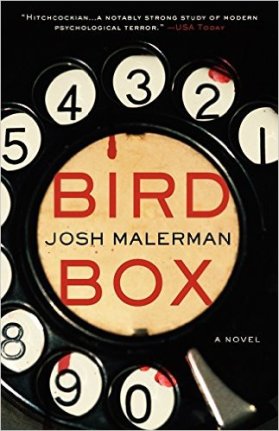
The day society collapses Malorie learns she is pregnant. No one can say why everything has fallen apart, but there are some theories. The most prevalent are that the people who have gone murderous and crazed saw something, creatures or entities, that broke their minds. By the time Malorie heads to the safe house in Detroit people are boarding up their windows and only going outside equipped with blindfolds. Humanity is slipping into darkness. Josh Malerman’s debut novel jumps between Malorie’s pregnancy in the safe house to her blind journey down a river with her equally blinded children. She’s been told that somewhere down the river lies a place where the three of them can be safe. But is something stalking them on the shore?

Bird Box gets a lot of things right. First, it builds tension incredibly well. The concept of something you see, possibly even from the corner of your eye and can drive you to a homicidal rage is terrifying. The book introduces the apocalypse in the background, just a few strange piecemeal stories out of rural Russia. Then more and more incidents are reported until everything has crumbled. It also hits Malorie personally as early on she comes across a loved one who has seen whatever is causing this mental break. Malerman’s smartly leaves the exact nature of what is going a mystery. Characters wildly speculating is much scarier than the book spelling out what is happening outside the doors of the safehouse.

By building a paranoid tension, the author also develops his characters based on how they react to their circumstances. This is an excellent way to let your readers quickly get to know Malorie and the six or so supporting figures around her. As soon as she arrives at the safe house, we are aware who these people are right away. We see who is keeping a level head and trying to come up with workable solutions. We are aware who is petrified with fear about the change. We see who is quick to anger and irritation. I’m not a huge fan of The Walking Dead television series, but I do think Bird Box treads similar ground in its focus on ensemble character interaction. Malerman juxtaposes Malorie against another pregnant survivor. The house’s de facto leader Tom is mirrored and contrasted by a couple of other characters, one of whom comes late the story and could be considered the antagonist of the novel.

There is also something to be said for how smart it is to handicap your characters with the apocalypse, and then on top of that take away their chief sense. Malorie’s blindfolded odyssey out to a local bar to gather supplies is a grippingly tense sequence. Everything takes longer to do, and these stretched out moments allow us to immerse ourselves in the scene. We know as much as Malorie knows. When she discovers the trapdoor in the floor and the subsequent stench of horror that comes from it, we receive the same sensory input she does. This particular mode of information delivery is at it’s best during the journey down the river. Malorie has spent four years adapting herself and her children to the world without sight. As their boat floats down the waters, every sound is a potential threat. A brief encounter with another human on their trip is paranoid and suspenseful. Everyone is a danger, and she begins to speculate about the creatures and if they can now mimic human speech.

Overall, Bird Box is a very breezy exciting read. I wouldn’t place it up there with the type of horror I treasure, but it is a read very worthy of your time. I guarantee it will keep you glued due to his narrative momentum. When the horrific finale in the safe house finally comes about in the last two dozen pages, you’ll not be able to stop until you find out how it concludes. When Malorie and the children are within hearing distance of the new haven, her paranoia will overtake you, and you won’t be sure if they will make it.

Movie Review – Logan

Logan (2017, dir. James Mangold)

logan

I remember being between by freshman and sophomore years of college and going to see X-Men in the movie theater. This was our first introduction to Hugh Jackman as Wolverine. Jackman almost wasn’t this iconic mutant; it would have been Dougray Scott who dropped out of X-Men to play the villain in Mission Impossible III. But now Jackman and Wolverine are constants throughout the X-Franchise, even shoehorned in cameos in First Class and Apocalypse. He is the star of what is roundly considered the worst film of the lot: X-Men: Origins: Wolverine. With Logan, his tenure as this character, and Patrick Stewart’s role as Charles Xavier comes to a close.

We learn at one point that the year is 2029 and for a little, over a year James Howlett aka Logan aka Wolverine has been in hiding with Charles Xavier and another mutant, Caliban. Some catastrophic event occurred that forced these three into the Mexican wilderness. Logan is saving up cash to purchase a Sunseeker yacht and take Charles as far from humanity as possible. Time has caught up to our protagonist. He moves slower and stumbles more often. His claws are impeded by arthritis and injuries that aren’t healing like they used to. While trying to live a quiet life Logan’s path crosses with that of a nurse and a little girl who desperately need his help. There’s one final mission for Logan and Charles where they must struggle past their physical and psychological issues to be heroes again.

In contemplating this film, I realized that we haven’t had a big screen superhero send off like this ever. If we look back at the iconic comic book movie franchise, they more often than not fizzle out and just end with a whimper. Christopher Reeve ended his tenure as Superman with a dismal fourth installment. Michael Keaton left Batman due to creative disagreements. Tobey Maguire danced his way out of Spider-Man with Ted Raimi’s third installment. Christian Bale’s Batman seems to be the only movie superhero I can think of with a proper ending to their iteration, and that is not regarded too well. For close to two decades Hugh Jackman has played this character, even after some films that any of us would have forgiven him from not returning after. So there is a special sentimentality to Logan.

There’s no doubt I loved this film. Will it be on my top ten of the year at the close of 2017? Probably not. But if I were to make a list of best comic book films this is up there. What helps Logan transcend the weight of the convoluted X-Franchise is that it doesn’t need the other films to work. You could switch out the X-Men with any generic superhero team, and the allusions to past events still work just a well. Instead of looking at this as a piece of a larger franchise, writer-director James Mangold smartly chooses to make the film a character piece. I have much stronger memories of the character moments than the action set pieces and that is quite an accomplishment these days in big-budget studio fare. The relationships between the three core characters (Logan, Charles, and Laura) feel honest, and choices they make are affected by these relationships. Logan’s hesitance to take Laura in and embark on her quest is true to his character.

The acting from the three most important cast members is phenomenal. You likely won’t see better performances in another 20th Century X-Picture ever again. Jackman is very comfortable in the skin of Logan and adds more layers with the affliction of age. It would be interesting to go back and watch the action sequences in X-Men and X2, comparing them to the awkwardness and lumbering of Logan in this film. Killing is taking a physical and emotional toll on the protagonist, and we see it how he slows down, how he falls. I have to say I don’t think I have ever seen Patrick Stewart in a role quite like this. The staid, headmaster of previous films is gone, and now we have a very broken, crass, angry Charles Xavier. He floats between states of consciousness due to medication, and when he does gain clarity of mind, it brings up tragic truths Logan sought to bury from his mentor. Dafne Keen as Laura delivers a very powerful performance. She is forced to hold her own against Jackman who is giving probably his best work, and she never flinches. For the majority of the film Keen is non-verbal and how an actor does in a role that asks them to act through reacting is a great litmus test. She has the makings of someone very special because she understands Laura isn’t just an angry Lil’ Wolverine. There is history beneath the surface, and she chooses to reveal that in interesting ways.

There are strong allusions to other films. The most obvious is the 1953 Western film Shane which Charles and Laura watch in a hotel room. The ending monolog of Shane is quoted in Logan’s climax, and it pretty much spells out the themes and ideas Mangold is aiming for. I don’t enjoy this element of comic book films, where at some point characters or the director put up big neon signs that point at what we’re meant to learn from the picture. I’d prefer to infer theme from watching the story unfold, and this element is a big part of why Logan isn’t going to end up as one of my top favorites of the year. Just a personal preference, but one that has always had me keep comic book films at arm’s length. There is also a moment in the third act that is blatantly nodding to Mad Max Beyond Thunderdome, and I loved that film acknowledge it was taking a lot of inspiration from the structure of those films.

If I could just end the X-Men franchise with this film, I would. 20th Century Fox has other ideas it seems. I hope that they look at Logan not for what it is on the surface, but for what it represents in the way comic book properties can work beyond just four color summer tentpole action. In the hands of the right creative people, these characters can be elevated and be central to stories that go much deeper than audiences expect.