Origins 2016 – Monsterhearts

monsterheartsFriday morning rolled around and I knew exactly what table I would be at. We had the great honor of playing Monsterhearts with Joe Beason. Joe has been a Google Plus friend for awhile and I’d been very interested in his variation on Monsterhearts, Elderhearts which focuses on a retirement home rather than a high school. However, we were feeling the original that morning.

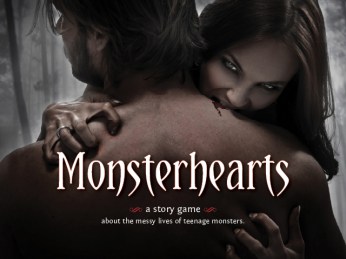
Monsterhearts (Designed by Avery Alder McDaldno, Published by Buried Without Ceremony) takes popular media like Buffy the Vampire Slayer, Twilight, Ginger Snaps and similar works and turns them into one of the most enjoyable systems I’ve ever run or played. Once again, this is a Powered by the Apocalypse game meaning it uses fictionally triggered Moves and two six sided die plus the relevant stat to determine the outcome of actions. The playbooks consist of what you would expect with some twists. There’s The Vamp, The Wolf, The Ghost alongside The Mortal, The Queen, The Ghoul and many more both official and fan made. In other PBtA games relationships between character are played as favors or debts, but in MH characters have Strings, representations of the emotional pull you have on others and they have on you. These are meant to be much more manipulative than debts or bonds and they help heighten that sense of adolescent emotional immaturity. Monsterhearts also heavily emphasizes the fluid nature of sexuality. Every character is expected to be able to be Turned On by any other character. The extent of how that arousal is acted on is determined in the fiction and how much detail the players want. Most games I play in typically fade to black or cut away before the descriptions get too gratuitous.

For Joe’s game we were students in a Florida high school that was in the path of Hurricane Danny, a brewing tropical storm. In our group we had The Ghost, The Chosen (a Buffy style hunter skin), The Witch, The Fae, and I played The Queen. Every experience I’ve had playing MH has been a lot of fun. Getting to indulge those over-dramatic hormone driven personalities of teenagers is a great time. I really hammed it up with The Queen, a stuck up rich girl whose twist involved her mind being taken over by a genetically engineered parasite her daddy’s medical research company brewed up. She was now the leader of a hive-mind (her clique) with a group text on her smartphone serving as the hub of communication. Lots of selfies were taken, many Snapchats were snapped.

Joe did a great job weaving a lot of elements through the fiction of the game based on the material we brought through our characters. The chief difference between traditional tabletop scenarios and PBtA is the planning. You can pick up Monsterhearts with no scenario in mind, sit down with friends, and simply listen and engage in conversation to build the world. Games like this will definitely stretch your mind and your creativity but you’ll up getting quicker on your feet as a result. Our high school Spring play had ground to halt with the death of the drama teacher. In his place an older, former teacher at the school was substituting, the same teacher responsible for our Ghost’s murder in the 1980s. My Queen was missing one of her clique, the girl was part of the trio of backup singers in the school’s production of Little Shop of Horrors. After a power outage, The Queen found her way to the auditorium and, along with the other player characters, got caught up in an occult ritual that was connected to the presence of the powerful storm outside.

This was one of those table at Games on Demand where everyone was firing on all cylinders and we were simpatico. The story flowed from player to player and GM. In those four hours we had a complete and satisfying narrative that left hints of other plots that could come from these characters had we been able to continue. That is also recurring note at almost every game I played: the players getting so deeply into the session they wished it was a regular weekly or monthly game so they could discover what happened next to these characters.

Avery McDaldno is currently looking at revising and releasing a second edition of the game. Since Monsterhearts’ publication in 2012, many more variations and hacks on PBtA have been released and the best iterations have brought new and intriguing mechanics to the community. As with Vincent Baker’s revision of the original Apocalypse World, I cannot wait to see what Avery adds and refines with Monsterhearts.

Even if you don’t care for the inspiration behind Monsterhearts, I’m confident you would love the game. The places the game explores aren’t represented in many other tabletop games and, with the right group of people who have buy in with the material, you’ll end up with some of the most satisfying sessions of gaming you’ve ever experienced.

You can purchase Monsterhearts here – http://www.drivethrurpg.com/product/100540/Monsterhearts

Later today: Bluebeard’s Bride and Dungeon World

Origins 2016 – Urban Shadows

urban shadows

Urban Shadows (Designed by Andrew Medeiros and Mark Diaz-Truman) is another game from Magpie Games and another variation on the Powered by the Apocalypse system. Are you noticing a trend with me? Urban Shadows was actually the first Magpie game I went all in for. I heard of some of their previous work but didn’t know these games were all from the same publisher. Urban Shadows is also a system I’ve run about 30 times in a series of small interconnected campaigns. I always love playing with a new GM though, because I learn techniques on how to run the game or discover subtleties about it that had completely gone over my head.

Urban Shadows takes many of the elements of World of Darkness with a focus on the faction politics. The four factions of the game are Mortality (Aware humans, monster hunters), Night (vampires, werewolves, ghosts), Power (Wizards, Oracles, Immortals) and Wild (Fae, Humans tainted by demons). Players have two sets of stats: one related to their individual abilities and the second for their knowledge and connection to each Faction. There are Basic Moves but also Faction Moves that require rolling with the relevant Faction stat. You accumulate Debts on other players and NPCs and can spend those debts for favors or greater influence in negotiations. You “level up” or advance by interacting with the four Factions. On top of all of this, there is a Corruption track that is advanced by certain choices in the Basic Moves and by a Corruption condition specific to each playbook. You can pick up new Corruption moves but in the fiction this moves you closer to your character becoming an NPC threat in a later game or campaign.

Thursday evening we sat down at the table with Derrick Kapchinksy, a member of Magpie. This was our first time with him running a game so I was very interested to see how things went. There was also a complete newbie to the PBtA style of game and appropriately Derrick spent time going over the basic mechanics and making sure he was comfortable with the game. After the game, my wife and I talked about how perfectly Derrick described how the system worked, talking about it in the context of a conversation with some mechanics that come to the surface only when needed. Our novice player definitely seemed to take to the game quickly. The urban environs of our game was Albuquerque, New Mexico, a city Derrick is very familiar with. As with all Urban Shadows games it’s fairly important that the GM have a good understanding of the city so they can weave real world elements with a fictional supernatural underbelly.

I played Raul, a Tainted Iraq War vet. He sold his soul in the midst of a firefight to an Ifrit. The result was that he was the sole survivor of his unit and returned to the state haunted by the fiery demon. Now the Ifrit had turned its attention to Raul’s nephew as a potential new host. Raul’s own rage built as the influence of the demon increased causing him to becoming brutally violent with bystanders, he particularly focused on the homeless population knowing they wouldn’t have many people looking out for them. In the opening hour of the game we established that vampires had been wiped out by a fellow player’s Veteran hunter. The Fae filled in that power vacuum but now the vampires were returning to the city.

I was particularly impressed with Derrick’s Redcap enforcers. They appeared as teenage Native American young men in backwards red baseball caps for the Albuquerque Cannons (now the Isotopes). I love that clever blending of traditional folkloric beings with touches of modern life. It helps to create the atmosphere of the supernatural embedded among us. The game consisted in the players getting their characters deeper and deeper into trouble between the Vampires and Fae, culminating in a showdown at a vampire nightclub.

Urban Shadows is one of the best adaptations of the PBtA system. It has a lot of moving parts and thus can be daunting the first time you look over a character sheet. With a little reading up and given some time the fluidity of these elements comes to the surface. As long as you run and play the game with an emphasis on the political you’ll have a great time. This does involve a shift in the traditional tabletop mindset where players receive plot from the GM. Here the GM looks to the players to communicate what things they are interested in doing and see happen. When everyone is on the same page the system sings. If this type of dark, political, supernatural style of storytelling appeals to you then I say you need to buy this game. I know for me it’s provided hours and hours of great gaming sessions.

Urban Shadows – http://www.drivethrurpg.com/product/153464/Urban-Shadows

You can also see Urban Shadows in play, run by the masterful Jay Brown here – https://www.youtube.com/watch?v=NZ5Vuy-KoEM

Tomorrow: Monsterhearts & Bluebeard’s Bride

Origins 2016 – Zombie World

zombie_horde_by_joakimolofsson-d5mudbk

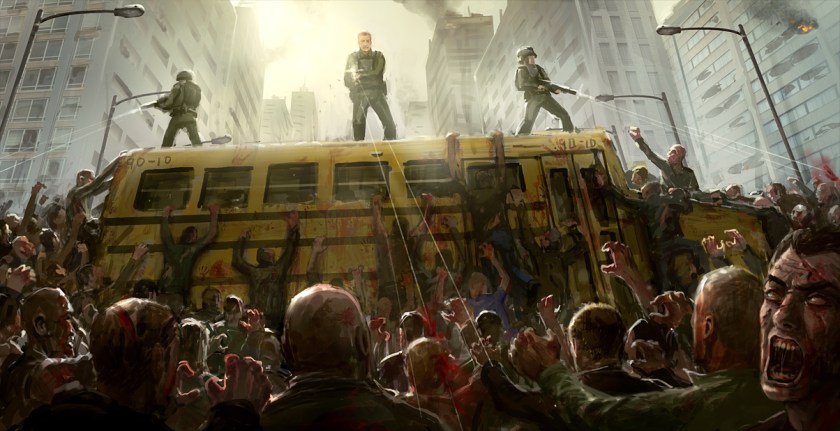
For the Thursday afternoon slot at Games on Demand, my wife and I went with Zombie World (designed and published by the team at Magpie Games). Our main reason was the game’s GM, Mark Truman-Diaz, co-founder of Magpie. Mark is both a stellar GM and an all around awesome human being so we knew we were in for a great experience. Two additional players joined our table and we were ready to begin.

Zombie World is another game that is Powered by the Apocalypse. Unlike with Masks, and most PBtA games, Zombie World uses playing cards instead of dice for resolution. Character creation involves drawing three cards and referencing an Oracle document for their meanings. The cards represent your character’s Past, Present, and Trauma. Each aspect provides specific moves or boons that only your character will have, as well as informing you on how to roleplay that character. Character creation in this style makes you think on your feet to connect what has the chance to be three very conflicting, yet compelling, aspects.

My character’s Past was Social Worker, Present was Scavenger, and Trauma was Imperious (I interjected myself into social conflicts, always wanting to solve problems). Holloway, was a social worker who still had a sense of concern for others, but this was balanced with his survival instincts. Getting involved in other’s arguments could shore up power and over time he could be seen as a de facto leader, or least open up avenues to get much needed resources if he was seen as a helper. He made a good Scavenger because his job required him to find resources for people in need and he also navigated the tougher parts of the city for many years.

Our particular game was set in an abandoned prison, which came with a playbook that we at the table collectively fleshed out. Cards were used to determine resources, threats, needs, etc. Once we had our characters and settings complete we began. Mark described a caravan of vehicles, some being manually pushed along a road outside of town. One of our hunters had spied the scene and said there was a chance a devastatingly large horde was following in the wake of these people. Two characters, our sharpshooter and a former cop, took the direct approach on the caravan while a third character, a guard who worked at the prison, led a group of Syrian refugees that had been living with us out into the woods to provide backup in case relations went south. Holloway, my social worker, didn’t volunteer to go, but snuck out of the prison to spy from a distance.

Things definitely fell apart and, while no one died, the characters suffered a number of serious setbacks, injuries, and were forced to make brutally hard choices. Conflict resolution was done by triggering one of the Basic Moves in the fiction of the game, then drawing a number of cards equal to the relevant stat. The highest card drawn would be used to determine how successful an action was. Jacks were complete successes, 8-10 was a success with a cost, and anything less than a 7 was a failure. Queens represented expendable resources and their effects and were removed from the deck after a use until they could be replenished or maintained in the fiction. For instance, our prison had a strong fence. Having a strong fence could have allowed you get very restful sleep because you didn’t need to be walking the perimeter all night. That rest could be what helped you stay alert in a firefight. But, if you don’t look for damage to the fence periodically or a massive horde crushes it to the ground then that Queen would not be reinserted into the deck again. Aces could be successes but required the player to take Stress if they wanted that boon.

I felt the character creation had light touches of Fiasco with the use of the Oracle. The drawing of cards created a sort of meta-tension. It worked even better because the higher your stat the more cards you had to draw. So being good at something actually meant the tension could be higher with each pull from the deck. From a fictional standpoint, the game completely got across the atmosphere of popular character focused zombie media (The Walking Dead). The zombies were there but not necessarily the greatest danger to our characters. As is typical with this sort of thing, it’s the other human beings you need to worry about. The game seems incredibly well suited for both one shots and small campaigns. It’s yet another Magpie production that has me excited as a hell to get my hands on it and run for friends. Zombie World does not yet have a release date, but Mark said it is pretty much at completion and will be released in the near future.

Later today: Urban Shadows.

Origins 2016 – Masks

masks

This year was my second trip to Origins Game Fair in Columbus, Ohio. Organized by the Game Manufacturers Association (GAMA) and first held in 1975, the convention focuses on all flavors of tabletop gaming (board, card, roleplaying, and every other sort of variation). While the bigger events revolve around more of the household names of gaming (D&D, Pathfinder, Settlers of Catan, Pokemon, etc.) I prefer the Games on Demand events.

Games on Demand specifically caters to fans of small press, independent roleplay gaming and also for con goers who are curious about trying something new. All of the gaming I did at Origins 2016 was exclusively with GoD and I can say I never felt like I was missing out on other parts of the con. Your mileage will vary depending on your personal gaming tastes, but I believe there is something there that can appeal to every player.

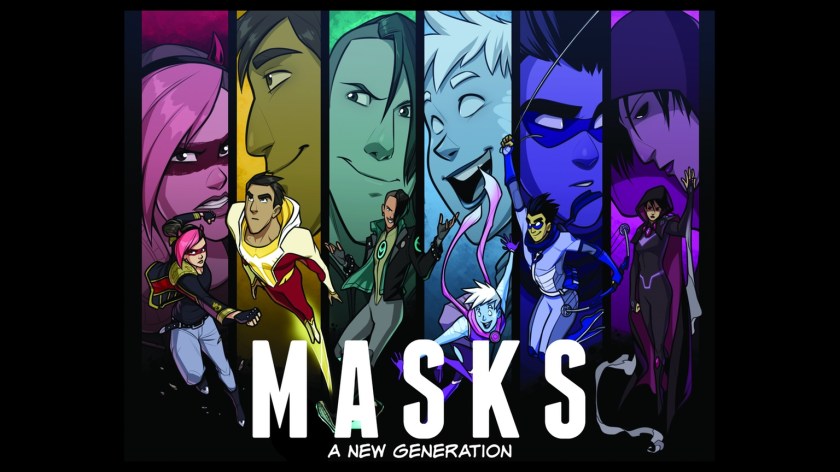
My GoD sessions began Thursday morning with a game of Masks: A New Generation (Designed by Brendan Conway, Published by Magpie Games). Masks is currently in post-Kickstarter mode with a public release coming very soon. Instead of being a superhero game that focuses on playing the Justice League or Avengers, players assume the roles of teen superheroes who still aren’t quite sure who they are and who they will be. The emphasis in the game is on the relationships between the heroes and the labels that are applied to them by fellow teammates, the world, and even themselves. Stats are in flux as events cause the heroes to reassess their roles. In this Masks session, I played The Beacon, a hero who shouldn’t be fighting alongside ultra powerful godlike beings. Think Hawkeye or Blue Beetle.

Masks is a Powered by the Apocalypse (PBtA) game. If you’re not familiar with this particular system, it was created by Vincent Baker for his Apocalypse World RPG. The core of the systems revolves around roll two six sided dice and adding a stat to determine the results of actions. A 10+ is a complete success, 7-9 will be a partial success or one with a cost, and a 6- is a complete failure. Players simply narrate their characters’ actions and if they trigger one of the Basic Moves or Playbook Moves a roll is made. Everything is grounded firmly in the fiction of the story. You don’t make a roll unless it is justified by the actions and logic of the story. Characters are created from playbooks, a trifold sheet that gives players lists of options from the look of a character to special Moves only they can access. Players simply narrate their characters’ actions and if they trigger one of the Basic Moves or Playbook Moves a roll is made. Unlike most games using the PBtA system, Masks’ stats (here called Labels) fluctuate based on interactions with teammates and NPCs.

In my game with Brendan, the team was pitted against an alien vessel that had come to claim our Outsider for her arranged marriage. Due to our actions (I say “our” but my Beacon triggered things by firing an EMP arrow at the ship), the vessel crashed into the bay. The aliens sent forth an inhumanly strong bodyguard and it became necessary to negotiate our way out of the situation. However, my Beacon, desperately wanting to prove themselves as worthy of a place on the team, fired a Weird Tech arrow (think Kirby style technology) and somehow brought a future version of the alien bodyguard to the present day. The rest of the session dealt with traveling to outer space, trying to get our Outsider out of her marriage, and the revelation that my chipper upbeat Beacon could possibly become a bloodthirsty killer in a future timeline.

I’m very biased when it comes to Masks for a number of reasons, so consider this both a disclosure and me fanboy-ing out. I’ve been a rabid comic book fan since I was nine years old and Masks really captures the essence of New Teen Titans, early Claremont X-Men, Young Avengers, and similar media. I feel confident in my knowledge of the tropes and was able to easily jump in. If you threw into say…a Conan game, being less confident in the tropes, I’d stumble a bit more. Brendan Conway and the designers at Magpie are producing some of my favorite tabletop rpgs at the moment and Masks is top of the heap for me. The choice to focus on interpersonal conflict and the construction of an interesting world, rather than stat blocking the hell out of each individual superpower, appealed to me even more. I’ve never felt a desire to go as deep as Mutants & Masterminds and have always preferred superhero comics where the display of powers takes a backseat to interesting relationships.

I was a privileged enough to help contribute to Masks as a Kickstarter stretch goal in a flavor/fluff piece written with my wife. So, I’m not exactly the most neutral of parties. But I know even if I hadn’t gotten to know Brendan and the Magpie crew personally, I would still be playing the hell out of Masks. I didn’t think twice when I was invited to participate in a second, off the books, session Saturday night. I choose to play The Transformed (Beast, Cyborg) and had another awesome three hours of gameplay.

If you are someone who has an appreciation of superheroes at any level, from simply a fan of the Marvel Cinematic Universe or a lifetime comic book collector, then I would highly recommend you check out Masks when it becomes available. It gives the emphasis on story that I think superhero games have been needing for a long time.

Tomorrow: Zombie World and Urban Shadows

Origins 2016 – Games We Play

I gamed too hard.

I’m currently in Columbus, Ohio at Origins 2016 as I type this. I’ll get to a summary of the specific games and characters I played on a later date, but for now I’m going to write about something a little more personal. There won’t be much of that on this blog, but from time to time it will happen.

This afternoon, as I sat in line for my 7th session of Games on Demand I felt more than a sense of fatigue set in, thought I was certainly tired. I felt a real volatile mixture of feelings come over me: ennui, a bit of sadness, a lot of disconnect. If I being entirely honest very deep down there was even a feeling that tears might come up. I decided to leave the line and found my wife chatting with some friends inside the Games on Demand room. I told her I decided to skip this session, that I had just felt overcome and was tired, a half truth? Definitely not the full scope of what was going in my head.

One of our friends was working as the host at the front table and encouraged us to pop back into line so we could play his upcoming game. I mulled it over and I knew that he would run it beautifully and we’d have a wonderful time so I returned to the line and we did have a marvelous time. But when the game was over, those same dreadful sensations returned.

I have had what could be called a rough year since the last Origins. It was a very promising year at the start. But once school began, things fell apart. I was in a work situation that was not what I wanted it to be. I was getting sick often, I believe due to work related stress. In April, I had to go the emergency room after vomiting on and off for 7 consecutive hours. In May I was fired from my job and, as our school district policy allows, was marked ineligible for rehire in the entire district. This led to making a plan with my wife to uproot our lives, I got a new job in a neighboring county, and we’re currently in the process of buying a home. One the day I was fired I told my wife what happened in the car after work, we went inside, I got to my bedroom, I broke down and cried, and I thought to myself the only things in my life at that moment that were good and I knew would help me through this were my wife, my dogs, and the knowledge that I would be going to Origins in June.

Last year’s Origins was a very important experience to me. I met so many kind, welcoming people, and then over the course of the year we continued to connect with people via social media. Our first day at Origins, people we had met last year, and even many we met briefly, remembered us and welcomed us right back in. I can’t emphasize how important this sense of welcoming is and if you have attended a con like Origins you know what I’m talking about. I was ravenous for games. I made sure I was there early on Thursday morning for the first Games of Demand session. And I played in six consecutive sessions (9am, 2pm, 8pm slots) equating to 24 hours of gaming. I don’t even want to attempt to calculate the math on waiting in line. And then I got this afternoon around 1pm.

I’ve mulled over why I felt compelled to game so intensely. I have not slept near enough. I’ve eaten terribly. This afternoon I began to slightly sweat, something that would happen to me in college when I stayed up late many nights in a row while still having to wake up early. I’ve come to the conclusion that I was turning gaming into a filtered, safe way to make connections with others and it was becoming a supplement to actual, organic, honest human interaction. Gaming is fabulous and wonderful and everyone should try it, but it shouldn’t get the point where you are waiting in line while your wife and others go off to have social interactions.

In non-Origins life I am extremely withdrawn. I honestly don’t have real life friends. I was homeschooled growing up and I was around children (very big homeschool group in our area) but I never wanted to be friends with those people. I had friends in college who I loved being around, but we grew distant over time. Then I moved to Bellingham, WA as part of AmeriCorps and we grew even farther apart. My wife is most certainly my best friend and that is something I love, but I do worry that I don’t have flesh and blood people who are IRL friends. That’s not normal, right? I don’t know.

Human interaction is a very complicated thing. I would guess that most participants in the tabletop gaming community would say they have had times, or continue to have those times, where social situations can be difficult. Gaming has likely been, or still is, a space where we can connect with another human being in way that is safe. In particular the storytelling and interpersonal emphasis of the indie games run at Games on Demand feed those sensitive, thoughtful, dreaming, creative people I have sat at many tables with. But safe interactions that entail no risk are completely dead after a while. Hiding behind a character sheet for 24 hours is not a normal thing to do. There should always be enough time to decompress after a gaming experience if it is going to be meaningful, not immediately queuing up for another dose. It cheapens the meaning of those experiences to discard them so quickly simply for the sake of consuming more.

I had moments today where I sat thinking about the people I want to have conversations with outside of game but haven’t because I’ve been too busy consuming. And then made me so fucking sad. Five days out of the year seems to be the only time I have to see these wonderful, amazing people. How wasteful I’ve been. That is not to discount the wonderful gaming experiences I’ve had. But, I had too many of them too soon after one another. And that choice has cost me. I don’t know what specific experiences and interactions have gone by the wayside but there is no doubt in my mind I have missed them.

It’s easier to always pretend. It is much harder to connect. Why does my brain work this way?

It is so utterly banal to blame your father for problems in your adult years. But it’s true. My father was my first bully. And the lessons that were deeply etched and carved into my brain as a result of my life with him are always with me. He taught me to feel that no one actually found me worthy of attention. He didn’t abuse with his hands, except for once when I was 14 and really beat the shit out of me for, of all things, rolling my eyes. His most common form of abuse was emotional. He made you feel as though you were the most pathetic, insignificant, unwanted person on the planet. So, when my wife tells me “Person X said they were sad when they realized they weren’t able to sit down and talk to you yet” or “Person Y said you were such an amazing player in that game” my emotional brain’s first thoughts are “What? I would never have thought they were interested in sitting and talking with me. I don’t think anything I did was as good as the other players.” The logical side of my mind knows I’m a fucking idiot to think that way and I need to stop it. But this is the conflict, much lessened than when I was younger if you can believe that.

I made an effort to go to the bar with my wife after our last game and just fucking talk to people. I still haven’t sat and talked with some people that are important to me and dammit I need to. Five days every year doesn’t equate to much over time so each moment is very important and shouldn’t be squandered. Online interaction is wonderful but it can never trump face to face.

When we arrived at Origins, people didn’t greet us simply because we “gamed good”. People weren’t asking me about how job and house hunting was going because I rolled my dice well. They don’t want to talk to me because I did a halfway decent accent in a session. They’re seeing a person who they have connected with and want to develop that friendship/acquaintanceship/whatevership. I need to start seeing that too.

Zootopia (2016, dir. Byron Howard, Rich Moore, Jared Bush)

zootopia

Zootopia is the story of Judy Hopps, a bunny who travels from the farm to the big city with one dream: to become a police officer and make the world a better place. The force is made up of much larger beasts (lions, tigers, bears, etc.) and Judy is put on meter maid duty. This innocuous job leads her into the path of con-fox Nick Wilde and on the trail of a missing otter. The duo explore the various boroughs of Zootopia and travel deeper and deeper down a winding trail of mystery and political intrigue. Along the way, they discover the harmful power of stereotypes and work to recognize each other as unique animals.

The world of Zootopia, a place where predators and prey live in harmony, is well built. A lot of time was spent on worldbuilding and it shows. Much like Pixar films where every frame is filled with details, Zootopia gives us a city that is populated to the gills. I started to think about how much fun it would be to explore this world in a well made video game and see all the corners the film didn’t have the time to reveal to us. We spend most of our time in Savanna Central, the most diverse borough. However, we also visit Tundratown (hope to an homage to the Godfather), the Rainforest District (which features one of the most thrilling action sequences of the film), and Little Rodentia (a miniaturized version of Greenwich Village, home to mice, shrews, and voles).

About halfway through the film, I immediately began to think about Black Lives Matters. The main plot of the film is touching upon current events: Trayvon Martin, Ferguson, the continuing violence and racial profiling of police against black people. The film does this in an unexpected way. Traditionally, predators have been presented, not just in Disney productions but all media,  as bloodthirsty villains (Shere Khan, Scar, The Big Bad Wolf, the list goes on). Zootopia clearly wants to challenge that assumption as a way to talk to adults and kids about the destructive effects they have on individuals. All Foxes are crafty and liars, right? Lions just want to tear apart the closest gazelle. It would have been so easy for the film to become heavy handed and obvious with its themes, but the screenplay handles them masterfully. You’re not being preached at, you’re being told a well developed story about two individuals whose perspectives are changing.

Disney Animation doesn’t seem to have the prolific output of Pixar, but when they do release a film it’s of the highest quality (Tangled, Frozen). Zootopia is definitely one of the best and fully realized films that have released to to date. The film never panders to its audience and adheres to presenting a well developed narrative with a rich cast of characters. While the film isn’t art house animation, it never backs down from dealing with difficult and complex ideas.

DC Rebirth Week #3

Author’s Note: I include Action Comics and Detective Comics because their creative teams did not directly work on last week’s Superman and Batman Rebirth issues. I won’t be following those titles here on the blog, but may read their full storylines and review them at a later date. So for now, just a quick look at how they are starting their Rebirth storylines.

Action Comics #957 (Writer: Dan Jurgens  Artist: Patrick Zircher)

Might be my second favorite of this week but also the one I feel the most trepidation.action
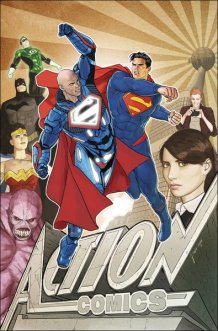
Returning for the tenth time or so to write Superman is Dan Jurgens, most famous for penning the now classic Death and Return of Superman storyline. The pace of the comic is just right, lots of stuff happens and many plots are set up. This feels the most like classic DC in the Rebirth roll out. The big plot points are Luthor taking up the mantle of Superman, using his time with Justice League as leverage, and Pre-New52 Superman finally making his debut in costume. I am very interested in finding out where this story will go but am praying this isn’t going to be another hard reset to status quo in a year’s time. We’ve seen Luthor in this role not to long ago (Paul Cornell’s run on Action kept coming back to me as I read) so I want to see something familiar but with fresh new direction.

Aquaman Rebirth (Writer: Dan Abnett  Artist: Scot Eaton, Oscar Jimenez, Mark Morales and Gabe Eltaeb)

aquamanI felt like I was in familiar territory because this issue seems to tread the same notes most modern Aquaman stories always do: Hey, he’s a super serious hero, you guys! This need to make meta-commentary on jokes about Aquaman does more to diminish the character than just telling good stories about him. This comic also didn’t seem very open to new readership with some elements, like the Deluge, not being defined well or the reveal of the villain at the end feeling awkward. At the end, I felt like it was all set up for Aquaman to just fight one of his old villains again, but not the sense that something new was going to happen. Probably my least favorite of this week’s releases.
 

Detective Comics #934 (Writer: James T Tynion IV  Artist: Eber Ferreira, Eddy Barrows)

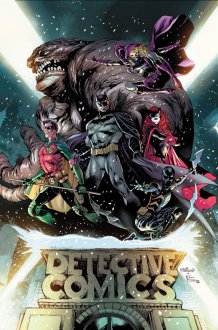
If this series had to get a new title it would be Batman Family. The conceit of Detective Detective-934appears to be a focus on a team of Bat-related characters. Featured in the series will be Batman, Batwoman, Red Robin, Spoiler, Orphan, and Clayface. Clayface is the interesting outlier, a character shaped more by his appearances in the 90s animated series, than much of anything in the comics. His role in the team hasn’t been revealed yet but Tynion does a good job of making him sympathetic right from his first moment in the film. I used to truly hate the work of artist Eddy Barrows but he has made some significant improvements. Action feels fluid and energetic and the world is full of detail. There’s a slot of story potential for the interaction and relationships between these characters and this will be one I continue following.
The Flash Rebirth (Writer: Joshua Williamson  Artist: Carmine di Giandomenico)

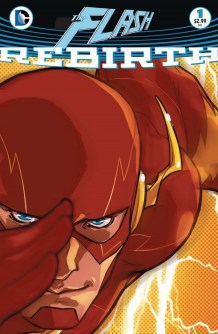
the flashIt can be argued that DC Rebirth #1 was a Flash-centric story, with its lost Wally West at the heart of it all. The Flash Rebirth is an interesting artifact in that it takes place before, during, and after the events of DC Rebirth. Right away Williamson is making the title new reader friendly by using a contemporary murder scene to recap Barry Allen’s own loss of his mother. It would be easy to just make the comic a facsimile of the popular tv show but effort is put into referencing those important elements but keeping the comic its own. There are a couple beats that take us out of the story, the Barry/Wally reunion retold and Barry’s visit to Batman who happens to be analyzing that familiar smiley face pin. Artist di Giandomenico was someone I didn’t care for much on the recent X-Factor title for Marvel, but here his style lends itself to the spend and energy of the Flash. While not a singularly cohesive story, Flash Rebirth is a good introduction to the character.
Wonder Woman Rebirth (Writer: Greg Rucka  Artist: Liam Sharp, Paulo Siqueira)

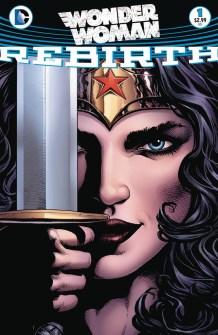
The award for most meta Rebirth comic this week goes to Wonder Woman. From page one,wonder woman Greg Rucka is bringing up the contradictions and fluctuations in this character’s past. Rucka’s past work on the title also dealt with finding a unique place for Princess Diana in a world of supermen. And he did a great job at it, playing up her role as a warrior and an ambassador to the world of men. Right away Rucka is saying we are going to examine this character again and redefine her. Another thing I loved was the use of multiple artists. Often new artists pop up in a jarring non-essential way, but here we switch to a new artist the moment Diana dons her new costume. If you really want a comic that is beckoning you in for a new story,but with recognition of the history that has come before, this is it. You also have a great pedigree with Greg Rucka at the helm. The ongoing series will be doing something a bit odd, alternating issues between the present day story and a Year One origin reboot. Definitely on my list to follow. Hands down the best release of the week.

Next Week: I will be at Origins most of the week so I’ll be reviewing weeks 4 & 5 together in two. Titles will be Batman #1, Green Arrow #1, Green Lanterns #1, Superman #1, Titans Rebirth, Flash #1, Aquaman #1, and Wonder Woman #1

Teenage Mutant Ninja Turtles: Out of the Shadows (2016, dir. David Green)

144611-mutant-ninja-turtles-out-of-the-shadows-2016

I was 7 years old when I first glimpsed the Teenage Mutant Ninja Turtles. As I was flipping through the channels one summer morning I came across the opening credits of the series. I remember having trouble remembering the four nouns of the title, referring to them as simply the Ninja Turtles. Eventually, being an imaginative DIY-er, I made a mask out of a piece of purple cloth and re-purposed a green backpack and taped together cardboard paper towel tubes, and I spent hours in the backyard acting out the stories I saw. In 1990, my sister won advance screening passes via the local Fox Kids Club to the TMNT film. I loved the Turtles. But it hasn’t been something that has stuck with me, they’ve never had the complexity that makes me want to revisit them often.

The most recent film, Teenage Mutant Ninja Turtles: Out of the Shadows, is the follow up to the successful 2014 reboot. The new film finds the Turtles continuing their life underground in the daytime while protecting the citizens of New York City during the night. After Shredder escapes from police custody, our heroes find themselves pushed out into the spotlight and their group goes through the inevitable existential questioning found so often in superhero sequels. Added to the mix this go round are Stephen Amell as the hockey stick wielding Casey Jones and the mutants Bebop and Rocksteady (played to perfection by Gary Anthony Williams and WWE’s Sheamus). Plus, Krang the Brain and the Technodrome make the slightest of appearances for the third act.

Out of the Shadows is not a great movie, but it is a big improvement on the 2014 film. One of the biggest complaint, and one I shared, about the first was that it was too April O’Neil focused with the Turtles in the background. For the second film we get a lot of time with the heroes with April being featured alongside them in a sort of sidekick partnership with Casey Jones. As previously mentioned, Bebop and Rocksteady are perfect recreations of their cartoon counterparts. They are buffoonish henchmen who bumble through their job with Shredder always on the edge of ending their lives, but strangely keeping them around.

My biggest issues with the film come from the overflow of content in the script and how a lot of these plot points aren’t able to be developed. Krang is the biggest example of someone who shows up in the first act to get the plot rolling, vanishes until the third act, and ends up just being a CGI punching bag so the film can have the big finale battle in the skies over New York City. Another problem I had was that right from the start of the film, April O’Neil uses her sexuality to get access to important information to the plot. It doesn’t come up again, but it is a rough start for her character. April has never been a character who flashed her midriff or seduced men. She’s an experienced reporter and it’s a shame that her opening moment in the film were so reductive.

The Out of the Shadows will feed that nostalgic itch of people who grew up with the cartoon series. It is also a big, loud dumb summer blockbuster but maybe a little less than other films under the Michael Bay banner. It’s considerably shorter than Transformers and their ilk, so that gives the Turtles a greater sense of energy and movement towards the finale. I don’t have expectations that we’ll ever have a deep, meaningful Teenage Mutant Ninja Turtles film, it was a concept developed as a parody of ninja comics in the mid 80s. But what has been made is a very fun, light movie.

Warcraft (2016, dir. Duncan Jones)

warcraft

Few video game properties come to the table with a such a dense lore and mythos as Warcraft. I never really played the original real-time strategy Warcraft games, but I did put about two years worth of time into World of Warcraft, even grinding two characters to the level cap of 90 at the time. During those two years of play, what I enjoyed most was the exploration aspect. Every time my character entered a new zone it was exciting to see what monsters lay in wait, what treasures there were to find, and it was always great to spend time seeing all the beautiful design put into the world. The film Warcraft was announced ten years ago but has languished in development until the last couple years. After a decade of development, what did we end up with?

Warcraft, directed by Duncan Jones, tells the stories of the war between the human and the orcs of Azeroth. As a result of a demonic plague, the orcs construct a portal that brings them to the world of Azeroth. Souls are needed to open the portal again and bring the orcs who stayed behind. The humans immediately want to drive the orcs back and thus the war begins. The cast is filled with many confusingly similar bearded men and some beautiful animated motion capture orcs. Also, Paula Patton is a half-orc with some very distracting tusk prosthetic.

Warcraft is an utter mess of a film. This rests entirely on the screenplay which failed in something that should have been easy. The IP has thousands of years of established lore and they picked a very meaty chunk of that history. The only work the screenplay had to do was character development and it completely fails. Instead, the film is constantly jumping from location to location never allowing us to really get to know or care about the characters. The dialogue is also painfully cliched. As a knight is leaving a curious mage behind in a mystical library he turns around to utter, “And while I’m gone…try not to touch anything” followed by the mage causing a minor accident. None of the dialogue differentiates the characters or gives you a sense of who they are.

The look of Warcraft also always been exaggerated and cartoonish. This does not translate well into live action. The entire look of the Alliance armor and much of the architecture is cringeworthy. The orcs look wonderful, though. The cgi used for the other side of the film’s war is exceptional and the facial expression that comes through is quite an achievement. The orcs are also far and away the most interesting part of the film and we do not spend enough time with them. It’s essentially a 60/40 split in my opinion between humans and orcs.

For viewers unfamiliar with the world of these games, I can only imagine what a confusing, mind boggling film this must be. I have a passing familiarity with many of the characters and bits of history so I was able to feel my way through events in the film, but even I had moments of confusion about who was who. There’s an emphasis put on the importance of Durotan’s newborn orc son which will play strangely to newcomers. Easter eggs abound for the fans, which is no surprise, but when the core of your narrative is near impenetrable to people who have never played the game you have problems. Sadly, if the acting had been more over the top, a la the Dungeons & Dragons film, Warcraft might be a fun “bad” movie, but everyone is so dull and uninteresting. And worst, it’s almost as hard to tell the litany of bearded white men apart as it is the orcs.

Duncan Jones is not a bad director. His debut feature, Moon, is one of the best independent films of the last decade. His mainstream follow up was Source Code, not a terrible film but fairly forgettable. He is thankfully returning to his roots with Mute, which he calls a follow up to Moon. What he presents us with in Warcraft is very confounding. The only conclusion a viewer could come to is that Jones struggled to bring his own stamp to the film, and it was inevitably overtaken by studio notes and the marketing department. What we’re left with is a film that so desperately wants to be the start of a new franchise but doesn’t have a hook to bring in the audience you need to do that. The film is doing amazingly well in China so there may actually be more. Let’s hope they put character first and use those individual, interesting personalities to help us care about the lore, not the other way round.

Neighbors 2: Sorority Rising (2016, dir. Nicholas Stoller)

neighbors0005

In the last 15 years, the Apatow film troupe has become a dominant force in American film comedy. We won’t go a year anymore without one or two films produced by Apatow and starring one of his regulars (Seth Rogen, James Franco,etc.). And it is very understandable that the viewing public has gotten to a point where they feel a bit..annoyed at a perceived repetitiveness in the work being produced. I’ve managed to watch a large number of these films, not due to a strong love of Apatow’s work, but due to that previously mentioned prevalence in our culture, and I’ve come away with some mixed thoughts and feelings about them, Neighbors 2 being a prime example.

Neighbors 2 continues the conflict between Mac and Kelly (Seth Rogen and Rose Byrne) with Teddy (Zac Efron). This time a sorority moves next door just as Mac and Kelly have gone into escrow on their house in preparation for a new baby. The sorority is led by Shelby (Chloe Moretz) and they all end up in a series of comedic set pieces where characters go over the top and slapstick comedy ensues.

Much of Neighbors 2 is a retread of the first. We just have a new organization, this time made up of young women, who are causing the exact same sorts of problems. Mac and Kelly enlist their friends for help. The couple deal with their own feelings of inadequacy as parents. Thematically they are the least interesting part of the film. From a larger perspective, this is almost a meta-commentary on these actors being pushed aside for the more interesting ideas and themes that come out of what Zac Efron and the sorority members are doing.

Hands down, it is Teddy, Efron’s role, that makes the film worth watching. I wouldn’t say I am a fan of Efron, his choice in films has led us down very different paths. But here he is presenting an examination of the very type of person is likely perceived to be. Early on, we have a scene between Teddy and his former frat brothers from the first film. Everyone is growing up with steady jobs, careers even, and now getting married. Teddy still works at Abercrombie & Fitch and, due to the criminal record he got from the first film’s exploits, has a difficult time finding work beyond customer service. While the film plays this for comedy, Efron manages to bring some levity into these circumstances. Teddy is a dudebro still clinging to his past while everyone around him is moving on. He doesn’t cling to his fraternity days for a sense of glory, we are very quickly shown he wants to be part of a family.

The story of Shelby and her sorority is also set up right away with a ton of empathy. In an orientation meeting for an established sorority on campus, Shelby learns that by-laws make it impossible for women to throw parties so they are forced to attend frat parties. A visit to one leaves Shelby turned off by the exploitative nature of these parties towards women and she ends up finding some strong friendships among fellow female party goers. This is the impetus for their move next door to Mac and Kelly. By the end of the film, I didn’t have much sympathy for Mac and Kelly who, if we look at the generational lines laid by the film, would be the characters I was expected to side with. They are my contemporaries experiencing many of the same life changes I am.

However, Shelby and her friends’ struggle to carve out a piece of the college experience that represents their ideals of female empowerment and to not be viewed as “Hos” for the “Bros” is a much stronger theme. There is a moment in the film where Teddy begins to reminisce about the parties he threw and quickly realizes women were literally labeled “hos” at every single one. His personal realization is played both for laughs and with some poignancy. While he and Shelby are only separated by a handful of years, ideologically and sociologically, they were light years apart. Never once is Shelby’s point of view used to lampoon social justice or feminism, the sorority sisters are funnier than the older characters and evoke a greater sense of empathy.

Neighbors 2 will not change your life. It will likely make you laugh a number of times. What I came away with was a sense of freshness to the Apatow films. Director Nicholas Stoller is responsible for what I believe is the criminally overlooked Forgetting Sarah Marshall, another film that deals in a grown man not blaming women for his problems, but learning to admit his own part in why a relationship crumbled. These films are often marketed with an emphasis on the slapstick, over the top, gross out humor present in them. But given a chance, I think you’ll find something much more thoughtful and refreshing than presented in the marketing.