Cinematic Television – The Dramas

While I have not yet seen The Wire, I know that so many people view it as the epitome of great television drama. I plan on watching it one day, and I see it as one of those great works of literature that I want to find the perfect time for fully absorbing it. That said, these are some other great dramas on the tube right now.
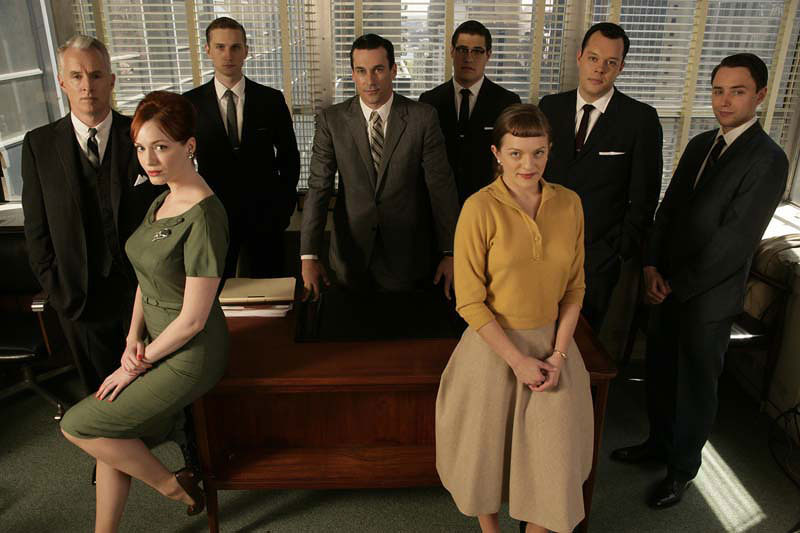


Mad Men (2007 – present, created by Matthew Weiner)
Starring Jon Hamm, Elizabeth Mitchell, January Jones, John Slattery, Christina Hendricks, Vincent Kartheiser, Bryan Batt, Aaron Staton, Michael Gladis, Rich Sommer, Robert Morse, Kiernan Shipka

Mad Men is a series that hinges completely on a contemporary audiences knowledge of their society, so that they may contrast it with irony of early 1960s American culture. The focal point of the show is Madison Avenue ad exec Don Draper, played with calm and cool ease by Jon Hamm. Draper is man with a very distinct set of personal moral beliefs. Sleeping around on his wife isn’t a huge deal, and when she seeks psychiatric help, making regular calls to the shrink for a report on what his wife has said is never a violation of her privacy, its his right as a husband. The male-dominated culture around him doesn’t work to convince him otherwise though. But Draper is an imposter in this world, through out all of the three seasons which have aired he comes up against a fear of his past being exposed.

As foils to Don, we’re given three other characters: Peggy Olson, Betty Draper, and Pete Campbell. Each is in a place where they are unsure of their identity. Peggy is girl from Brooklyn who starts out as Don’s secretary, but finds herself moving up the ladder of power in the office incredibly quickly. Betty, Don’s wife, is not content at playing house after living as a model in Europe before she met Don. Her transformation over the three season has been the most dramatic and it is hard to predict where her character will go.

Pete is the most direct parallel to Don, a salesman at the Sterling/Cooper ad agency, he is from a family that expected more “respectable” work out of him and are completely opposed to supporting his life. Pete is newly married and seems at times disinterested in his bride, and other completely devoted to her. While Don seems representative of the Old Way, Pete is our manifestation of new ideas coming into society. Pete is confused when, after crunching the numbers and discovering the black community is buying a client’s brand of television more than the white, the client rejects his ideas to directly market to that minority. He sees it as both socially and economically ignorant.

The series is respectful of its adult audience. There’s little chance adolescents will enjoy the series, and the writers believe that the grown ups watching don’t need every emotion and thought telegraphed through blunt dialogue. There are long moments of silence in the series, where the only information we receive is through a simple look of Don’s, or the frustrated body language of Betty. This complete rejection of dumbed down television is an oasis in the desert. It makes each and every episode come across as highly cinematic and important.
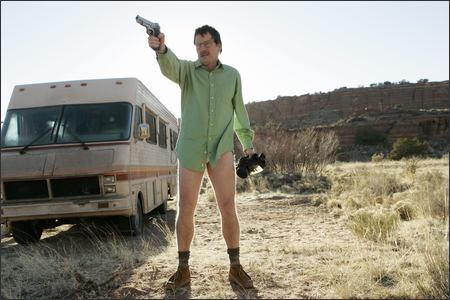
Breaking Bad (2007 – present, created by Vince Gilligan)
Starring Bryan Cranston, Aaron Paul, Anna Gunn, Dean Norris, Betsy Brandt, RJ Mitte, Bob Odenkirk

If you are only familiar with Bryan Cranston through his work as the befuddled father on Malcolm in the Middle you will be in for a shock. The same frenetic energy that informed Hal on the Fox sitcom, if filtered through a simmering boil in Breaking Bad. Cranston plays Walter White, a high school chemistry teacher who works part-time at a car wash to pay the bills. He has a teenaged son with cerebral palsy and a baby daughter on the way. One day, he collapses at work and learns he has terminal lung cancer. Walter keeps this a secret from his family and decides on a whim to join his DEA brother in law as a ride along on a meth lab raid. One of his students ends up being the meth cook who escapes from the raid and Walter tracks him down with a proposition: they work together to make and sell as much meth as possible. Walter reasons this will get him enough money for some experimental cancer treatment and, if he does die, provide his wife with a major financial cushion. Thus begins Walter White’s descent into Hell.

For the first half of the first season, Walter is unsure of himself. He is confident in the lab and he knows how to cook meth of a quality his partner, Jesse, and the DEA have never seen before. It’s not till the second half of the first season that Walter explodes. A mix of chemo therapy and the impending concept of his own death pounding in his skull forces the meek man to become a force of violence. This doesn’t come without a cost though, as strong as his newly found fury may be, he is also ignorant of the inner workings of the big money trade. Walter inevitably draws the attention of the wrong people and ends up in multiple circumstances where he is close to being murdered.

While Walter is descending, his young partner, Jesse is trying to emerge from the drug fueled mire he has sunken into. At one point, he tries to reconnect with his family, whom roundly reject him. Jesse has a brief foray into a rehabilitated life, but is pulled back down by Walter. A palpable sense of tragedy surrounds the young man and its becoming apparent the weight that won’t let him live his life is our protagonist. The place the second season ends leaves both characters in an unknown place. They are burdened by a massive loss of life that is the result of their actions; Walter has come out on top though, and Jesse, once again is left with the bloodied hands. Where these characters go to next is going to be a fascinating journey.


Damages (2007 – present, created by Daniel Zelman, Glenn Kessler, Todd A. Kessler)
Starring Rose Byrne, Glenn Close, Tate Donovan
Featuring Ted Danson, Zeljko Ivanek, William Hurt, Marcia Gay Harden, Timothy Olyphant, Campbell Scott, Martin Short, Lily Tomlin, Keith Carradine

Damages starts with the typical prime time drama setting, a law office. But that is where the similarities with your typical law drama end. Borrowing a device from Lost, flash-forwards, Damages allows us to glimpse pieces of the end of season while going back to the beginning and moving forward from there. The series follows law school graduate Ellen Parsons, who is hired at Hewes & Associates, to work underneath infamous lawyer Patty Hewes. Hewes’ focus is primarily in cases against large corporations, on the part of citizens harmed by them. While her goals are admirable, Patty has a “by any means necessary” approaching to getting her way. She lies, cheats, steals, and even hires people to kill those who are getting in her way.

Each season focuses on a single case, allowing it to be played out in great detail and devoting an equal amount of time to the defense. Much like Law & Order, the cases draw on real life events, but because they are for such larger stakes it only makes sense that it take 13 episodes for them to play out. Season One featured an Enron type case, wherein billionaire Arthur Frobisher convinced his employees to invest in company stock, only to defraud them and abscond with their life savings. Season Two is a more generic environmental case, where an energy company is knowingly withholding data that proves their practices have caused harm to the population. And in the current season, the series is tackling a Bernie Madoff parallel with an incredibly stellar guest cast. If you enjoy typical law dramas, but want something with more continuity and depth then definitely give Damages a shot.

Next: Science Fiction & Fantasy
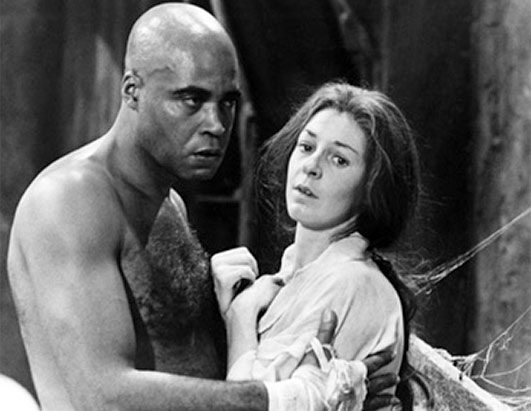
Seventies Saturdays – The Great White Hope

The Great White Hope (1970, dir. Martin Ritt)
Starring James Earl Jones, Jane Alexander, Lou Gilbert, Joey Fluellen

Based on the Pulitzer Prize winning play, The Great White Hope is a “names changed” version of the career of Jack Johnson, an African-American boxer during the early 20th century. Johnson was the first black heavyweight boxing champion and was known for patiently waiting for his opponent to slip up, then barraging him with a series of incapacitating blows. Johnson was a figure of great controversy, not just because he was a threat to the white male ego in the boxing ring, but because all of the women he became seriously involved with were white. Johnson showed little sense of humility about his dealings and was one of the first public figures to really use controversy as a way to promote his own celebrity.

In the film, Jack Jefferson (Jones) has just defeated the heavyweight champion and is celebrating this achievement with much bravado. The African-American community is divided about Jefferson though. While those around him immediately after the fight revel with him and dance in the streets, there are others who see Jefferson has creating negative image for their people because of his brazeness. Another group see Jefferson as being nothing but an “uncle tom” by consorting with white women and embracing what they see as a white way of life. Jefferson has an interesting take on all of this. In a scene early on, after he is weighed in before the big bout, an older black gentleman mentions that the young men will be inspired and “proud to be colored” when Jefferson wins. The boxer replies that they should already be proud and his winning or losing should have nothing to do with it. An interesting idea when thinking about the role of athletes as “role models” in contemporary society.

Jefferson and his fiancee, Eleanor’s relationship is played very well, but we don’t get enough background to understand how they came together. They are very much in love, but we’re never shown how, despite the social stigma of their relationship, they would defy it and stay together. The film also has some problems with how broadly a lot of characters are played. The white establishment villains literally “bwahahaha” at one point in the final scenes, and it would have been interesting to see them played with more internal conflict. Jane Alexander’s performance as Eleanor is also ruined by the pointless turn her character is forced to take, mainly to serve as momentum to move Jefferson forward to the finale. The one standout performance is James Earl Jones as Jefferson; he plays the character as incredibly multi-layered. Jefferson is charming and intelligent, but also selfish and arrogant. He loves Eleanor deeply but is resentful when he realizes she’ll never understand the limitations put on him.

The Burton/Depp Collaborations – The 1990s

Tim Burton and Johnny Depp are a cinematic pair that will probably be working together, till both of them are in their old age. The duo have made seven pictures together of varying success. We’ll be looking at these films by decade and see of their collaborations are gaining value or zero-ing out.


Edward Scissorhands (1990)
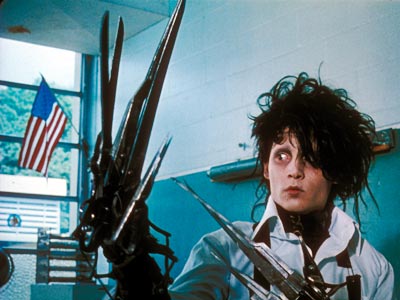
It was quite a surprise to see teen heartthrob and star of 21 Jump Street working in a film by the director of Batman. Even though I was only eight at the time, I remember thinking it was weird that the Johnny Depp guy would be in this movie. I was also deeply obsessed with Burton at the time because of Pee-Wee’s Big Adventure, Beetlejuice, and aforementioned Batman. Scissorhands didn’t appeal to me at that age though, its a deeper film, meant for an older audience. Yes, it has elements of a fairy tale, but its satiric take on Southern California suburbia, its bittersweet love story, and its affection for the wonderful Vincent Price is sort of lost of a 3rd grader. This is the film Depp broke out with, and I feel he’s always felt a strong closeness to Burton because of it. Deep delivers a wonderfully muted performance, I can’t say I’ve seen him deliver anything like this since. While Jack Sparrow has flowery dialogue and free reign to go over the top. That’s a style of acting that can be a sort of cakewalk. Edward doesn’t get to speak much, but has those wonderful props on his hands, that give a truly unique form of expression. Burton is also at the top of his game, delivering the gothic landscapes as well as a neon suburbia. I hope that with Burton’s upcoming Frankenweenie feature film we can see some more of this.

Ed Wood (1994)
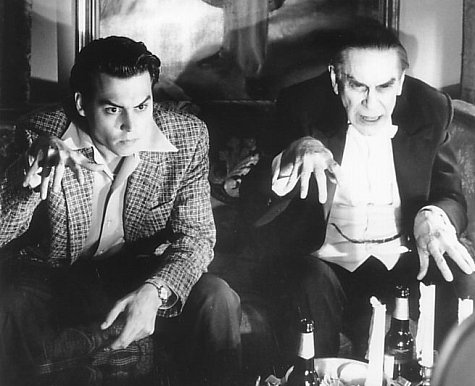
A lot of Burton/Depp fans have missed this one, and I personally think it is the best film Burton has ever made. There are references to his deep love of classic horror films and a darkly wicked sense of humor. The performances here are spectacular as well. Depp, who is such an adept chameleon, takes on the wackiness of Ed Wood completely. In addition, Martin Landau as Bela Lugosi is one of the best pieces of acting there has ever been in a Burton picture. Lugosi comes across as sympathetic, yet constantly acerbic and unlikable. It’s the only film Burton has done which was based on real events, and makes me curious to see what other visual flair he could add to another famous figure. Wouldn’t it be amazing to see a Burton directed film about Vincent Price? Or Edgar Allen Poe? Bill Murray also has a perfect performance as Wood’s homosexual producer and has one of the best scenes in the film during a mandatory baptism by financial backers from a church. Burton and Depp have come close only once to the level of perfection this film achieved.

Sleepy Hollow (1999)
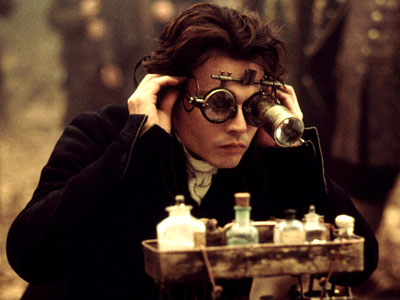
Burton and Depp finished out the decade with the first of many adaptations. I am not a fan of the majority of Burton’s adapted works, the scripts are never written by him and bear a lot of the clichéd story beats of typical Hollywood work. Here we have Ichabod Crane turned from a schoolteacher to a pre-forensics crime investigator. That character tweak has always come off as insulting to me. The studio believed Crane had to be “sexier” and so he had to be a detective. It would have been simple to have Crane’s intellectual curiosity spurring him on to investigate the goings on in Sleepy Hollow. Depp felt very blank in this film as well, I never felt a true sense of personality in him. Yes, there are some wonderful visuals, but it is at about this point things begin to feel stale in Burton’s aesthetic. He draws on the classic Corman horror flicks of his youth but seems to recycle a lot of visuals from Nightmare Before Christmas. This staleness would continue into the next decade.

Next: The Corpse Bride, Charlie and the Chocolate Factory, and Sweeney Todd.

Import Fridays – Ricky


Ricky (2009, dir. Francois Ozon)

Starring Alexandra Lamy, Sergi Lopez, Melusine Mayance, Arthur Peyret

Ricky would be just another sappy, sentimental film if it weren’t for that opening scene. Where in the film’s chronology does it fall? The middle? The end? Both are completely plausible. The scene in question is one in which working class Katie (Lamy) is speaking to an off camera social worker about being unable to pay rent and care for her two children. Only when the end of the film is reached does the ambiguity of these scene truly surface.

The plot follows Katie who is raising a daughter and working in a chemical factory to make ends meet. One day, she meets new employee Paco (Lopez) and two begin a relationship and Katie ends up pregnant. Katie gives birth to a little boy, Ricky, and slowly but surely Paco makes a run for it when he gets scared. In the meantime, Katie and her daughter discover Ricky growing strange appendages out of his shoulders and finding ways out of his crib and onto the top of an unreachable dresser. Things develop in an odd way from there, ending with paparazzi chasing Katie and her miracle child around. The film has a touch of the bittersweet in its finale and, as I mentioned before about the film’s opening sequence, it can be seen as a downbeat film.

Ozon is balancing realism in his first half with fantasy in the second. It almost feels like two films, yet never loses a consistent style; an admirable achievement. The explanation behind Ricky’s special abilities is never explained and Ozon never shows an interest in explaining it. There are some hints: Paco’s unknown origins or the chemical factory where Katie works. But it doesn’t really matter WHY Ricky is the way he is, but that there is an unquestioning love between he and Katie. Sadly, the film doesn’t delve into this as deeply as it should and fails to earn its finale scene between Katie and Ricky. Overall, an intriguing film from a French director who is doing some stunning work in contemporary cinema.

Director in Focus – New Director Poll

This month will be my last covering the films of director John Sayles. For my next director, I’d like the readers to choose. The poll will be open till the end of the month. Below are the choices and brief description of them:

Francois Ozon – French director specializing in films focused on female characters, sexuality plays a key role as well as the surreal. I have seen Swimming Pool and Ricky.

Pier Paolo Pasoloni – Italian poet and author whose films adapted great works of literature such as The Canterbury Tales and Oedipus Rex. I have never seen any of his films.

Claire Denis – French director who positions her actors in carefully intricate poses and shots, focus on sexuality in her work. I have seen Trouble Every Day.

Brian DePalma – American director who makes slightly surreal and highly stylized noir and thriller films. I have seen Phantom of the Paradise, Raising Cain, Mission: Impossible, and Mission to Mars.

Vote in the poll on the left side of the page. Excited to see who everyone picks.

Cinematic Television – The Comedies

In the last decade the ante has been upped on both network and cable television. While channels go the cheap route of “reality” tv, they have also worked to develop higher quality scripted series. These higher quality series have a lot more in common with film, than previous television programs. They employ complex cinematography, a higher caliber of acting, and a devotion on the part of viewers to following longform story arcs, not “done in one” stand alone episodes. We’ll be looking at some of these series that have really stood out for me, starting with

The Comedies


Freaks and Geeks (1999-2000, created by Judd Apatow and Paul Feig)
Starring Linda Cardellini, Jason Segal, James Franco, Seth Rogen, Busy Phillips, John Francis Daley, Samm Levine, Martin Starr, Joe Flaherty, Becky Ann Baker

This can be marked as the beginning of the Apatow movement in contemporary comedy. The series was broadcast by a less than enthused NBC, who seemed to go out of their way to air episodes out of order and move the series around the schedule without letting viewers know. The series gained a following when it was reran on Fox Family and then when it was released on DVD in the last few years. The premise follows the Weir sibling, Lindsay (the Freak) and Sam (the Geek) as they go through a year of changes in 1980. Lindsay, a straight-A student and member of the Math-letes, starts hanging out with a group of classic rock loving stoners, and Sam deals with his desire to lose his childish geek image and win the heart of his long time crush. Unlike other nostalgia based programming, there is no maudlin sentiment here. The emotions and resolutions to stories feel honest and real. Characters have parents who are incredibly flawed, and those flaws don’t go away at the end of the episode. One episode in particular deals with a cheating parent, the episode ends on a very ambiguous note. If you haven’t discovered this gem, I highly recommend you hunt it down.


Curb Your Enthusiasm (2000 – present, created by Larry David)
Starring Larry David, Cheryl Hines, Jeff Garlin, Susie Essman
Featuring Richard Lewis, Ted Danson, Mary Steenburgen, Bob Einstein, Shelly Berman, Vivica A. Fox, Wanda Sykes, J.B. Smoove, Paul Dooley, Julia Louis-Dreyfus, Jason Alexander, Jerry Seinfeld, Michael Richards, Kaitlin Olsen, Paul Mazursky, Richard Kind, Ben Stiller, Mel Brooks

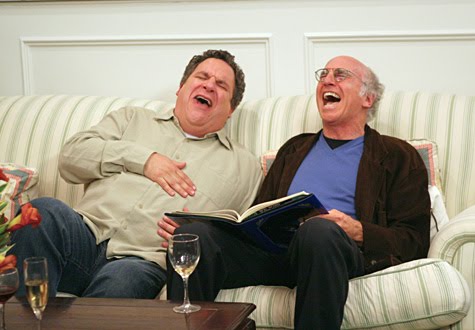
If you enjoyed Seinfeld, then Curb Your Enthusiasm will blow your mind. The neurotic basis of George Costanza, Larry David, has created a series in which he plays himself as a buffoon constantly getting into awkward situations based on the misunderstanding of other or, more often than not, David’s own hang ups about minutiae. The series is one of the few to really capture improv comedy working right. A lot of comedies have followed since and don’t seem to have actors of the high level working in them that Curb does. A typical episode of Curb might involve Larry getting into an argument with a wheelchair bound man about using the handicapped toilet stall, followed by him inadvertently insulting a lesbian receptionist about she and her partner’s desire to adopt a Chinese baby. The jokes are never played as mocking these people, but rather comes from David’s desire to see all characters, regardless of their specificities, shown as jerks. He sees that people are more or less jerks when it comes down to it, and how he plays this out is hilarious.


Arrested Development (2003-2006, created by Mitchell Hurwitz)
Starring Jason Bateman, Will Arnett, Portia de Rossi, Tony Hale, Michael Cera, Alia Shawkat, Jessica Walter, Jeffrey Tambor, David Cross, Ron Howard
Featuring Liza Minelli, Ed Begley, Jr., Henry Winkler, Mae Whitman, Judy Greer

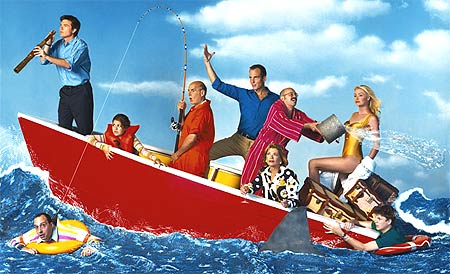
There has never been a more complex, layered, and enjoyable comedy on network television than Arrested Development. From the moment it debuted, Fox seemed to have little interest in it, while viewers and critics loved the hell out of this show. The premise is that George Bluth, owner of the Bluth Corporation is arrested for violating trading laws and his son, Michael finds he’s now in charge of the company and the self-absorbed and moronic family around him. Every actor is bringing their A game here, and the casting is spot on. There are no other actors who could play this character so over the top and still be endearing. The series also incorporates a large number of cameos and employs many of the players from HBO’s Mr. Show (Cross was one of the creators of that skit comedy series). Since the cancellation of series, network television comedy has never seemed as promising to me. A featuring film continuing the adventures of the Bluth family is in the works and set to be released next year, here’s hoping it can live up to the series.


Eastbound and Down (2009 – present, created by Jody Hill)
Starring Danny McBride, Andrew Daly, John Hawkes, Katy Mixon, Ben Best, Jennifer Irwin
Featuring Will Ferrell, Craig Robinson

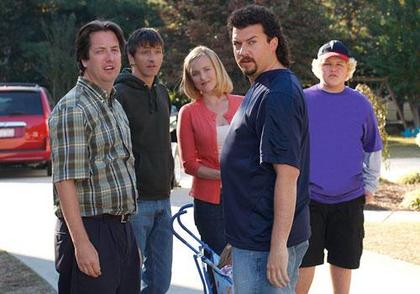
From the minds behind The Foot Fist Way and Observe & Report, comes this amazing HBO comedy series. Kenny Powers, a blatant parody of ignorant, racist Atlanta Brave John Rocker, is thrown out of Major League Baseball after being caught using steroids. He returns to his hometown in North Carolina where he becomes a substitute PE teacher at the same middle school his high school sweetheart works at. Kenny goes about abusing the hospitality of his brother and family, treating the middle school principal like a jerk, and ingesting an unhealthy amount of drugs. The highlight of the series comes when Kenny deals with local car dealer Ashley Schaeffer (Ferrell) which culminates in an insane pitching demonstration. The entire first season plays out like an extended movie, with a series finale that could serve as a perfect ending.


Bored to Death (2009 – present, created by Jonathan Ames)
Starring Jason Schwartzman, Zach Galifianakis, Ted Danson
Featuring Olivia Thirlby, Oliver Platt, John Hodgman, Bebe Neuwirth, Jenny Slate

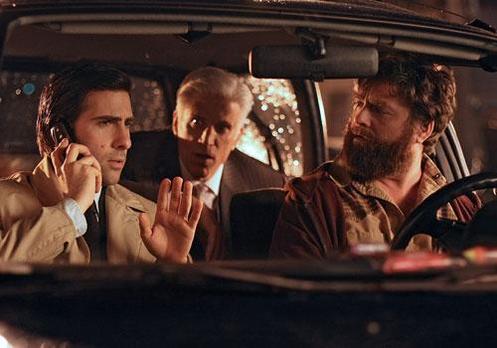
This HBO series is a sort of comedic version of Paul Auster’s City of Glass novel. Schwartzman playing a writer named Jonathan Ames (meta, eh?), loses his girlfriend and out of boredom posts a craiglist ad as an unlicensed private eye. He begins to get cases and finds himself getting caught up in the fun of it. He typically incorporates his indie comic book artist friend (Galifiankis) and pot smoking boss (Danson) on the cases as well. The series has a much more muted sense of comedy than Eastbound and Down, one of the best aspects of HBO’s comedy programming. They do a very good job of balancing multiple styles, yet never lose their quality.

Jolly Good Thursdays – Peeping Tom


Peeping Tom (1960, dir. Michael Powell)

Starring Karlheinz Bohm, Moira Shearer, Anne Massey

Released the same year as Hitchock’s Psycho, critically panned in Britain, pulled from theaters after an incredibly short run, and reviled by its director, Michael Powell. Peeping Tom sounds like it should have been forgotten. However, the film was years ahead of its time and is a masterful piece of commentary on voyeurism and the film audience. Infamous for containing the first nudity in British cinema (a nude model’s bare breasts are glimpsed for a couple seconds), but is about much more than seedy exploitation.

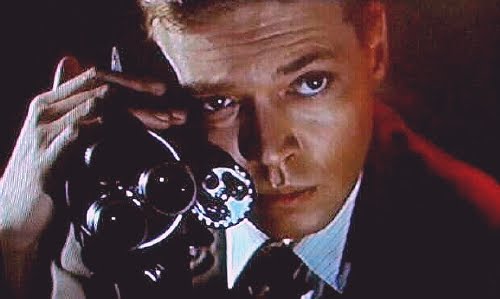
Mark Lewis is film studio cameraman by day, with side job taking nudie pictures for a corner newsagent. What no one knows is ,that from time to time, Mark takes to the streets with his camera and films the faces of women he murders. This is the result of a psychologist father who experimented on the compulsion people have to gaze, or be a peeping tom, on his own son. He fetishistically films young Mark, waking him up in the middle of the night by tossing a lizard in his bed or making him listen to the sounds of women being murdered. Now, with Mark alone in the world he has been lost in the damaged inflicted on him. He befriends a young boarder in his large mansion and fights his urges to make her gaze into the camera.

Peeping Tom  has some very clever camera play, especially during the murders where we see everything through Mark’s camera. And it does a very effective job of getting across the seediness of the world Mark inhabits. At the photo shoot over the newsagent’s shop, one model complains that Mark needs to hide her bruises from the camera, while another is frightened of people seeing her harelip. Powell creates exterior, physical deformities to emphasize the corruption infesting Mark. Are these women truly this scarred? Or it a manifestation of Mark’s psychosis?

One of the most interesting aspects of the film is, that despite Powell’s dislike of the picture, he weaves himself so personally into it. He plays young Mark’s father in old reel to reel footage, cast his own son as young Mark, and his own wife as the body of Mark’s lifeless mother in a funeral scene. In addition, the most elaborate murder is performed on actress Moira Shearer, famous as the prima ballerina in The Red Shoes. Powell and Shearer reportedly could not stand each other, he viewed her as an “airhead”. The film Mark is working on involves a director struggling with a red-headed flighty actress he is having to do retakes of constantly. In addition, Shearer plays the younger actress’ stand-in and is presented as an aging actress on her way out. A rather cruel, yet clever, way of Powell addressing his own problems in cinema.

Hypothetical Film Festival #9 – The Luck of the Irish

In honor of St. Patrick’s Day, here is a film festival in celebration of the Irish people:


Darby O’Gill and the Little People (1959, dir. Robert Stevenson)

Starring Sean Connery
A very overlooked Disney film that is absolutely amazing! Crazed ol’ Darby O’Gill claims to have seen and even stolen the gold of the Leprechauns. His daughter is embarrassed by his reputation as a crazy drunk. That is, until the day she sees the Leprechauns too. I remember loving this film as a child and being terrified out of my mind when the evil banshee makes her appearance. Darby O’Gill is notable for being the film that brought young Sean Connery to the attention of producer Robert Broccoli, who was having a difficult time of casting the role of James Bond in Dr. No.


In the Name of the Father (1993, dir. Jim Sheridan)

Starring Daniel Day-Lewis, Pete Postlethwaite, Emma Thompson
Based on the true story of an thief in Northern Ireland who is wrongly accused of being part of an IRA bombing of a London pub. Gerry Conlon (Day-Lewis) and his friends are beaten into confessions and spend the next 15 years in prison, while on the outside, Gerry’s father (Postlethwaite) with their lawyer (Thompson) fight vigorously to free him. This is one of the great pieces of contemporary Irish cinema by one of the greatest Irish directors there has ever been.


The Magdalene Sisters (2002, dir. Peter Mullan)

Starring Anne-Marie Duff, Nora Jane Noone, Dorothy Duff
For almost 200 years, the Catholic Church ran the Magdalene Asylums throughout Ireland, where young women who had had sex out of wedlock, were working as prostitutes, or simply victims of rape were sent because they were “unclean”. This film focuses on three teenaged girls sent to one of these places where they are forced into slave labor through laundry work, one hundred percent of the profit being kept by the nuns that run the facility. This a heartbreaking film about the dehumanizing being done by religious institutions to people who already brutally victimized.


Breakfast on Pluto (2005, dir. Neil Jordan)

Starring Cillian Murphy, Liam Neeson, Stephen Rea, Brendan Gleeson
This wonderful modern fairy tale, tells the story of Kitten Braden (Murphy), a young cross-dressing Irishman who goes on a picaresque journey through his homeland and onto London in a quest to find his long lost mother. This is one of the greatest achievements of prolific director Jordan, whose name is synonymous with Irish film. The picture touts a brilliant soundtrack of period music and some amazing visuals. Cillian Murphy is amazing and completely becomes his character, one of those few actors I do forget is in there when he is performing.


I Sell the Dead (2008, dir. Glenn McQuaid)

Starring Dominic Monaghan, Ron Perlman, Larry Fessenden, Angus Scrimm
A very overlooked picture that is both a comedy and mix of horror and sci-fi all wrapped up in an Irish package. Dominic Monaghan is a grave robber in the late 19th century whose partner finds a body they believe is a circus freak’s. To the modern audience we recognize it as an space alien. The alien body has the effect of resurrecting the dead and soon there are reports of zombies plaguing the countryside. This is not just a horror-comedy in name only, but a legitimately funny film that shows a real love for classic cult horror like Evil Dead.

Newbie Wednesday – The Men Who Stare At Goats


The Men Who Stare at Goats (2009, dir. Grant Heslov)

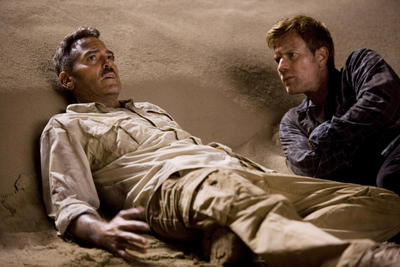
Starring Ewan McGregor, George Clooney, Jeff Bridges, Kevin Spacey, Stephen Lang
If you remember the jokingly done reports in the media about prisoners of war in Iraq being exposed to Barney the Dinosaur’s “I Love You” song on a loop, then you have already heard of the writing of reporter Bob Wilton. In a mix of fantasy and reality we get this very suspect account of a secret unit of the U.S. Army, in operation since the Vietnam War. Director Heslov doesn’t deliver a film of any great magnitude, it has its moments, and we end up with a very quirky, very uneven comedy.
Bob Wilton is an Ann Arbor, MI reporter who ends up just outside of Iraq as the war is breaking out. Months earlier he interviewed an odd man who claimed to have been a psychic in the employ of the Army. By chance, Wilton runs in Lyn Cassady (Clooney), the man the interviewee claimed had been the best in their unit. Wilton and Lyn begin a strange journey across Iraq that ends with figures from Lyn’s past reappearing and culminating in an LSD fueled finale.
Jeff Bridges plays a ultra hippie, Bill Django, the founder of the New Earth Army, the unit devoted to using peace and love to combat enemy troops. A lot of these ideas won’t seem far fetched if you know anything about the experimentation the military has done on the paranormal for combat purposes. The film even brings up the infamous MKULTRA experiments done by the CIA on soldiers and civilians alike, where psychotropic drugs were added to water without the subjects’ knowledge and their reactions were recorded.
I never found myself laughing during this film, a few grins here and there, but was never really impressed with anything I saw. The film seems to not know what it wants to be: a satire of the army, a satire of the new age movement, a commentary on the absurdity of this current and all war. Because of this lack of a “thesis statement” the film seems to wander aimlessly with no point at the end. Coupled with very amateurish voice over (a big no-no unless you know how to do it right) and an original score that felt cheap, its a film that could easily be missed without regret.

Wild Card Tuesday – Hunger


Hunger (2008, dir. Steve McQueen)

Starring Michael Fassbender, Liam Cunningham
The fight between Catholic and Protestant sides in Northern Ireland has devastated that country since the late 1960s. Each side has visited monolithic brutality on the other in of the greatest displays of community inflicting such cruelty on itself. But the cruelty that was the worst, was that of employees of the British empire on IRA members imprisoned in facilities across the country. Director Steve McQueen never give support for the terrorist actions of the IRA, but advocates that all prisoners, regardless of their crimes, deserve humane treatment.
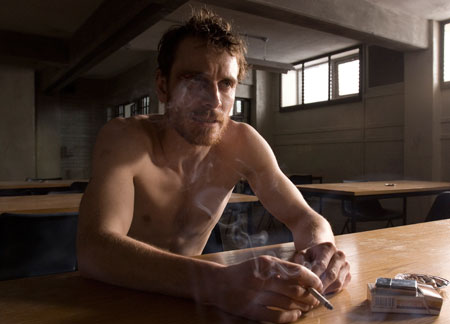
The film’s focus is real life IRA soldier Bobby Sands (Fassbender). While the film doesn’t explicitly cover his activities with the IRA, he was no saint. He helped ferry weapons for the movement and was involved in the bombing of a furniture store in 1976. The film chooses to portray Sands as a figure unwilling to budge an inch for the brutal authority crashing down around his head. In this effort he has allowed himself to become dehumanized. Simply put, he has been caged and treated like an animal, so he will behave like one. Sands smears the walls of his cell with his own feces, allows the daily meals to rot and mold in a corner, and funnels his bed pan (synchronized with the other prisoners) out into the hallway. Is it vile? Yes. But there something innate within us that despise authority that wishes to break us, so it comes off as bizarrely admirable.
Bobby’s most memorable, and final, triumph came when he began a hunger strike in 1981 which took his life after several painful months of starvation. Michael Fassbender destroyed his body through malnutrition to take on the gaunt, sunken appearance of a Holocaust victim. He become the specter of death with additional help from an incredibly talented makeup department. His back is covered in open sores, he’s unable to urinate for the prison doctor’s physical, and he stains his sheets with black, acrid blood. The moments before Sands passes are truly powerful. The film moves into his consciousness as hallucinations of his younger self appear and his mind travels back to long distance race where he and both Prot and Catholic youths ran together, in fields of golden amber. Director McQueen doesn’t want you to take the IRA’s side, he wants you to realize how irrelevant any side is, and simply see a man dying.
The aesthetic choice made by McQueen are magnificent. For the first 30 minutes of the film there is little or no dialogue. Only 50 minutes in is there an actual conversation between two people for extended amount of time. Here Sands and a priest from his community debate the point of standing in defiance of authority. The priest tells Sands he must submit to the uniform being enforced on the prisoners and Sands simply won’t budge. Once again, neither side wins in the debate. They simply come to the conclusion that neither of them will change their ideas about it. Hunger is one of the best examples of director using the language of cinema to tell a visceral and moving story. There is no maudlin sentimentality, yet there is a deep emotional core. Not for those lacking a strong constitution, but one of the most amazing British films I’ve ever seen.